⚠️ Fitness Disclaimer: The information in this article is for general educational purposes only and does not constitute professional fitness or medical advice. Always consult a qualified healthcare professional before starting any new exercise program, especially if you have existing injuries or medical conditions.
The Exercise That Separated Me From the Athletes I Trained With
I couldn’t do a single strict pull-up when I started training seriously at 24. I could bench press, I could squat — but every time I approached the pull-up bar with genuine intention, I’d hang there, pull as hard as I could, and go nowhere. The bar felt like a ceiling I couldn’t crack.
Eight weeks after committing to a systematic progression protocol, I performed 15 consecutive strict pull-ups for back development in a single set. The program that produced that result — which I’ve since used with dozens of training clients including complete beginners — is what this article covers in full detail.
Why the Pull-Up Is the Most Valuable Bodyweight Exercise
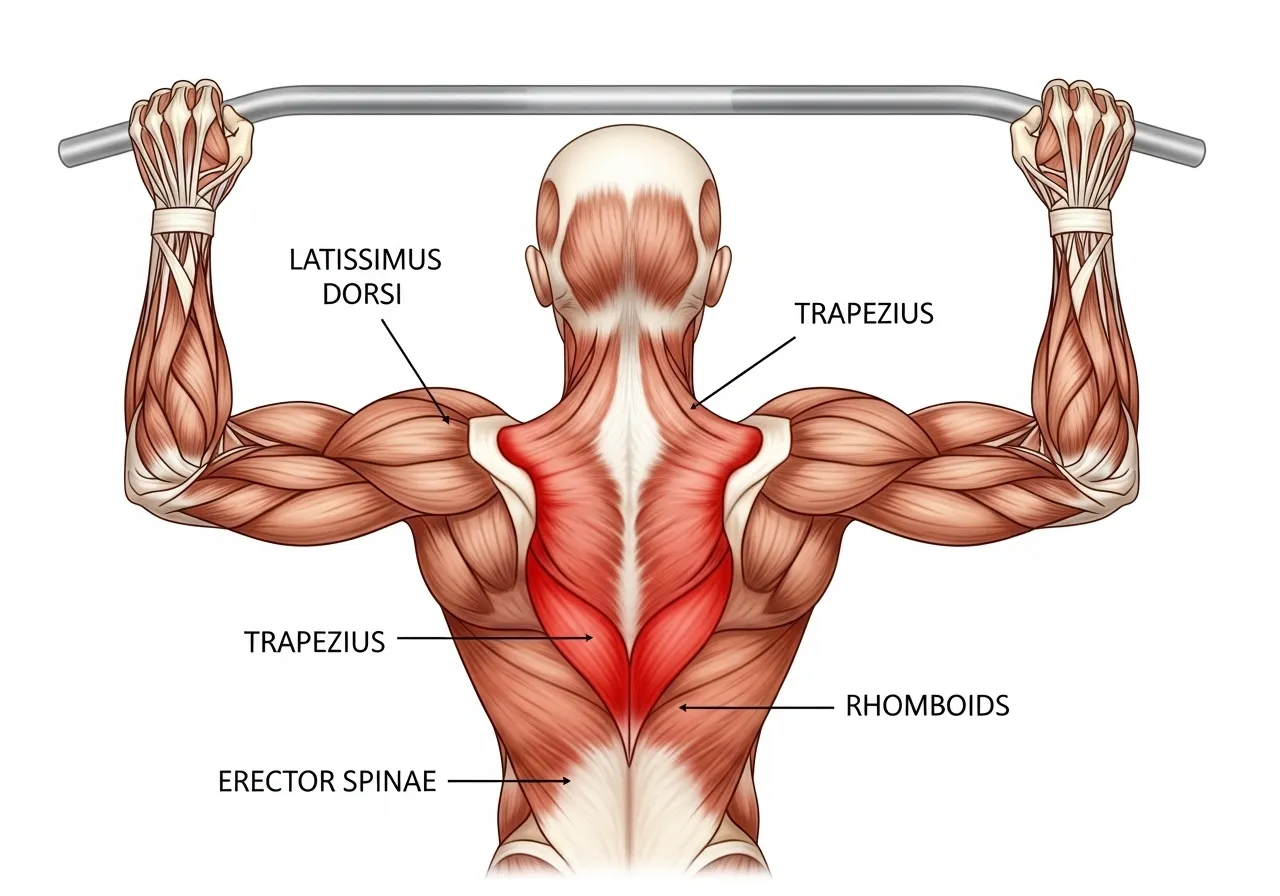
The pull-up trains the latissimus dorsi, biceps brachii, rear deltoids, rhomboids, lower trapezius, and core stabilizers in a single movement requiring the body to move against gravity using relative strength. Unlike machine exercises that externally stabilize the body, the pull-up demands that every muscle in the kinetic chain work together to move the entire body upward. This systemic demand makes pull-up strength a reliable indicator of genuine upper body strength and makes improvement produce visible changes across the entire upper body.
Why Pull-Ups Feel Impossible for Beginners
The pull-up requires moving the entire body weight through a large range of motion using muscles that most beginners have significantly underdeveloped. The average sedentary adult has spent years developing pushing muscles through the pushing actions of daily life, while pulling muscles receive almost no meaningful stimulus without intentional training. The solution is not trying harder — it is a systematic progression that develops the specific muscles progressively over weeks before attempting the full movement.
The Anatomy of the Pull-Up
The latissimus dorsi is the primary mover — its function of shoulder extension and adduction (pulling the elbow toward the hip) drives the upward movement. The biceps flex the elbow, the rear deltoids assist shoulder extension, and the lower trapezius depresses the scapulae to initiate and control the movement. Developing each of these through targeted progressions before combining them in the full pull-up is the key to rapid improvement.
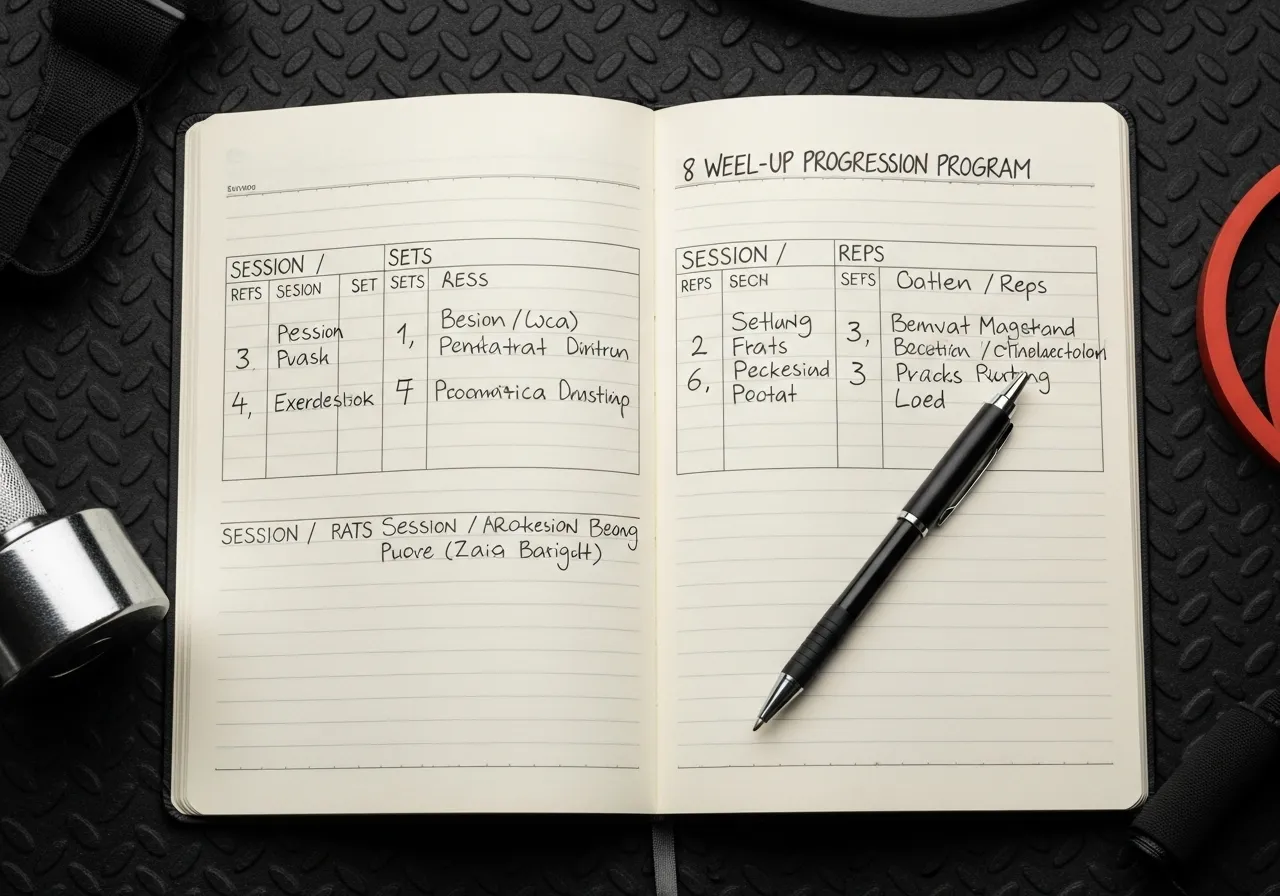
The 8-Week Pull-Up Program
This program is designed for people who can currently do 0-5 pull-ups and want to build to 10+ reps. It requires a pull-up bar, a resistance band, and 15-20 minutes 4-5 days per week.
Weeks 1-2: Foundation
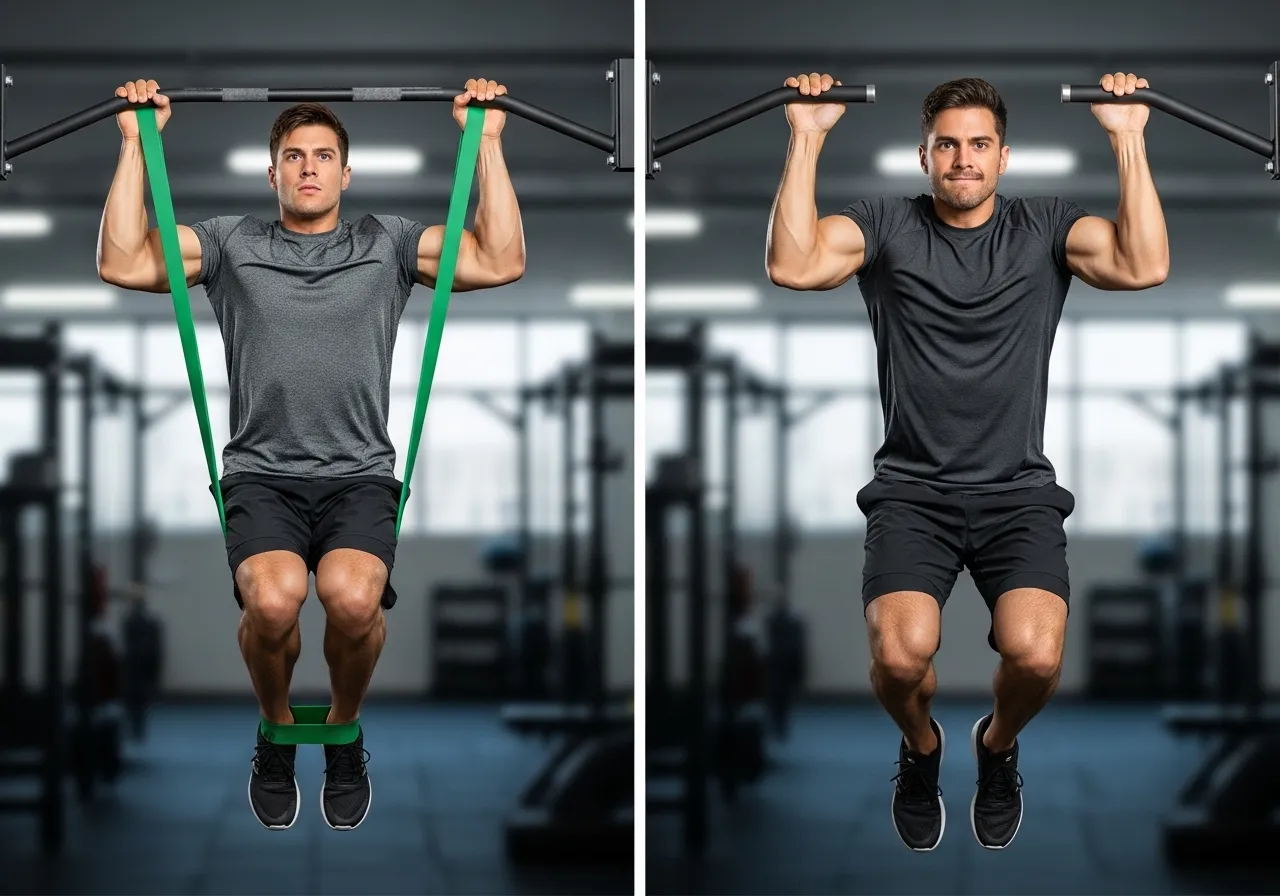
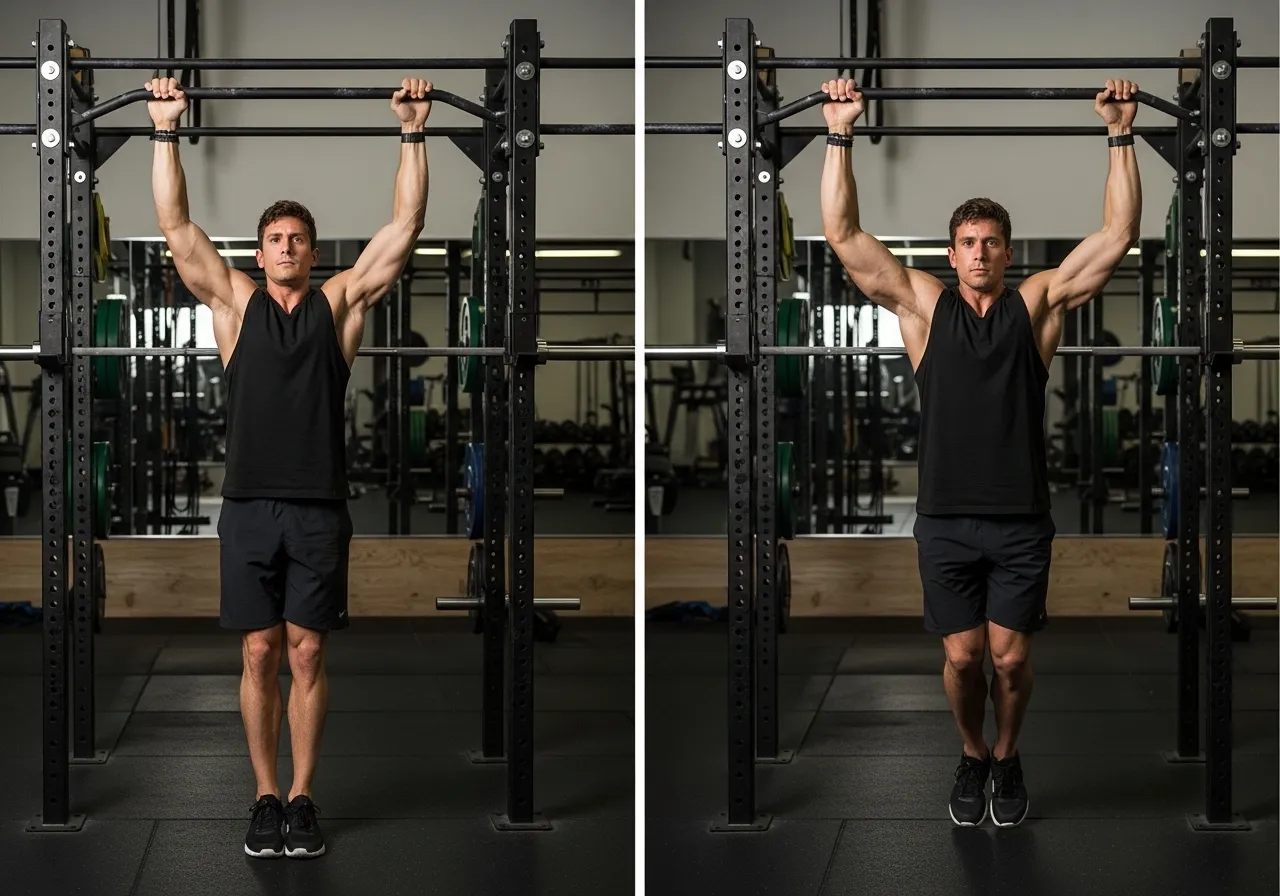
Dead hangs (3×30 seconds): Hang from the bar with arms fully extended, shoulders engaged. This builds grip strength and teaches the starting position. Focus on pulling the shoulders down and back slightly — this activates the lats and establishes scapular depression that initiates every good pull-up. Scapular pull-ups (3×10): From the dead hang, retract and depress your shoulder blades without bending the elbows — your body rises 5-10 cm. This trains the first movement of the pull-up in isolation. Band-assisted pull-ups (3×6-8): Use a resistance band to reduce effective body weight. Choose a band that allows 6-8 reps with genuine effort but complete range of motion.
Weeks 3-4: Negative Training
Negative (eccentric) pull-ups (4×5): Use a box to get your chin over the bar, then lower yourself as slowly as possible — target 5-8 seconds per negative. Research on eccentric training consistently finds it produces greater strength and hypertrophy gains per session than concentric-only training. These are the most powerful tool in this program for building the strength needed for unassisted pull-ups. Continue band-assisted pull-ups (4×8) alongside the negatives.
Weeks 5-6: Transition
Attempt unassisted pull-ups at the start of each session when fresh. Even 1-2 reps with perfect form are more valuable than 10 assisted reps — these represent training the exact movement at full demand. Follow with negatives (3×4) and band-assisted (3×8) to complete volume. This week typically produces the first unassisted reps for most people.
Weeks 7-8: Building Sets
Cluster sets: 2-3 reps, rest 20-30 seconds, repeat. This allows more total quality reps than single continuous sets. A cluster of 2+2+2+2 produces 8 quality reps that build far more strength than grinding through fatigue. As weeks progress, reduce rest and combine reps — 3+2+2+1 becomes 3+3+2 and eventually sets of 8-10.
Pull-Up Technique: The Details That Maximize Every Rep
Initiating with the Lats, Not the Biceps
The most common pull-up error is initiating by flexing the elbows (bicep-first) rather than depressing and retracting the scapulae (lat-first). Elbow-first pull-ups overload the biceps and underutilize the lats. The correct cue: before pulling, think about pulling your elbows toward your hip pockets. If you can feel your lats contracting before your arms bend, you’re initiating correctly.
Full Range of Motion
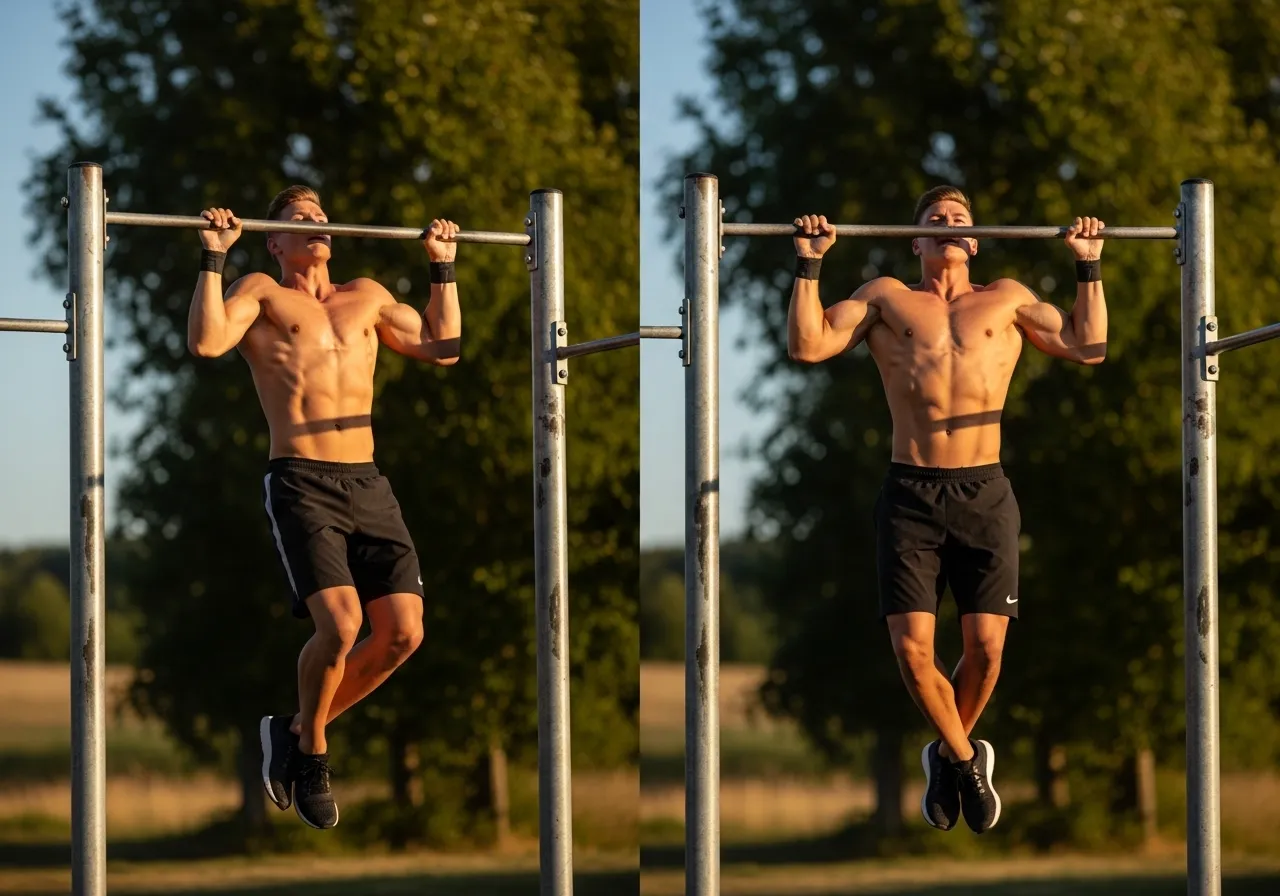
Every rep should start from a full dead hang (elbows locked) and end with the chin clearly over the bar. Half reps reduce the training stimulus significantly by avoiding the positions where the muscles are most challenged. Full range pull-ups train the complete length of the lat and build the shoulder mobility that makes overhead movements safer.
The Hollow Body Position
The most efficient pull-up body position is a slight hollow body — ribs down, core braced, legs together and slightly forward. This prevents the kipping and swinging that reduce the training stimulus. The hollow body pull-up trains the lats, biceps, and core simultaneously as a coordinated system, producing greater functional strength than allowing the lower body to swing as a counterweight.
Breathing
Inhale at the bottom of each rep, exhale as you pull up. This breathing pattern coordinates with the core bracing that makes each rep stable and protects the spine. Holding the breath throughout a set (especially for beginners) leads to premature fatigue and reduces the reps achievable at quality technique.
Pull-Up Variations for Advanced Development
Chin-Up (Supinated Grip)
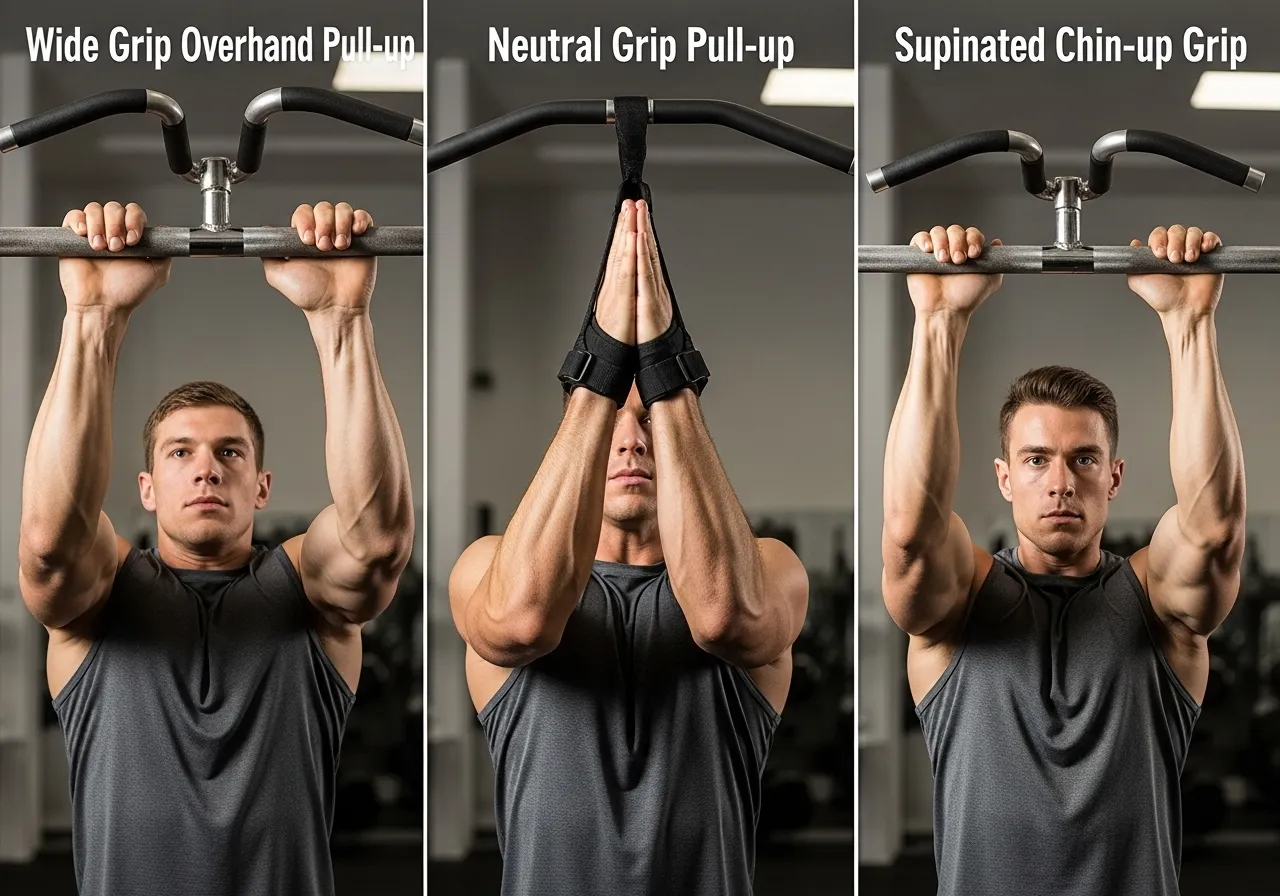
The underhand grip places the biceps in a more mechanically advantageous position, typically allowing more reps than the overhand pull-up and producing greater bicep activation alongside comparable lat activation. Excellent variation for bicep development alongside back training and for beginners who find supinated grips more comfortable on the wrists and shoulders.
Wide-Grip Pull-Up
A grip 15-20 cm wider than shoulder-width emphasizes the upper lat fibers more than the standard grip. Wide-grip pull-ups reduce bicep contribution and feel harder per rep. Use as a secondary variation after developing consistent standard pull-ups. Avoid excessively wide grips that compromise shoulder health.
Weighted Pull-Up
Adding a weight belt with plates or holding a dumbbell between the feet provides progressive overload once bodyweight pull-ups become easy for 10+ reps. Weighted pull-ups are the most direct path to continued strength development. Start with 5 kg and progress using the same principles as barbell strength training. (see also: barbell row guide)
Archer Pull-Up
From a wide grip, pull toward one hand while the opposite arm maintains tension but doesn’t actively pull. This builds unilateral pulling strength and is a progression toward one-arm pull-ups. Begin with 3-4 reps per side at the end of pull-up sessions once 12+ bodyweight reps are achievable.
Troubleshooting and Frequently Asked Questions
Not Enough Frequency
Pull-ups are a skill movement as much as a strength movement — the neural pattern requires repeated practice. Training pull-ups once per week provides insufficient stimulus. The 8-week program uses 4-5 sessions per week for this reason. Increasing from one to three sessions per week often produces immediate progress without any other change.
Grip Failure Before Lat Failure
If your grip gives out before your back is fatigued, grip weakness is limiting development. Solutions: add dead hangs and farmer’s carries to build grip strength, use chalk to improve dry grip, and consider wrist straps for the heaviest sets to allow the lats to be fully trained. Do not use straps as a permanent replacement for grip development.
Ignoring the Negative
The eccentric phase is where the greatest strength development occurs. Athletes who rush through the negative miss the most productive part of every rep. Deliberately slowing the negative to 3-5 seconds per rep dramatically increases the training stimulus and produces faster strength development.
How often should I do pull-ups? 3-5 sessions per week for beginners building their first reps. Once consistent pull-ups are established, 2-3 sessions per week with progressive loading is sufficient.
Should I train to failure on pull-ups? Occasionally, but not every session. Training to failure 1-2 times per week provides maximum stimulus. Other sessions should stop 1-2 reps short to preserve quality and allow more total volume.
Why do I feel pull-ups in my biceps more than my back? This indicates lat underactivation — either poor scapular initiation or grip position overloading the biceps. Focus on the lat-first initiation cue and try slightly externally rotating the elbows during the pull to increase lat recruitment.
My shoulders hurt during pull-ups. What should I do? Sharp shoulder pain warrants cessation and evaluation by a physiotherapist. Mild discomfort at the bottom often indicates insufficient shoulder external rotation — try adjusting lat pulldown research, ensuring full scapular depression at the start of each rep, and adding external rotation exercises like face pulls and band pull-aparts. The NSCA’s exercise standards identify the pull-up as a fundamental assessment and development exercise for all fitness levels.
Can I do pull-ups every day? Light pull-up practice (50-60% of max reps, multiple times per day — “greasing the groove”) can be performed daily and builds volume and neural efficiency effectively. Full training sessions targeting close to failure require 48 hours of recovery.
⚠️ Fitness Disclaimer: The information in this article is for general educational purposes only and does not constitute professional fitness or medical advice. Exercise carries inherent risks. Always consult a qualified healthcare professional or certified personal trainer before starting or modifying any exercise program, especially if you have a pre-existing medical condition, injury, or health…
⚠️ Fitness Disclaimer: The information in this article is for general educational purposes only and does not constitute professional fitness or medical advice. Always consult a qualified healthcare professional before starting any new exercise program, especially if you have existing injuries or medical conditions. Why the Overhead Press Is the Most Neglected Compound Lift in…
⚠️ Health & Fitness DisclaimerThis article is for general educational purposes only and does not replace professional medical advice. If you have any elbow, wrist, or shoulder conditions, please consult a qualified healthcare professional before beginning any curl training program. The seated row guide curl may be the most practised isolation exercise in any gym…
⚠️ Hamstring and Knee Safety NoteThe Nordic hamstring curl places the biceps femoris and semimembranosus under maximum eccentric load at full knee extension — the position associated with the highest hamstring injury risk during sprinting. Individuals with active hamstring tears (Grade II or above), proximal hamstring tendinopathy, or recent posterior knee surgery should obtain medical…
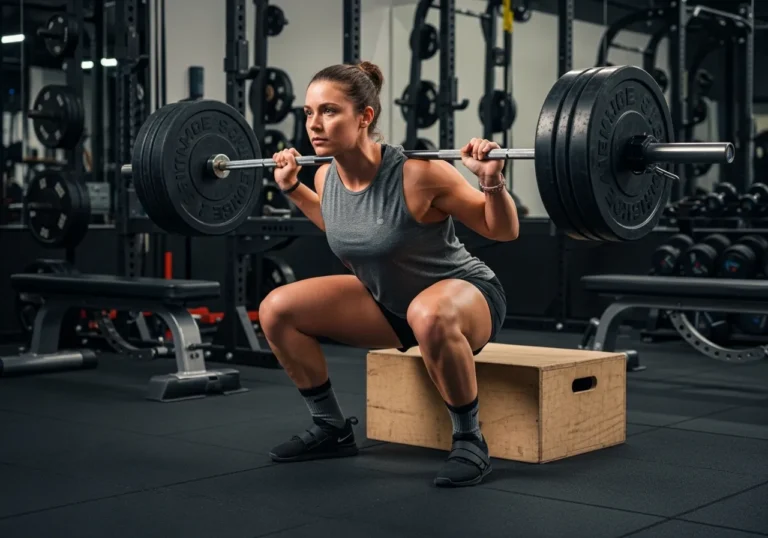
The box squat is simultaneously one of the most effective and most misunderstood squat variations available. Its proponents claim it develops power that the conventional back squat cannot, builds the hip and posterior chain emphasis that powerlifters need, and teaches correct squat mechanics by providing a definitive depth reference. Its critics dismiss it as a…
⚠️ Fitness Disclaimer: The information in this article is for general educational purposes only and does not constitute professional fitness or medical advice. Always consult a qualified healthcare professional before starting any new exercise program, especially if you have existing injuries or medical conditions. The Posterior Chain Exercise Debate That Every Serious Lifter Faces I…