Warning Fitness Disclaimer: The information in this article is for general educational purposes only and does not constitute professional fitness or medical advice. Always consult a qualified healthcare professional before starting any new exercise program, especially if you have existing injuries or medical conditions.
Warning Medical Disclaimer: This article is for general informational purposes only and does not constitute medical advice. If you are experiencing pain or any health condition, consult a healthcare professional before following any guidance here.
The Spinal Segment Nobody Talks About Until It Breaks Everything
For two years I had unexplained shoulder pain during overhead pressing that physiotherapy, rotator cuff exercises, and months of shoulder-focused mobility work could not resolve. The shoulder itself was structurally healthy. Yet every time I pressed overhead, a deep catching pain in the posterior shoulder stopped me at 90 degrees of elevation.
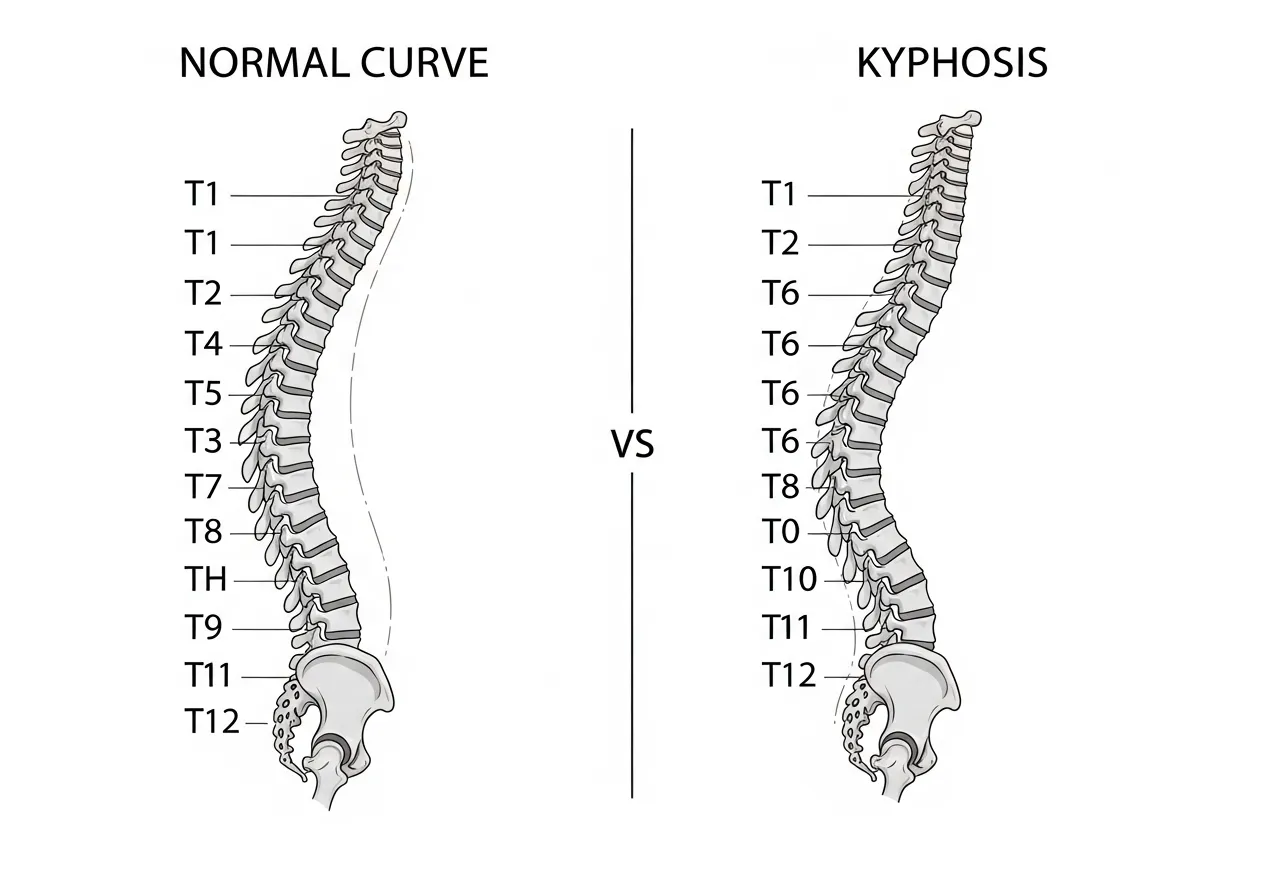
The diagnosis, when I finally got a comprehensive movement assessment, was thoracic kyphosis, an excessively rounded upper back from years of desk work and an anterior-heavy training program. The rounded thoracic spine was mechanically preventing full shoulder elevation. Eight weeks of daily thoracic mobility work produced more shoulder range of motion improvement than the previous two years of shoulder-specific treatment.
The Thoracic Spine: Anatomy and Function
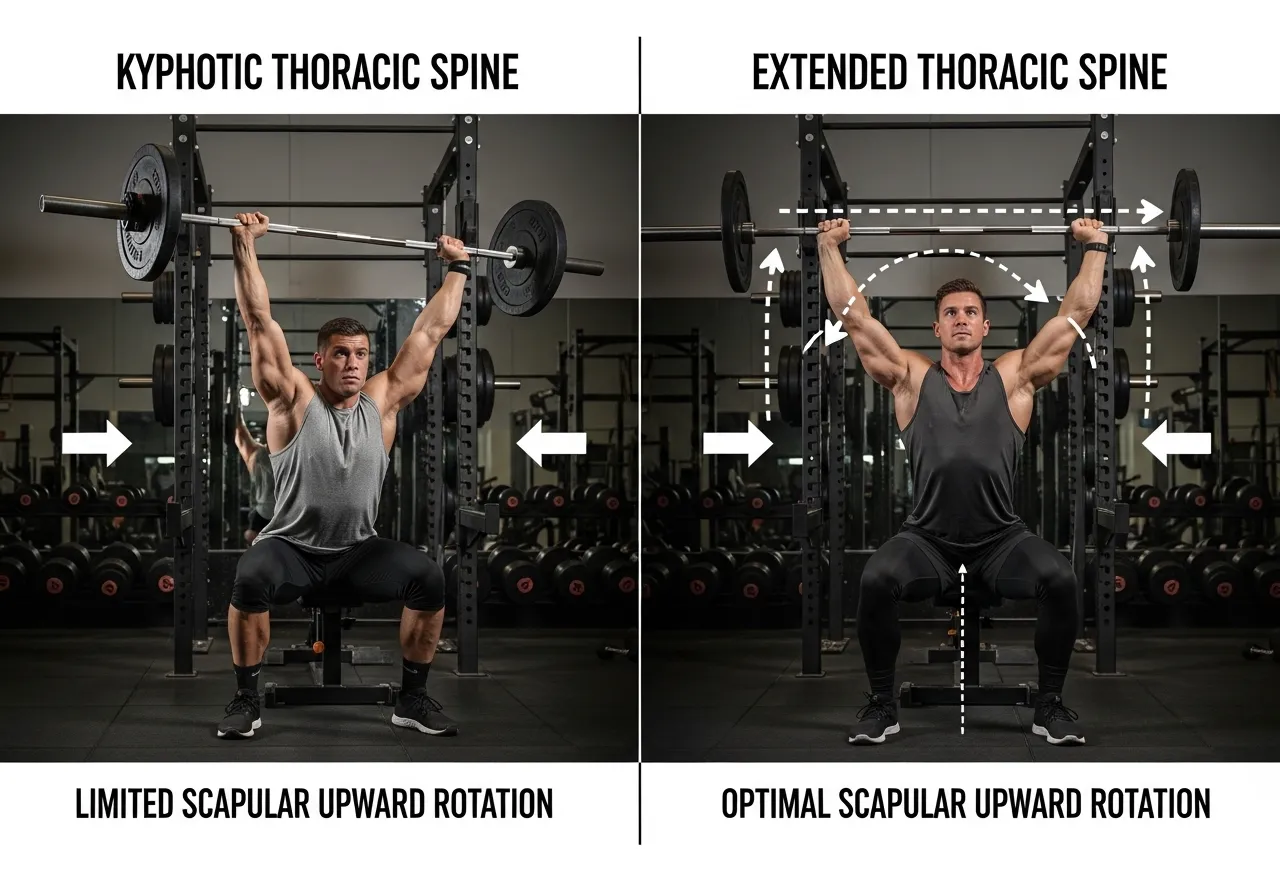
The thoracic spine consists of the twelve vertebrae between the cervical and lumbar regions. Unlike the cervical and lumbar spine which prioritize mobility, the thoracic spine is structured for stability and protection. The thoracic spine primarily performs extension, rotation, and lateral flexion. For upper body movement, thoracic extension is most critical: the scapulae can only properly rotate upward when the underlying thoracic spine is sufficiently extended.
The Regional Interdependence Model
The regional interdependence concept in physical therapy describes how restrictions in one body region produce compensatory dysfunction in adjacent regions. Thoracic kyphosis contributes to cervical dysfunction, shoulder impingement from scapular dyskinesis, lumbar overload, and hip flexor tightening. Research on regional interdependence confirms that addressing thoracic mobility produces measurable improvements in shoulder, cervical, and lumbar function, often more effectively than treating these regions directly.
Why Modern Life Destroys Thoracic Mobility
Thoracic kyphosis is the postural default position of sedentary modern life. Sitting compresses the thoracic spine into flexion. Looking at screens encourages the head to protrude forward. Anterior-dominant exercise programs develop the chest and anterior shoulder while ignoring the thoracic extension capacity needed to counterbalance the anterior pull.
The Progressive Stiffening Process
Thoracic mobility decreases through a progressive stiffening process. Sustained flexed positions shorten the anterior longitudinal ligament and anterior capsular structures. The paraspinal muscles on the posterior thorax become chronically elongated and weak. The facet joints develop reduced range of motion from sustained flexion loading. Each of these changes reinforces the others in a self-reinforcing stiffening cycle.
The Desk Worker Problem
A person sitting at a desk for 8 hours per day maintains their thoracic spine in flexion for approximately 2,000 hours per year. The exercises in this article can reverse this process but only if performed consistently and if the hours of daily sitting are also addressed through movement breaks and workstation ergonomics.
Athletes Are Not Immune
Athletes who train consistently are not immune to thoracic restriction. Many are more affected than sedentary people because of anterior-dominant training programs. Heavy bench pressing, front squats, and forward-loaded rowing develop the anterior chain while the thoracic extensors are systematically undertrained. The result is a strong but thoracically stiff athlete who cannot safely move their arms overhead without compensatory movement.
The Five Best Thoracic Mobility Exercises
Exercise 1: Thoracic Extension Over a Foam Roller
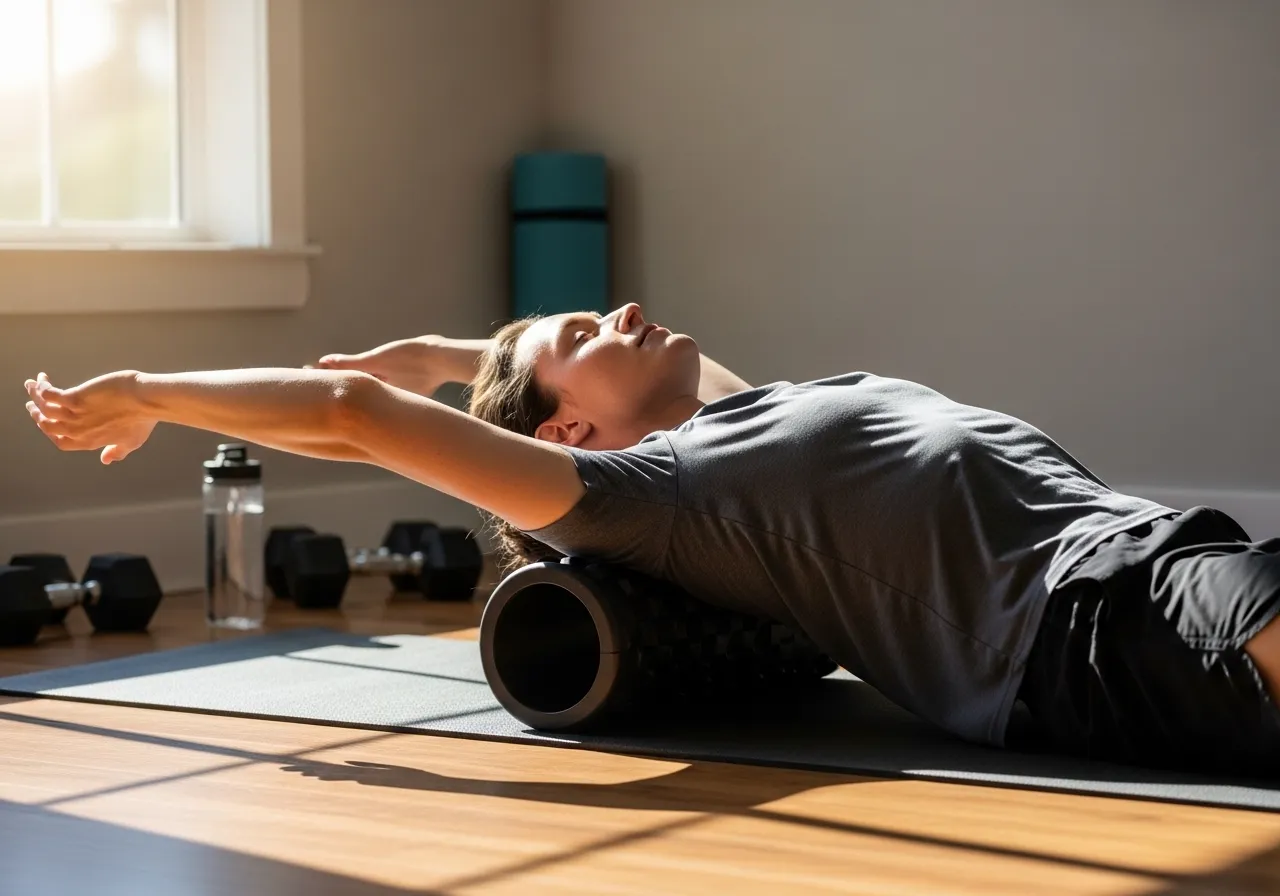
Lie on your back with a foam roller positioned perpendicular to your spine at the mid-thoracic level (approximately T6-T8, just below the shoulder blades). Support your head with your hands behind your neck. Gently extend backward over the roller, allowing the thoracic spine to arch into extension over the support point. Hold for 30-45 seconds, breathing deeply. Move the roller up and down the thoracic spine to address different segments from T4 to T10. Avoid rolling the lumbar spine. This exercise directly restores extension to the individual thoracic segments that have stiffened in flexion. Daily use of this exercise for 5-10 minutes produces measurable thoracic extension improvement within 2-3 weeks.
Exercise 2: Thread the Needle Rotation
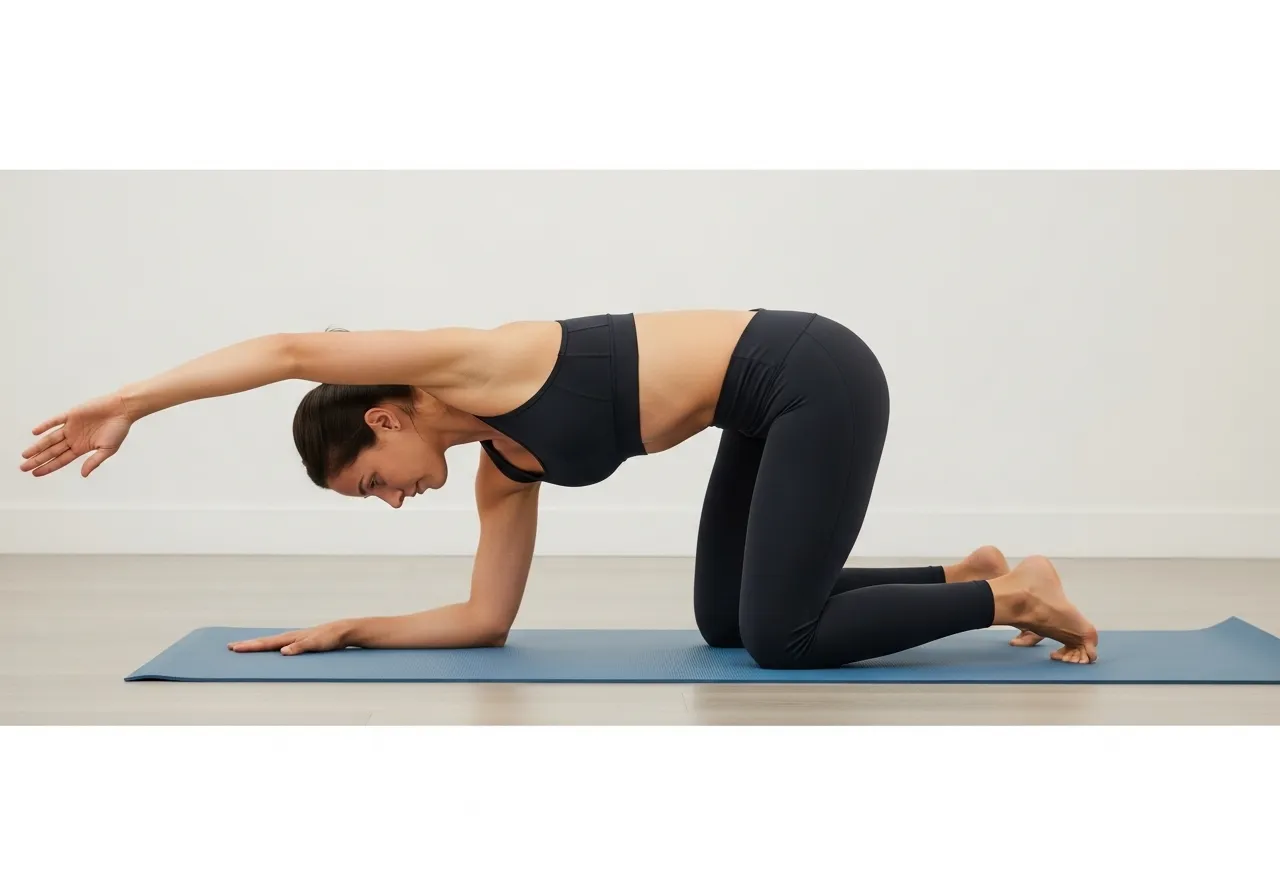
Begin in the quadruped position on hands and knees. From this position, slide one hand along the floor beneath the opposite arm, rotating the thoracic spine as far as possible. Hold for 2-3 seconds at maximum rotation, then return. Perform 8-10 repetitions per side, 2 rounds. The key: movement must come from thoracic rotation, not from the lumbar spine. Research on mobility exercise effectiveness supports segmental rotation exercises as a primary intervention for thoracic stiffness in both athletic and clinical populations.
Exercise 3: Seated Thoracic Rotation
Sit upright in a chair or on the floor in a cross-legged position. Place both hands behind your head with elbows pointing outward. Maintaining an upright posture, rotate the upper body to one side as far as possible, attempting to point the same-side elbow toward the wall behind you. Hold 2 seconds, return to center, and rotate the other direction. 10 repetitions per side, 2-3 rounds.
Exercise 4: Open Book Stretch
Lie on your side with hips and knees stacked at 90 degrees in a fetal position. Place both arms extended in front of you at shoulder height, palms together. Keeping the knees stacked and the lower arm stationary, rotate the top arm backward over the body, following it with your eyes and opening the chest toward the ceiling. Hold 3-5 seconds at maximum rotation, then slowly return. 8-10 repetitions per side. (see also: lower back pain stretches)
Exercise 5: Cat-Camel with Thoracic Segmentation
The standard cat-camel spine flexion and extension exercise performed with intentional segmentation through the thoracic spine. In the extension phase, focus on sequentially extending from the lumbar spine upward through each thoracic segment. Slowing this exercise to 5-8 seconds per direction with segmental attention converts a generic warm-up exercise into a targeted thoracic mobility practice. 10-15 slow repetitions.
Foam roller thoracic extension: 3 minutes, three positions covering mid-to-upper thoracic segments at 30 seconds each. Cat-camel segmented: 2 minutes of 10 slow repetitions with deliberate segmentation through the thoracic spine in both directions. Thread the needle: 2 minutes of 8 repetitions each side focusing on maximum rotation from thorax. Open book: 2 minutes of 8 repetitions each side in the side-lying position. Seated rotation to finish: 1 minute of 10 repetitions each side from seated position. Total: approximately 10 minutes.
When to Perform the Routine
The thoracic mobility routine is most effective when performed before training sessions that involve overhead movement, before sports activities, and as a daily morning practice for people with significant kyphosis. A morning session provides the best overall impact on daily posture and pain by addressing stiffness before the day of sustained flexion begins.
Progression: How to Know It Is Working
The primary progress indicators for thoracic mobility work include improved ability to look upward without neck strain, improved overhead reach, and reduced shoulder and neck tension after prolonged sitting. Most people with significant thoracic restriction report noticeable improvement within 3-4 weeks of daily practice and substantial improvement within 8-10 weeks.
Combining Mobility With Strength: The Essential Complement
Thoracic mobility work alone restores range of motion but does not provide the muscular strength to actively maintain the improved position. The thoracic extensors including the mid-trapezius, rhomboids, and thoracic erector spinae must be strengthened to hold the thoracic spine in its improved position. Face pulls, prone Y-T-W exercises, and seated cable rows with thoracic extension emphasis build the posterior chain strength that prevents the thoracic spine from defaulting back to kyphosis.
Thoracic Mobility and Athletic Performance, and Frequently Asked Questions
Overhead Athletes
Swimmers, baseball pitchers, volleyball players, and Olympic weightlifters directly benefit from thoracic mobility. The biomechanical requirement is clear: full scapular upward rotation necessary for safe shoulder elevation above 90 degrees requires thoracic extension. Thoracic mobility work has been shown to improve overhead reach, shoulder rotation, and scapular kinematics in overhead athletes more effectively than shoulder-specific stretching alone.
Barbell Training Optimization
The back squat requires thoracic extension to prevent excessive forward lean. A kyphotic thoracic spine in the squat forces the upper back to round under the bar, shifting load forward. Many lifters find that thoracic mobility work produces immediate improvement in squat feel and performance, often more dramatically than any technique cue, because it addresses the structural limitation preventing good technique.
Rotational Sport Performance
Golf, tennis, baseball batting, and any rotational sport depend on thoracic rotation for swing mechanics. The thoracic spine contributes the majority of rotational range of motion during athletic rotation. NSCA resources on rotational power development consistently identify thoracic spine mobility as a prerequisite for safe and effective rotational training.
How long does it take to improve thoracic mobility? Initial improvements are often noticeable within the first 1-2 weeks of consistent daily practice. Meaningful structural improvement takes 6-8 weeks of consistent daily work. Full reversal of significant thoracic kyphosis may take 3-6 months of sustained practice combined with strengthening work.
Can I use a tennis ball instead of a foam roller? Yes. Two tennis balls taped together in a peanut shape are actually more effective than a foam roller for precise thoracic segment mobilization because they fit on either side of the spinous process, directly loading the thoracic facet joints rather than pressing on the spinous process.
My upper back cracks loudly during thoracic extension. Is this safe? Audible joint cavitation during thoracic extension exercises is typically harmless. It represents gas bubble formation and release within the joint capsule, a normal response to rapid joint distraction. If the cracking is accompanied by pain, stop the exercise and consult a physiotherapist.
Will thoracic mobility work fix my shoulder pain? Thoracic restriction is a common but not universal contributor to shoulder pain. A comprehensive movement assessment by a physiotherapist is the most reliable way to identify whether thoracic mobility is the limiting factor for a specific shoulder presentation.
Is thoracic mobility work safe during pregnancy? The seated and supine thoracic mobility exercises are generally safe during pregnancy with modification for comfort. Consult a healthcare provider for personalized guidance on mobility exercises during pregnancy.
⚠️ Fitness Disclaimer: The information in this article is for general educational purposes only and does not constitute professional fitness or medical advice. Always consult a qualified healthcare professional before starting any new exercise program, especially if you have existing injuries or medical conditions. Core Stability vs Core Strength: Why Most People Train the Wrong…
The rectus femoris is the quadriceps muscle that crosses two joints rather than one. While the vastus lateralis, vastus medialis, and vastus intermedius cross only the knee, the rectus femoris originates at the anterior inferior iliac spine of the pelvis and crosses both the hip and the knee. This two-joint architecture means the rectus femoris…
⚠️ Fitness Disclaimer: The information in this article is for general educational purposes only and does not constitute professional fitness or medical advice. Always consult a qualified healthcare professional before starting any new exercise program. ⚠️ Medical Disclaimer: This article is for general informational purposes only. If you are experiencing pain or any health condition,…
Calf tightness is one of the most widespread and most underaddressed mobility restrictions in recreational athletes. Most trainees know their calves are tight. Few understand specifically what that tightness limits or how to resolve it systematically. Restricted calf flexibility means restricted ankle dorsiflexion: the ability to bring the foot toward the shin during loaded movement….
Sciatica is one of the most common causes of persistent lower body pain in active adults, and radiating arm pain from cervical nerve compression is its upper body equivalent. Both conditions share a mechanism: the peripheral nerve is irritated, compressed, or has lost its normal ability to glide freely through the surrounding tissues. Movement that…
⚠️ Fitness Disclaimer: The information in this article is for general educational purposes only and does not constitute professional fitness or medical advice. Always consult a qualified healthcare professional before starting any new exercise program. ⚠️ Medical Disclaimer: This article is for general informational purposes only and does not constitute medical advice. If you are…