⚠️ Fitness Disclaimer: The information in this article is for general educational purposes only and does not constitute professional fitness or medical advice. Always consult a qualified healthcare professional before starting any new exercise program.
⚠️ Cardiovascular Health Notice: If you have a history of heart disease, high blood pressure, or any cardiovascular condition, obtain medical clearance from your physician before performing high-intensity training. (see also: heart rate zones)
The HIIT research guide vs Steady-State Debate: Why Both Camps Are Missing the Point
I spent two years firmly in the HIIT camp, convinced that 20-minute interval sessions were objectively superior to 45-minute steady jogs. The research I had read seemed to confirm it — studies showing EPOC effects, VO2max improvements, cardio mistakes superiority. Then I developed an overuse knee injury from running too many high-impact intervals, my resting heart rate stubbornly refused to drop below 62, and a sports physiologist pointed out that the athletes I admired for their physical condition trained mostly at low-to-moderate intensity with HIIT used sparingly.
The HIIT vs steady-state debate is one of fitness culture’s most persistent false dichotomies. Both training modalities produce distinct, valuable cardiovascular adaptations. Neither is universally superior. The appropriate question is not which is better but when and why to use each — and how combining them in the right ratio produces cardiovascular development that neither achieves alone.
Defining the Modalities
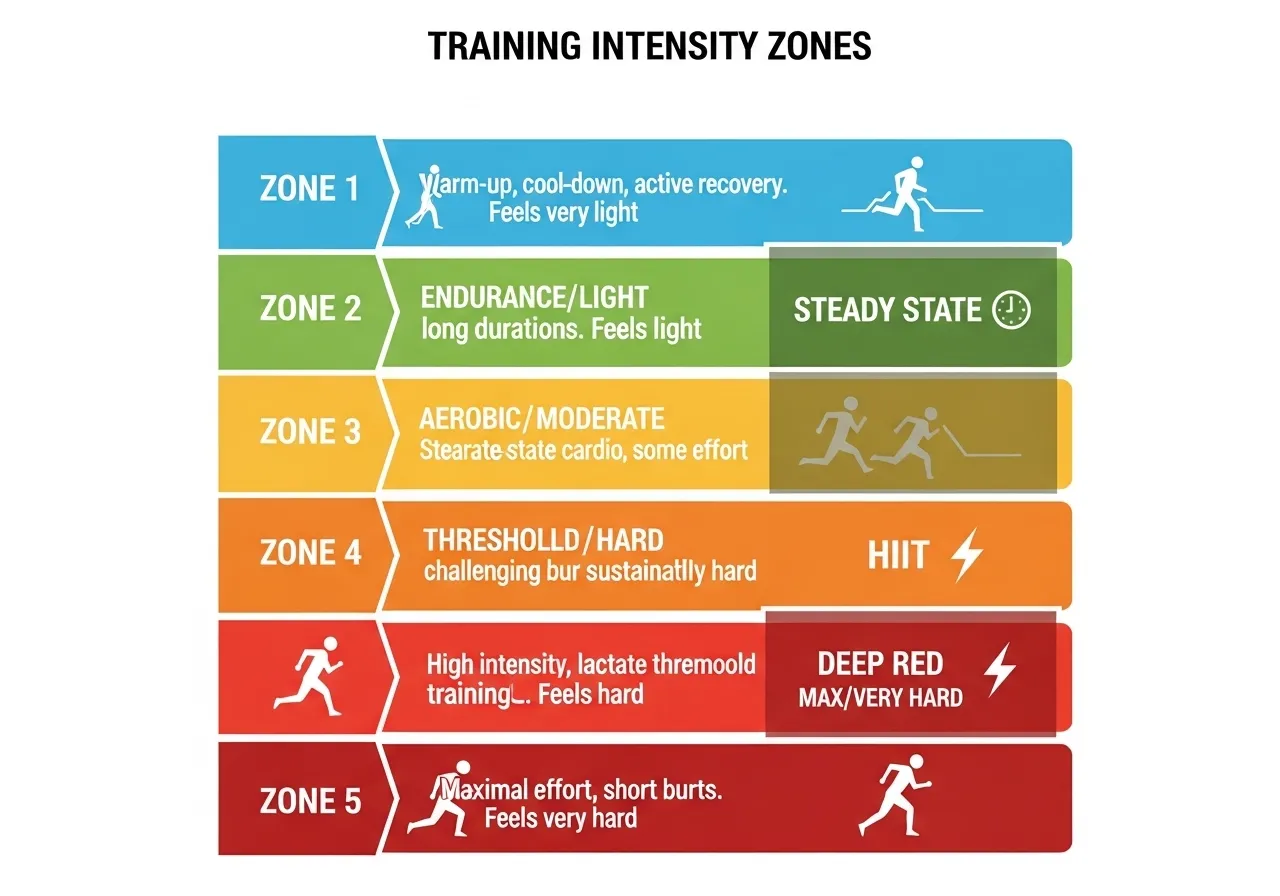
High-intensity interval training (HIIT): alternating periods of near-maximal effort (85-95% max heart rate, unsustainable for more than minutes) with recovery periods. Session duration: 15-30 minutes total, with 10-20 minutes of actual work. True HIIT should be genuinely hard — if you can maintain a conversation during the work intervals, the intensity is insufficient. Steady-state cardio (SSC): continuous exercise at moderate, sustainable intensity (60-75% max heart rate) for 30-60+ minutes. Breathing is elevated but comfortable, conversation is possible. Also called low-intensity steady-state (LISS) or Zone 2 training training.
The Key Physiological Principle: Different Adaptations
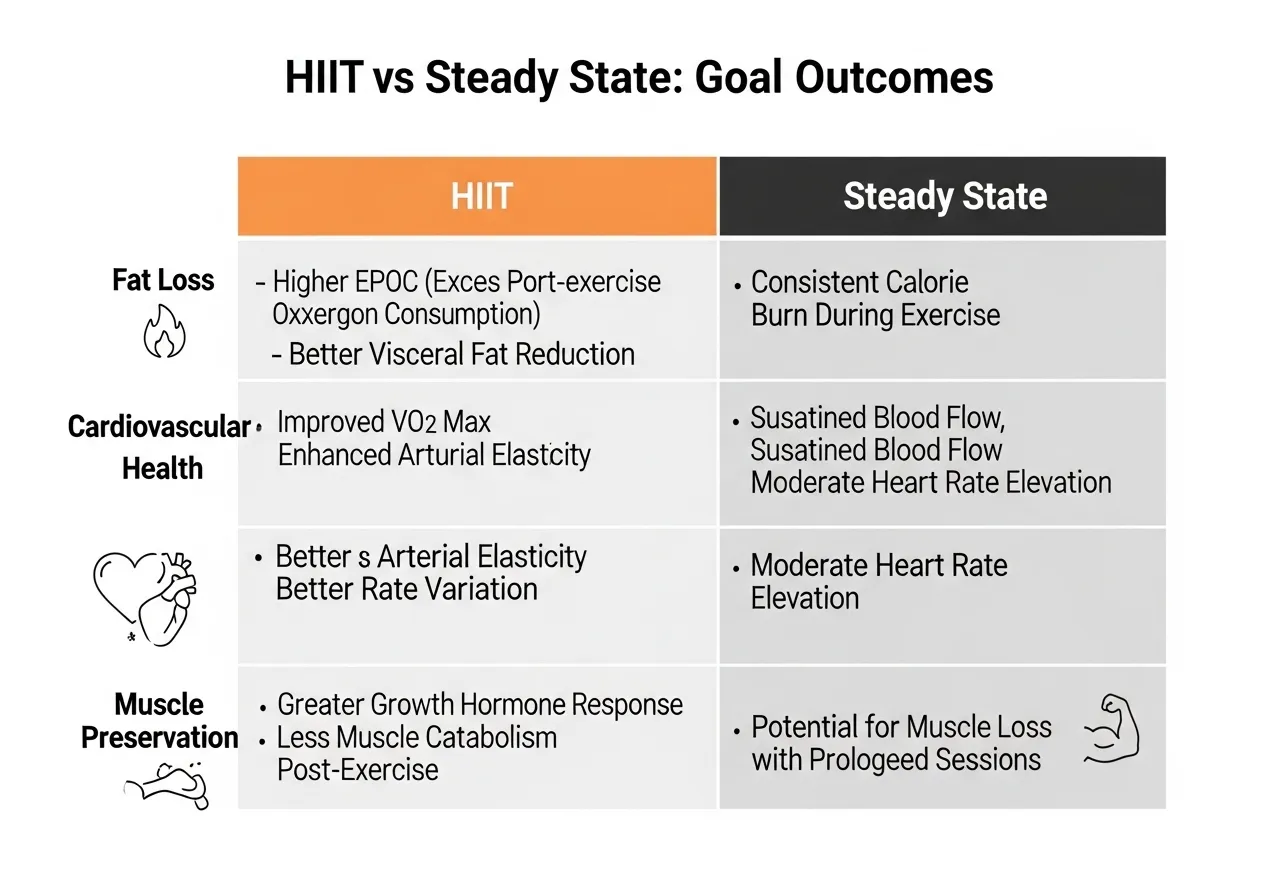
HIIT and steady-state training produce overlapping but distinct cardiovascular adaptations because they stress different energy systems and produce different cellular signaling. Research comparing HIIT and steady-state training adaptations confirms that both improve VO2max and cardiovascular markers, but through different mechanisms — HIIT primarily through cardiac output at high intensities, steady-state through mitochondrial density and metabolic efficiency. This difference in mechanism explains why combining them produces superior results to either alone.
Historical Context and Evolution of This Training Method
Understanding the historical development of any training method provides context for why current practices look the way they do and which principles have proven durable across changing fitness culture. The approaches that have persisted across decades of evolving fitness knowledge typically reflect genuine physiological truths rather than passing trends. Those that have been modified or abandoned often reflected incomplete understanding that subsequent research has corrected. Critically evaluating training history — asking which aspects of long-established practices reflect proven physiology and which reflect cultural inertia — produces more evidence-informed training decisions than either accepting all traditional practices uncritically or dismissing all established methods in favor of novelty.
The modern scientific understanding of exercise physiology began developing seriously in the 1960s and 1970s, when researchers began applying laboratory methods to athletic populations. Before this period, training practices were largely empirically developed by coaches and athletes whose methods were informed by observation and competition results rather than physiological measurement. Many of these empirically developed practices have been validated by subsequent research; others have been modified as measurement tools revealed that the underlying mechanisms were different from what practitioners assumed. The intersection of practical athletic knowledge accumulated over decades and the physiological science that explains why effective methods work is where modern evidence-based training guidance exists — neither purely scientific nor purely practical, but integrating both.
Individual Variation: Why One Size Never Fits All
Individual variation in response to training is one of the most important and most underappreciated factors in exercise programming. Research consistently finds that when a group of people performs the same training program, the range of individual responses is enormous — some participants improve dramatically, others improve modestly, and a small percentage improve minimally or not at all. This variation exists in response to cardiovascular training, strength training, and virtually every other exercise modality studied. The sources of variation include genetic factors (muscle fiber type distribution, hormonal baseline, connective tissue quality), prior training history, lifestyle factors (sleep quality, nutrition, stress levels), and individual biomechanical differences that affect how efficiently exercises can be performed.
The practical implication is that research findings about average responses to training programs apply to the average person in the study population, not necessarily to any specific individual. A training approach that produces significant improvement in 80% of research participants is an excellent evidence-based choice, but it means 20% of individuals will respond less well and may benefit from a different approach. When a training approach is not producing expected results after 8-12 weeks of consistent application, individual variation is a legitimate explanation that warrants trying alternative approaches rather than assuming the approach is universally superior and the individual is doing something wrong. The most effective trainers and coaches recognize that programming is ultimately an individual optimization problem, not a universal prescription. ACSM exercise guidelines acknowledge individual variation as a fundamental consideration in exercise prescription for all populations.
Recovery Modalities: What Works and What Doesn’t
The recovery modality market — foam rollers, massage guns, ice baths, compression garments, infrared saunas, and dozens of other products — creates the impression that sophisticated recovery requires expensive equipment and elaborate protocols. The research evidence is more modest: most recovery modalities produce small, short-lived improvements in subjective recovery experience with limited effects on actual performance outcomes. This does not mean they are worthless — subjective recovery improvement has real value in maintaining training motivation and reducing the psychological burden of training — but it does mean they should be understood as marginal enhancements rather than fundamental recovery requirements.
The recovery interventions with the strongest evidence base are the simplest: sleep (the most powerful recovery tool available, with a dose-response relationship between sleep quality and training adaptation), adequate protein intake (supporting muscle protein synthesis that converts training damage into strength and mass), light movement on recovery days (increasing blood flow to recovering tissues without imposing additional training stress), and cold water immersion (reducing acute muscle soreness but potentially blunting some hypertrophic adaptations when used after every strength training session — best reserved for competitive periods when performance recovery is prioritized over adaptation development). Foam rolling and massage gun use consistently reduce subjective muscle tightness and improve short-term range of motion but show minimal effects on strength performance, injury rates, or long-term flexibility in controlled research. They are pleasant and may support training motivation through improved subjective wellbeing; they are not transformative recovery tools that meaningfully affect training outcomes. Investing recovery attention in sleep, nutrition, and training load management — the high-evidence-base fundamentals — before adding elaborate recovery modalities produces the best long-term return on investment. ACSM recovery guidelines prioritize sleep and nutrition as the primary recovery interventions, with additional modalities recommended as supplementary rather than foundational elements.
The Psychology of Physical Training: Mind-Muscle Connection and Focus
The mind-muscle connection — the deliberate attentional focus on the target muscle during exercise — has been shown in research to meaningfully affect muscle activation patterns and hypertrophic outcomes. Studies comparing external focus (attending to the movement’s effect on the external world, such as pushing the
Training for Health vs Performance: Understanding the Distinction
The training demands required for health benefit and for athletic performance are dramatically different — a distinction that allows most people to achieve excellent health outcomes with far less training volume and intensity than competitive athletes require. Research on the dose-response relationship between exercise and health outcomes finds that the largest health improvements occur in the transition from sedentary to lightly active, with diminishing returns as training volume and intensity increase. The difference in cardiovascular disease risk between a completely sedentary person and one who performs 150 minutes of moderate-intensity exercise per week is enormous; the difference between 150 minutes and 300 minutes per week is meaningful but much smaller; the difference between 300 minutes and 600 minutes per week is smaller still. This diminishing returns relationship means that optimizing training for health requires far less training than optimizing for athletic performance — and that the health-focused recreational exerciser who trains 3-4 hours per week achieves most of the health benefit available from any training volume.
For people training primarily for health and quality of life rather than athletic performance, this research context provides liberating permission: the pressure to optimize every training variable, match elite training volumes, or progress to advanced techniques is not justified by health goals that can be fully achieved with consistent moderate training. The most health-promoting training practice for most people is not the most elaborate or most intense but the most consistently executed over the longest period. Establishing and maintaining a consistent moderate training practice across decades produces more cumulative health benefit than any period of intense training followed by abandonment. The exercise that is most consistently performed is the most health-promoting exercise — not the exercise that is theoretically most effective when performed optimally. This principle should guide training decisions for health-motivated individuals more than any performance optimization consideration. ACSM physical activity guidelines confirm that health-related benefits are achievable with moderate training volumes and that additional benefits from higher volumes are meaningful but incrementally smaller than the initial health gains from transitioning from sedentary to active.
What HIIT Does Best: The Case for High-Intensity Intervals
VO2max Development
HIIT is the most time-efficient method for improving VO2max — the maximum volume of oxygen the body can use during exercise, the single best measure of cardiovascular fitness and a strong predictor of long-term health outcomes. Training at intensities near VO2max (approximately 90-95% of maximum heart rate) for sustained periods forces the cardiovascular system to work at its capacity ceiling, producing the cardiac output improvements and oxygen delivery adaptations that define VO2max. Eight to twelve weeks of HIIT training produces VO2max improvements of 8-15% in previously untrained individuals — improvements comparable to much larger volumes of steady-state training.
Time Efficiency: The Practical Advantage
For people with genuine time constraints, HIIT produces meaningful cardiovascular improvement in 20-25 minutes per session. Three HIIT sessions per week (approximately 1 hour total) produces cardiovascular improvements comparable to five 45-minute steady-state sessions (approximately 3.75 hours total) over 8-12 weeks in sedentary individuals. This efficiency advantage is real and makes HIIT the most practical option for cardiovascular maintenance when training time is severely limited.
Post-Exercise Calorie Burn (EPOC)
HIIT produces elevated excess post-exercise oxygen consumption (EPOC) — the metabolic elevation that persists for 12-24 hours after training. The actual magnitude of HIIT’s EPOC effect is modest (30-100 additional calories in the 24 hours following a session), but measurably greater than equivalent-duration steady-state training. EPOC’s contribution to total daily caloric expenditure is often overstated in popular fitness media but is a real, if small, additional benefit of HIIT.
Anaerobic Capacity
HIIT uniquely develops anaerobic capacity — the ability to sustain effort above the lactate threshold for repeated short bursts. Steady-state training at Zone 2 intensity does not develop anaerobic capacity meaningfully. For athletes competing in sports with repeated sprint demands (team sports, racket sports, combat sports), HIIT is essential for developing the specific energy system that competition requires.
Motivation, Habit Formation, and Long-Term Adherence
The most physiologically optimal training program produces no benefit without consistent adherence over months and years. Motivation research in exercise science identifies the factors that predict long-term exercise adherence: intrinsic motivation (exercising because you find it enjoyable, meaningful, or identity-aligned) consistently outperforms extrinsic motivation (exercising to achieve specific outcomes like weight loss or appearance changes) for long-term adherence. Intrinsic motivation sustains training through periods when outcomes plateau, when life disrupts training schedules, and when the novelty of a new exercise approach fades. Building intrinsic motivation — finding aspects of training that are genuinely enjoyable or meaningful beyond the physical outcomes — is therefore as important to long-term training success as any programming decision.
Habit formation reduces the role of motivation in exercise behavior by making training automatic rather than effortful. A training habit sufficiently established does not require motivation to initiate — it occurs through the same automatic triggering that drives other established daily habits like morning coffee or evening tooth brushing. Research on habit formation finds that exercise habits typically require 60-90 days of consistent reinforcement to establish at the automatic level, substantially longer than the popular “21-day habit” myth. During this formation period, consistent context (same time of day, same location, same pre-training routine) strengthens the habit loop. Exercise partners and social accountability significantly increase consistency during the habit formation period. Once established, the exercise habit requires only maintenance rather than motivation — making the 60-90 day investment in consistency the highest-leverage action available for long-term training outcomes.
The Role of Technique in Long-Term Training Outcomes
Technique — the quality of movement execution in each exercise — determines both the training stimulus and the injury risk of every session. Good technique directs training demand toward the intended muscles and away from structures not designed to bear the load; poor technique distributes load unpredictably and often loads vulnerable structures rather than resilient ones. The relationship between technique and training outcomes is not linear: technique that is 90% correct produces results close to perfect technique; technique that is 70% correct produces substantially reduced stimulus with elevated injury risk; technique below 60% correct often produces more joint and connective tissue stress than muscle development, with injury risk that accumulates progressively.
Technique development should be prioritized over load progression in the first months of learning any exercise — this is the period when movement patterns are being established in the nervous system, and the patterns established under low-load conditions will be the patterns that persist under high-load conditions. Attempting to load exercises aggressively before technique is established produces the inefficient and potentially harmful movement patterns that then require months of dedicated corrective work to overwrite. Learning exercises correctly from the beginning is dramatically more efficient than learning incorrectly and then correcting later. The investment in technique coaching — whether through a qualified personal trainer, video analysis, or experienced training partner — produces dividends that compound across years of subsequent training. NSCA exercise technique standards provide detailed guidance on correct movement execution for all major resistance training exercises.
Setting Realistic Training Goals and Expectations
Unrealistic training expectations — derived from fitness media, social media athletes using performance-enhancing drugs, or exceptional genetic outliers — are one of the primary causes of exercise program abandonment. When expected results don’t materialize on the timeline presented by fitness marketing, people commonly conclude that the program is ineffective, that they are personally incapable of achieving the results, or that the effort required exceeds the benefit. In most cases, the problem is not the program, the individual, or the effort — it is the expectation. Evidence-based rates of physical development are substantially slower than fitness media representations. Natural strength development: intermediate lifters gain approximately 1-3 kg of muscle per month under optimal conditions. Cardiovascular fitness improvement: VO2max improves approximately 10-15% over 8-12 weeks of consistent training. Body composition change: sustainable fat loss is approximately 0.5-1% of body weight per week, limited by caloric deficit and muscle preservation constraints. These rates feel slow relative to before-and-after photos presented in 30-day program marketing, but they represent genuine physiological change that compounds into transformative results over 1-2 years of consistent application.
Setting training goals with realistic timelines prevents the disappointment that drives program abandonment. Instead of targeting a specific body composition outcome in 8 weeks, targeting a consistent training practice established over 8 weeks — with body composition outcomes following over 6-12 months — produces better adherence and better eventual outcomes. Instead of targeting a specific strength number in 12 weeks, targeting a specific training frequency and consistency over 12 weeks — with strength outcomes following the established consistent practice — maintains motivation through the inevitable slower-progress periods that any training goal encounters. Process goals (consistent training execution, progressive load management, technique development) produce better long-term outcomes than outcome goals (specific weight targets, specific strength numbers) because process goals can be achieved through consistent behavior regardless of the biological timeline that outcome goals depend on. Experienced trainers uniformly report that their most dramatic physical improvements occurred during periods when they focused on consistent training execution rather than specific outcome targets — the outcomes followed consistent process, not the other way around.
What Steady-State Does Best: The Case for Moderate-Intensity Cardio
Mitochondrial Density: The Engine You Build Over Years
Steady-state cardio at Zone 2 intensity (60-70% max heart rate) is the primary stimulus for mitochondrial biogenesis — the creation of new mitochondria in muscle cells. Mitochondria are where aerobic energy production occurs; more mitochondria means more aerobic capacity at all intensities. This adaptation takes weeks to months to develop significantly but produces lasting cardiovascular infrastructure that HIIT cannot build as efficiently. Elite endurance athletes who have trained for years have dramatically higher mitochondrial density than recreational athletes — and the primary training stimulus that built that density was years of moderate-intensity steady-state work.
Cardiac Dilation and Stroke Volume
Prolonged moderate-intensity exercise produces left ventricular dilation — the heart’s pumping chamber enlarges, increasing stroke volume (blood pumped per heartbeat). This adaptation is primarily stimulated by the sustained moderate demand of steady-state training rather than the brief high-demand intervals of HIIT. The lowered resting heart rate that characterizes well-trained endurance athletes is primarily a stroke volume adaptation: the heart pumps more blood per beat and requires fewer beats per minute to deliver the same cardiac output.
Recovery and Sustainability
Steady-state cardio can be performed more frequently with less recovery cost than HIIT. Three to five steady-state sessions per week are sustainable for most people; three HIIT sessions per week represents near-maximum tolerable HIIT volume for most recreational athletes. The recovery demand of true high-intensity training limits how frequently it can be productively applied — and the accumulated fatigue of excessive HIIT increases injury risk in a way that excessive steady-state cardio typically does not. ACSM exercise guidelines recommend a mixture of moderate and vigorous intensity cardiovascular training for comprehensive health benefits.
Injury Prevention: Training Smart for the Long Term
Training longevity — the ability to train consistently over years and decades without injury-enforced interruptions — is the most important factor in long-term athletic development and health outcomes. An athlete who trains consistently for 10 years without significant injury develops far more than an athlete who trains at twice the intensity for 5 years with two major injuries requiring 6-month recovery periods each. The mathematics of consistency versus intensity are unambiguous: total training volume accumulated over time, distributed across years without interruption, produces the most comprehensive physical development. Injury prevention is therefore not a conservative choice that sacrifices development — it is the choice that maximizes long-term development by maintaining the consistency that produces it.
The most evidence-supported injury prevention strategies are: maintaining appropriate training load progression (increasing volume or intensity by no more than 10-15% per week), addressing movement pattern limitations before loading exercises heavily, including adequate recovery between training sessions, developing the supporting muscles that protect joints under loading (rotator cuff for shoulder training, hip abductors and external rotators for knee training, spinal stabilizers for heavy loading), and listening to the distinction between productive training discomfort (muscle fatigue and burning that resolves after training) and injury warning signs (sharp pain, joint pain, pain that worsens during training, pain that persists hours after training). Developing this distinction is a trainable skill that improves with experience but requires deliberate attention rather than automatic development. Consulting sports medicine professionals proactively — before significant pain develops, when movement quality declines, or when training demands increase substantially — prevents the more significant injuries that develop when early warning signs are ignored.
Training Community and Social Support
The social environment of training significantly influences both short-term performance and long-term adherence. Research on exercise adherence consistently identifies social support as one of the strongest predictors of consistent training behavior. Training with partners, joining group classes, participating in fitness communities (in-person or online), and having accountability relationships all improve training consistency compared to training in isolation. The mechanisms are multiple: social comparison provides motivational benchmarks, shared training creates accountability that makes skipping sessions more psychologically costly, community provides encouragement during difficult training periods, and training with others generates the social enjoyment that contributes to intrinsic motivation for the training itself.
For people who train primarily alone (home training, solo gym sessions), creating virtual community through online fitness groups, training log sharing, or accountability partnerships with geographically distant training partners provides many of the same adherence benefits as in-person community. The specific medium of social support matters less than its presence — any consistent accountability relationship that makes training consistency feel socially meaningful and observable improves adherence outcomes. Deliberately cultivating training community — rather than treating training as a purely individual activity — is as important a long-term adherence strategy as any programming decision, and often more important than specific exercise selection or periodization choices in determining who continues training and who does not across the years that produce meaningful physical development.
Technology and Training: Tools That Add Value
Fitness technology — training apps, wearable monitors, video analysis tools, smart home gym equipment — has proliferated dramatically in recent years, creating both genuine value and significant marketing-driven noise. Evaluating fitness technology through the lens of evidence and practical utility separates genuinely useful tools from expensive gadgets that add complexity without proportionate benefit. The most valuable fitness technologies share common characteristics: they provide objective data that training subjectively cannot provide, they are used consistently enough to generate meaningful data over time, and the data they provide drives actual training decisions rather than mere
The Optimal Combination: Polarized Training in Practice
What the Elite Athlete Research Shows
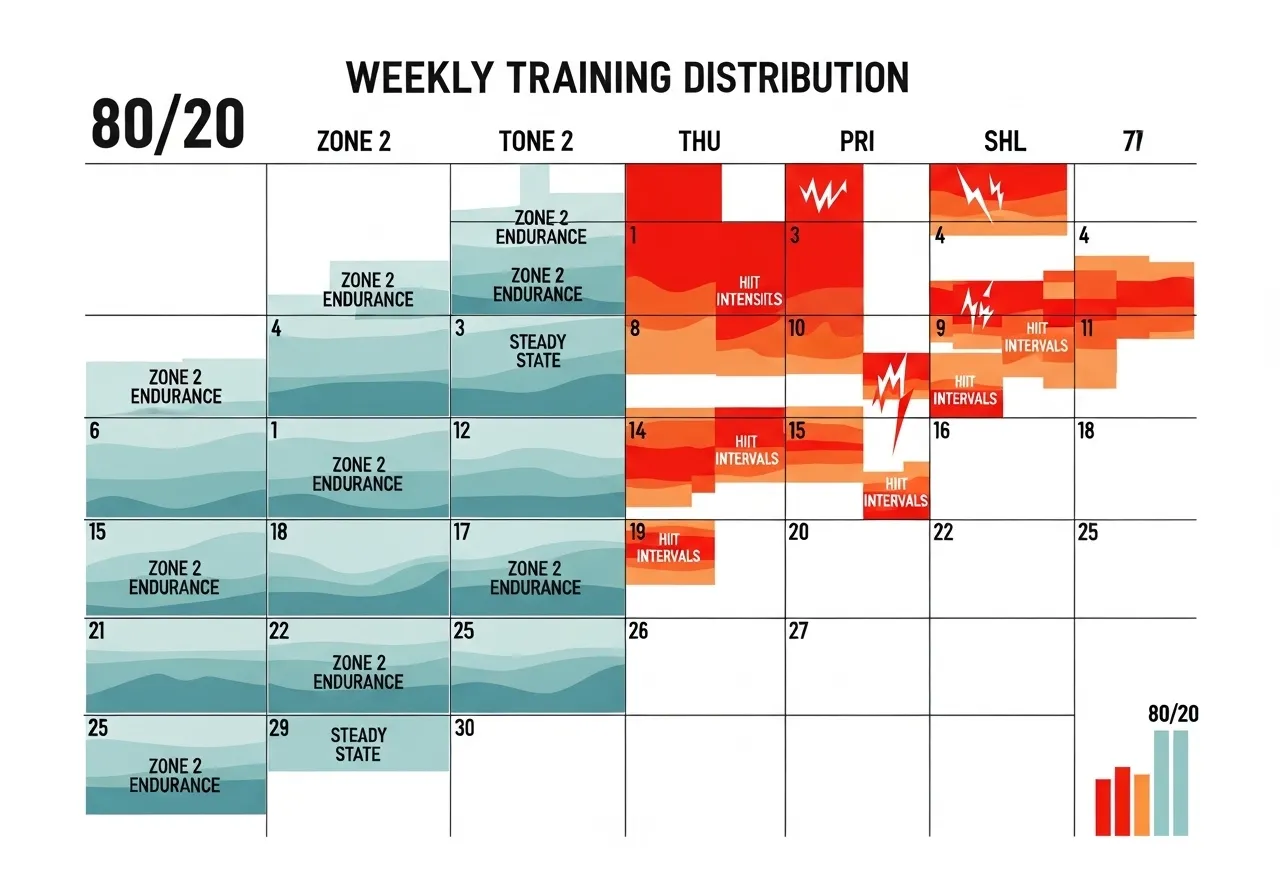
Studies of elite endurance athletes consistently find a training intensity distribution of approximately 80% low-to-moderate intensity (Zone 1-2) and 20% high intensity (Zone 4-5), with very little time in the moderate “threshold” zone that most recreational athletes occupy most of the time. This polarized distribution produces better long-term cardiovascular development than threshold-heavy training distributions — not because moderate intensity is harmful, but because it produces neither the mitochondrial development of Zone 2 nor the VO2max stimulus of Zone 4-5, while accumulating fatigue from both. Research on polarized training distribution in endurance athletes supports this 80/20 approach as optimal for performance development over time.
Applying the 80/20 Principle for Recreational Athletes
For a recreational athlete performing 4 cardiovascular sessions per week, the polarized prescription translates to: 3 sessions of steady-state Zone 2 training (45-60 minutes each) and 1 session of genuine HIIT (20-25 minutes). This ratio provides the mitochondrial development stimulus of Zone 2 work while maintaining the VO2max and anaerobic capacity benefits of one quality HIIT session. Most recreational athletes currently train the inverse of this distribution — mostly moderate intensity with occasional steady-state, and rarely reach the Zone 2 intensity that produces mitochondrial adaptation or the true Zone 4-5 intensity that produces VO2max stimulus.
Weekly Schedule Template
Monday: Rest or light mobility. Tuesday: HIIT session — 5-minute warm-up, 8×1-minute at 90% max heart rate with 1-minute recovery, 5-minute cool-down. Wednesday: Steady-state, 45 minutes at comfortable conversational pace. Thursday: Strength training. Friday: Steady-state, 45 minutes. Saturday: Steady-state long session, 60 minutes. Sunday: Rest. This schedule provides approximately 2.5 hours of Zone 2 work and one quality HIIT session — a more productive cardiovascular distribution than most recreational athletes currently use.
Interpreting Exercise Research: What Studies Actually Show
Exercise research is frequently misrepresented in fitness media — results of short-duration studies with specific populations are generalized to all training contexts, effect sizes are ignored in favor of statistical significance, and mechanistic research (showing how something works in a laboratory) is conflated with applied research (showing whether it works in real training). Developing basic research literacy allows more accurate interpretation of fitness claims and more informed decision-making about training approaches. Key principles for interpreting exercise research: consider the study population (research on trained athletes may not generalize to beginners; research on older adults may not generalize to young athletes), consider the study duration (8-week studies reveal acute responses; long-term adaptations require longer study periods), consider the effect size (a statistically significant difference that amounts to 1-2% improvement may not be practically meaningful), and consider who funded the research (industry-funded studies show systematic bias toward positive findings for the funded product or method).
The most reliable exercise research comes from independent academic institutions, is published in peer-reviewed journals with rigorous methodology, and has been replicated by independent researchers. Single studies should be interpreted cautiously regardless of how dramatic their findings appear — the replication crisis in scientific research has revealed that many single-study findings do not hold up when other researchers attempt to reproduce them. Meta-analyses and systematic reviews that synthesize findings across multiple studies provide more reliable guidance than any individual study. When fitness guidance claims to be “science-backed,” the critical questions are: what studies specifically, how large were they, how similar were the participants to your situation, and have the findings been replicated? Developing these questions as automatic responses to any research-based fitness claim produces far more accurate navigation of the exercise science landscape. High-quality exercise research consistently supports the principles of progressive overload, specificity, and adequate recovery as the foundational drivers of physical adaptation regardless of the specific training modality applied.
Training Environment: Optimizing Your Space for Consistent Practice
The training environment — where and how training occurs — significantly influences both performance quality and training consistency. Research on behavior change consistently finds that environmental design is one of the most powerful determinants of habitual behavior: making desired behaviors easier and undesired behaviors harder through environmental modification produces more reliable behavior change than motivation or willpower. Applied to training, this means that reducing the friction between deciding to train and actually beginning training — having equipment accessible, training clothes ready, the training route established — produces more consistent training than relying on motivation to overcome friction. The athlete who can begin training within 5 minutes of deciding to train trains more consistently than the one who requires 20 minutes of preparation regardless of the specific training program either follows.
Commercial gym environments provide equipment access and social context that many home training setups cannot match. However, gym commute time is the most commonly cited barrier to gym training consistency — a gym 30 minutes away requires 60+ minutes of additional time per session, making three sessions per week add nearly 3 hours of commute time to the training time itself. Home training setups that reduce this barrier to zero consistently produce more training sessions per week in adherence research, even with modestly lower equipment availability. The optimal training environment is the one that is most consistently used — a home setup with basic equipment that is trained in 4-5 days per week produces better results than a comprehensive commercial gym visited 1-2 days per week due to access barriers. Choosing training environment based on accessibility and consistency rather than equipment comprehensiveness alone typically produces better long-term training adherence outcomes.
Choosing the Right Modality for Your Goals
Prioritize HIIT When:
Time is severely limited (less than 3 hours per week for cardio), the primary goal is maximum caloric expenditure in minimum time, sport performance requires anaerobic capacity development, or when VO2max improvement is the specific goal. HIIT also works well as a plateau-breaker when steady-state cardio has produced adaptations that are no longer improving — the novel intensity stimulus often produces cardiovascular improvements when moderate-intensity training has adapted.
Prioritize Steady-State When:
Building the aerobic base for endurance sports, developing metabolic efficiency (fat oxidation capacity), training alongside heavy resistance training where recovery capacity is limited (steady-state interferes less with strength adaptation than HIIT), or recovering from high-intensity training periods. Steady-state also produces superior long-term cardiovascular health outcomes and is more sustainable for lifetime fitness than HIIT-dominant approaches.
For Most People: Use Both
The practical recommendation for the majority of recreational athletes: establish a steady-state base first (8-12 weeks of consistent Zone 2 training to develop the aerobic infrastructure), then add one HIIT session per week to the established steady-state foundation. This sequence uses steady-state to build the aerobic engine that makes HIIT more productive, then uses HIIT to push VO2max and anaerobic capacity beyond what steady-state can achieve alone.
Frequently Asked Questions
Which burns more fat: HIIT or steady-state? Over a 24-hour period including EPOC, HIIT and steady-state produce similar total fat oxidation when matched for caloric expenditure. Steady-state burns a higher percentage of fat during the session; HIIT burns more total calories per session due to higher intensity. For fat loss, the most important factor is total caloric expenditure and dietary adherence — the modality is secondary.
Can I do HIIT every day? True high-intensity intervals require 48-72 hours of recovery between sessions. Daily HIIT is not sustainable without progressive performance decline, accumulated fatigue, and elevated injury risk. Most research on HIIT protocols uses 2-3 sessions per week; this is the appropriate frequency for most recreational athletes.
Is HIIT safe for beginners? HIIT is appropriate for beginners only after a base of cardiovascular fitness is established — typically 4-8 weeks of consistent moderate-intensity cardio. Jumping directly to HIIT from a sedentary baseline produces excessive fatigue, high dropout rates, and elevated injury risk. Build the aerobic base before introducing genuine high-intensity intervals.
Does steady-state cardio interfere with muscle building? Extensive steady-state cardio (more than 4-5 hours per week) can interfere with muscle building through accumulated fatigue and potential muscle protein catabolism during very long sessions. Moderate steady-state cardio (2-3 hours per week) produces minimal interference with muscle development when performed on separate days from resistance training or at least 6 hours apart.
Measuring Cardiovascular Fitness Progress
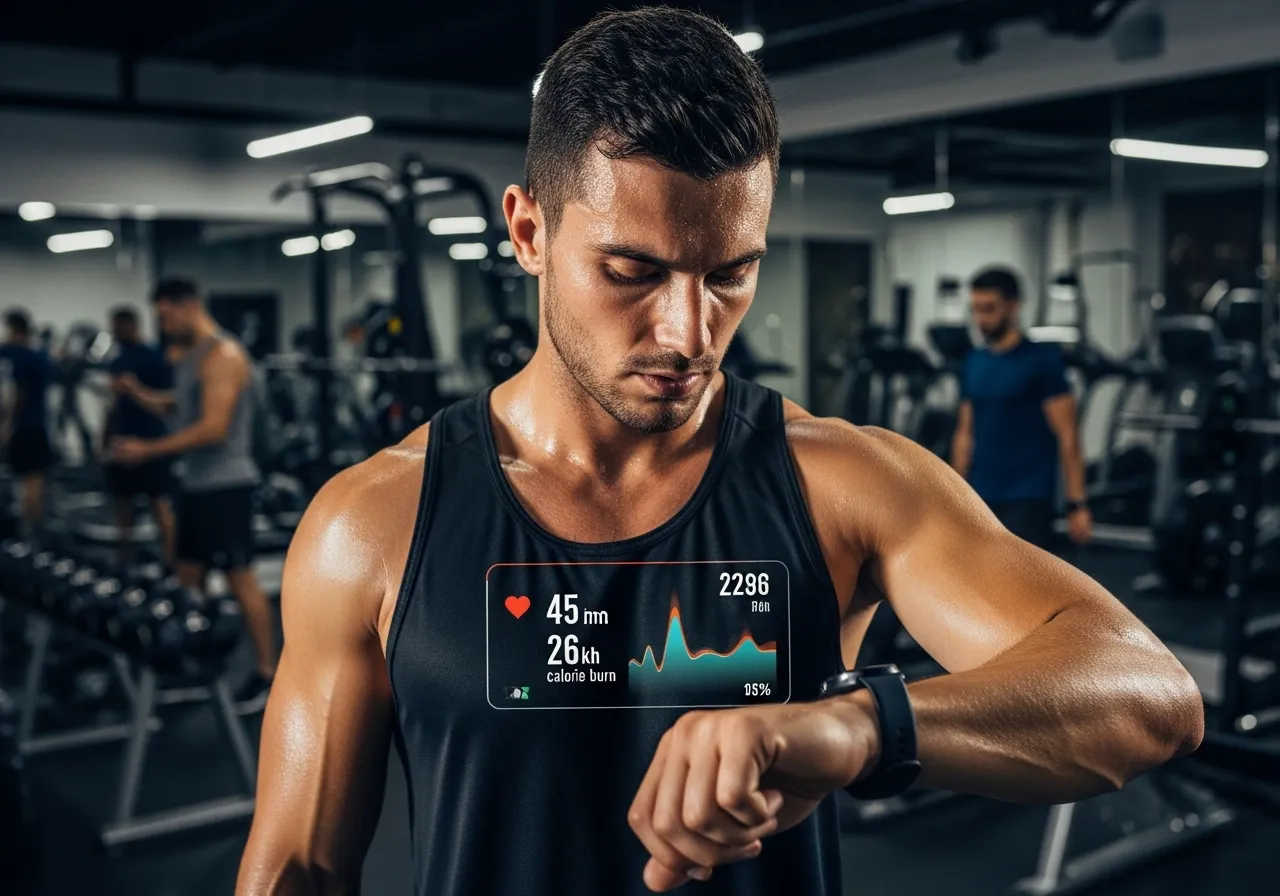
Objective measurement of cardiovascular fitness progress provides the feedback that guides intelligent training decisions. The most accessible cardiovascular fitness metrics for recreational athletes are resting heart rate (measured first thing in the morning before rising, lower is better), heart rate at a standardized exercise intensity (running pace, cycling wattage, or rowing split that can be replicated consistently), and heart rate recovery (the rate at which heart rate drops in the first 1-2 minutes after stopping exercise, faster is better). Tracking these metrics monthly provides objective evidence that training is producing cardiovascular adaptation, reveals when training loads are excessive (rising resting heart rate, declining performance at standard exercise intensity), and motivates continued training by making improvements quantitatively visible.
The most comprehensive single cardiovascular fitness measurement is VO2max — the maximum volume of oxygen the body can consume during maximal exercise. Direct VO2max measurement requires laboratory equipment (metabolic cart, treadmill or cycle ergometer, maximal exercise test), but several validated field tests provide good estimates: the Cooper 12-minute run test (distance covered in 12 minutes predicts VO2max with reasonable accuracy), the Rockport walking test (1-mile walking time and heart rate predict VO2max), and the step test (heart rate after standardized stepping protocol predicts VO2max). Retesting every 12-16 weeks tracks long-term cardiovascular fitness trends and demonstrates the cumulative effect of months of consistent training that week-to-week training logs cannot reveal. Elite endurance athletes have VO2max values of 70-85 ml/kg/min; sedentary adults typically have values of 30-45 ml/kg/min; recreational fitness athletes typically develop values of 45-60 ml/kg/min with consistent training. Progress within these ranges represents meaningful cardiovascular health improvement regardless of absolute values. ACSM guidelines identify VO2max as the gold standard measure of cardiovascular fitness and a strong predictor of long-term health outcomes.
Heart Rate Variability: The Advanced Readiness Metric
Heart rate variability (HRV) — the variation in time between consecutive heartbeats — is the most sensitive and most widely adopted objective metric for training readiness among elite athletes. Unlike resting heart rate, which reflects average cardiovascular demand, HRV reflects the balance between sympathetic (stress response) and parasympathetic (recovery response) nervous system activation. High HRV indicates readiness for intense training; low HRV indicates accumulated fatigue, illness, or stress that warrants reduced training intensity. HRV-guided training — performing high-intensity sessions on high-HRV days and low-intensity or rest on low-HRV days — has been shown to produce superior fitness adaptations compared to fixed-schedule training in research on recreational athletes over 12-week periods.
Practical HRV measurement: smartphone apps (HRV4Training, Elite HRV, and similar) using the phone’s camera to detect pulse from a fingertip, or pulse oximeters, provide daily HRV measurements in 60-90 seconds upon waking. Measurements should be taken at the same time each morning under the same conditions (lying down, relaxed, before coffee or food) to ensure comparability. After 2-4 weeks of daily measurement, a personal baseline is established and daily readings can be interpreted as above-baseline (green — train hard), at-baseline (yellow — train as planned), or below-baseline (red — reduce intensity or rest). For athletes integrating both HIIT and steady-state cardio, HRV guidance helps distribute the high-intensity HIIT sessions on days when recovery is complete, maximizing the quality of each interval session and avoiding the performance-compromising HIIT sessions that occur when training hard through inadequate recovery.
Long-Term Physical Development: The 5-Year Perspective
The most meaningful perspective on physical training is the 5-year view rather than the 12-week program cycle that fitness marketing emphasizes. In 5 years of consistent, progressive training — training that accumulates rather than restarts with each new program — the physical changes achievable exceed anything a 12-week transformation could produce. Five years of consistent strength training typically produces: 15-30 kg of additional muscle mass for men, 8-15 kg for women; strength improvements of 200-400% from starting levels across major lifts; significant improvements in movement quality, body composition, and functional capacity that persist throughout the subsequent lifespan if training continues. Five years of consistent cardiovascular training typically produces: VO2max improvements of 20-40%; cardiovascular disease risk reduction approaching that of lifelong athletes; measurably reduced biological aging markers compared to sedentary age peers.
These 5-year outcomes are achievable not through the most sophisticated programming but through the most consistent execution of sound basic principles. The athletes who achieve the most dramatic 5-year physical development are rarely those who found the most optimized program — they are those who showed up consistently, progressed loads systematically, recovered adequately, and adapted their training to their life circumstances rather than abandoning training when optimal conditions weren’t available. The secret of long-term physical development is no secret at all: it is the patient, consistent accumulation of training stimulus over years, guided by sound principles and adapted to individual circumstances. Understanding this at the beginning of a training journey — rather than discovering it after years of program-hopping — saves years of misdirected effort and produces the compounding physical development that consistency alone generates.
Environmental and Contextual Factors in Training Success
Physical training outcomes are influenced by factors beyond training programming, nutrition, and recovery — the environmental and social context in which training occurs significantly affects both performance quality and long-term adherence. Training environment quality (lighting, temperature, equipment availability, noise level) affects acute performance: research on environmental conditions and exercise performance finds that slightly cool temperatures (15-20°C) produce better endurance performance than hot conditions, that familiar training environments produce better strength performance than novel ones (due to reduced cognitive load from navigation and equipment unfamiliarity), and that social presence (training with others or in a populated gym versus alone) tends to increase effort level through social comparison and motivation mechanisms. These environmental effects are smaller than training, nutrition, and recovery in their impact on outcomes but are worth considering when training environment choices are available.
The social and cultural context of training shapes the behaviors and expectations that drive long-term outcomes. Fitness communities — whether competitive sports teams, CrossFit affiliates, running clubs, or online training groups — create social norms around training frequency, intensity, and recovery that members tend to conform to. Joining communities with healthy training norms (progressive training, appropriate intensity management, injury prevention awareness) produces better long-term outcomes than training in isolation because the community’s norms function as an external accountability system that supplements individual motivation. The selection effect — people who join fitness communities may be more intrinsically motivated than those who train alone — is partially responsible for community exercisers’ better outcomes, but experimental research on social support and exercise adherence confirms that the social environment itself contributes meaningfully to training consistency beyond individual motivation differences. NSCA resources consistently recognize that training context and social environment influence long-term athletic development alongside the purely technical programming variables that exercise science research primarily studies.
Applying HIIT and Steady State to Body Composition Goals
HIIT for Fat Loss: The Real Evidence
HIIT’s reputation for fat loss superiority over steady-state cardio is based on real but often overstated research findings. Short-term studies do find that HIIT produces equivalent or slightly superior fat loss outcomes in fewer training minutes compared to steady-state cardio — primarily through higher total caloric expenditure per session despite shorter duration. The EPOC (excess post-exercise oxygen consumption) effect of HIIT contributes an additional 30-100 calories over 24 hours following a session, a meaningful but modest addition to total daily energy expenditure. For fat loss specifically, total weekly caloric expenditure from all exercise matters most — and this total can be achieved through either modality depending on individual preferences, schedule, and recovery capacity.
The most evidence-supported fat loss approach is combining steady-state’s sustainable volume (which accumulates more total weekly caloric expenditure without excessive fatigue) with HIIT’s time efficiency and metabolic intensity. Two to three steady-state sessions per week burning 300-400 calories each, combined with one HIIT session burning 250-350 calories, provides 1,200-1,600 weekly calories from cardiovascular exercise — sufficient for meaningful fat loss when combined with appropriate dietary management. This combination also avoids the joint overload that daily HIIT produces in people who are simultaneously performing heavy resistance training. Research comparing HIIT and steady-state training adaptations confirms both modalities produce significant improvements in body composition when total training volume is adequate and dietary management supports a caloric deficit.
Steady-State Cardio for Muscle Preservation
When training for fat loss alongside muscle preservation — the primary challenge in body recomposition — steady-state cardio at Zone 2 intensity has a significant advantage over HIIT in minimizing muscle loss. HIIT’s high intensity activates muscle protein breakdown pathways (particularly mTOR inhibition and AMPK activation) that can directly interfere with muscle protein synthesis when training volume is high. Moderate-intensity steady-state cardio at Zone 2 levels does not significantly activate these pathways, meaning muscle-preserving anabolic signaling can occur alongside the cardiovascular training without significant interference. For physique athletes and bodybuilders who need to reduce body fat while maximally preserving muscle, steady-state cardio is the preferred cardiovascular modality during caloric restriction phases — HIIT is reduced to one session per week or eliminated entirely to minimize muscle protein catabolism risk.
Periodizing Cardio Through an Annual Training Cycle
Annual periodization of cardiovascular training — varying the balance between HIIT and steady-state across training phases throughout the year — produces superior long-term cardiovascular development compared to maintaining the same intensity distribution year-round. A common evidence-based annual structure: base phase (12-16 weeks, late off-season) emphasizing steady-state Zone 2 training (80%+ of cardiovascular volume at Zone 2) to develop the aerobic foundation; build phase (8-12 weeks) introducing HIIT at increasing volume while maintaining significant Zone 2 base; peak phase (4-6 weeks) featuring maximum HIIT intensity alongside maintained Zone 2 base for competition preparation; transition phase (4-6 weeks) reducing intensity and volume for recovery and psychological restoration before the next base phase begins. This cycling produces the aerobic base that Zone 2 training builds and the VO2max ceiling that HIIT raises, while preventing the staleness and overuse that maintaining maximum training intensity year-round produces.
For recreational athletes without competition seasons, applying periodization involves creating artificial periodization phases based on personal goals and life calendar. Periods of high availability (vacations from work, lighter life demand periods) become opportunities for volume accumulation phases; periods of lower availability become intensity-focused phases where less total training time is used more efficiently through HIIT emphasis. The specific structure matters less than the principle: vary the training stimulus across time rather than training at the same intensity year-round. The physiological adaptation to any constant stimulus plateaus within 4-6 weeks; introducing systematic variation through periodization maintains continuous adaptation stimulus across the annual training cycle. Research on periodized endurance training consistently demonstrates superior long-term cardiovascular development from periodized compared to non-periodized training approaches.
Long-Term Physical Development: The 5-Year Perspective
The most meaningful perspective on physical training is the 5-year view rather than the 12-week program cycle that fitness marketing emphasizes. In 5 years of consistent, progressive training — training that accumulates rather than restarts with each new program — the physical changes achievable exceed anything a 12-week transformation could produce. Five years of consistent strength training typically produces: 15-30 kg of additional muscle mass for men, 8-15 kg for women; strength improvements of 200-400% from starting levels across major lifts; significant improvements in movement quality, body composition, and functional capacity that persist throughout the subsequent lifespan if training continues. Five years of consistent cardiovascular training typically produces: VO2max improvements of
HIIT and Steady-State for Health Beyond Fitness Performance
Cardiovascular Disease Risk Reduction
Both HIIT and steady-state cardio significantly reduce cardiovascular disease risk through different but complementary mechanisms. Steady-state moderate-intensity exercise produces the largest reductions in resting blood pressure, improves endothelial function (the health of blood vessel linings), and reduces fasting triglycerides — the cardiovascular risk markers most responsive to sustained aerobic training volume. HIIT produces the largest improvements in VO2max (a strong independent predictor of cardiovascular mortality) and improves glycemic control more effectively than steady-state at equivalent time investments. The combination of both in a weekly training program addresses the full spectrum of cardiovascular risk markers more comprehensively than either alone.
The American Heart Association’s physical activity recommendations — 150 minutes of moderate-intensity aerobic activity per week (equivalent to steady-state Zone 2 training) or 75 minutes of vigorous-intensity activity (equivalent to HIIT) — acknowledge both modalities as equivalent in cardiovascular health benefit. The practical interpretation: either modality meets the health-protective minimum, but the combination in a polarized distribution produces the best cardiovascular health outcomes for people with sufficient training capacity.
Aging and Exercise Intensity Selection
Exercise intensity selection becomes more nuanced with advancing age due to several physiological changes. Recovery capacity decreases with age — the 48-72 hours required to recover from HIIT sessions extends to 72-96 hours for many adults over 60, limiting weekly HIIT frequency. Joint loading tolerance also decreases, making the high-impact HIIT protocols popular with younger athletes inappropriate for many older adults. Running-based HIIT specifically can become problematic as joint health limits high-impact loading. Cycling, swimming, and rowing-based HIIT preserve the cardiovascular benefits while eliminating the joint loading that limits running-based intensity training in aging populations. For adults over 50, Zone 2 cardio on low-impact modalities with one moderate-intensity interval session per week represents the appropriate balance of cardiovascular benefit and injury risk management.
Mental Health Benefits of Different Intensities
Exercise intensity affects mental health outcomes through different mechanisms. Steady-state moderate-intensity exercise produces the most consistent mood elevation through endocannabinoid system activation — the mechanism responsible for the “runner’s high” that research confirms occurs primarily at moderate, sustained exercise intensities rather than at exhausting high intensities. HIIT produces acute stress hormone elevation (cortisol, adrenaline) that can feel invigorating in the short term but, if performed excessively, contributes to cumulative stress burden that impairs mood rather than improving it. The optimal mental health prescription is similar to the cardiovascular health prescription: primarily moderate-intensity steady-state for sustained mood support, with occasional HIIT for the neurological and performance benefits. ACSM exercise guidelines identify regular aerobic exercise as a first-line intervention for depression and anxiety, with both intensity levels showing positive mental health effects when performed consistently.
Progressive Overload and Training Logs
Every long-term training result depends on progressive overload — the systematic increase of training demands over time. The body adapts to a given stimulus within 4-6 weeks and requires increased demand to continue improving. A training log recording exercise, sets, reps, and weight transforms subjective effort into objective data. NSCA progressive overload guidelines confirm systematic progression as the foundational development strategy for all training levels.
Nutrition for Training Adaptation
Training produces adaptation only when nutritional support is adequate. Research consistently identifies 1.6-2.2 grams of protein per kilogram of body weight per day as the range that maximizes muscle protein synthesis. Consistently sleeping 7-9 hours per night maximizes adaptation from every session. Dietary Guidelines for Americans provide evidence-based nutritional recommendations supporting athletic performance and overall health.
HIIT Safety and Medical Considerations
True high-intensity interval training — reaching 85-95% of maximum heart rate for sustained periods — is a significant cardiovascular stress that warrants appropriate medical screening. The American College of Sports Medicine recommends cardiovascular screening before beginning vigorous exercise programs for adults with cardiovascular risk factors including hypertension, diabetes, smoking history, obesity, or family history of early cardiovascular disease. For adults over 45 with no regular exercise history, medical clearance before beginning HIIT is strongly advised. The acute cardiovascular risk during high-intensity exercise (though still extremely low in healthy individuals) is elevated compared to moderate-intensity exercise, making appropriate screening proportionate to the exercise demand. ACSM pre-participation screening guidelines provide detailed criteria for determining when medical evaluation is recommended before beginning vigorous exercise programs.
For individuals who have received clearance for vigorous exercise, the gradual introduction of HIIT intervals — beginning with shorter intervals at lower target heart rates (80-85% rather than 90-95%) and progressing over 4-6 weeks toward the full HIIT intensity prescription — reduces the acute cardiovascular stress of transitioning from sedentary or moderately active baseline to high-intensity interval training. This gradual introduction also allows the cardiovascular system to develop the stroke volume and cardiac output improvements that make maximal-intensity intervals physiologically manageable before they are routinely programmed. Attempting maximum-intensity HIIT from a completely sedentary baseline creates cardiovascular stress that exceeds both safety recommendations and the body’s current adaptive capacity, explaining the high dropout rates from programs that begin with maximum-intensity intervals rather than building gradually to them.
Consistency over time is the most powerful force in physical development. The athlete who trains three times per week for five years accumulates more than 700 training sessions. The knowledge, the physical adaptation, and the habitual practice that accumulates across those 700 sessions — each building incrementally on the ones before it — produces transformative physical and cognitive development that no short-term program can replicate. The first year of consistent training produces visible results; the second year produces structural changes that support the first year’s adaptations; the third year reveals capabilities that the first year’s physiology could not support; the fourth and fifth years express the full potential that patient, consistent development has built. Training with this multi-year perspective — treating each session as one of hundreds rather than the first of a 12-week program — produces both better immediate performance and better long-term outcomes. The willingness to trust the process, to train consistently during periods of apparent plateau, and to take the long view of physical development is the psychological quality that most reliably predicts extraordinary physical outcomes among people of equal genetic potential and training access.
The practical translation: show up consistently, progress systematically, recover adequately, and take a longer view of your development than any marketing-driven program encourages. The results that consistency produces over years are genuinely extraordinary — and they are available to anyone willing to commit to the patient accumulation that physical development requires. ACSM long-term physical activity recommendations support sustained, progressive exercise across the lifespan as the most evidence-based approach to both performance development and long-term health maintenance for all populations.
Consistency over time is the most powerful force in physical development. The athlete who trains three times per week for five years accumulates more than 700 training sessions. The knowledge, the physical adaptation, and the habitual practice that accumulates across those 700 sessions — each building incrementally on the ones before it — produces transformative physical and cognitive development that no short-term program can replicate. The first year of consistent training produces visible results; the second year produces structural changes that support the first year’s adaptations; the third year reveals capabilities that the first year’s physiology could not support; the fourth and fifth years express the full potential that patient, consistent development has built. Training with this multi-year perspective — treating each session as one of hundreds rather than the first of a 12-week program — produces both better immediate performance and better long-term outcomes. The willingness to trust the process, to train consistently during periods of apparent plateau, and to take the long view of physical development is the psychological quality that most reliably predicts extraordinary physical outcomes among people of equal genetic potential and training access.
The practical translation: show up consistently, progress systematically, recover adequately, and take a longer view of your development than any marketing-driven program encourages. The results that consistency produces over years are genuinely extraordinary — and they are available to anyone willing to commit to the patient accumulation that physical development requires. ACSM long-term physical activity recommendations support sustained, progressive exercise across the lifespan as the most evidence-based approach to both performance development and long-term health maintenance for all populations.
Consistency over time is the most powerful force in physical development. The athlete who trains three times per week for five years accumulates more than 700 training sessions. The knowledge, the physical adaptation, and the habitual practice that accumulates across those 700 sessions — each building incrementally on the ones before it — produces transformative physical and cognitive development that no short-term program can replicate. The first year of consistent training produces visible results; the second year produces structural changes that support the first year’s adaptations; the third year reveals capabilities that the first year’s physiology could not support; the fourth and fifth years express the full potential that patient, consistent development has built. Training with this multi-year perspective — treating each session as one of hundreds rather than the first of a 12-week program — produces both better immediate performance and better long-term outcomes. The willingness to trust the process, to train consistently during periods of apparent plateau, and to take the long view of physical development is the psychological quality that most reliably predicts extraordinary physical outcomes among people of equal genetic potential and training access.
The practical translation: show up consistently, progress systematically, recover adequately, and take a longer view of your development than any marketing-driven program encourages. The results that consistency produces over years are genuinely extraordinary — and they are available to anyone willing to commit to the patient accumulation that physical development requires. ACSM long-term physical activity recommendations support sustained, progressive exercise across the lifespan as the most evidence-based approach to both performance development and long-term health maintenance for all populations.
⚠️ Health & Fitness DisclaimerThis article is for general educational and informational purposes only.It does not replace professional medical or fitness advice.If you have any pre-existing condition, injury, or cardiovascular concern — please consult a qualified healthcare professional or certified personal trainer before starting or modifying any exercise program. Battle ropes sit at an unusual…
Breathing through the mouth during exercise is the default for most people. It feels necessary at moderate intensity, instinctive at high intensity, and the idea of restricting breathing to the nose during a training run sounds like an experiment in self-imposed oxygen deprivation. The research tells a more nuanced story. Nasal breathing during exercise activates…
⚠️ Health & Fitness DisclaimerThis article is for general educational and informational purposes only and does not replace professional medical or fitness advice.If you have any cardiovascular condition, joint concerns, or are new to vigorous exercise — consult a qualified healthcare professional before starting any HIIT program. High-intensity interval training — HIIT — has moved…
⚠️ Health & Fitness DisclaimerThis article is for general educational and informational purposes only.It does not replace professional medical or fitness advice.If you have any pre-existing shoulder, neck, or upper back condition — please consult a qualified healthcare professional or certified personal trainer before starting or modifying any pressing program. The overhead press guide is…
Most recreational athletes choose one form of cardio and repeat it. Runners run. Cyclists cycle. Swimmers swim. This is not a strategic decision. It is the path of least resistance: the familiar equipment, the practised movement, the social group tied to the activity. The repetition accumulates a specific cardiovascular adaptation to one mode of exercise…
Warning Fitness Disclaimer: The information in this article is for general educational purposes only and does not constitute professional fitness or medical advice. Always consult a qualified healthcare professional before starting any new exercise program. The cardio mistakes guide Method That Changed Everything I Thought I Knew About Training For most of my training life,…