⚠️ Fitness Disclaimer: The information in this article is for general educational purposes only and does not constitute professional fitness or medical advice. Always consult a qualified healthcare professional before starting any new exercise program.
⚠️ Cardiovascular Health Notice: If you have a history of heart disease, high blood pressure, or any cardiovascular condition, obtain medical clearance from your physician before performing high-intensity training. (see also: heart rate zones)
The rowing machine sits in the corner of most gyms, used occasionally by people who cycle through the cardio equipment and mostly avoided by everyone else. I was in that majority for years — I understood treadmills and bikes, but the rowing machine felt technical and unfamiliar, and the few attempts I made at it produced an awkward lurch that bore no resemblance to what I saw experienced rowers doing.
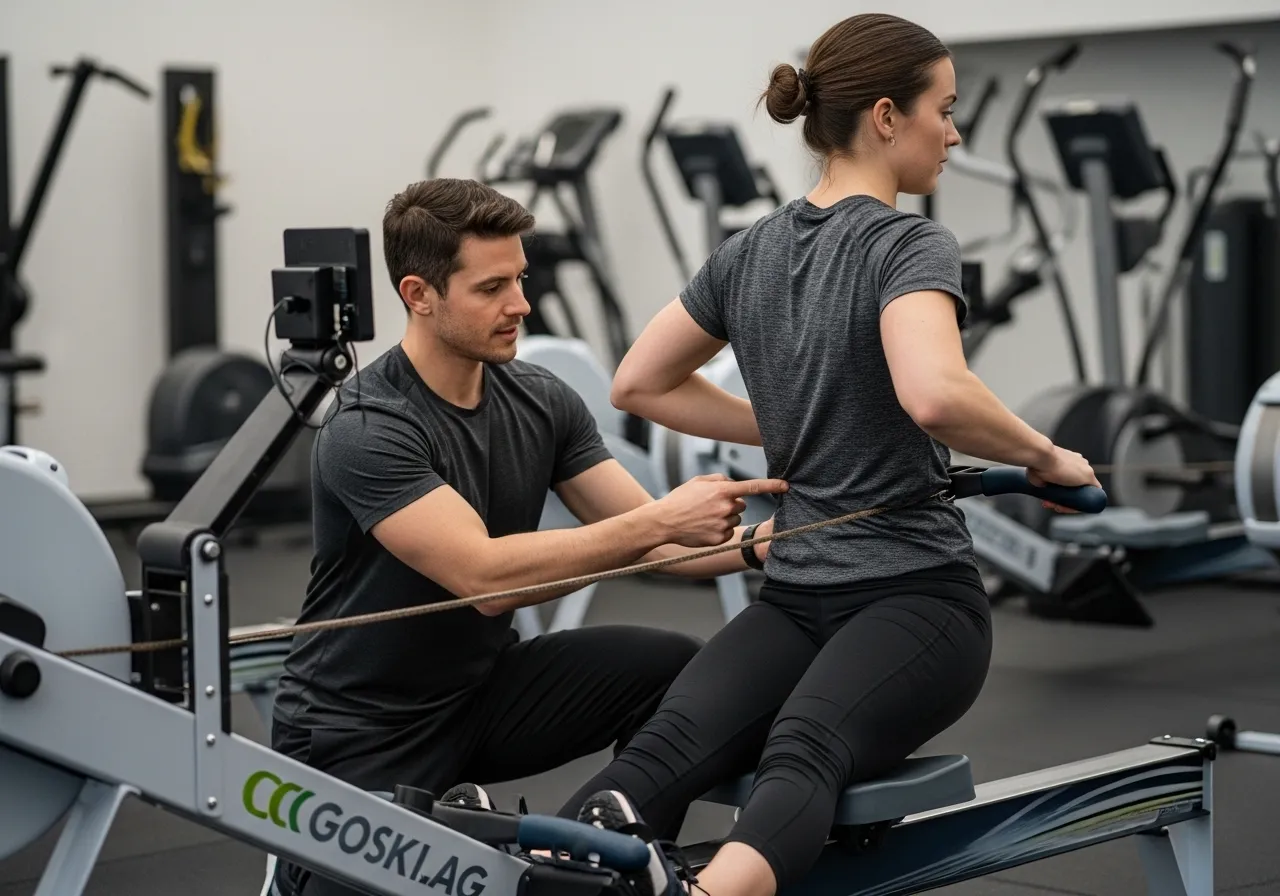
The change came when a rowing coach at my gym spent fifteen minutes explaining the stroke sequence. Within three sessions of applying that instruction, I understood what the machine was actually doing — and within four weeks of regular rowing, I had developed upper back and lat engagement that no amount of pulling exercises had previously produced, alongside a cardiovascular capacity that surprised me at my next fitness assessment.
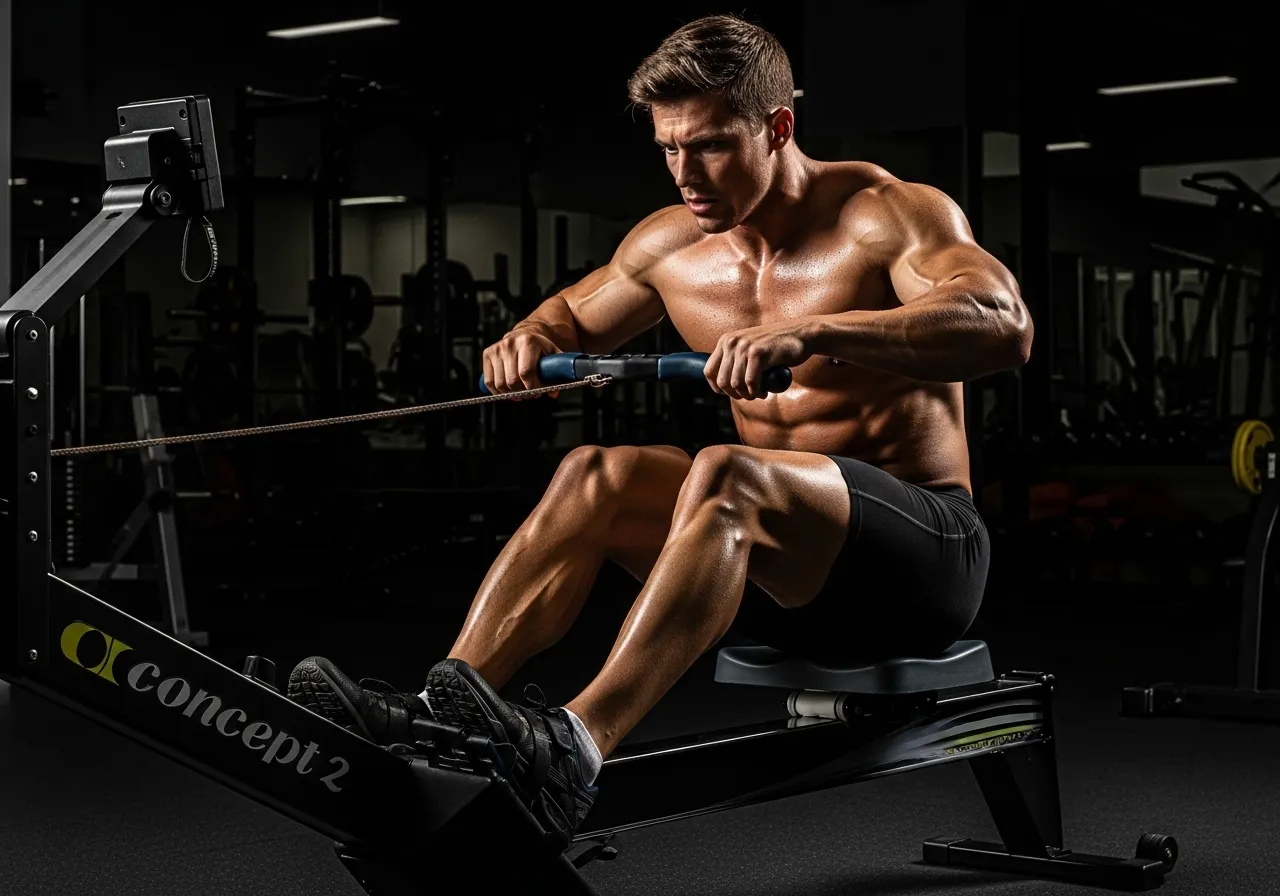
The rowing machine is the only piece of cardiovascular equipment that simultaneously develops strength endurance in the legs, core, and upper back while delivering cardiovascular conditioning comparable to running. It is the most complete cardio tool in the gym, available at most facilities, and used correctly by almost nobody.
The Physiological Case for Rowing
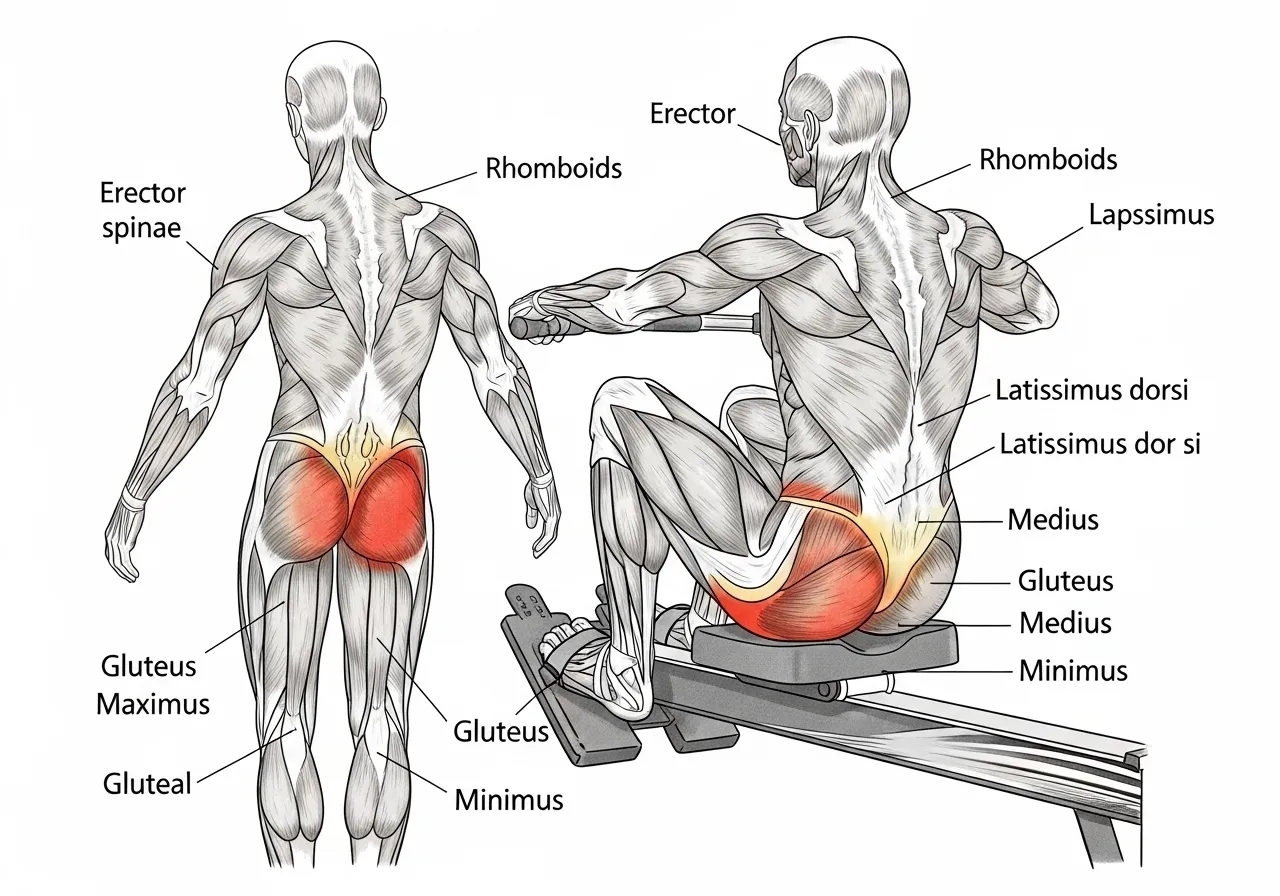
Rowing engages approximately 86% of the body’s muscle mass per stroke — more than any other common cardiovascular exercise. The leg drive generates most of the power (approximately 60%), the body swing contributes approximately 20%, and the arm pull contributes approximately 20%. This full-body demand produces a cardiovascular response comparable to running at equivalent effort levels while simultaneously developing posterior chain endurance — the erector spinae, glutes, hamstrings, rhomboids, trapezius, and biceps all work throughout every stroke. Research on rowing exercise physiology confirms that rowing produces VO2max improvements and cardiovascular adaptations comparable to running and cycling, with the additional benefit of upper body strength endurance development that pure cardio modalities cannot provide. (see also: VO2 max improvement)
Individual Differences in Training Response
Individual variation in response to training is one of the most important and most underappreciated factors in exercise programming. Research consistently finds that when a group of people performs the same training program, the range of individual responses is enormous — some participants improve dramatically, others improve modestly, and a small percentage respond minimally. This variation exists in response to cardiovascular training, strength training, and virtually every other exercise modality studied. The sources of variation include genetic factors such as muscle fiber type distribution, hormonal baseline, and connective tissue quality, alongside prior training history, lifestyle factors including sleep quality and stress levels, and individual biomechanical differences that affect exercise efficiency.
The practical implication is that research findings about average responses to training programs apply to the average person in the study population, not necessarily to any specific individual. When a training approach is not producing expected results after 8-12 weeks of consistent application, individual variation is a legitimate explanation that warrants trying alternative approaches rather than assuming the approach is universally superior. The most effective coaches recognize that programming is ultimately an individual optimization problem, not a universal prescription. ACSM exercise guidelines acknowledge individual variation as a fundamental consideration in exercise prescription for all populations.
Building Sustainable Long-Term Training Habits
The most physiologically optimal training program produces no benefit without consistent adherence over months and years. Motivation research in exercise science identifies that intrinsic motivation — exercising because you find it enjoyable or meaningful — consistently outperforms extrinsic motivation — exercising to achieve specific outcomes — for long-term adherence. Intrinsic motivation sustains training through periods when outcomes plateau, when life disrupts schedules, and when novelty fades. Building intrinsic motivation by finding aspects of training that are genuinely enjoyable is therefore as important to long-term success as any programming decision.
Habit formation reduces the role of motivation in exercise behavior by making training automatic rather than effortful. Research on habit formation finds that exercise habits typically require 60-90 days of consistent reinforcement to establish at the automatic level. During this formation period, consistent context — same time of day, same location, same pre-training routine — strengthens the habit loop. Exercise partners and social accountability significantly increase consistency during the habit formation period. Once established, the training habit requires only maintenance rather than motivation, making the initial 60-90 day consistency investment the highest-leverage action for long-term training outcomes. NSCA training resources support consistent training practice as the foundation of long-term physical development at all fitness levels.
Progressive Overload: The Engine of All Long-Term Improvement
Every meaningful improvement in physical performance results from progressive overload — the systematic increase of training demands over time. The body’s adaptation mechanism is fundamentally conservative: it adapts to meet imposed demands, not to exceed them. This means that training at a constant level produces initial adaptation followed by maintenance, not continued improvement. Only by progressively increasing training demands — more load, more volume, higher intensity, shorter rest — does the body continue adapting beyond the initial plateau. This principle applies universally to cardiovascular training (adding duration or intensity), strength training (adding load or sets), flexibility training (working at slightly greater range over time), and skill development (adding complexity to established patterns). Understanding progressive overload not as a technique to apply in specific contexts but as the fundamental mechanism underlying all physical improvement reframes training decisions: the most important question about any training decision is not whether the exercise is good or bad in isolation, but whether it contributes to a progressive demand increase that drives continued adaptation.
The practical application of progressive overload varies by training level. For beginners, progression can occur session-to-session because the initial training stimuli are far below the body’s adaptive ceiling — adding weight to every workout is sustainable for 2-4 months before the pace of adaptation slows. For intermediate athletes, progression occurs weekly to bi-weekly — the same exercise at the same load becomes stimulating enough for continued adaptation only if load is increased every 1-2 weeks. For advanced athletes, monthly progressions are typical — the body’s adaptive ceiling is closer to current training levels, making smaller, less frequent load increases appropriate as the marginal stimulus of any additional training demand decreases. Matching progression rate to current training level prevents both the frustration of attempting to progress faster than biology allows and the stagnation of progressing more slowly than the body’s current capacity. NSCA progressive overload guidelines provide detailed frameworks for applying progressive overload across all training levels and modalities, representing the consensus of the most experienced strength and conditioning practitioners worldwide.
Training for Health vs Performance: Understanding the Distinction
The training demands required for health benefit and for athletic performance are dramatically different — a distinction that allows most people to achieve excellent health outcomes with far less training volume and intensity than competitive athletes require. Research on the dose-response relationship between exercise and health outcomes finds that the largest health improvements occur in the transition from sedentary to lightly active, with diminishing returns as training volume and intensity increase. The difference in cardiovascular disease risk between a completely sedentary person and one who performs 150 minutes of moderate-intensity exercise per week is enormous; the difference between 150 minutes and 300 minutes per week is meaningful but much smaller; the difference between 300 minutes and 600 minutes per week is smaller still. This diminishing returns relationship means that optimizing training for health requires far less training than optimizing for athletic performance — and that the health-focused recreational exerciser who trains 3-4 hours per week achieves most of the health benefit available from any training volume.
For people training primarily for health and quality of life rather than athletic performance, this research context provides liberating permission: the pressure to optimize every training variable, match elite training volumes, or progress to advanced techniques is not justified by health goals that can be fully achieved with consistent moderate training. The most health-promoting training practice for most people is not the most elaborate or most intense but the most consistently executed over the longest period. Establishing and maintaining a consistent moderate training practice across decades produces more cumulative health benefit than any period of intense training followed by abandonment. The exercise that is most consistently performed is the most health-promoting exercise — not the exercise that is theoretically most effective when performed optimally. This principle should guide training decisions for health-motivated individuals more than any performance optimization consideration. ACSM physical activity guidelines confirm that health-related benefits are achievable with moderate training volumes and that additional benefits from higher volumes are meaningful but incrementally smaller than the initial health gains from transitioning from sedentary to active.
Rowing Technique: The Four-Phase Stroke That Changes Everything
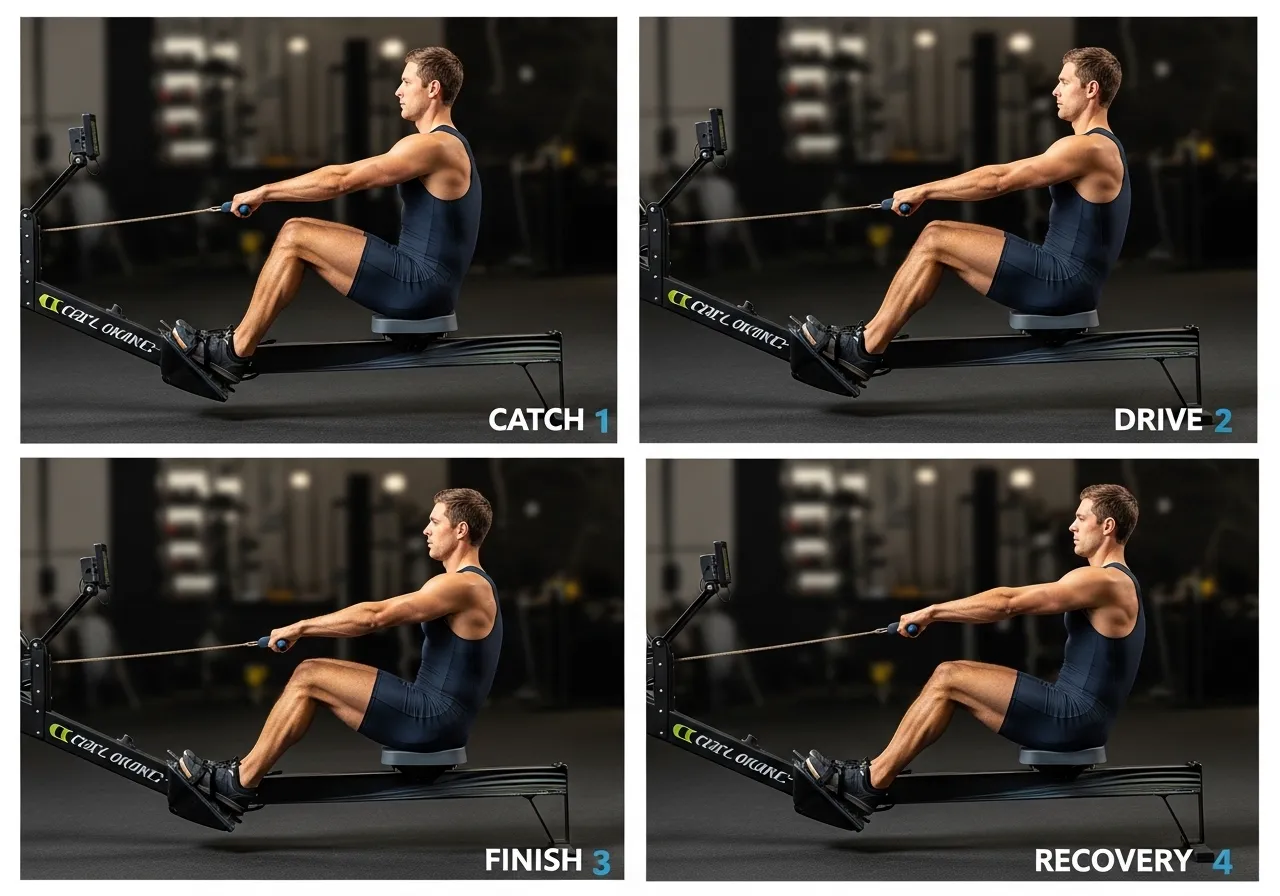
Phase 1: The Catch
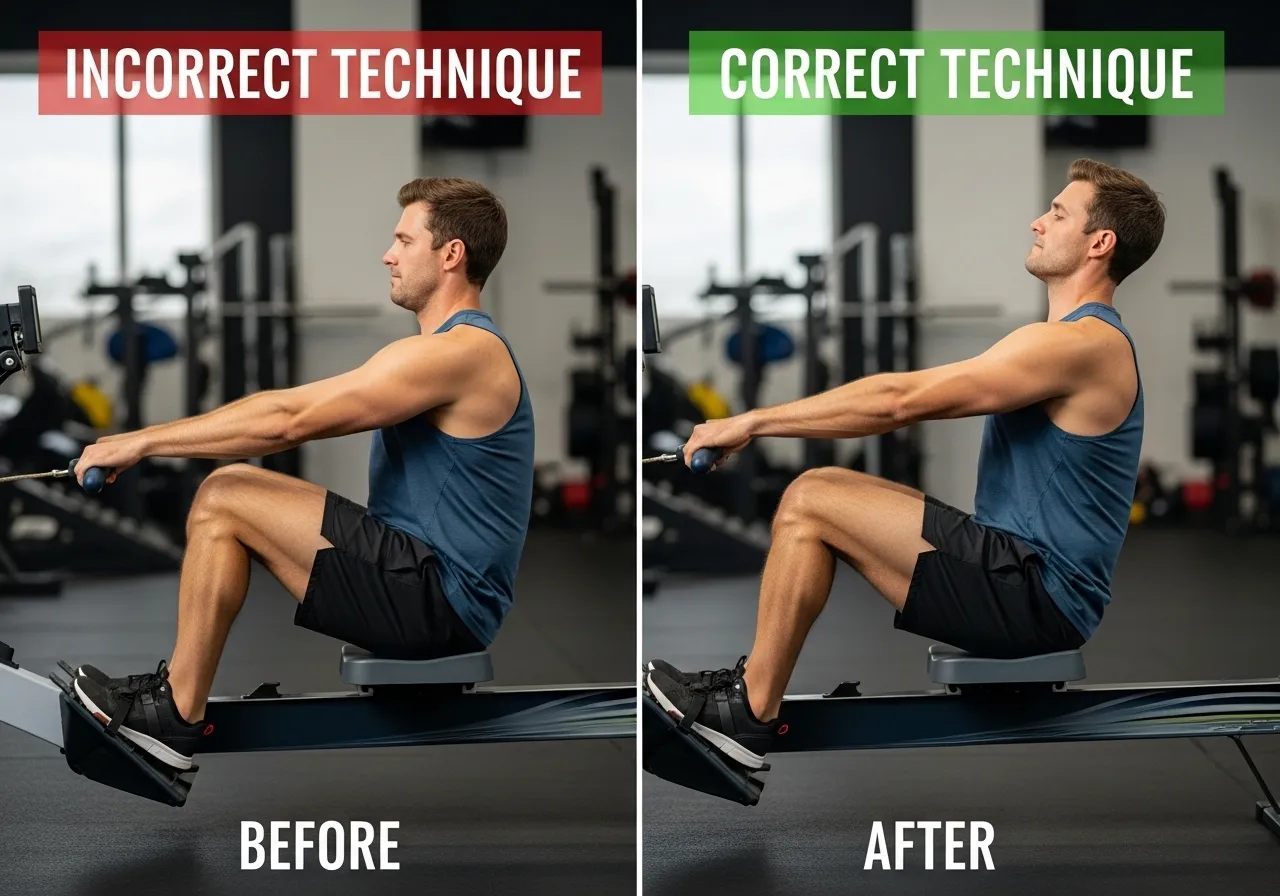
The catch is the starting position at the front of the stroke where maximum body compression occurs. Arms straight, hands holding the handle at lower-rib height, shins vertical (or slightly past vertical), knees bent to approximately 90-120 degrees, body leaned slightly forward (approximately 1 o’clock position relative to vertical). The back must be flat — not rounded — at the catch, which requires both hamstring flexibility and lumbar awareness. A rounded lower back at the catch is the most common and most injury-prone rowing error. Shins should not be more than vertical at the catch; overcompression (shins past vertical, knees near the chest) reduces power generation and forces a suboptimal leg drive angle.
Phase 2: The Drive
The drive is the power phase and must occur in a specific sequence: legs first, then body swing, then arms. This sequence is critical — initiating the drive with the arms or the body swing before the legs have pressed produces a weak, arm-dominated stroke that is both inefficient and exhausting. The correct cue: “legs, body, arms.” Press both feet into the footplates, driving the seat backward. When the legs are approximately halfway extended, begin swinging the body back toward the 11 o’clock position. When the legs are near full extension and the body is at 11 o’clock, draw the arms into the body at lower-rib height with elbows traveling outward and slightly upward.
Phase 3: The Finish
At the finish position: legs fully extended, body leaned back slightly to 11 o’clock, arms drawn fully into the lower ribs with elbows past the body. This position requires that the sequence was executed correctly — if the body is at 11 o’clock but the legs are still bent, the sequencing was wrong. Hold this finish position for a brief moment to confirm correctness before beginning the recovery.
Phase 4: The Recovery
The recovery is the return to the catch — arms, body, legs in reverse of the drive sequence. Extend the arms first, then swing the body forward to 1 o’clock, then bend the knees to slide the seat forward. The recovery should be controlled and unhurried — approximately twice as long as the drive phase. Rushing the recovery disrupts rhythm and prevents adequate recovery between strokes.
Injury Prevention and Training Longevity
Training longevity — the ability to train consistently over years and decades without injury-enforced interruptions — is the most important factor in long-term physical development. An athlete who trains consistently for 10 years without significant injury develops far more than one who trains at twice the intensity for 5 years with two major injuries requiring 6-month recovery periods each. The mathematics of consistency are unambiguous: total training volume accumulated over time without interruption produces the most comprehensive development. Injury prevention is therefore the choice that maximizes long-term development by maintaining the consistency that produces it.
The most evidence-supported injury prevention strategies are: maintaining appropriate training load progression (increasing volume or intensity by no more than 10-15% per week), addressing movement pattern limitations before loading exercises heavily, including adequate recovery between training sessions, and developing the supporting muscles that protect joints under loading. Listening to the distinction between productive training discomfort (muscle fatigue that resolves after training) and injury warning signs (sharp pain, joint pain, pain that worsens during training, or pain that persists hours after) is a trainable skill that requires deliberate attention. Consulting sports medicine professionals proactively — before significant pain develops, when movement quality declines, or when training demands increase substantially — prevents more significant injuries that develop when early warning signs are ignored.
Nutrition Timing and Training Performance
The timing of nutritional intake relative to training sessions influences both session quality and recovery rate. Pre-training nutrition (consumed 2-3 hours before, or a smaller snack 60-90 minutes before) supports the glycogen stores and blood amino acid levels that maintain session quality through the complete training volume. A meal containing 30-60 grams of carbohydrate and 20-30 grams of protein before training is appropriate for most training sessions of 60-90 minutes. For sessions longer than 90 minutes or at very high intensities, intra-training carbohydrate (sports drinks, gels) maintains blood glucose and delays glycogen depletion that would otherwise compromise the session’s final sets or intervals. Post-training nutrition (protein within 2 hours after training, ideally alongside some carbohydrate to accelerate glycogen replenishment) supports the muscle protein synthesis that converts the training stimulus into structural adaptation. The post-training window is not as narrow as previously believed — research finds that total daily protein intake matters more than precise timing — but consuming protein within 2 hours after training consistently provides an anabolic advantage compared to delaying protein intake by 4-6 hours. Dietary Guidelines for Americans provide comprehensive nutritional frameworks supporting both athletic performance and long-term health.
Nutritional Foundations for Physical Development
Physical development from training depends on nutritional support that is often underappreciated in fitness culture that emphasizes training techniques while treating nutrition as secondary. The fundamental nutritional requirements for training adaptation are: adequate total caloric intake to support both daily energy needs and the additional demands of training (insufficient calories produce adaptation impairment regardless of training quality), adequate protein to support muscle protein synthesis (1.6-2.2 grams per kilogram of body weight daily for people training for strength or muscle development), and adequate carbohydrate to fuel high-intensity training sessions (25-50 grams before and after intense sessions for most athletes).
Hydration is the most commonly neglected nutritional variable affecting training performance. Even mild dehydration (1-2% of body weight) measurably reduces strength output, cardiovascular performance, and cognitive function during training. Training in a hydrated state — drinking 400-600 ml of water in the 2 hours before training and replacing fluid losses during training (approximately 400-800 ml per hour of exercise depending on sweat rate and environmental conditions) — maintains the performance quality that represents the intended training stimulus. Micronutrient status — iron (essential for oxygen transport), vitamin D (essential for muscle function and immune health), magnesium (essential for muscle contraction and recovery), and zinc (essential for protein synthesis and hormone function) — affects training adaptation through mechanisms that direct caloric and macronutrient management doesn’t address. Athletes who experience unexplained fatigue, persistent soreness, or performance plateaus despite adequate protein and caloric intake benefit from micronutrient assessment before attributing training problems to programming or recovery management. Dietary Guidelines for Americans provide comprehensive nutritional recommendations supporting both athletic performance and long-term health across the lifespan.
Setting Realistic Training Goals and Expectations
Unrealistic training expectations — derived from fitness media, social media athletes using performance-enhancing drugs, or exceptional genetic outliers — are one of the primary causes of exercise program abandonment. When expected results don’t materialize on the timeline presented by fitness marketing, people commonly conclude that the program is ineffective, that they are personally incapable of achieving the results, or that the effort required exceeds the benefit. In most cases, the problem is not the program, the individual, or the effort — it is the expectation. Evidence-based rates of physical development are substantially slower than fitness media representations. Natural strength development: intermediate lifters gain approximately 1-3 kg of muscle per month under optimal conditions. Cardiovascular fitness improvement: VO2max improves approximately 10-15% over 8-12 weeks of consistent training. Body composition change: sustainable fat loss is approximately 0.5-1% of body weight per week, limited by caloric deficit and muscle preservation constraints. These rates feel slow relative to before-and-after photos presented in 30-day program marketing, but they represent genuine physiological change that compounds into transformative results over 1-2 years of consistent application.
Setting training goals with realistic timelines prevents the disappointment that drives program abandonment. Instead of targeting a specific body composition outcome in 8 weeks, targeting a consistent training practice established over 8 weeks — with body composition outcomes following over 6-12 months — produces better adherence and better eventual outcomes. Instead of targeting a specific strength number in 12 weeks, targeting a specific training frequency and consistency over 12 weeks — with strength outcomes following the established consistent practice — maintains motivation through the inevitable slower-progress periods that any training goal encounters. Process goals (consistent training execution, progressive load management, technique development) produce better long-term outcomes than outcome goals (specific weight targets, specific strength numbers) because process goals can be achieved through consistent behavior regardless of the biological timeline that outcome goals depend on. Experienced trainers uniformly report that their most dramatic physical improvements occurred during periods when they focused on consistent training execution rather than specific outcome targets — the outcomes followed consistent process, not the other way around.
Rowing Workouts: From Beginner to Performance Training
Beginner: Technique-First Sessions (Weeks 1-4)
20-minute sessions at low stroke rate (18-20 strokes per minute) focused entirely on stroke sequence. The low stroke rate creates adequate time between strokes to consciously apply the sequence. Target effort: light resistance, comfortable pace where full attention can go to technique rather than output. Row for 5 minutes, rest 2 minutes, row 5 more minutes. After four weeks of technique-focused rowing at low rates, most beginners develop the muscle memory for the sequence and can begin training for output.
Intermediate: Aerobic Base Development (Weeks 4-12)
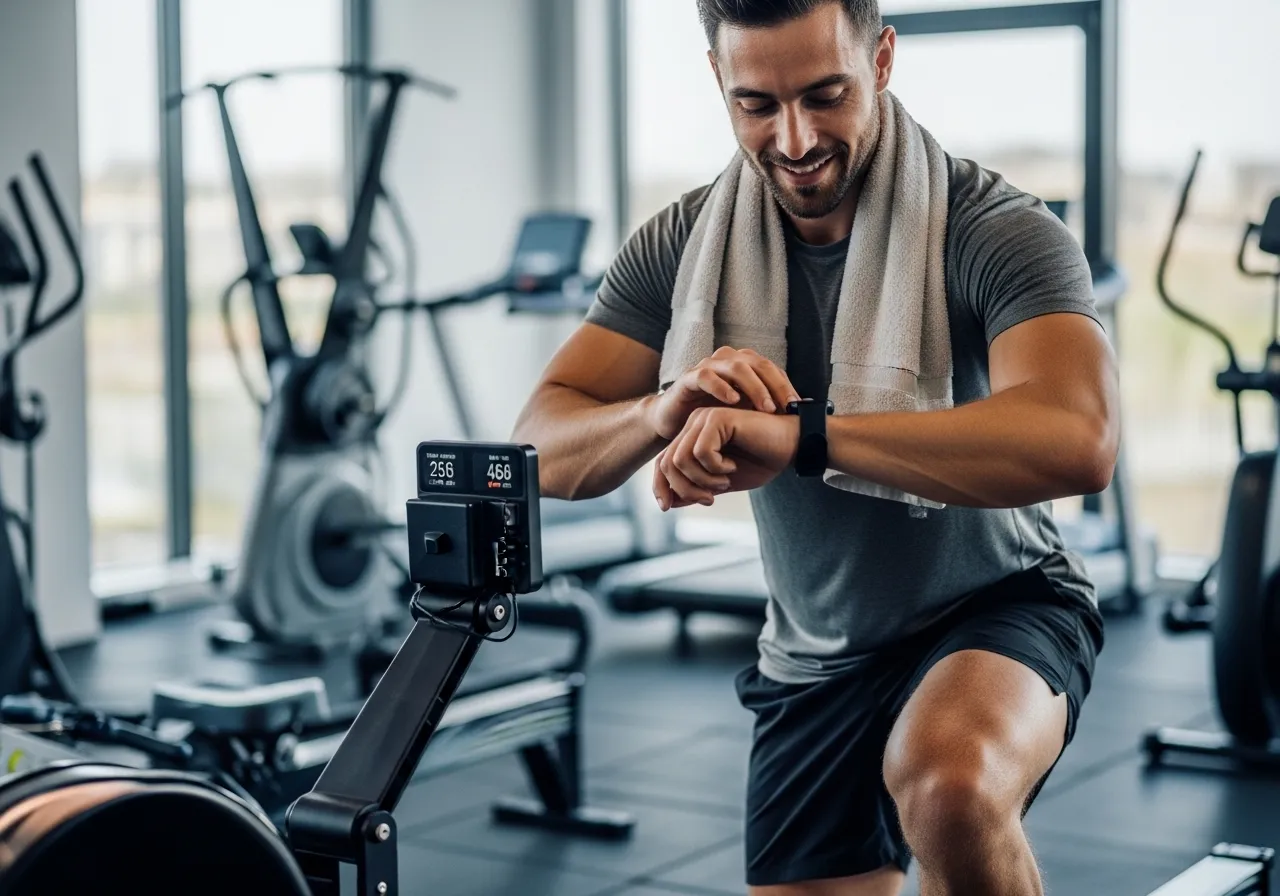
Steady-state rowing at 22-24 strokes per minute for 20-40 minutes at Zone 2 training intensity (60-70% max heart rate). Rowing for sustained periods at moderate intensity builds the cardiovascular and muscular endurance that makes higher-intensity rowing productive. Most intermediate rowers develop their aerobic base at 2:00-2:20 per 500 meters for women and 2:10-2:30 per 500 meters for men — paces sustainable for 30+ minutes. Track 500-meter split times as the primary progress metric: as fitness develops, the same heart rate produces faster splits.
Performance: Interval Training
Once a solid aerobic base is established, rowing intervals produce VO2max and lactate threshold improvements. Most effective rowing interval protocol: 4×500 meters at 85-90% effort with 3 minutes rest. Start at 4 intervals and progress to 8 over 8-10 weeks. The 500-meter distance is long enough to produce sustained high-intensity demand and short enough to maintain quality across multiple repetitions. Pace target: 5-10 seconds per 500 meters faster than sustainable steady-state pace. Concept2 rowing training resources provide evidence-based interval protocols used by competitive rowers worldwide and applicable to recreational fitness rowing.
The Rowing Ergometer Test: A Universal Fitness Benchmark
The 2000-meter rowing test is the standard rowing fitness benchmark used from high school athletics to Olympic team selection. Most recreational fitness rowers can use their 2000-meter time as a progress marker. Typical recreational fitness benchmarks: men under 7:30, women under 8:30 for a reasonable level of fitness; men under 6:40, women under 7:40 for strong cardiovascular fitness. Attempting this test every 8-12 weeks provides the objective progress measurement that keeps training productive and goal-directed.
Tracking Progress: Metrics That Matter
Progress tracking transforms subjective training experience into objective data that guides intelligent decision-making. The most meaningful training metrics depend on the primary training goal: for strength, the primary metric is load at a given rep scheme (tracking whether the same exercises are being performed heavier over time); for endurance, pace or power at a given heart rate (tracking whether cardiovascular efficiency is improving); for body composition, measurements and photographs taken monthly under consistent conditions (tracking structural changes more reliably than scale weight, which fluctuates with hydration and glycogen status); for movement quality, video analysis comparing technique at the same load across months (tracking skill development that strength metrics don’t capture). Tracking too many metrics produces information overload and compliance fatigue; tracking too few misses important signals about training response. Three to five consistently measured metrics across 8-12 week periods provides sufficient data for informed training decisions without requiring excessive measurement time. The act of tracking itself also produces psychological benefits — seeing objective evidence of improvement, even when progress feels slow subjectively, maintains motivation and confidence across the inevitable periods of gradual progress that characterize long-term training development.
Sleep as the Foundation of Training Adaptation
Sleep is the most impactful recovery intervention available, yet it is consistently undervalued in fitness culture that emphasizes training volume and nutrition while treating sleep as optional or negotiable. During sleep, growth hormone secretion peaks, muscle protein synthesis is elevated, the inflammatory response to training is resolved, and neural adaptations from training consolidate into permanent structural changes. Consistently sleeping less than 7 hours per night measurably impairs strength performance, reduces muscle protein synthesis rates, slows recovery from intense training, and increases injury risk through both reduced movement quality and delayed tissue healing. No supplement, recovery modality, or training technique compensates for chronic sleep deprivation’s negative impact on adaptation rate — the deficit created by consistently undersleeping is irreplaceable through any other intervention.
Optimizing sleep quality requires addressing both duration (total time asleep, distinct from time in bed) and architecture (the proportion of restorative deep sleep and REM sleep within the total). Sleep hygiene practices that improve both: consistent sleep and wake times that align the circadian rhythm, a cool sleeping environment (65-68°F / 18-20°C is optimal for sleep quality), complete darkness or a quality sleep mask, limited screen exposure in the 60-90 minutes before sleep (blue light suppresses melatonin), and avoiding caffeine within 6-8 hours of bedtime. For athletes performing multiple training sessions per day or in heavy training blocks, strategic napping (20-minute naps in the early afternoon) extends total sleep without disrupting nighttime sleep quality and has been shown to improve subsequent training session performance in research on elite athletic populations. NSCA resources on recovery consistently identify sleep as the primary recovery tool for athletes at all training levels.
Recovery Modalities: What Works and What Doesn’t
The recovery modality market — foam rollers, massage guns, ice baths, compression garments, infrared saunas, and dozens of other products — creates the impression that sophisticated recovery requires expensive equipment and elaborate protocols. The research evidence is more modest: most recovery modalities produce small, short-lived improvements in subjective recovery experience with limited effects on actual performance outcomes. This does not mean they are worthless — subjective recovery improvement has real value in maintaining training motivation and reducing the psychological burden of training — but it does mean they should be understood as marginal enhancements rather than fundamental recovery requirements.
The recovery interventions with the strongest evidence base are the simplest: sleep (the most powerful recovery tool available, with a dose-response relationship between sleep quality and training adaptation), adequate protein intake (supporting muscle protein synthesis that converts training damage into strength and mass), light movement on recovery days (increasing blood flow to recovering tissues without imposing additional training stress), and cold water immersion (reducing acute muscle soreness but potentially blunting some hypertrophic adaptations when used after every strength training session — best reserved for competitive periods when performance recovery is prioritized over adaptation development). Foam rolling and massage gun use consistently reduce subjective muscle tightness and improve short-term range of motion but show minimal effects on strength performance, injury rates, or long-term flexibility in controlled research. They are pleasant and may support training motivation through improved subjective wellbeing; they are not transformative recovery tools that meaningfully affect training outcomes. Investing recovery attention in sleep, nutrition, and training load management — the high-evidence-base fundamentals — before adding elaborate recovery modalities produces the best long-term return on investment. ACSM recovery guidelines prioritize sleep and nutrition as the primary recovery interventions, with additional modalities recommended as supplementary rather than foundational elements.
Technology and Training: Tools That Add Value
Fitness technology — training apps, wearable monitors, video analysis tools, smart home gym equipment — has proliferated dramatically in recent years, creating both genuine value and significant marketing-driven noise. Evaluating fitness technology through the lens of evidence and practical utility separates genuinely useful tools from expensive gadgets that add complexity without proportionate benefit. The most valuable fitness technologies share common characteristics: they provide objective data that training subjectively cannot provide, they are used consistently enough to generate meaningful data over time, and the data they provide drives actual training decisions rather than merely being observed passively. Technologies that meet these criteria include heart rate monitoring during cardiovascular training (objective intensity measurement that prevents both undertraining and overtraining), training logs whether paper or digital (objective progress tracking across weeks and months), and video analysis of lifting technique (provides visual feedback unavailable through feel alone, particularly valuable for identifying asymmetries and technique errors that only appear from external viewpoints).
Technologies that frequently don’t meet the practical utility threshold include continuous calorie tracking apps (high user burden for modest accuracy that doesn’t justify the burden for most people), elaborate biosensor suites that track dozens of metrics (data quantity without clarity about which metrics to act on produces confusion rather than guidance), and premium gym equipment with built-in coaching algorithms (the algorithm’s exercise prescription is usually less sophisticated than a qualified human coach’s assessment). The useful test for any fitness technology: would eliminating this technology change my training decisions, and would it change them in ways that would affect my outcomes? If the answer is no to either question, the technology may not be worth the financial or attention cost it requires. Simple, consistently used tracking tools outperform sophisticated tools used inconsistently or without clear protocols for translating data into training decisions. NSCA resources on training technology emphasize that training principles — progressive overload, specificity, recovery — remain more important than technology in determining training outcomes at all levels.
Rowing for Different Fitness Goals
Weight Loss and Caloric Expenditure
Rowing burns approximately 400-600 calories per hour at moderate intensity, comparable to running at equivalent effort. The upper body strength endurance demand of rowing means that post-session muscle protein synthesis contributes to metabolic rate elevation beyond the session — an advantage that pure cardiovascular modalities like cycling lack. For weight loss, rowing provides the caloric expenditure of running without the impact loading that limits running frequency for many people, allowing higher weekly training volume with lower injury risk.
Strength Endurance Development
No cardio machine develops posterior chain strength endurance comparably to the rowing ergometer. The repeated loading of the erector spinae, rhomboids, trapezius, and latissimus dorsi through hundreds of strokes builds a muscular endurance base in these muscle groups that directly supports heavier barbell work. Powerlifters and Olympic weightlifters who add rowing to their conditioning frequently report improved back endurance in heavy lifting sets — the rowing adaptation carries over directly to maintaining position under prolonged barbell loading.
Low-Impact Cardiovascular Development
Rowing is a seated, non-impact exercise — the feet never leave the footplates, and there is no ground reaction force. For people with knee or hip conditions that make running painful, rowing provides high-intensity cardiovascular training with essentially zero joint impact. The smooth, controlled sliding motion and adjustable resistance make rowing accessible for returning from lower extremity injuries, for older adults managing joint conditions, and for anyone who needs cardiovascular development without running’s mechanical loading.
Cross-Training Value of Rowing for Other Sports
Rowing’s full-body cardiovascular demand with specific emphasis on posterior chain endurance makes it a uniquely complementary cross-training tool for athletes in other sports. Runners who add rowing to their training develop upper body cardiovascular fitness and posterior chain endurance while giving their running-specific tissues a recovery day. The cardiovascular adaptations from rowing — improved VO2max, cardiac stroke volume, and mitochondrial density — transfer directly to running performance. Research on cross-training in runners finds that replacing 2 running sessions per week with equivalent-duration rowing maintains running performance while significantly reducing injury risk from running overuse, because the altered mechanical loading pattern gives repetitively stressed tissues a recovery opportunity without sacrificing cardiovascular training stimulus.
For strength athletes (powerlifters, Olympic weightlifters, bodybuilders), rowing provides conditioning that complements rather than interferes with strength training. Zone 2 rowing (60-70% max heart rate, conversational pace) provides cardiovascular health benefits and active recovery from strength training without the glycolytic demand that would compete with strength recovery. Two to three 30-minute Zone 2 rowing sessions per week alongside 3-4 strength training sessions per week improves cardiovascular health markers without measurably affecting strength gains, based on research on concurrent training in strength-trained populations. The specific posterior chain demand of rowing also provides additional back and posterior shoulder training that complements the typically anterior-dominant loading of bench pressing and overhead pressing without adding axial spine loading that heavy deadlifting and squatting already provide abundantly.
The Psychology of Physical Training: Mind-Muscle Connection and Focus
The mind-muscle connection — the deliberate attentional focus on the target muscle during exercise — has been shown in research to meaningfully affect muscle activation patterns and hypertrophic outcomes. Studies comparing external focus (attending to the movement’s effect on the external world, such as pushing the floor away during a squat) versus internal focus (attending to the sensations in the contracting muscles) find that internal focus during isolation exercises and external focus during heavy compound exercises produces optimal outcomes. For bodybuilding-oriented training where hypertrophy in specific muscles is the goal, deliberately directing attention to the target muscle during each set — feeling it contract and stretch through the range of motion — produces greater activation in that muscle and superior hypertrophic outcomes compared to unfocused repetition completion.
Pre-training mental preparation — establishing clear session goals, reviewing technique cues, and mentally rehearsing the session before beginning — has documented effects on training performance, particularly for complex or heavy lifts where technical execution determines the training outcome. Athletes who mentally rehearse correct technique before heavy sets consistently demonstrate better technique maintenance under fatigue than those who approach heavy sets without deliberate pre-set preparation. This mental preparation doesn’t require elaborate visualization protocols — simply reviewing the 2-3 most important technique cues for the primary exercise of the session, in the 60 seconds before beginning warm-up sets, provides sufficient mental priming. The psychological barrier between current performance and potential performance is often smaller than it appears — deliberate focus and clear intention frequently unlock performance that unfocused effort repeatedly misses. Building the habit of intentional mental preparation as a consistent session element, rather than an occasional practice, produces compounding performance and technique improvements that unfocused training cannot generate. Consistency of focused practice produces expertise; consistency of unfocused practice produces repetition without development.
Training for Health vs Performance: Understanding the Distinction
The training demands required for health benefit and for athletic performance are dramatically different — a distinction that allows most people to achieve excellent health outcomes with far less training volume and intensity than competitive athletes require. Research on the dose-response relationship between exercise and health outcomes finds that the largest health improvements occur in the transition from sedentary to lightly active, with diminishing returns as training volu
Common Rowing Mistakes and How to Fix Them
The “Banana Back” at the Catch
Rounding the lower back at the catch position is the most common and most dangerous rowing error. It occurs when the lifter tries to achieve maximum compression (getting the seat as close to the heels as possible) at the expense of lumbar position. Fix: prioritize a flat lower back over maximum compression. Sit tall at the catch with only slight forward body lean, arms straight, hands at lower-rib height. The compression comes from hip flexion, not from lumbar rounding.
Arm-Dominant Pulling
Using the arms to initiate the drive rather than the legs produces weak, inefficient strokes and exhausts the arms before the powerful leg drive can contribute. Identifiable by arms bending before the legs have fully pushed. Fix: think “push with the legs” — the arms stay straight until the legs are near full extension. A drill: row 10 strokes “legs only” (arms remain straight throughout the entire drive) to reinforce the leg drive dominance that efficient rowing requires.
Rushing the Recovery
Sliding the seat forward quickly after the finish shortens recovery time between strokes and disrupts rhythm. The recovery should feel unhurried — perhaps 2-3 times as long as the drive. A useful cue: “shoot away” with the arms before beginning the forward body swing, creating a moment of arm extension that separates the finish from the recovery sequence.
Incorrect Damper Setting
The damper (1-10 resistance dial on Concept2 ergometers) controls airflow into the flywheel, not rowing speed — higher is not harder in the meaningful sense. Most recreational rowers set the damper too high, which makes each stroke feel harder but actually slows the flywheel deceleration rate between strokes and reduces power per stroke. Most experienced rowers find damper settings of 3-5 optimal for training. The drag factor setting (measurable by the machine’s performance monitor) is the more accurate resistance calibration.
Scaling Training to Life Demands: The Sustainable Approach
Training programs exist within the larger context of life — work demands, family responsibilities, sleep schedules, social commitments, and the unpredictable events that disrupt planned routines. The most technically perfect training program that cannot be consistently executed within the realistic constraints of a person’s life produces inferior outcomes to a simpler program that can be consistently adhered to. This fundamental truth is often forgotten in the pursuit of optimal programming: the gap between optimal and good-enough is tiny compared to the gap between any consistent program and inconsistent program adherence. Designing training around life’s realistic constraints — available time, energy level after work, gym access logistics — produces better long-term outcomes than designing optimal training in the abstract and then struggling to execute it against life’s inevitable friction.
Minimum effective dose thinking is useful for periods of reduced training availability: what is the minimum training that maintains current fitness without regression? Research on training detraining and maintenance finds that strength can be maintained with as little as one session per week at full intensity (maintaining intensity while reducing volume), and cardiovascular fitness can be maintained with 2-3 sessions per week at moderate-to-high intensity. During vacation, illness recovery, or life disruption periods, a dramatically reduced training schedule that maintains the training habit — even 2-3 brief sessions per week — prevents the full detraining that results from complete cessation. The training habit maintained at reduced intensity returns to full programming much faster than the training habit completely abandoned and restarted. This makes minimum effective dose programming during difficult periods not a compromise but a strategic investment that preserves the foundation for rapid return to full training when circumstances allow. NSCA training maintenance guidelines support reduced-volume, maintained-intensity approaches for preserving adaptation during unavoidable training interruptions.
Long-Term Physical Development: The 5-Year Perspective
The most meaningful perspective on physical training is the 5-year view rather than the 12-week program cycle that fitness marketing emphasizes. In 5 years of consistent, progressive training — training that accumulates rather than restarts with each new program — the physical changes achievable exceed anything a 12-week transformation could produce. Five years of consistent strength training typically produces: 15-30 kg of additional muscle mass for men, 8-15 kg for women; strength improvements of 200-400% from starting levels across major lifts; significant improvements in movement quality, body composition, and functional capacity that persist throughout the subsequent lifespan if training continues. Five years of consistent cardiovascular training typically produces: VO2max improvements of 20-40%; cardiovascular disease risk reduction approaching that of lifelong athletes; measurably reduced biological aging markers compared to sedentary age peers.
These 5-year outcomes are achievable not through the most sophisticated programming but through the most consistent execution of sound basic principles. The athletes who achieve the most dramatic 5-year physical development are rarely those who found the most optimized program — they are those who showed up consistently, progressed loads systematically, recovered adequately, and adapted their training to their life circumstances rather than abandoning training when optimal conditions weren’t available. The secret of long-term physical development is no secret at all: it is the patient, consistent accumulation of training stimulus over years, guided by sound principles and adapted to individual circumstances. Understanding this at the beginning of a training journey — rather than discovering it after years of program-hopping — saves years of misdirected effort and produces the compounding physical development that consistency alone generates.
Environmental and Contextual Factors in Training Success
Physical training outcomes are influenced by factors beyond training programming, nutrition, and recovery — the environmental and social context in which training occurs significantly affects both performance quality and long-term adherence. Training environment quality (lighting, temperature, equipment availability, noise level) affects acute performance: research on environmental conditions and exercise performance finds that slightly cool temperatures (15-20°C) produce better endurance performance than hot conditions, that familiar training environments produce better strength performance than novel ones (due to reduced cognitive load from navigation and equipment unfamiliarity), and that social presence (training with others or in a populated gym versus alone) tends to increase effort level through social comparison and motivation mechanisms. These environmental effects are smaller than training, nutrition, and recovery in their impact on outcomes but are worth considering when training environment choices are available.
The social and cultural context of training shapes the behaviors and expectations that drive long-term outcomes. Fitness communities — whether competitive sports teams, CrossFit affiliates, running clubs, or online training groups — create social norms around training frequency, intensity, and recovery that members tend to conform to. Joining communities with healthy training norms (progressive training, appropriate intensity management, injury prevention awareness) produces better long-term outcomes than training in isolation because the community’s norms function as an external accountability system that supplements individual motivation. The selection effect — people who join fitness communities may be more intrinsically motivated than those who train alone — is partially responsible for community exercisers’ better outcomes, but experimental research on social support and exercise adherence confirms that the social environment itself contributes meaningfully to training consistency beyond individual motivation differences. NSCA resources consistently recognize that training context and social environment influence long-term athletic development alongside the purely technical programming variables that exercise science research primarily studies.
Frequently Asked Questions About Rowing Machine Training
Is rowing good for weight loss? Rowing is excellent for weight loss, combining high caloric expenditure (400-600 calories per hour at moderate intensity), full-body muscle engagement, and low joint impact that allows higher training frequency than running. Like all exercise for weight loss, it works best alongside dietary management — the exercise creates caloric expenditure, but nutritional choices determine whether that expenditure produces a deficit.
How should I hold the handle? The handle should be held with a relaxed overhand grip, fingers curved around the handle, wrists flat (not bent upward). Gripping too tightly fatigues the forearms and prevents the natural wrist position needed for an efficient stroke. Think of holding the handle as lightly as possible while maintaining control — if you are feeling forearm fatigue before cardiovascular fatigue, the grip is too tight.
What is a good rowing pace for a beginner? Beginners should not focus on pace in the first 4 weeks — technique development produces far better outcomes than chasing split times. Once technique is established, a comfortable aerobic pace for recreational fitness is typically 2:00-2:30 per 500 meters for men and 2:15-2:45 for women, depending on fitness level. Pace improves naturally as technique efficiency and cardiovascular fitness develop together.
Does rowing build muscle? Rowing builds muscular endurance rather than maximum hypertrophy. The repeated submaximal loading of the posterior chain (erector spinae, glutes, hamstrings, rhomboids, lats) produces endurance adaptation and visible development in these muscle groups. For maximum hypertrophy, resistance training is more effective. For functional strength endurance that improves posture, athletic performance, and barbell training capacity, rowing’s muscular contribution is significant. ACSM guidelines recommend combined cardiovascular and resistance training for comprehensive fitness development.
My lower back hurts when rowing. What should I do? Lower back pain during rowing almost always indicates either rounding the lower back at the catch or hyperextending the lower back at the finish (leaning too far back). Video your rowing from the side to identify which error is occurring. If catch-phase rounding: reduce compression and focus on flat back at the catch. If finish hyperextension: lean back only to 11 o’clock, not further. Persistent lower back pain during rowing warrants evaluation by a physiotherapist before continuing.
Warm-Up Science: Maximizing Performance While Minimizing Injury Risk
The pre-training warm-up is one of the most evidence-studied areas of exercise preparation, with clear research findings that challenge some traditional warm-up practices. Static stretching — the traditional hold-a-stretch-for-30-60-seconds warm-up — measurably reduces subsequent strength and power performance when performed immediately before high-intensity exercise. This performance reduction (typically 5-8% for
Long-Term Physical Development: The 5-Year Perspective
The most meaningful perspective on physical training is the 5-year view rather than the 12-week program cycle that fitness marketing emphasizes. In 5 years of consistent, progressive training — training that accumulates rather than restarts with each new program — the physical changes achievable exceed anything a 12-week transformation could produce. Five years of consistent strength training typically produces: 15-30 kg of additional muscle mass for men, 8-15 kg for women; strength improvements of 200-400% from starting levels across major lifts; significant improvements in movement quality, body composition, and functional capacity that persist throughout the subsequent lifespan if training continues. Five years of consistent cardiovascular training typically produces: VO2max improvements of 20-40%; cardiovascular disease risk reduction approaching that of lifelong athletes; measurably reduced biological aging markers compared to sedentary age peers.
These 5-year outcomes are achievabl
Rowing Machine Programming: 12-Week Development Plan
Weeks 1-3: Technique and Aerobic Foundation
The first three weeks prioritize stroke mechanics over output metrics. Session structure: 20-25 minutes total, stroke rate 18-20 SPM, focus entirely on leg-body-arm sequence and recovery rhythm. Effort level: light — the absence of performance pressure during technique sessions produces better mechanical learning than competitive pace efforts. Monitor the stroke drive:recovery ratio, aiming for a 1:2 ratio (one unit of time for the drive, two units for the recovery). This unhurried recovery is the most common element missing from beginner rowing — the instinct to rush back to the catch reduces recovery time and disrupts rhythm. Three sessions per week at this conservative volume provides sufficient practice frequency for technique consolidation without excessive fatigue from unfamiliar muscle loading.
Weeks 4-7: Building Aerobic Base
Once technique fundamentals are established, sessions extend to 30-35 minutes at 22-24 SPM and moderate Zone 2 effort. Progress is measured by 500-meter split times at a fixed heart rate — as adaptation occurs, faster splits are achievable at the same heart rate. Introduce one weekly slightly longer session (40 minutes) alongside two standard sessions. The split time improvements during this phase are often dramatic for beginners — 10-20 second per 500m improvements in the first month of consistent aerobic training are common and reflect both technique efficiency gains and genuine cardiovascular adaptation.
Weeks 8-10: Interval Introduction
Add one interval session per week while maintaining two aerobic base sessions. Interval protocol: 4×500m at 85% effort, 3 minutes rest between repetitions. The 500m interval distance is ideal for rowing — long enough to require sustained high-intensity effort and short enough to maintain quality across 4 repetitions. Target interval pace: 10-15 seconds per 500m faster than the sustainable aerobic pace established in weeks 4-7. Track split times for each interval to monitor pacing and ensure the effort is genuinely near-maximal rather than conservative pace held unnecessarily in reserve.
Weeks 11-12: Peak and Assessment
The final two weeks test the fitness improvements from the 12-week program. Week 11: perform a 4×500m time trial at full effort to measure interval performance. Week 12: attempt the 2000m rowing test — the standard fitness benchmark. Compare to any baseline assessment from week one. Most people completing this program improve 2000m times by 20-40 seconds — a significant improvement representing the combined effect of technique efficiency, cardiovascular adaptation, and muscular endurance development from three months of consistent rowing. The 2000m test result provides the starting point for the next training cycle, with clear targets for continued development. Concept2 rowing training resources provide additional evidence-based interval protocols used by competitive rowers worldwide and applicable to recreational fitness rowing at all levels.
Nutrition and Recovery
Training produces adaptation only when nutritional support is adequate. Research consistently identifies 1.6-2.2 grams of protein per kilogram of body weight per day as the range that maximizes muscle protein synthesis. Sleep of 7-9 hours per night maximizes adaptation from every session. Dietary Guidelines for Americans provide evidence-based nutritional recommendations supporting athletic performance and overall health.
Consistency over time is the most powerful force in physical development. The athlete who trains three times per week for five years accumulates more than 700 training sessions. The knowledge, the physical adaptation, and the habitual practice that accumulates across those 700 sessions — each building incrementally on the ones before it — produces transformative physical and cognitive development that no short-term program can replicate. The first year of consistent training produces visible results; the second year produces structural changes that support the first year’s adaptations; the third year reveals capabilities that the first year’s physiology could not support; the fourth and fifth years express the full potential that patient, consistent development has built. Training with this multi-year perspective — treating each session as one of hundreds rather than the first of a 12-week program — produces both better immediate performance and better long-term outcomes. The willingness to trust the process, to train consistently during periods of apparent plateau, and to take the long view of physical development is the psychological quality that most reliably predicts extraordinary physical outcomes among people of equal genetic potential and training access.
The practical translation: show up consistently, progress systematically, recover adequately, and take a longer view of your development than any marketing-driven program encourages. The results that consistency produces over years are genuinely extraordinary — and they are available to anyone willing to commit to the patient accumulation that physical development requires. ACSM long-term physical activity recommendations support sustained, progressive exercise across the lifespan as the most evidence-based approach to both performance development and long-term health maintenance for all populations.
Consistency over time is the most powerful force in physical development. The athlete who trains three times per week for five years accumulates more than 700 training sessions. The knowledge, the physical adaptation, and the habitual practice that accumulates across those 700 sessions — each building incrementally on the ones before it — produces transformative physical and cognitive development that no short-term program can replicate. The first year of consistent training produces visible results; the second year produces structural changes that support the first year’s adaptations; the third year reveals capabilities that the first year’s physiology could not support; the fourth and fifth years express the full potential that patient, consistent development has built. Training with this multi-year perspective — treating each session as one of hundreds rather than the first of a 12-week program — produces both better immediate performance and better long-term outcomes. The willingness to trust the process, to train consistently during periods of apparent plateau, and to take the long view of physical development is the psychological quality that most reliably predicts extraordinary physical outcomes among people of equal genetic potential and training access.
The practical translation: show up consistently, progress systematically, recover adequately, and take a longer view of your development than any marketing-driven program encourages. The results that consistency produces over years are genuinely extraordinary — and they are available to anyone willing to commit to the patient accumulation that physical development requires. ACSM long-term physical activity recommendations support sustained, progressive exercise across the lifespan as the most evidence-based approach to both performance development and long-term health maintenance for all populations.
Consistency over time is the most powerful force in physical development. The athlete who trains three times per week for five years accumulates more than 700 training sessions. The knowledge, the physical adaptation, and the habitual practice that accumulates across those 700 sessions — each building incrementally on the ones before it — produces transformative physical and cognitive development that no short-term program can replicate. The first year of consistent training produces visible results; the second year produces structural changes that support the first year’s adaptations; the third year reveals capabilities that the first year’s physiology could not support; the fourth and fifth years express the full potential that patient, consistent development has built. Training with this multi-year perspective — treating each session as one of hundreds rather than the first of a 12-week program — produces both better immediate performance and better long-term outcomes. The willingness to trust the process, to train consistently during periods of apparent plateau, and to take the long view of physical development is the psychological quality that most reliably predicts extraordinary physical outcomes among people of equal genetic potential and training access.
The practical translation: show up consistently, progress systematically, recover adequately, and take a longer view of your development than any marketing-driven program encourages. The results that consistency produces over years are genuinely extraordinary — and they are available to anyone willing to commit to the patient accumulation that physical development requires. ACSM long-term physical activity recommendations support sustained, progressive exercise across the lifespan as the most evidence-based approach to both performance development and long-term health maintenance for all populations.
Consistency over time is the most powerful force in physical development. The athlete who trains three times per week for five years accumulates more than 700 training sessions. The knowledge, the physical adaptation, and the habitual practice that accumulates across those 700 sessions — each building incrementally on the ones before it — produces transformative physical and cognitive development that no short-term program can replicate. The first year of consistent training produces visible results; the second year produces structural changes that support the first year’s adaptations; the third year reveals capabilities that the first year’s physiology could not support; the fourth and fifth years express the full potential that patient, consistent development has built. Training with this multi-year perspective — treating each session as one of hundreds rather than the first of a 12-week program — produces both better immediate performance and better long-term outcomes. The willingness to trust the process, to train consistently during periods of apparent plateau, and to take the long view of physical development is the psychological quality that most reliably predicts extraordinary physical outcomes among people of equal genetic potential and training access.
The practical translation: show up consistently, progress systematically, recover adequately, and take a longer view of your development than any marketing-driven program encourages. The results that consistency produces over years are genuinely extraordinary — and they are available to anyone willing to commit to the patient accumulation that physical development requires. ACSM long-term physical activity recommendations support sustained, progressive exercise across the lifespan as the most evidence-based approach to both performance development and long-term health maintenance for all populations.
Warning Fitness Disclaimer: The information in this article is for general educational purposes only and does not constitute professional fitness or medical advice. Always consult a qualified healthcare professional before starting any new exercise program. The cardio mistakes guide Method That Changed Everything I Thought I Knew About Training For most of my training life,…
⚠️ Health & Fitness DisclaimerThis article is for general educational and informational purposes only.It does not replace professional medical or fitness advice.If you have any pre-existing shoulder, neck, or upper back condition — please consult a qualified healthcare professional or certified personal trainer before starting or modifying any pressing program. The overhead press guide is…
Most recreational endurance athletes train in the middle. They run or cycle at a pace that feels like a meaningful workout: harder than a casual stroll, not so hard that it becomes a genuine interval session. This moderate intensity zone, roughly 75 to 85% of maximum heart rate, feels productive. It creates obvious cardiovascular stress….
⚠️ Fitness Disclaimer: The information in this article is for general educational purposes only and does not constitute professional fitness or medical advice. Always consult a qualified healthcare professional before starting any new exercise program. ⚠️ Cardiovascular Health Notice: If you have a history of heart disease, high blood pressure, or any cardiovascular condition, obtain…
⚠️ Fitness Disclaimer: The information in this article is for general educational purposes only and does not constitute professional fitness or medical advice. Always consult a qualified healthcare professional before starting any new exercise program. ⚠️ Cardiovascular Health Notice: If you have a history of heart disease, high blood pressure, or any cardiovascular condition, obtain…
⚠️ Health & Fitness DisclaimerThis article is for general educational and informational purposes only.It does not replace professional medical or fitness advice.If you have any pre-existing condition, injury, or cardiovascular concern — please consult a qualified healthcare professional or certified personal trainer before starting or modifying any exercise program. Battle ropes sit at an unusual…