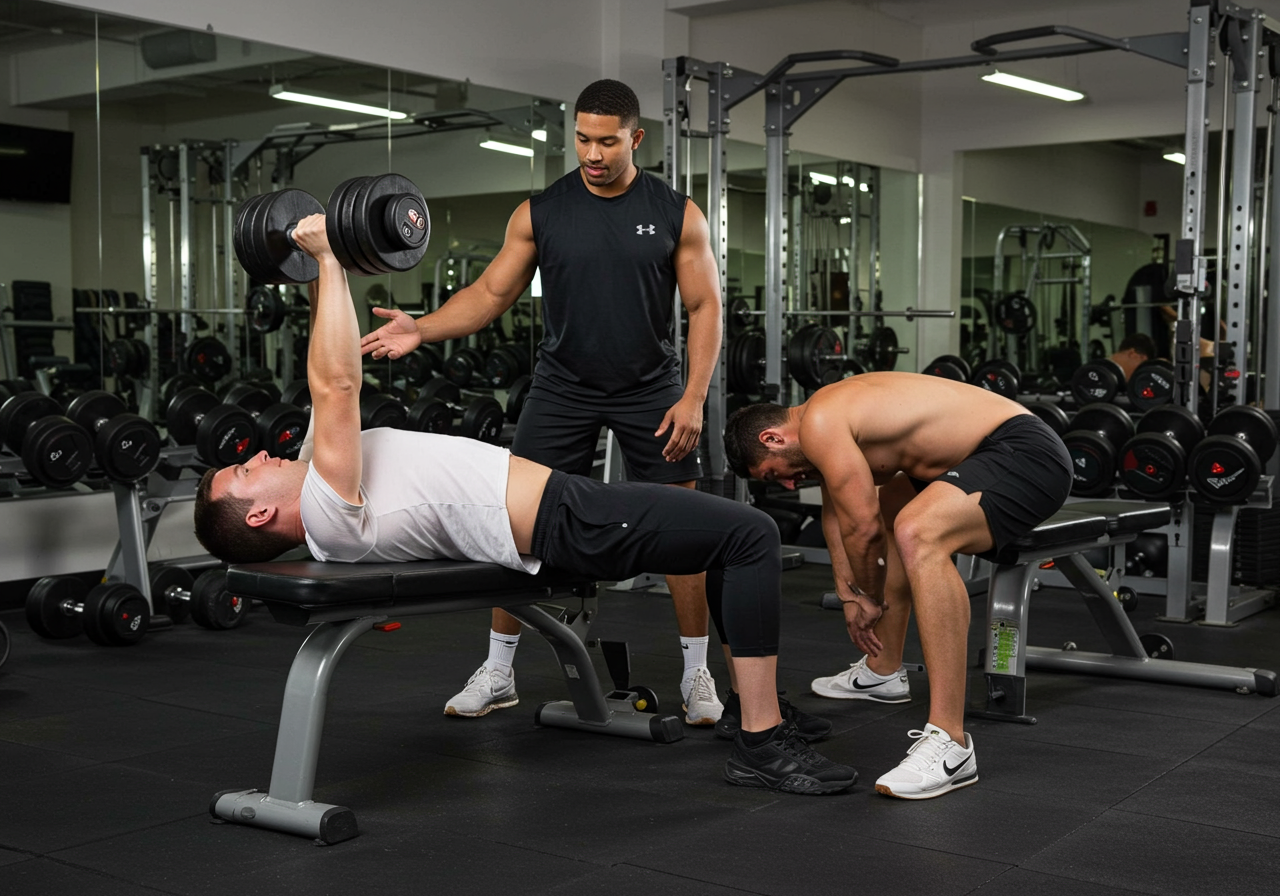
Dumbbell Press: Target Chest at Various Angles (Flat, Incline, Decline)
Chest Press Angles That Build Balanced Strength

Understand angles to build your chest safely and evenly
Angles decide which chest fibers work hardest. Small changes matter.
Incline targets upper chest. Flat targets mid chest. Decline targets lower chest and reduces shoulder stress.
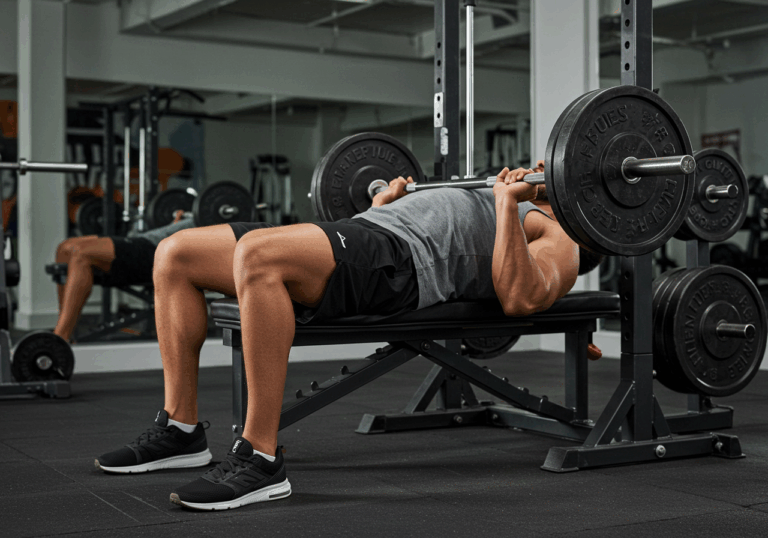
- Bench angles: Incline 15–30°, Flat 0°, Decline -10 to -15°.
- Scapula: Retract and depress. Keep shoulders down.
- Feet: Drive into floor. Keep glutes on bench.
- Grip: Neutral to 45° rotate. Keep wrists straight.
- Range: Lower until dumbbells align with mid chest.
| Angle | Primary focus | Key cues | Common errors |
|---|---|---|---|
| Incline 15–30° | Upper chest, front delts | Elbows 45–60°. Touch upper chest. | Too steep bench. Flaring elbows. |
| Flat 0° | Mid chest, triceps | Pack shoulders. Slight arch. | Bouncing. Narrow grip. |
| Decline -10 to -15° | Lower chest, triceps | Touch lower chest. Neutral wrists. | Neck strain. ROM too short. |
I learned this the hard way. Skipping warm-up once led to a strained pec minor. I now prepare methodically.
Your Weekly Dumbbell Press Plan

Use a clear plan to train all chest angles each week
Balanced training spreads stress and builds complete strength. Two upper sessions work well.
- 5 minutes cardio in Zone 2 (60–70% max heart rate).
- Foam roll thoracic spine for 60 seconds.
- Band pull-aparts 2×15 and scap push-ups 1×15.
- Two ramp-up sets per angle at 50% and 70% load.
| Level | Exercise order | Sets x reps | RIR | Rest | Tempo |
|---|---|---|---|---|---|
| Beginner | Incline → Flat → Decline | 3×8 each | 2–3 | 90–120 sec | 3-1-1 |
| Intermediate | Incline → Flat → Decline | 4×6–10 each | 1–2 | 90–150 sec | 2-1-1 |
| Advanced | Rotate first lift weekly | 5×5–8 each | 0–2 | 120–180 sec | 2-0-1 |
RIR means reps in reserve. Keep one or two reps back most sets.
| Week plan | Session A | Session B |
|---|---|---|
| Mon | Incline focus + triceps | — |
| Thu | — | Flat focus + shoulders |
Beginners start with 15–25 total chest sets weekly. Intermediates use 12–20 sets.
I coach beginners to press twice weekly. Progress accelerates without excessive soreness.
Progressive Overload That Actually Works

Progress gradually to keep joints happy and numbers climbing
Small, steady changes beat random heavy days. Track everything.
| Method | How to use | Best for |
|---|---|---|
| Double progression | Stay in 6–10 reps. When all sets hit 10, add weight next week. | Most lifters |
| Reverse pyramid | Heaviest first set, then reduce 5–10% load each set. | Advanced focus |
| Tempo work | Lower 3 seconds. Pause 1 second at chest. | Beginners learning control |
My recent block lasted eight weeks. I trained chest twice weekly. I tracked heart rate with a Garmin watch.
Warm-ups sat in Zone 2 around 120–130 bpm. Work sets stayed below 140 bpm.
| Lift | Week 1 | Week 4 | Week 8 |
|---|---|---|---|
| Incline DB press | 55s 3×8 (2 RIR) | 60s 4×9 (2 RIR) | 65s 4×10 (1 RIR) |
| Flat DB press | 70s 3×8 (2 RIR) | 75s 4×9 (1–2 RIR) | 80s 4×10 (1 RIR) |
| Decline DB press | 65s 3×10 (3 RIR) | 70s 3×11 (2 RIR) | 75s 3×12 (1–2 RIR) |
Upper chest responded fastest. Reverse pyramid helped me break a mid-cycle incline plateau.
Client Maya, 39, used double progression. She went from 20s 3×10 to 30s 3×10 in six weeks.
Client Ethan, 51, used tempo work. His shoulder ache vanished by week three. His reps still climbed.
Recovery, Mobility, and Fuel for Press Gains

Recover well to press harder and stay pain free
Recovery builds muscle. Training provides the stimulus.
For muscle gain, eat 200–300 calories above maintenance. Track in MyFitnessPal for two weeks.
I average 2,800 calories on press days. I hit 180 g protein and sleep 8 hours nightly.
| Supplement | Dose | Purpose |
|---|---|---|
| Creatine monohydrate | 3–5 g daily | Strength and size support |
| Caffeine | 2–3 mg/kg preworkout | Acute performance boost |
| Omega-3 | 1–2 g EPA+DHA | Inflammation support |
- Thoracic extensions on foam roller: 8 slow reps.
- Doorway pec stretch: 2×30 seconds each side.
- Band external rotations: 2×15.
- Scap push-ups: 1×15.
I track sleep and heart rate with a Garmin watch. Low HRV days trigger lighter sessions.
I program a 15% deload every seventh week. Soreness drops and strength rebounds faster.
Zone 2 walks aid recovery between sessions. I keep them 20–30 minutes and easy.
Use MyFitnessPal for calories and macros: myfitnesspal.com. Track heart rate with Garmin: garmin.com.
Real Results, Fixes, and Long-Term Analysis

Measure outcomes and solve problems for sustainable routine maintenance
Numbers prove progress. Photos confirm visual changes.
| Metric | Start | Week 6 | Week 8 |
|---|---|---|---|
| Flat DB press 10RM | 70s x10 | 80s x9 | 80s x12 |
| Chest circumference | 103 cm | 105 cm | 106 cm |
| Body weight | 79.5 kg | 80.4 kg | 80.8 kg |
After six weeks, I added ~12% to 10RM. Visual fullness improved notably.
Clients reported stronger lockouts and less shoulder discomfort. Technique cleaned up quickly.
- Rotate first exercise weekly to change emphasis.
- Increase rest by 30–60 seconds on heavy sets.
- Add microplates: 1–2 lb per dumbbell.
- Drop one set per angle if soreness lingers.
Injury adjustments help you continue. Use floor presses for pain-free range and push-up handles for wrists.
Motivation thrives with tracking. I log loads and sets in a spreadsheet and check weekly photos.
For adherence, I pair sessions with a friend. We schedule two fixed slots weekly.
Long-term consistency beats any single peak. Keep form tight and progress slow, and you will grow.