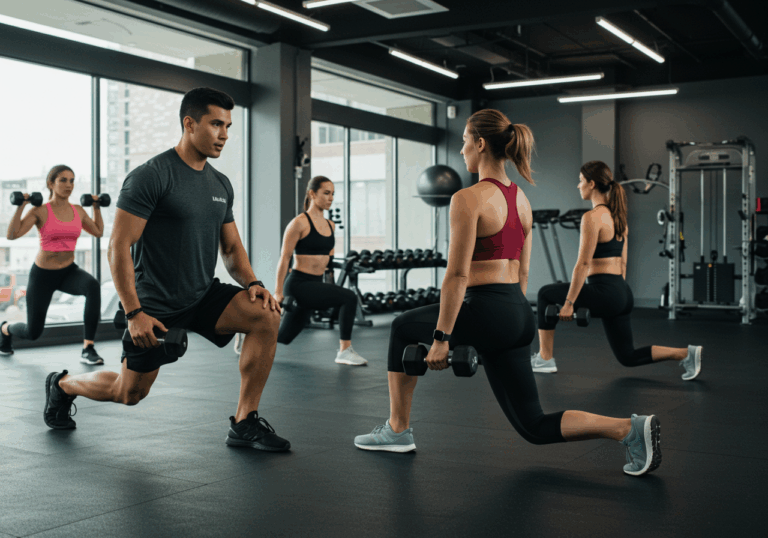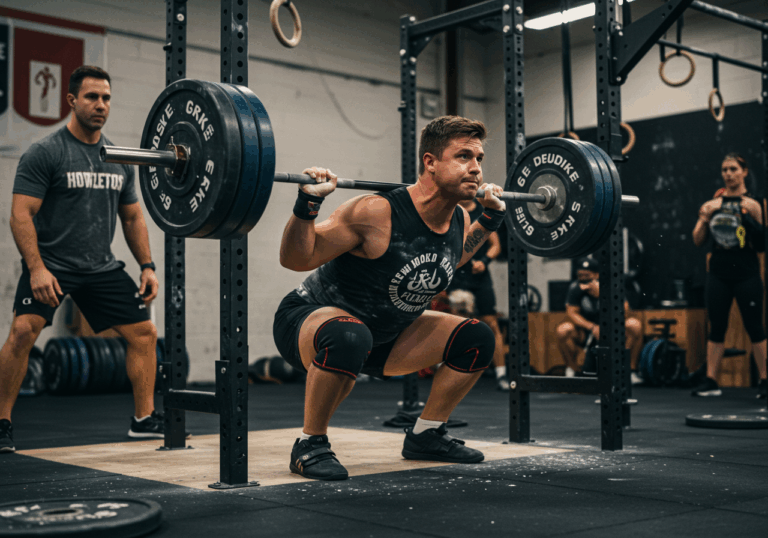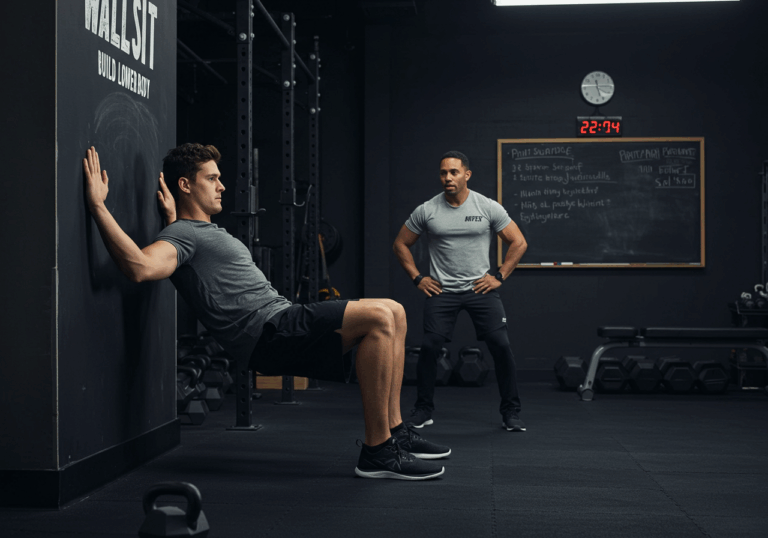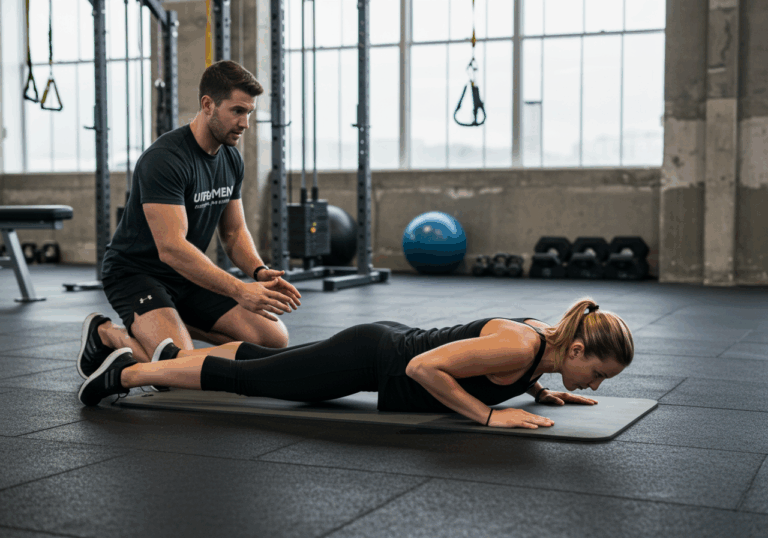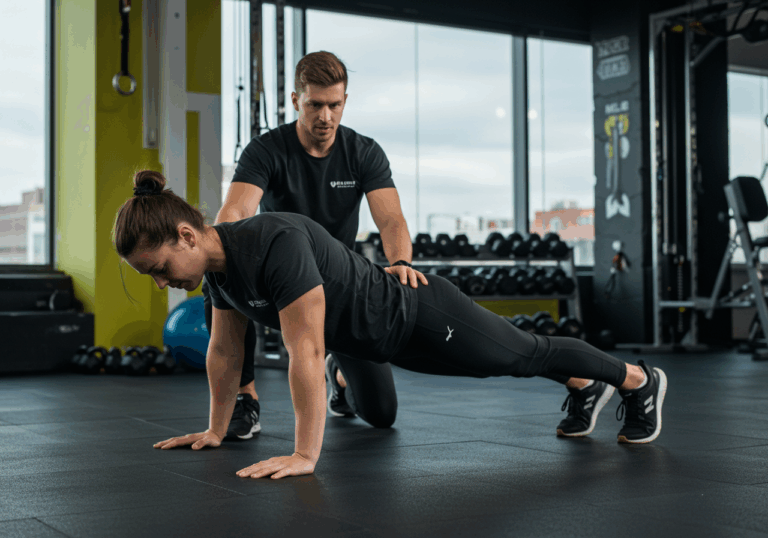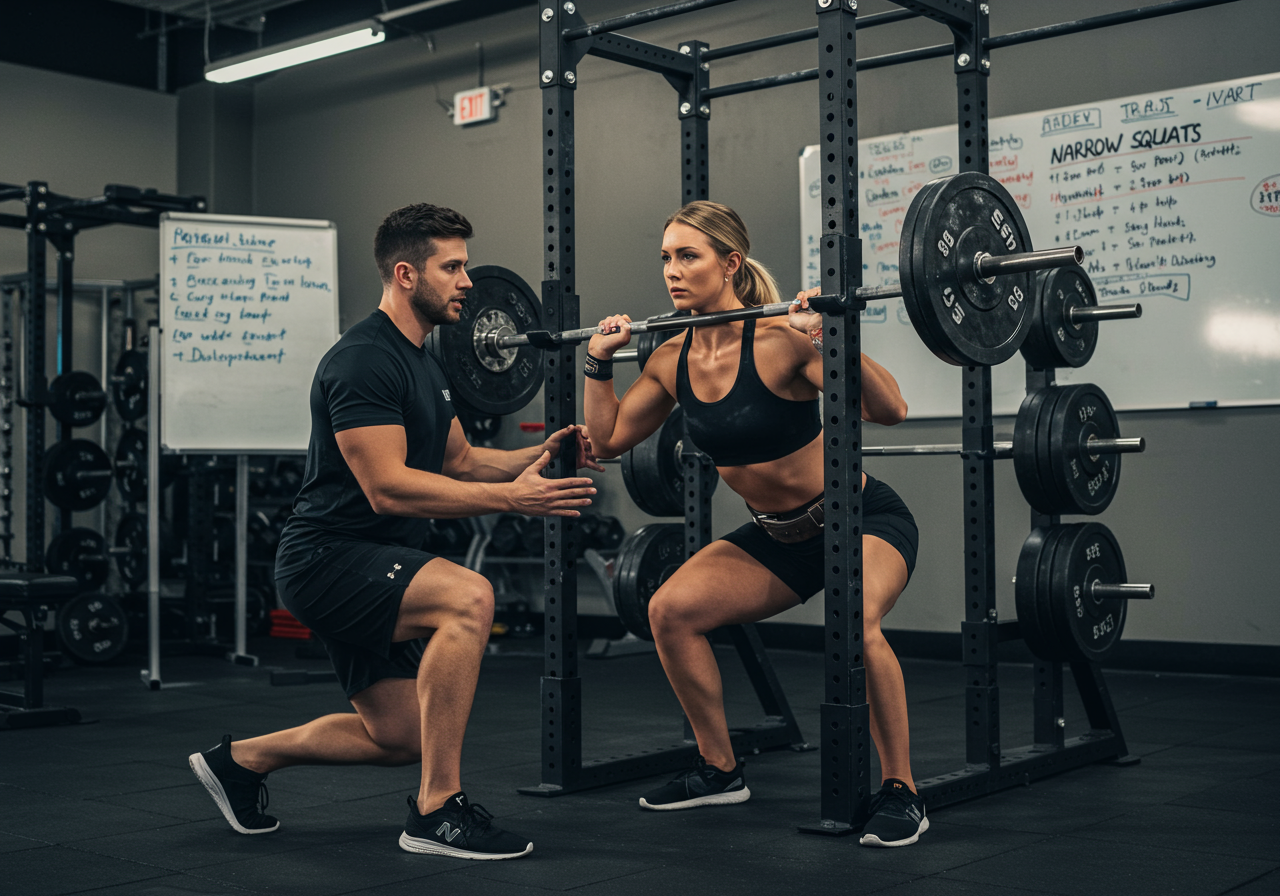
Narrow Squats: Balanced Lower Body Development
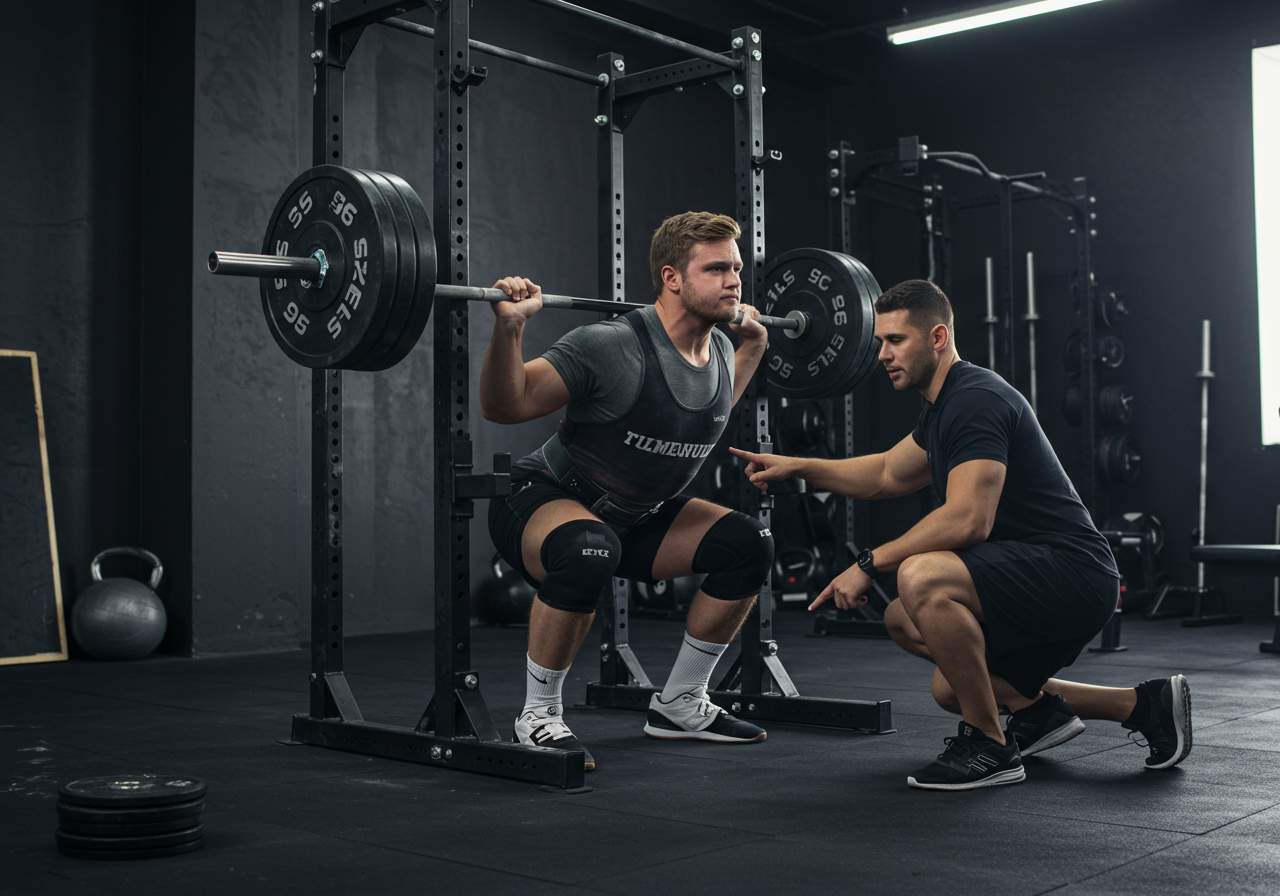
Blueprint: Narrow Squats build balanced legs and resilient movement
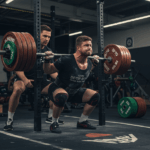
Narrow squats set your heels roughly hip-width. Toes point slightly out. This stance increases knee bend demand. Quadriceps, adductors, and glutes share the load. Ankles and hips move together. The result is balanced development and clean tracking.
I use this stance with beginners. It teaches depth without collapsing arches. It also builds strength that transfers to running and cycling.
- Breathing: Two diaphragmatic breaths. Brace like a cough.
- Foot setup: Heels hip-width. Big toe, little toe, heel press evenly.
- Warm-up: 5 minutes brisk walk, then 8 bodyweight narrow squats.
- Activation: 2 sets x 12 mini-band side steps.
- Main lift: 3 sets x 8 goblet narrow squats, RIR 2.
| Day | Main Squat | Accessory | Conditioning | Focus |
|---|---|---|---|---|
| Mon | Goblet narrow 4×6-8 | Split squat 3×10 | Zone 2 walk 20 min | Patterning |
| Wed | Back squat narrow 5×5 | Hamstring curl 3×12 | Core 10 min | Strength |
| Fri | Front squat narrow 4×4 | Calf raise 3×15 | Intervals 6x45s | Power |
I track sets and RIR in MyFitnessPal notes. I also log bar speeds using a simple timer. Garmin HR tracks conditioning zones reliably.
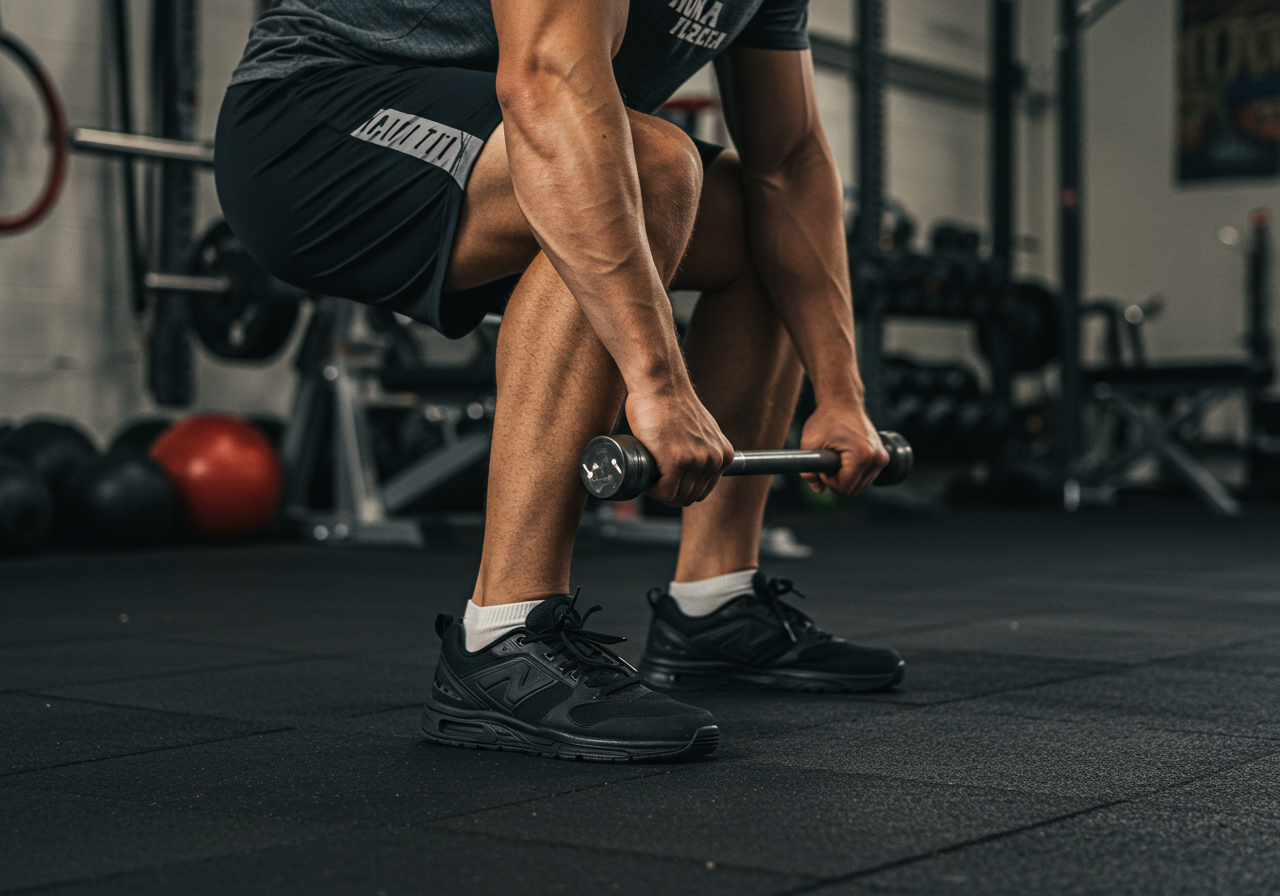
Technique mastery keeps joints safe while strength climbs
Start with controlled descent. Brace your trunk before every rep. Maintain a stacked ribcage over pelvis. Drive knees forward and out evenly.
Find your foot tripod. Press big toe, little toe, and heel. This stabilizes arches. It also helps knee tracking.
Keep the bar over midfoot. Move like an elevator, not an escalator. Use a smooth tempo. I favor 3 seconds down, 1 second pause, drive up.
| Variation | Sets x Reps | Rest | RIR | Use case |
|---|---|---|---|---|
| Goblet narrow | 3-5 x 6-10 | 90 sec | 1-3 | Beginner pattern and depth |
| Back squat narrow | 4-6 x 3-6 | 2-3 min | 1-2 | Max strength |
| Front squat narrow | 3-5 x 3-5 | 2-3 min | 1-2 | Torso upright, quad focus |
| Heels elevated | 3-4 x 8-12 | 90 sec | 1-3 | Limited ankle mobility |
| Tempo 3-1-1 | 3-4 x 5-8 | 2 min | 1-2 | Control at depth |
| Safety bar narrow | 4 x 4-6 | 2-3 min | 1-2 | Shoulder friendly |
- If knees cave inward, reduce load and add tempo.
- If heels lift, elevate heels or mobilize calves.
- If back arches hard, reset brace and exhale longer.
This technique section supports the blueprint. It prepares you for progressive loading ahead.
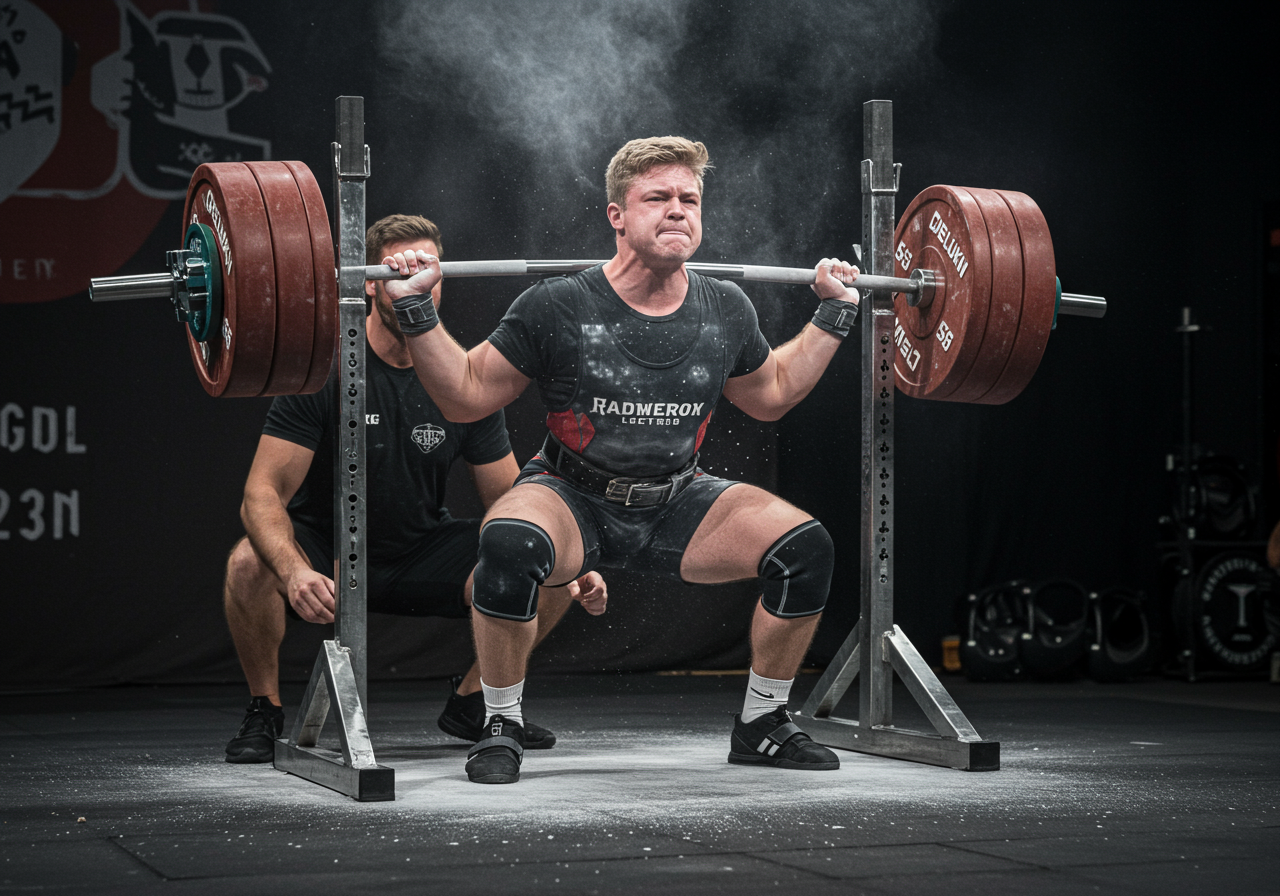
Progression planning drives steady gains and real confidence
We now layer progression on clean technique. We use simple blocks. Each block controls volume and intensity.
| Level | Weeks | Main squat | Progression | Target |
|---|---|---|---|---|
| Beginner | 1-4 | Goblet narrow 4×8 | +1 rep weekly, then +2.5 kg | RIR 2-3 |
| Intermediate | 5-8 | Back squat narrow 5×5 | +2.5–5 kg every 1-2 weeks | RIR 1-2 |
| Advanced | 9-12 | Front squat narrow 6×3 | Wave 80/85/90% 1RM | Bar speed focus |
I schedule two lower sessions weekly. I add a short finisher for conditioning. That keeps recovery manageable.
- Warm-up: 5 minutes bike, HR Zone 1-2.
- Mobility: Ankles and hips, 6 minutes total.
- Back squat narrow: 5×5 at 85 kg, RIR 2.
- Front rack hold: 3×20 seconds at 100 kg.
- Leg curl: 3×12 at RPE 7.
- Finisher: 6x45s bike sprints, Zone 4-5, 75s easy between.
- Total time: 62 minutes. Average HR 131 bpm.
I compared intervals against steady walks during a mini-cut. HIIT reduced waist faster for me. Steady walking improved daily energy and sleep.
| Method | Duration | Typical HR | Outcome in 4 weeks |
|---|---|---|---|
| HIIT bike sprints | 12-15 minutes | Zone 4-5 | -1.3 kg fat, legs felt snappier |
| Zone 2 walks | 25-35 minutes | Zone 2 | Better recovery, sleep up 35 minutes |
I track HR with Garmin and log intervals on Strava. Both sync smoothly. Strava shows pace trends clearly.
For transparency, I once skipped bracing practice. I tweaked my back. I now brace before every single rep.
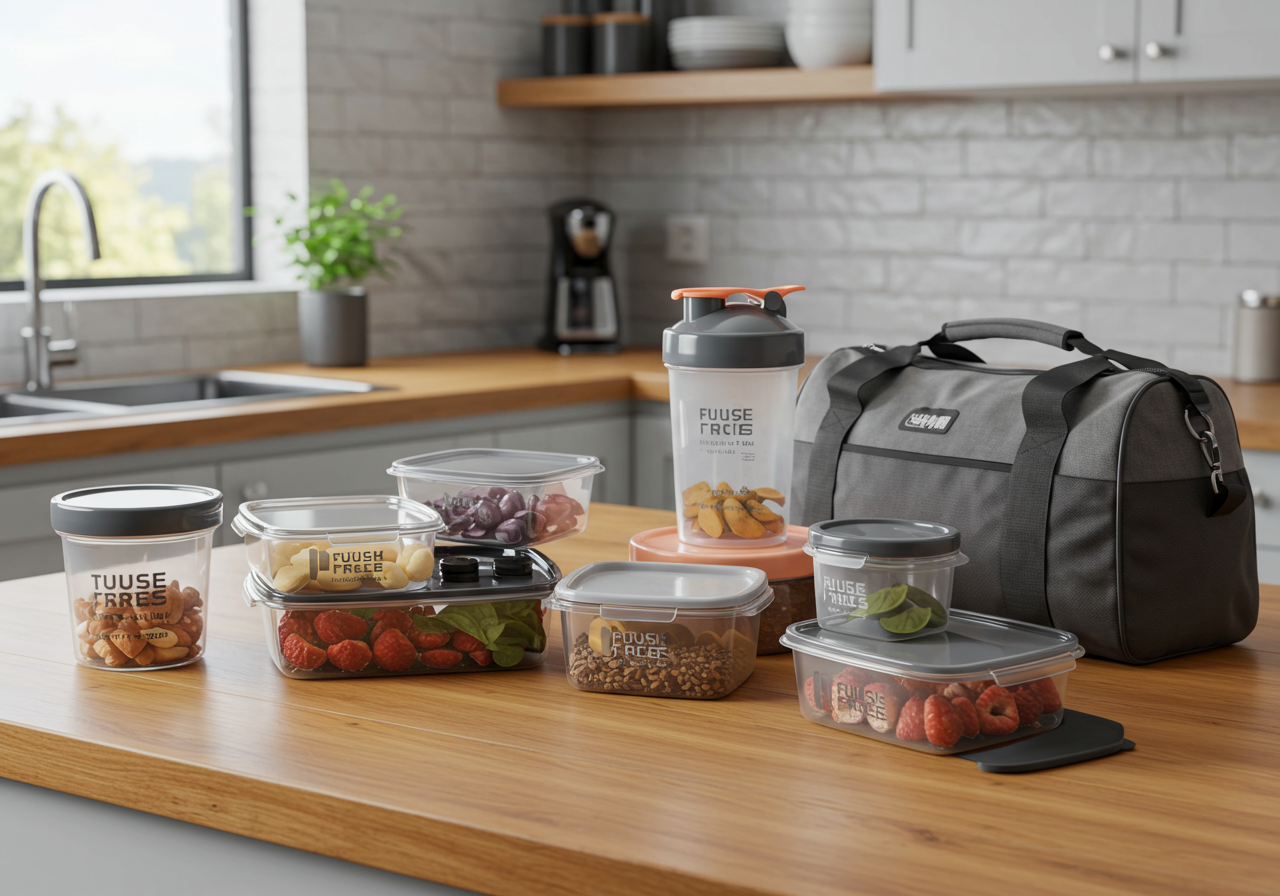
Fuel, recovery, and mobility keep gains coming
Nutrition drives training quality. Recovery anchors the plan. Mobility keeps joints happy under load.
For a 75 kg beginner, I set 2,200–2,400 kcal while learning technique. I log meals in MyFitnessPal. Consistency beats perfection.
Supplements that actually help: Creatine 3–5 g daily. Caffeine 1.5–3 mg/kg pre-lift. Electrolytes for long sessions.
Sleep targets matter. I aim for 7.5–9 hours nightly. I keep a consistent bedtime. Fitbit helped me spot late-night caffeine issues.
| Recovery Tool | When | Purpose |
|---|---|---|
| 90/90 hip breathing | Post-session, 3 minutes | Reset ribs and pelvis |
| Ankle rocks | Warm-up, 2 sets x 10 | Improve dorsiflexion |
| Quad foam roll | Off days, 5 minutes | Reduce tone, ease soreness |
Client experiences speak loudly. Maya, a nurse, trained three days weekly. She wrote, “My knees stopped aching on stairs. I added 10 kg to my squat in eight weeks.”
Another client, Luis, said, “Heels-elevated narrow squats saved my depth. I finally hit parallel without pain.”

Evidence checks, troubleshooting, and long-term result interpretation
We verify progress with numbers. We adjust before frustration builds. We keep the plan sustainable.
| Metric | Target change | Tool | Frequency |
|---|---|---|---|
| 5RM narrow back squat | +5–10% in 8 weeks | Training log | Weekly |
| Depth consistency | Parallel or better | Video review | Every session |
| Knee comfort | 0–2/10 after sessions | Pain scale | Daily |
| VO2 max | +5–10% in 6 weeks | Garmin estimate | Weekly |
My recent 6-week block produced clear changes. VO2 max rose about 8%. 5RM increased from 100 kg to 112 kg. Waist dropped 2.5 cm.
A beginner client improved quickly. She added 17.5 kg to her goblet squat in four weeks. Her stairs felt easy by week three.
- Stuck at 5×5? Switch to 6×3 for two weeks.
- Bar slows mid-range? Add 2-count pauses at parallel.
- Sore knees? Elevate heels and reduce load 10% temporarily.
- Log loads and RIR right after sets.
- Film one top set from the side.
- Hit 7,000–10,000 steps daily.
- Protein minimum met before bedtime.
Use Garmin for HR tracking at garmin.com. Track food on myfitnesspal.com. Share sessions on strava.com for accountability.
This system started with stance. It added technique, then progression. Finally, we validated results and adjusted the plan.