Rugby: Full-Contact, High-Intensity Team Sport

Rugby skills grow fastest with simple, safe, repeatable practice.
New players need clear fundamentals first. I teach stance, footwork, and catching before contact. This order builds confidence.
Ball security matters under pressure. I build grip strength and forearm endurance early. These details reduce drops in games.
- Feet shoulder-width, hips low, chest proud.
- Catch with hands, then bring to chest.
- Pass from the core, not only the arms.
- Lead the receiver’s chest, not the head.
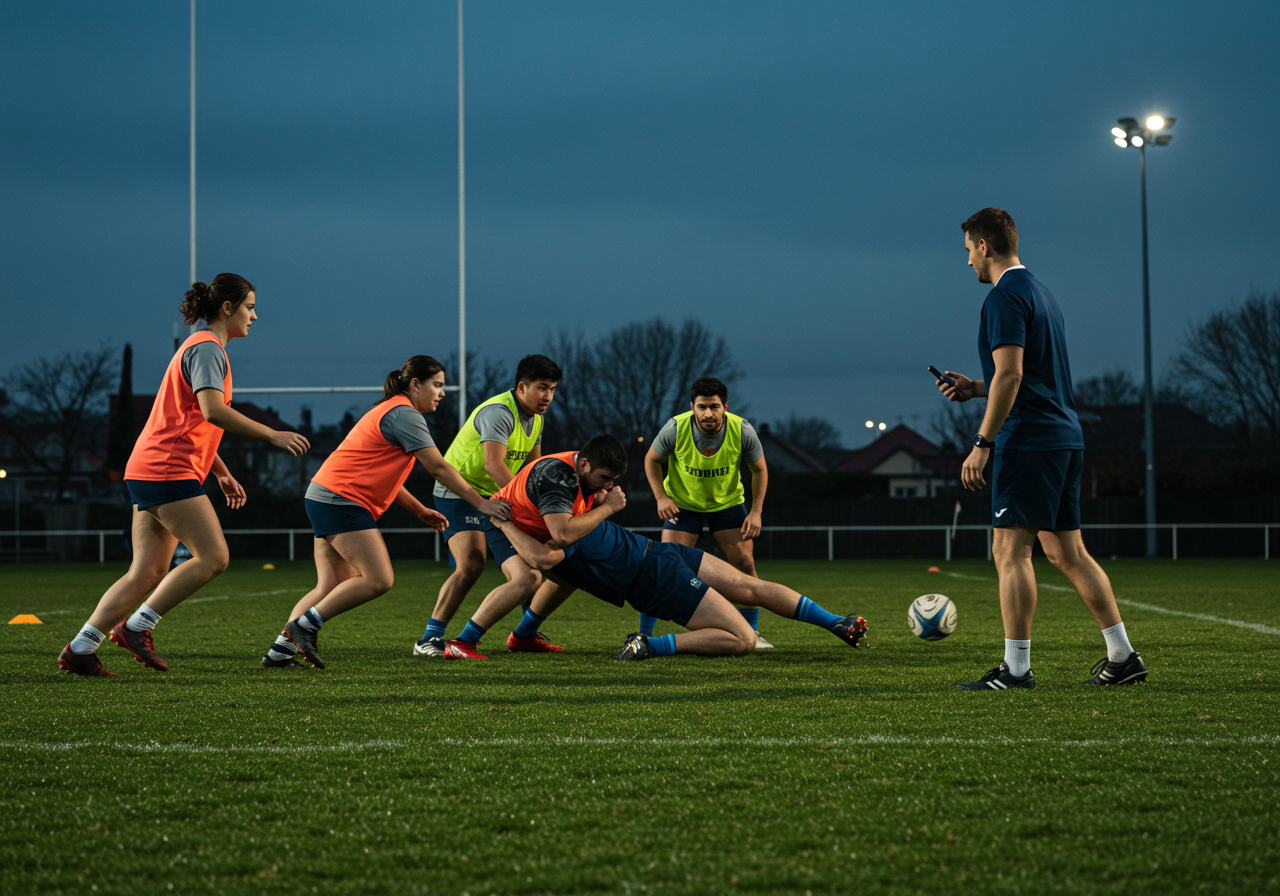
- For tackling, head to the side, eyes wide, cheek to cheek.
- Wrap arms, drive through, and control the fall.
- 90 seconds ankle rocks and hip openers.
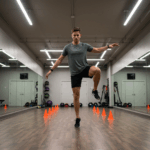
- 3 minutes light jogging with high knees.
- 3 minutes partner passing, both sides.
- 2 minutes tackle-pad hits at 60% intensity.
- 90 seconds plank and side plank.
| Level | Drill | Sets/Reps | Rest | Focus |
|---|---|---|---|---|
| Beginner | Stationary passing both sides | 4×12 | 45s | Hand placement, spiral |
| Beginner | Cone weave with ball | 5x20m | 60s | Footwork, guard the ball |
| Intermediate | Moving pass under pressure | 6x30m | 60s | Timing, communication |
| Intermediate | Tackle-pad shoulder hits | 4×6/side | 75s | Head position, wrap |
| Advanced | 2v1 and 3v2 decision drills | 8 rounds | 60s | Deception, support lines |
| Advanced | Controlled live tackling | 6×3 | 90s | Level change, finish |
Skill work sets the base for later conditioning. Your feet and hands guide everything.

Rugby performance needs a complete engine, not isolated pieces.
Games demand repeated sprints, collisions, and quick decisions. I train all energy systems together for durability.
Strength builds safer contact. Conditioning keeps speed late in matches. Mobility reduces strain and improves positions.
- Alactic: 5–10 second sprints and hits. Full power, long rests.
- Glycolytic: 20–60 second efforts. Hard runs, repeated reps.
- Aerobic: steady output between plays. Recovery and pacing engine.
| Day | Focus | Session Details |
|---|---|---|
| Mon | Strength Lower + Alactic | Front squat 4×5 @70%, Nordic curl 3×6, Sled push 6x10s, walk back 60s |
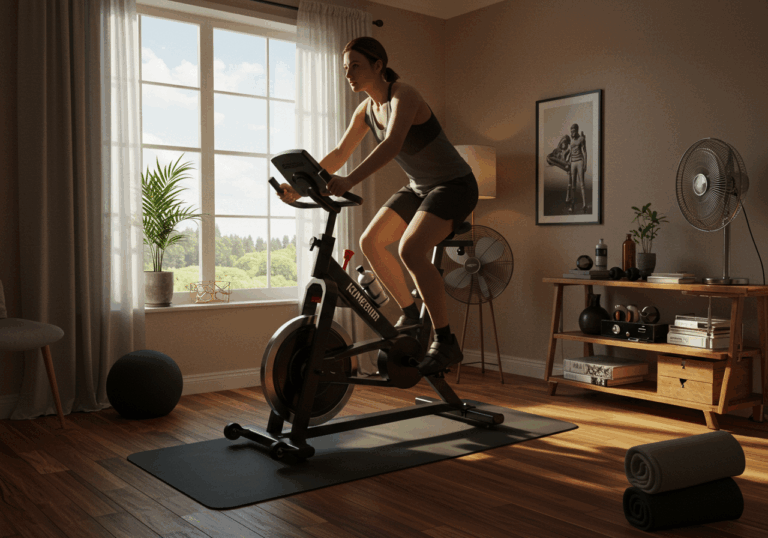
| Tue | Skills + Aerobic | 45 min Zone 2 run or bike, passing drills 20 min |
| Wed | Strength Upper + Collision | Bench 4×6 @70–75%, Row 4×8, Tackle-pad hits 8×3, Rest 90s |
| Thu | Glycolytic Intervals | 6x30s hard run @90–95% HRmax, 2:30 easy jog |
| Fri | Mobility + Speed | Hips/ankles 20 min, 8x20m sprints, walk back recovery |
| Sat | Game Practice | Small-sided games 30–45 min, set piece reps 15 min |
| Sun | Recovery | Walk 30 min, stretch 15 min, breath work 5 min |
- Zone 2 run: 35–50 minutes at 60–70% HRmax. Talk pace.
- 4×4 minutes: 90–95% HRmax, 3 minutes easy jog. Big engine builder.
- Alactic sprints: 10×10 seconds all-out, 60–90 seconds rest. Full recovery.
Load increases drive progress without spikes. I add 2.5–5% weekly if form stays crisp.
| Lift | Week 1 | Week 2 | Week 3 | Week 4 |
|---|---|---|---|---|
| Front Squat 4×5 | 70% | 72.5% | 75% | Deload 60% |
| Bench 4×6 | 70% | 72.5% | 75% | Deload 60% |
| RDL 3×8 | 65% | 67.5% | 70% | Deload 55% |
Mobility unlocks better scrums and rucks. I hit hips, T-spine, and ankles daily.
- 90/90 hip switches x20.
- World’s greatest stretch x6/side.
- Banded ankle rocks x15/side.
- Thoracic opener on bench x10.
Nutrition supports sessions and recovery. I target 1.6–2.2 g/kg protein daily for muscle repair.

Enjoyment keeps you consistent and sharp during games.
Sessions work better when drills feel fun and purposeful. I build games into conditioning days.
Clear calls reduce hesitation. Simple language keeps structure under fatigue. Everyone learns the same cues.
- Immediate feedback after reps.
- Balanced challenge, not overwhelm.
- Short rests that retain focus.
- Roles defined before drills start.
- 3v3 touch on 20x20m. Play 90 seconds, rest 60 seconds, for 10 rounds.
- Channel tackle: 1v1 in a lane. Tackle, pop up, pass to support, rotate.
- Kick and chase: Kick to a zone, race, and set a ruck. Keep it controlled.
| Call | Meaning | Use Case |
|---|---|---|
| “Tip” | Short pass to runner next to carrier | Tight spaces near ruck |
| “Pull” | Pass behind decoy runner | Beat blitz defense |
| “Kick On” | Kick to space and chase | Slow ball or advantage |
Fun sessions grow attendance. Consistent attendance creates better results with less burnout.

Stepwise planning moves you from zero to confident.
This schedule layers skills, fitness, and contact. You will progress safely across three phases.
I track zones with a Garmin watch and Strava uploads. I log meals in MyFitnessPal.
| Phase | Weeks | Beginner | Intermediate | Advanced |
|---|---|---|---|---|
| Base | 1–4 | 2 Zone 2 runs 30–40 min, 2 lifts, skills 2x | 2 Zone 2 40–50 min, 2 lifts, 1 intervals, skills 3x | 2 Zone 2 50–60 min, 3 lifts, 1 intervals, skills 3x |
| Build | 5–8 | 1 Zone 2, 1x4x4 min, 2 lifts, light contact | 1 Zone 2, 1x4x4, 1 sprint session, 3 lifts | 1 Zone 2, 1x5x4, 1 sprint, 3 lifts, moderate contact |
| Sharpen | 9–12 | 1 Zone 2, 1 sprint, 2 lifts, scrimmage weekly | 1 Zone 2, 1 sprint, 2 lifts, scrimmage 60–75 min | 1 Zone 2, 1 sprint, 2 lifts, scrimmage 75–90 min |
- Mon: Lower lift 50 minutes. Front squat, RDL, split squat, calves.
- Tue: 4×4 min @90–95% HRmax. 3 min easy between reps.
- Wed: Skills and tackle pads 45 minutes. No live hits.
- Thu: Upper lift 50 minutes. Bench, row, pull-ups, push-ups.
- Fri: Sprints 8x20m. Walk back. Mobility 12 minutes.
- Sat: Small-sided games 40–60 minutes. Limit contact to 15 minutes.
- Sun: Walk 30 minutes, stretch 15 minutes.
Progress follows good recovery. Sleep 7–9 hours nightly. Keep a steady bedtime routine.
| Nutrition Focus | Details |
|---|---|
| Calories | Bodyweight x 30–35 for training days. Adjust based on weight trends. |
| Protein | 1.6–2.2 g/kg bodyweight daily. Distribute across meals. |
| Carbs | 3–6 g/kg on practice days. Front-load before sessions. |
| Hydration | 500–750 ml per hour of training. Add electrolytes in heat. |
Track with Garmin or Strava. Log food in MyFitnessPal.

Objective results guide smart adjustments and long-term result interpretation.
Numbers keep us honest. I test before week 1 and after week 12. I compare both.
My latest group followed this plan. Their stories show what beginners can achieve with structure.
- Yo-Yo Intermittent Recovery Level 1 distance.
- 40 m sprint, split at 10 m and 30 m.
- 3RM front squat and bench press estimates.
- Tackle-pad force proxy: distance pushed in 5 seconds.
| Metric | Baseline | Week 6 | Week 12 |
|---|---|---|---|
| VO2 max (watch estimate) | 42 ml/kg/min | 45.5 ml/kg/min | 48 ml/kg/min |
| Yo-Yo IR1 | 960 m | 1180 m | 1440 m |
| 40 m sprint | 6.00 s | 5.82 s | 5.70 s |
| Front squat 3RM | 85 kg | 95 kg | 110 kg |
My own cycle gave similar changes. After 6 weeks, VO2 max increased by about 8%.
HIIT beat steady running for fat loss in my logs. Skinfolds dropped faster during interval phases.
- Maya, wing, 29: Yo-Yo up 36%. Sprint 40 m improved 0.22 seconds. She added 5 kg to bench.
- Jai, flanker, 33: Tackling confidence soared. Front squat rose from 90 kg to 115 kg.
- Leo, scrum-half, 22: Passing accuracy hit 90% in drills. He reduced cramps with better hydration.
- Plateau: Drop volume 30% for one week. Return with 2.5% load bump.
- Overtraining signs: Resting HR up 8 bpm for three days. Replace intervals with Zone 2.
- Motivation dip: Swap one run for small-sided games. Keep total time equal.
- Injury niggle: Shift to pads only. Keep strength with machines and tempo work.
Weekly progress checks prevent surprises. I review Garmin HR trends and Strava splits on Sundays.
Nutrition logs reveal energy gaps. I increase carbs 0.5–1 g/kg on heavy days.
Recovery tracking matters. I aim for 7.5–8.5 hours of sleep during build weeks.