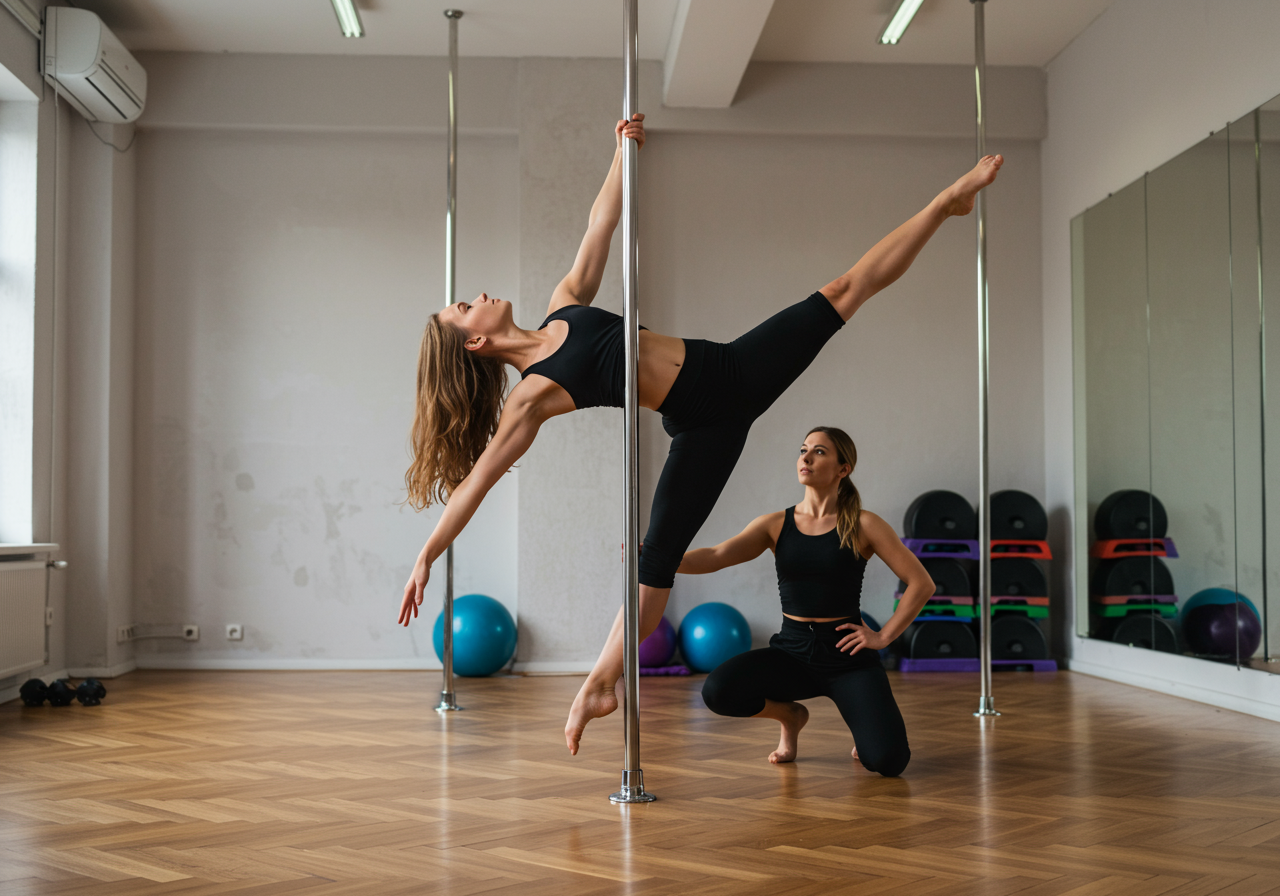
Pole Dance: Maximize Full-Body Strength, Core, Flexibility
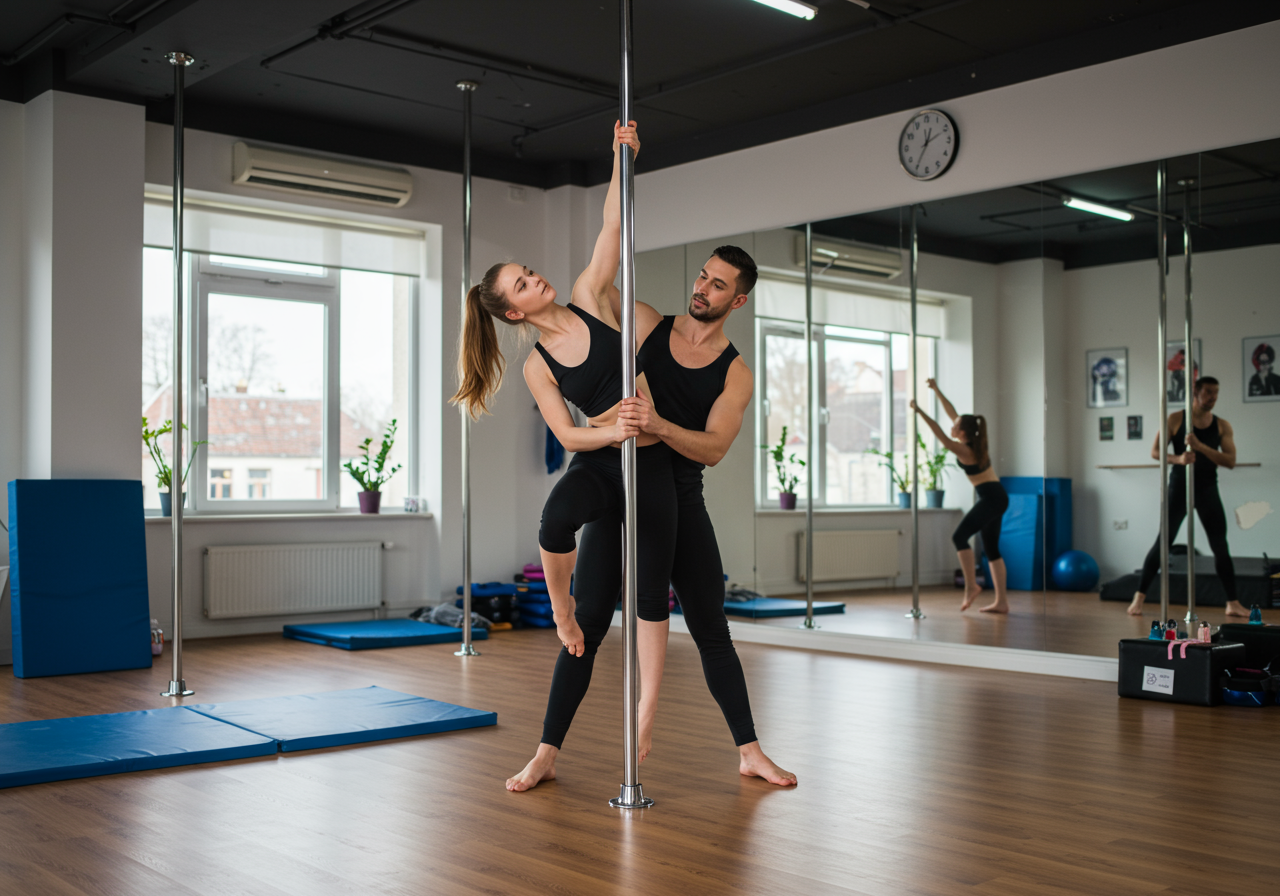
Pole dance builds strength, core steadiness, and flexibility together
This blueprint teaches safe skill growth for new athletes. I combine strength sets, flow drills, and mobility work.
My early sessions lacked structure and resulted in elbow pain. I fixed technique, loaded smarter, and recovered better.
- Grip strategy: alternate grips to reduce tendon stress and hotspots.
- Scapular control: prioritize depression and protraction for solid pulling.
- Hollow body tension: keep ribs down to protect the lumbar spine.
- Hip extension power: drive glutes for climbs, inverts, and dismounts.
- Tempo practice: slow eccentrics improve control and reduce flailing.
- Breathing timing: exhale on exertion to reinforce core brace.
Skill groups progress in logical layers for safety. Each block supports the next block.
| Skill Group | Examples | Primary Muscles | Technique Focus |
|---|---|---|---|
| Entry and Grips | Pole walk, basic hold | Forearms, lats | Thumb wrap, wrist alignment |
| Spins | Fireman, chair, back hook | Lats, core, hip flexors | Shoulder down, chest proud |
| Climbs | Basic climb, side climb | Adductors, glutes, calves | Squeeze knees, point toes |
| Inverts | Chopper, outside leg hang | Lats, lower abs | Posterior pelvic tilt, controlled kick |
| Flexibility | Pancake, bridge prep | Hamstrings, hip flexors | Breathe, progressive range |
Energy plays a role during sets. Short power bursts tax anaerobic systems, while flow rounds build aerobic capacity.
I coach heart rate awareness to manage fatigue. Simple zones keep practice efficient and safe for beginners.
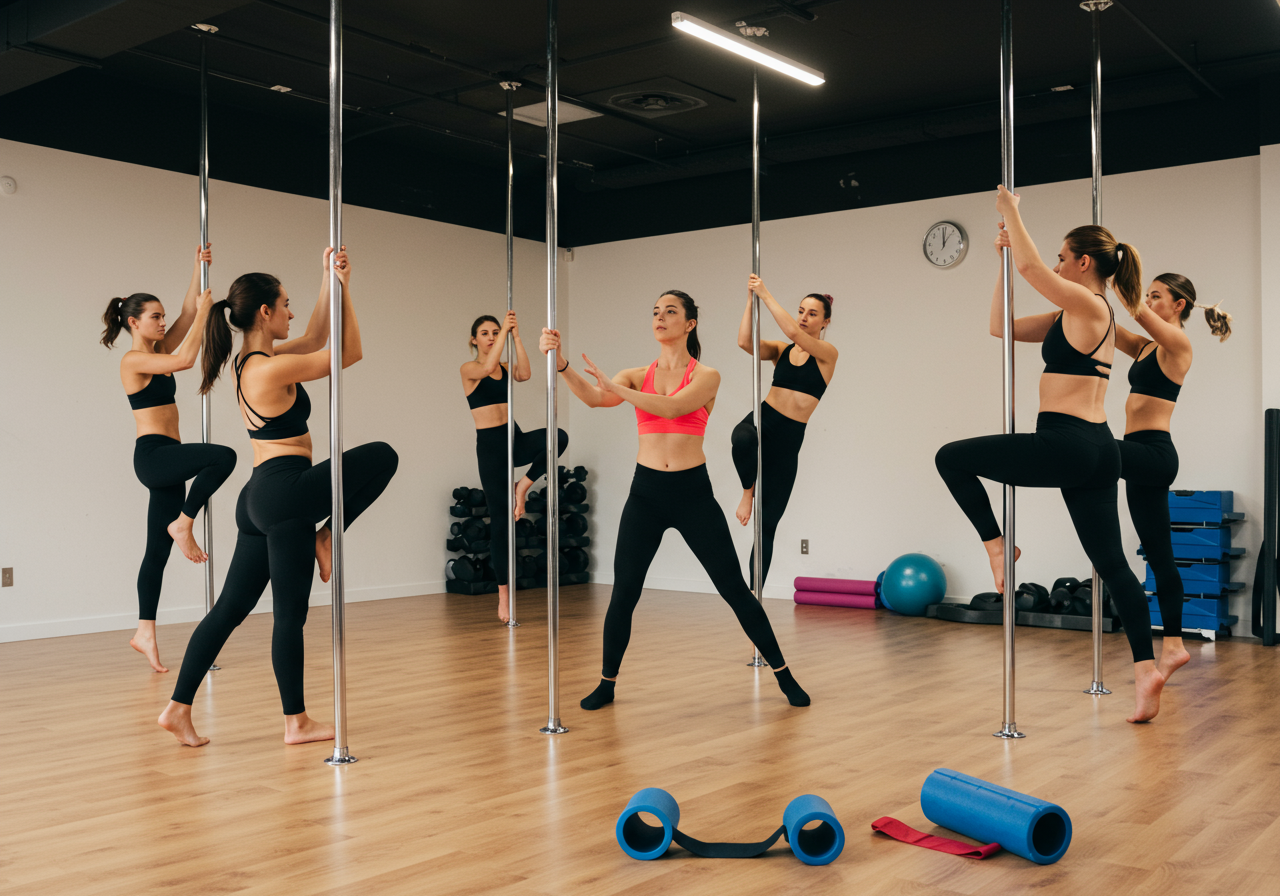
Weekly structure blends skill, strength, and mobility for steady gains
This schedule balances nervous system load across the week. You will improve safely and consistently.
- Train three days on nonconsecutive days.
- Add one optional cardio day for conditioning.
- Keep sessions 60–75 minutes with focused blocks.
| Level | Block | Drills | Sets x Reps/Time | Rest |
|---|---|---|---|---|
| Beginner | Warm-up | Joint prep, band pull-aparts | 8 minutes, HR Zone 2 | — |
| Beginner | Skill | Pole walk, fireman spin | 5 x 20–30 seconds | 60–90 seconds |
| Beginner | Strength | Hollow hold, scapular pulls | 3 x 20–30 seconds; 3 x 8 | 60–90 seconds |
| Beginner | Conditioning | Rope skip intervals | 6 x 30s fast/60s easy | As prescribed |
| Beginner | Mobility | Lat stretch, hip flexor lunge | 2 x 45–60 seconds | 30 seconds |
| Level | Block | Drills | Sets x Reps/Time | Rest |
|---|---|---|---|---|
| Intermediate | Warm-up | CNS prep, band assisted inversions | 10 minutes, HR Zone 2 | — |
| Intermediate | Skill | Chair spin, basic climb | 6 x 20–40 seconds | 60–90 seconds |
| Intermediate | Strength | Leg raises, assisted chopper | 4 x 6–8; 4 x 3 | 90 seconds |
| Intermediate | Conditioning | Bike sprints | 8 x 15s Zone 5/90s Zone 1 | As prescribed |
| Intermediate | Mobility | Pancake progressions | 3 x 45–60 seconds | 30 seconds |
| Level | Block | Drills | Sets x Reps/Time | Rest |
|---|---|---|---|---|
| Advanced | Warm-up | Dynamic prep, split activation | 10 minutes, HR Zone 2 | — |
| Advanced | Skill | Shoulder mount entries | 5 x 1–3 controlled reps | 2–3 minutes |
| Advanced | Strength | Weighted leg hangs | 4 x 5 each side | 2 minutes |
| Advanced | Conditioning | EMOM combo flows | 12 minutes total | As needed |
| Advanced | Mobility | Bridge and thoracic openers | 3 x 45–60 seconds | 30 seconds |
Heart rate zones guide conditioning. Use 60–70% max for base and 80–90% for sprints.
Use a simple max estimate if needed. Multiply 220 minus age for a quick guide.
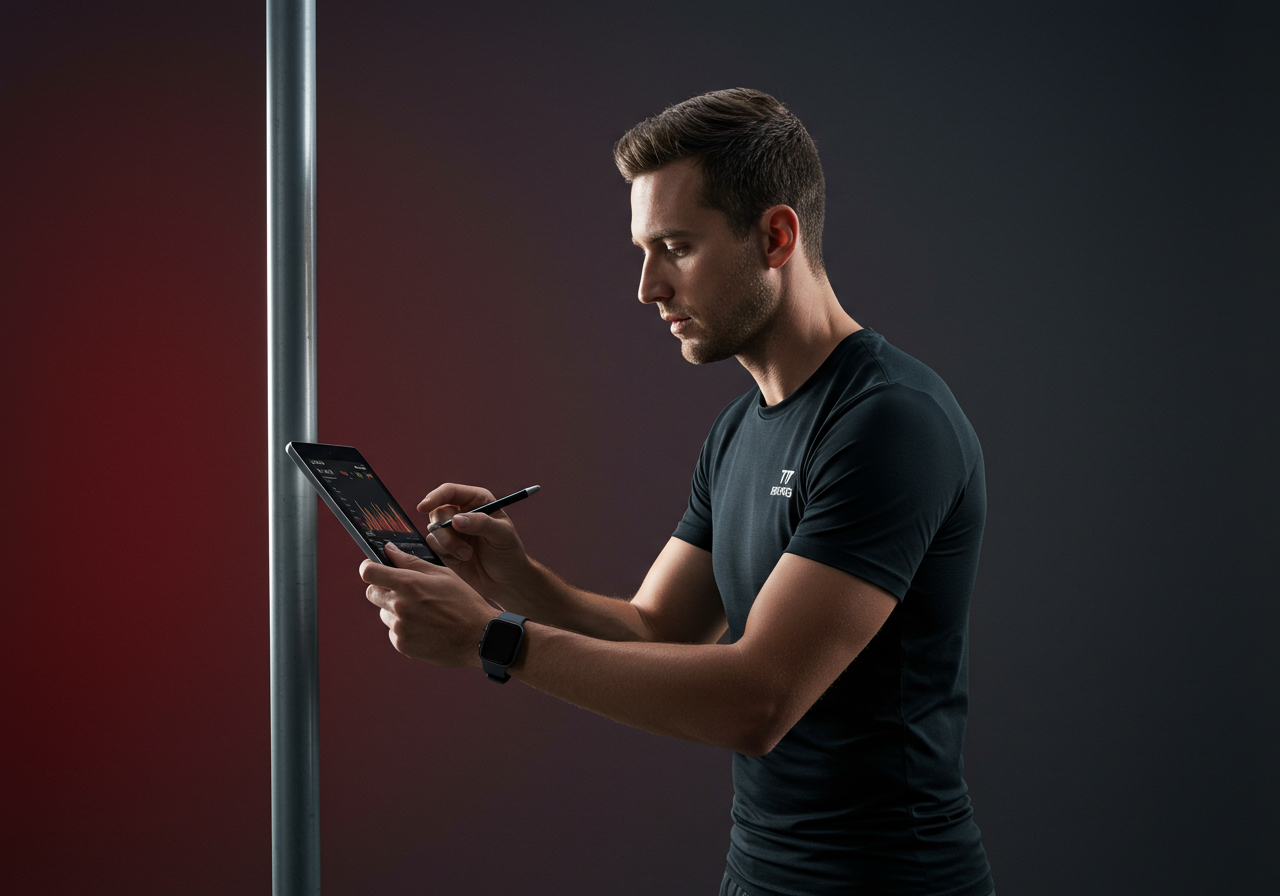
Structured phases drive measurable gains while respecting recovery cycles
This plan advances volume and complexity in waves. Fatigue stays managed while skills expand.
| Phase | Weeks | Focus | Progress |
|---|---|---|---|
| Base | 1–4 | Grip, spins, aerobic base | Add 1 set weekly |
| Build | 5–8 | Climbs, assisted inverts | Increase tempo control |
| Peak | 9–11 | Short combos, strength peaks | Reduce rest 10–15% |
| Deload | 12 | Technique polish, recovery | Cut volume by half |
Tracking provides clarity and motivation. Numbers tell the truth about progress.
| Metric | Start Target | 12-Week Goal | Tool |
|---|---|---|---|
| Grip hold time | 10–15 seconds | 35–45 seconds | Stopwatch |
| Climb repeats | 2 climbs/set | 5 climbs/set | Training log |
| VO2 max estimate | Baseline | +5–10% | Garmin |
| Session RPE | 5–6 average | 6–7 peak blocks | Note app |
| Calories and protein | Track weekly | Consistency 85%+ | MyFitnessPal |
Short sprints target anaerobic power. Easy aerobic work improves repeat recovery between pole rounds.
- Pair a heart rate watch for zone feedback.
- Log sessions in Strava or a notebook.
- Record grip time and climb count after each session.
Example workout data shows the method. I include heart rate and load details below.
Session example: 70 minutes total today. Average heart rate 142 bpm, peaks hit Zone 4.
Recovery habits and smart adjustments keep progress moving forward
Recovery determines how well you perform tomorrow. I plan it like training.
- Resting heart rate up by 8 bpm for three mornings.
- HRV drops over 12% from baseline.
- Grip strength feels weak despite sleep and food.
Nutrition supports tissue repair and energy. Simple targets work for most beginners.
| Goal | Daily Target | Notes |
|---|---|---|
| Protein | 1.6–2.2 g/kg | Split across meals |
| Calories | Deficit 250–400 if fat loss | Maintain for strength phases |
| Carbs | 3–5 g/kg on training days | Support intense rounds |
| Hydration | 35 ml/kg | More in heat |
Supplements can help if used correctly. Keep dosage simple and consistent.
- Creatine monohydrate: 3–5 g daily for strength.
- Caffeine: ~3 mg/kg pre-session for power.
- Vitamin D: test first, then correct under guidance.
My mistakes taught hard lessons. Skipping warm-ups once caused a strained calf.
- Elbow tendinopathy: limit spin volume and vary grips.
- Shoulder discomfort: emphasize scapular control and rotator cuff work.
- Groin strain risk: progress splits slowly and respect pain.
- Deload one week by 40–50% volume.
- Change grip style to shift stress.
- Add density: same work in less time.
Sleep anchors everything. Aim for 7–9 quality hours nightly.
Active recovery days include easy cycling and mobility flow. Keep heart rate in Zone 2.

Evidence from training floors and sustainable routine maintenance
Real numbers confirm the approach works for new athletes. I share results here transparently.
| Athlete | Duration | Key Wins | Measured Changes |
|---|---|---|---|
| Client M | 12 weeks | First controlled chopper | Grip hold 12s to 41s; VO2 max +7% |
| Client R | 10 weeks | Four clean climbs | Waist −6 cm; body mass −4.2 kg |
| Client A | 8 weeks | Flow combo unlocked | Chair spin 3 to 8 reps |
Personal session example shows typical training flow. I log heart rate and power.
- Duration 68 minutes with three blocks.
- Average heart rate 144 bpm, Zone 3 dominant.
- Top heart rate 174 bpm during EMOM combos.
- Deadlift accessory: 3 x 5 at 1.15 x bodyweight.
After six weeks, my VO2 max increased by roughly eight percent. Garmin estimated the rise.
HIIT beats steady cycling for fat loss in my clients. However, both improved climbing recovery.
- “I finally climbed three times without sliding.”
- “My shoulders feel stable, not pinchy anymore.”
- “My jeans fit better, and spins look smooth.”
I validate nutrition logs weekly for accuracy. I use MyFitnessPal consistently.
Cardio uploads live on Strava. Heart rate tracking runs through Garmin watches.
Long-term success relies on lifestyle fit and smart deloads. I schedule short maintenance blocks monthly.