Upright Row: Develop Shoulders & Trapezius
Blueprint: Upright Row-Centered Shoulder and Trap System
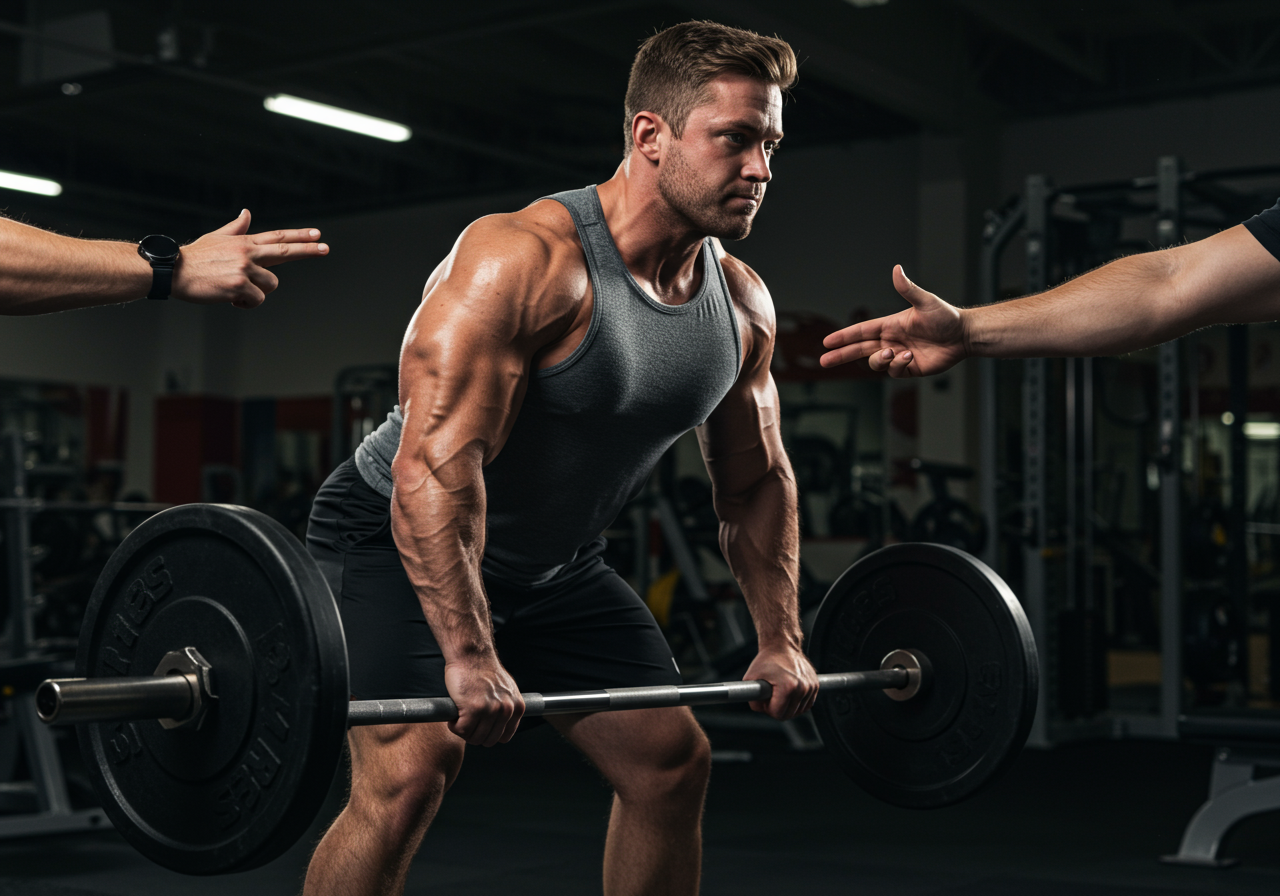
This system targets shoulders and upper traps without sacrificing joint health. It revolves around smart variations.
I center sessions on the upright row, then support with lateral raises and pulls. This balance prevents overuse.
However, technique decides comfort and results. Small details change everything for the shoulder joint.
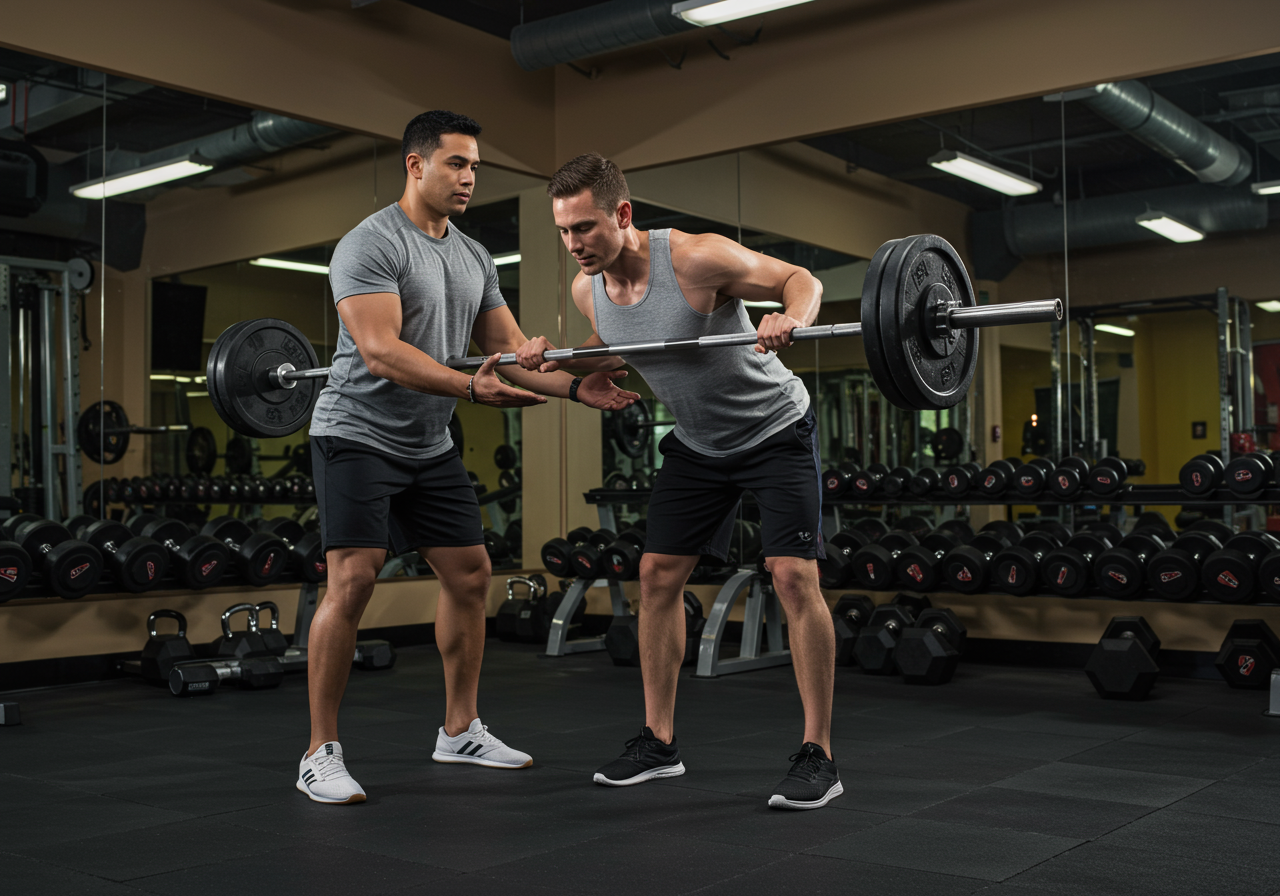
Here is the core technique I coach weekly.
- Grip just outside shoulders. Use straps only after form feels secure.
- Brace ribs down. Keep a tall, neutral spine.
- Lead with elbows, not wrists. Keep the bar close.
- Stop when elbows reach the lower chest line.
- Lower under control for two to three seconds.
| Exercise | Primary Target | When to Use | Notes |
|---|---|---|---|
| Barbell Upright Row (wide) | Delts, Upper Traps | Main lift | Elbows to chest line, 2–3s eccentric |
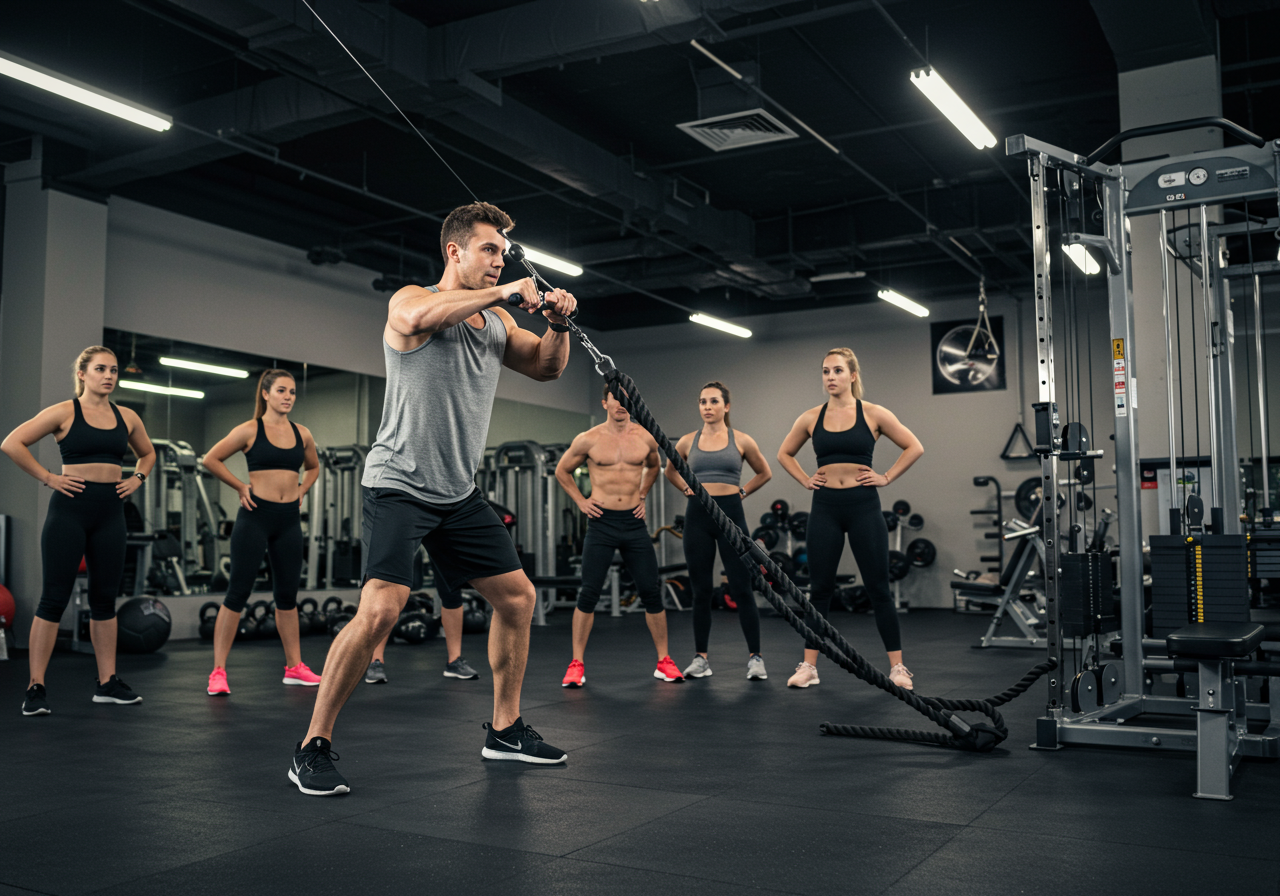
| Cable Upright Row (rope) | Delts, Mid Traps | Joint-friendly option | Neutral wrists reduce irritation |
| Dumbbell High Pull | Delts, Traps, Power | Athletic variation | Hip drive, crisp pull, low volume |
| Side-Lying Lateral Raise | Middle Deltoid | Accessory | High tension at low loads |
This framework supports complete shoulder growth and posture. It limits risky ranges and reinforces control.
Additionally, we integrate pulls and rear delts for balance. This keeps the shoulders centered and strong.
Load Progression and Measurable Overload
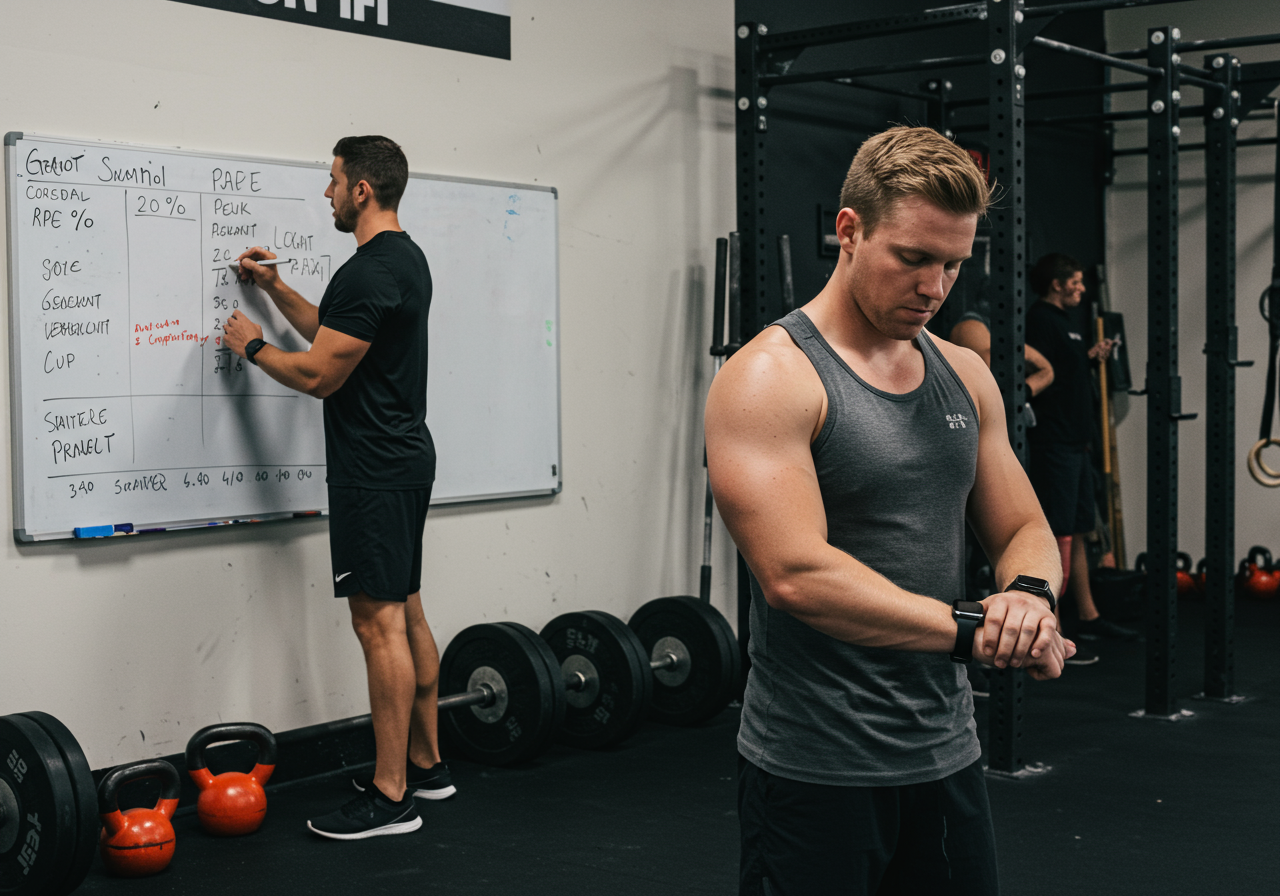
Progress requires planned overload with clear markers. I use volume, tempo, and proximity to failure.
I track RPE and bar speed feelings weekly. I also log tonnage and rep quality notes.
| Level | Sets x Reps | Relative Intensity | Rest | Tempo |
|---|---|---|---|---|
| Beginner | 3 x 10–12 | RPE 6–7 | 90–120s | 3s down, 1s up |
| Intermediate | 4 x 8–10 | RPE 7–8 | 120s | 2s down, 1s up, 1s hold |
| Advanced | 5 x 5–8 | RPE 8–9 | 150s | 2s down, explosive up |
I superset upright rows with low-skill pulling. I use band face pulls at moderate tension.
I keep accessory circuits in Zone 2 heart rate. My Garmin records 60–70% max heart rate.
For example, my last block started at 35 kg for 12s. It progressed to 45 kg for 8s.
However, form stayed strict with elbows only to chest. This preserved shoulder comfort under load.
Warm-Up, Mobility, and Recovery Nutrition
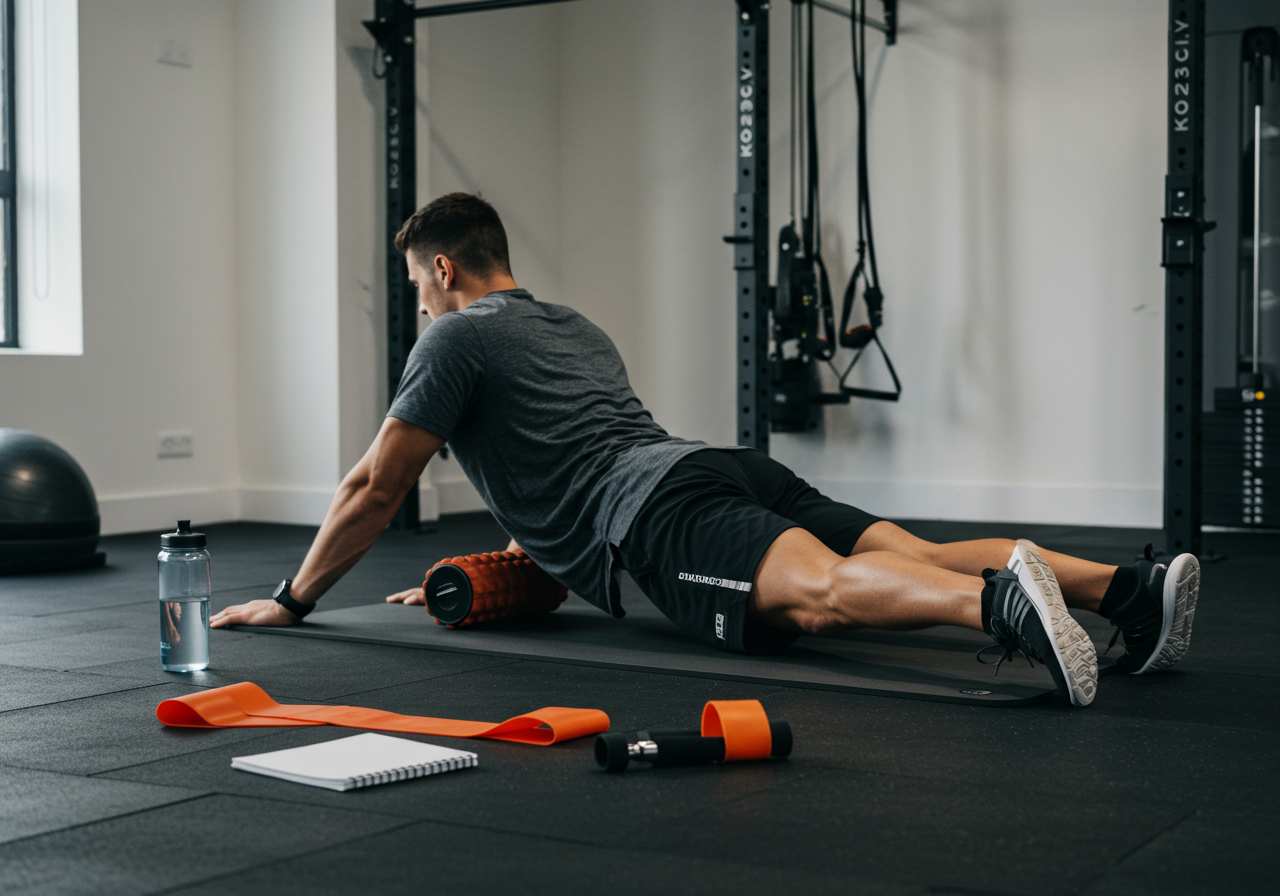
Preparation protects the shoulders before volume. I use a five-part sequence for reliable readiness.
- Breathing: Two minutes 90/90 breathing. Ribs stack and lats relax.
- T-Spine: Foam roll upper back for one minute. Then perform two extension mobilizations.
- Scapula: Scapular CARs for ten slow circles. Control shoulder blades.
- Activation: Band external rotations and face pulls. Two sets each.
- Primer: Empty-bar upright rows for two sets. Groove the path.
Recovery fuels muscle and tendons. I keep nutrition simple and consistent.
- Calories: Slight surplus for growth or modest deficit for recomposition.
- Protein: 1.6–2.2 g/kg body weight daily.
- Carbs: Heavier on training days for output and sleep quality.
- Fats: 0.6–1.0 g/kg for hormones and satiety.
I track intake with MyFitnessPal. I review weekly averages, not single days.
Additionally, I aim for seven to nine hours of sleep. I keep room temperature cool.
Creatine at five grams daily supports strength. It also helps maintain training volume.
Client note: Maya reported better posture after three weeks. Neck tightness reduced during desk work.
Weekly Templates and On-Ramp Progressions
Structure guides consistency for all levels. These templates scale stress intelligently.
| Level | Day 1 | Day 2 | Day 3 |
|---|---|---|---|
| Beginner | Wide-Grip Upright Row 3×12; Band Face Pull 3×15; Walk 20 min Zone 2 | Dumbbell Press 3×10; Side-Lying Lateral 3×12; Row Machine 12 min | Cable Upright Row 3×10; Rear Delt Fly 3×15; Core 8 min |
| Intermediate | Barbell Upright Row 4×8–10; Pull-Up 4×6; Bike 15 min Zone 2 | DB Incline Press 4×8; Lateral Raise 4×12; Seated Row 3×10 | Rope Upright Row 3×12; Face Pull 3×15; Farmer Carry 6x40m |
| Advanced | High Pull 5×5; Wide Upright Row 4×8; Assault Bike 10×20/100 easy | Push Press 5×3; Lateral Raise Myo-Reps; Chest-Supported Row 4×8 | Paused Upright Row 4×6; Snatch-Grip Shrug 4×10; Neck Iso 3x30s |
I monitor heart rate recovery between sets. My Garmin flags if recovery lags.
Additionally, I sprinkle short Zone 2 work after lifting. This supports work capacity and recovery.
For outdoor movement, I upload easy rides to Strava. It keeps motivation steady and social.
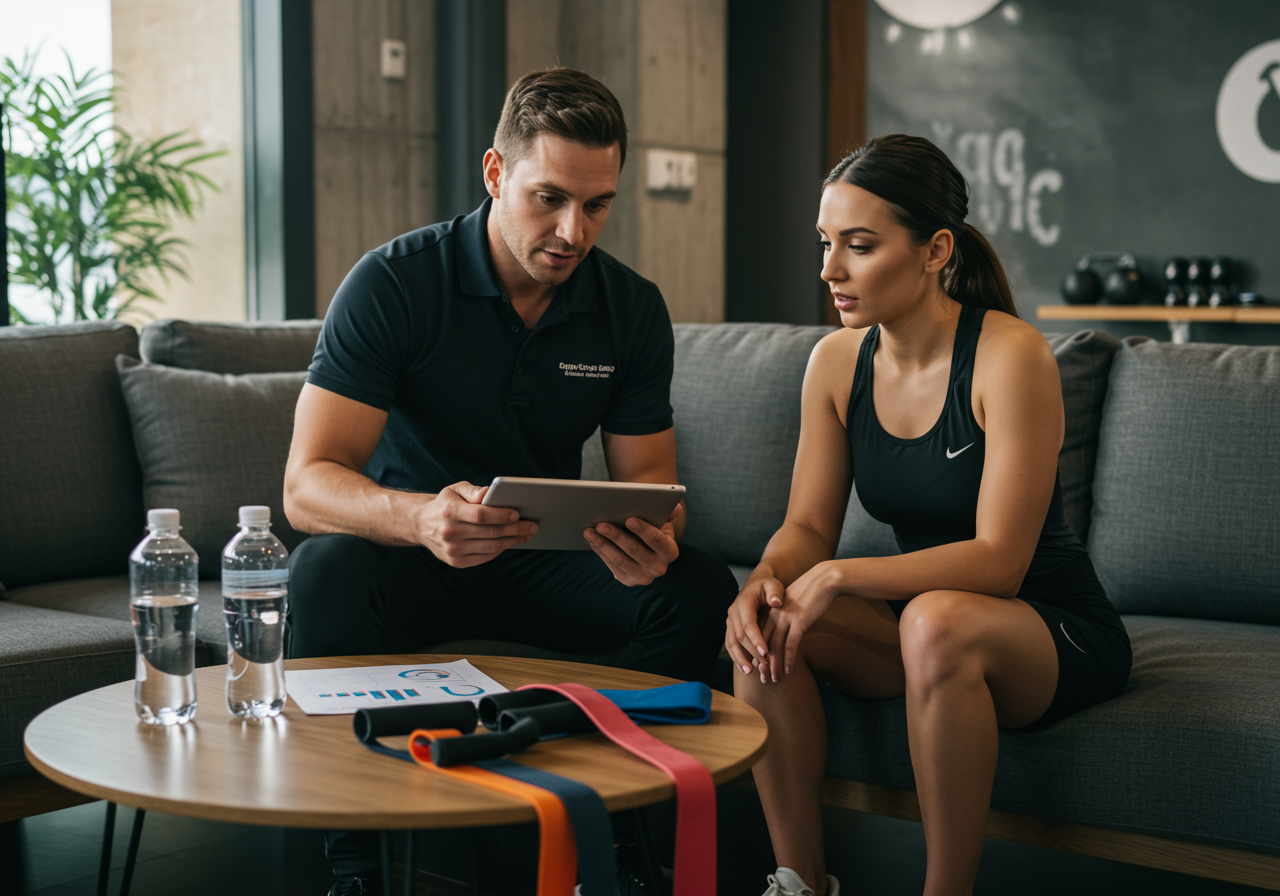
Testimonial: “The rope variation saved my shoulder. I finally feel my delts,” wrote Aaron, a desk engineer.
Outcomes, Tracking, and Troubleshooting—long-term result interpretation
Results confirm the method works. I use simple, objective markers each block.
| Metric | Start | 6 Weeks | Notes |
|---|---|---|---|
| Upright Row 8RM | 35 kg | 45 kg | Strict range and pauses kept joints happy |
| Shoulder Girth | 110 cm | 113 cm | Measured relaxed, weekly average |
| Face Pull 15RM | 18 kg | 25 kg | Better scapular control improved comfort |
| VO2 Max (Garmin) | 42 ml/kg/min | 45 ml/kg/min | ~8% rise from added Zone 2 and sprints |
My last mesocycle averaged three sessions weekly. Session time averaged 62 minutes including warm-up.
Additionally, average training heart rate hit 62–68% max during accessories. Recovery improved noticeably.
Client outcome: Maya progressed from 20 kg x 10 to 30 kg x 8 in eight weeks. Neck tightness eased.
Client outcome: Luis used the rope handle exclusively. Shoulder pain diminished while strength rose steadily.
If pain persists, switch to cable or dumbbell patterns. Keep training the movement intent.
Motivation dips happen with stale loads. I rotate grips and tempo every four weeks.
HIIT improved fat loss for busy clients. However, Zone 2 maintained better training energy for many.
I keep supplements minimal and consistent. Creatine, protein powder, and caffeine timed pre-lift.
Finally, I track readiness scores and RPE trends. Small adjustments maintain momentum without setbacks.