
Barbell Rows: Overall Back Thickness Development

Back-Thickening Blueprint: Why Barbell Rows Work
Barbell rows build dense muscle across the entire back. They thicken lats, rhomboids, and mid traps quickly.
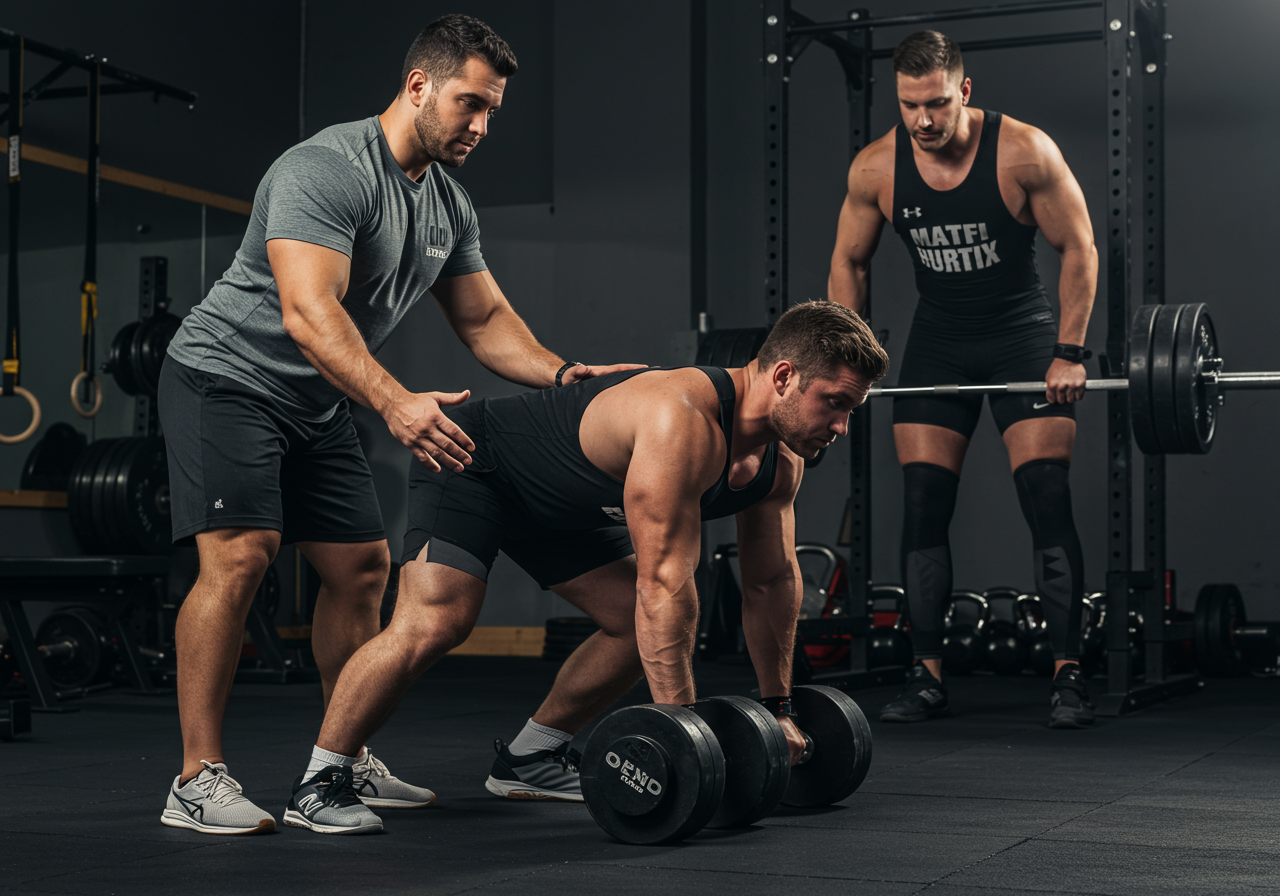
I coach beginners to master a safe hip hinge first. Then we drive elbows back and squeeze shoulder blades.
Proper setup protects your spine and elbows. It also maximizes force on target muscles.
Use a neutral grip width. Grip just outside shoulder width for balanced lat and upper-back recruitment.
| Element | Execution Cue | Target Effect |
|---|---|---|
| Hip hinge angle | Torso ~20–45° to floor | Balances lats and mid-back |
| Bar path | Pull to lower ribs or navel | Thicker mid-back and lats |
| Scapula | Retract, then control eccentric | More time under tension |
| Brace | Big breath, 360° core pressure | Spinal stability under load |
I prefer straps only when grip limits back training. This keeps effort focused on target muscles.
Beginner-to-Advanced Progressions and Weekly Structure
Progressions keep training safe and effective. You will rise from basics to heavy rows smoothly.
Start with stable variations. Then layer load, volume, and range of motion.
Use the right variation for your level. Match challenge to your technique.
| Level | Primary Row | Sets x Reps | Rest | Notes |
|---|---|---|---|---|
| Beginner | Chest-supported DB row | 3 x 10–12 | 90 sec | Learn bracing, avoid swinging |
| Intermediate | Barbell row (traditional) | 4 x 6–8 | 120 sec | Neutral spine, elbows 45–70° |
| Advanced | Pendlay row | 5 x 3–5 | 150 sec | Dead-stop, explosive concentric |
Organize your week for balanced development. Train rows with complementary lifts.
| Day | Main Lift | Accessories | Conditioning |
|---|---|---|---|
| Day 1 | Barbell row 4 x 6–8 | RDL 3 x 8, Face-pulls 3 x 15 | 5 min bike Zone 2 |
| Day 3 | Pull-up 4 x AMRAP | DB row 3 x 12, Reverse fly 3 x 15 | Row erg 6 x 30/30 easy |
| Day 5 | Pendlay row 5 x 3–5 | Lat pulldown 3 x 10, Curl 3 x 12 | Walk 10 minutes Zone 2 |
I program short Zone 2 work to aid recovery. Keep heart rate conversational.

Overload, Tracking, and Breaking Plateaus
Progressive overload drives back thickness. Add reps, load, or sets while holding form.
I track reps in reserve (RIR). Stop sets with 1–2 reps left when learning.
Use microplates for small jumps. Add 1–2 pounds per side when progress slows.
| Week | Load | Sets x Reps | RIR | Notes |
|---|---|---|---|---|
| 1 | 95 lb | 4 x 8 | 2 | Form steady, no straps |
| 3 | 105 lb | 4 x 9 | 1 | Tempo 2-0-2 matched |
| 5 | 115 lb | 4 x 8 | 1–2 | Added belt for core feedback |
I log every set in a spreadsheet. I also tag perceived effort.
My Garmin tracks HR during finishers. I keep warm-ups in Zone 2 often.
- Deload: cut volume 40–50% for one week.
- Change torso angle slightly to shift stress.
- Use straps only for last sets to spare grip.
- Switch to chest-supported rows if back cramps.
These changes solved a client plateau in week seven. He hit PRs the next week.
Recovery, Mobility, and Fueling for Growth
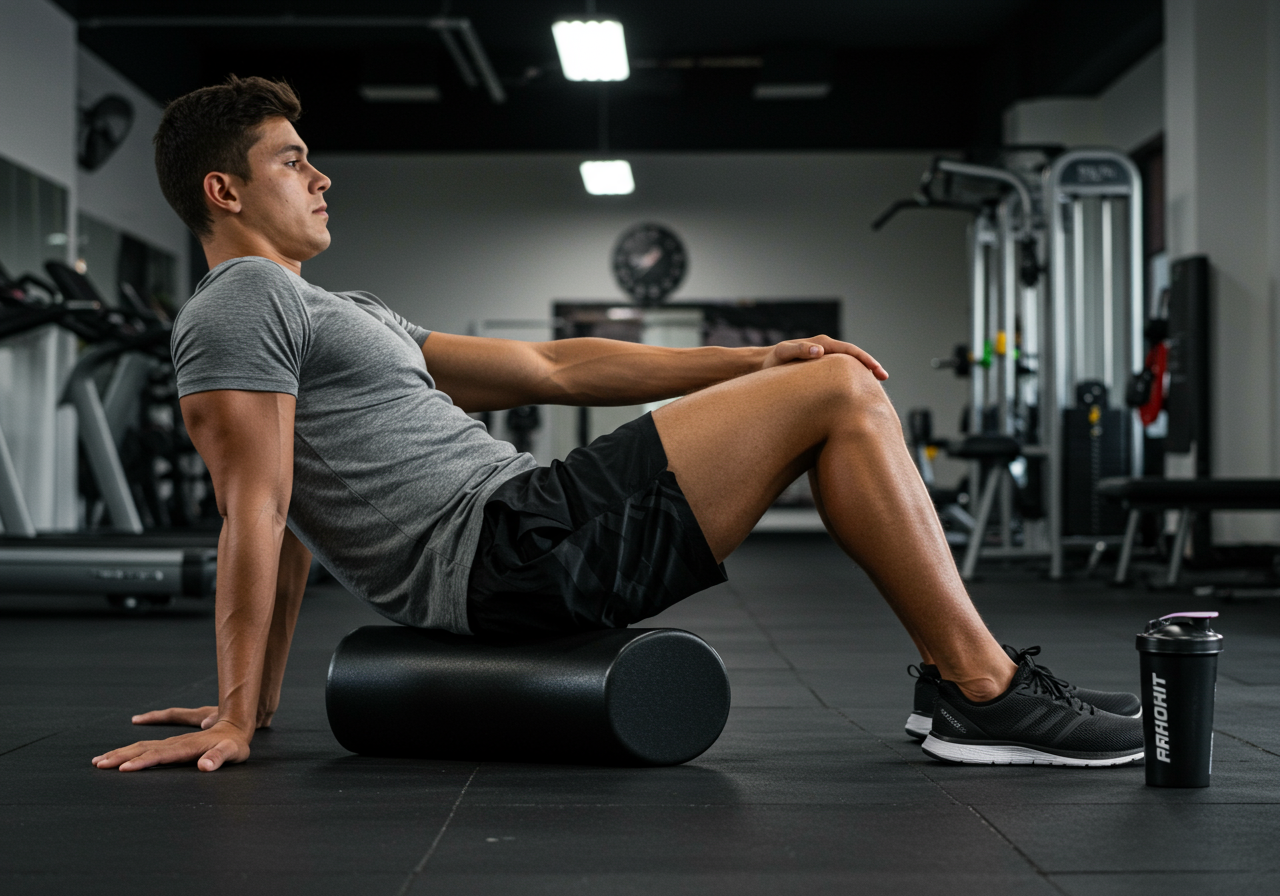
Recovery cements progress from rows. Sleep, nutrition, and mobility protect your back.
I program short daily mobility. It keeps the hinge clean and shoulders free.
Fuel supports growth. I aim for a modest calorie surplus for muscle gain.
| Goal | Calories | Protein | Carbs | Fat |
|---|---|---|---|---|
| Recomp | Bodyweight x 14 | 1.6–2.2 g/kg | 3–4 g/kg | 0.7–1.0 g/kg |
| Lean gain | Bodyweight x 16–17 | 2.0 g/kg | 4–5 g/kg | 0.8–1.0 g/kg |
I track intake with MyFitnessPal. Consistency beats perfection here.
My sleep target stays at 7.5–8.5 hours nightly. HRV trends guide training stress.
- Supplements I use: creatine 5 g, omega-3 1–2 g, vitamin D as needed.
- Post-workout: 30–40 g protein and 60–80 g carbs.
- Warm-up HR: Zone 2 on bike for 5 minutes.
I monitor recovery with Garmin. I watch resting HR and sleep stages.

Measured Outcomes, Client Stories, and Next Steps — long-term result interpretation
Numbers prove what the mirror suggests. Back thickness improves when rows progress consistently.
My training cycle ran 10 weeks. I lifted three days weekly with rows twice.
- Starting 8RM barbell row: 155 lb x 8 at RIR 1.
- Week 10 8RM barbell row: 205 lb x 8 at RIR 1.
- Upper-back tape at axilla: 113 cm to 116 cm.
- Waist: 84 cm to 82.5 cm.
- Warm-up VO2 estimate rose ~6% on Garmin.
My average session lasted 55 minutes. Heart rate stayed mostly in low Zone 2 during warm-ups.
| Metric | Start | Week 10 | Change |
|---|---|---|---|
| Barbell Row 8RM | 155 lb | 205 lb | +50 lb |
| Chin-up max reps | 6 | 10 | +4 reps |
| Upper-back circumference | 113 cm | 116 cm | +3 cm |
| Resting HR | 62 bpm | 59 bpm | -3 bpm |
Client Ana (beginner) shared her results after eight weeks.
“Rows felt awkward at first. The chest-supported start helped. My posture improved and shirts fit better.”
- Ana’s row: 45 lb x 12 to 85 lb x 10.
- Waist: -3 cm. Upper back: +2 cm.
- Confidence: high, no back pain reported.
Client Mike (intermediate) plateaued in week six. We deloaded and added microplates.
“That one light week reset me. I hit 225 for fives the next Monday.”
- Common issues: elbow discomfort, low-back fatigue, motivation dips.
- Solutions: neutral wrists, chest-supported swaps, and small PRs weekly.
- Tracking: I log loads and RIR. I verify recovery with Garmin sleep scores.
Keep the cycle simple. Progress small, recover well, and your back thickens reliably.