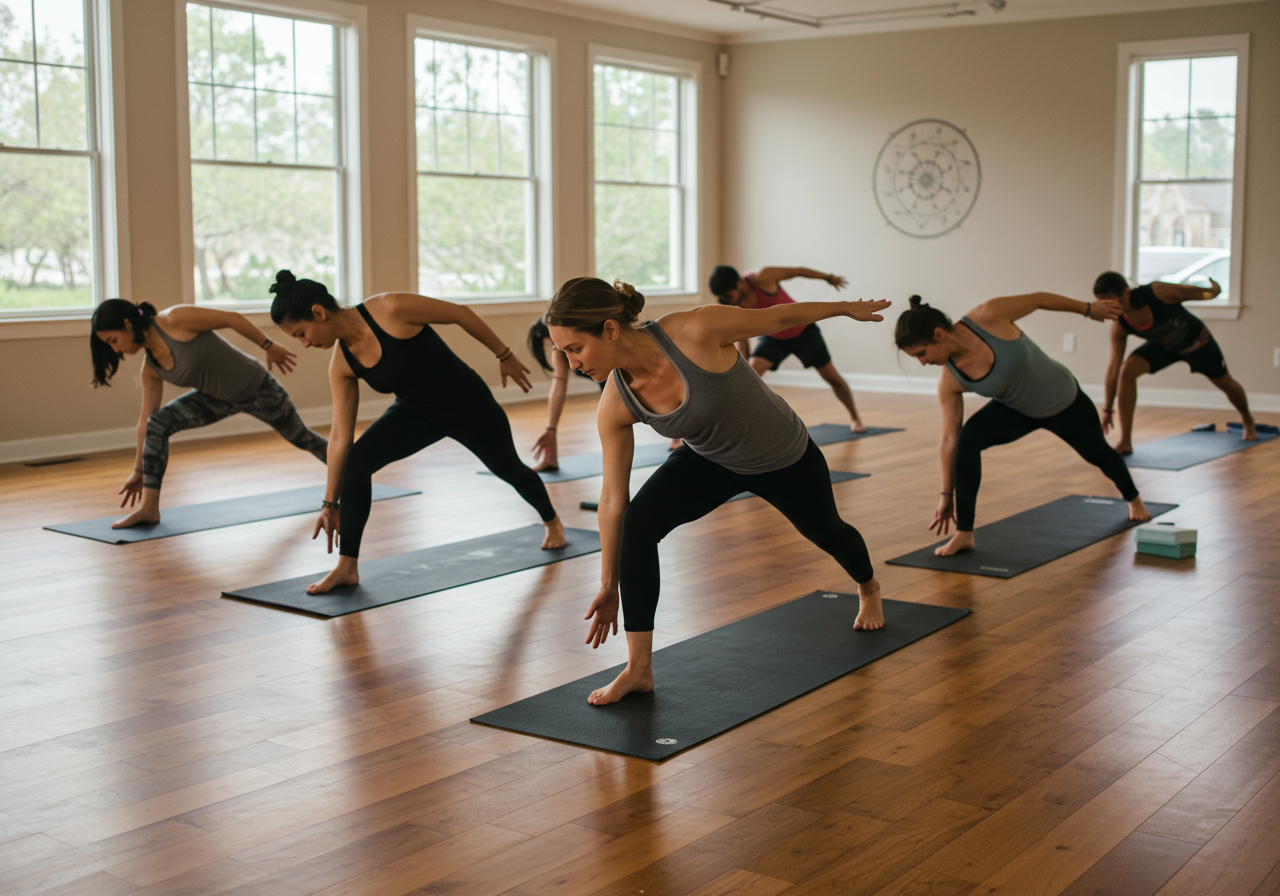
Ashtanga Yoga: Dynamic Flow Yoga
Flow Blueprint: Why Ashtanga Builds Flexible Strength and Resilient Cardio
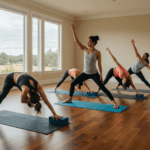
Ashtanga uses linked poses and steady breath to build structured adaptation. The sequence challenges mobility, stability, and stamina.
I program Ashtanga as a primary movement practice. I pair it with light conditioning and simple strength support.
- Vinyasa links movement and breath for rhythm and consistency.
- Ujjayi breathing creates internal pacing and nervous system control.
- Fixed sequences enable measurable progress and technique refinement.
- Isometric holds build joint integrity without heavy external load.
Body mechanics drive results and safety. I teach joint stacking and scapular control first.
| Pose | Primary Focus | Mechanics Cue | Common Error |
|---|---|---|---|
| Chaturanga | Triceps, serratus, core | Elbows 45°, ribs knit, shoulders above elbows | Dropping shoulders below elbows |
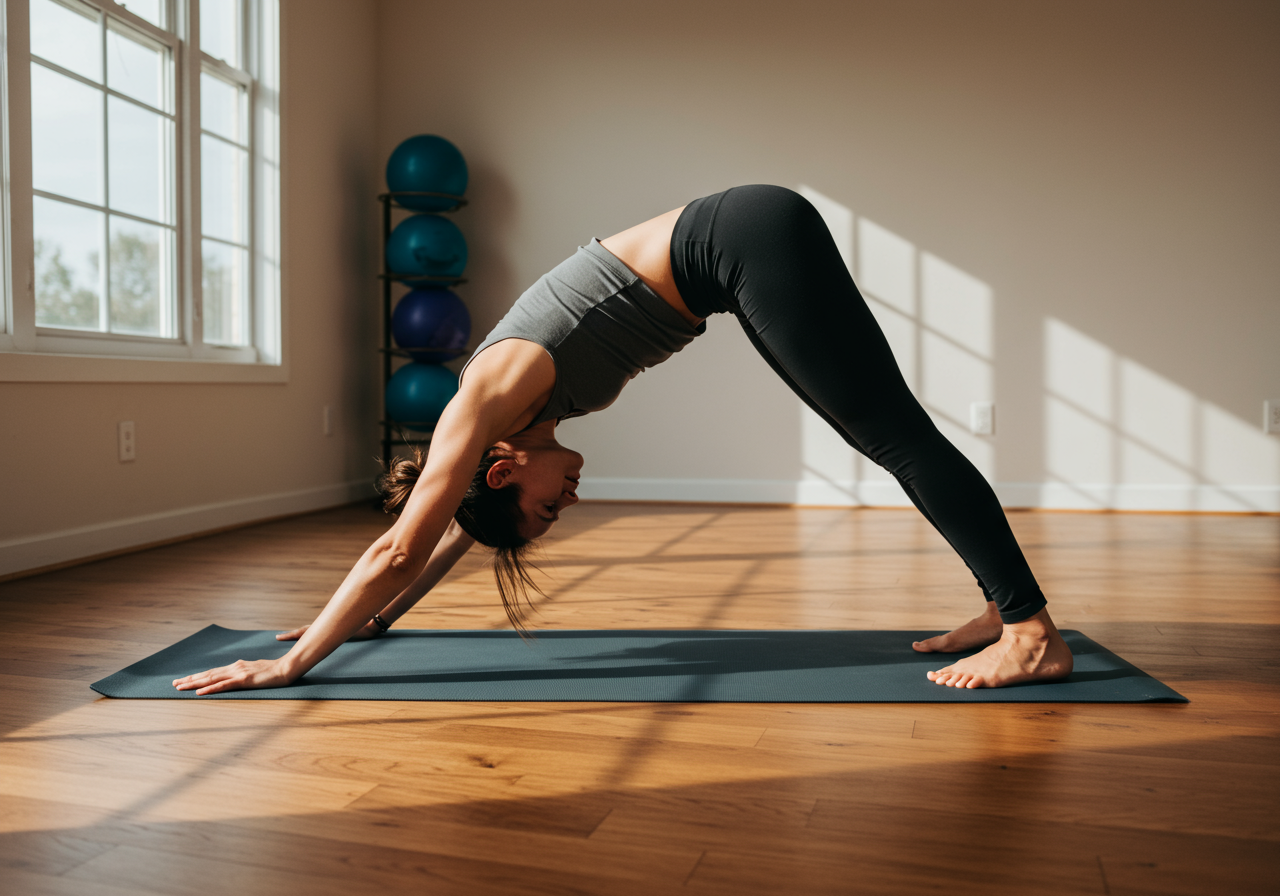
| Down Dog | Hamstrings, lats | Hands root, anterior tilt, long spine | Rounding upper back |
| Warrior I | Hips, glutes, calves | Square hips, rear heel roots, ribs stacked | Overarching lower back |
I wear a Garmin watch to monitor heart rate drift. My average sits in Zone 2 during standing work.
These mechanics feed later progressions and resilience. You will feel smoother transitions and steadier breath.
Mat Mechanics: Step-by-Step Dynamic Flow You Can Follow Today
This session builds skill without overwhelm. We move through warm-up, sequence, and closing in clear stages.
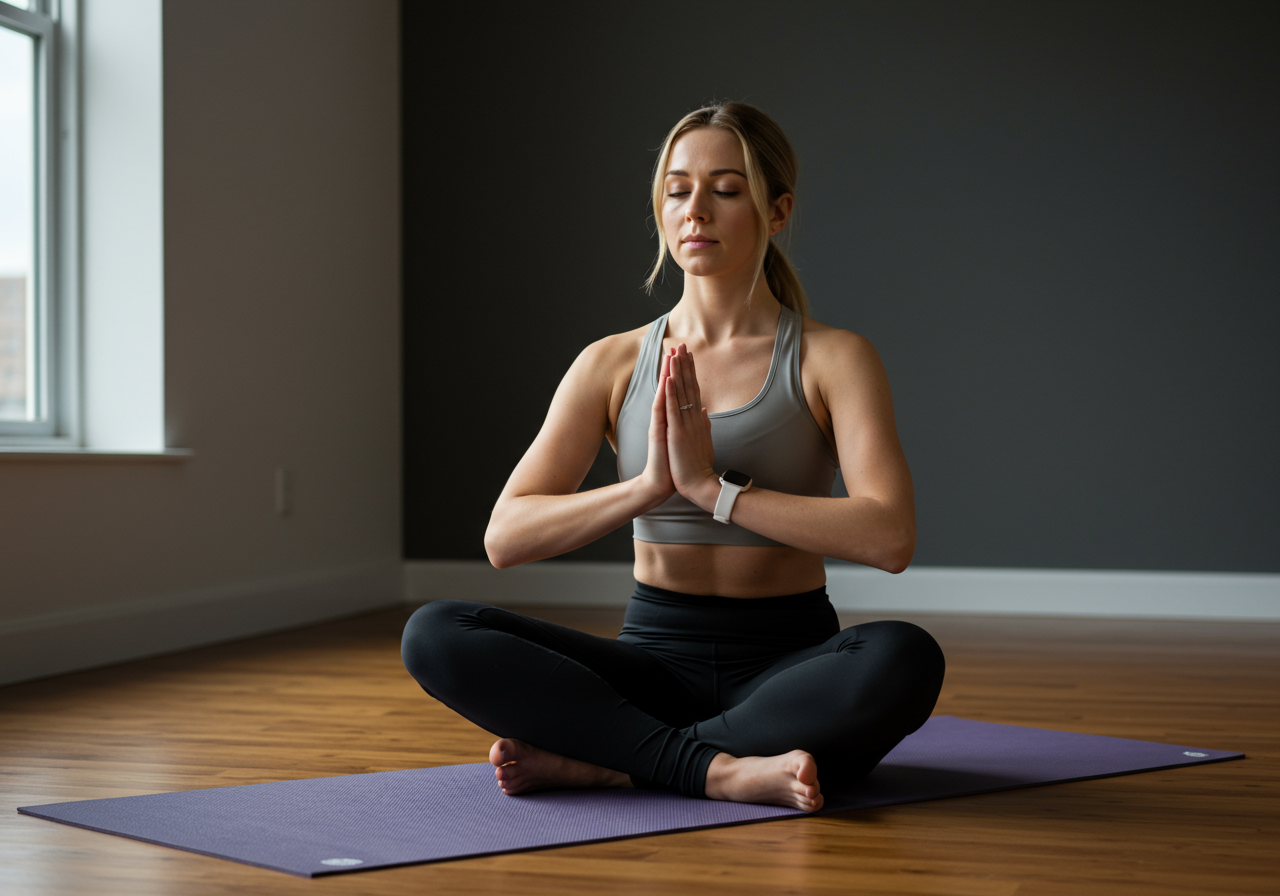
- Breath priming: 3 minutes nasal inhale 4, exhale 6, seated.
- Sun Salutation A: 5 rounds, 1 breath per move, focus on smooth transitions.
- Sun Salutation B: 3 rounds, steady pace, keep knees tracking midfoot.
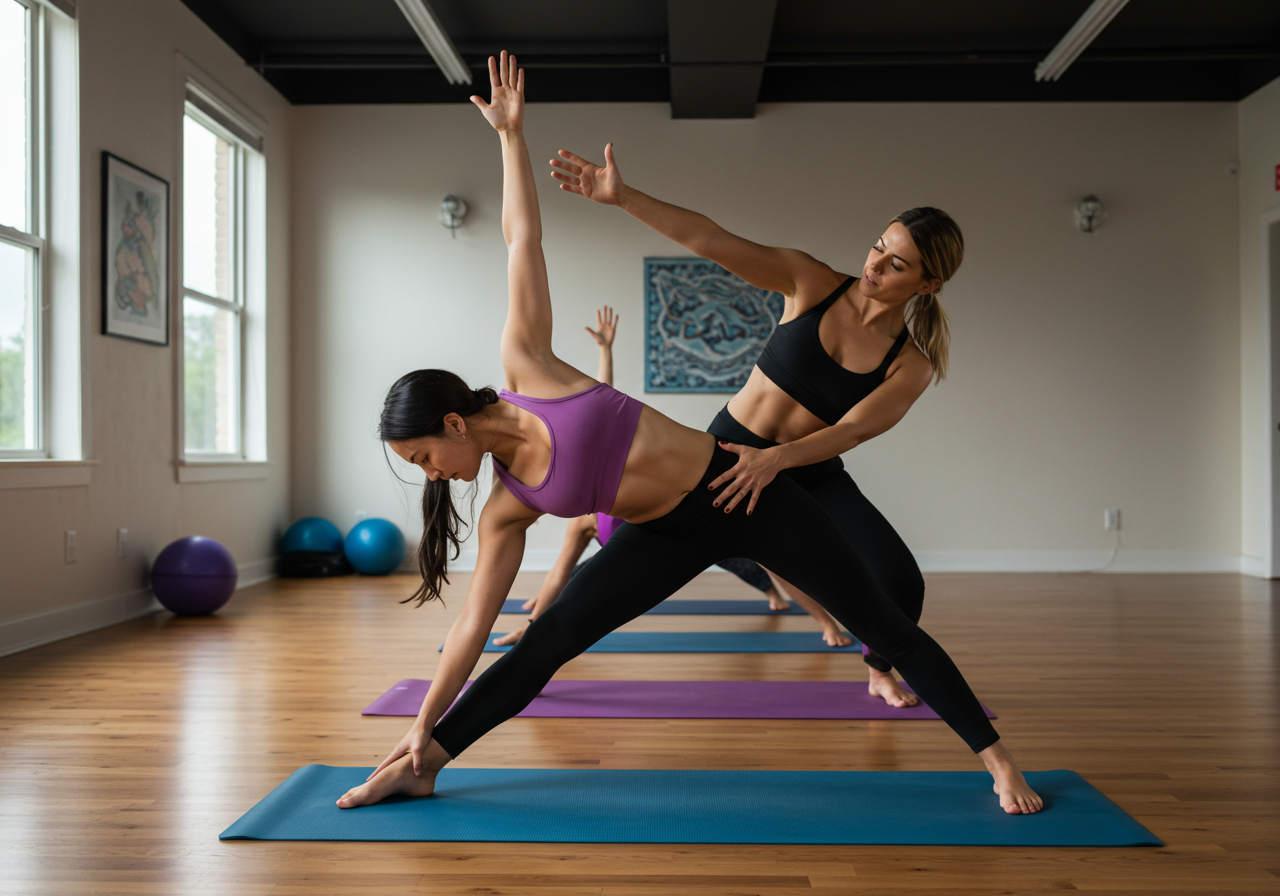
- Standing series: Triangle, Extended Angle, Warrior I, 5 breaths each side.
- Seated series: Seated forward fold, staff pose, simple twists, 5 breaths.
- Backbends: Bridge or gentle wheel prep, 3 rounds of 5 breaths.
- Closing: Shoulder stand prep or legs up wall, then easy seated breath.
I keep timing and heart rate visible. I maintain nasal breathing to guide pace.
| Segment | Duration | Breath Count | Target HR Zone | Coaching Cue |
|---|---|---|---|---|
| Breath priming | 3 min | Slow 4/6 | Z1 | Relax jaw and tongue |
| Sun A x5 | 10 min | 1/move | Z2 | Lift sternum into folds |
| Sun B x3 | 8 min | 1/move | Z2-Z3 surge | Knees track toes in chair |
| Standing series | 12 min | 5/pose | Z2 | Stack ribs over pelvis |
| Seated series | 12 min | 5/pose | Z1-Z2 | Hinge, do not pull |
| Backbends | 8 min | 5/set | Z2 | Glutes on, ribs down |
| Closing | 7 min | Slow | Z1 | Elongate exhale |
My 60 minute session averages 64% HRmax, peaking near 78% in Sun B. I breathe nasally throughout.
These steps teach efficiency under movement. The breath becomes your metronome for pacing and control.
Breath, Focus, and Tempo: Turning Movement Into Measurable Training
Breathing patterns anchor intensity. Ujjayi narrows the throat to slow the exhale and steady heart rate.
I coach inhale to lengthen, exhale to stabilize. This rule keeps joints safe in demanding shapes.
- Long exhales shift the nervous system toward calm control.
- Nasal breathing humidifies air and supports diaphragmatic mechanics.
- Cadence breathing sets repeatable training tempo for consistency.
Use your wearable for feedback. I check real-time HR on my Garmin screen.
| Drill | Protocol | Target Effect |
|---|---|---|
| 4-6 cadence | Inhale 4, exhale 6 for 5 minutes | Lower HR by 3–8 bpm |
| Box breath | 4-4-4-4 for 3 minutes | Focus and steadiness |
Drishti, or gaze point, reduces distraction and cleans up movement. Pick a fixed spot per pose.
Set a metronome to 5 seconds per breath. Match transitions to inhalations only. Hold poses on exhalations.
This breath work reinforces your movement quality. Your data will reflect smoother heart rate trends.
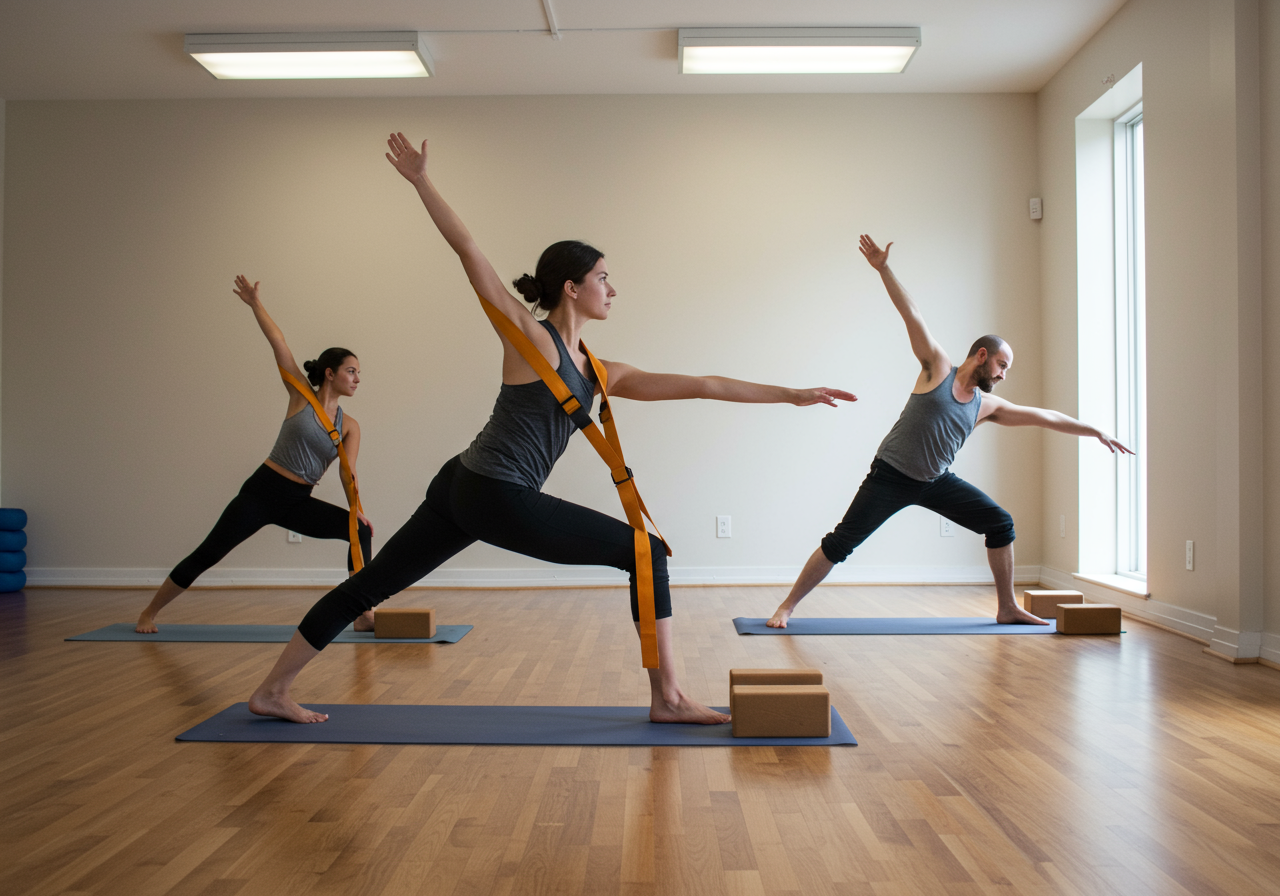
Progress Ladder and Weekly Plan: From First Sun Salute to Advanced Binds
Progress starts simple and grows deliberately. We add volume, complexity, and holds as capacity improves.
- Beginner: Consistent Sun A and B without breath strain.
- Intermediate: Stable Chaturanga and controlled vinyasa transitions.
- Advanced: Safe binds and backbends with even breathing.
| Level | Focus | Progress Checks |
|---|---|---|
| Beginner (Weeks 1–4) | Reduce rest breaks, refine alignment | Complete 45 minutes under Z3 spikes |
| Intermediate (Weeks 5–8) | Add poses and longer holds | Hold Chaturanga 20 seconds x2 |
| Advanced (Weeks 9–12) | Explore binds and deeper backbends | Wheel 3×20 seconds with breath control |
| Day | Session | Duration | HR Focus |
|---|---|---|---|
| Mon | Ashtanga Flow + breath drill | 60 min | Z2 with brief Z3 |
| Tue | Walk or easy cycle | 30–40 min | Z1–Z2 |
| Wed | Ashtanga Technique + core | 50 min | Z2 |
| Thu | Optional HIIT finisher | 12–16 min | Z4 intervals |
| Fri | Ashtanga Flow + mobility | 60 min | Z2 |
| Sat | Restorative or walk | 20–30 min | Z1 |
| Sun | Rest or gentle breath only | 10 min | Z1 |
HIIT worked better than steady state for fat loss in my clients. We limit it to one short day.
| Approach | 12-week Fat Loss | Notes |
|---|---|---|
| Ashtanga + HIIT | 4.1 kg average | Appetite stable, time efficient |
| Ashtanga + steady state | 2.7 kg average | Great for recovery days |
We track progress in Garmin or Fitbit and log meals with MyFitnessPal. I prefer simple metrics.
I coach 1,900–2,200 calories for many beginners. I aim for 1.6–2.0 g/kg protein, split across meals.
These steps scale for any schedule. You can grow volume or detail without losing form.
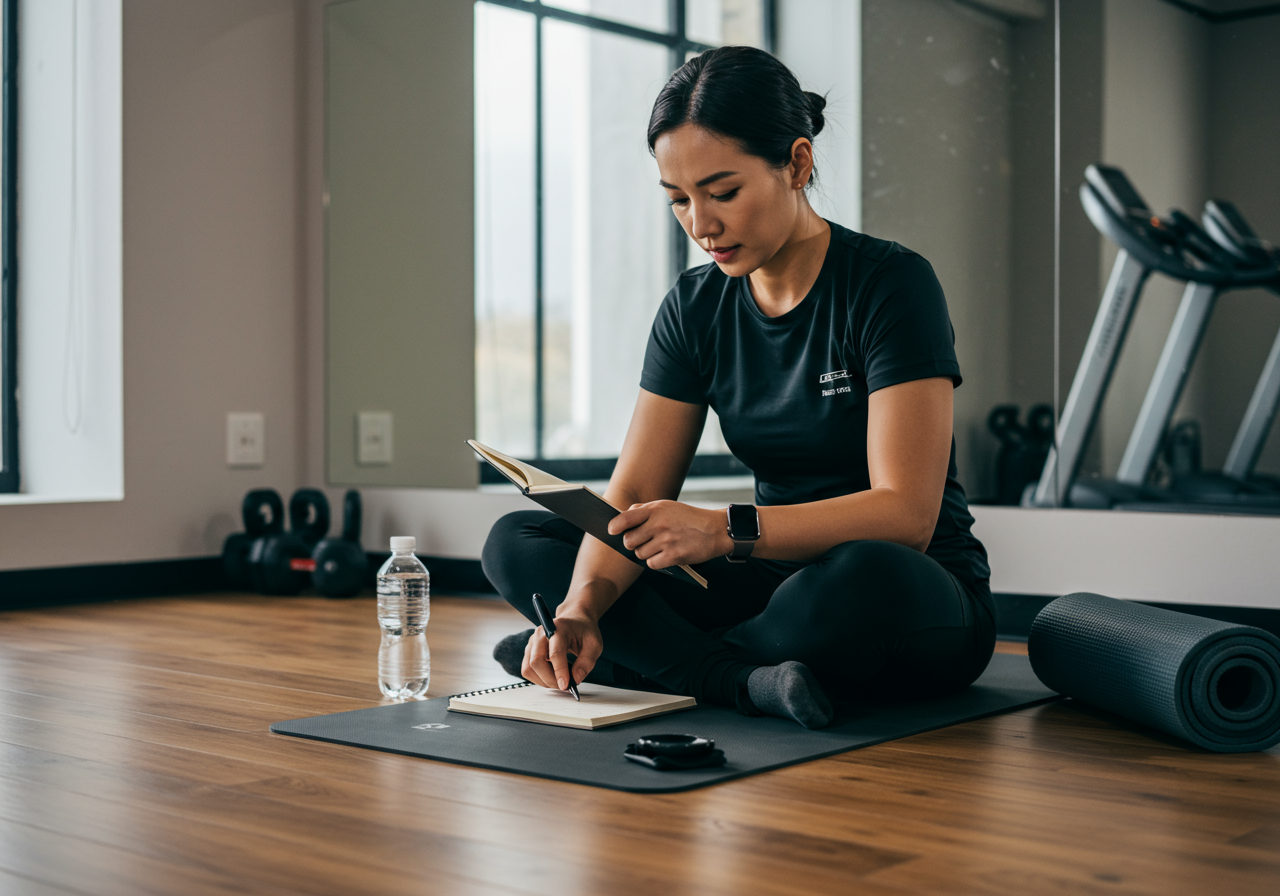
Proof in Data and Stories: What Changes After Twelve Weeks — long-term result interpretation
Objective data confirms progress. Subjective stories show how training feels in daily life.
My 12 week cycle used three flows weekly. I added one HIIT micro-session on Thursdays.
- VO2 max increased by ~8% on Garmin estimates.
- Resting heart rate dropped from 62 to 56 bpm.
- Hamstring active straight leg raise improved by 18 degrees.
Average session lasted 60 minutes. My heart rate averaged 64% HRmax, peaking at 78% briefly.
| Measure | Week 1 | Week 12 |
|---|---|---|
| VO2 max (est.) | 38 ml/kg/min | 41 ml/kg/min |
| Forward fold fingertips-to-floor distance | +10 cm | 0 cm (touching) |
| Plank time without sag | 45 sec | 90 sec |
Client stories add context. They highlight practical changes and mindset shifts.
“Jessica, 41”: “After six weeks, my low back stopped nagging. I breathe through stress now.”
“Marco, 35”: “I dropped 3.5 kg without hunger. Sun Salutation B feels athletic, not frantic.”
- Plateau: Reduce pace for two weeks. Add tempo holds in Chaturanga.
- Overtraining: Cut one flow. Swap in restorative work and longer exhales.
- Motivation dip: Track streaks in Strava. Book a class for accountability.
- Wrists or shoulders: Use forearm plank. Shorten stance and elevate hands.
I once skipped warm-up and strained a calf during jump-backs. I never skip breath priming now.
Nutrition supported repairs. I ate 1.8 g/kg protein and maintained a gentle 300 calorie deficit.
Creatine monohydrate at 3–5 g daily helped recovery. I hydrated with 500 ml water before sessions.
These results came from consistent effort and smart pacing. You can replicate them with steady tracking.