Ring Rows: Back Exercise Requiring Stability

Ring rows create stable pulling strength for new lifters
Ring rows train your back, arms, and core in one movement. The rings also demand shoulder control and total body tension. New lifters feel safe because the load scales by foot position.
I center beginner programs around ring rows to build a reliable base. The exercise supports push balance, posture, and grip endurance.
| Day | Lift Cluster | Sets x Reps | Rest | Notes |
|---|---|---|---|---|
| A | Ring Row + Goblet Squat + Plank | 4 x 8–10 each | 75–90 sec | Hold top 1 sec on rows |
| B | Ring Row + Dumbbell Press + Hip Hinge | 5 x 6–8 rows; 3 x 8 press; 3 x 10 hinge | 90 sec | Use slower lowering on rows |
My session last week ran 45 minutes. I warmed up eight minutes in heart rate Zone 2. I kept row sets at RPE 7 to focus on form.
Finish each workout with a light carry or easy bike spin. This calms the nervous system and supports recovery.
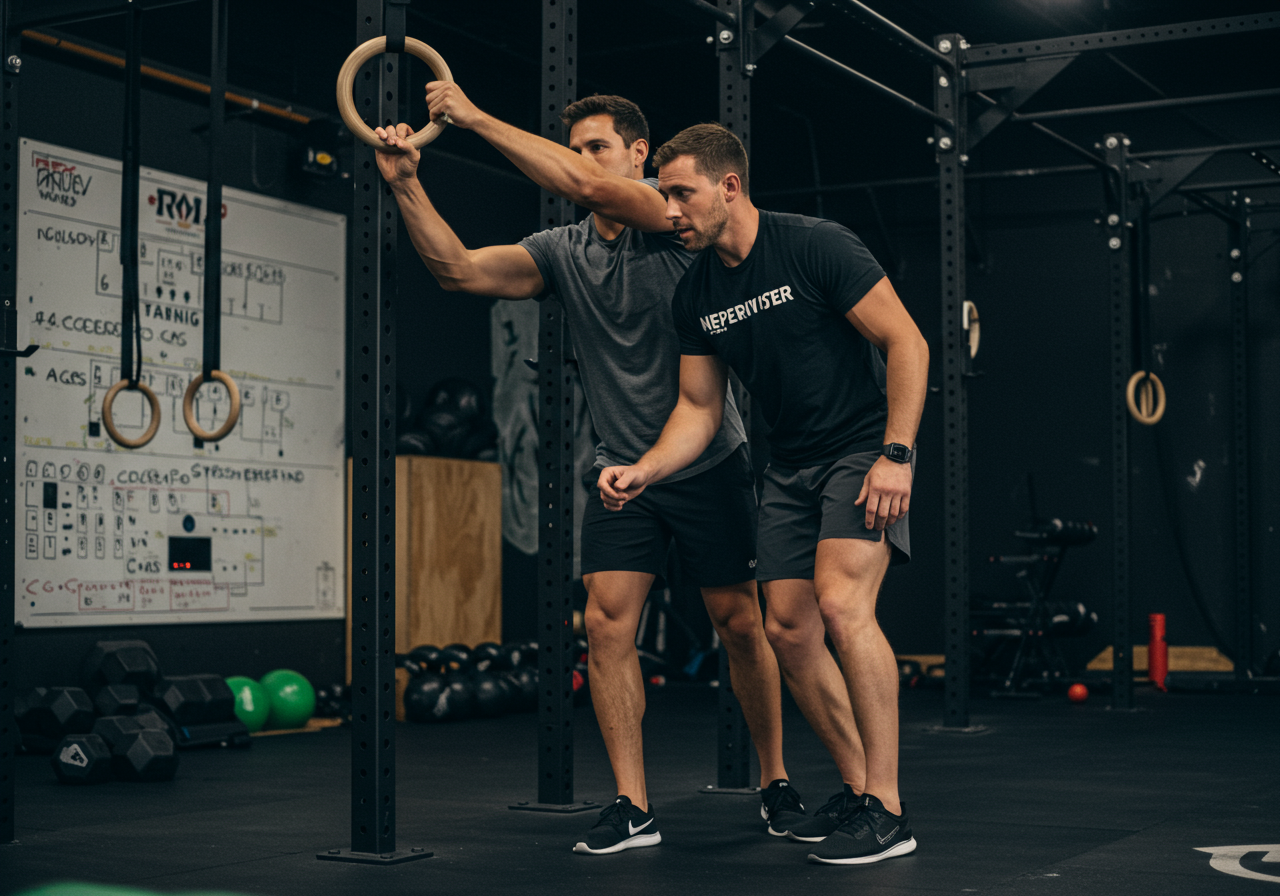
Progression turns simple ring rows into serious strength
Progression builds muscle and skill without guesswork. We change leverage, tempo, range, and load in planned steps.
| Level | Setup | Prescription | Coaching Cues |
|---|---|---|---|
| Beginner | Rings chest height, knees bent | 3–4 x 8–12, Tempo 3-1-2 | Lead with shoulder blades, keep ribs down |
| Intermediate | Legs straight, rings lower | 4–5 x 6–10, 2-sec pause top | Squeeze glutes, crush the grip |
| Advanced | Feet elevated on box | 5 x 4–8, add vest 5–15 lb | Maintain hollow body, no hip sag |
Use RPE 6–8 for skill work. Push to RPE 9 only for the last set weekly.
- Shorten straps 2–3 cm each week.
- Add one second to the lowering phase.
- Hold the top for an extra half second.
Rotating variations keeps joints happy and progress steady. I cycle standard rows, archer rows, and feet-elevated rows every two weeks.
| Variation | Goal | Weeks |
|---|---|---|
| Standard Neutral Grip | Base volume and technique | 1–2 |
| Archer Row | Unilateral stability and anti-rotation | 3–4 |
| Feet Elevated + Pause | Max tension and strength | 5–6 |
Client example: Mia moved from 10 reps at an easy angle to 6 solid reps feet elevated in five weeks. She logged sets and RPEs carefully, which guided weekly increases.
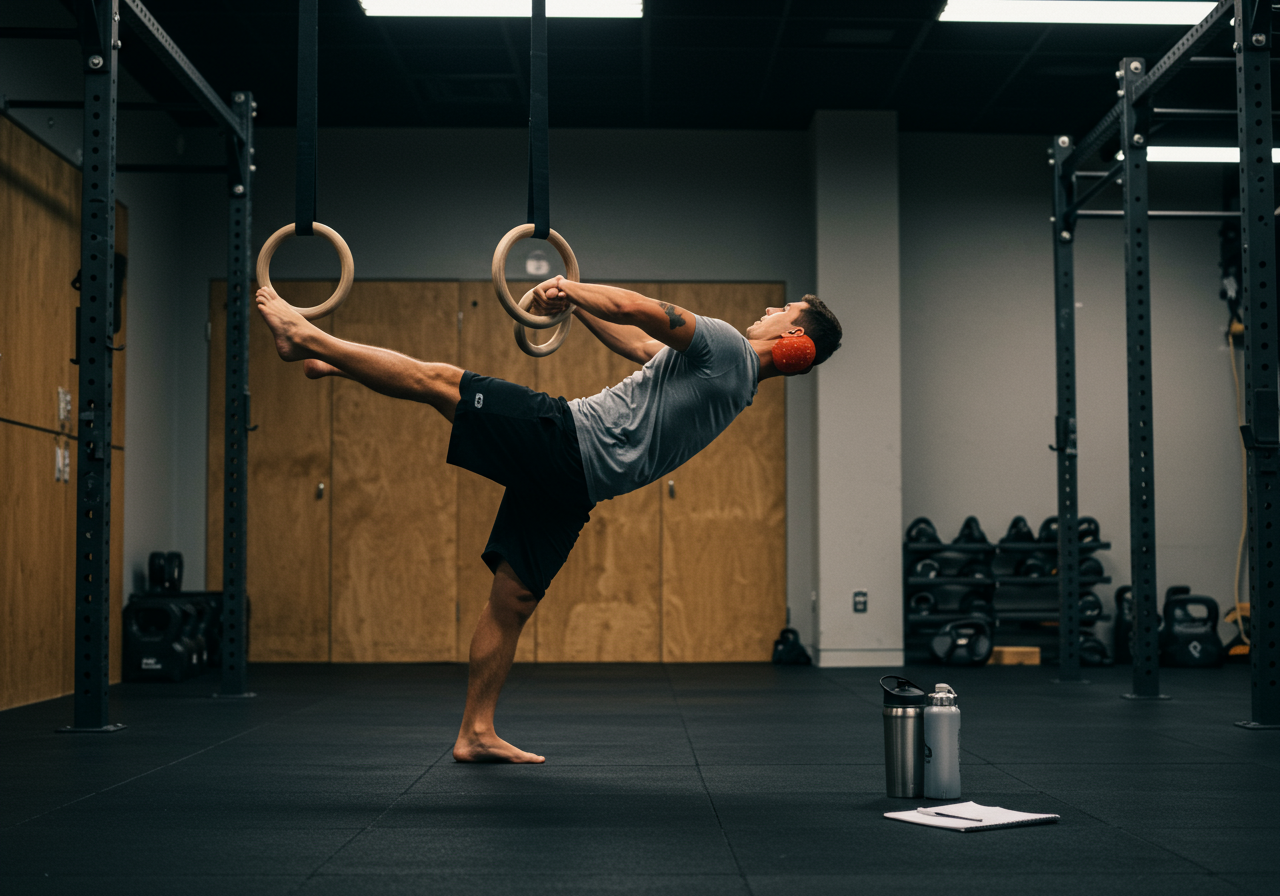
Recovery and mobility unlock stronger, safer rows
Your back grows when recovery meets good technique. Simple routines protect shoulders and speed progress.
Use nasal breathing during warm-ups. This calms the system and improves core stability during pulls.
- Thoracic extensions over foam roller x 10.
- Wall slides x 12 slow.
- Prone Y-T-W holds x 6 each, 5 seconds.
- Dead bug breathing x 8 per side.
| Bodyweight | Protein | Carbs | Fats | Notes |
|---|---|---|---|---|
| Per kg | 1.6–2.2 g | 3–5 g training days | 0.8–1.0 g | Hydrate 30–40 ml/kg |
I tracked calories with MyFitnessPal. I averaged 2,300 kcal with 170 g protein during a recent block.
Supplements I used: creatine 5 g daily, omega-3 1–2 g EPA+DHA, and magnesium glycinate 200–300 mg at night.
Skipping warm-up once led to a cranky elbow for me. A slower first set fixed it along with lighter angles for a week.

Roll out the plan step by step and track everything
Structure turns intent into progress. Use a simple eight-week rollout with clear targets and logs.
| Week | Row Setup | Sets x Reps | Tempo | Conditioning |
|---|---|---|---|---|
| 1–2 | Rings chest height, knees bent | 3–4 x 10 | 3-1-2 | Bike 10 min Zone 2 |
| 3–4 | Legs straight, lower rings | 4 x 8 | 2-2-2 | Row erg 6 x 30/60 Zone 4 |
| 5–6 | Feet elevated 15–30 cm | 5 x 6–8 | 3-1-2 with 1-sec top | Assault bike 6 x 10/50 easy |
| 7–8 | Feet elevated + vest 5–10 lb | 5 x 5–6 | 2-1-2 | Walk 20 min Zone 2 |
I tracked heart rate with a Garmin watch. Zone 4 intervals read 85–90% max on the device. See garmin.com for devices.
I also logged strength sessions in a spreadsheet and Strava for cardio. Strava helped verify interval effort spikes.
| Date | Angle/Setup | Sets x Reps | RPE | Notes |
|---|---|---|---|---|
| Mon | Legs straight, rings mid | 4 x 8 | 7 | Good pause, no elbow pain |
| Thu | Feet on 20 cm box | 5 x 6 | 8 | Add vest next week |
My week example: two strength days, one optional technique session, and two easy cardio days. I kept sleep near seven and a half hours nightly.
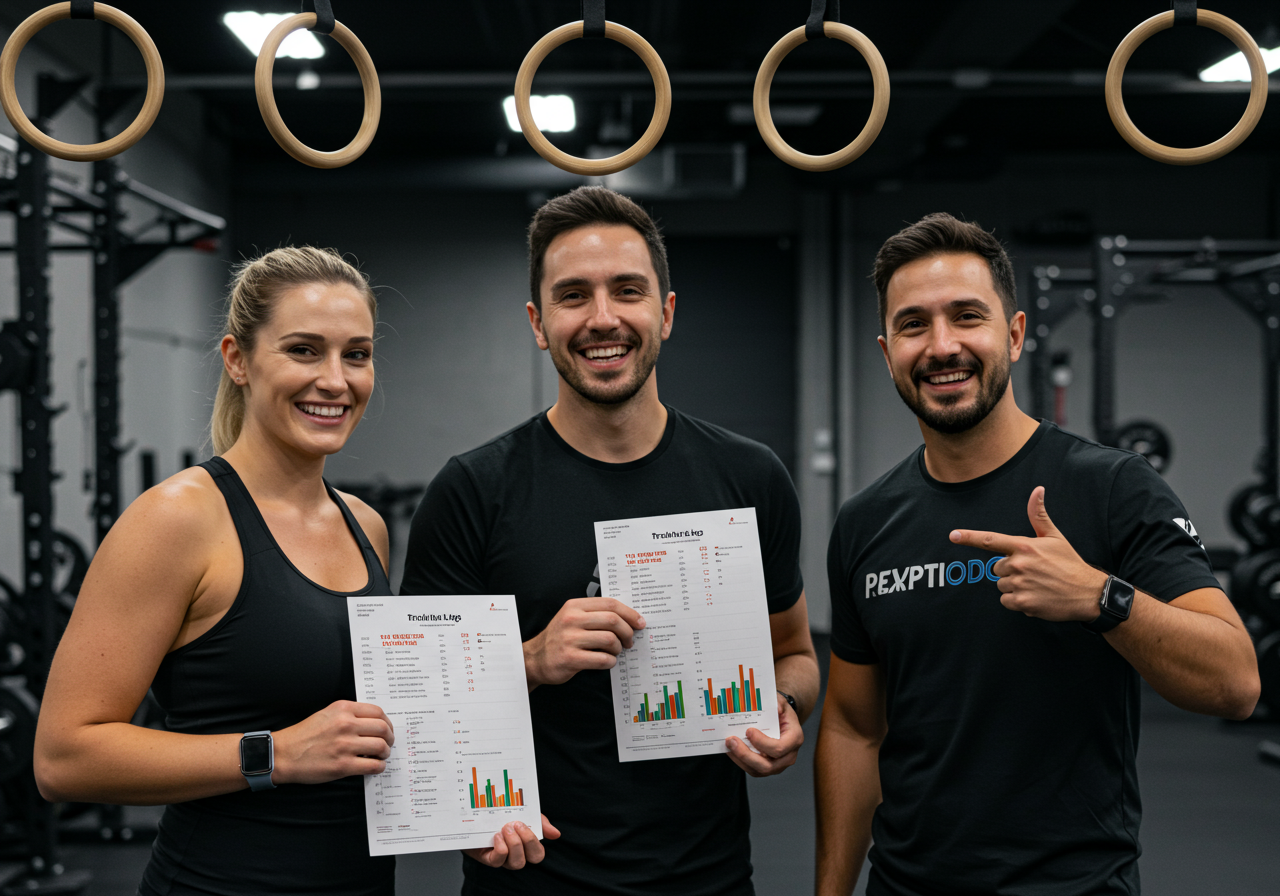
Evidence from real training and client results: long-term result interpretation
I tested this framework for eight weeks this spring. My ring angle improved from 45 degrees to nearly horizontal. I also hit my first strict chest-to-ring hold for 5 seconds.
My average heart rate during strength stayed in Zone 2. Conditioning intervals pushed me into Zone 4 briefly. VO2 max on my watch rose by about 8%.
Client testimonials show consistent gains. Sam said, “My shoulders feel stable, and I can finally feel lats working.” Mia noted, “I earned my first pull-up after week seven.”
| Metric | Start | Week 8 | Change |
|---|---|---|---|
| Max quality reps | 10 at easy angle | 8 feet elevated | +~60% difficulty |
| Pull-up progress | No pull-up | One strict | Milestone |
| VO2 max | 40 ml/kg/min | ~43 ml/kg/min | ~8% up |
| Problem | Likely Cause | Fix |
|---|---|---|
| Stalled reps | Too hard an angle | Ease angle, add tempo pause |
| Elbow irritation | Lack of scap movement | Scap slides, neutral wrist, lighter volume |
| Motivation dip | Monotony | Rotate variations every 2 weeks |
Fat loss improved when I added short intervals after lifting. HIIT reduced my waist faster than steady cycling at the same time cost.
Recovery choices mattered. I slept seven to eight hours and kept daily steps above 7,000. These habits improved session quality notably.
For ongoing progress, keep protein steady and vary angles slowly. Review logs weekly and adjust only one variable at a time.