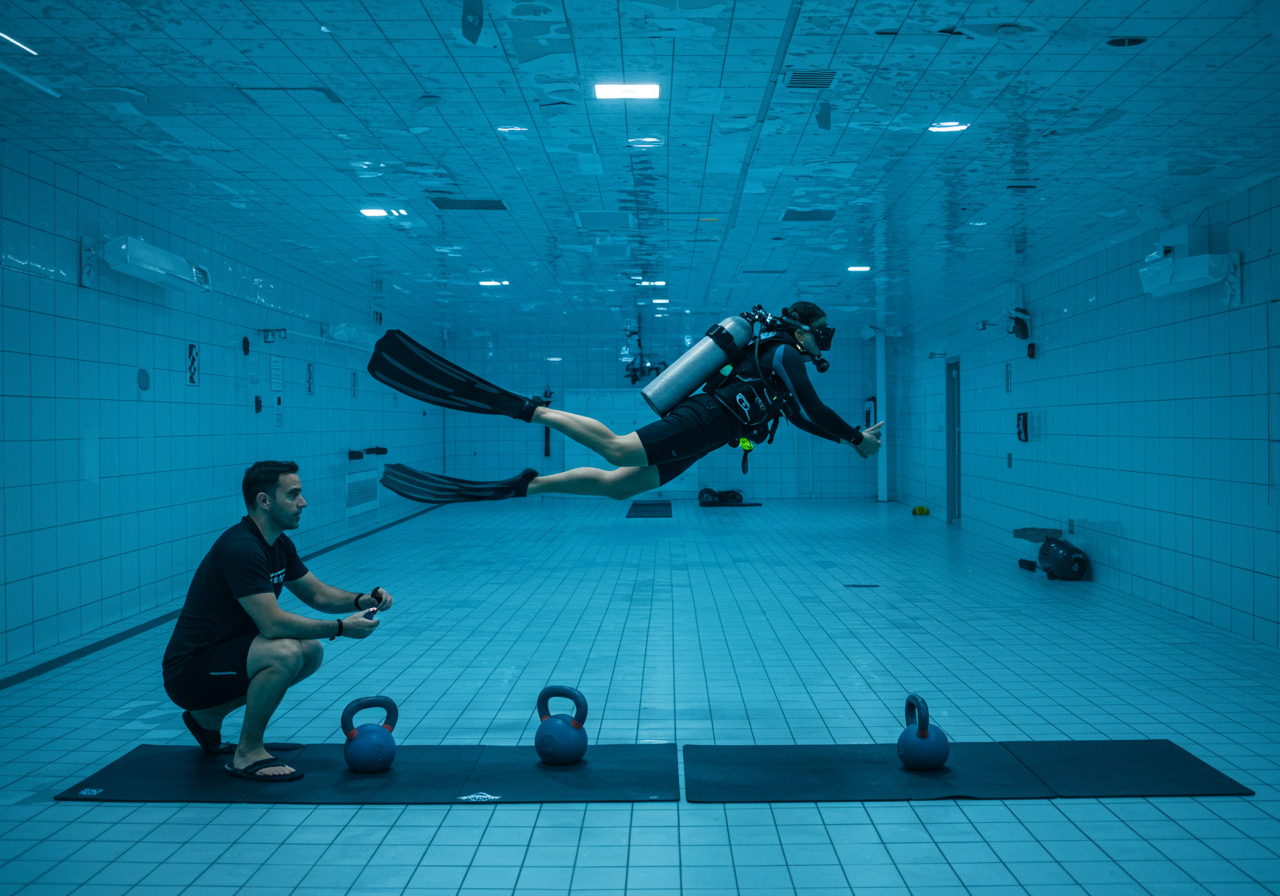
Scuba Diving: Explore Underwater, Full-Body Activity
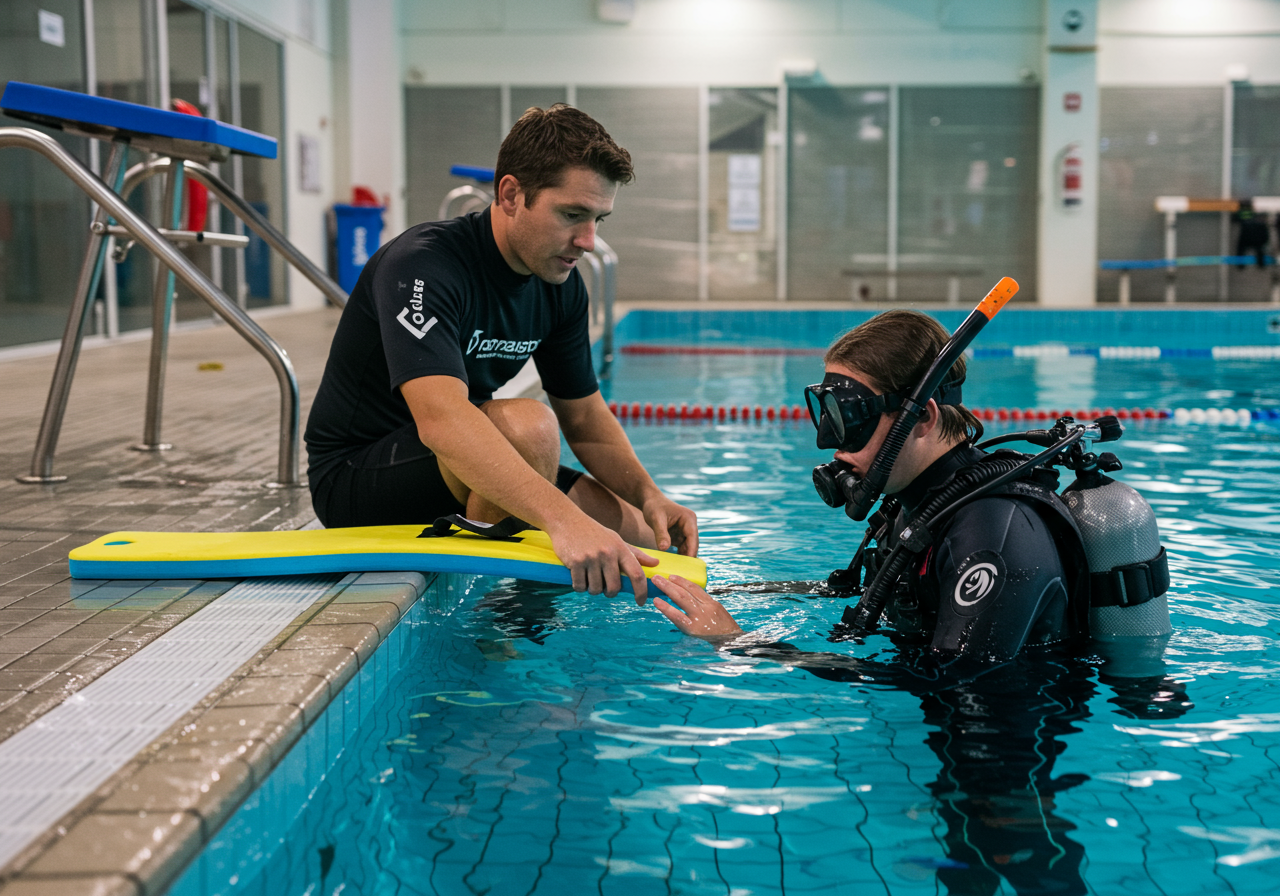
Dive-Ready Fitness Blueprint: skills, strength, and breath control working together
This blueprint builds safe and enjoyable scuba fitness. It develops skills, strength, and cardio together. I use it with beginners and returning divers.
- Build skills on land, then confirm in water.
- Train fin power and hip mobility for efficient kicks.
- Use Zone 2 cardio for endurance. Use short intervals for power.
- Practice breathing control for calm buoyancy management.
- Strengthen the posterior chain to protect the back.
Heart rate zones: Zone 1 easy, Zone 2 conversational, Zone 3 moderate, Zone 4 hard, Zone 5 very hard.
Technique comes first. I start with flutter kick positions on a bench. I cue neutral spine and pointed toes. Then we repeat the pattern in the pool with fins.
Core stability anchors trim. I program anti-rotation work, like dead bugs and Pallof presses. This reduces wobbly legs underwater.
Breathing drives buoyancy. We practice slow nasal inhales and extended exhales on land. Then we mirror the rhythm with a regulator in shallow water.
- 5 minutes snorkel float, steady exhale.
- 5 minutes kick board fins, 25 m easy, 25 m rest.
- 5 minutes hover drill, hands still, eyes on tile line.
| Skill | Dryland Primer | Pool Transfer | Coaching cue |
|---|---|---|---|
| Flutter kick efficiency | Prone banded kicks, 2x30s | 4×25 m with fins | Small fast kicks, straight legs |
| Trim control | Dead bug, 3×8/side | Hover for 30–60s | Ribs down, steady exhale |
| Buoyancy rhythm | Box breathing, 3×2 minutes | Neutral buoyancy swim | Slow inhale, longer exhale |
- Never hold your breath when on scuba.
- Avoid all-out exercise 24 hours before and after dives. This follows Divers Alert Network guidance.
- Equalize early and often to protect ears.
See Divers Alert Network: dan.org
I learned this structure after a strained calf in 2019. I skipped my warm-up, then cramped at depth. I never skip priming now.

Strength and mobility for fin power and a resilient back
Strength protects joints and improves propulsion. I prioritize hips, hamstrings, lats, and grip.
- Hip extension drives fin speed.
- Strong lats stabilize tank and BCD position.
- Core endurance keeps trim neutral.
| Exercise | Sets x Reps | Rest | Tempo | Progression |
|---|---|---|---|---|
| Romanian Deadlift | 4×6 | 2 min | 3-1-1 | +2.5–5 kg weekly |
| Front Foot Elevated Split Squat | 3×8/side | 90 s | 2-1-1 | +2 reps then load |
| Lat Pulldown or Pull-up | 4×6–10 | 2 min | 2-1-1 | Add 1 rep weekly |
| Pallof Press | 3×12/side | 60 s | 1-1-1 | Slower tempo |
| Farmer Carry | 4×40 m | 90 s | Smooth | +2 kg per hand |
- Hip flexor stretch, 2x60s/side.
- 90/90 hip rotations, 2×8/side.
- Thoracic open book, 2×10/side.
- Ankle plantar flexion rocks, 2×15.
My workout example from last week follows. I lifted for 40 minutes. I stayed near Zone 1. I hit 4×6 at 110 kg on Romanian deadlift. Last month I used 100 kg. I improved grip with thick handles.
Client Marco started with back tightness. We reduced volume and cleaned his hinge pattern. After eight weeks, he loaded 70 kg for 6 reps pain-free. He now exits boats without strain.
- Brace before you lift tanks.
- Avoid spinal flexion when moving gear.
- Stop sets if tingling or sharp pain appears.
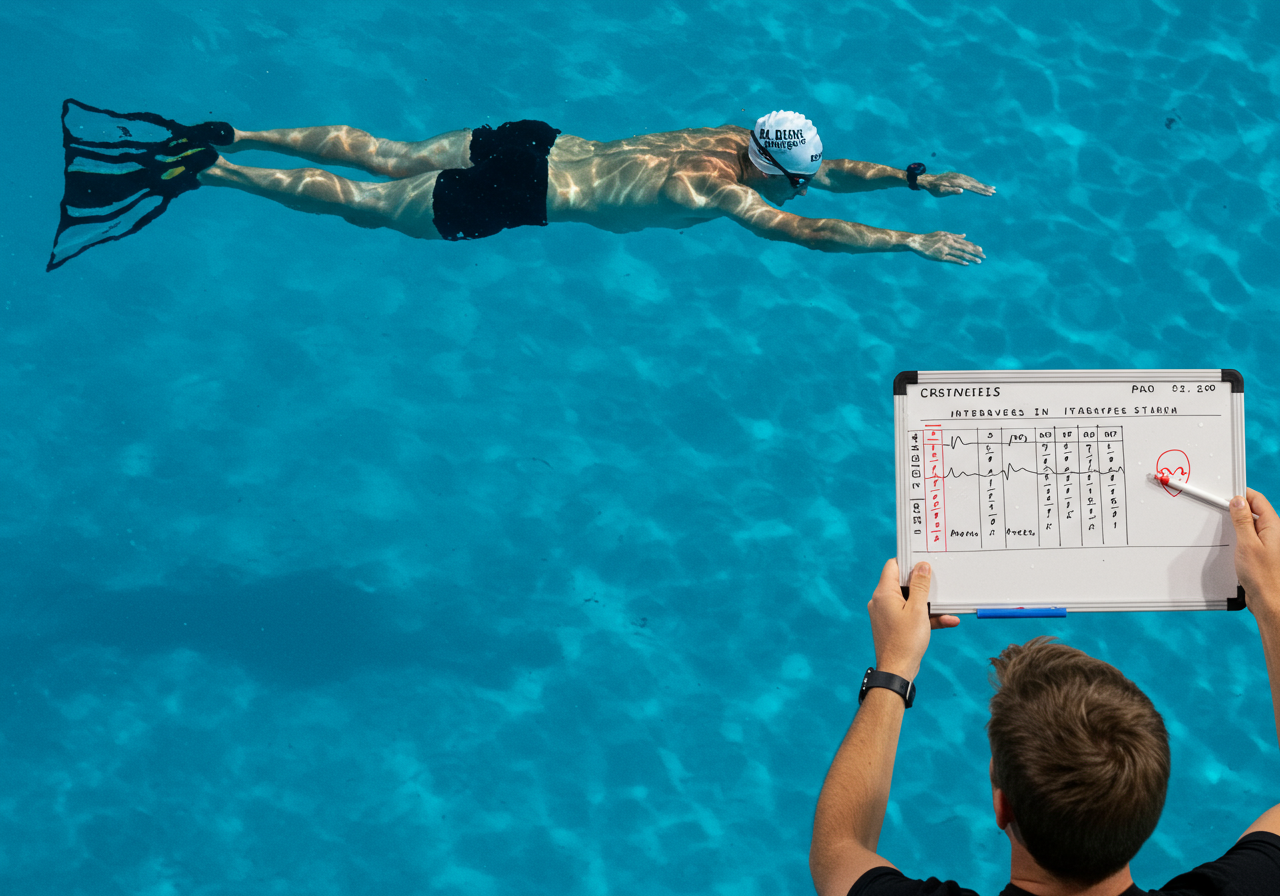
Engine work: cardio endurance, CO2 tolerance, and pool practice
Cardio supports calm diving and low air use. I build a base, then add intervals.
- Zone 2 increases mitochondrial density and endurance.
- Short intervals raise VO2 max and fin power.
- CO2 tolerance practice reduces urge to breathe anxiety.
| Session | Details | Target Zone | Duration |
|---|---|---|---|
| Zone 2 Cardio | Brisk walk or cycle | Z2 | 30–45 min |
| Pool Fins Intervals | 8×25 m strong, 25 m easy | Z3–4 | 20 min |
| CO2 Tolerance Drill | Box breathe 4-4-4-4, then 4-6-4-6 | Z1 | 10 min |
- Warm-up: 200 m easy fins, Z1–Z2.
- Main: 10×50 m, odd strong Z3, even easy Z2.
- Skills: 4x30s hover, perfect trim.
- Cooldown: 100 m backstroke, easy.
Time: 35 minutes. Average HR: 132 bpm. Peak HR: 156 bpm.
Intervals helped my fat loss more than steady swims. I lost 2.6 kg in six weeks with two interval days and two Zone 2 days. Steady state alone stalled after week three. However, Zone 2 still drove diving endurance gains.
- Practice breath control on land or at the surface.
- Do not breath-hold with scuba. Keep continuous exhale.
- Stop CO2 drills if dizzy or anxious.
I track swims with Garmin. The Garmin Dive and Connect apps log HR and pool distance. You can review them at garmin.com.
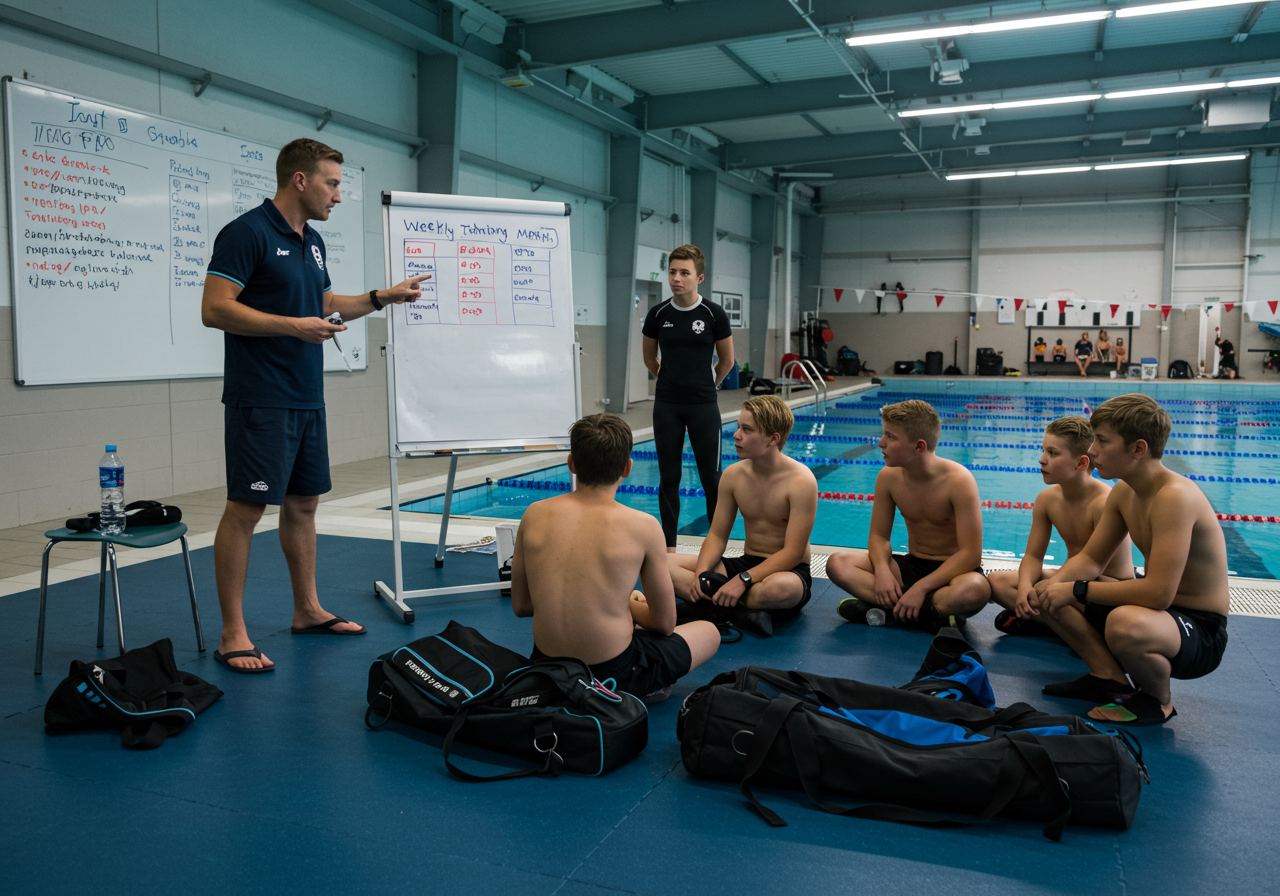
12-week rollout: from first pool session to two-tank weekends
This rollout builds capacity step by step. It aligns gym work and pool practice with dive days.
| Phase | Weeks | Focus | Weekly Plan |
|---|---|---|---|
| Beginner | 1–4 | Base strength, Zone 2, pool skills | 2 strength, 2 cardio, 1 pool |
| Intermediate | 5–8 | Intervals, load progress, buoyancy | 2 strength, 1 interval, 1 Zone 2, 1 pool |
| Advanced | 9–12 | Power, skills under stress, deload | 2 strength, 1 interval, 1 pool, 1 mobility |
- Mon: Strength A, 45 min.
- Tue: Zone 2 cycle, 40 min.
- Wed: Pool skills, 35 min.
- Thu: Strength B, 45 min.
- Fri: Mobility, 20 min.
- Sat: Intervals swim, 25–30 min.
- Sun: Rest or easy walk.
| Strength A | Strength B |
|---|---|
|
|
I increase load 2–5% weekly in phases one and two. I deload in week nine by cutting sets in half. I then push power again in week ten.
- Keep the day before dives easy mobility only.
- Hydrate with electrolytes. Aim for pale yellow urine.
- Post-dive, avoid sprints and heavy lifting for 24 hours.
I log sessions in Strava and Garmin. I track calories and protein with MyFitnessPal at myfitnesspal.com. I target 1.6–2.2 g protein per kg bodyweight. I aim for 7.5–8.5 hours sleep nightly.
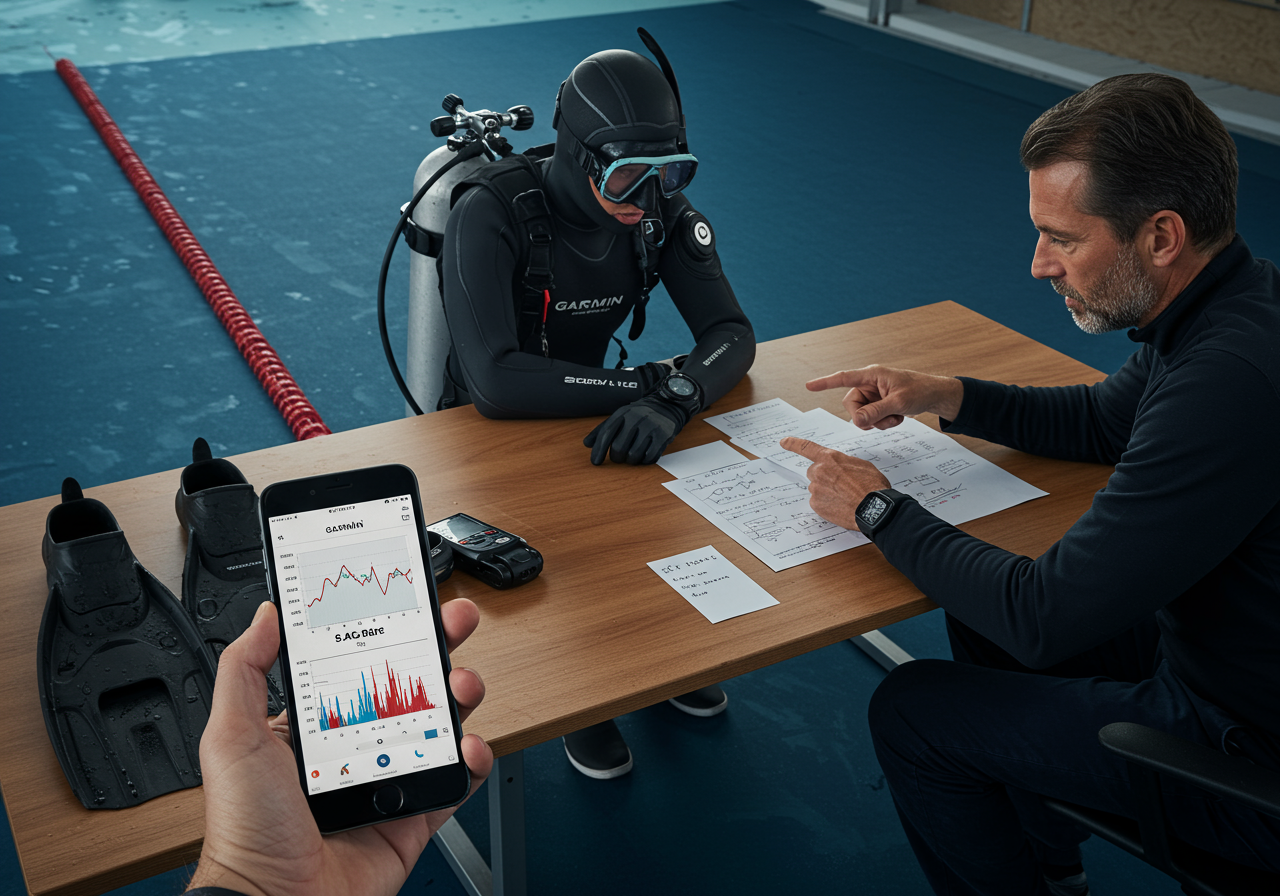
Proof of progress: metrics, testimonials, and problem solving — long-term result interpretation
Data confirms results and guides adjustments. I keep metrics simple and actionable for new divers.
- VO2 max estimate and resting HR.
- Surface Air Consumption (SAC) rate.
- Fin interval times and RPE.
- Strength loads and reps.
| Metric | Baseline | 6 Weeks | 12 Weeks |
|---|---|---|---|
| VO2 max (Garmin) | 38 ml/kg/min | 41 (+8%) | 44 (+16%) |
| Resting HR | 68 bpm | 62 | 60 |
| SAC rate | 21 L/min | 18 L/min (-14%) | 16 L/min (-24%) |
| 50 m fins split | 1:14 | 1:07 | 1:03 |
Client Aisha sent this after week eight. “I finished a two-tank trip with 900 psi left. I used to surface at 400 psi.” She combined two Zone 2 rides and one pool interval weekly. She also hit protein at 1.8 g/kg and slept eight hours most nights.
My recent block produced similar changes. After six weeks, my VO2 max rose by about 8% on Garmin. My SAC dropped from 18.5 L/min to 16.2 L/min. My average HR during fin intervals fell by 6 bpm at the same pace.
- Calories: maintenance on non-dive weeks. Small deficit for fat loss.
- Protein: 1.6–2.2 g/kg daily.
- Carbs: 3–5 g/kg on pool days.
- Hydration: 30–40 ml/kg daily. Add electrolytes in hot climates.
- Supplements: creatine 3–5 g. Vitamin D if deficient.
- Plateaus: rotate intervals or change fin length for two weeks.
- Overtraining: check morning HRV and mood. Cut volume 30% for a week.
- Motivation loss: schedule a skills dive with a buddy. Set a fun photo goal.
- Ear pain: ascend and equalize earlier. Never push through discomfort.
I compare HIIT and steady-state weekly. HIIT reduced my waist faster. Zone 2 built the base needed for calm dives. Together they worked best.
I log dives in Garmin Dive and strength in a spreadsheet. I track food with MyFitnessPal at myfitnesspal.com. These tools keep feedback simple and honest.
If numbers drift, I adjust one variable at a time. I cut one interval set first. I next add ten minutes to sleep goals. Simple changes keep trends positive.