Kayaking: Arm Strength for Gliding on Water
Blueprint: Arm Power for Smooth Kayak Gliding
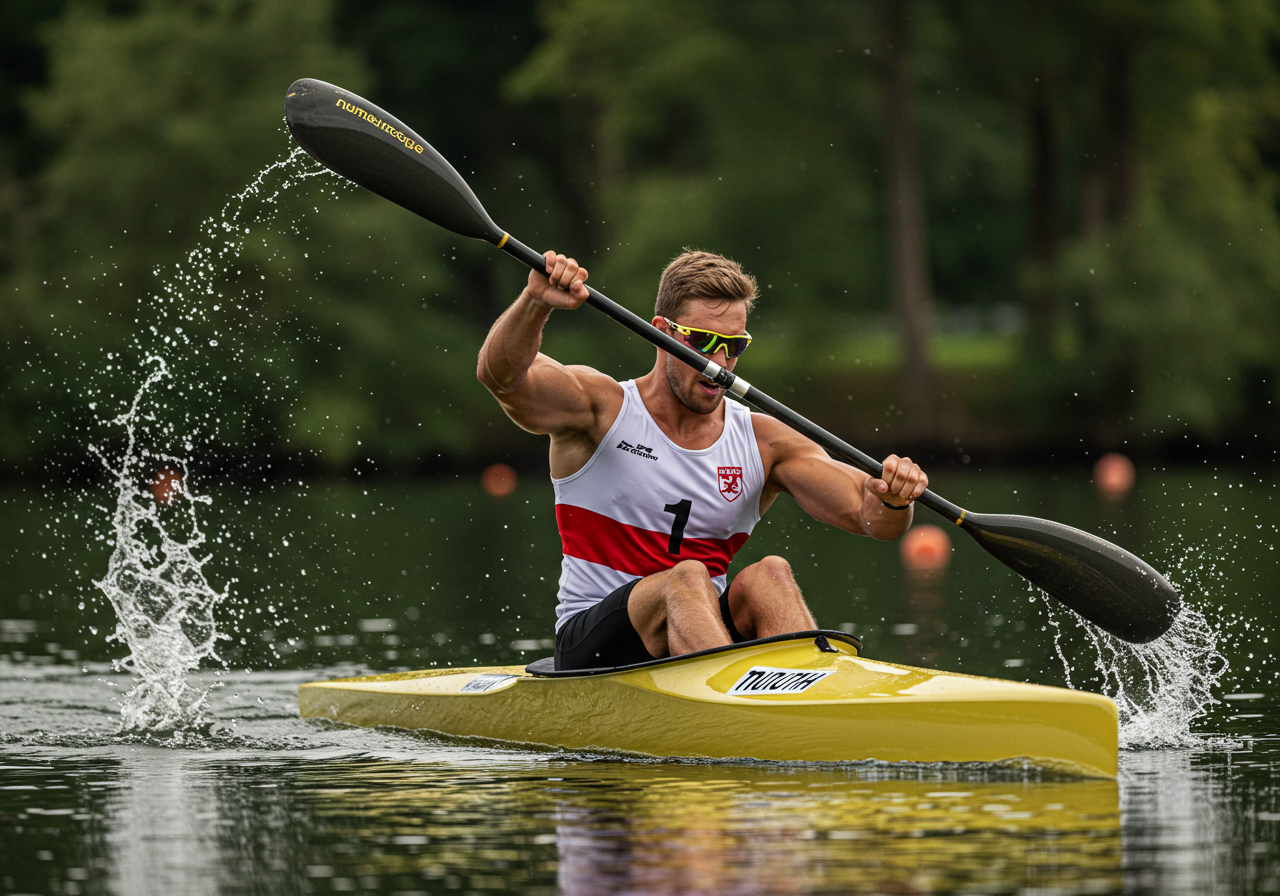
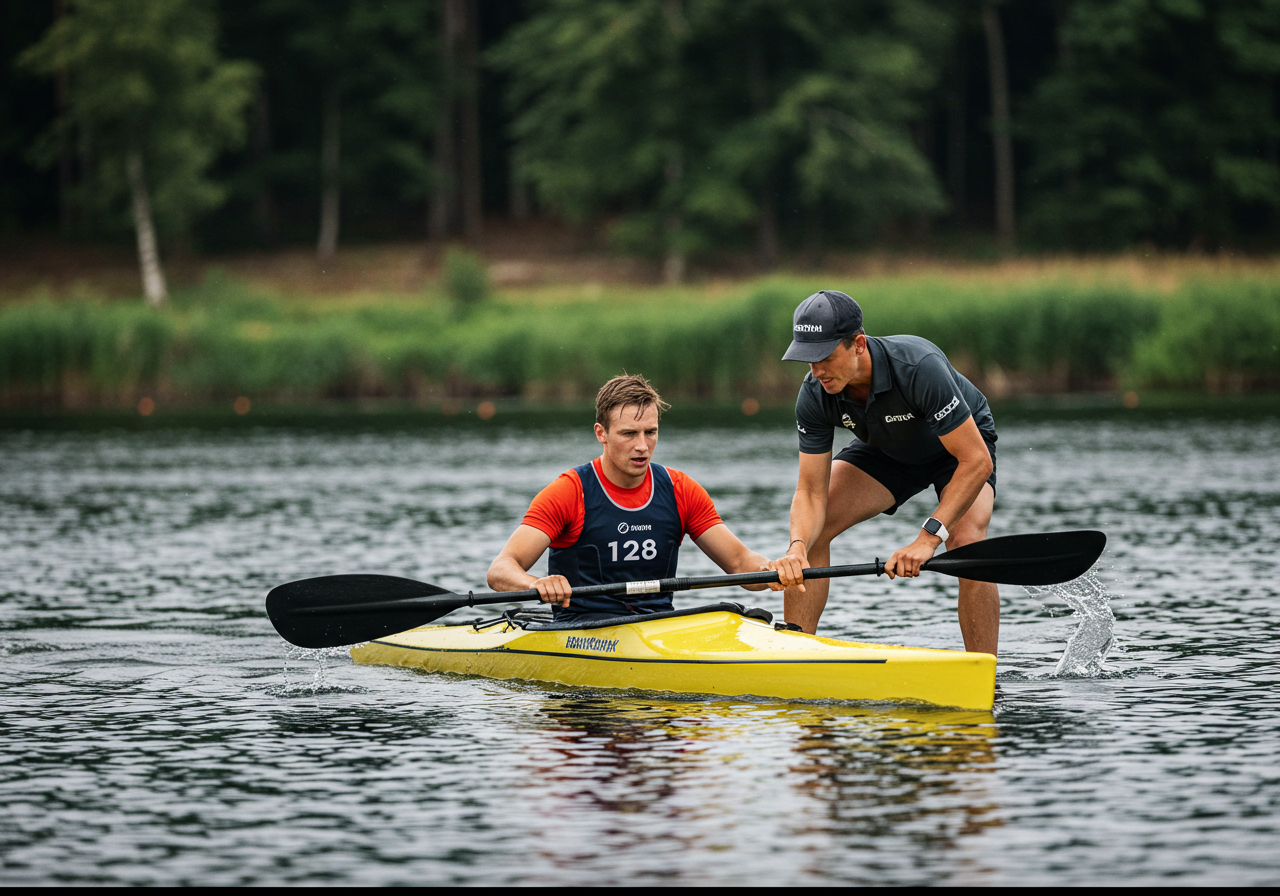
Building glide starts with technique and force transfer. Strong arms matter, but the torso drives power.
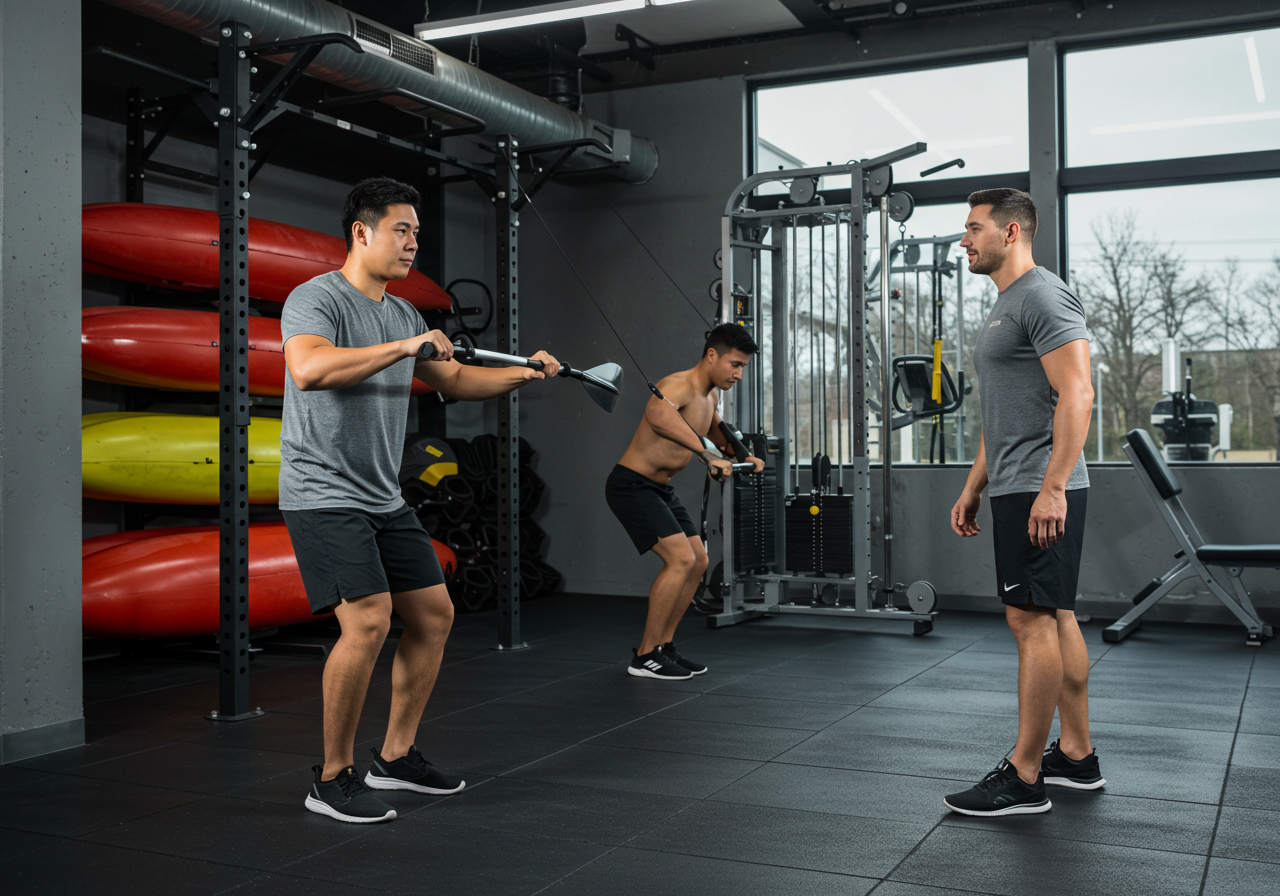
I teach a simple chain. Legs press. Hips rotate. Torso turns. Arms guide and finish. This keeps shoulders safe.
Strength supports technique. I focus on lats, rear delts, biceps, forearms, and rotator cuff. Core stability keeps the boat straight.
| Muscle focus | Exercise | Technique cue |
|---|---|---|
| Lats and rear chain | Chest-supported rows, banded lat pulls | Lead with elbow. Ribs down. |
| Biceps and forearms | EZ-bar curls, farmer carries | Neutral wrists. Crush, then relax. |
| Rotator cuff | Cable external rotations, Y-T-W raises | Elbow fixed. Small range. |
| Core and hips | Pallof press, half-kneeling chops | Brace first. Rotate from hips. |
Cardio supports long days on water. I use Zone 2 paddles at 60–70% HRmax. Intervals sharpen speed.
Practice Plans and Progressions
Progress begins with clear weekly structure. I pair water sessions with strength and mobility.
Use heart rate feedback. I track with a Garmin watch and chest strap for accuracy.
| Level | Weekly layout | Session details |
|---|---|---|
| Beginner | 3 paddles, 2 strength, 2 mobility | Paddle 30–40 min at Zone 2. Strength: 2×10 rows, 2×10 curls, 2×12 Pallof. |
| Intermediate | 4 paddles, 2 strength, 2 mobility | Add 6 x 2 min intervals at Zone 4. Strength: 3×8 rows, 3×8 carries, 3×10 rotations. |
| Advanced | 5 paddles, 3 strength, 2 mobility | Add threshold set: 2 x 10 min Zone 3. Strength: 4×6 rows, 4×6 pull-ups, heavy carries. |
Strength days move heavy to moderate loads. I progress 2–5% each week if reps stay crisp.
| Exercise | Sets x Reps | Rest | Load guide |
|---|---|---|---|
| Chest-supported row | 3–4 x 6–10 | 90–120 s | Last 2 reps challenging |
| Pull-up or assisted | 3 x 5–8 | 120 s | Add band or weight |
| EZ-bar curl | 3 x 8–12 | 60–90 s | Leave 1 rep in tank |
| Farmer carry | 4 x 40–60 m | 60–90 s | Heavy, posture tall |
| Cable external rotation | 2–3 x 12–15 | 45–60 s | Low load, strict |
Stepwise Calendar and Real Workouts
This calendar converts goals into action. It fits busy beginners and seasoned paddlers.
Use heart rate zones. Zone 2 equals conversational. Zone 4 feels hard, yet controlled.
| Weeks | Focus | Sample workout | Notes |
|---|---|---|---|
| 1–4 | Technique and aerobic base | 35 min paddle Zone 2. Then 6 x 10 strokes fast. Rest easy paddling. | Keep cadence smooth. RPE 5–6. |
| 5–8 | Strength and threshold | 2 x 8 min Zone 3 with 3 min easy. Strength 3×8 rows, 3×8 pull-ups. | Progress 2–5% loads weekly. |
| 9–12 | Race pace and speed | 8 x 2 min Zone 4 with 2 min easy. Finish with 10 min Zone 2. | Deload every fourth week. |
Here is my real session last month. It improved catch timing and arm drive.
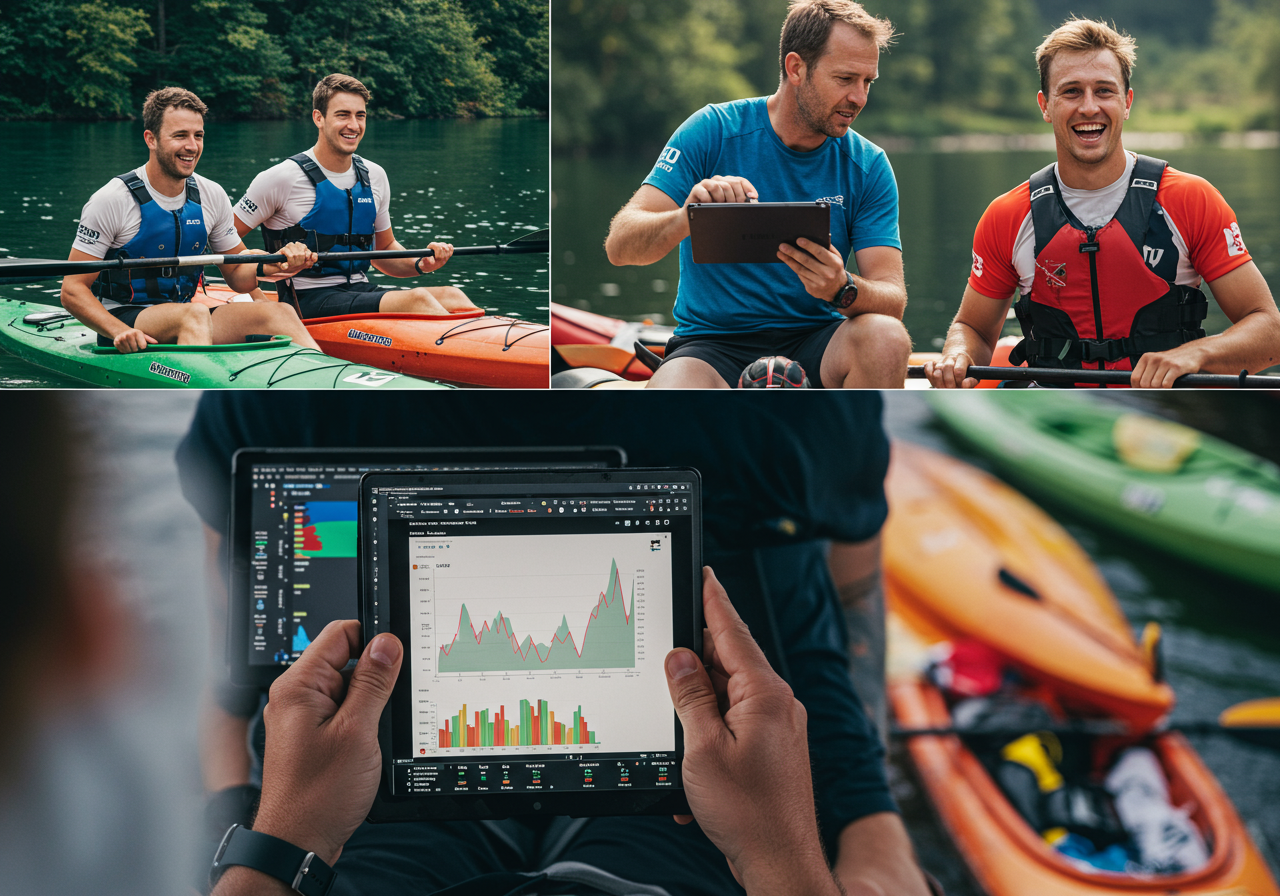
I used a Garmin watch for HR and strokes. I uploaded splits to Strava for segment analysis.
Fueling, Recovery, and Fixes
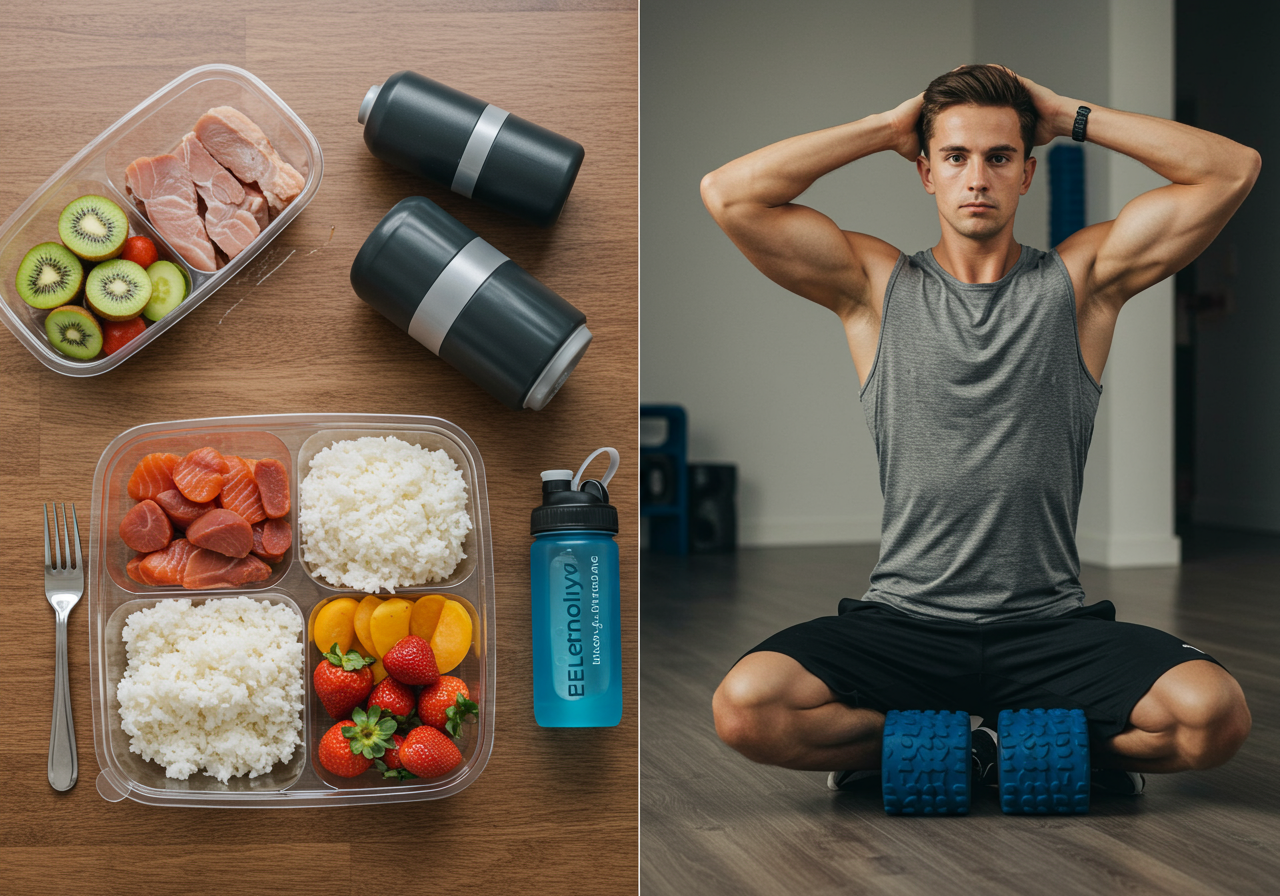
Recovery turns training into speed. I treat food and sleep as core gear.
Most paddlers perform well at maintenance calories or a small deficit. Large deficits slow adaptation.
| Bodyweight | Protein g/day | Carbs g/day | Fats g/day |
|---|---|---|---|
| 60–75 kg | 110–140 | 220–320 | 50–75 |
| 76–90 kg | 135–170 | 270–380 | 60–85 |
| 91–110 kg | 165–200 | 330–440 | 70–95 |
I track intake with MyFitnessPal. I keep hydration high and add sodium on hot days.
Sleep sets the ceiling. I aim for 7.5–9 hours. I cut screens an hour before bed.
Mobility maintains shoulder space. I like prone Y-T-W and half-kneeling windmills.
| Issue | Cause | Fix |
|---|---|---|
| Forearm pump | Death grip on paddle | Relax between strokes. Add farmer carries. |
| Shoulder pinch | Elbow flared, poor scap control | Scap pull-ups and cuff work. Narrow the elbow path. |
| Plateaued speed | No intensity variation | Add Zone 4 intervals. Deload every fourth week. |
Evidence, Metrics, and Case Notes — long-term result interpretation
Results validate the plan. I measure outcomes and adjust weekly.
My last 8-week block improved aerobic and strength markers. The mix delivered balanced gains.
| Measure | Before | After | Change |
|---|---|---|---|
| 500 m time trial | 2:36 | 2:22 | -14 s |
| VO2 max (watch estimate) | 46 ml/kg/min | 50 ml/kg/min | ~8% up |
| Pull-ups strict | 6 reps | 10 reps | +4 reps |
| HR drift 40 min Zone 2 | 9% | 4% | Better durability |
I tracked paddles with a Garmin watch. I posted intervals to Strava for accountability and pacing review.
Her review felt honest. She said these short intervals kept motivation high during a busy schedule.
HIIT drove fat loss better than only easy paddles. However, we kept two Zone 2 sessions.
I log food with MyFitnessPal. I monitor HRV and zones with Garmin. I compare pace using Strava.
Testimonials echo the data. “My arms stopped burning, and the boat finally glides,” wrote one client last month.
I keep things sustainable. We chase small wins, measure weekly, and adjust loads thoughtfully.