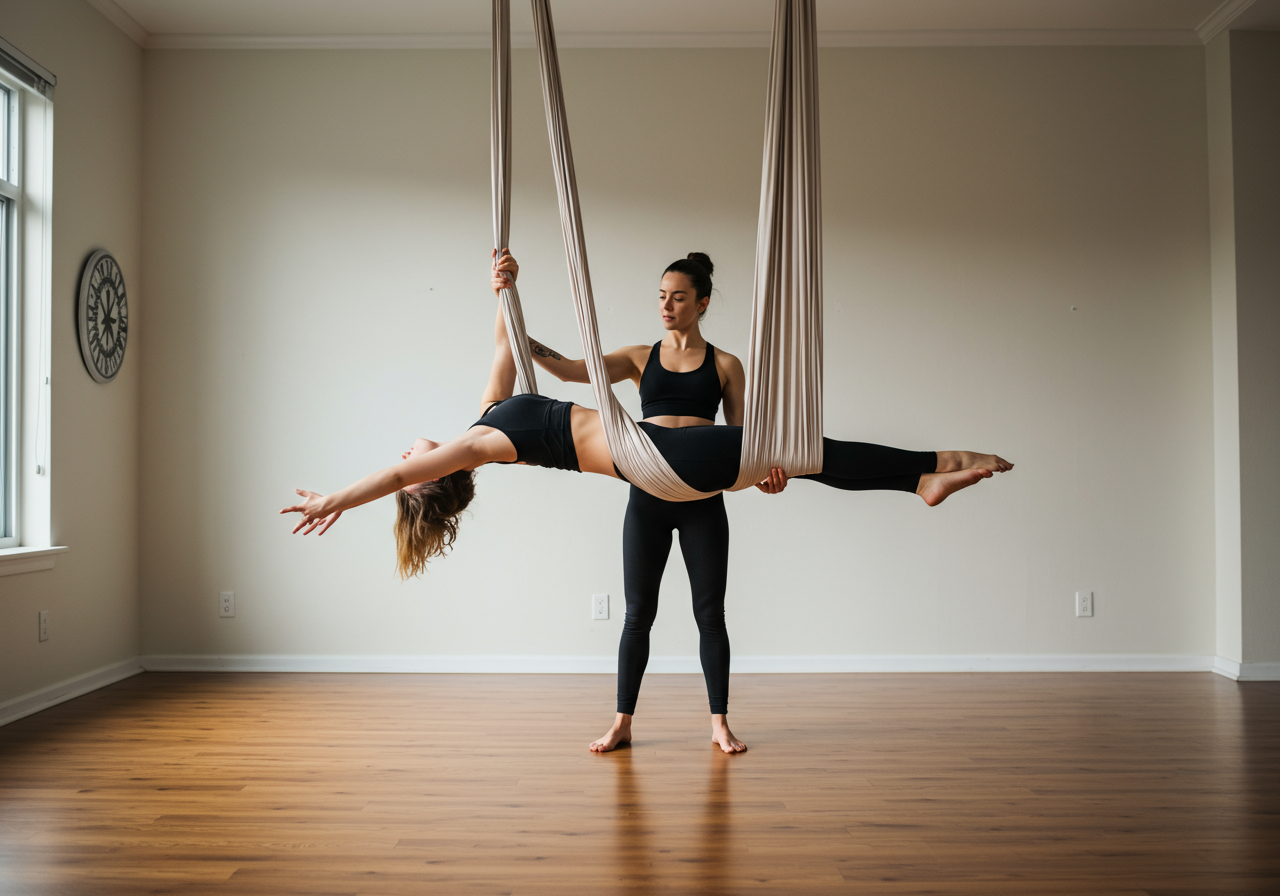
Aerial Yoga: Unique Yoga in the Air
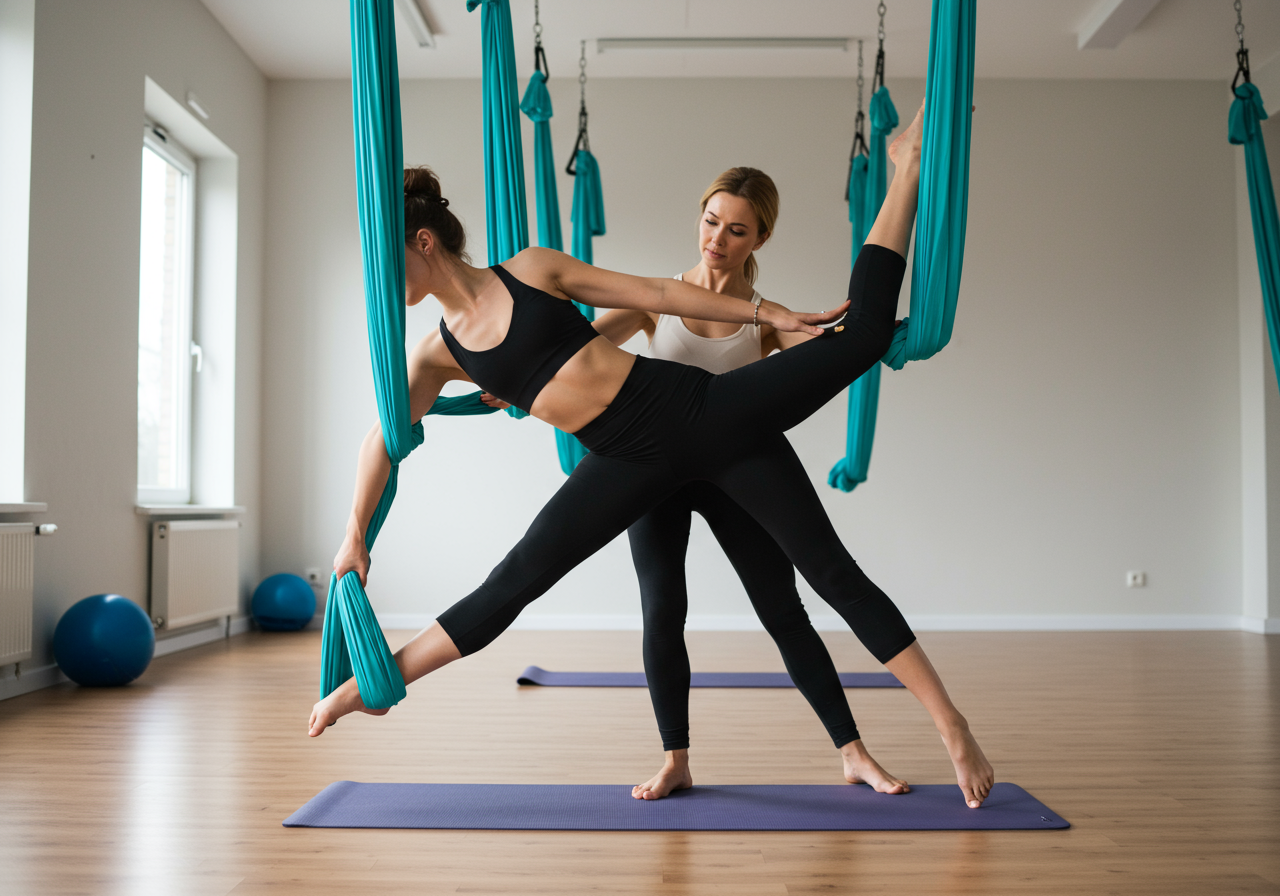
Airborne foundations: how aerial yoga upgrades your entire body
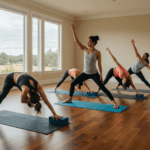
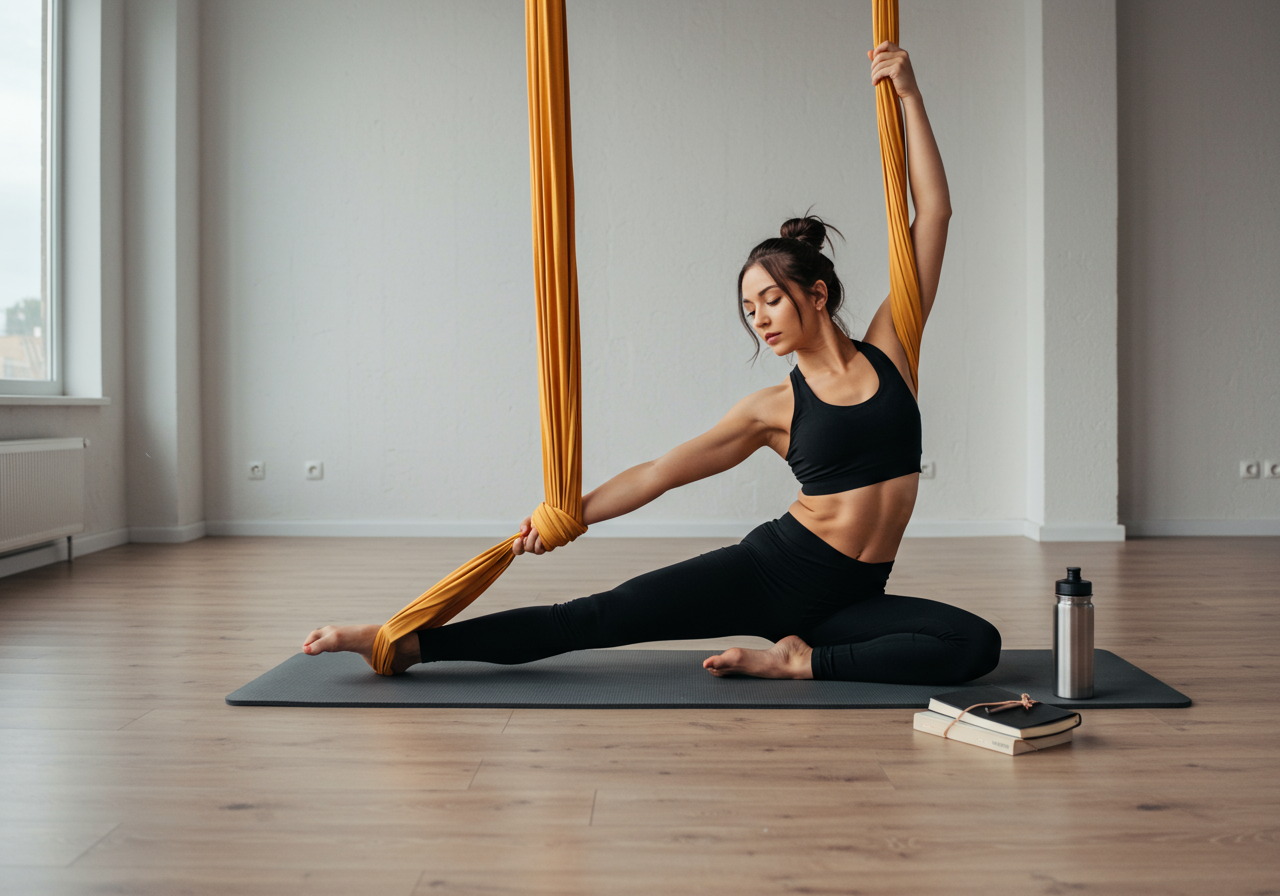
Aerial yoga supports flexibility, stability, and strength using a fabric hammock. The hammock reduces joint stress.
This method builds mobility through traction and decompression. It also challenges balance and deep core control.
I integrate aerial sessions with strength and cardio. This creates a balanced system for body composition and performance.
– Use traction to open hips and spine safely.
– Train core with anti-rotation and anti-extension drills.
– Alternate nervous system loads across the week.
– Pair aerial mobility with strength patterns: squat, hinge, push, pull.
– Track heart rate to manage fatigue.
Body mechanics focus on shoulder packing and hip centration. Your shoulder blades must glide, not shrug.
Your pelvis stays neutral during inversions. This protects your lumbar spine under traction.
Breathing guides stability. Nasal inhales expand ribs laterally. Slow exhales engage the deep core gently.
I coach tempo control during entries and exits. Controlled movement prevents fabric burns and slips.
| Component | Goal | Aerial Application |
|---|---|---|
| Mobility | Improve hip and thoracic range | Low hammock lunges, thoracic hangs |
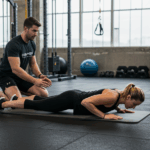
| Stability | Control under instability | Plank in sling, hollow holds |
| Strength | Build pulling and grip strength | Inverted rows, hip hinge hangs |
| Cardio | Raise aerobic capacity | Flow sequences at Zone 2–3 |
A beginner can start with hip height fabric. This reduces fear and improves grip endurance safely.
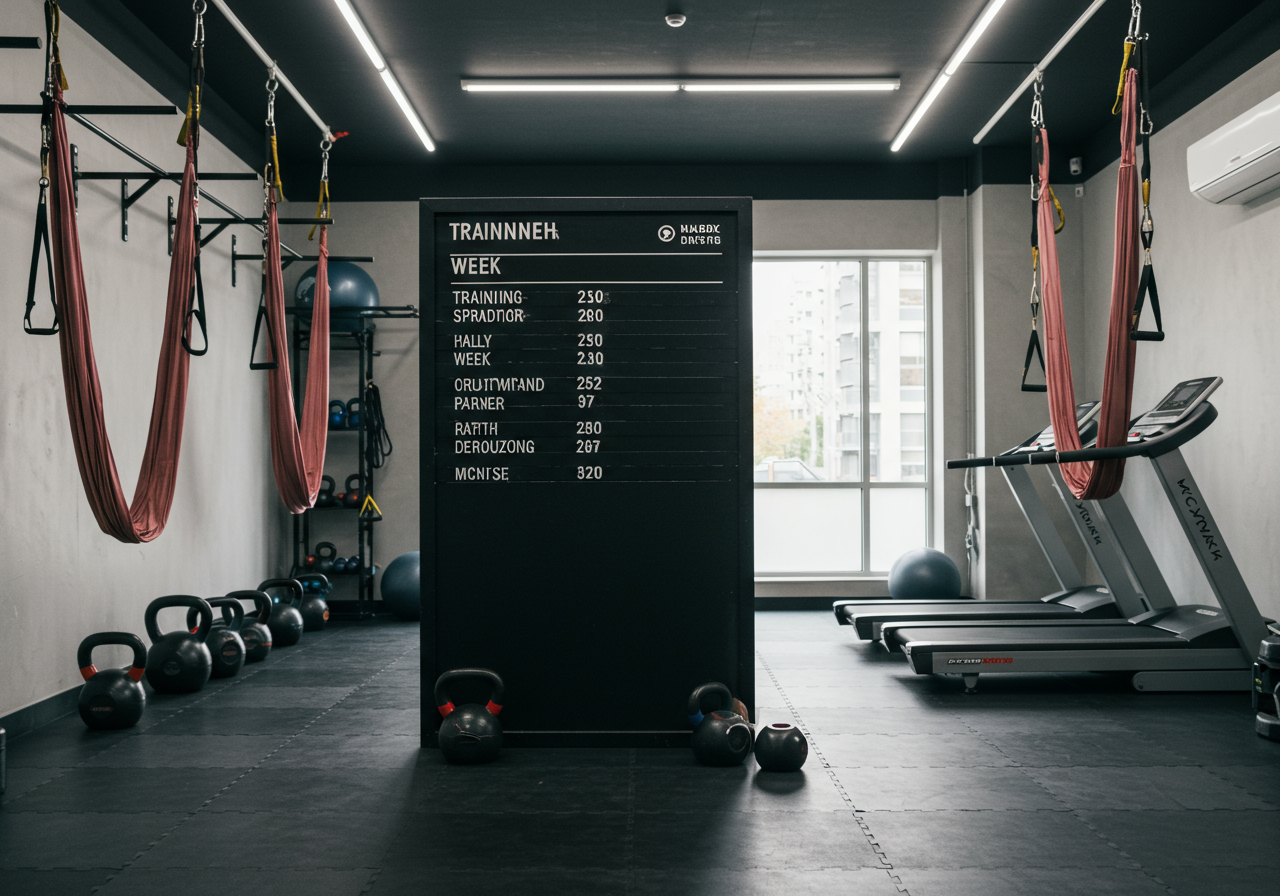
Weekly blueprint: combine aerial sessions, cardio, and strength for balanced gains
This blueprint balances mobility, strength, and endurance. It suits busy beginners and returning athletes.
Warm up 8 minutes: brisk walk and joint circles.
Flow 20 minutes: low hammock sequences.
Strength 15 minutes: goblet squats and rows.
Cool down 7 minutes: hamstring hangs and box breathing.
| Day | Session | Details |
|---|---|---|
| Mon | Aerial Mobility + Core | 45 min, HR Zone 2, plank in sling 3x30s, hip hangs |
| Tue | Strength | Goblet squat 4×8, incline push-up 4×10, band row 4×12 |
| Wed | Cardio | Cycling 35–45 min, HR Zone 2, nasal breathing |
| Thu | Aerial Flow | 55 min, Zone 2–3, sequence repeats, grip rotation |
| Fri | Strength + Mobility | Romanian deadlift 4×8, face pull 3×15, thoracic hangs |
| Sat | Optional Play | Hike or dance 30–60 min, easy pace |
| Sun | Recovery | Walk 20 min, breathing 10 min, soft tissue |
Step-by-step entries keep you safe. I cue three anchor points before each movement.
- Grip high on the fabric with neutral wrists.
- Place the hammock at hip crease for support.
- Shift weight slowly before lifting feet.
Breathing connects mind and body. Inhale through the nose for four counts. Exhale for six counts.
I coach exhale during effort phases. You protect your spine by engaging the pelvic floor gently.
Beginners should practice near a mat. You should also remove rings and watches.
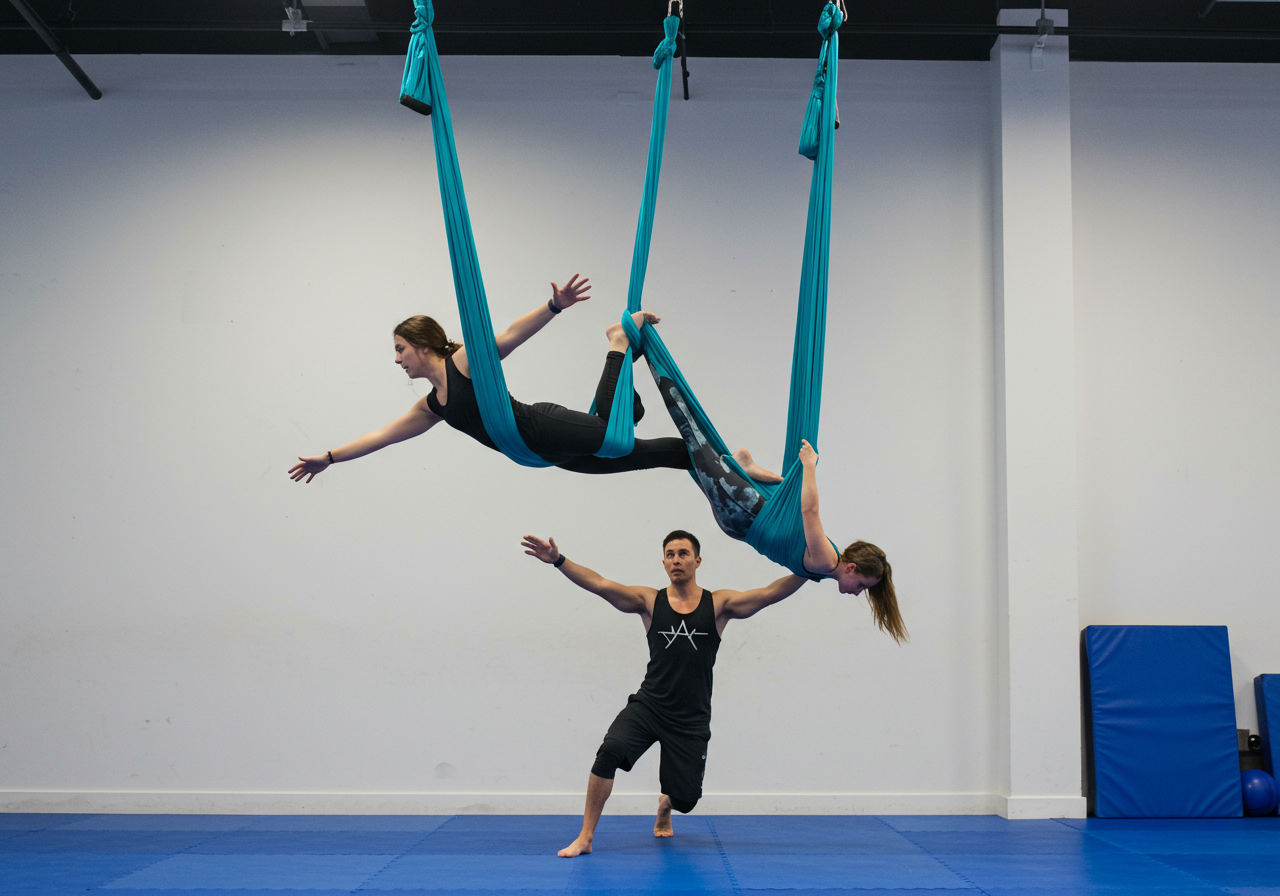
Level-up pathway: progressions, heart rate zones, and load management
Progressions keep training exciting and safe. I advance position difficulty while monitoring effort.
| Level | Key Skills | Session Example |
|---|---|---|
| Beginner | Mount, hip hang, plank in sling | 35–45 min, Zone 2, 6–7 drills, long rests |
| Intermediate | Inversions, side body hangs, flow links | 45–55 min, Zone 2–3, 8–10 drills, circuits |
| Advanced | Drops practice, single-point balance | 55–70 min, Zone 3, 10–12 drills, minimal rests |
Heart rate zones anchor intensity. I use a Garmin watch for cohesion across sessions.
| Zone | Percent Max HR | Use in Aerial |
|---|---|---|
| Zone 1 | 50–60% | Warm-ups and breathing |
| Zone 2 | 60–70% | Base flow sessions |
| Zone 3 | 70–80% | Challenging sequences |
Load management matters for recovery. I progress volume before increasing complexity.
My training example shows measured growth. Weeks one to six included three aerial days and two strength days.
Week 1 average heart rate during flow was 118 bpm. Week 6 average heart rate was 126 bpm with longer sequences.
Grip endurance improved from 25 seconds to 48 seconds per hang. I tracked data using Garmin Connect from garmin.com.
HIIT circuits raised calorie burn more than steady flow for me. Fat loss improved with 1–2 weekly HIIT finishes.
However, too much HIIT spiked soreness. I capped HIIT to twelve minutes total per week.
Weeks 1–2: Low hammock hip hangs 3x20s, plank in sling 3x25s.
Weeks 3–4: Inversion prep 4x15s, side body hangs 3x20s.
Weeks 5–6: Linked flow 4 rounds, 60–75 seconds per round.
Breathing remains central as difficulty increases. I maintain long exhales to stabilize the ribs under load.
Recovery, nutrition, and troubleshooting for consistent progress
Recovery keeps your joints happy and your mind calm. A steady plan prevents plateaus.
| Focus | Target | Protocol |
|---|---|---|
| Sleep | 7.5–9 hours | Dark room, consistent schedule, phone off early |
| Protein | 1.6–2.2 g/kg | Distribute across three to four meals |
| Carbs | 3–5 g/kg | Higher on flow or HIIT days |
| Hydration | Clear urine | 500 ml pre-session, sip during, 500 ml post |
I track calories with MyFitnessPal from myfitnesspal.com. Consistency beats perfection each week.
My cut phase used 300–400 calorie deficit. I kept protein high and fiber steady.
Supplement choices stayed simple. I used creatine monohydrate and vitamin D based on bloodwork.
Plateaus usually stem from under-fueling or sleep debt. I adjust carbs first, then reduce HIIT.
Common aerial aches include wrist irritation and hamstring cramps. I rotate grips and extend warm-ups.
I once skipped a full warm-up. I strained my calf during a drop practice and lost two training days.
Breathing repairs nervous system tone. I use 4-7-8 breathing after hard flows for five minutes.
– Pain above 4/10: stop and regress.
– Fatigue high two days: deload to technique.
– Motivation low: switch to playful sequences.
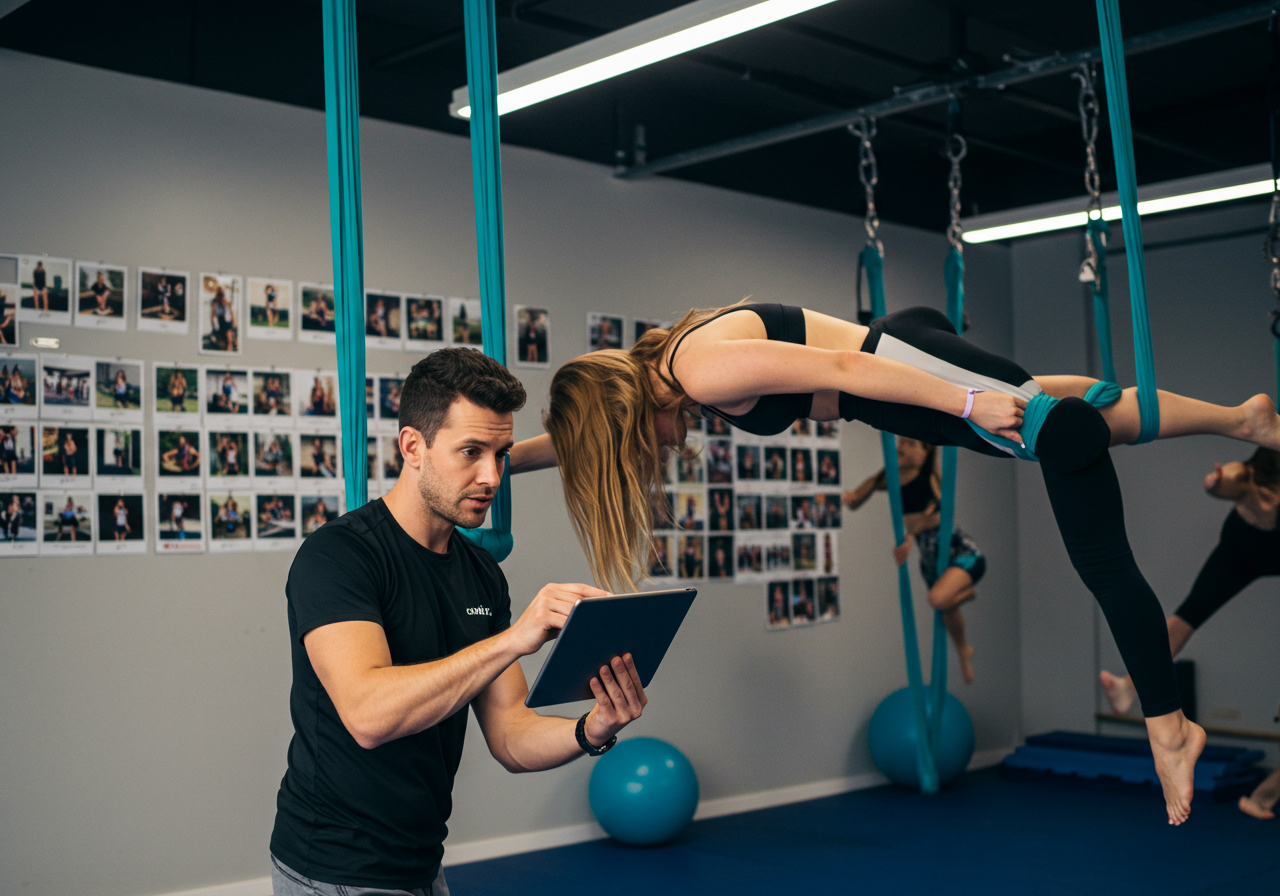
Client feedback highlights the mental benefits. Calm minds learn complex skills faster and safer.
Evidence of progress: data, testimonials, and long-term result interpretation
Results matter. I capture numbers and stories to verify effectiveness.
| Metric | Start | 6 Weeks | Change |
|---|---|---|---|
| VO2 max (Garmin) | 36 ml/kg/min | 39 ml/kg/min | +8% |
| Hamstring Straight-Leg Raise | 65° | 78° | +13° |
| Plank in Sling Hold | 25 s | 52 s | +27 s |
| Resting Heart Rate | 66 bpm | 61 bpm | -5 bpm |
One client, Maya, shared her experience. She was new and anxious about inversions.
Another client, Ben, tracked with Garmin and Strava. He noticed improved cycling climbs after aerial sessions.
My own fat loss improved with short HIIT finishes. Steady flows maintained calm but burned fewer calories.
However, I saw no benefit from daily inversions. My recovery improved once I limited inversions to three days.
– Log three metrics weekly: flexibility angle, grip time, resting heart rate.
– Record session RPE and sleep hours.
– Review trends every Sunday.
Breathing quality remains my deciding factor. Smooth exhales indicate readiness for harder skills.
These results support aerial yoga within a complete system. The framework delivers sustainable routine maintenance.