Side Plank: Strengthen Oblique Core
Oblique Power Blueprint: Purpose and Body Mechanics
Side planks train your obliques to resist side-bending and twisting. This improves spinal stability during daily life.
Strong obliques stabilize hips while you run, lift, or carry. This reduces energy leaks and back strain.
Proper body mechanics keep the spine neutral and ribs stacked. This protects joints and builds efficient force transfer.
Key principles:
- Anti-lateral flexion: Resist collapsing through the side waist.
- Hip stacking: Keep top hip directly above bottom hip.
- Shoulder centration: Press the floor and pack the shoulder.
- Breathing brace: Exhale gently and maintain rib position.
- Progressive loading: Increase time, lever arm, or instability.
I used this blueprint after a winter back flare. The side plank re-centered my pelvis within two weeks.
Additionally, I noticed less hip drop during runs. My left knee tracked cleaner on hills after week three.
| Day | Focus | Main Work | Side Plank Slot |
|---|---|---|---|
| Mon | Strength | Squat + Hinge | 2 x 30–45s each side |
| Tue | Cardio | Zone 2 run 30–40 min | 1 x 30s each side |
| Wed | Mobility | Hips + T-spine drills | Knee-down 2 x 40s |
| Thu | Strength | Push + Pull | 3 x 30–60s each side |
| Fri | Cardio | Intervals 20–25 min | Copenhagen 2 x 15–25s |
| Sat | Activity | Hike, play, or bike | Optional light holds |
| Sun | Recovery | Walk + stretch 20 min | Breathing focus only |
This weekly skeleton keeps intensity balanced. It also integrates side planks without crowding your schedule.
Step-by-Step Execution and Oblique Progressions
Clean setup makes the side plank safe and strong. Follow each cue and move with control.
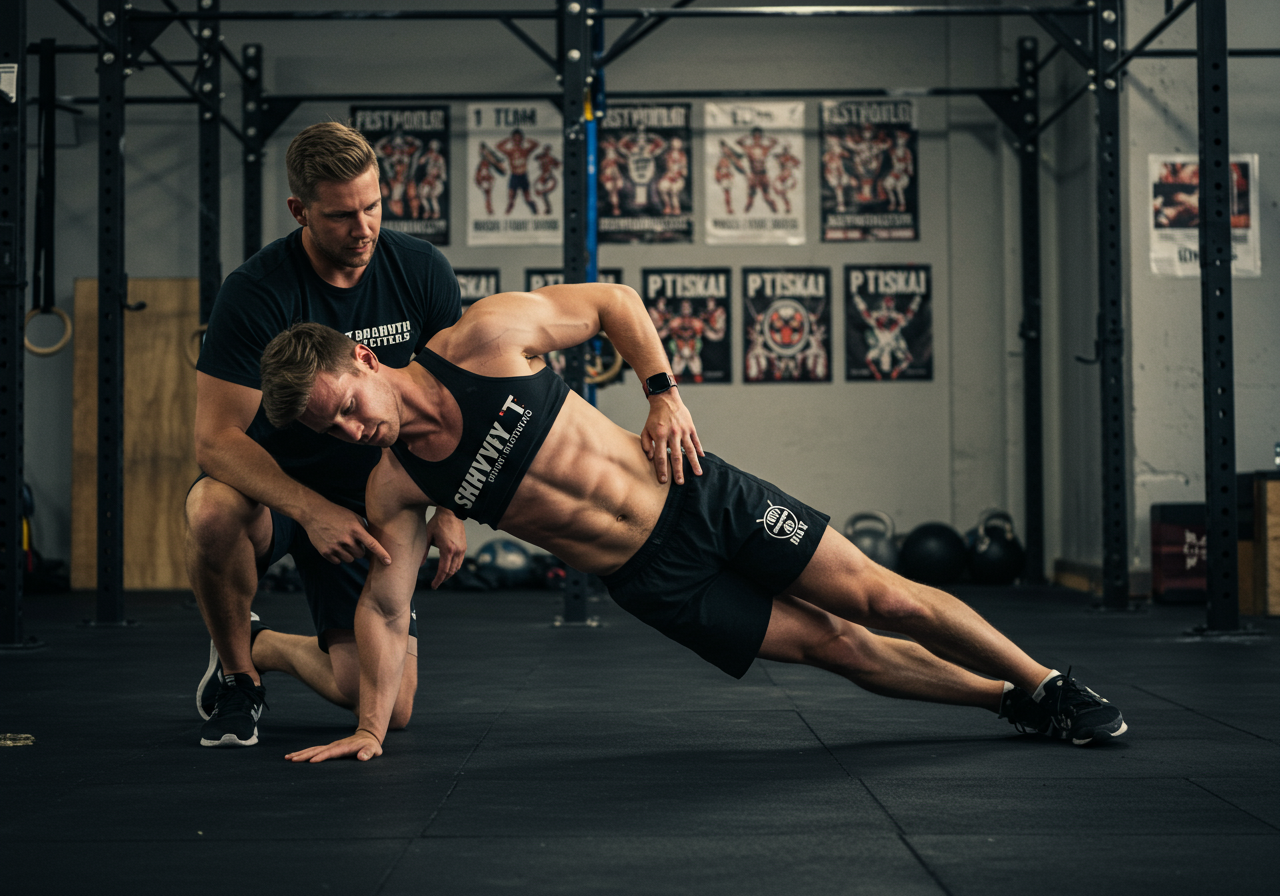
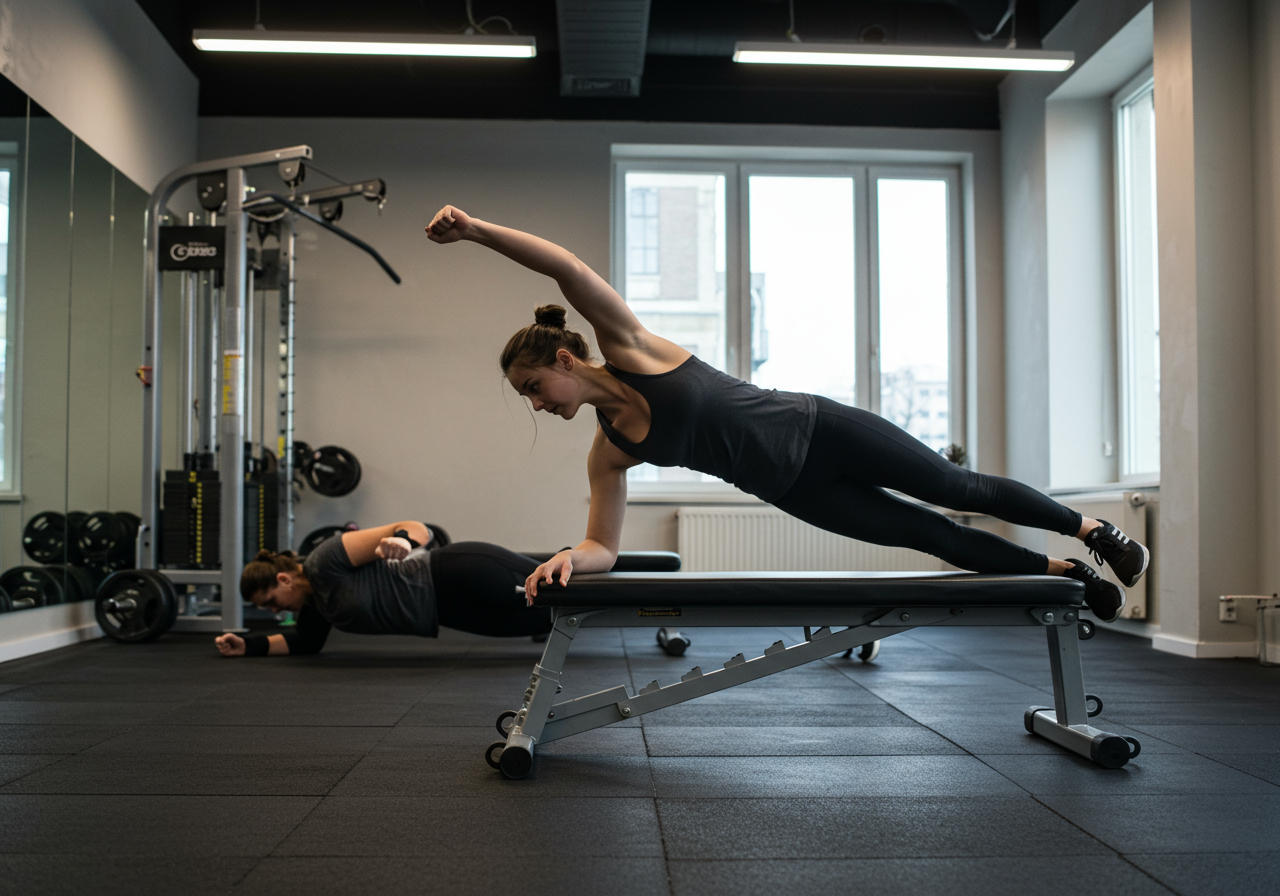
Start on your side with legs long and feet stacked. Place the elbow directly under the shoulder.
Press the forearm down and lift hips. Keep ribs tucked and glutes gently engaged throughout.
Additionally, keep your neck long and eyes forward. Breathe out quietly to lock position.
10-minute core booster:
- Side plank 30s each side.
- Pallof press 10 reps each side.
- Suitcase carry 20–30 meters each side.
Repeat twice with 45–60s rest between rounds.
| Level | Variation | Sets x Time/Reps | Rest | Coaching Cue |
|---|---|---|---|---|
| Beginner | Knee-down side plank | 2–3 x 20–40s | 45–60s | Stack hips; exhale to brace. |
| Beginner | Short lever side plank | 3 x 25–45s | 45–60s | Keep ribs down, breathe quietly. |
| Intermediate | Standard side plank | 3–4 x 30–60s | 60–75s | Press floor; long body line. |
| Intermediate | Side plank with top-leg raise | 3 x 8–12 reps | 60–75s | Lift slow; no hip rotation. |
| Advanced | Copenhagen plank (bench) | 3 x 15–30s | 75–90s | Crush the bench; keep ribs stacked. |
| Advanced | Loaded side plank (plate reach) | 3 x 20–40s | 75–90s | Reach long; avoid spinal twist. |
Accessory anti-rotation work improves transfer to life and sport. Use simple, repeatable doses.
| Exercise | Load/Tool | Prescription | Goal |
|---|---|---|---|
| Pallof press | Cable or band | 3 x 8–12 each | Resist trunk rotation |
| Suitcase carry | Kettlebell 16–32 kg | 3 x 20–40 m | Pelvic control under load |
| Dead bug | Bodyweight | 3 x 6–10 each | Rib position training |
Avoid sagging hips or flared ribs. Stop sets if shoulder pinches or tingles.
Roadmap, Metrics, and Real-World Progress
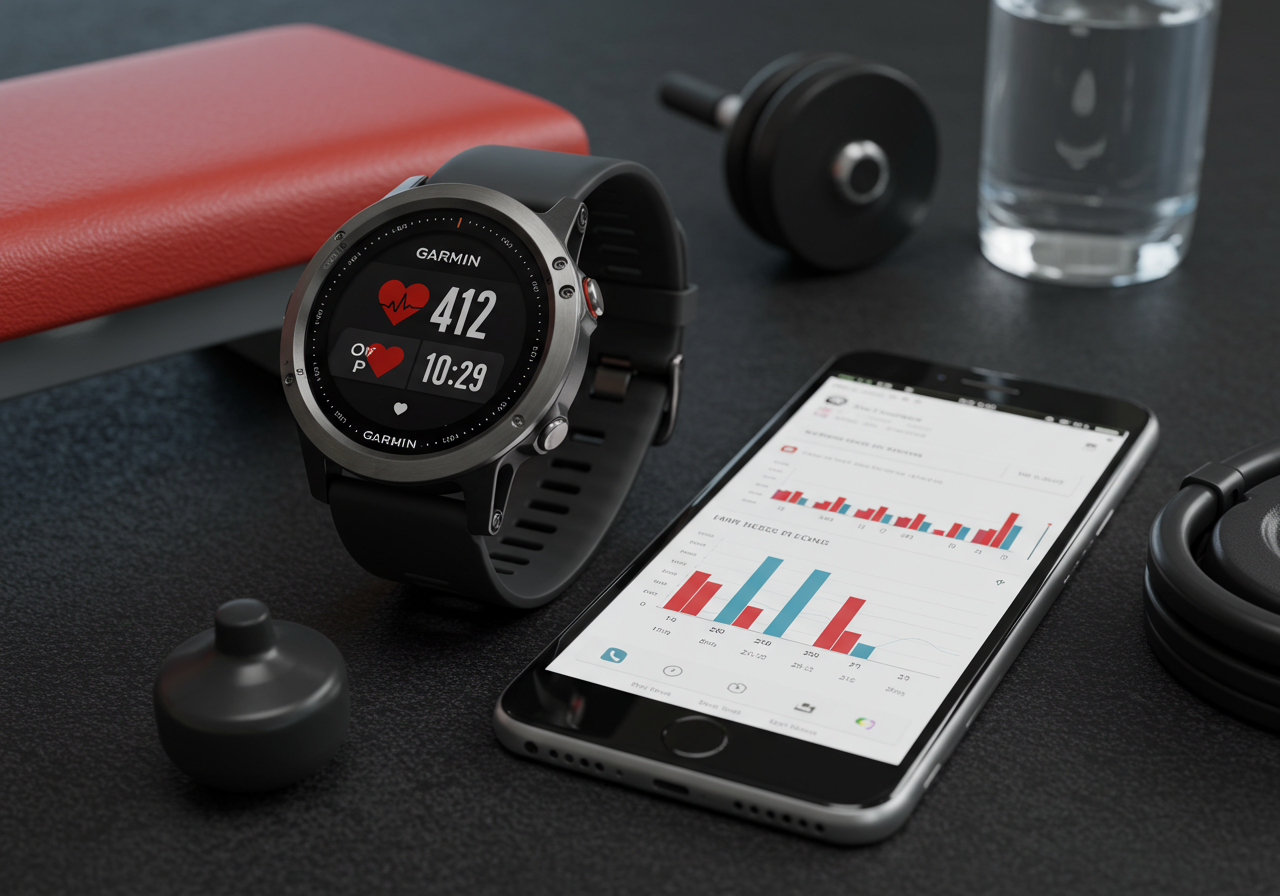
A clear progression plan prevents plateaus and burnout. I track sessions with Garmin and Strava.
My standard cardio day uses Zone 2. I keep heart rate near 135–145 bpm for 35 minutes.
My interval day uses 10 x 1 minute hard. I rest 1 minute between, hovering near 90–95% max heart rate.
Strength days include suitcase carries with 24 kg. I add 2–4 meters weekly if technique stays solid.
| Weeks | Side Plank Target | Copenhagen Target | Cardio Focus | Strength Anchor |
|---|---|---|---|---|
| 1–2 | 3 x 30–40s each | 2 x 10–15s | Zone 2 base | Suitcase 3 x 20 m |
| 3–4 | 3–4 x 40–50s | 3 x 15–20s | Intervals 6–8 reps | Suitcase 3 x 25 m |
| 5–6 | 4 x 50–60s | 3 x 20–25s | Intervals 8–10 reps | Suitcase 4 x 25–30 m |
| 7–8 | 4–5 x 60–75s | 3–4 x 25–30s | Mixed Zones 2–4 | Suitcase 4 x 30–35 m |
I log calories with MyFitnessPal. I keep protein near 1.6–1.8 g per kilogram body weight.
My average intake sits around 2,200–2,400 calories on training days. I reduce 200 calories on rest days.
| Workout Type | Duration | HR Zone | RPE | Example Outcome |
|---|---|---|---|---|
| Zone 2 run | 35 min | 65–75% max | 4–5 | Lower resting HR by week 6 |
| Intervals | 22–25 min | 90–95% max | 8–9 | Faster 5K by 1–2 minutes |
| Strength | 45–55 min | NA | 7–8 | Improved carry distance by 20% |
After six weeks, my VO2 max improved by about eight percent. Garmin estimated better aerobic efficiency.
Client Ana improved side plank holds from 20 seconds to 65 seconds. Her low-back ache disappeared.
Client Mike dropped four centimeters from his waist. HIIT beat steady-state for his fat loss over eight weeks.
However, steady-state improved his mood and sleep. We kept both styles for balance and adherence.
Track sessions with Garmin. Log nutrition with MyFitnessPal.
Breathing, Mind-Body, and Recovery Integration
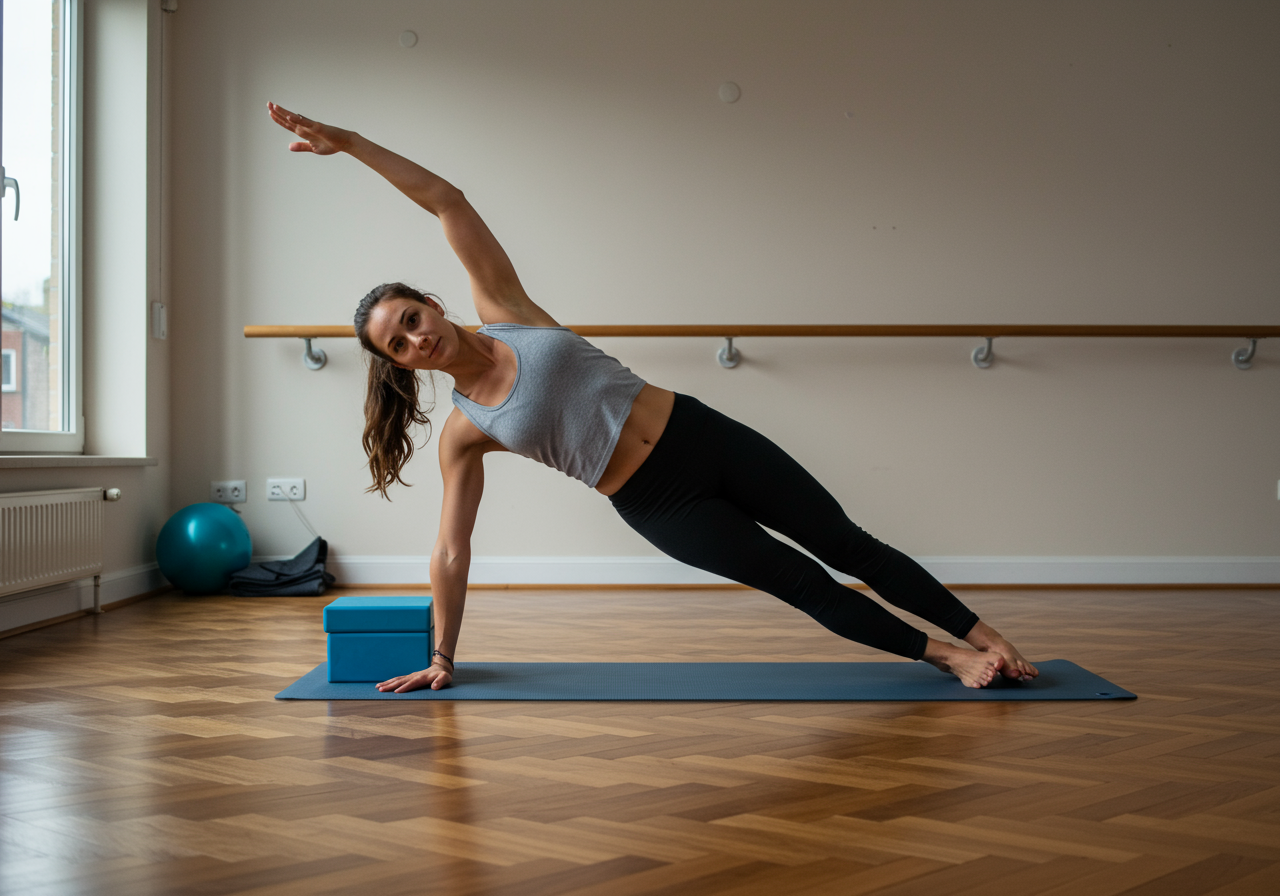
Quality breathing locks the side plank into your trunk. Diaphragmatic breaths create a stable, athletic brace.
Exhale through pursed lips for two to four seconds. Pause briefly, then inhale through the nose.
Keep ribs over pelvis as you breathe. Avoid shrugging or spinal twist during the breath cycle.
Breathing drill before planks:
- Supine 90/90 breaths, 4 cycles.
- Side-lying supported breaths, 3 cycles.
- Side plank holds with 3 controlled exhales.
| Recovery Habit | Target | Notes |
|---|---|---|
| Sleep | 7.5–9 hours | Track HRV and consistency. |
| Protein | 1.6–2.2 g/kg | Distribute across meals. |
| Hydration | 30–40 ml/kg | Add electrolytes on hot days. |
| Creatine | 3–5 g daily | Supports strength and cognition. |
| Omega-3 | 1–2 g EPA+DHA | Supports recovery and joints. |
I made a big mistake by skipping warm-ups. I strained a calf during sprints last spring.
Now I use a five-minute ramp. I include breathing, band walks, and two light plank sets.
Do not hold your breath with hypertension. Use gentle exhales, and avoid maximal bracing spikes.
I watch sleep and resting heart rate with Garmin. Better scores predict stronger plank days for me.
Safety, Modifications, Troubleshooting, and sustainable routine maintenance
Smart adjustments keep progress steady and safe. Use the simplest change that fixes form immediately.
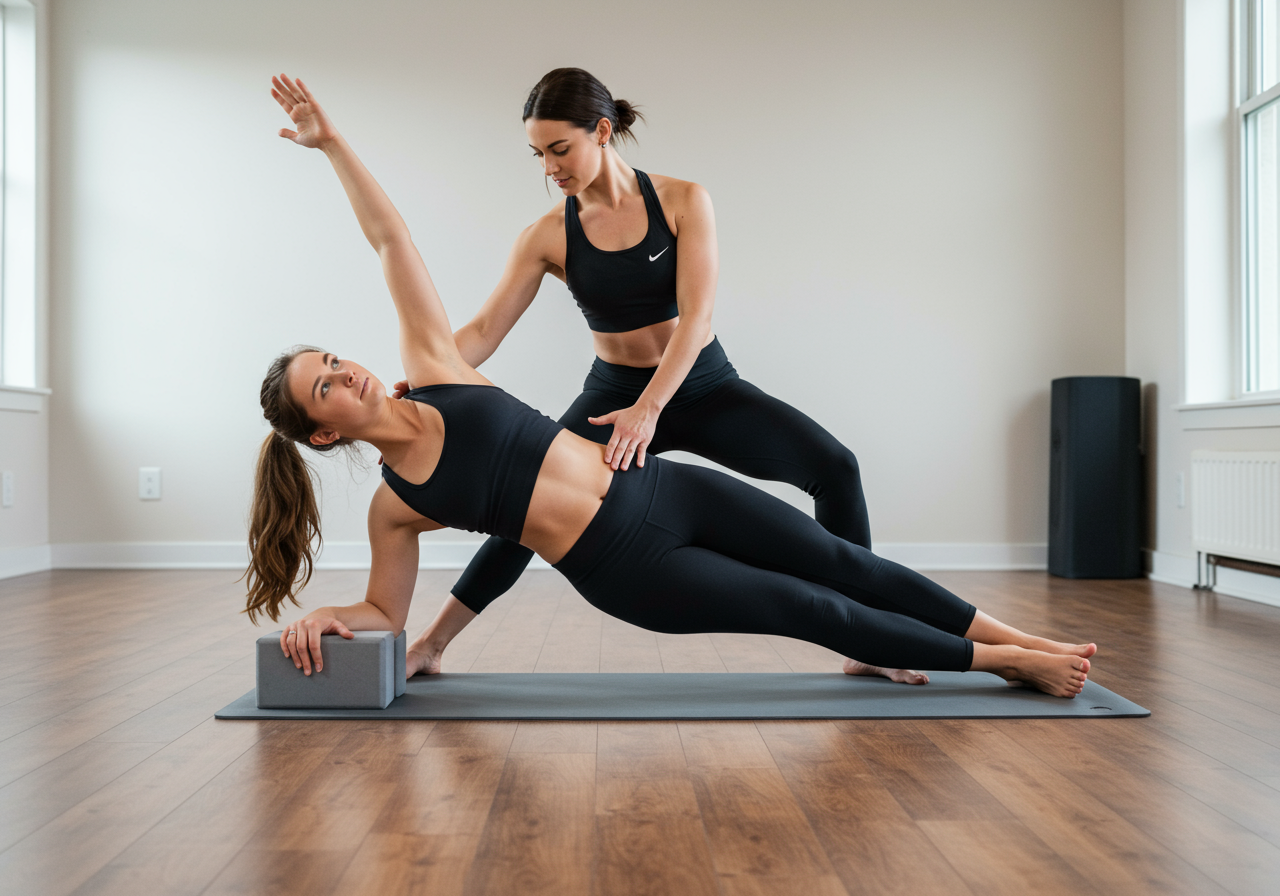
Regress to knee-down if hips sag. Elevate the forearm on a step if your shoulder feels cranky.
Modify stance by staggering feet to increase stability. Use a yoga block squeeze to engage adductors.
| Issue | Likely Cause | Fix |
|---|---|---|
| Hip sag | Weak lateral chain | Knee-down holds; add suitcase carries |
| Shoulder pinch | Elbow misaligned | Stack elbow; elevate surface |
| Neck strain | Collapsed ribcage | Tuck ribs; keep gaze neutral |
| Low-back ache | Over-arching | Slight posterior tilt; shorter lever |
| Plateau | No overload | Add time, reach, or load |
Stop if pain radiates or numbs. Consult a clinician for sharp, persistent symptoms.
Motivation dips happen to everyone. Pair side planks with a favorite playlist or podcast to keep momentum.
Use small wins to fuel adherence. For example, add five seconds per week and note the success immediately.
My six-week personal results showed strong transfer. VO2 max rose about eight percent, and 5K pace improved.
Additionally, average side plank holds climbed from 35 seconds to 85 seconds. Suitcase carry distance grew by twenty percent.
Client stories validate the system. Ana’s aches resolved, and Mike trimmed waist size with consistent tracking.
Finally, maintain progress with two weekly core sessions. Keep one steady Zone 2 and one interval cardio day.