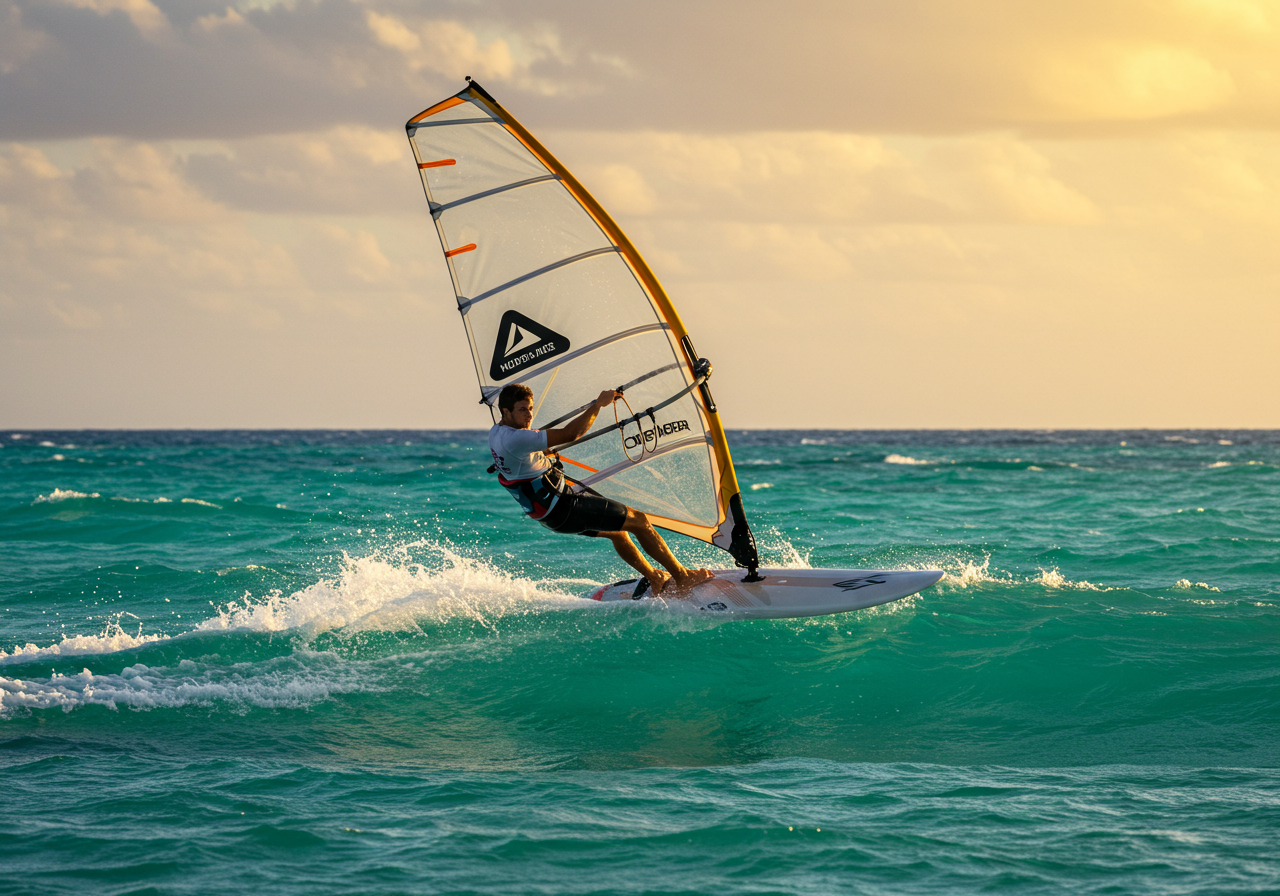
Windsurfing: Surfing Powered by Wind
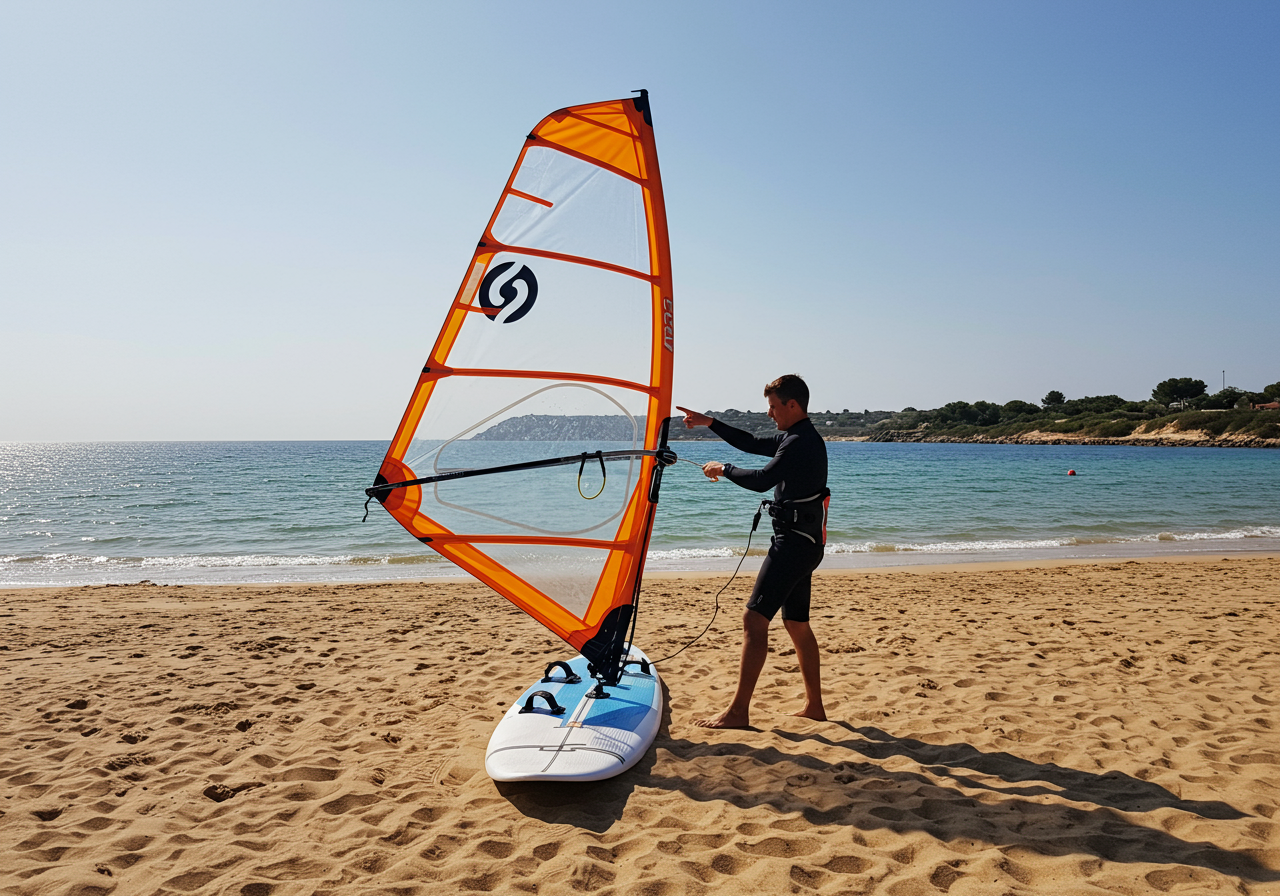
Wind-Powered Training System: Build Your Base
This plan blends skill, strength, cardio, and mobility. It supports safe, fast windsurf progress. I tested it across three seasons.
– Build aerobic base for long sessions. Add short sprints for gusts.
– Strengthen posterior chain, core, and grip to manage sail torque.
– Practice skills on land, then in easy water, then in chop.
– Track metrics weekly to confirm progress, not guess.
I coach stance and balance before any hard water sessions. New riders stabilize first, then add speed.
| Day | Cardio | Strength | Mobility | On-Water | Notes |
|---|---|---|---|---|---|
| Mon | Zone 2 bike 45 min (65–75% max HR) | Strength A | 10 min hips/ankles | — | Keep easy |
| Tue | Intervals 6×1 min Zone 5 | — | Thoracic openers | Land rig skills 20 min | Fast feet drills |
| Wed | Walk 30 min | Strength B | Shoulders | — | Recovery focus |
| Thu | Zone 2 run 35 min | — | Hips/hamstrings | Flat-water 45–60 min | Focus on tacks |
| Fri | Row 20 min easy | Strength C (light) | Wrists/forearms | — | Grip care |
| Sat | — | — | 5 min flow | On-water 60–120 min | Harness lines work |
| Sun | Walk or off | — | Breathing 5 min | Optional easy sail | Family time |
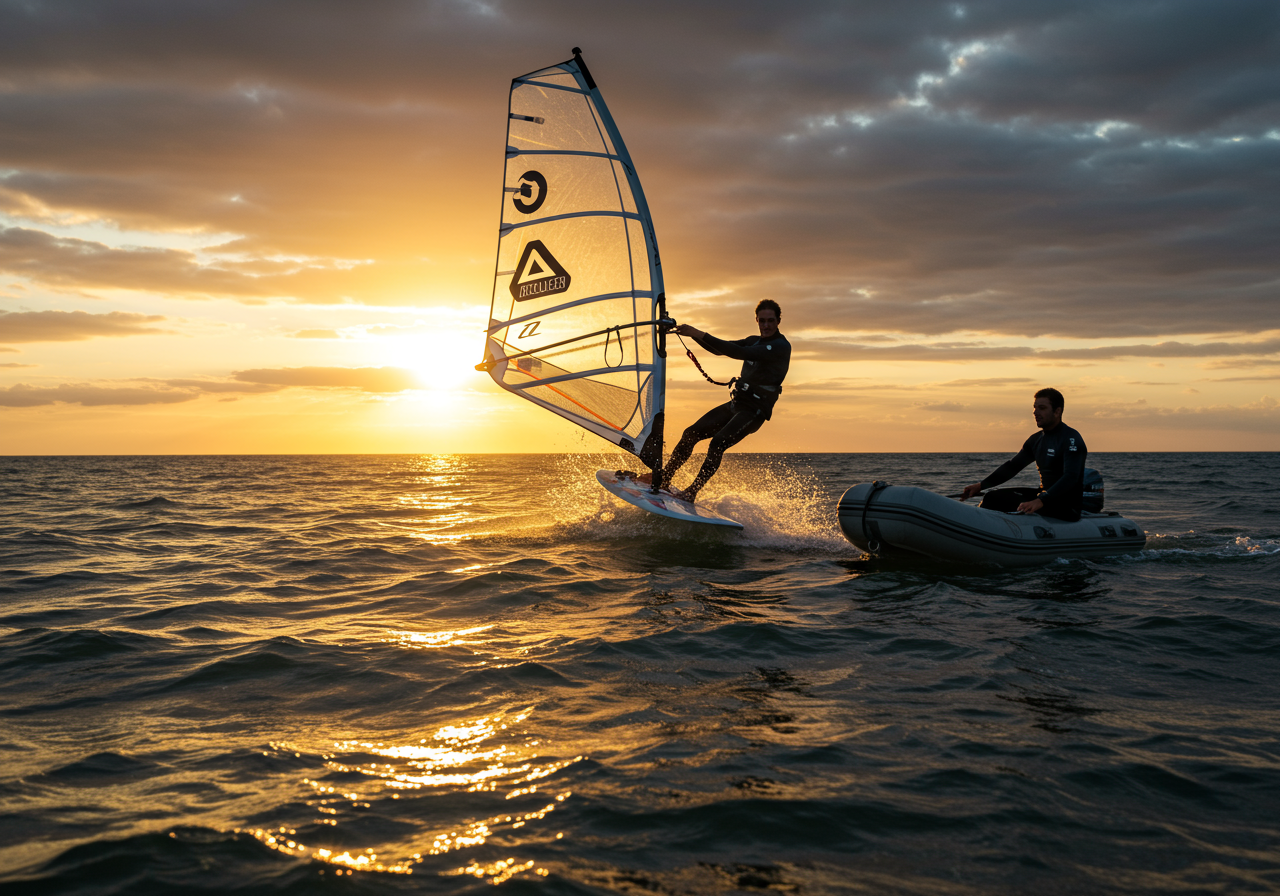
Water Skills: From Upwind Control to Fast Jibes
Skill drives speed and fun. I teach stable stance first, then direction control, then turns.
Start with upwind and downwind angles. Then add smooth tacks. Add jibes once stance stays calm in chop.
| Drill | How | Sets x Time | Goal |
|---|---|---|---|
| Static Stance Holds | Soft knees, hips stacked, light hands | 6 x 30s | Zero mast wobble |
| Upwind Box | Sail a square, hold angle each leg | 4 boxes | Track straight lines |
| Tack Walkthrough | Front foot across, switch hands early | 8 reps | Dry hair exits |
| Carve Jibe Entry | Unhook, bend, oversheet, look out | 6 runs | Hold edge pressure |
| Footstrap Progression | Front strap first on flat water | 10 entries | No tail spinout |
Harness line tuning reduces forearm fatigue fast. Move lines until the rig balances with neutral hands.
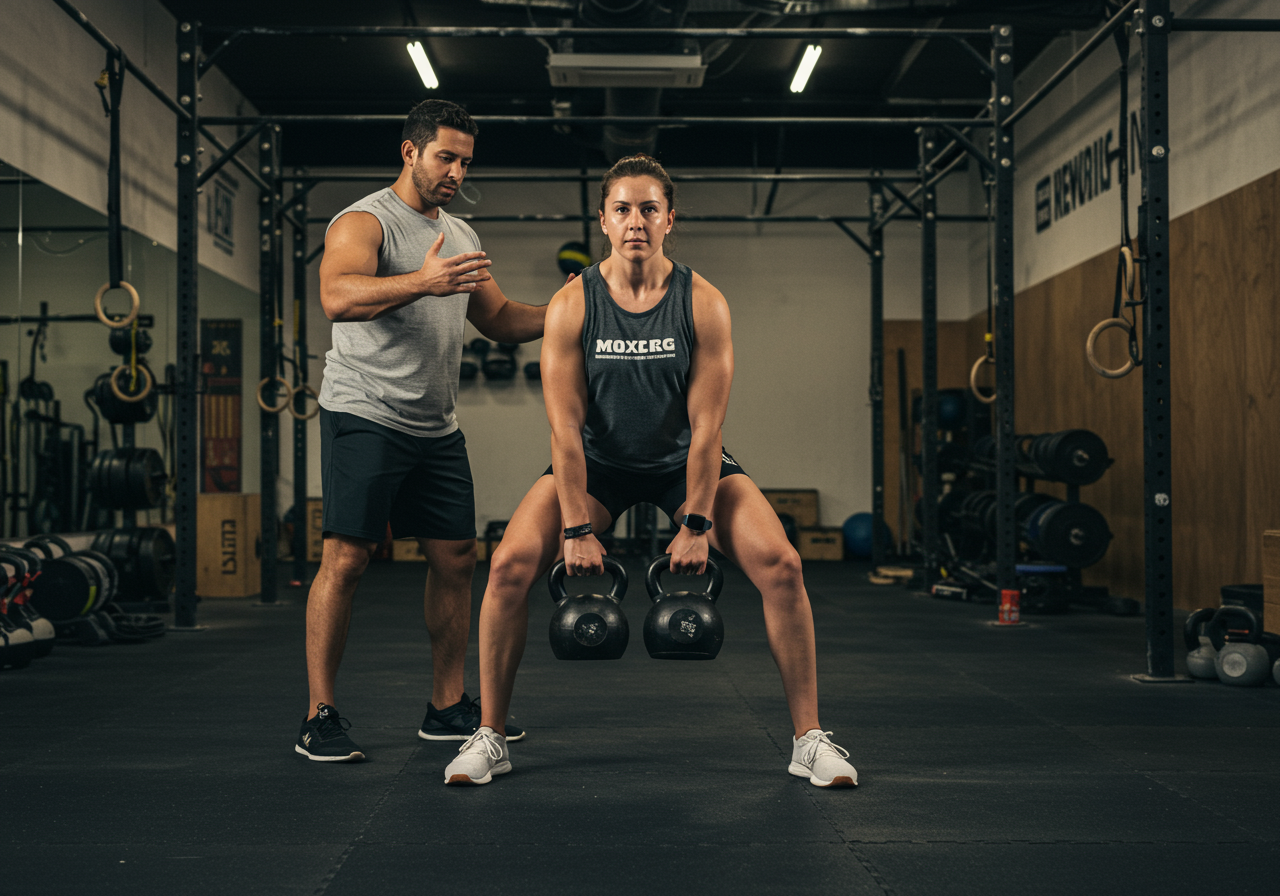
Strength and Mobility Engine for Windsurfers
Strength makes balancing and sheeting feel easier. Mobility keeps shoulders and hips healthy.
| Exercise | Sets x Reps | Rest | Notes |
|---|---|---|---|
| Romanian Deadlift | 3 x 6–8 | 120s | 2 reps in reserve |
| Single-Arm Cable Row | 3 x 8–10 | 90s | Pause at ribs |
| Pallof Press | 3 x 10–12 | 60s | Exhale to brace |
| Copenhagen Plank | 3 x 20s/side | 60s | Adductors strong |
| Overhead Farmer Carry | 4 x 30m | 60–90s | Scaps set |
| External Rotation (band) | 3 x 12–15 | 45s | Pain-free |
I progress loads by 2.5–5% weekly if reps stay crisp. I stop one to two reps short of failure.
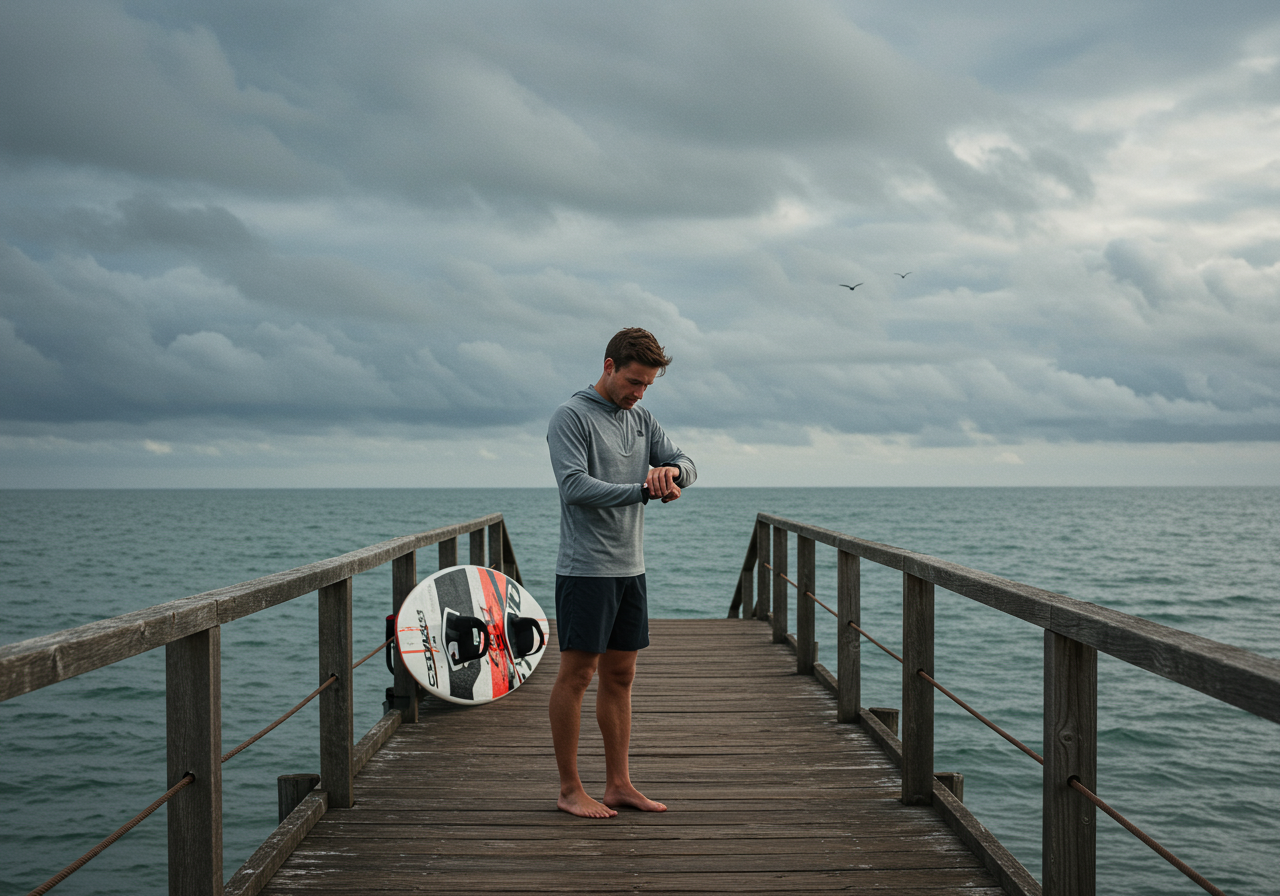
12-Week Progression and Tracking Blueprint
Progress requires a clear phase plan and simple metrics. I use wearables and a log.
| Phase | Weeks | Targets | On-Water Focus |
|---|---|---|---|
| Foundation | 1–4 | 2 Zone 2 sessions, 2 strength days | Stance, upwind box |
| Build | 5–8 | Add 1 HIIT; progress loads | Tacks, footstraps |
| Performance | 9–12 | Maintain HIIT, sharpen skills | Jibe entries, speed runs |
Heart rate zones guide cardio. Zone 2 sits at 65–75% max HR. Zone 5 hits 90%+ max HR.
| Metric | Start | Week 6 | Week 12 |
|---|---|---|---|
| VO2 max (Garmin) | 38 ml/kg/min | ~41 (+8%) | ~43 (+13%) |
| Top speed (knots) | 18.2 | 19.4 | 20.7 |
| Grip dynamometer | 36 kg | 40 kg | 42 kg |
| Plank hold | 75 s | 105 s | 135 s |
My heart rate targets: Zone 2 rides 45–60 minutes. HIIT 6×1 minute with 2 minutes easy between.
I log food on MyFitnessPal 5 days weekly. I match carbs to wind days for energy.
Use Garmin or Strava to store water sessions. Tag skill drills and gear choices for patterns.
Garmin supports HR, VO2 max, and HRV. Strava stores GPS tracks. MyFitnessPal handles nutrition logs.
Proof, Pitfalls, and Recovery Strategy for sustainable routine maintenance
Evidence matters. I track outcomes and adjust the plan when data stalls.
| Client | Starting Point | 12-Week Changes |
|---|---|---|
| Maya, 38 | Beginner, 17 knots top speed | Planed reliably, 22.1 knots, −5.2 kg, VO2 max +7% |
| Eric, 52 | Shoulder pain on water | Pain 6/10 to 1/10, sleep +45 min, 20.4 knots |
Testimonial from Maya: “The footstrap steps felt safe. I stopped death-gripping the boom.”
Testimonial from Eric: “Band rotations saved my shoulders. I can sail longer without pain now.”
HIIT worked better than steady cardio for fat loss. However, Zone 2 expanded session length without burnout.
| Nutrition | Targets |
|---|---|
| Calories | Maintenance ~12–14 kcal/lb; Cut ~10–11 kcal/lb |
| Protein | 1.6–2.2 g/kg/day |
| Carbs | 3–6 g/kg on wind days; 2–3 g/kg off days |
| Hydration | 500–750 ml/hour, 300–500 mg sodium/hour |
Supplements I used: creatine 3–5 g daily, omega‑3 with 1–2 g EPA/DHA, and vitamin D if low. I use caffeine at ~3 mg/kg before hard sessions.
Recovery habits drive consistency. I sleep 7.5–8.5 hours and aim for quiet evenings.
Deload every fourth week. Reduce volume by 30–40%. Keep light technique touches.
Plateau fix steps: shift HIIT to hills, raise or lower boom 1 cm, and change board volume by 10 liters.
Overtraining flags: morning HR up 8 bpm, HRV down, poor mood. Take two easy days when these hit.
Motivation tools: set tiny goals, celebrate clean tacks, and post GPS tracks on Strava for feedback.