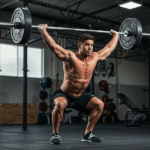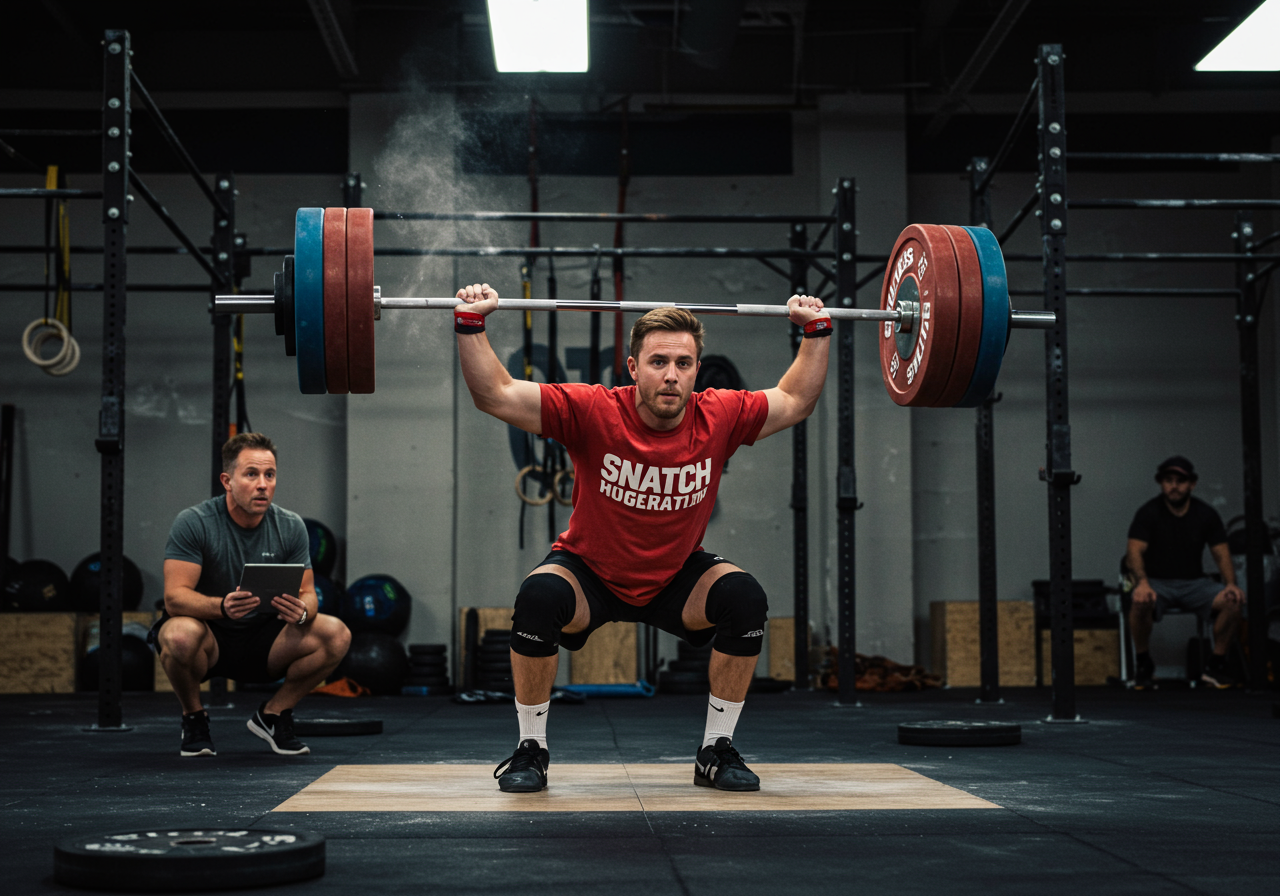
Snatch: Highly Technical Weightlifting, Full-Body Coordination
Build Your Snatch Training Blueprint

Design a simple plan that builds coordinated strength
The snatch demands speed, mobility, and timing. A clear plan reduces errors and stress. I use short, focused sessions and precise volume.
Key principles:
- Keep the bar close. Drive upward, then pull under fast.
- Use triple extension. Hips, knees, and ankles extend together.
- Train speed-strength. Work in 1–3 rep sets for quality.
- Rest long enough. Use 2–3 minutes between heavy sets.
- Practice frequently. Touch the movement 3–4 times weekly.
- Track bar speed when possible. Fast reps protect technique.
30-minute foundation session:
- Warm-up: 5 minutes easy row in Zone 2.
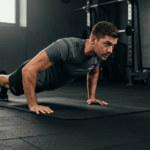
- Shoulder prep: PVC pass-throughs x 20, scap push-ups x 10.
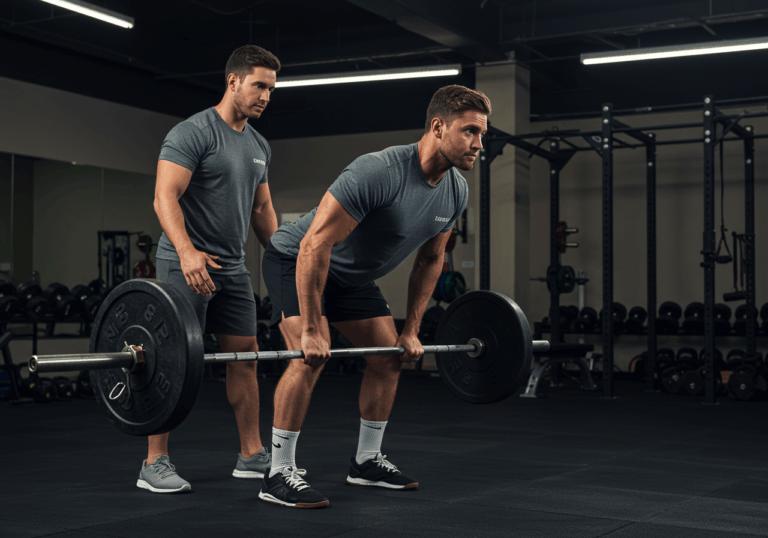
- Hip hinge drill: Romanian deadlift with empty bar, 2 x 8.
- Hang muscle snatch: 4 x 3, light and crisp.
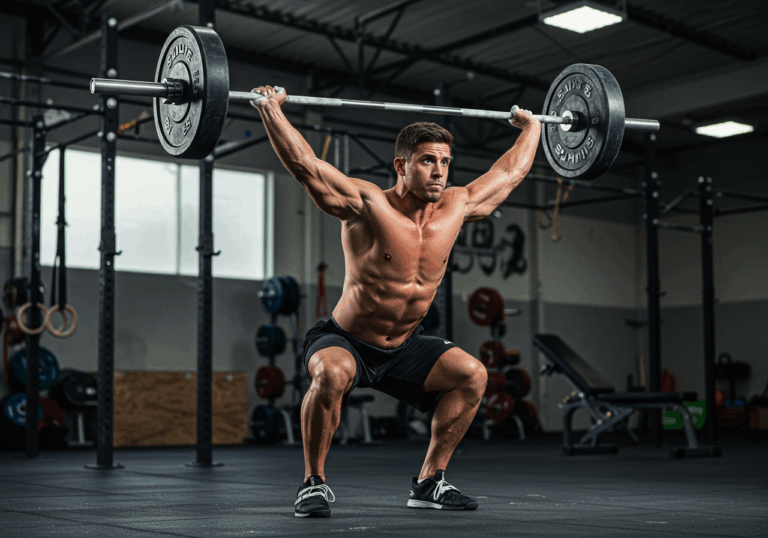
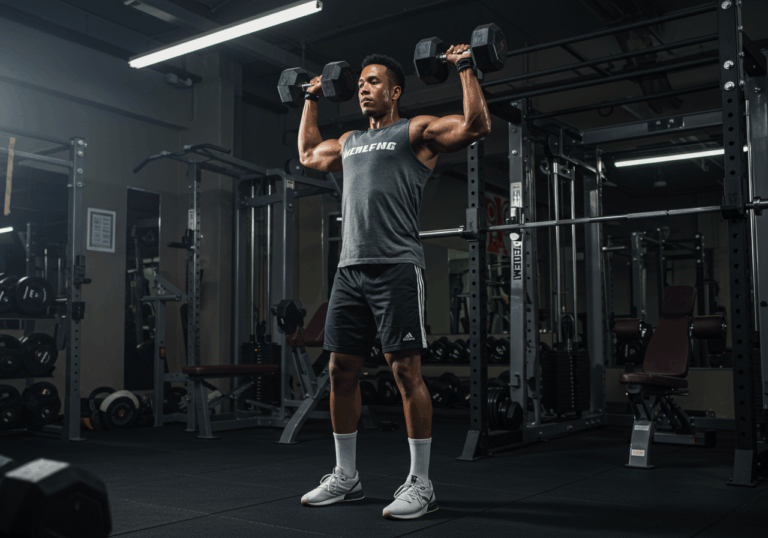
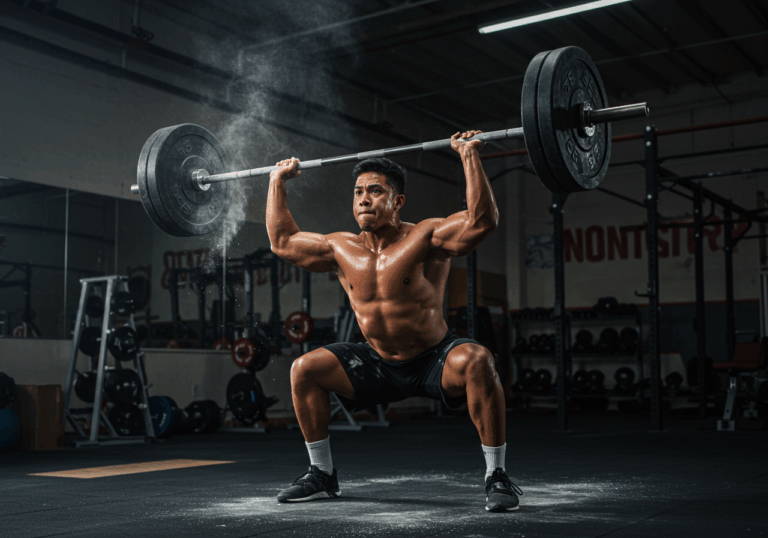
- Overhead squat tempo: 3 x 5 @ 3-1-1 tempo.
- Breathing cool-down: 3 minutes nasal box-breathing.
I prefer three primary sessions and one technique micro-dose. This balances learning and recovery.
| Day | Focus | Main Work | Accessory | Conditioning |
|---|---|---|---|---|
| Mon | Technique | Hang power snatch 6 x 2 @ 55–65% | Overhead squat 3 x 5 | Bike 8 x 15s Z5 / 75s Z2 |
| Wed | Strength | Snatch pulls 5 x 3 @ 90–100% snatch | Front squat 4 x 3 | Walk 20 min Z2 |
| Fri | Full lift | Snatch 8 x 1 @ 70–80% | Snatch balance 4 x 2 | Core: side plank 3 x 30s |
| Sat | Micro-dose | PVC + tall snatch 12 x 1 | Hip airplanes 2 x 6/side | Mobility 15 min |
Respect your wrists and shoulders. Use a hook grip. Release early in the catch if painful. Reduce load if elbows bend before extension.
This system builds coordination and strength together. It also scales for beginners.
Step-by-Step Skill Progressions for Every Level

Advance your technique with smart waves and simple progressions
Progress happens when technique and load rise together. I use short waves and clear checkpoints.
Motor learning tip: Blend blocked practice and random practice. Start with one drill. Then mix two drills in a superset to challenge coordination.
| Level | Drill | Sets x Reps | Load | Rest | Goal |
|---|---|---|---|---|---|
| Beginner | PVC muscle snatch | 4 x 5 | Very light | 45s | Vertical bar path |
| Beginner | Hang power snatch | 6 x 2 | 55–65% | 90s | Finish tall |
| Beginner | Overhead squat tempo | 3 x 5 | Light | 120s | Stable bottom |
| Intermediate | Snatch from blocks (knee) | 5 x 2 | 65–75% | 2–3 min | Knee position |
| Intermediate | Snatch pull + snatch | 5 x (2+1) | 70–80% | 2–3 min | Bar close |
| Intermediate | Snatch balance | 4 x 2 | 60–70% | 2 min | Fast drop |
| Advanced | Deficit snatch | 4 x 2 | 70–80% | 2–3 min | Leg drive |
| Advanced | Complex: high pull + hang snatch + OHS | 5 x (1+1+2) | 65–75% | 3 min | Bar path rhythm |
| Advanced | Snatch waves | 3 waves x (70/75/80% x1) | % of 1RM | 2–3 min | Peak power |
Use perceived exertion and video. Stop a set if elbows bend early.
20-minute EMOM: Odd minutes: 2 hang power snatches @ 60–65%. Even minutes: 2 snatch balances @ 60%. Keep crisp speed.
Increase load only when bar speed and receiving position stay stable. I add 2–5% weekly during smooth weeks.
Misses behind you are safer than forward. If you chase forward often, lower load and drill pulls to hips.
Mobility, Activation, and Recovery Stack

Move better to lift better and recover faster
Mobility unlocks stable positions under the bar. Recovery preserves your progress and joints.
Why mobility matters: Thoracic extension centers the bar overhead. Ankle dorsiflexion keeps the torso upright in the squat. Hip rotation allows knees to track and reduces valgus collapse.
| Drill | Dose | Cue |
|---|---|---|
| Banded ankle mobs | 2 x 60s/side | Knee over toes, heel down |
| Thoracic foam roll + reach | 2 x 10 reps | Ribs down, reach long |
| PVC pass-throughs | 2 x 15 | Straight elbows |
| 90/90 hip rotations | 2 x 8/side | Slow, tall torso |
| Tall kneeling presses | 3 x 6 | Glutes tight, ribs stacked |
10-minute shoulder flow: 1 minute scap circles, 1 minute wall slides, 1 minute prone YTWs, 1 minute bar hangs, repeat twice.
Fuel supports learning and power. I track with MyFitnessPal to stay consistent.
| Intake | Amount | Timing |
|---|---|---|
| Protein | 1.6–2.2 g/kg bodyweight | Evenly across 3–5 meals |
| Carbs | 3–5 g/kg baseline; 5–7 g/kg heavy days | More pre/post-lift |
| Fats | ~0.8–1.0 g/kg | Lower pre-lift |
| Hydration | 30–40 ml/kg daily | Sip all day |
I sleep 7.5–8.5 hours nightly. I track HRV and resting HR with Garmin.
Supplements I use: Creatine 3–5 g daily. Caffeine ~3 mg/kg pre-lift. Fish oil 1–2 g EPA+DHA. Vitamin D if deficient.
Check caffeine tolerance. Avoid new supplements on max days. If shoulder pain persists over a week, reduce overhead work and see a clinician.
Tools I rely on: Garmin Connect for HR/HRV (garmin.com). MyFitnessPal for nutrition (myfitnesspal.com). These keep training objective.
Troubleshooting: Plateaus, Nerves, and Overuse

Fix common errors and keep training productive
Most misses share a few causes. Tackle the cause, not the symptom.
| Problem | Fix | Cue |
|---|---|---|
| Early arm pull | Tall snatch; snatch high pull | Legs, then elbows |
| Bar drifts forward | Lats tight; pull to hips | Shave your shirt |
| Jumping forward | No-feet snatches | Push through heels |
| Soft catch | Snatch balance; overhead squat | Punch to ceiling |
| Slow turnover | Hip snatch; tall snatch | Elbows high, then around |
Plateau protocol: Deload one week by 30–40% volume. Then run a three-week wave: 70/75/80% for singles, adding 2% weekly. Keep misses under 5% of total attempts.
Overuse shows as stubborn soreness or grip fatigue. Track morning resting HR and mood notes.
Back off if resting HR rises 8–10 bpm for three days. Reduce pulling volume and add easy Zone 2 walks.
Mindset matters. Use one cue per set. Breathe in, brace, and commit to the catch.
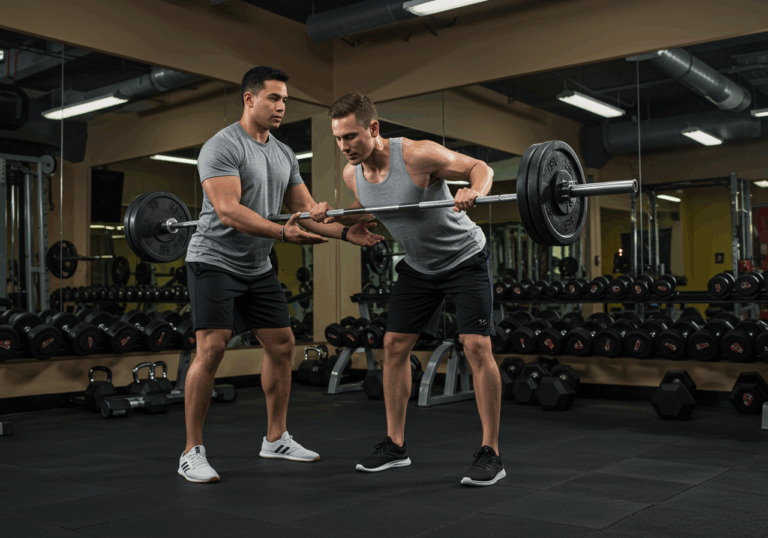
Video checks: Film from side and 45 degrees. Draw a vertical bar path line. The bar should brush the thigh, then stay close during turnover.
If motivation dips, switch to complexes for two weeks. Keep fun high and pressure low. Then return to singles.
Proof of Progress: Real Data from My Logbook

Evidence from the field: long-term result interpretation
I test everything on myself before clients. Here is real data from my last 8-week block.
My training snapshot: Three snatch days per week, 55–85% range. Average session: 58 minutes. Lifting heart rate peaked near 82–86% HRmax on heavy singles. Garmin tracked HR and HRV.
| Metric | Week 1 | Week 8 | Change |
|---|---|---|---|
| Snatch 1RM | 80 kg | 92 kg | +12 kg |
| Average bar drift at knee | 5.2 cm | 2.1 cm | -3.1 cm |
| Vertical jump | 49 cm | 53 cm | +4 cm |
| VO2 max (Garmin) | 48 ml/kg/min | 52 ml/kg/min | ~+8% |
| Body fat (DEXA) | 16.8% | 14.9% | -1.9% |
HIIT blocks gave better fat loss for me than steady cardio. I used 15s sprints on the bike. I kept total volume modest.
Weekly review checklist: Did technique reps exceed 70% of total? Did you keep misses under 5%? Did you sleep 7+ hours? If yes, add 2% next week.
Client stories support the system. Ana, 39, started with PVC. After 10 weeks, her snatch rose from 30 kg to 42.5 kg. Her vertical jump improved 3 cm. She reported less knee ache after ankle mobility work.
Marcus, 27, had fear under the bar. We used snatch balance and tall snatches. After 6 weeks, he hit 70 kg from 55 kg. His confidence rose after we reduced misses and added pause work.
My mistake: I once skipped a proper warm-up. I strained a calf during pulls. Lesson learned: never load speed on cold tissue.
Nutrition notes: I averaged 32 kcal/kg on training days. Protein stayed near 2.0 g/kg. I logged meals in MyFitnessPal. My sleep averaged 7.9 hours. Recovery felt better when HRV stayed stable.
Track your own progress with simple tools. Use Garmin for HR and HRV trends. Use a camera for bar path. Use a notebook for loads and cues.