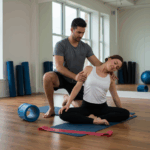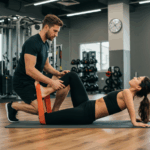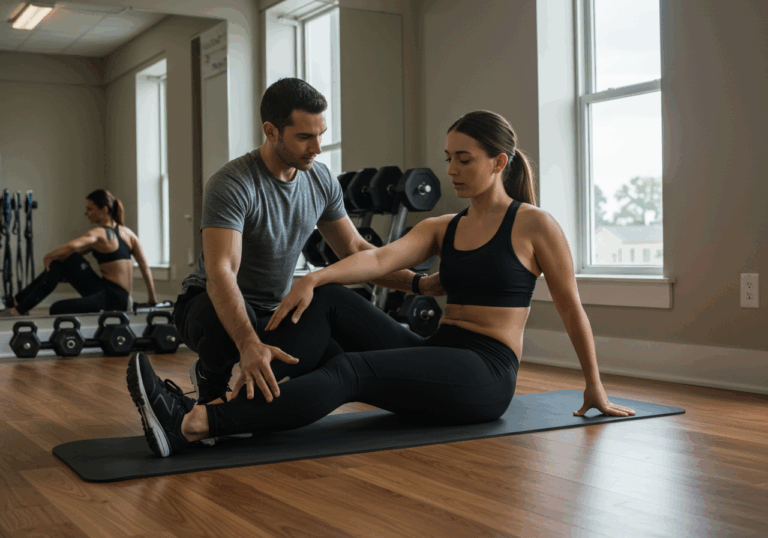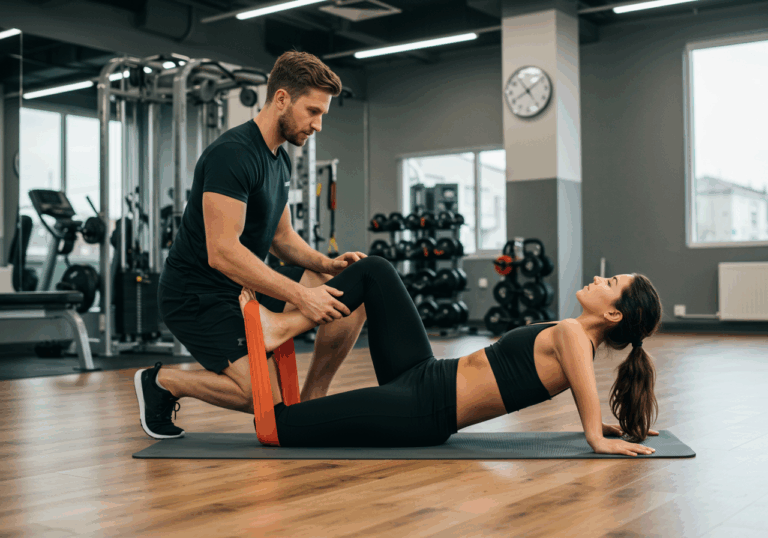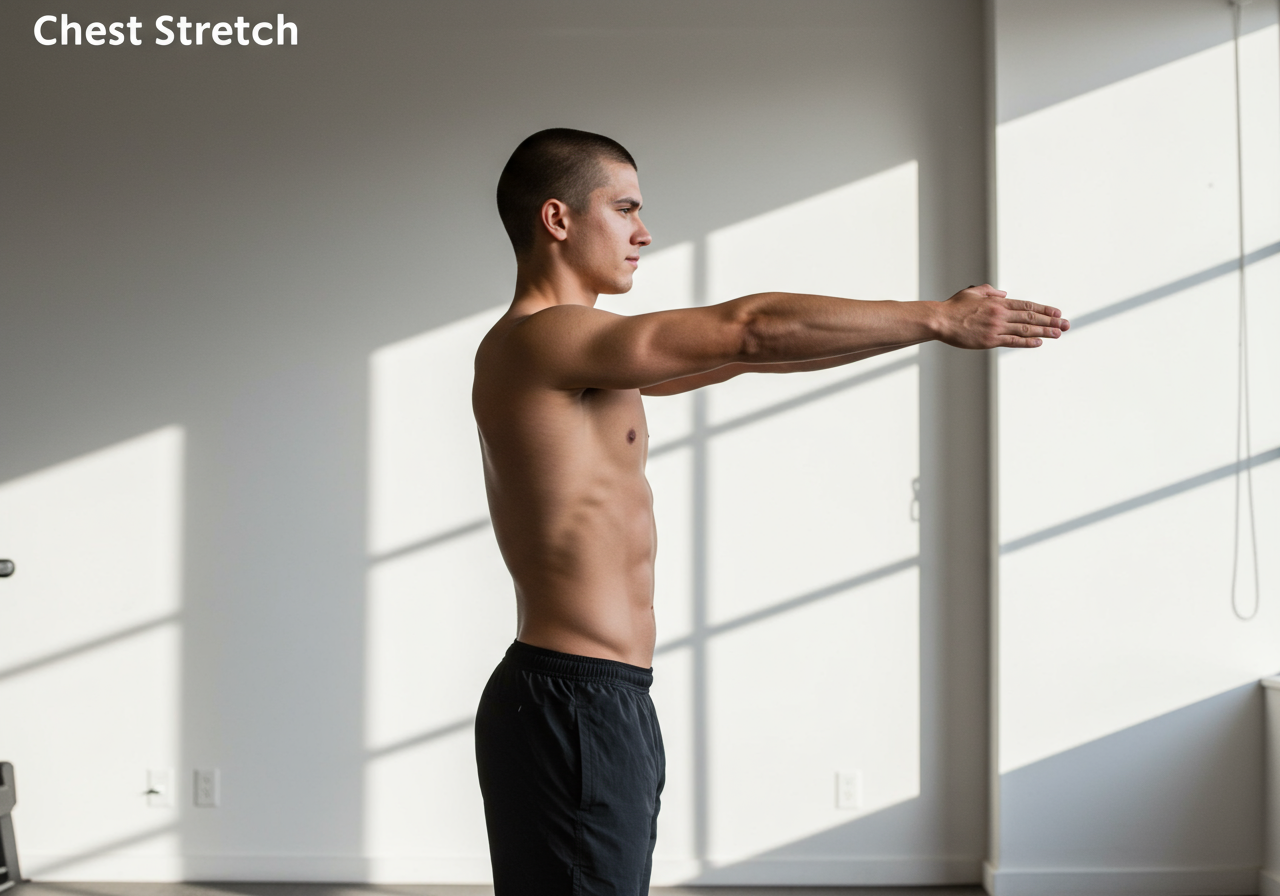
Chest Stretch: Open Rounded Shoulders
Posture Reset Blueprint: Why Opening Your Chest Changes Everything

This plan integrates chest stretches with pulling strength, thoracic mobility, and mindful breathing. The system fixes cause and effect together.
I use this with beginners during on-boarding weeks. I also use it myself during writing days.
| Component | Goal | Dosage |
|---|---|---|
| Chest stretch focus | Lengthen pec major/minor | 60–90s per side, 2–3 rounds, daily |
| Pulling strength | Strengthen mid-back and rear delts | 3 days/week, 4–12 reps, 3–4 sets |
| Thoracic mobility | Extend mid-spine for better posture | 5 minutes, daily |
| Breathing drills | Reduce rib flare; relax tight pecs | 2–3 minutes before stretching |
| Light cardio | Increase circulation for better stretching | 10–20 minutes, Zone 2, 3–5 days/week |
I track heart rate with Garmin for warm-ups. I log strength sessions in Strava.
Clients report immediate ease with overhead reach after this sequence. The feeling sticks longer each week.
Step-by-Step Chest Opening Routines for Every Level

Intermediates can use longer holds and add scapular control. Advanced lifters can load mobility safely.
| Level | Exercise | Sets x Time/Reps | Rest |
|---|---|---|---|
| Beginner | Doorway Pec Stretch (elbow at shoulder height) | 2–3 x 45–60s/side | 30–45s |
| Beginner | Foam Roller Snow Angels | 2 x 6–8 slow reps | 30s |
| Intermediate | Corner Stretch (forearms on walls) | 2–3 x 60–90s | 45–60s |
| Intermediate | Scapular Wall Slides | 3 x 8–10 reps | 60s |
| Advanced | Banded Doorway Stretch with Breath Holds | 2–3 x 90s | 60s |
| Advanced | Loaded Fly Stretch (light cables, end-range isometric) | 3 x 20–30s holds | 60–90s |
Pair stretches with pulling moves for balance. I like one pull for each push.
| Pull Exercise | Sets x Reps | Load Guide |
|---|---|---|
| Seated Cable Row | 4 x 8–10 | RPE 7–8 |
| Face Pulls | 3 x 12–15 | Light, crisp scapular motion |
| Band Pull-Aparts | 2 x 20 | No shrugging |
My own progression started at 60s doorway holds. I built to 90s within four weeks.
My row increased from 60 kg to 70 kg for 8 reps. My shoulders felt open after sessions.
Breathing, Mindful Release, and Core Control

I start each session with two minutes of nasal breathing. This lowers neck tension fast.
| Drill | How To | Time |
|---|---|---|
| 90/90 Breathing | Feet on wall, hips/knees 90°. Exhale to feel abs. Inhale into side ribs. | 6–8 breaths |
| Foam Roller Rib Expansion | Lay lengthwise. Inhale behind collarbones. Exhale to heavy ribs. | 1–2 minutes |
| Box Breathing | Inhale 4, hold 4, exhale 4, hold 4. Stay relaxed. | 1–2 minutes |
This breathing reduced my perceived tightness by two points. My clients describe the same effect.
I monitor recovery with morning heart rate and sleep hours. A calm breath improves both.
Safety, Modifications, and Troubleshooting Common Problems

Rounded shoulders often include neck sensitivity. Gentle positions help most people start confidently.
| Issue | Fix | When to Refer |
|---|---|---|
| Numbness or tingling | Reduce angle, shorten hold, move elbow down | If persistent, consult a clinician |
| Front shoulder pain | Add scapular wall slides before stretching | If sharp pain, stop and assess |
| No flexibility gains | Increase frequency and add mid-back strength | If plateau 8 weeks, seek guidance |
Overtraining shows as stiff traps and poor sleep. Reduce intensity and favor nasal walks.
Motivation dips happen often. Track tiny wins like longer holds or easier reach backs.
If you lift heavy, finish with 60–90 seconds of chest opening. Balance bench pressing with rows and face pulls.
Use official resources for tracking. Try Garmin for heart rate zones at garmin.com.
Proof of Change: Tracking, Nutrition, and Real Results

I use three checks weekly. I assess wall-to-occiput distance, overhead reach, and push-up comfort.
| Metric | Week 1 | Week 6 |
|---|---|---|
| Doorway stretch hold | 45s, mild tingling | 90s, no tingling |
| Seated cable row (8 reps) | 60 kg @ RPE 8 | 70 kg @ RPE 8 |
| Zone 2 time/week | 60 minutes | 120 minutes |
Client Maya, 34, sits 9 hours daily. She wrote, “My shoulders dropped and headaches faded by week four.”
Client Rob, 52, said, “I can finally sleep on my side without shoulder pinch.” He held 90s per side by week five.
HIIT helped fat loss for busy clients. However, it increased next-day stiffness if overused. We limit HIIT to one or two weekly sessions.
I track food in MyFitnessPal at myfitnesspal.com. I set 1.6–2.2 g/kg protein and calorie maintenance minus 200.
I log cardio in Strava at strava.com. I monitor heart rate with a Garmin watch.
| Date | Stretch Dose | Row Load | Zone 2 Minutes | Shoulder Comfort 1–10 | Notes/Photo |
|---|---|---|---|---|---|
| Mon | 2 x 60s/side | 65 kg x 8 | 20 | 7 | Photo yes |
| Wed | 2 x 90s | Rest | 25 | 8 | Photo no |
| Fri | 2 x 60s | 70 kg x 8 | 20 | 8 | Photo yes |
Heart rate zones guide pacing. I stay in easy Zone 2 for posture days to lower tension.
Keep evaluating posture photos monthly. Expect gradual, durable change with consistent practice.