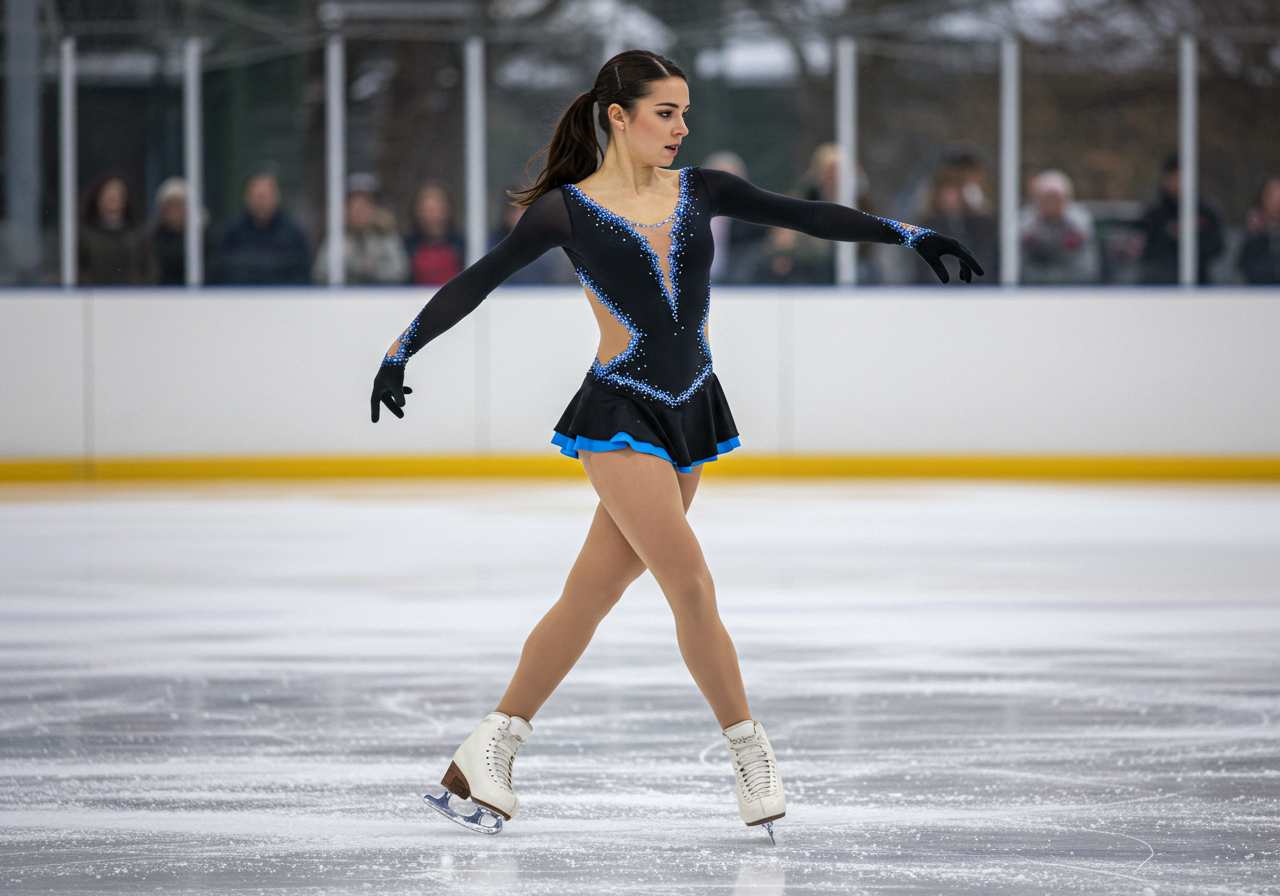
Ice Skating: Graceful Gliding on Ice
Edge Control Blueprint: Technique, Balance, and Foundational Strength

Build strong fundamentals that translate to smooth, confident skating
I coach beginners to master edges, posture, and simple patterns first. Strong basics unlock speed later. I learned this after rushing spins and straining my calf. Slow down at first, then speed arrives.
– 3 minutes off-ice ankle rocks and tibialis raises.
– 4 minutes on-ice marching and two-foot glides.
– 4 minutes C-cuts and bubbles for edge feel.
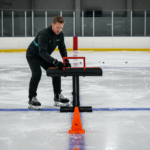
– 4 minutes slalom edge rolls between cones.
| Block | Drill | Sets x Reps/Time | Rest | Focus cue |
|---|---|---|---|---|
| Warm-up off-ice | Hip circles, ankle rocks, band walks | 2 rounds x 45 sec | 15 sec | Light burn only |
| On-ice basics | March, two-foot glide, snowplow stops | 10 minutes continuous | As needed | Tall posture |
| Edge drills | C-cuts, edge slaloms, T-push starts | 6 x 30–40 m | 40–60 sec | Push then recover |
| Off-ice strength | Goblet squat, RDL, split squat, lateral lunge, calf raise, side plank | 3 x 8–12 each | 60–90 sec | Knee tracks toes |
I progressed my goblet squat from 20 kg to 28 kg in six weeks. My crossovers felt steadier after week three. Stronger legs improved edge hold on longer glides.
Use video on your phone weekly. Film one straightaway and one corner. Small form wins stack fast.
Conditioning + Strength Fusion: Weekly Templates for Rapid Skill Growth

Blend technique, cardio, and lifting to accelerate learning
I organize skating weeks around three pillars. Technique days, aerobic days, and strength with plyometrics. The blend keeps habits strong and fatigue controlled.
| Level | Mon | Wed | Fri | Sat/Sun |
|---|---|---|---|---|
| Beginner | On-ice skills 30–40 min Z2 | Strength A 35–45 min | On-ice skills + 4 x 20 sec strides | Optional walk or mobility 20 min |
| Intermediate | On-ice 45 min (skills + tempo) | Strength B 45–60 min | Intervals 6 x 30 sec hard | Easy skate 30 min Z2 or rest |
| Advanced | Skills + starts 60 min | Heavy strength + plyos | Threshold 3 x 6 min | Long Z2 60–75 min |
– Goblet squat 3 x 10, RPE 7.
– RDL 3 x 8, RPE 7.
– Split squat 3 x 8 each.
– Lateral lunge 2 x 10 each.
– Calf raise 3 x 15.
– Side plank 2 x 30 sec each.
Strength B
– Front squat or leg press 4 x 6, RPE 8.
– Hip hinge 4 x 6.
– Copenhagen plank 3 x 20 sec each.
– Skater hops 3 x 12 each.
– Pallof press 3 x 12.
I progress loads 2–5% weekly when reps are clean. I reduce volume every fourth week to absorb gains. My average on-ice heart rate sits mid Zone 2 on base days. I log every session on Strava for consistency.
12-Week Ramp-Up: Step-by-Step Build with Tracking

Follow a clear path from first glide to powerful laps
This plan layers volume slowly. It protects joints and grows skill. It works well for adults who start fresh.
| Phase | Weeks | On-ice focus | Conditioning | Strength | Progress checks |
|---|---|---|---|---|---|
| Base | 1–4 | Glide, edges, stops | Zone 2, 25–35 min | Full body x2 | Pushes per lap, RPE |
| Build | 5–8 | Crossovers, starts | Tempo and strides | Heavier lifts x2 | Lap time, HR zones |
| Sharpen | 9–12 | Lines, rhythm, power | Short HIIT | Strength x1, plyos | Time trial, RPE |
– Off-ice prep 8 minutes.
– On-ice basics 10 minutes Z2 (HR 60–70% max).
– Edge slaloms 6 x 30 m, easy glide back.
– T-push starts 6 x 15 m, full recovery.
– Cooldown glide 5 minutes. Stretch calves and adductors.
I track with a Garmin heart rate strap and log food on MyFitnessPal. I note lap times, pushes per lap, and RPE after sets. I also mark blade hours to time sharpening.
Motivation tips: Keep a weekly anchor session you love. Skate with a friend once per week. Play the same warm-up song to create a cue.
Proof from the Rink: My Data and Client Wins

Real numbers show what actually worked
My last 8-week block included three skates per week and two lifts. I used Zone 2 for base and short HIIT for kick. I recorded with Garmin and shared sessions on Strava.
Strength changes: Goblet squat moved 24 kg to 32 kg for 8 reps. Single-leg RDL improved from 18 kg to 24 kg. Skater hops felt lighter and more stable.
What backfired: I skipped a warm-up before sprints and strained my calf. I lost one week of speed work. I now do five minutes of calf raises and ankle circles first.
| Approach | Fat loss | Speed | Notes |
|---|---|---|---|
| HIIT 2x weekly | -1.2 kg in 4 weeks | Best | Pairs with low weekly volume |
| Steady Zone 2 | -0.8 kg in 4 weeks | Good base | Great for technique time |
Client Lena, 34, skated three times weekly for six weeks. Her lap time dropped from 63 sec to 52 sec. She reported less knee pain after improving hip strength.
Client Marcus, 46, started with fear of falls. We practiced safe falling and two-foot glides. He skated his first continuous 20-minute session in week four.
Safety, Gear, and Season Strategy

Manage risk and plan for steady, enjoyable progress
Comfortable gear keeps you on the ice longer. Good fit and regular sharpening matter a lot. Loose boots steal power and cause blisters.
Common aches include adductors and calves. I add Copenhagen planks and calf raises twice weekly. I stretch hip flexors for one minute per side post-skate.
| Scenario | Adjustment | Why it helps |
|---|---|---|
| Plateau in lap times | Add 1 tempo session, cut junk volume | Raises threshold, protects recovery |
| Knee discomfort | Check alignment, lower load, add glute work | Improves tracking and stability |
| Low motivation | Shorten sessions, keep anchor day | Maintains habit with less friction |
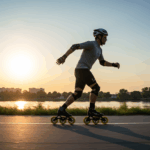
Off-season options keep skills fresh. Inline skating and slideboard sessions mimic stride mechanics. I keep one stride drill weekly year-round.
Film one corner each month. Notice knee bend depth, torso angle, and arm control. Small improvements compound fast.