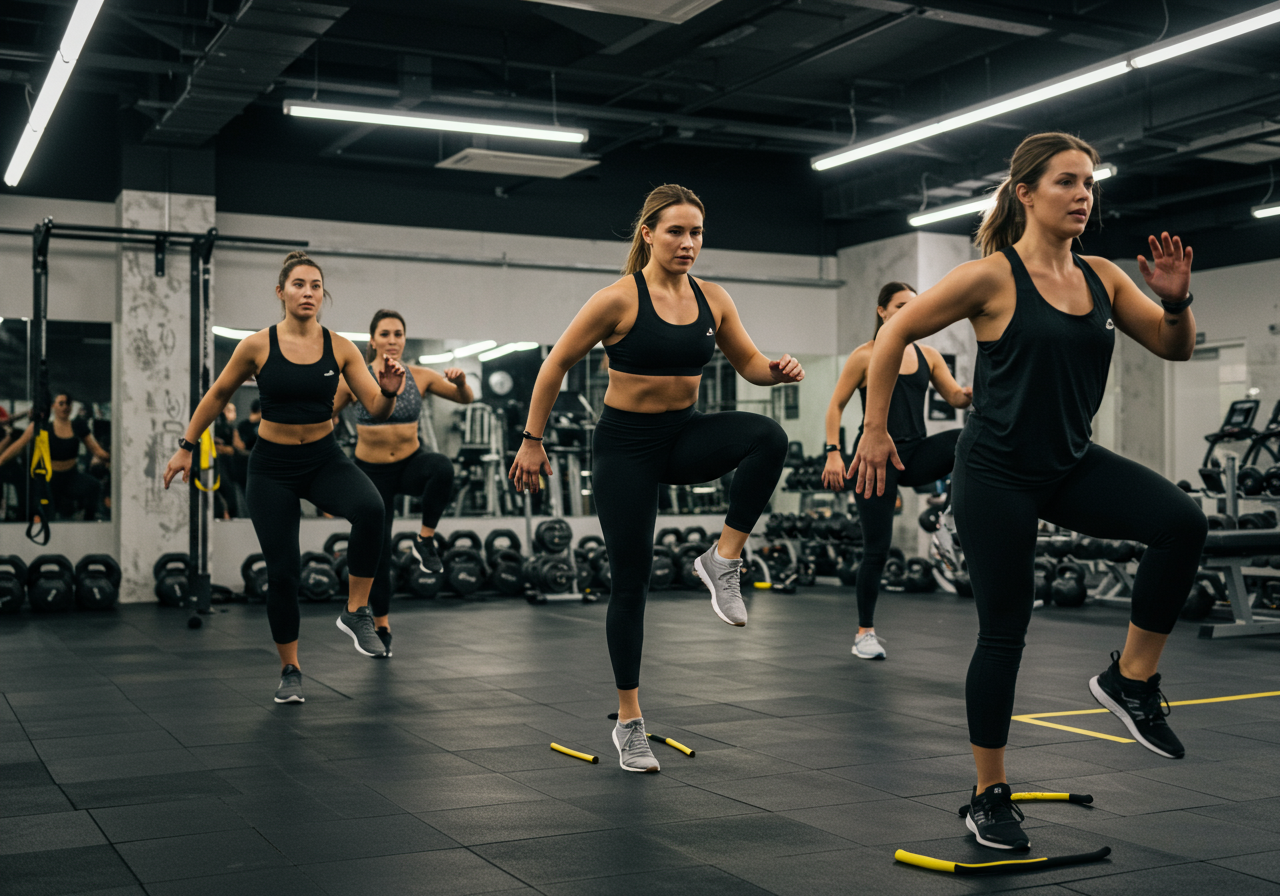
Dynamic Stretching: Warm-up Before Workout
Build Your Dynamic Warm‑Up System

Dynamic warm-ups prepare your body and mind for real training.
Dynamic stretching improves joint motion, temperature, and neural readiness before work sets. I use it daily.
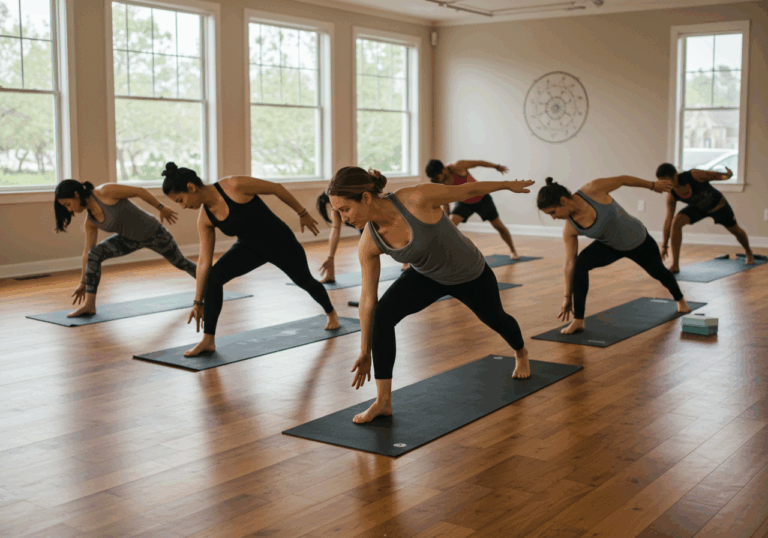
Dynamic methods move joints through range without long holds. They mimic your upcoming workout patterns.
This system follows four phases for beginners and beyond. It scales across cardio and strength sessions.
- Increase synovial fluid for smoother joints.
- Raise muscle temperature for faster contractions.
- Boost nervous system drive for powerful starts.
- Improve fascial glide for efficient force transfer.
The structure uses four clear blocks. Tissue readiness, joint mobility, movement prep, and potentiation finish the priming.
| Phase | Goal | Time | Heart rate |
|---|---|---|---|
| Tissue readiness | Light blood flow | 2–4 minutes | Zone 1 |
| Joint mobility | Controlled circles | 3–5 minutes | Zone 1–2 |
| Movement prep | Pattern rehearsal | 4–6 minutes | Zone 2 |
| Potentiation | Low-dose power | 1–3 minutes | Zone 2–3 |
Static stretching fits better after training. Long holds can reduce immediate force in some tasks.
My experience shows clear benefits. Skipping warm-up once strained my calf during sprints.
My calf strain taught me discipline. I never sprint cold anymore.
Client Maya felt hips open within two weeks. She reported smoother first miles during runs.
You can track heart rate with a Garmin device. See official details at garmin.com.
Step‑by‑Step Dynamic Routines

Simple progressions make dynamic warm-ups easy and safe.
These routines cover beginner, intermediate, and advanced levels. They align with your planned session.
Beginner plans emphasize control and short ranges. Intermediate adds range and coordination.
| Level | Drill | Sets x Reps/Time | Rest | Notes |
|---|---|---|---|---|
| Beginner | March + arm swings | 1 x 90s | — | Nasal inhale, soft exhale |
| Beginner | Hip circles | 1 x 8 each | 15s | Slow pelvis control |
| Beginner | Walking lunges | 2 x 8 | 30s | Knee tracks toes |
| Intermediate | World’s greatest stretch | 2 x 30s each | 20s | Reach long, breathe |
| Intermediate | Leg swings front/side | 2 x 10 each | 15s | Small to larger arc |
| Advanced | A‑skips or pogo hops | 3 x 15m | 45s | Soft, elastic feet |
Strength days need movement‑specific prep. You should prime the exact joints and angles used.
| Workout | Drills | Load/Range | HR Target |
|---|---|---|---|
| Lower body day | 90/90 hips, ankle rocks, bodyweight squats, jump prep | Shallow to parallel | Zone 2 |
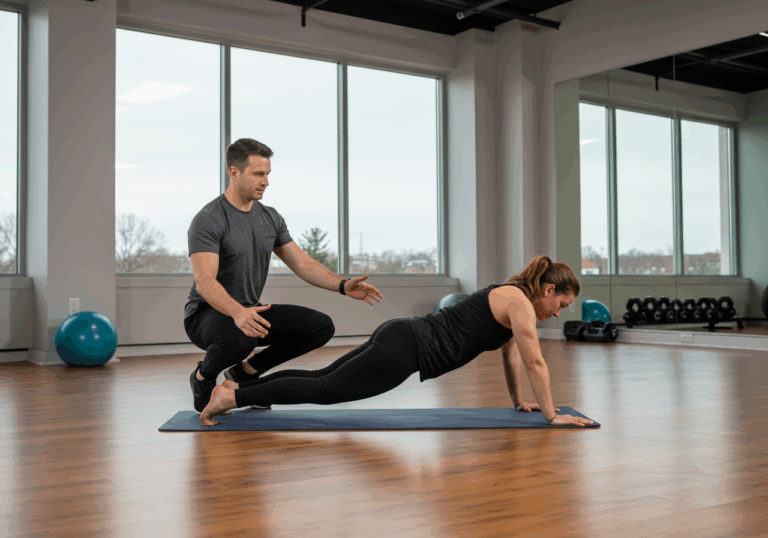
| Upper body day | Scap circles, band pull‑aparts, push‑up to down‑dog | Full shoulder control | Zone 1–2 |
| HIIT session | High‑knee drills, Carioca, progressive strides | Short, crisp moves | Zone 2–3 |
Breathing guides stability and range. I cue nasal inhales and long mouth exhales.
My session example shows real values. I warm up 12 minutes, rising from 95 to 125 bpm.
I finish with two squat potentiation sets. I use 30% and 50% of working weight.
Eight‑Week Rollout and Tracking

Structured rollout builds habits and measurable progress.
This plan layers time, range, and intensity gradually. You will track key markers weekly.
| Week | Focus | Warm‑up Time | Complexity | Potentiation |
|---|---|---|---|---|
| 1–2 | Consistency and control | 8–10 minutes | Basic | None |
| 3–4 | Range and rhythm | 10–12 minutes | Moderate | Low hops |
| 5–6 | Coordination | 12–14 minutes | Moderate‑plus | Jumps or A‑skips |
| 7–8 | Performance | 12–15 minutes | Advanced | Quick power sets |
Tracking quantifies progress and guides adjustments. Use simple weekly metrics.
| Metric | Tool | Target Change |
|---|---|---|
| Warm‑up HR rise | Garmin/Fitbit | Zone 1 to Zone 2 |
| Ankle dorsiflexion | Wall test cm | +2–4 cm |
| Hip rotation comfort | 0–10 ease scale | +2 points |
| RPE on first work set | Logbook | -1 point |
I log HR and drills in Strava or Garmin Connect. I tag sessions consistently.
I track food in myfitnesspal.com for energy support. I monitor recovery.
My personal rollout showed smoother squats by week four. My first set RPE dropped by one.
Recovery, Nutrition, and Troubleshooting

Recovery and fuel make warm-ups actually work.
Nutrition supports tissue quality and energy. Aim for balanced calories and protein daily.
| Factor | Target | Notes |
|---|---|---|
| Protein | 1.6–2.2 g/kg | Distribute across meals |
| Carbs | 3–5 g/kg | More on hard days |
| Fluids | Clear urine goal | Add electrolytes in heat |
| Sleep | 7–9 hours | Consistent schedule |
Supplements can support recovery. I use creatine 5 g and vitamin D in winter.
Troubleshooting keeps you on track. Use these fixes when problems appear.
| Issue | Likely Cause | Fix |
|---|---|---|
| Plateaued range | Rushing reps | Slow tempo, add 2 weeks |
| Knee discomfort | Poor alignment | Track knee over toes |
| Back tightness | Overarching | Ribs down, exhale longer |
| Overtraining signs | Too much intensity | Reduce hops, add walks |
| Motivation dips | Complex routines | Use 6‑minute set |
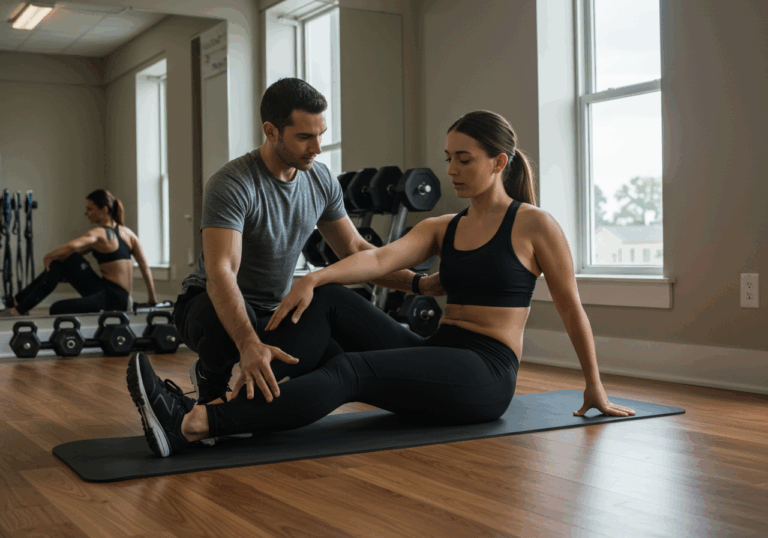
Client Dev struggled with knee tracking initially. We added wall‑supported splits and fixed discomfort.
My HRV readings flagged fatigue once. I replaced jumps with brisk marching and recovered quickly.
Performance Proof and Long‑Term Maintenance

Measured outcomes confirm effectiveness and guide long-term result interpretation.
Personal data validates this warm-up framework. I tracked numbers for eight focused weeks.
| Measure | Start | Week 8 | Change |
|---|---|---|---|
| VO2 max (Garmin) | 46 ml/kg/min | 49.7 ml/kg/min | +8% |
| 5k time | 26:40 | 25:05 | -1:35 |
| Back squat first‑set RPE | 7.5 | 6.5 | -1.0 |
| Ankle dorsiflexion | 7 cm | 10 cm | +3 cm |
Client outcomes also support this approach. Real stories show real benefits.
Maya, 42, cut shin tightness episodes by 70%. She kept easy runs steady.
Dev, 33, improved overhead range by 15 degrees. His press felt smoother immediately.
HIIT compared to steady state showed faster fat loss for Maya. The dynamic warm-up improved HIIT adherence.
HIIT sessions used this priming and felt safer. Zone 2 jogs felt easier as well.
I use strava.com for route logs and splits. I verify consistency visually.
These results reflect consistent habits and smart progressions. Your body will reward the routine.