⚠️ Fitness Disclaimer: The information in this article is for general educational purposes only and does not constitute professional fitness or medical advice. Always consult a qualified healthcare professional before starting any new exercise program, especially if you have existing injuries or medical conditions.
The Fitness Quality Nobody Trains Until It Fails Them
Balance is the fitness quality that most athletes and gym-goers ignore completely until an ankle gives way during a run, a landing goes wrong, or a stumble on uneven surface results in a fall. I discovered balance training for a frustrating reason: a recurrent ankle sprain that no amount of strengthening work seemed to prevent. My ankle was strong — it just kept giving way at unexpected moments during lateral direction changes.
A sports physiotherapist identified the problem as proprioceptive deficit: my ankle was mechanically capable but neurologically slow to respond to the perturbations that cause sprains. The treatment was balance training, not strengthening. Within six weeks of daily balance work, the ankle that had sprained repeatedly over three years stopped spraining entirely. That result sent me into the research on what balance training actually does — and the findings extend well beyond ankle stability.
The Neuroscience of Balance: Three Systems Working Together
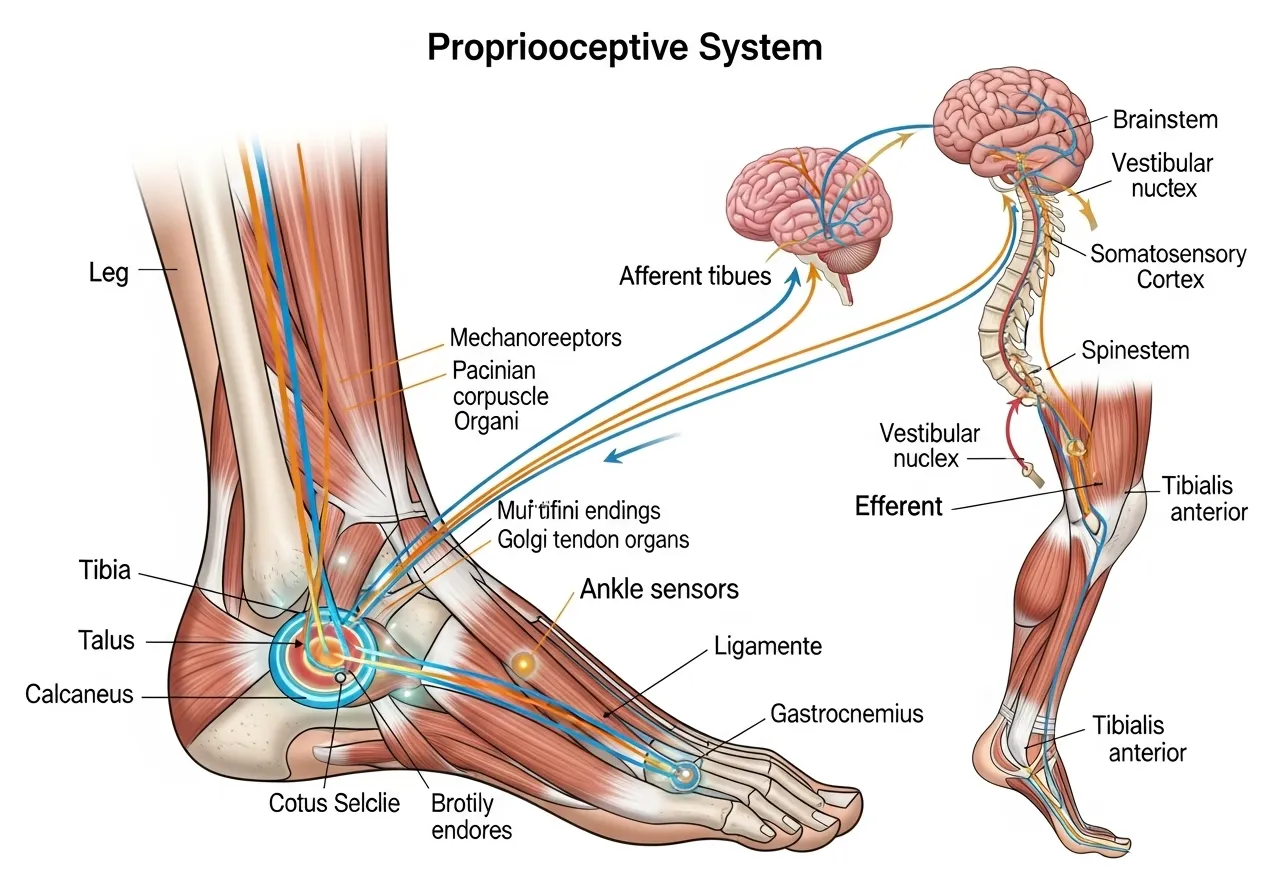
Balance is a complex neuromuscular process integrating information from three systems simultaneously: the vestibular system (inner ear, providing information about head position and movement), the visual system (spatial orientation from the environment), and the proprioceptive system (sensory receptors in muscles, joints, and tendons providing information about body position and movement). These three systems continuously integrate, with the brain making hundreds of micro-corrections per second to maintain stable posture.
When one system is compromised — eyes closed, uneven surface, fatigue — the other systems compensate, but only to the extent they have been trained. People with well-developed proprioception compensate for surface instability more effectively than those with poor proprioception. This is a trainable neurological quality, not a fixed attribute of coordination or athleticism.
Why Balance Deteriorates Without Training
Modern life systematically reduces proprioceptive demand: flat, predictable surfaces everywhere, supported seating for most of the day, and exercise programs that prioritize strength and cardiovascular fitness without any neuromotor challenge. The result is that most adults have significantly underdeveloped proprioceptive systems — not because of age or injury, but because they have never deliberately trained the system that prevents falls and enables agile movement.
Why Balance Training Matters Beyond Not Falling
Injury Prevention in Athletes
Research on ankle sprain prevention consistently identifies balance training as the most effective single intervention for reducing recurrence in athletes. Studies on sport-specific balance training programs find 30-50% reductions in lower extremity injury rates when balance training is added to standard conditioning programs. The mechanism: faster neuromuscular responses to perturbations prevent the excessive inversion or eversion that produces ligament sprains before mechanical threat exceeds structural capacity.
ACL injury prevention programs — among the most studied injury prevention protocols in sports medicine — include balance and proprioceptive training as a core component. The neuromuscular control of the knee during landing and direction change is trainable, and programs that most effectively reduce ACL injury rates train this control through single-leg balance, landing mechanics, and perturbation training alongside strength work.
Athletic Performance Enhancement
Balance training improves performance in any sport requiring ground contact, change of direction, or single-leg propulsion. Improved proprioception means faster automatic corrections during athletic movement, reducing energy wasted on balance recovery and allowing more resources to go toward propulsion. Strength, speed, and power are all expressed more fully on a stable base — the athlete with better neuromuscular control converts more physical capacity into sport-specific performance.
Core Activation Through Balance
Single-leg balance and unstable surface training produce significantly higher core muscle activation than bilateral stable-surface training for equivalent movements. A single-leg squat activates the core stabilizers more intensely than a bilateral squat at comparable loads because the body must resist the lateral forces single-leg support creates. This makes balance training one of the most efficient core training approaches available — training the anti-lateral flexion and anti-rotation functions that matter most for functional strength.
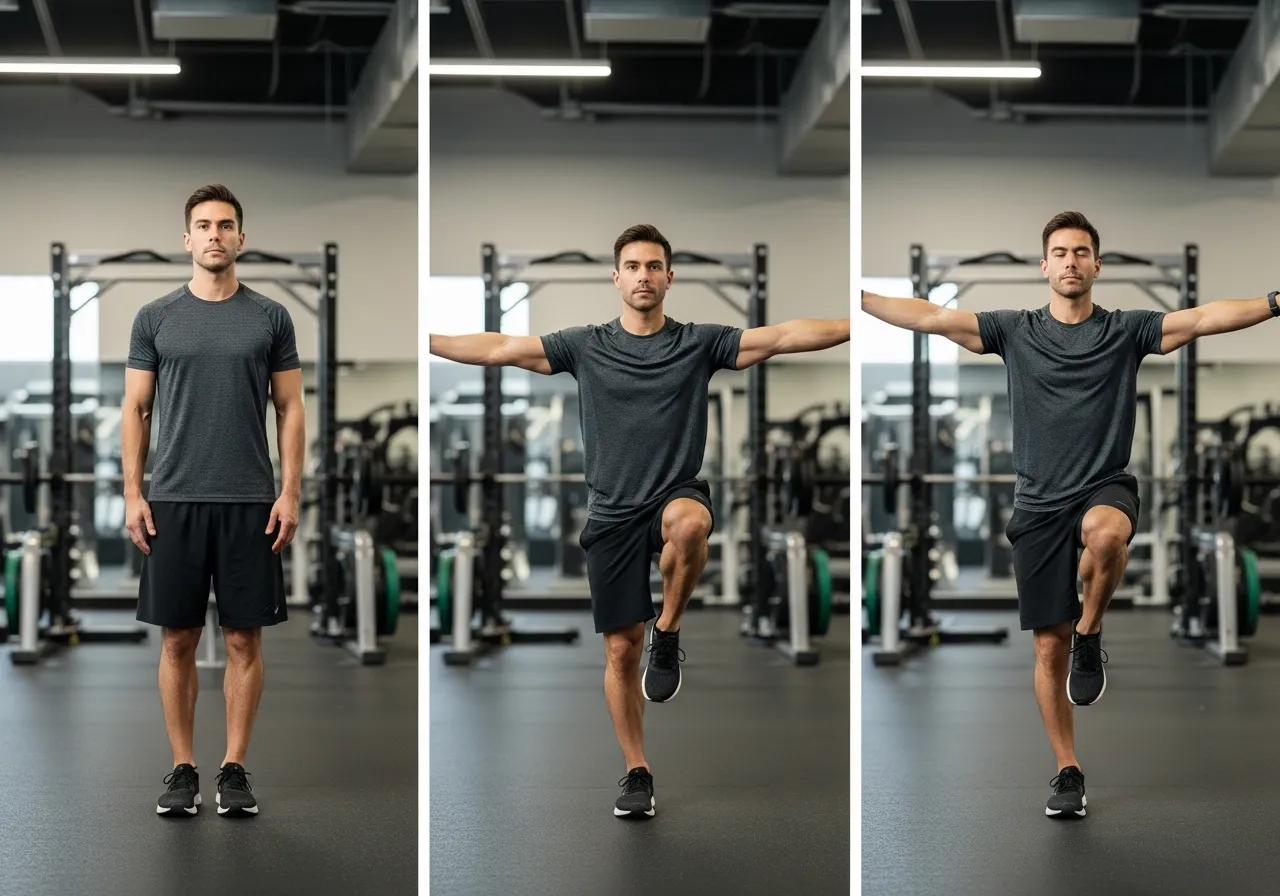
Tandem stance: stand with one foot directly in front of the other (heel to toe) for 30-60 seconds. This reduces the base of support significantly compared to normal standing. Progress to eyes closed once stable for 60 seconds. Two-legged mini squat with eyes closed: perform small partial squats (30 degrees of knee flexion) with eyes closed, focusing on maintaining level hips. 3 sets of 10 slow reps. These exercises challenge the proprioceptive system without single-leg demand.
Level 2: Unilateral Stable Surface
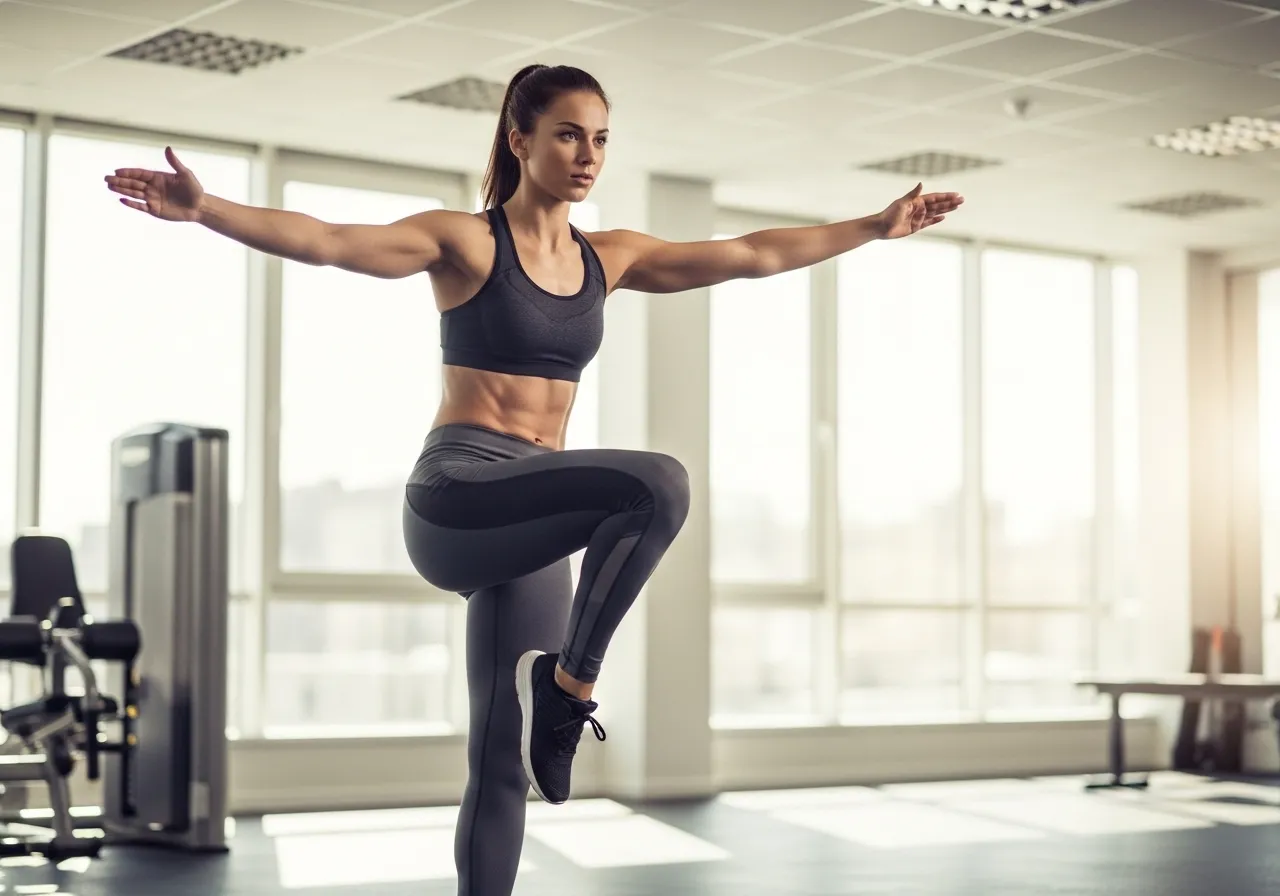
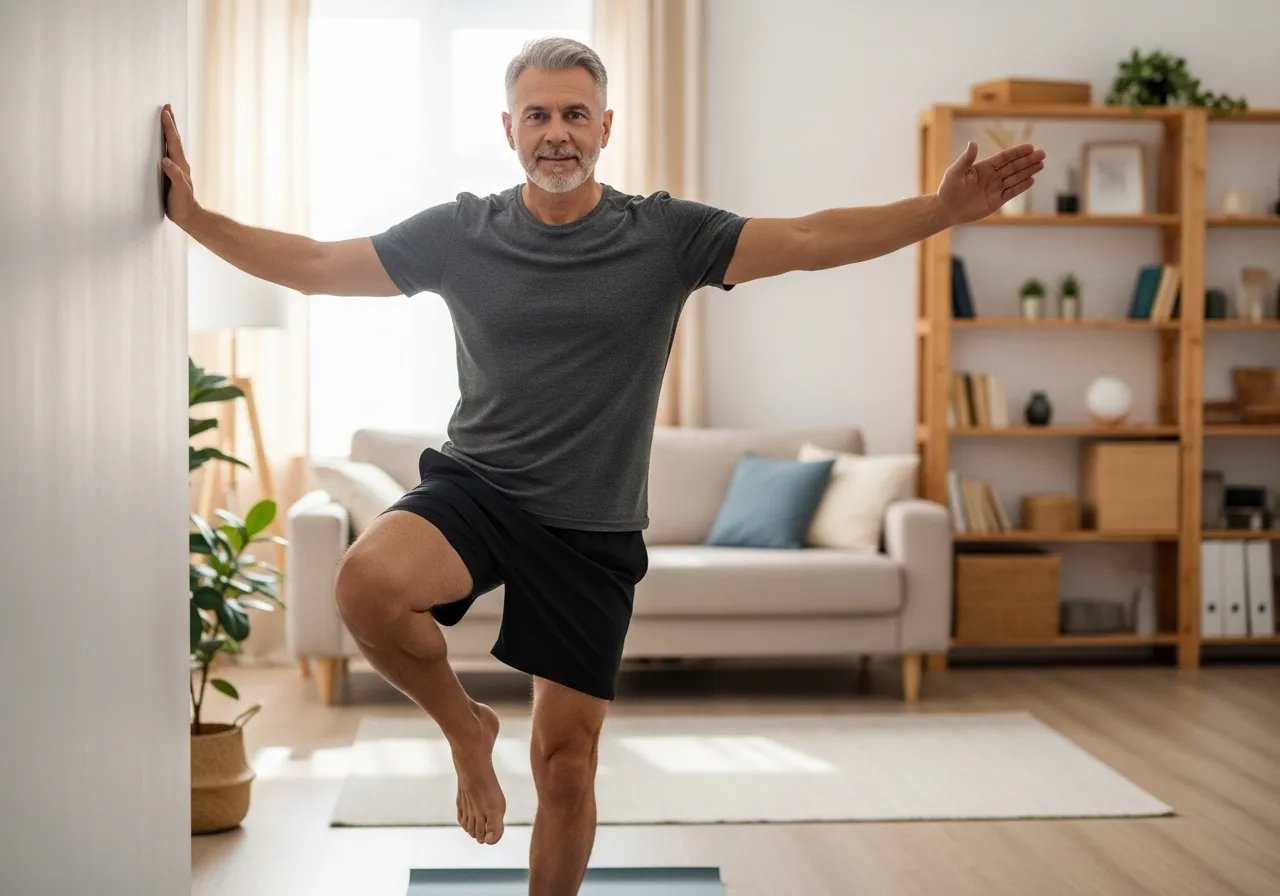
Single-leg stance: stand on one leg for 30-60 seconds with minimal arm movement, maintaining level hips. Perform near a wall for safety initially. Progress by adding eyes closed (dramatically increases proprioceptive demand), head turning (challenges vestibular integration), and arm movements that create perturbations. Single-leg deadlift bodyweight: develops balance, proprioception, and hip stability simultaneously. 3×8 per side — this is the most functional balance exercise available for general fitness.
Level 3: Unstable Surface
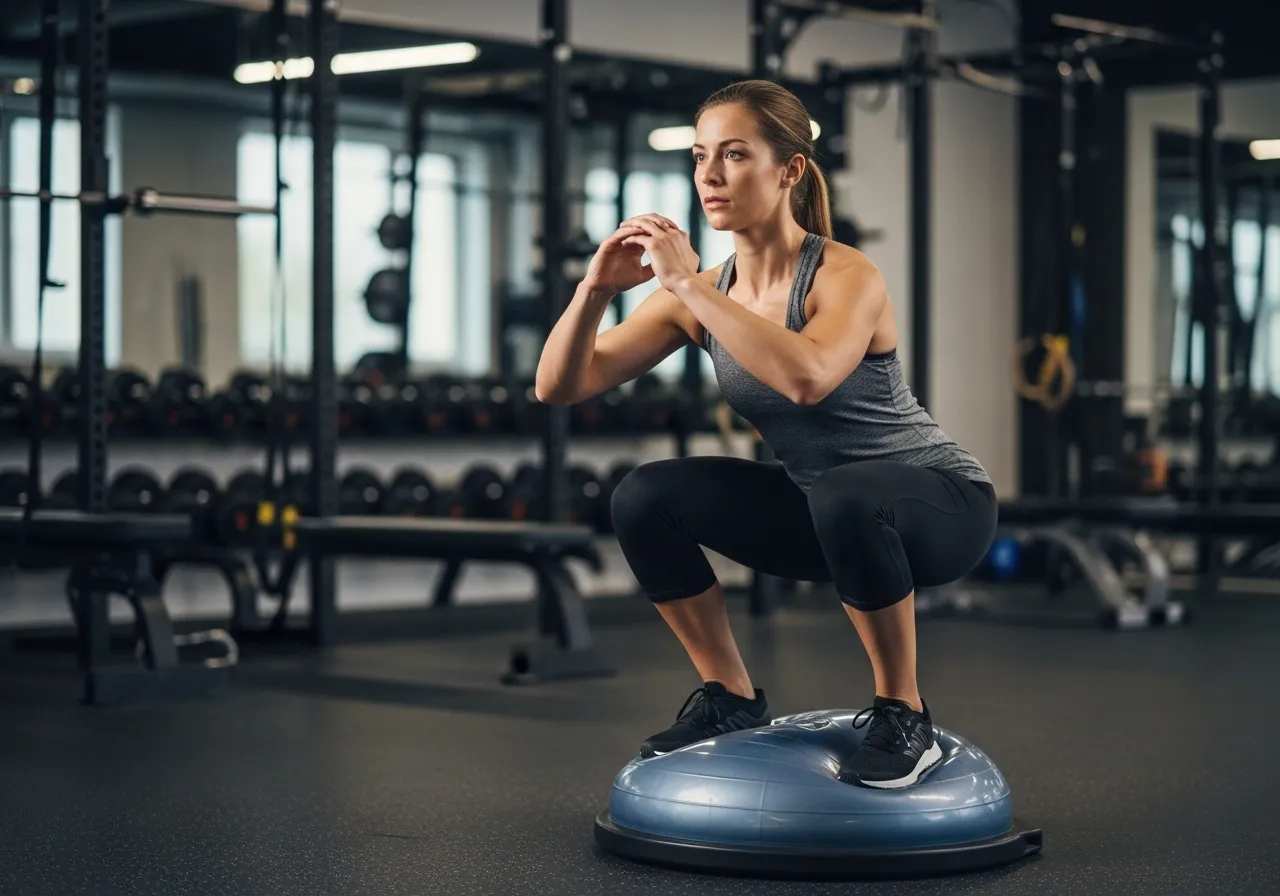
BOSU ball (dome side up): multidirectional instability that training on flat ground cannot produce. Begin with bilateral standing, progress to single-leg standing, then single-leg squats. Balance board or wobble board: provides even greater proprioceptive challenge through multidirectional tilting. Perform single-leg balance, reaching tasks (touching targets at different heights), and mini squats. All unstable surface work should be performed near a support surface initially.
Level 4: Dynamic Balance
Single-leg hop and stick: hop forward and land on one leg, holding the landing position for 3-5 seconds before releasing. This trains the reactive balance that prevents ankle sprains and knee injuries during sport. Lateral bound and stick: bound laterally and land on the opposite single leg. This directly trains the landing mechanics that most commonly produce ACL injuries. 3×5 per side, full recovery between reps to maintain landing quality.
Balance Training for Specific Populations
Older Adults: Fall Prevention
Balance deteriorates with age due to reduced proprioceptive sensitivity, vestibular changes, visual changes, and reduced muscle strength. Falls in adults over 65 are the leading cause of injury-related hospitalization in many countries — and research consistently identifies balance training as the most effective single intervention for fall risk reduction. Simple daily practices (single-leg standing while brushing teeth, tandem walking along floor tiles, sit-to-stand without arm support) significantly improve balance scores. Tai chi, which is essentially structured balance and proprioceptive training in movement form, produces particularly strong fall prevention results across research populations. ACSM exercise guidelines include neuromotor exercise as a recommended component of a complete fitness program for all adults.
Runners
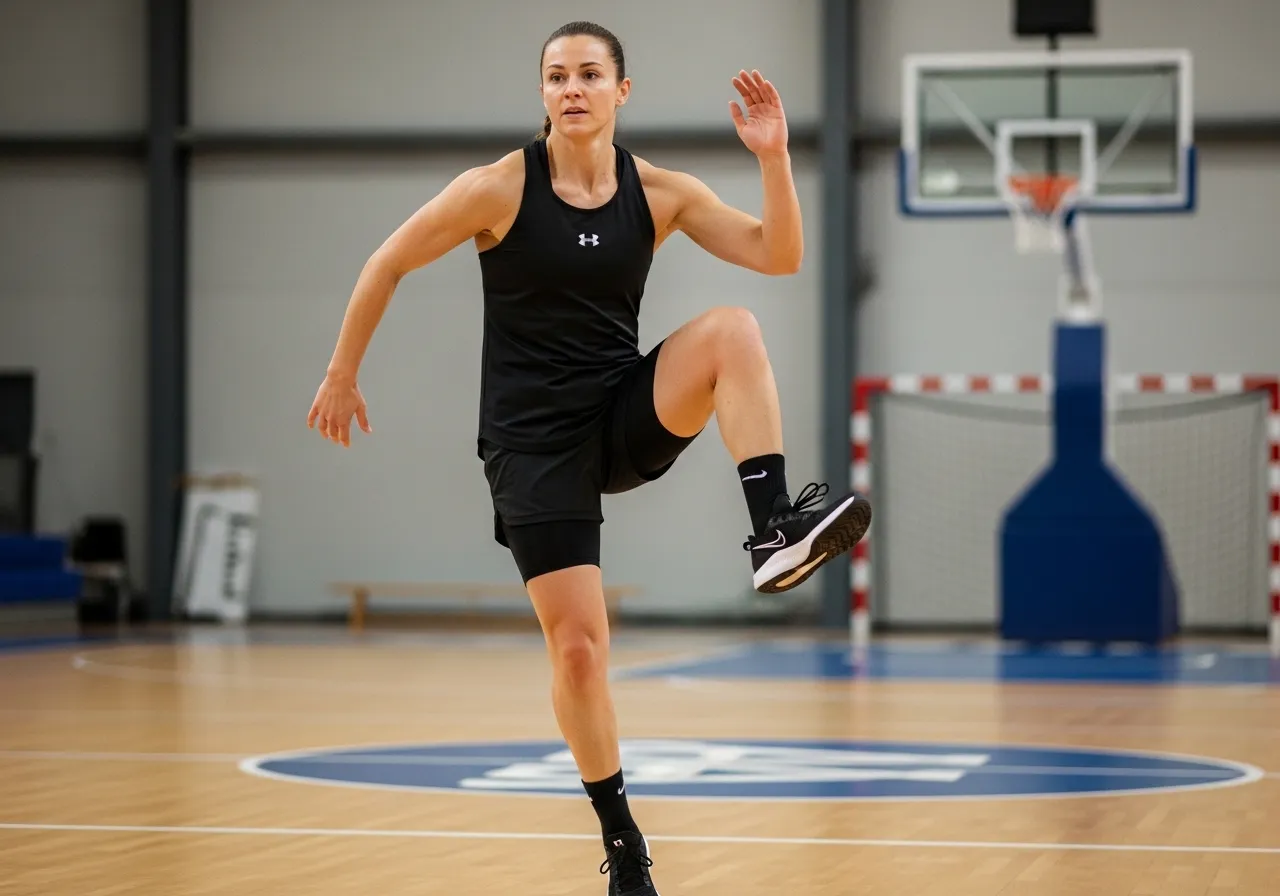
Running is a single-leg activity — each step requires a complete single-leg landing, stabilization, and propulsion cycle. Runners who train balance develop better landing mechanics, reduced energy waste on stability corrections, and greater resistance to ankle and knee injuries on uneven terrain. Single-leg deadlifts, single-leg calf raises, and lateral hop-and-stick exercises directly address the specific balance demands of running.
Strength Athletes
Heavy barbell training develops bilateral strength but doesn’t develop single-leg stability or the proprioceptive responses athletic movement requires. Strength athletes who add single-leg balance work find that the unilateral stability they develop improves their bilateral lifts — a strong, stable base is more efficient for force transfer than a strong but proprioceptively limited one. Single-leg squats and single-leg RDLs also reveal and address strength asymmetries that bilateral lifts mask.
Integrating Balance Training Into Your Weekly Program
As a 5-Minute Warm-Up
Begin each training session with 5 minutes of progressive balance work: 60 seconds tandem stance, 60 seconds single-leg each side, 60 seconds single-leg eyes closed each side. This activates the proprioceptive system and core stabilizers before training begins, improving the quality of every exercise that follows by establishing higher baseline neuromuscular activation. The investment is minimal; the performance and injury prevention return is substantial.
As Exercise Substitution
Replace bilateral exercises with single-leg alternatives: single-leg RDLs instead of Romanian deadlifts, Bulgarian split squats instead of back squats for portions of lower body work. These unilateral variations provide equal or greater strength stimulus while simultaneously developing balance and identifying bilateral asymmetries. The extra stability demand translates to greater core activation without any additional core training time.
Daily Opportunistic Training
Balance training during daily activities accumulates meaningful practice with zero time investment: single-leg standing while brushing teeth (2 minutes of daily balance training, twice daily), tandem walking along floor tiles or lines, standing on one leg while waiting. These brief daily practice opportunities develop proprioceptive sensitivity through frequency that formal training sessions cannot replicate.
How long does it take to improve balance? Research finds measurable improvements in balance test scores within 3-4 weeks of consistent training. Functional improvements are typically reported within 4-6 weeks. Full proprioceptive development requires 8-12 weeks of dedicated practice.
Is balance training useful if I’m young? Yes — balance training improves athletic performance, reduces injury risk during sport, and develops the proprioceptive system that protects joints during all physical activity regardless of age. Elite athletic programs include it not because athletes have balance problems but because improving this system improves performance.
What equipment do I need? Bodyweight single-leg exercises require no equipment. A BOSU ball ($80-120) dramatically increases the range of balance challenges. Balance boards provide excellent proprioceptive training at lower cost. Both are optional — the most fundamental balance training requires only a flat surface and your body weight.
Is there a risk of falling during balance training? Yes, particularly for beginners and older adults. Always train near a wall or sturdy surface initially. Progress from supported to unsupported balance only when the supported version is stable and confident. For older adults with significant fall risk, beginning with a physiotherapist or qualified fitness professional is strongly recommended.
Can I do balance training if I have knee problems? Many balance exercises (single-leg standing, tandem stance) place minimal stress on the knee while improving the neuromuscular control that protects it. Consult a physiotherapist for specific guidance — the knee’s stability depends heavily on quadriceps and hamstrings’ proprioceptive response speed, and balance training is often one of the most effective knee injury rehabilitation tools available.
⚠️ Fitness Disclaimer: The information in this article is for general educational purposes only and does not constitute professional fitness or medical advice. Exercise carries inherent risks. Always consult a qualified healthcare professional or certified personal trainer before starting or modifying any exercise program, especially if you have a pre-existing medical condition, injury, or health…
⚠️ Fitness Disclaimer: The information in this article is for general educational purposes only and does not constitute professional fitness or medical advice. Always consult a qualified healthcare professional before starting any new exercise program, especially if you have existing injuries or medical conditions. The Debate That Every Gym Member Has an Opinion On Ask…
⚠️ Fitness Disclaimer: The information in this article is for general educational purposes only and does not constitute professional fitness or medical advice. Always consult a qualified healthcare professional before starting any new exercise program. ⚠️ Medical Disclaimer: This article is for general informational purposes only and does not constitute medical advice. If you are…
⚠️ Fitness Disclaimer: The information in this article is for general educational purposes only and does not constitute professional fitness or medical advice. Always consult a qualified healthcare professional before starting any new exercise program, especially if you have existing injuries or medical conditions. The Exercise That Separated Me From the Athletes I Trained With…
⚠️ Fitness Disclaimer: The information in this article is for general educational purposes only and does not constitute professional fitness or medical advice. Always consult a qualified healthcare professional before starting any new exercise program. ⚠️ Cardiovascular Health Notice: If you have a history of heart disease, high blood pressure, or any cardiovascular condition, obtain…
⚠️ Fitness Disclaimer: The information in this article is for general educational purposes only and does not constitute professional fitness or medical advice. Always consult a qualified healthcare professional before starting any new exercise program, especially if you have existing injuries or medical conditions. The Ball That Made My Conventional Training Feel Incomplete I added…