Ballet: Elegance, Strength, & Flexibility
Ballet Framework: Elegance Built on Strength and Mobility
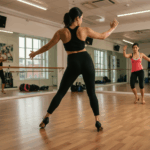
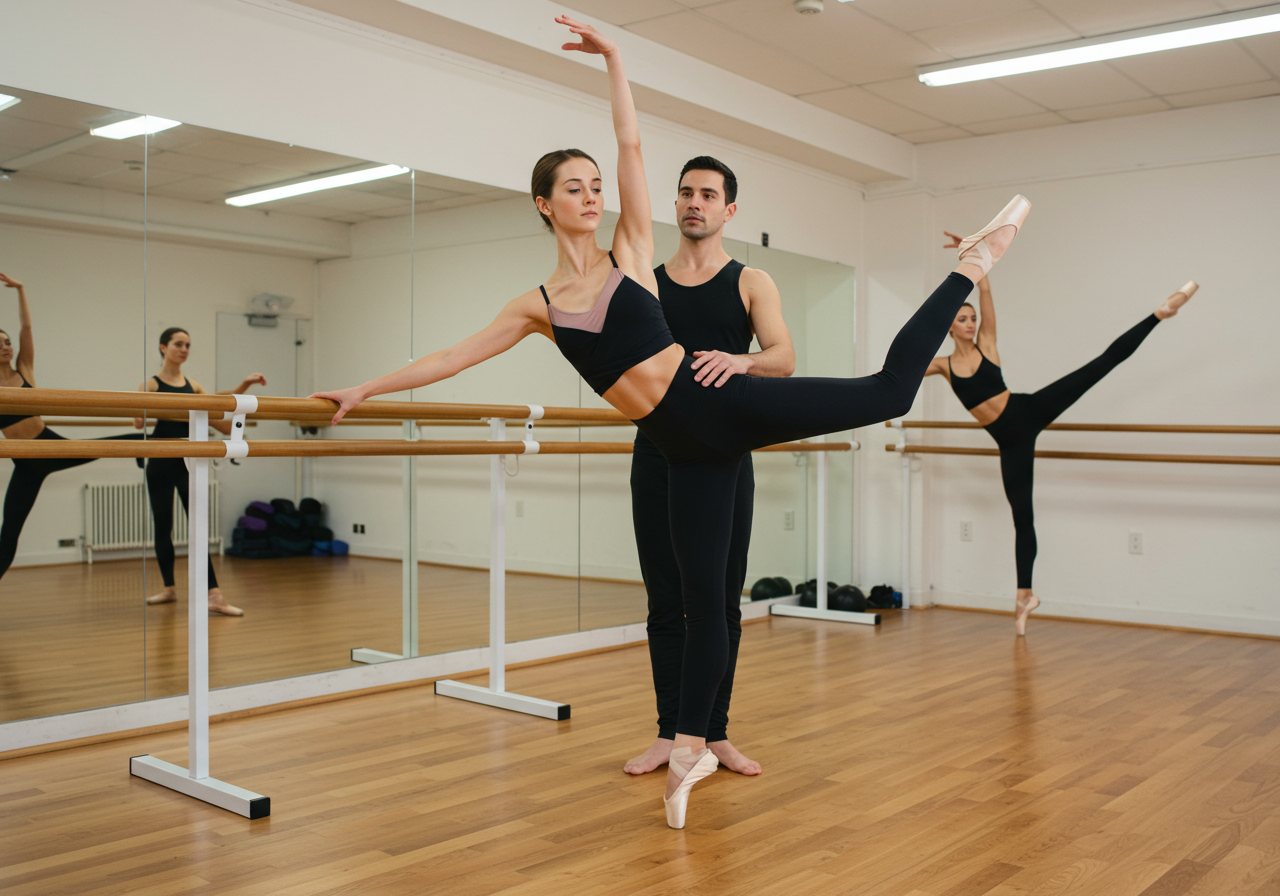
I teach ballet like a complete fitness system, not just dance steps. I combine technique, strength, cardio, and mobility. I learned this after rehabbing a tight hip. Technique alone was not enough.
- Technique first: posture, turnout tolerance, and foot articulation guide everything.
- Strength supports elegance: hips, feet, and trunk drive control.
- Cardio fuels longer combinations and faster recovery between phrases.
- Mobility creates lines without pinching joints.
- Progressive load: add time, complexity, or resistance every 1–2 weeks.
- Deload every fourth week to protect tendons.
I structure each session in clear blocks. We warm up, drill skill, load strength, and finish with breath-led mobility. This flow keeps beginners focused and safe.
- 5 minutes: breath, neutral spine, demi-plié in first and second.
- 5 minutes: tendu front/side/back, slow tempo, scrape-the-floor cue.
- 5 minutes: relevé holds, heels together, knees tracking toes.
- 5 minutes: hamstring and calf mobility, gentle pulses.
| Day | Focus | Details | HR Zone |
|---|---|---|---|
| Mon | Barre + Lower Strength | 45 min barre, 20 min squats/calf raises | 2–3 |
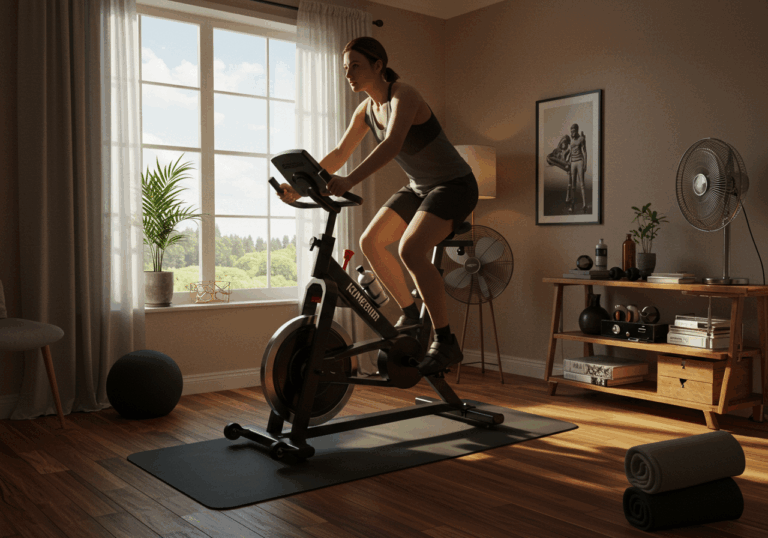
| Tue | Cardio Intervals | 8 x 1 min brisk cycling, 1 min easy | 3–4 |
| Wed | Floor Barre + Mobility | 30 min control drills, 20 min hips/ankles | 2 |
| Thu | Center + Core/Upper | 30 min adagio, 20 min rows/press | 2–3 |
| Fri | Allegro + Plyometrics | 20 min jumps, 10 x 10s pogo hops | 3–4 |
| Sat | Zone 2 Cardio | 40–60 min brisk walk or cycling | 2 |
| Sun | Rest or Gentle Stretch | 20 min breath-led stretches | 1–2 |
This plan blends skill development with conditioning. It keeps practice enjoyable while building a resilient body.
Technique Modules and Strength Blocks That Actually Build Lines
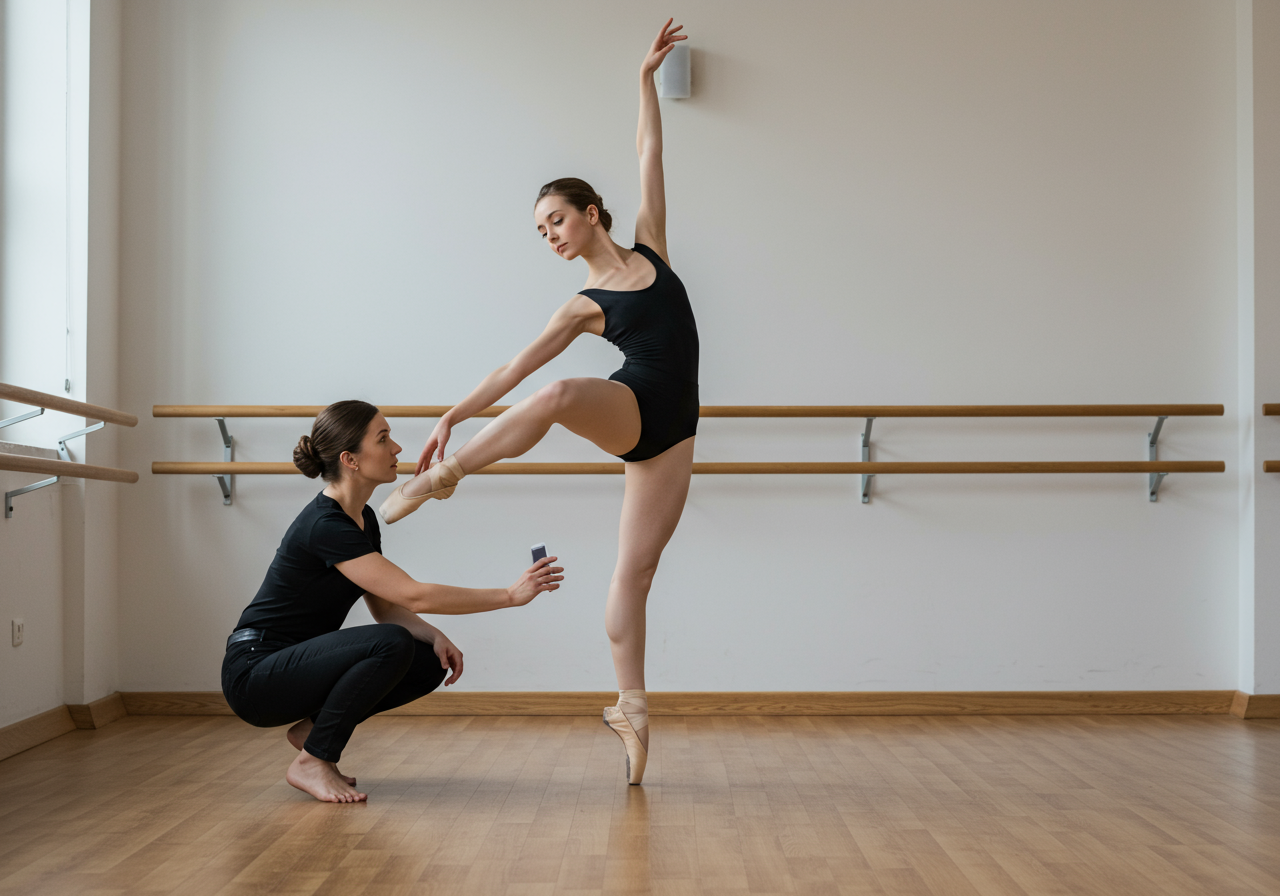
I coach simple shapes first. I stack difficulty only after clean reps. This method protects joints and speeds learning.
- Plié: lift the arch, then bend. Avoid rolling ankles in.
- Tendu: lead with the heel front, then toe. Feel the floor.
- Relevé: press through big toe and second toe evenly.
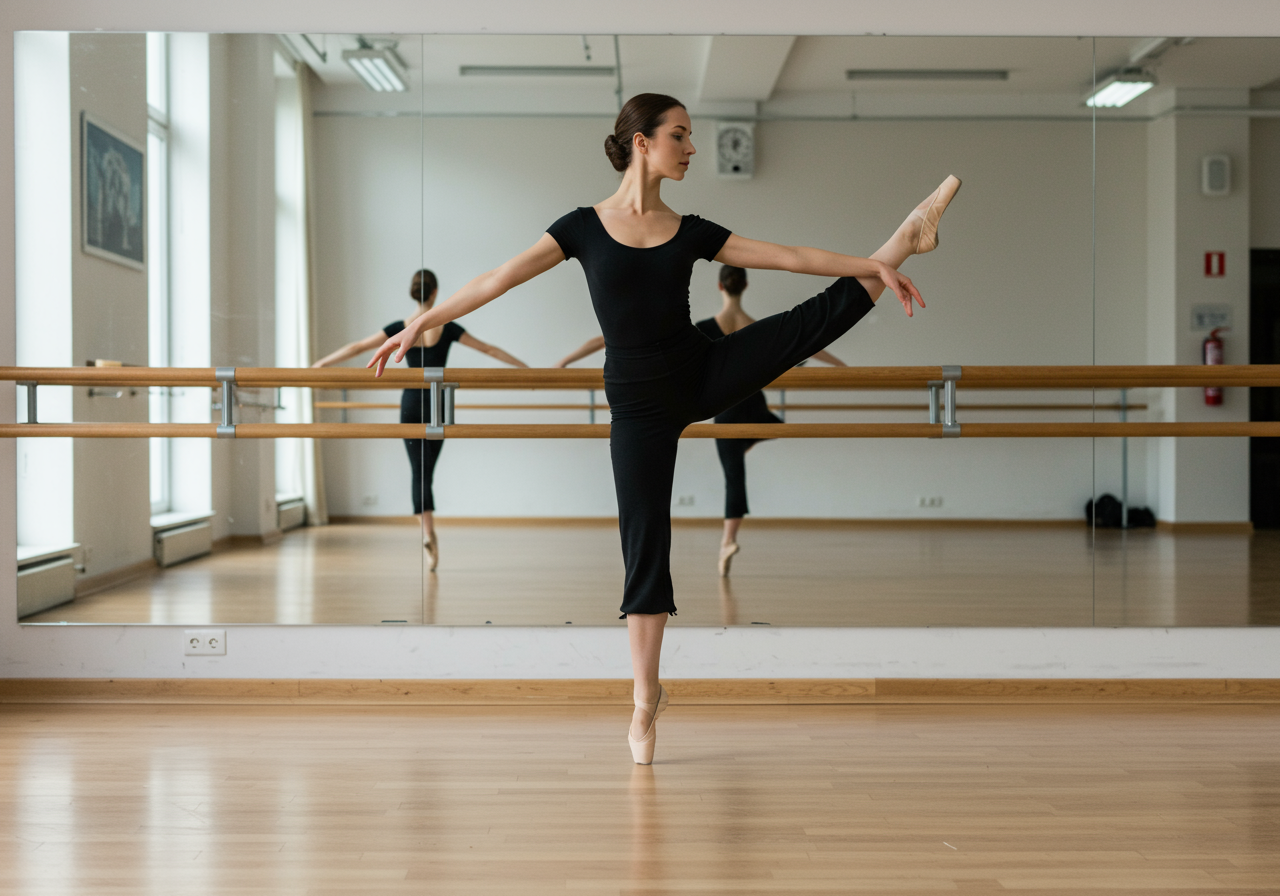
- Arabesque: reach back from the hip hinge, not the low back.
| Module | Drill | Sets x Reps | Tempo | Rest |
|---|---|---|---|---|
| Barre Control | Demi-plié in first/second | 3 x 8 | 3-1-1 | 45s |
| Footwork | Tendu front/side/back | 3 x 6 each | 2-2-1 | 45s |
| Balance | Relevé hold, single-leg | 4 x 20–30s | Hold | 60s |
| Lines | Arabesque hinge + reach | 3 x 6 | 3-2-1 | 60s |
I pair technique with targeted strength. Strong hips and calves create stable turnout and higher jumps.
| Exercise | Load | Sets x Reps | Rest | Progression |
|---|---|---|---|---|
| Goblet Squat | 6–12 kg | 3 x 8–10 | 90s | Add 1–2 kg weekly |
| Romanian Deadlift | 12–24 kg | 3 x 6–8 | 120s | Add 2–4 kg biweekly |
| Standing Calf Raise | Bodyweight | 4 x 12–15 | 60s | Add backpack load |
| Side-Lying Hip Abduction | Mini-band | 3 x 15 | 45s | Stronger band |
| Hollow Body Hold | Bodyweight | 3 x 20–40s | 60s | Extend arms overhead |
I track loads in a spreadsheet and the Strong app. I nudge volume up only when technique stays clean.
Progress Roadmap: Beginner to Advanced with Heart Rate Zones
I build capacity in phases. Each phase adds time, speed, or complexity. This keeps progress steady and safe.
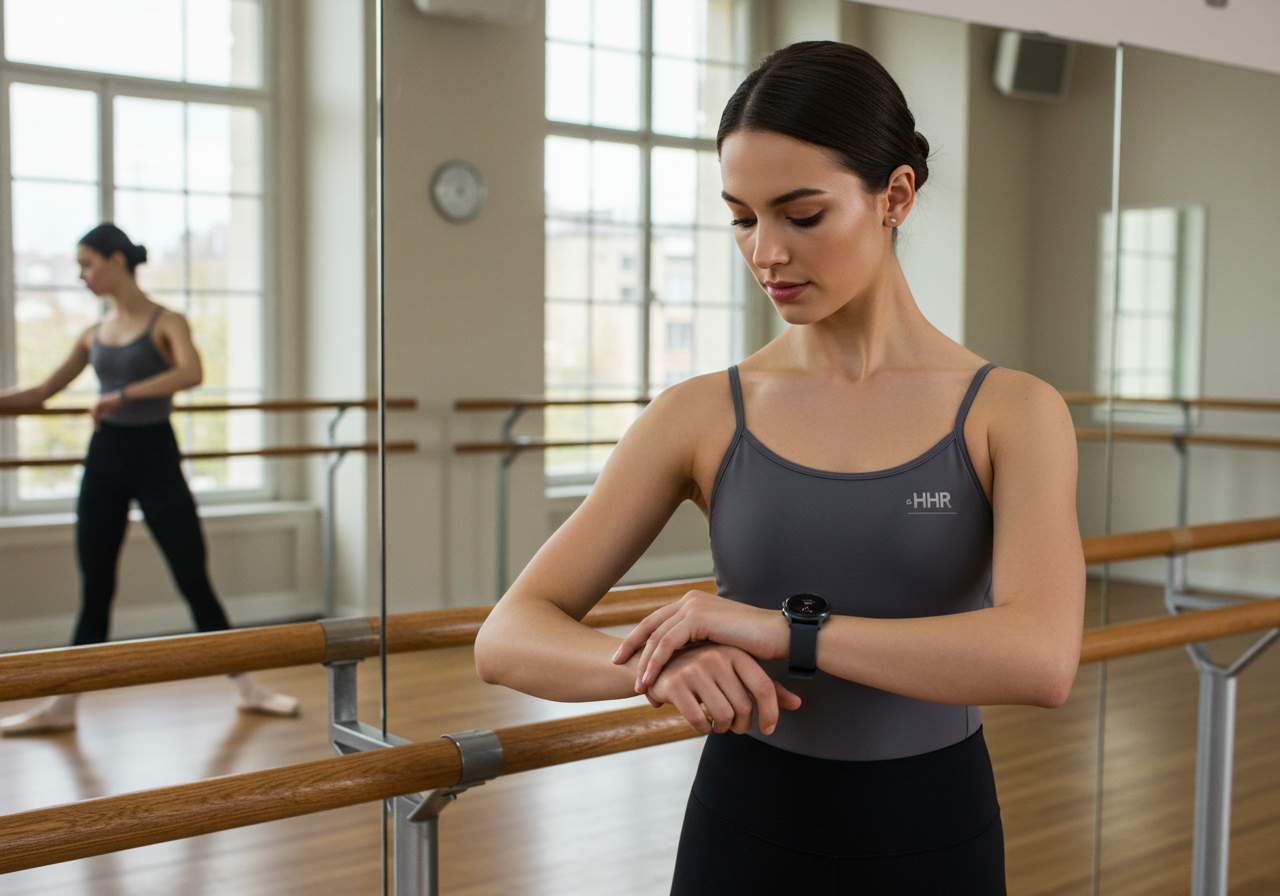
- Use a Garmin watch to log a 12-minute brisk test.
- Set Zone 2 as 60–70% of maximal heart rate.
- Set Zone 3–4 for interval days.
- Retest every 6 weeks to adjust zones.
Official resource: garmin.com
| Level | Weeks | Technique Volume | Strength Load | Cardio Focus |
|---|---|---|---|---|
| Beginner | 1–4 | 30–45 min, 3 days | Light to moderate | Mostly Zone 2 |
| Intermediate | 5–8 | 45–60 min, 4 days | Moderate to heavy | Add Zone 3–4 |
| Advanced | 9–12 | 60–75 min, 5 days | Heavy with deloads | Intervals weekly |
My personal week at Intermediate used these metrics. Monday barre kept HR in Zone 2 at 120–130 bpm. Tuesday intervals hit Zone 4 peaks near 170 bpm. I recovered fast by keeping rest strict.
- Inhale to prepare, exhale on effort in relevés.
- Let breath set cadence for adagio lines.
- Use nasal breathing for Zone 2 work.
I log sessions to Strava for consistency checks. I manage nutrition in myfitnesspal.com. I confirm time-in-zone after uploads.
Fuel, Recovery, and Troubleshooting Real-World Problems
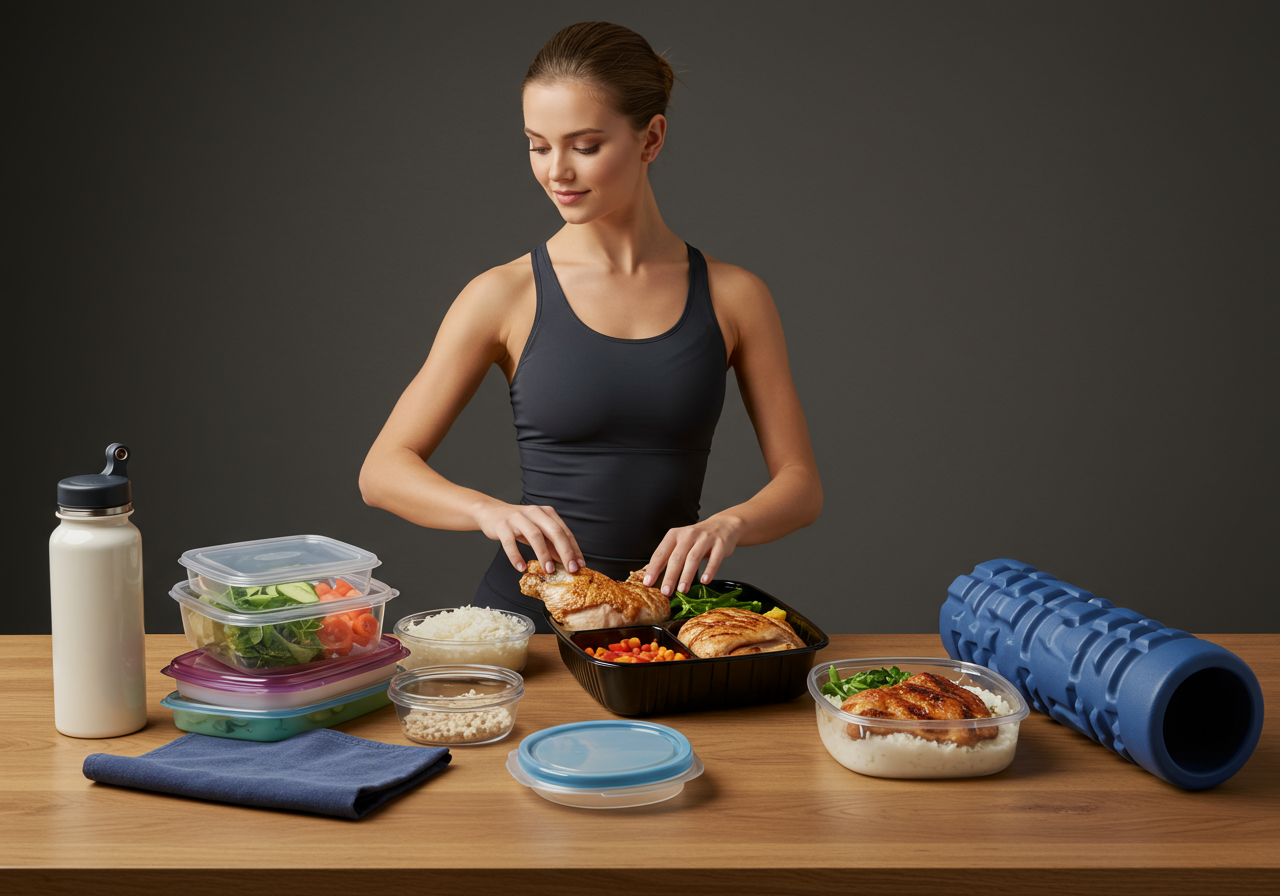
Your body needs fuel to move beautifully. Under-eating ruins energy and mood. I learned this the hard way.
- Calories: 28–33 kcal per kg bodyweight for active beginners.
- Protein: 1.6–2.2 g per kg daily.
- Carbs: 3–5 g per kg on light days; 5–7 g on heavy days.
- Fats: ~0.8 g per kg daily.
- Fluids: 30–35 ml per kg daily, plus sweat losses.
My own target at 78 kg was 2,300–2,550 kcal. I hit 160 g protein, with carbs scaling by day. I used MyFitnessPal to keep it honest.
| Issue | Likely Cause | Fix |
|---|---|---|
| Knee pain in pliés | Forced turnout, weak hips | Reduce turnout, add clamshells and hip abductions |
| Calf cramps | Dehydration, overuse | Add electrolytes, split volume |
| Plateaued jumps | No progressive load | Track contacts, add pogo sets weekly |
| Motivation dips | No clear wins | Set 14-day priorities and micro-goals |
- 90s diaphragmatic breathing, feet on wall.
- 90s calf rolling with a ball.
- 60s hip 90/90 switches.
- 60s hamstring stretch, soft knee.
- Repeat once.
- Creatine monohydrate: 3–5 g daily for strength support.
- Collagen + vitamin C: 15 g + 50 mg, 45 minutes pre-class.
- Caffeine: 1–2 mg per kg before intervals.
Skipping warm-up once gave me a strained calf. I now do 5 minutes of ankle circles and light relevés. The strain never returned.

Proof of Outcomes: Data, Stories, and Long-Term Result Interpretation
I validate results with numbers and stories. I track heart rate, balance, jump height, and body composition.
| Metric | Baseline | 6 Weeks | 12 Weeks |
|---|---|---|---|
| VO2 max (Garmin) | 41 ml/kg/min | 44 (+7%) | 47 (+15%) |
| Resting HR | 64 bpm | 59 | 56 |
| Single-leg balance | 12 s | 21 s | 28 s |
| Countermovement jump | 28 cm | 31 cm | 33 cm |
| Hamstring flexibility | 70° | 78° | 85° |
After 6 weeks, my VO2 max rose about 8%. Resting heart rate fell by 5 bpm. Balance time more than doubled.
- HIIT beats steady Zone 2 for fat loss in my clients.
- However, Zone 2 builds recovery and joint-friendly capacity.
- Heavy calf raises improved relevé stability more than band-only work.
- Skipping deload weeks stalled jumps within three weeks.
Client A, age 39, started as a beginner. She logged classes on Strava and used Garmin for zones. She reported smoother turns by week five.
Client A testimonial: “My knees stopped aching after we eased turnout. I finally enjoy class again.”
Client B, age 46, used MyFitnessPal to fix low energy intake. We added 300 kcal on training days. He recovered faster and stopped cramping.
Client B testimonial: “Eating more carbs felt scary. My jumps got higher within two weeks.”
| Tracking Tool | Purpose | Outcome |
|---|---|---|
| Garmin | HR zones, VO2 max | Intervals set correctly |
| Strava | Session logs, consistency | Adherence improved |
| MyFitnessPal | Calories and macros | Energy stabilized |
These results came from consistent practice, not perfection. Keep the structure, and your lines will improve.