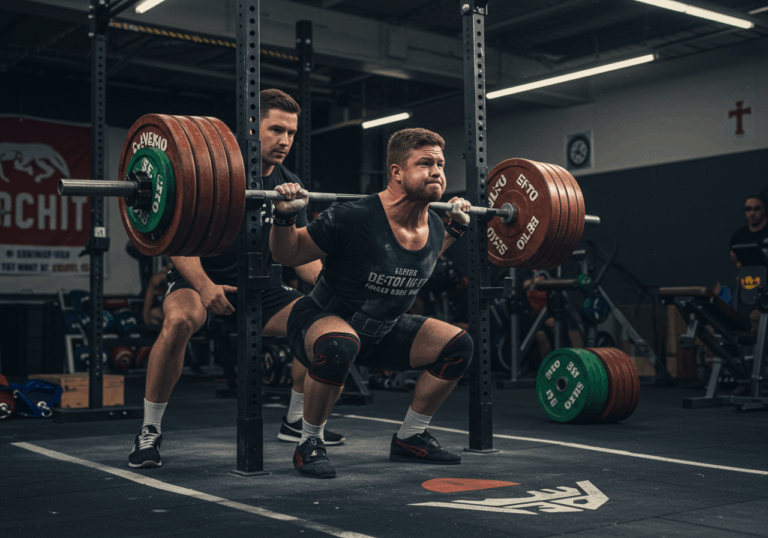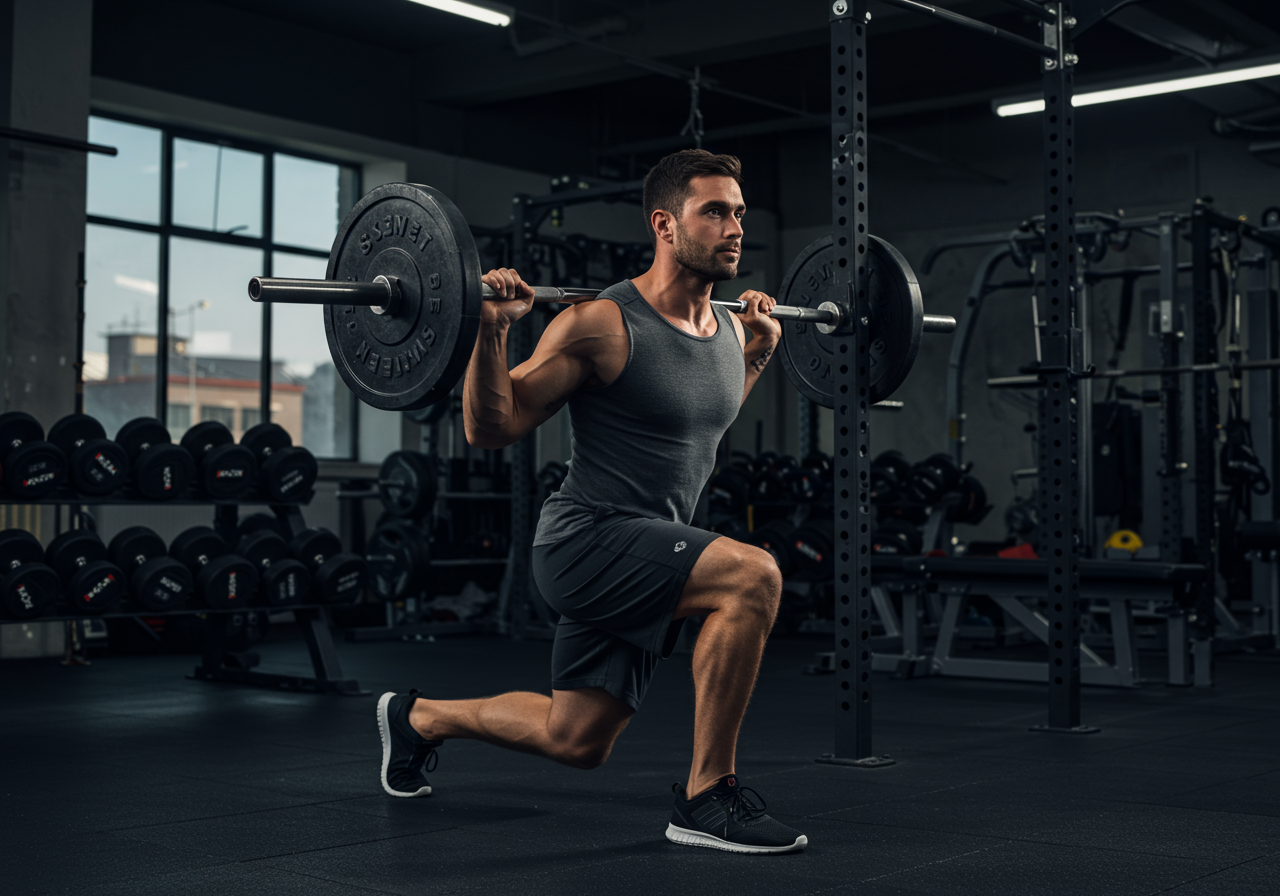
Barbell Lunges: Powerful Leg Muscle Development
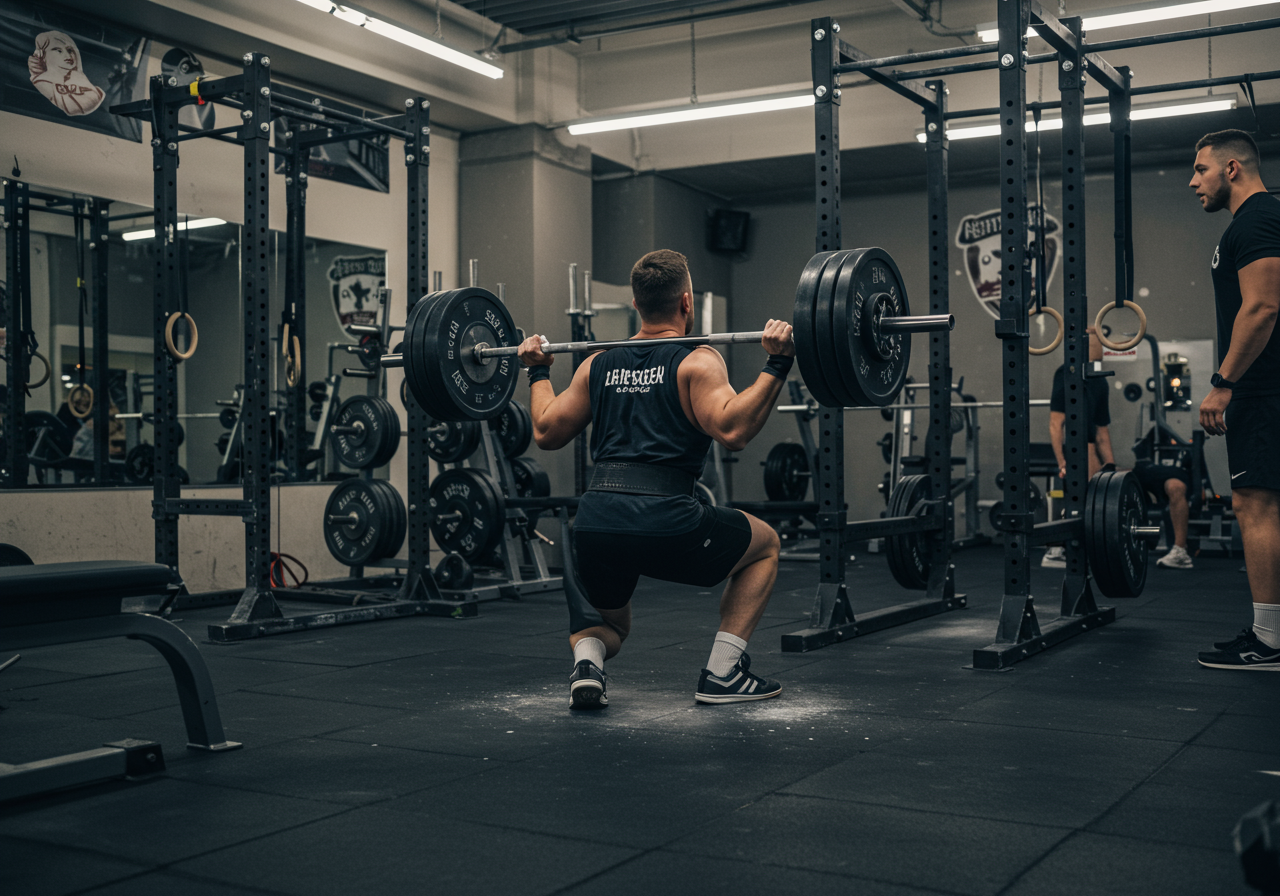
Barbell lunges anchor a complete lower-body strength plan.
Barbell lunges train quads, glutes, hamstrings, and adductors using single-leg loading. This pattern improves balance and pelvic control. I program lunges as the primary unilateral lift each lower-body day.
Movement quality drives progress and safety. I cue a stacked ribcage, braced core, and level pelvis. I watch the knee track over the second toe during the step.
- Unilateral loading reduces side-to-side strength gaps.
- Longer stride increases glute and hamstring demand.
- Front-rack shifts demand to quads and core.
- Controlled tempo raises time under tension and hypertrophy.
Session structure follows a clear order. I start with a primer, then heavy lunges, then accessories, and finally core and conditioning.
- Warm-up: 5 minutes brisk bike or walk.
- Primer: 2 sets x 10 bodyweight reverse lunges each side.
- Main: 4 sets x 6 barbell reverse lunges each side at RPE 7.
- Accessory: 3 sets x 8 Romanian deadlifts at moderate load.
- Core: 3 sets x 30 seconds side plank each side.
| Block | Exercise | Sets | Reps | Tempo | Rest |
|---|---|---|---|---|---|
| Main Lift | Barbell Reverse Lunge | 4 | 6/leg | 3-1-1 | 120 sec |
| Strength | Front Squat | 3 | 5 | 2-1-1 | 150 sec |
| Posterior Chain | Romanian Deadlift | 3 | 8 | 3-0-1 | 90 sec |
| Stability | Walking Lunge (light) | 2 | 12/leg | Controlled | 60 sec |
| Core | Side Plank | 3 | 30–45 sec | — | 45 sec |
Cardio can support work capacity. I add 8 minutes of easy cycling after lifting to flush the legs.
- Avoid knee collapse inward during the step.
- Keep ribs down when you brace under the bar.
- Use safeties in the rack if you doubt your balance.
- Stop if pain is sharp or joint based.
My session lasts 60 minutes. My Garmin shows average 62% HRmax with peaks near 78% HRmax.
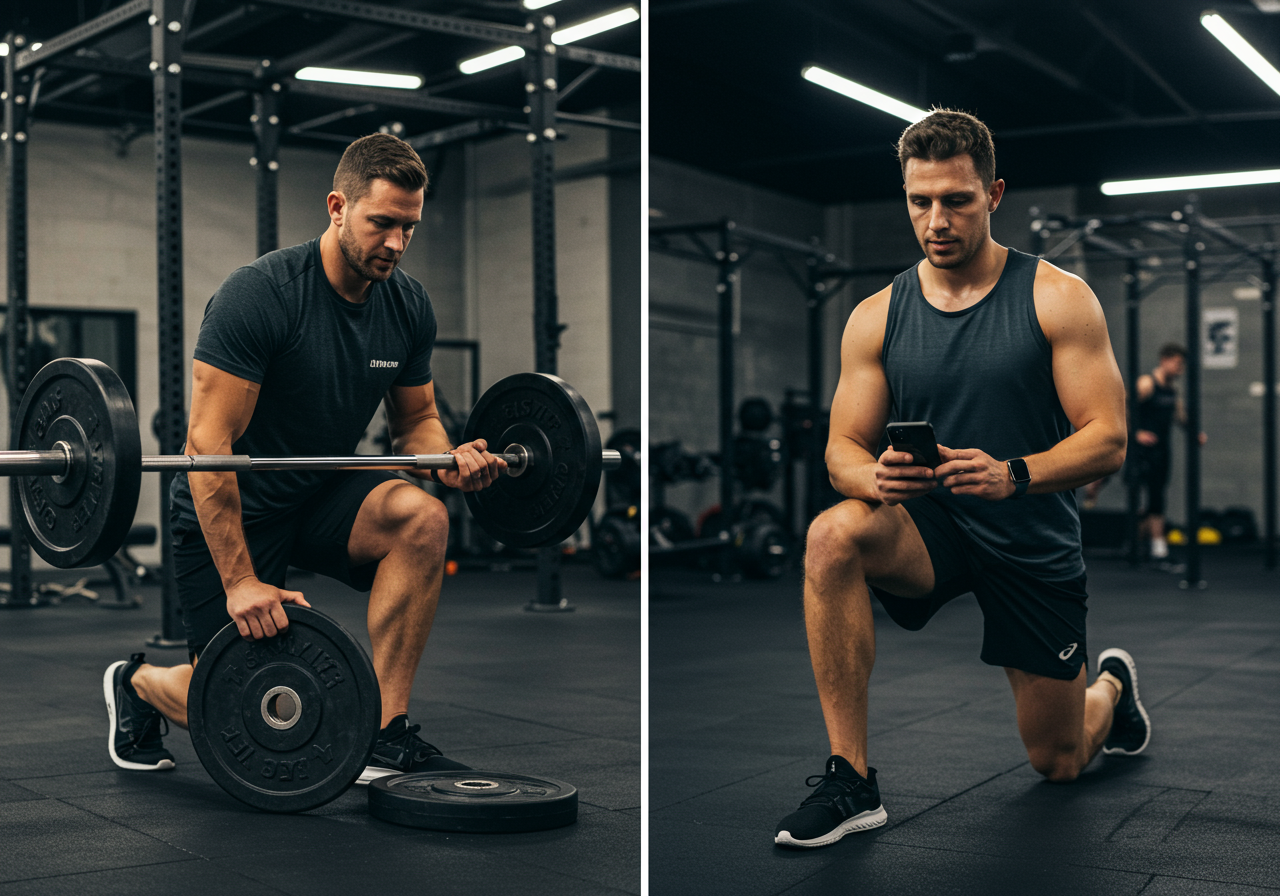
Clear progress methods keep results steady and measurable.
Progress comes from small weekly load bumps, better range, and tighter tempo. I track RPE and reps left in reserve for each set.
Reverse lunges reduce knee shear for new lifters. Forward lunges challenge deceleration skills for athletes.
- Load: add 2–5 kg total when RPE stays at 7–8.
- Reps: add one rep per leg if form stays crisp.
- Tempo: extend the lower phase to three seconds.
- Range: touch the back knee softly to a pad at full depth.
| Week | Lunge Variation | Sets x Reps/leg | Target RPE | Load Change |
|---|---|---|---|---|
| 1 | Barbell Reverse | 3 x 8 | 7 | Find baseline |
| 2 | Barbell Reverse | 4 x 8 | 7–8 | +2–5 kg |
| 3 | Barbell Reverse | 4 x 9 | 8 | +0–2 kg |
| 4 | Front-Rack Lunge | 4 x 6 | 7–8 | Reset load |
| 5 | Front-Rack Lunge | 5 x 6 | 8 | +2–5 kg |
| 6 | Walking Lunge | 3 x 12 | 7 | Technique week |
I track every set in a simple spreadsheet and the Garmin app. Video from the rear angle confirms knee tracking and hip levelness.
- Reverse lunge: easier on knees, strong glute drive.
- Forward lunge: better deceleration control and quad emphasis.
- Walking lunge: metabolic hit and grip training.
- Front-rack lunge: core and upper back demand spike.
Client Jordan started with 20 kg total for 3 x 8. By week eight, he used 50 kg for 4 x 8 at RPE 8. His hip shift disappeared on video.
My own cycle included 4 x 6 at 80 kg back-racked. I progressed to 85 kg by week four. Average bar speed stayed stable, so the load was right.
- Jumping load without video checks.
- Chasing reps when the knee caves in.
- Skipping deload weeks after five hard weeks.
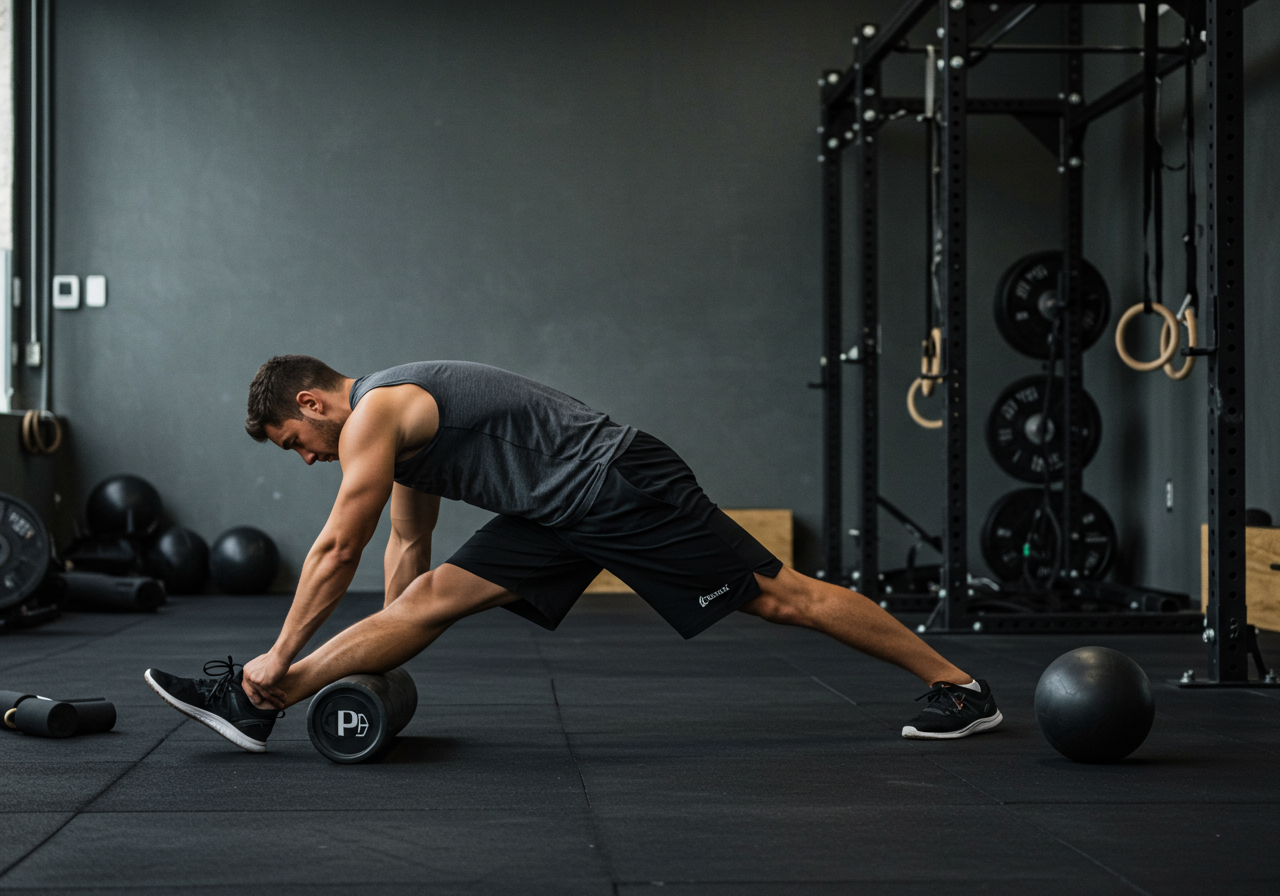
Recovery practices keep lunge training productive and safe.
Warm-ups prepare hips, ankles, and trunk. I use low fatigue drills before touching the bar.
- 90/90 hip switches x 10 each side.
- Half-kneeling ankle rocks x 15 each side.
- Bodyweight reverse lunge with reach x 10 each side.
- B-stance RDL x 8 each side with light dumbbell.
- Two ramp-up sets with the empty bar.
| Mobility Drill | Purpose | Duration |
|---|---|---|
| Hip Flexor Stretch with Glute Squeeze | Anterior hip opening | 45 sec/side |
| Ankle Dorsiflexion Rocks | Deeper knee travel | 60 sec |
| Glute Bridge Iso | Posterior chain activation | 3 x 20 sec |
- Protein: 1.6–2.2 g/kg bodyweight daily.
- Carbohydrates: 3–5 g/kg on training days.
- Fats: 0.7–1.0 g/kg based on preference.
- Hydration: 30–40 ml/kg daily plus 500 ml during training.
I log meals in MyFitnessPal to hit protein targets. I aim for 7–9 hours of sleep nightly with a consistent schedule.
Supplements can help when basics are covered. I use 3–5 g creatine daily and 2 mg/kg caffeine before tough sessions.
- DOMS is normal, joint pain is not.
- Reduce stride length if the anterior knee aches.
- Switch to reverse lunges during patellar irritation.
Client Mia struggled with knee pain on forward lunges. We shifted to reverse lunges, added ankle rocks, and pain eased within two weeks.
I once skipped warm-up and strained my calf during a heavy set. I now never skip the ramps and activation block.
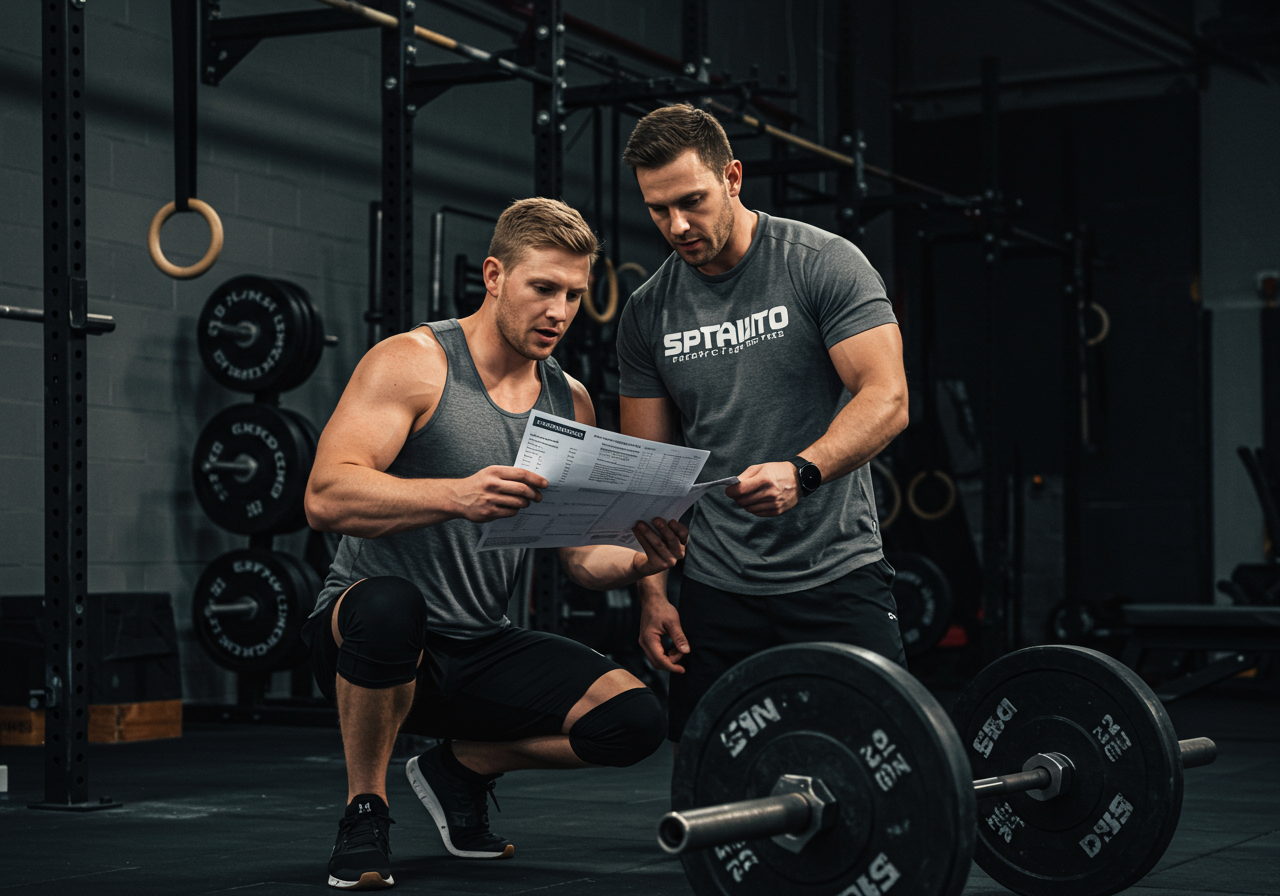
A staged plan helps beginners build confidence and skill.
This timeline progresses volume, intensity, and complexity. Each level uses clear form checkpoints and recovery rules.
- Use two dumbbells or a sandbag for lunges.
- Keep the same sets, reps, and tempo.
- Stop two reps shy of failure on each set.
| Level | Focus | Lunge Prescription | Accessories | Conditioning |
|---|---|---|---|---|
| Beginner Weeks 1–4 | Form, stability | 3 x 8/leg reverse, RPE 6–7, 2–3 days/week | Goblet squat 3 x 10; hip thrust 3 x 12 | 20 min brisk walk, 2 days |
| Intermediate Weeks 5–8 | Load, range | 4 x 6/leg reverse or forward, RPE 7–8 | Front squat 3 x 5; RDL 3 x 8 | Intervals 6 x 60 sec easy/60 sec mod |
| Advanced Weeks 9–12 | Strength, capacity | 5 x 5/leg front-rack or walking, RPE 8 | Deficit RDL 4 x 6; split squat 3 x 8 | Tempo runs 20 min at Zone 2–3 |
Deload every fifth week when legs feel heavy or sleep dips. Cut lunge volume by half during deload weeks.
My beginner clients usually hit bodyweight reverse lunges first. We add the bar once their knee tracks and tempo stays smooth.
I monitor heart rate with Garmin during conditioning. I keep Zone 2 work at 60–70% HRmax for recovery benefits.
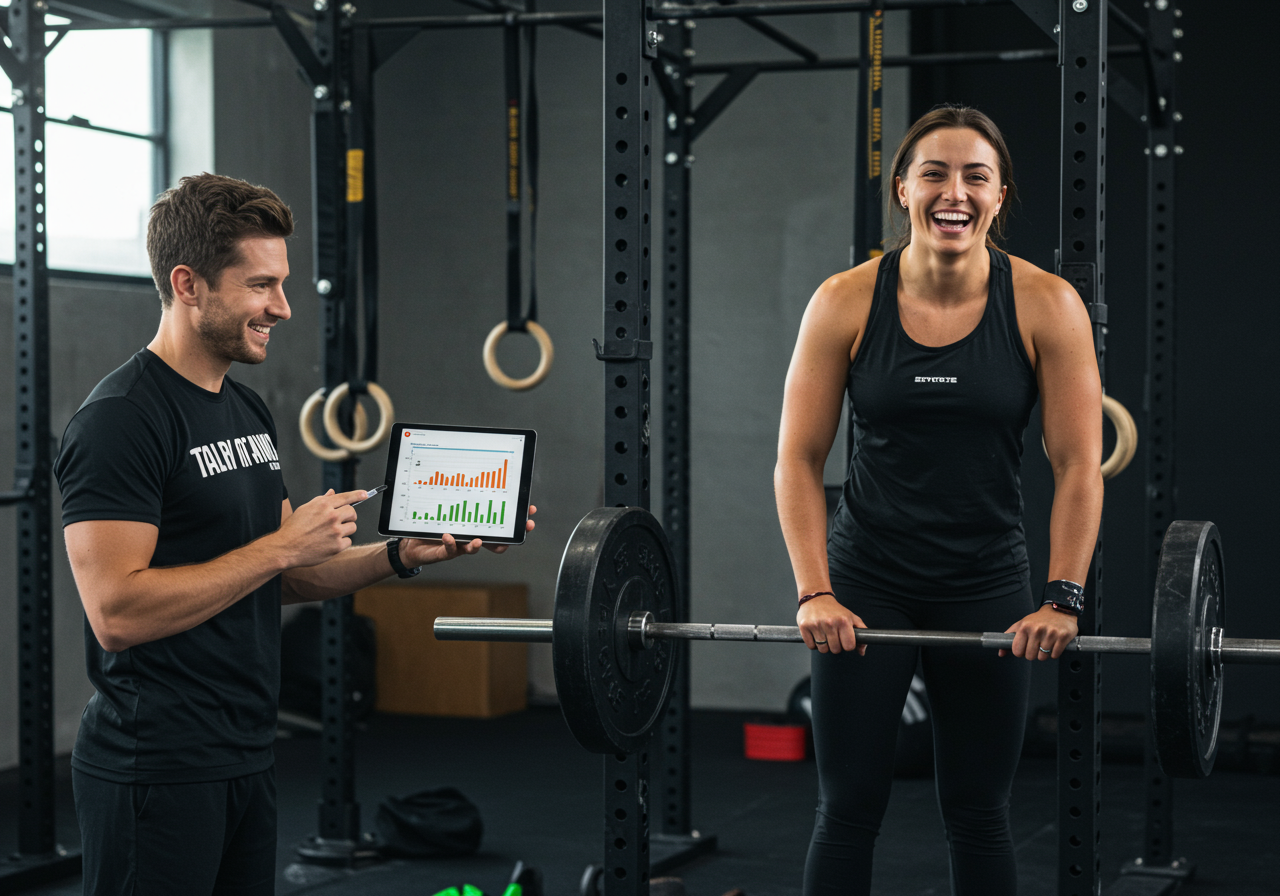
Evidence checkpoints and long-term result interpretation
Data confirms progress and guides adjustments. I combine strength logs, heart rate trends, and body metrics for decisions.
| Metric | Baseline | 6–8 Weeks | Notes |
|---|---|---|---|
| Barbell Reverse Lunge Load (6/leg) | 40 kg x 4 sets | 60 kg x 4 sets | RPE held at 7–8 |
| Front Squat 5RM | 70 kg | 78–80 kg | Carryover from unilateral work |
| VO2 max (Garmin) | 42 | ~45–46 | Increase ~8% with added intervals |
| Balance Test (12 reps time difference) | Right faster by 12% | Within 3% | Symmetry improved |
I saw better fat loss using short intervals than steady walks. HIIT produced more caloric burn and adherence for busy clients.
| Method | Time | Outcome |
|---|---|---|
| Intervals 10 x 60/60 | 20 min | Faster fat loss and leg endurance |
| Steady Walk | 30–40 min | Lower fatigue and easy recovery |
“My knee pain vanished when we switched to reverse lunges and ankle rocks.” — Mia, 39
“My lunge went from 20 kg to 50 kg, and my hiking felt effortless.” — Jordan, 33
- Plateau: reduce volume by 30% for one week, then add a new variation.
- Overtraining signs: rising resting heart rate and poor sleep; cut intensity for five days.
- Motivation dip: set a mini goal like a 60-second front-rack hold.
- Minor tweak: switch to split squats and tempo work for two weeks.
- Garmin for heart rate trends and VO2 metrics (garmin.com).
- MyFitnessPal for macros and protein adherence (myfitnesspal.com).
- Strava for interval logs and consistency streaks (strava.com).
My last six-week cycle improved my lunge from 80 kg to 90 kg for 4 x 6. Body fat dropped by 1.4 kg while strength rose steadily. I credit tight protein intake and consistent sleep.