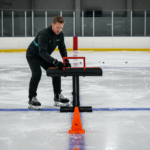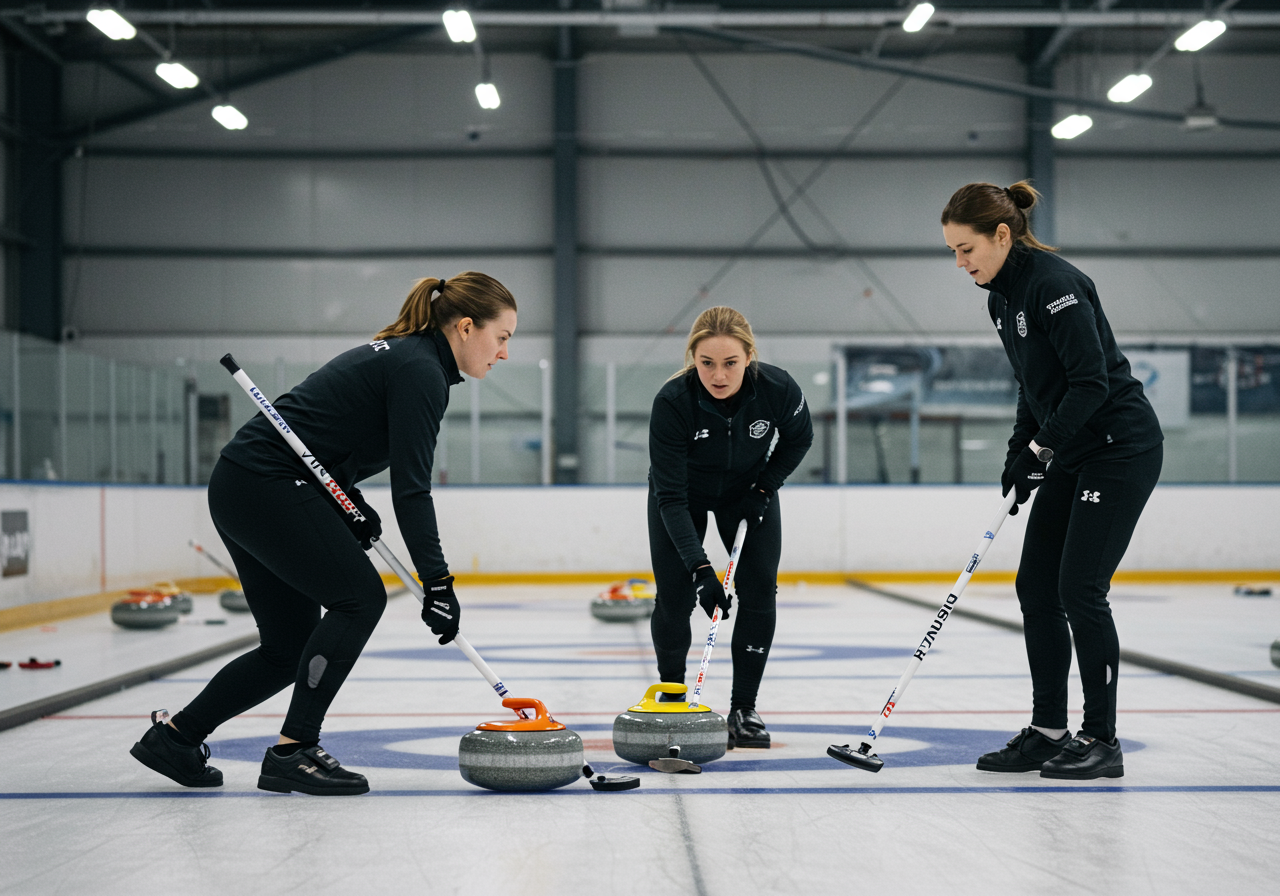
Curling: Ice Chess, Strategic Team Sport
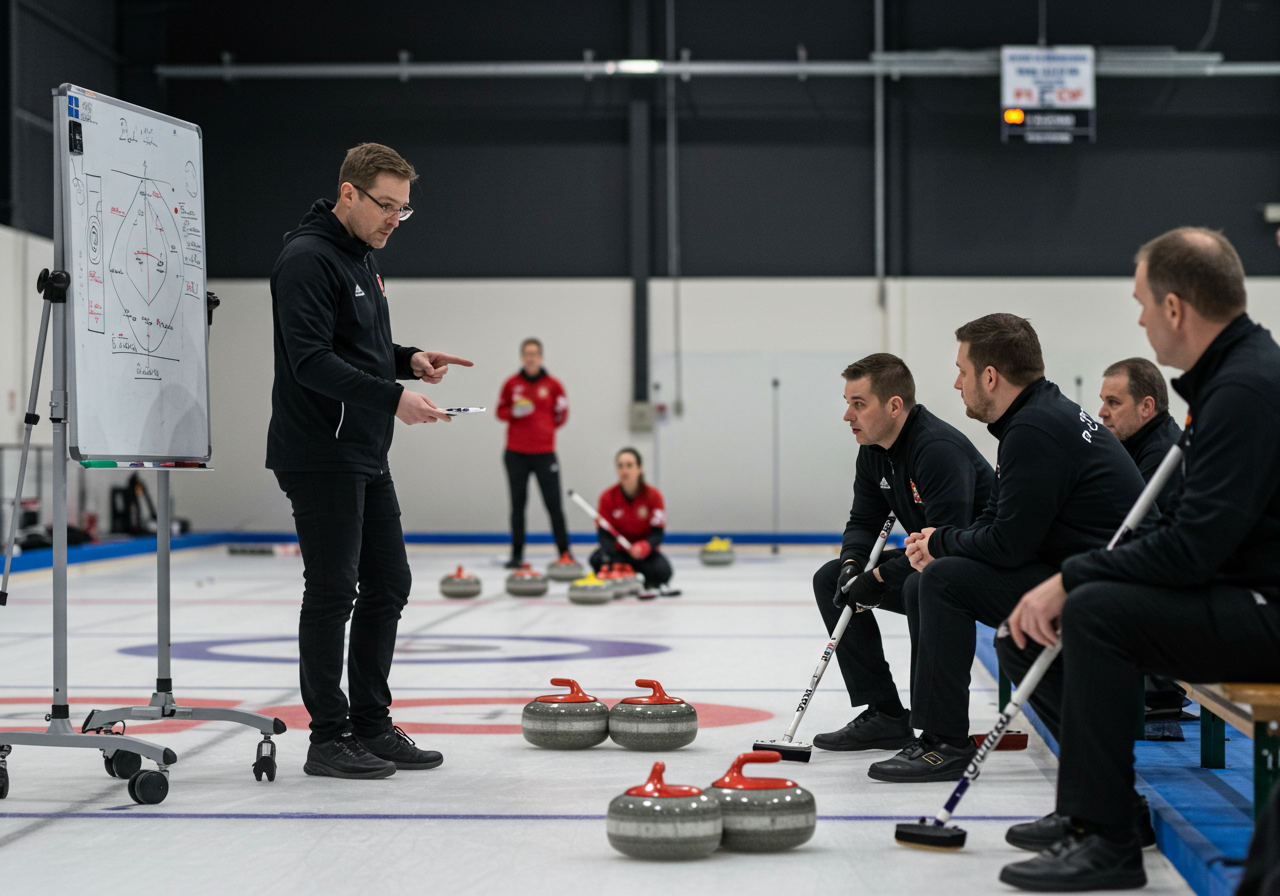
System overview for curling performance
Curling looks calm, yet it taxes balance, stamina, and decision speed. I build all three together. You will develop delivery stability, sweeping power, and clear communication.
- Balance first: train the delivery lunge and torso control.
- Aerobic base second: stay fresh across eight ends.
- Repeated-power third: sweep hard without form collapse.
- Strategy always: practice split times and shot planning.
I define simple heart rate zones for training. Zone 2 is 60–70% of max. Zone 4 is 80–90% of max.
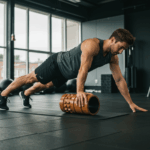
- Foam roll calves, quads, glutes, lats – 3 minutes total.
- World’s greatest stretch – 2 rounds each side.
- Lateral lunge to balance reach – 2×8 each side.
- Dead bug with exhale – 2×8 each side.
- Split squat isometric hold – 2×20 seconds each side.
- Light broom sweep intervals – 3×15 seconds, brisk, nasal breathing.
Here is a typical training week I use with new curlers. We blend skill, strength, and conditioning.
| Day | Focus | Session details |
|---|---|---|
| Mon | Strength + mobility | 45 min gym: goblet split squats, hip hinge, anti-rotation, ankle mobility. |
| Tue | Aerobic base | 35 min Zone 2 cycle or brisk walk; nasal breathing. |
| Wed | On-ice skills | 60–75 min: delivery drills, sweeping cadence, split-time practice. |
| Thu | Power intervals | 10×30 sec SkiErg at Zone 4, 60 sec easy; light core. |
| Fri | Restorative | 20 min mobility flow; diaphragmatic breathing. |
| Sat | League or scrimmage | Match play; HR tracking; post-game notes. |
| Sun | Optional walk | 30–40 min Zone 2; easy recovery. |
My last on-ice session lasted 70 minutes. My average HR was 126 bpm. Peaks reached 164 bpm during sweeping bursts.
I record heart rate with Garmin. I log nutrition in MyFitnessPal. I review notes after each match.
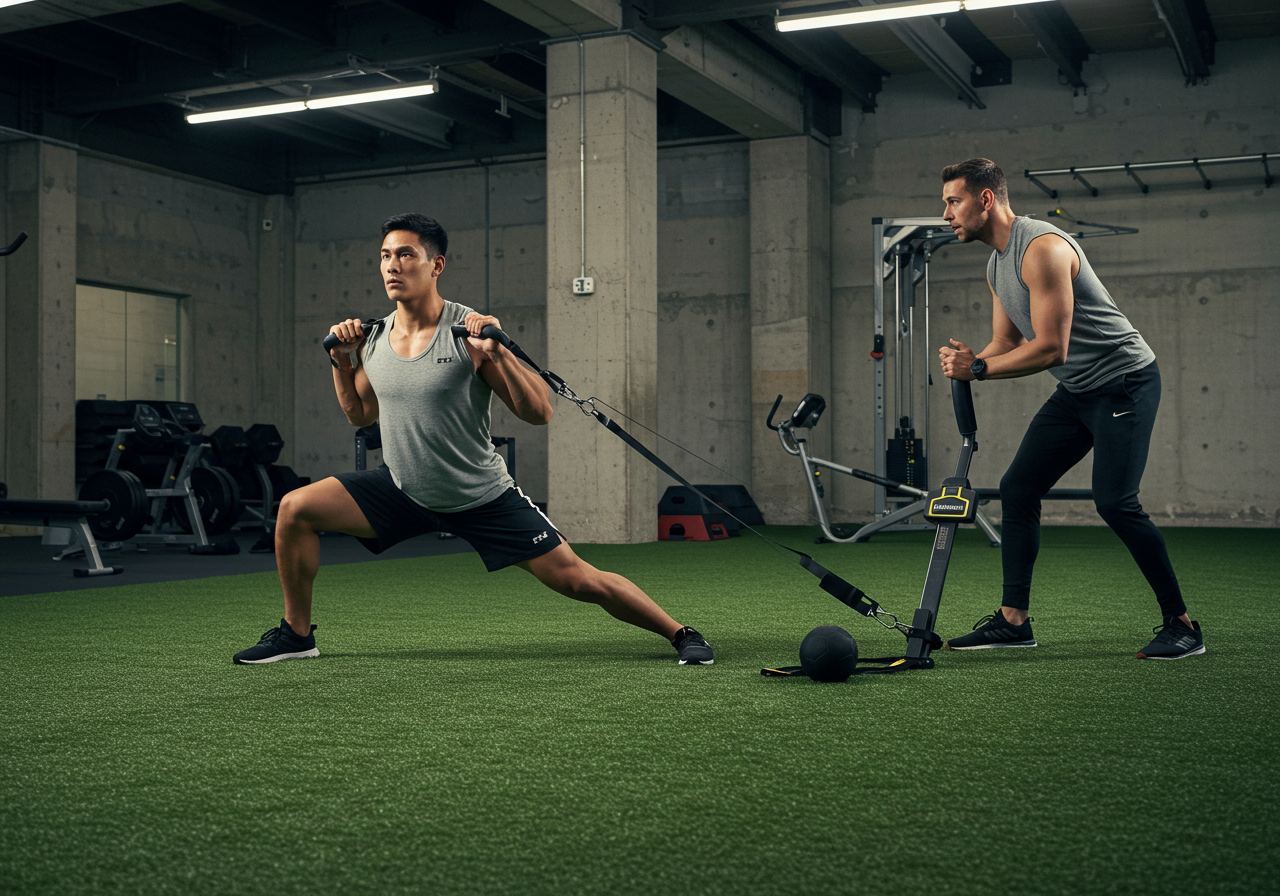
Gym work that transfers to delivery and sweeping
Curlers need strong legs, resilient cores, and repeatable power. I build these with simple lifts and clear progressions.
| Exercise | Sets x Reps | Rest | Notes |
|---|---|---|---|
| Goblet Split Squat | 3×8 each | 75–90 sec | Torso tall; front shin vertical. |
| Romanian Deadlift | 3×6 | 90 sec | Glute squeeze; no back rounding. |
| Push-up or DB Bench | 3×8–12 | 60–90 sec | Full range; scapular control. |
| Half-Kneeling Cable Chop | 3×10 each | 45–60 sec | Anti-rotation focus; ribcage down. |
| Farmer Carry | 3×30–40 m | 60 sec | Neutral spine; steady steps. |
Progress loads 2–5% weekly if reps move cleanly. Reduce volume by 30% every fourth week.
- SkiErg 8–12 rounds: 20 seconds hard at Zone 4–5.
- Recover 70 seconds at easy pace, nasal breathing.
- Keep technique crisp. Aim for smooth strokes.
| Level | Target | Example session |
|---|---|---|
| Beginner | Base capacity | 20 min Zone 2 bike + 2 sets strength circuit. |
| Intermediate | Repeat power | 10×30 sec hard SkiErg; full lift A above. |
| Advanced | Game simulation | 3 sets: 3×20 sec sweep sprints + 2 ends on-ice. |
My data last month: SkiErg intervals averaged 1:45/500m pace. Heart rate rose to 168 bpm. Recovery reached 110 bpm within 60 seconds by week four.
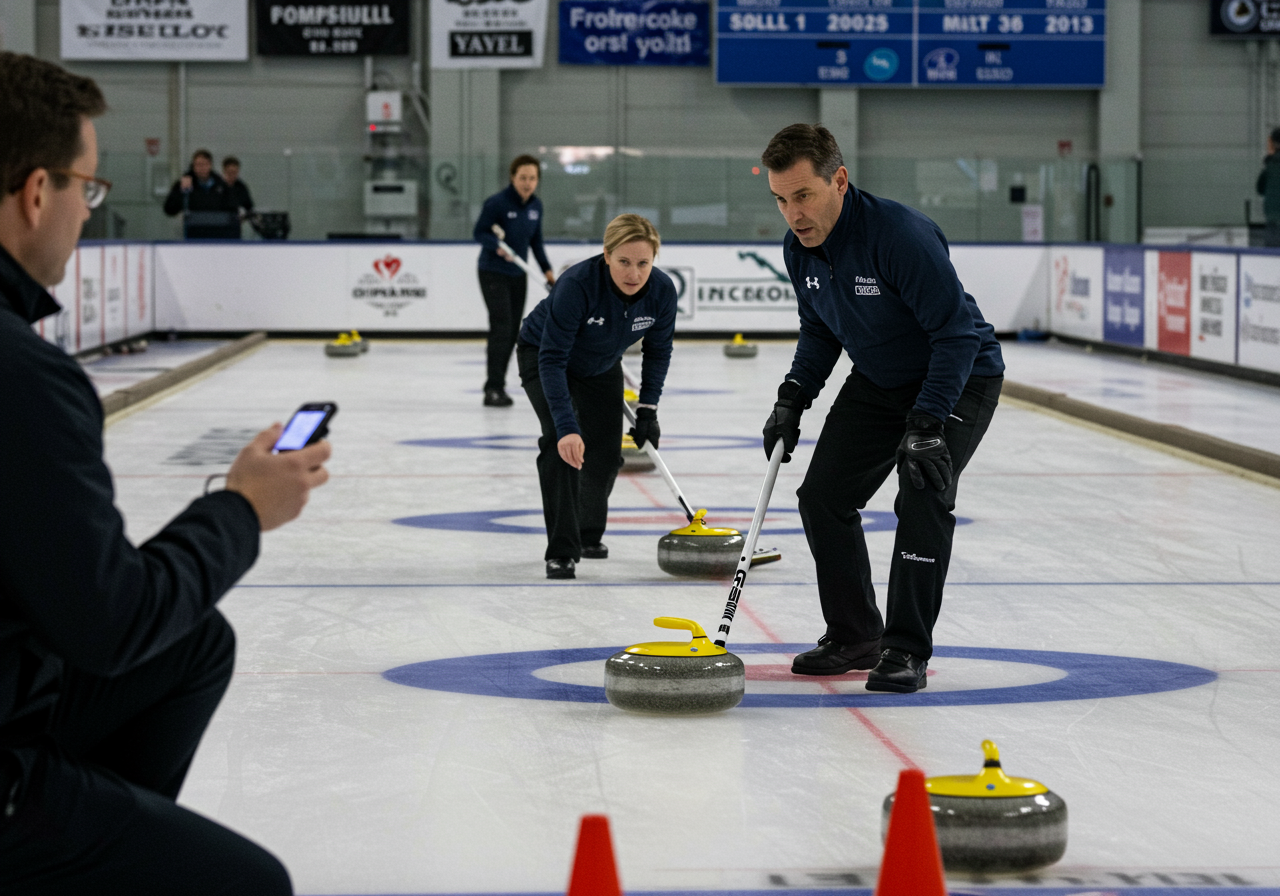
Drills that sharpen delivery, sweeping, and tactical decisions
Great shots start with repeatable mechanics. Smart calls reduce wasted effort. We practice both in short, focused blocks.
| Level | Drill | Structure | Cue |
|---|---|---|---|
| Beginner | Delivery slide to balance hold | 6 sets of 3 slides; 10 sec hold | Head quiet; knee stacked over toes. |
| Beginner | Sweeping cadence basics | 5×15 sec; metronome at 120–140 bpm | Short strokes; hips back. |
| Intermediate | Split-time draws | 10 stones; record hog-to-hog | Release smooth; same push each rep. |
| Intermediate | Line calling drill | 4 ends; call and confirm | Short commands; one voice leads. |
| Advanced | Power sweep ladders | 10–20–30–20–10 sec, x2 | Rate high; pressure consistent. |
| Advanced | Scenario ends | 4 ends, poor guard, two down | Commit to plan A or bail early. |
- Agree on call, weight, and broom target.
- Two breath cycle; visualize line.
- Settle hips; quiet head; smooth push.
I track draws with split times each practice. My average hog-to-hog improved from 14.6 to 14.2 seconds. That matched better weight control in games.
Client K’s testimonial: “The cadence drill changed everything. My sweeps stayed strong in the eighth end.”
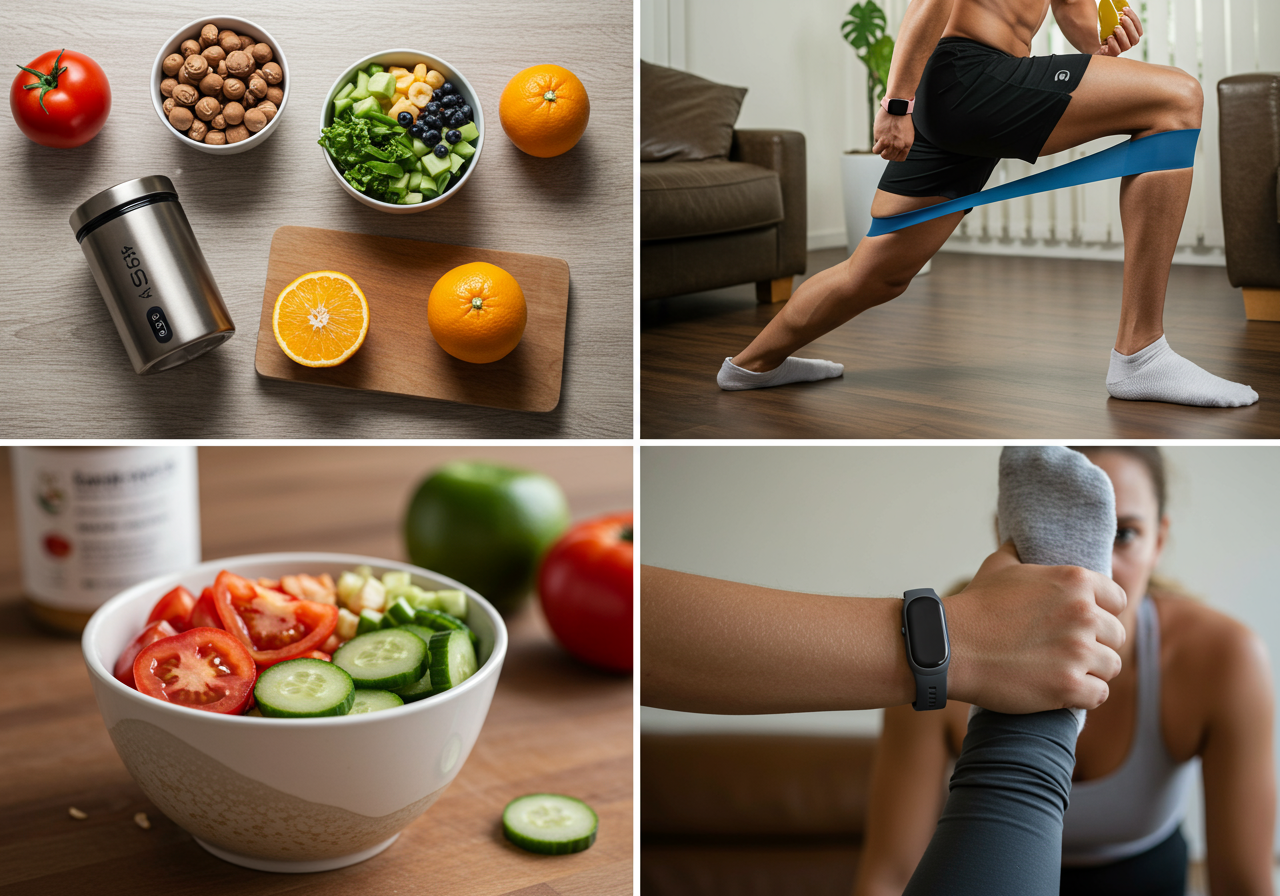
Nutrition and recovery that support winter performance
Good fueling keeps shots sharp late in matches. Recovery protects your hips and lower back.
- Calories: bodyweight (lb) x 13–15 for maintenance.
- Protein: 0.7–1.0 g per pound bodyweight.
- Carbs: 2–3 g per pound on practice days.
- Fats: fill the remainder with mostly unsaturated sources.
Example for a 160 lb curler on practice day. Calories near 2,400–2,600. Protein near 130–160 g. Carbs near 320–400 g.
- 2–3 hours pre: rice bowl with chicken and veggies.
- 30 minutes pre: 300 ml sports drink or banana.
- During: sips of electrolytes every end.
- Post: 25–35 g protein plus carbs within 60 minutes.
I track macros in MyFitnessPal. It keeps my energy steady during back-to-back ends. Hydration helps ice reading by avoiding brain fog.
Supplements I actually use: creatine monohydrate 3–5 g daily. Caffeine 2–3 mg/kg before intervals. Vitamin D if bloodwork shows low levels.
Sleep is my biggest recovery tool. I keep 7.5–8.5 hours nightly. Garmin HRV trends flag early fatigue well.
I once skipped my warm-up in a hurry. I tweaked my left adductor on the first end. Since then, I hold isometric split squats before every draw.
| Issue | Fix | Tool |
|---|---|---|
| Cramping late game | Add 400–600 ml electrolyte; extra banana. | Bottle with marked sips per end. |
| Hip pinching in delivery | 90/90 hip switches; reduce depth 10%. | Mini-band, foam pad. |
| Forearm fatigue | Farmer carries; wrist extensor eccentrics. | Light dumbbells. |
Useful resources: Garmin for HR trends (garmin.com). MyFitnessPal for logging (myfitnesspal.com). USA Curling for rules and tips (usacurling.org).
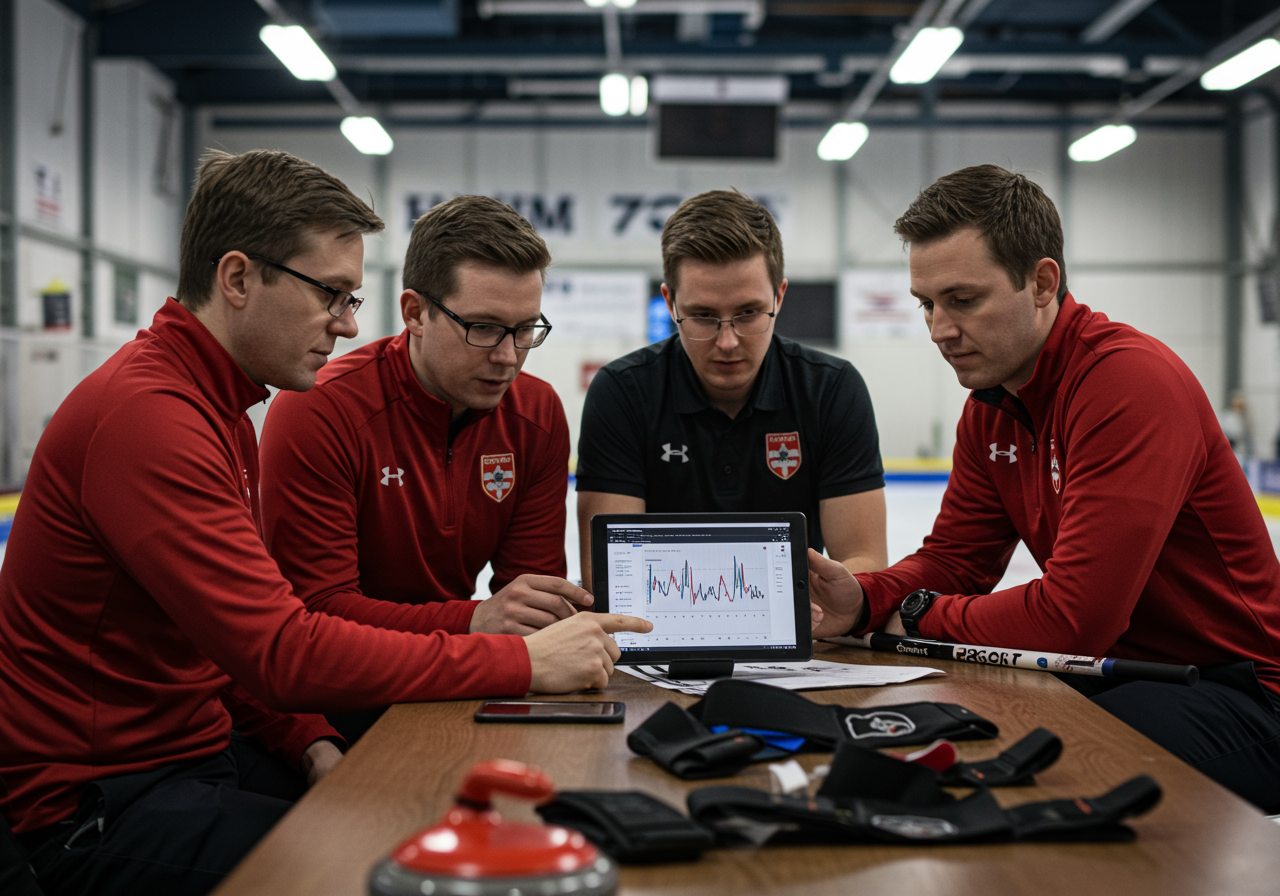
Measured outcomes and sustainable long-term result interpretation
Tracking closes the loop. We confirm that training choices actually improve play.
| Athlete | Timeline | Key metrics before | Key metrics after |
|---|---|---|---|
| Me | 8 weeks | VO2 max 47; RHR 58; draw variance ±1.4 ft | VO2 max 51 (+8%); RHR 52; variance ±0.8 ft |
| Client A | 6 weeks | Could sweep 2×20 sec; back fatigue | 6×20 sec with stable form; no back pain |
| Client K | 10 weeks | Hog-to-hog 14.8 s; 4 missed lines per game | 14.1 s; 1–2 missed lines per game |
HIIT intervals reduced body fat faster than steady Zone 2 for me. However, Zone 2 improved recovery between ends. I kept both.
- Week 1: two gym days, one on-ice, one Zone 2.
- Week 2: add SkiErg intervals; keep mobility daily.
- Week 3: increase loads 5%; add scenario ends.
- Week 4: deload volume 30%; test draw accuracy.
- If HRV drops and legs feel heavy, cut intervals in half.
- If draw weight drifts, film delivery and shorten slide.
- If motivation dips, run short skill EMOMs for fun.
- For pain, stop and assess. Technique first, then load.
Two testimonials from this winter:
“Our end-seven calls stayed sharp. The split-time work paid off.” — R.S., vice-skip.
“I breathe easier late. The Zone 2 base helped my focus.” — D.L., lead.
Progress tracking template I use weekly: HR average, hardest sweep HR peak, draw variance, split-time range, and soreness score. I store everything in Garmin Connect and a simple spreadsheet.
Keep this system rolling. Advance drills only when technique holds. Add power in small steps. Enjoy the chess on ice as your fitness rises.