Dumbbell Squats: Lower Body with Dumbbells
Foundational dumbbell squat system that builds strong, athletic legs
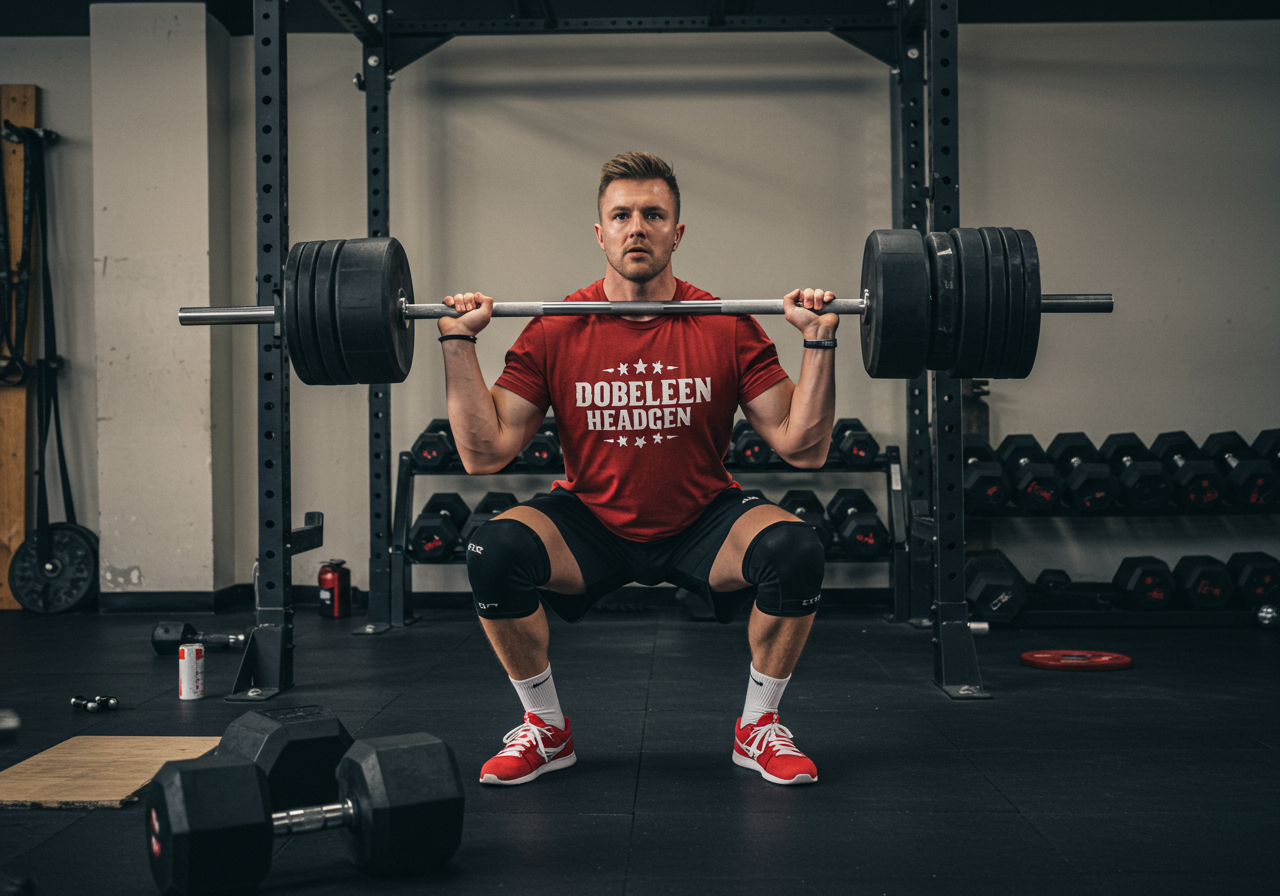
This framework centers on dumbbell squats and their variations. It organizes volume, intensity, and technique to build legs safely.
I start every client with a clear movement standard. We chase depth, control, and repeatable bracing before heavy loads.
- Brace first: inhale through nose, lock ribs down, then squat.
- Foot tripod: press big toe, little toe, and heel into the floor.
- Knees track over toes: avoid collapse or excessive flare.
- Hip-knee balance: sit between hips and knees, not only back.
- Tempo control: 3 seconds down, slight pause, strong drive up.
- Range beats ego: depth within your hip and ankle mobility.
- Frequency: two lower days weekly progress most beginners.
- Fatigue management: end sets with 1–3 reps in reserve.
Here is the step-by-step setup I teach. It keeps positions consistent under fatigue.
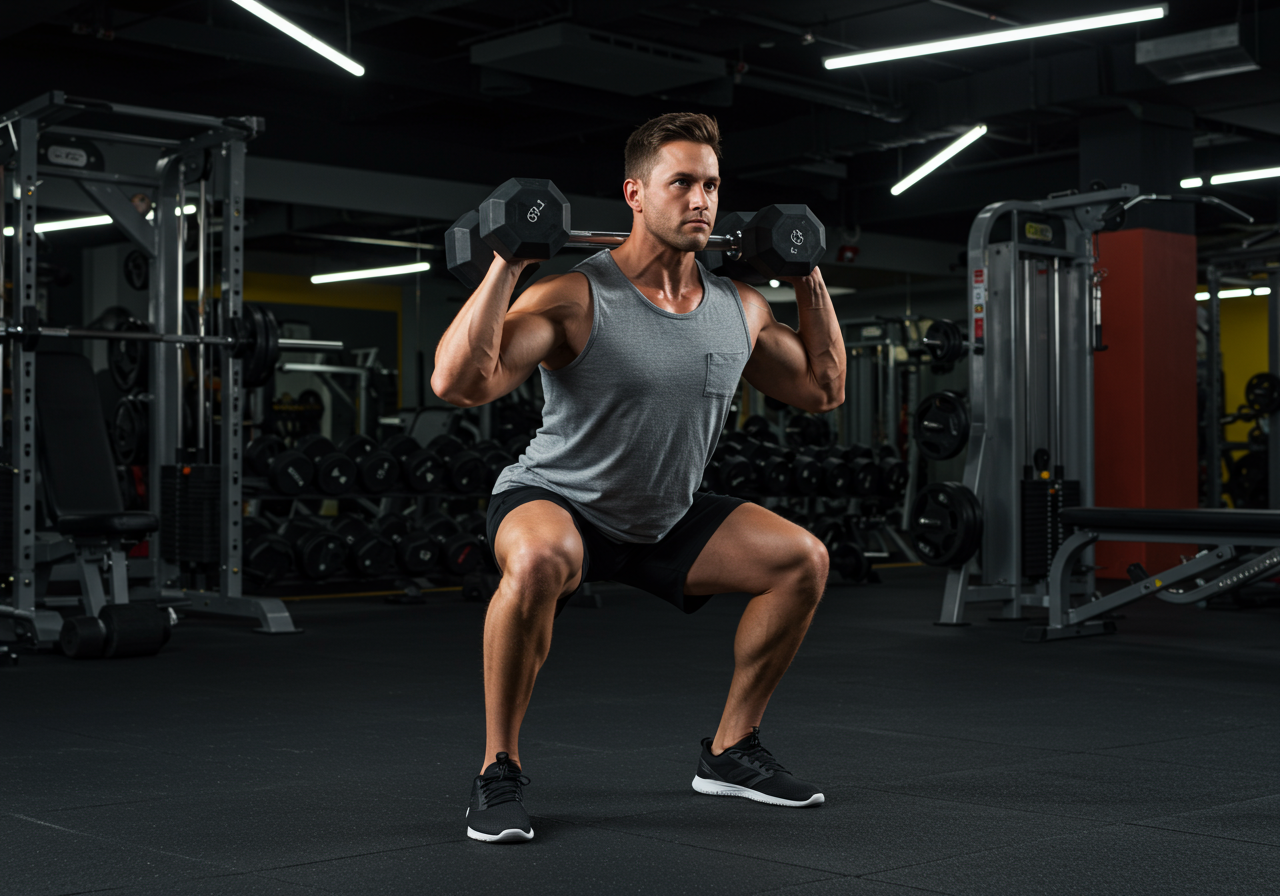
- Hold one dumbbell vertically at chest, elbows down.
- Set feet shoulder-width, toes slightly out.
- Inhale, brace, and lock gaze forward.
- Descend for three seconds to mid-foot balance.
- Pause briefly, drive up, and exhale near lockout.
- Finish tall with glutes squeezed and ribs stacked.
This foundation ties directly to performance. It prepares you for heavier double-dumbbell work later.
- Do not bounce at the bottom. Tissues dislike sudden stretch loads.
- Do not hold your breath for entire sets. Use controlled exhales.
- Stop if sharp knee or back pain appears. Regress and assess.
| Element | Why it matters | Coaching cue |
|---|---|---|
| Brace | Spine stability and power transfer | Ribs down, 360° air |
| Foot pressure | Balance and knee tracking | Grip floor with toes |
| Tempo | Tendon health and control | 3–0–1 speed |
Smart progressions and loading methods that drive steady strength
Progression needs structure. We move from easy positions to demanding patterns without losing form.
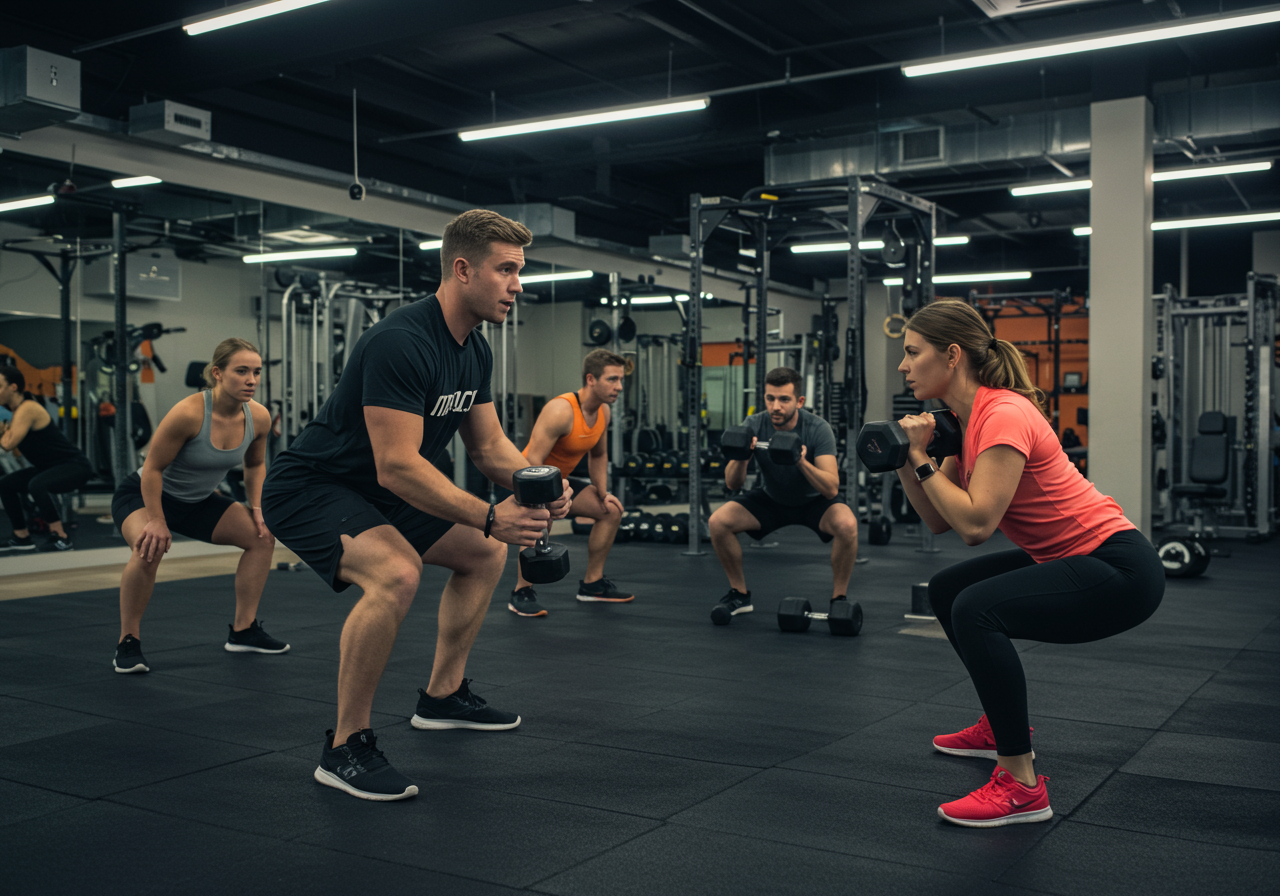
Beginners start with goblet squats. Intermediates use double-dumbbell front squats. Advanced lifters add tempo and pauses.
- Double progression: increase reps first, then weight.
- Tempo manipulation: slow eccentrics build tissue capacity.
- Pauses: one to two seconds at the bottom improves control.
- Range shifts: heel elevation biases quads for variety.
| Level | Exercise | Sets x Reps | Rest | Target RIR |
|---|---|---|---|---|
| Beginner | Goblet Squat | 3 x 8–10 | 90 sec | 2–3 |
| Intermediate | Double-Dumbbell Front Squat | 4 x 6–8 | 120 sec | 1–2 |
| Advanced | Tempo or Pause DB Squat | 5 x 3–5 | 150 sec | 1 |
- Bulgarian split squat: 3 x 8 per leg.
- Dumbbell Romanian deadlift: 3 x 10.
- Standing calf raise with DBs: 3 x 12–15.
My recent leg session lasted 45 minutes. I averaged 121 bpm and peaked at 152 bpm.
I ran 4 x 8 goblet squats at 22.5 kg. Last month I used 17.5 kg.
The same day, I hit 3 x 10 DB RDLs at 30 kg each. I kept two reps in reserve.
Week 1: 3 x 10 at 15 kg. Week 2: 3 x 10 at 17.5 kg.
Week 3: 4 x 8 at 20 kg. Week 4: 4 x 8 at 22.5 kg.
- Elbows drop in front rack. Reduce weight and pause at top.
- Knees cave in the bottom. Use a mini band for awareness.
- Back rounds under load. Shorten depth and work ankle mobility.
Recovery and mobility habits that support consistent squat progress
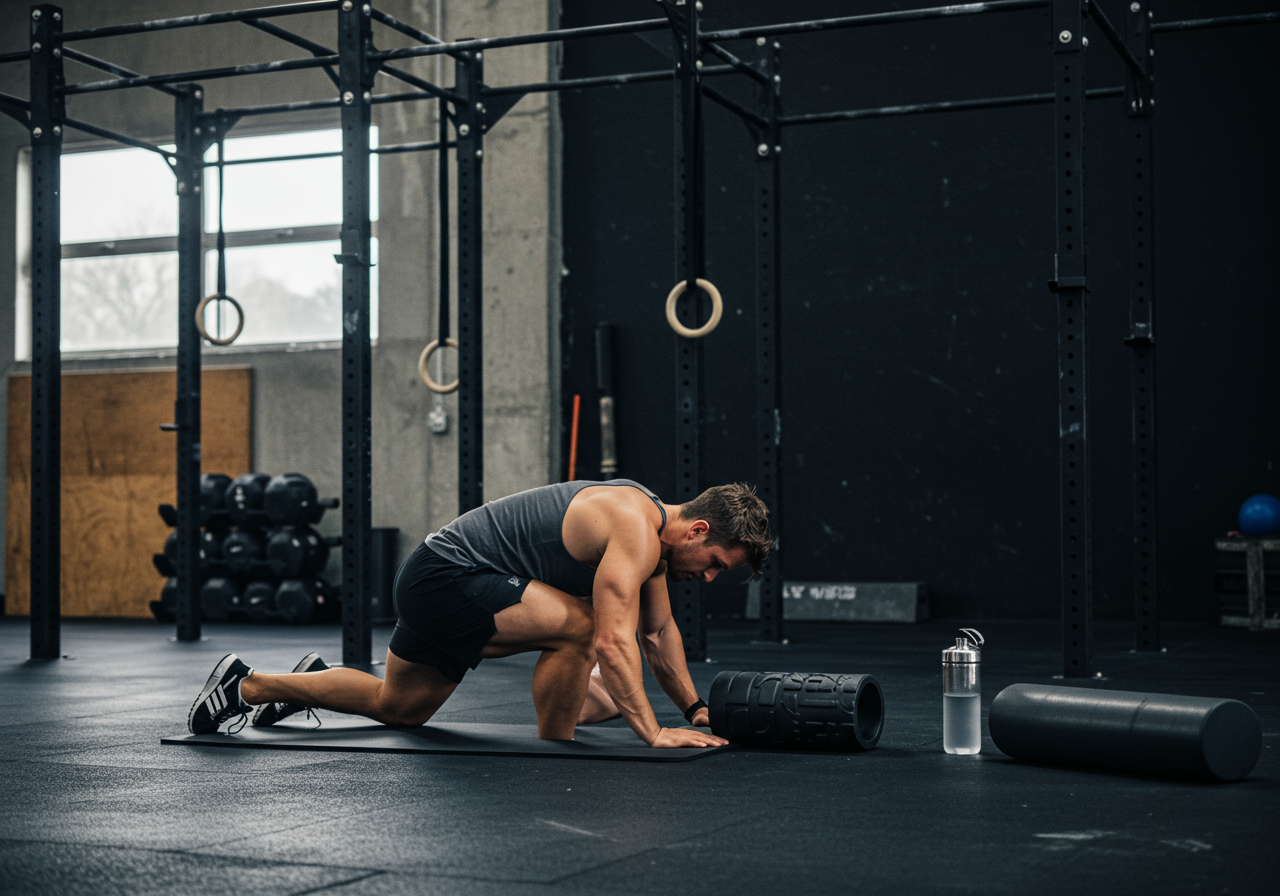
Strong squats need solid ankles and hips. Warm-ups and recovery make strength stick.
- 2 minutes brisk walk or bike.
- 90 seconds calf raises and ankle rocks.
- 90 seconds 90/90 hip switches.
- 2 sets x 10 bodyweight squats, 3–0–1 tempo.
- 2 sets x 8 goblet squat pry with light load.
- Bretzel stretch: 60 seconds per side.
- Quadriceps stretch: 45 seconds per side.
- Box breathing: 2 minutes to lower heart rate.
| Nutrition target | Range | Notes |
|---|---|---|
| Protein | 1.6–2.2 g/kg | Distribute over 3–4 meals. |
| Carbs | 3–5 g/kg on training days | Add 30–60 g pre-lift. |
| Fats | 0.6–1.0 g/kg | Keep digestion comfortable. |
I track intake with MyFitnessPal. It keeps protein consistent when life gets busy.
Sleep drives leg growth for me. Seven and a half hours beats six hours every time.
My Garmin sleep score improved when I lowered late caffeine. DOMS dropped within two weeks.
- Creatine monohydrate: 3–5 g daily.
- Caffeine: 2–3 mg/kg before lifting.
- Electrolytes: add sodium on hot days.
- Performance drops three sessions in a row. Schedule a deload.
- Joint pain lingers longer than 72 hours. Reduce volume by 30%.
- Tendon pain on first reps. Warm up longer and cut load.
Stepwise execution and tracking so progress becomes predictable
This roadmap turns principles into sessions. It includes targets and tracking so you see change.
| Phase | Weeks | Focus | Main Squat | Notes |
|---|---|---|---|---|
| Foundation | 1–2 | Technique and tempo | Goblet 3 x 10 | 3–0–1 tempo, 2–3 RIR |
| Build | 3–5 | Volume and load | DB Front 4 x 8 | Add 2.5 kg weekly if reps hold |
| Peak | 6–7 | Strength emphasis | Pause DB 5 x 5 | 1–2 RIR, longer rests |
| Deload | 8 | Recovery and skill | Goblet 3 x 8 light | 50–60% loads |
- Day 1: Squat focus + posterior chain.
- Day 2: Upper body push and pull.
- Day 3: Squat focus + single-leg work.
- Day 4: Optional Zone 2 cardio, 30–40 minutes.
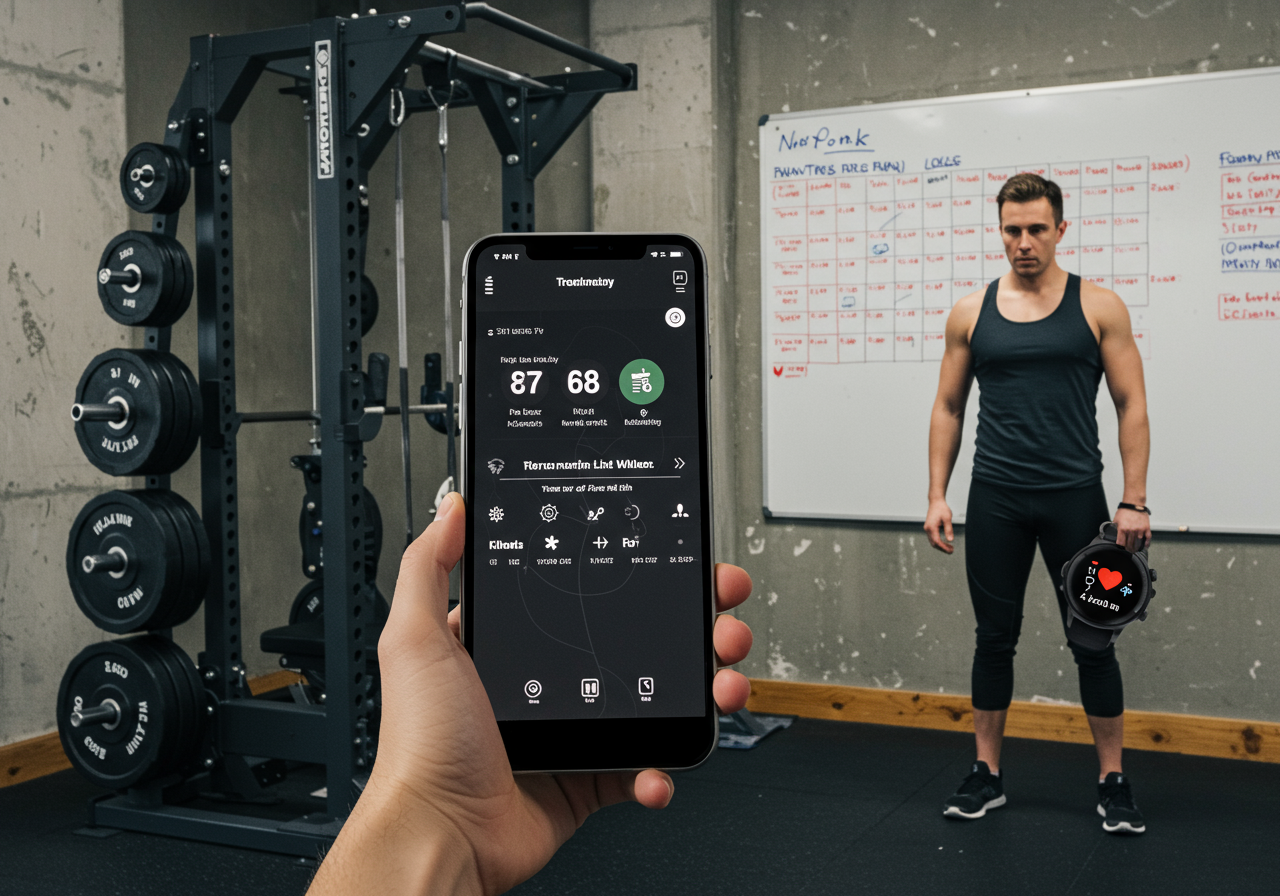
I log sessions in Garmin and Strava. Heart rate confirms recovery between sets.
My average set rest lands near 120 seconds. I resume when heart rate drops below 110 bpm.
- RIR: stop sets with 1–3 reps in reserve.
- Session RPE: aim 7–8 most days.
- Write loads and reps after each set.
| Cardio style | Use case | Observation |
|---|---|---|
| Zone 2 | Recovery days | Better leg freshness next squat day |
| HIIT | Short time windows | Higher fatigue, plan carefully |
- Plateau two weeks: add a set or switch to pauses.
- Motivation dips: shorten sessions to 30 minutes, keep intensity.
- Knee irritation: elevate heels and slow tempo.

Real outcomes, client feedback, and long-term result interpretation
Numbers matter. Stories matter too. These show what consistent dumbbell squats deliver.
- Mia, beginner: goblet squat from 10 kg x 8 to 22.5 kg x 10.
- Mia’s leg circumference increased 2.1 cm at mid-thigh.
- My double-dumbbell front squat moved from 22.5s to 30s for 6s.
- Average weekly steps rose 18%, which improved recovery.
Mia shared this after week six. “Stairs feel easy. My knees feel stable now.”
Jon, remote client, emailed this. “I added 7.5 kg per hand in five weeks.”
| Measure | Start | Week 8 | Change |
|---|---|---|---|
| Goblet Squat 10RM | 12.5 kg | 25 kg | +12.5 kg |
| DB Front Squat 6RM | 20 kg each | 30 kg each | +10 kg each |
| VO2 max estimate | 39 ml/kg/min | 42 ml/kg/min | ~8% increase |
I saw better fat loss using short HIIT blocks than long steady cardio. However, HIIT raised leg fatigue.
I now program Zone 2 on rest days. Strength stays higher across the week.
- Two squat days weekly with clear RIR targets.
- Protein at breakfast and after lifting.
- Write loads immediately after sets.
- I skipped a warm-up once. I strained my calf. I never skip now.
- I chased weight too fast. My form slipped. I reset 10% and rebuilt.
- I under-ate carbs. My sessions dragged. I increased carbs by 60 g pre-lift.
I verify progress with video angles and set notes. I also use heart rate recovery between sets.
These methods remain simple. They work because they are repeatable and measurable.