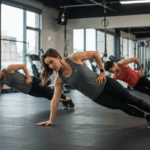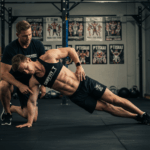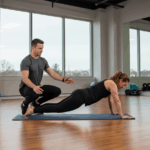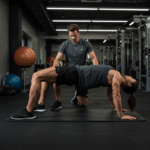
Forearm Plank: Basic Core Stabilization
Core Stability Blueprint: Why the Forearm Plank Anchors Your Training

Why the Forearm Plank Builds Total-Body Stability
The forearm plank teaches your body to resist unwanted motion. That skill protects your spine during life and lifting. I use it as the core anchor in every beginner plan.
The plank targets anti-extension strength. Your abs stop the lower back from arching. Your glutes and lats lock the pelvis and ribs together. Your breathing then stabilizes pressure inside the abdomen.
| Muscle | Primary Role | Coaching Cue |
|---|---|---|
| Rectus abdominis | Stops back arch | Exhale and pull ribs down |
| Obliques | Resists rotation | Keep hips level |
| Glutes | Posterior pelvic tilt | Squeeze butt cheeks lightly |
| Serratus anterior | Scapular stability | Push floor away |
I rebuilt my core after a cycling crash. I programmed planks four days weekly for eight weeks. My low-back tightness dropped, and deadlifts felt steadier.
However, I tracked posture and fatigue daily. I reduced volume if my back arched on video. Data guided the plan, not ego.
Technique You Can Trust: Step-by-Step Plank and Essential Variations

Exact Technique and Core Variations
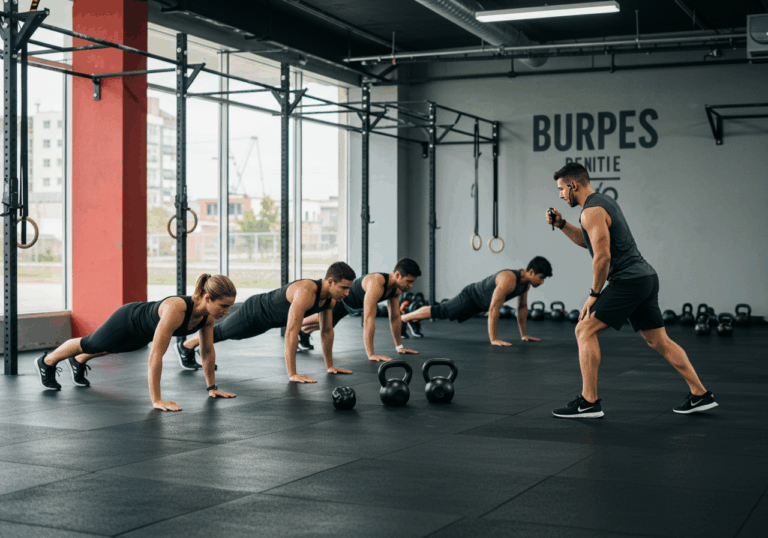
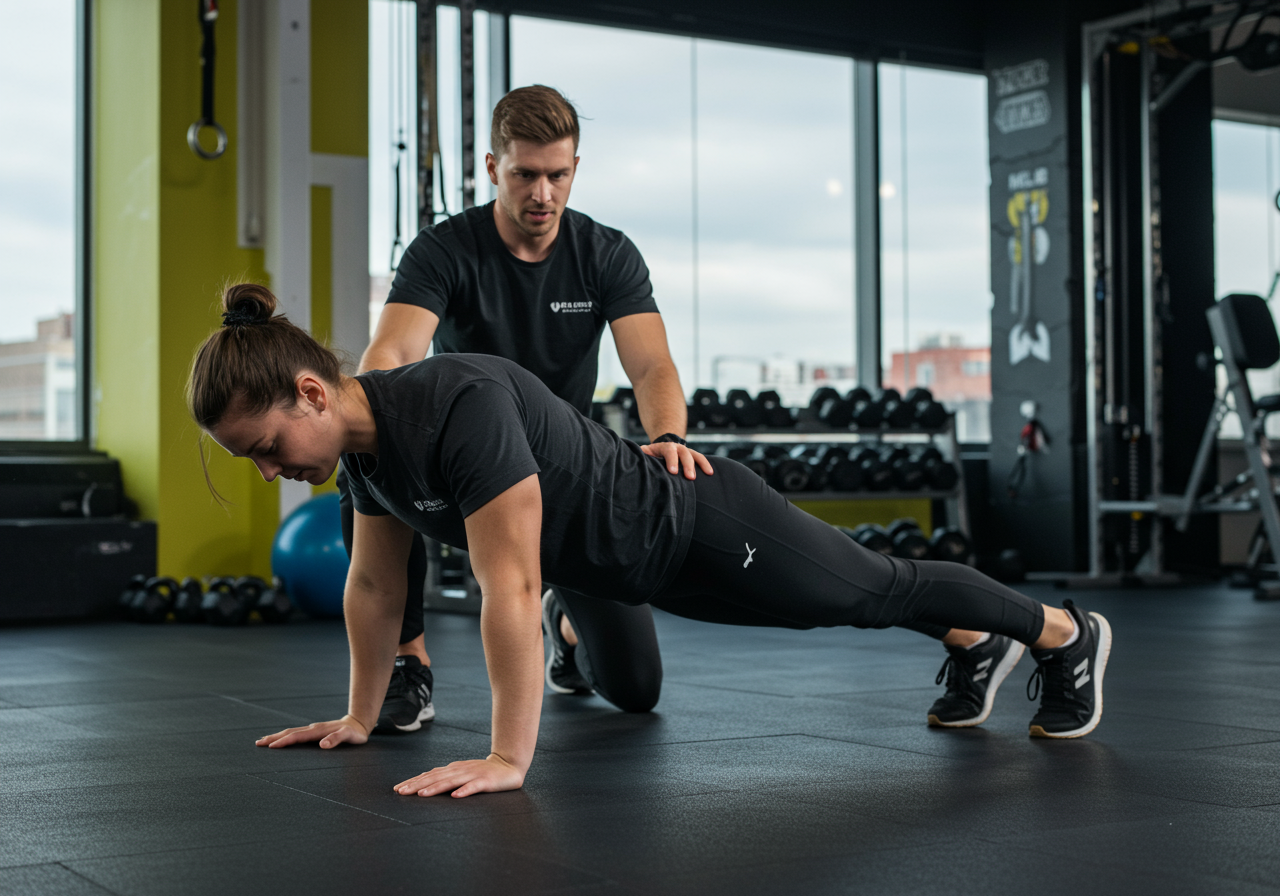
Start on forearms with elbows under shoulders. Set feet hip width. Lengthen your body from heels through crown.
Brace your abs at 6 out of 10 effort. Squeeze glutes gently. Push the floor away to round shoulder blades slightly.
Inhale through the nose. Exhale through the mouth for three seconds. Hold steady between breaths. Keep the head in line.
| Level | Variation | Prescription | Rest | Key Cue |
|---|---|---|---|---|
| Beginner | Knee forearm plank | 5×15–20s | 45–60s | Ribs down, glutes on |
| Beginner | Incline plank on bench | 4×20–30s | 45s | Push floor away |
| Intermediate | Standard forearm plank | 4×30–45s | 60s | Squeeze thighs |
| Intermediate | RKC plank (max tension) | 6×10–20s | 60–90s | Pull elbows to toes |
| Advanced | Stir‑the‑pot (ball) | 3×8–12 circles | 75s | Hips steady |
| Advanced | One‑leg plank | 4×15–25s/side | 60s | No hip drop |
I teach beginners to chase perfect lines first. I cap holds at 45 seconds initially. I add tension before adding time.
However, I change variation if form breaks twice. I protect the spine while we build capacity.
Weekly Plan: Blend Cardio, Strength, and Mobility Around the Plank

Weekly Plan Integrating Cardio, Strength, and Mobility
This plan balances core stability, strength, and cardio. You will train movement skills without frying recovery. Simplicity wins adherence.
| Day | Core Focus | Strength | Cardio | Mobility |
|---|---|---|---|---|
| Mon | Forearm plank 4×30–45s | Goblet squat 4×8, Row 4×10 | Zone 2 walk 25 min | Hip flexor 2x45s |
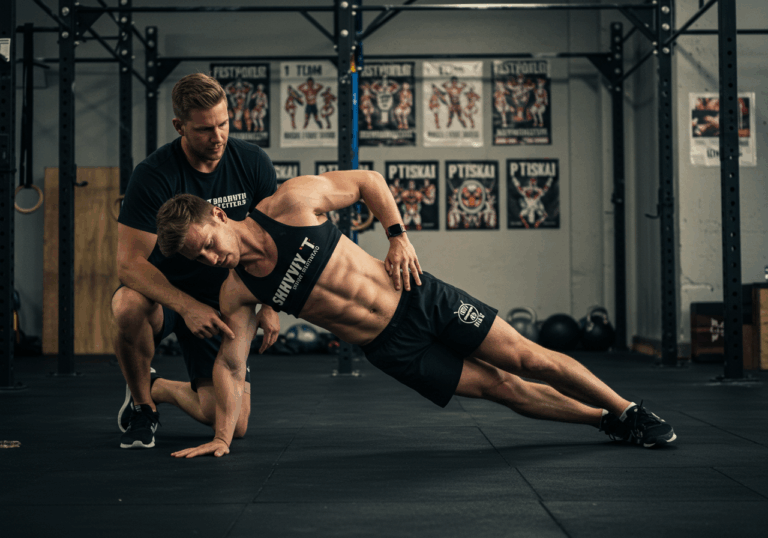
| Tue | Side plank 3x20s/side | DB press 4×8, Hinge 4×8 | Off or easy cycle 20 min | T‑spine openers |
| Wed | RKC plank 5x15s | Split squat 3×10 | HIIT 8×30:30, RPE 8/10 | Calf/hamstring 2x45s |
| Thu | Off-core | Off-lifting | Zone 2 cycle 30–40 min | Breathing drills 5 min |
| Fri | Stir‑the‑pot 3×8/dir | Deadlift 5×5, Pull‑ups 3xAMRAP | Off or walk 20 min | Ankle rocks 2×10 |
| Sat | Standard plank test set | Kettlebell carry 4x40m | Mixed easy run 25 min | Yoga flow 20 min |
| Sun | Off-core | Off-lifting | Walk with hills 30 min | Full-body reset 10 min |
I track heart rate with a Garmin watch. I keep Zone 2 at 65% max heart rate. My average is 128–132 bpm.
For fat loss, short HIIT blocks beat longer steady cardio for me. However, I keep HIIT to once weekly to recover well.
I log endurance sessions on Strava. I note RPE and cadence. Consistent notes helped me fix pacing errors.
Useful tools: Garmin for heart rate, Strava for workout logs.
Four-Week Ramp-Up: From Beginner Holds to High-Tension Mastery

Four-Week Ramp-Up and Load Progression
This progression develops stability without overwhelm. You will increase quality before time. You will reduce rest slowly and safely.
| Week | Plank Work | Goal | Breathing | Notes |
|---|---|---|---|---|
| 1 | 5x20s knee or incline | Neutral spine every set | Nasal inhale, 3s exhale | Stop if back sags |
| 2 | 4×30–35s standard | Even hip level | 2 exhales per hold | Add glute squeeze |
| 3 | 6×15–20s RKC plank | High tension control | Short sharp exhales | Increase rest if shaking |
| 4 | Test: 45–60s standard | No lumbar sag | Steady breath | Deload lifts 20% |
I progressed a client with this ramp. We used phone video weekly. We corrected rib flare quickly and safely.
Proof, Fixes, and Long-Term Core Confidence

Real Outcomes, Fixes, and long-term result interpretation
I validate programs with numbers, not guesses. I track hold times, heart rate, and perceived effort weekly. I also log soreness and sleep.
| Person | Starting Point | 6–8 Week Result | Notes |
|---|---|---|---|
| Me, 38 | Plank 40s, VO2 max 46 | Plank 95s, VO2 max +8% | One HIIT day worked best |
| Client A, 42 | Plank 22s, back pain 5/10 | Plank 70s, pain 1/10 | RKC planks improved bracing |
| Client B, 29 | Runner, poor posture | Cadence steadier, 5k −1:12 | Side planks enhanced control |
Client A said, “My core feels switched on all day.” Client B said, “My shoulders finally relax.” Simple drills changed their weeks.
| Problem | Likely Cause | Fix |
|---|---|---|
| Plateau at 30–40s | Low tension | Add RKC sets 6x15s |
| Back discomfort | Rib flare, weak glutes | Reset stack, squeeze glutes |
| Motivation dips | No feedback loop | Weekly test and chart |
| Overtraining signs | Too many hard days | Deload 30% volume |
Nutrition drives progress. I set protein at 1.6–2.2 g/kg. I aim for 25–35 g per meal.
For beginners, maintenance calories feel best. I adjust ±300 calories based on weekly average weight. I log food in MyFitnessPal.
| Bodyweight | Protein Target | Carbs | Fats |
|---|---|---|---|
| 60 kg | 96–132 g | 3–5 g/kg training days | 0.6–1.0 g/kg |
| 80 kg | 128–176 g | 3–5 g/kg training days | 0.6–1.0 g/kg |
I sleep seven to eight hours. I walk after dinner for ten minutes. These habits improved recovery and heart rate variability.
What failed me before? I skipped warm‑ups and strained a calf. I now do five minutes of breathing and mobility.
Helpful app: MyFitnessPal for macros and consistency reminders.