Glute Bridge: Strengthen Glutes & Hamstrings

Build a focused lower-body engine with the glute bridge
The glute bridge anchors this complete strength plan. It targets glutes and hamstrings first. It protects knees and backs by building posterior strength. It scales from bodyweight to heavy barbell hip thrusts. It also teaches neutral spine and bracing.
- Prioritize hip extension. Drive through heels. Keep ribs down.
- Use progressive overload. Increase load, reps, tempo, or range.
- Train two to three glute bridge patterns weekly.
- Pair with hamstring hinges and abduction movements.
- Support with Zone 2 cardio for recovery capacity.
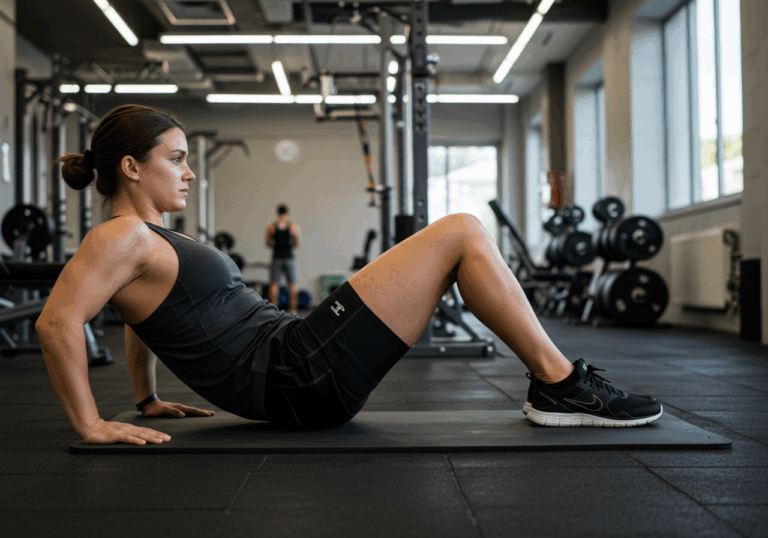
My coaching goal keeps the setup repeatable. I cue a posterior pelvic tilt first. I then coach a stacked ribcage. I hold a brief isometric squeeze at lockout. I never allow lumbar arching.
- Perform 3×12 bodyweight glute bridges. Pause one second at top.
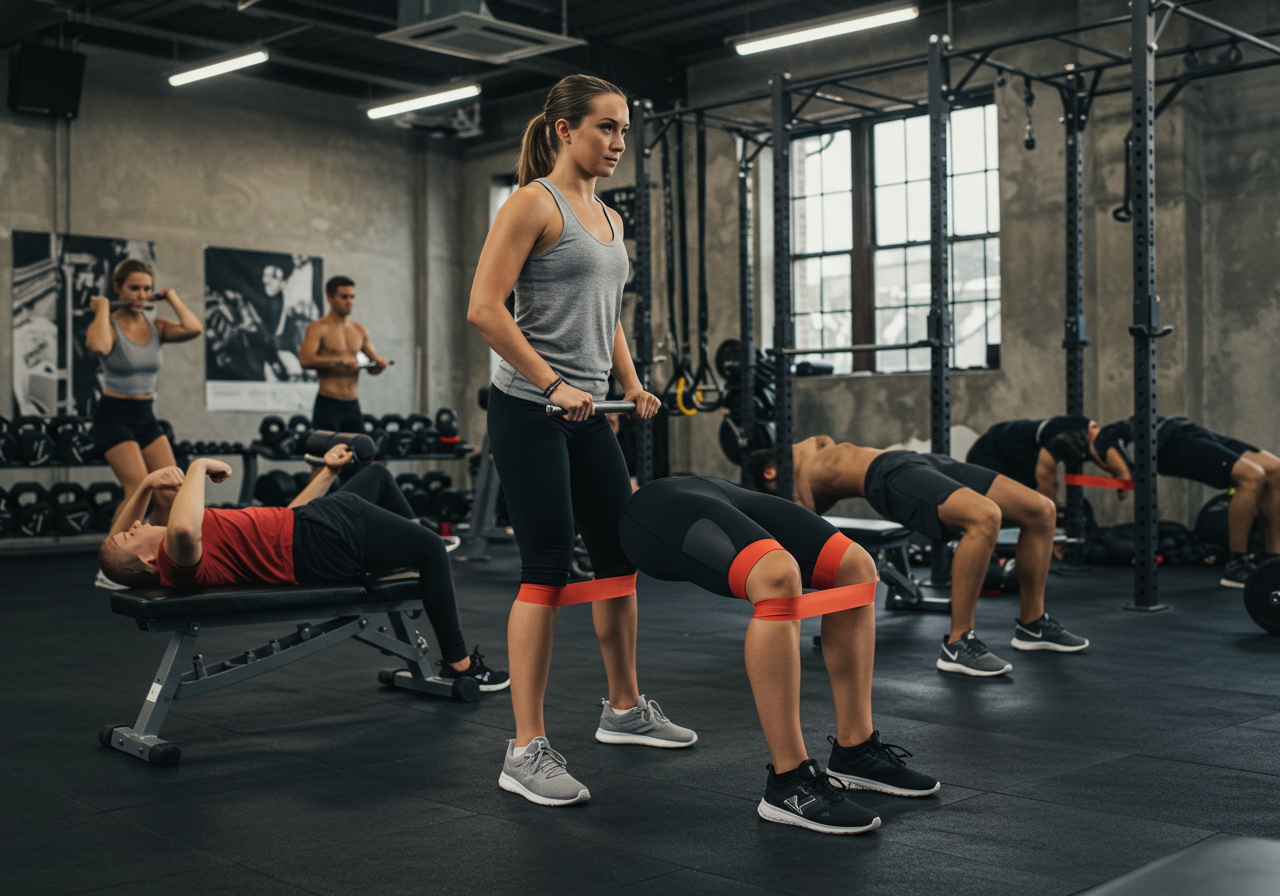
- Add a mini-band above knees. Keep constant outward tension.
- Finish with 2×20 frog pumps for a fast pump.
Total time: 12 minutes. Rest 45 seconds between sets.
| Movement | Purpose | Cues |
|---|---|---|
| Bodyweight Glute Bridge | Pattern learning, activation | Tuck pelvis, ribs down, drive heels |
| Banded Bridge | Glute medius support | Push knees out, maintain foot tripod |
| Barbell Hip Thrust | Max strength, hypertrophy | Chin tucked, shins vertical, pause at top |
My baseline session lasts 45 minutes. I track rest with a timer. I keep RPE near eight on final sets. I use the Strong app for load logs.

Advance from foundations to powerful hip thrusting
Progressions guide safe strength increases. They also keep training interesting. I use clear steps for each level. I set volume and tempo targets. I finish with a high-rep finisher for blood flow.
| Level | Exercise | Sets x Reps | Tempo | Rest | Target RPE |
|---|---|---|---|---|---|
| Beginner | Bodyweight Bridge + Band | 3-4 x 10-15 | 2-1-2 | 60-75s | 6-7 |
| Intermediate | Barbell Hip Thrust | 4 x 6-10 | 2-2-1 | 90s | 7-8 |
| Advanced | Single-Leg Bridge or Deficit Thrust | 5 x 5-8 | 3-1-1 | 120s | 8-9 |
Accessory lifts stabilize results. I program RDLs, hamstring curls, and abductions. I add split squats for single-leg balance. I place core anti-extension after thrust work.
| Accessory | Sets x Reps | Notes |
|---|---|---|
| Romanian Deadlift | 3 x 6-8 | Hinge; stretch hamstrings |
| Seated Leg Curl | 3 x 10-15 | Squeeze peak contraction |
| Cable Abduction | 2-3 x 15-20 | Light burn, slow tempo |
| Dead Bug | 2-3 x 8/side | Ribs down, exhale hard |
- Hip Thrust: 4 x 8, RPE 8
- RDL: 3 x 6-8, RPE 7
- Split Squat: 3 x 10/side, RPE 7
- Leg Curl: 3 x 12-15, RPE 8
- Frog Pumps: 2 x 25, RPE 9
Rest 90 seconds between heavy sets. Rest 60 seconds on accessories.

Blend hip strength with cardio capacity and mobility
An integrated week builds resilient performance. It improves recovery and work capacity. It keeps fat loss moving. It protects joints and tendons. It prevents boredom.
| Day | Focus | Details |
|---|---|---|
| Mon | Glute Bridge Strength A | Hip thrust 4×8, RDL 3×6-8, curls 3×12-15 |
| Tue | Zone 2 Cardio | 30-40 min at 60-70% HRmax; conversational pace |
| Wed | Mobility + Core | Hip flexor openers, adductor rocks, dead bugs |
| Thu | Glute Bridge Strength B | Single-leg bridge 5×6, split squats, abductions |
| Fri | Interval Cardio | 6×1 min at 85-92% HRmax; 2 min easy |
| Sat | Optional Full Body | Rows, pushups, light thrusts, carries |
| Sun | Rest + Walk | 20-30 min easy walk, breathing drills |
I log cardio with Strava. I monitor heart rate with Garmin. These tools keep the aerobic work honest. They also highlight recovery trends.
- 90/90 breathing: 1 minute
- Glute bridge hold: 2 x 20 seconds
- Mini-band lateral steps: 2 x 10/side
- Hip hinge drill with dowel: 10 reps
| Nutrition target | Daily Range | Notes |
|---|---|---|
| Calories | Bodyweight x 12-14 | Cut for fat loss at lower end |
| Protein | 1.6-2.2 g/kg | Spread over 3-4 meals |
| Carbs | 3-4 g/kg on lift days | Prioritize pre-workout fuel |
| Fats | 0.8-1.0 g/kg | Balance hormones |
I track macros with MyFitnessPal. I use creatine monohydrate at 3-5 g daily. I take whey post-lift. I aim for seven to eight hours of sleep.

Run phased training with measurable checkpoints
Clear phases prevent guesswork. They support steady adaptation. They also make progress feel rewarding. We track strength, volume, and heart rate trends. We keep small weekly wins visible.
| Weeks | Focus | Hip Thrust Target | Cardio Goal | Notes |
|---|---|---|---|---|
| 1-2 | Technique and base | 3×12 BW + band; RPE 6-7 | 2×30 min Z2, HR 120-135 | Learn cues, avoid arching |
| 3-4 | Load entry | 4×8 at 40-60% bodyweight | 1x Z2 + 1x intervals | Add one-second pauses |
| 5-6 | Strength push | 5×5 at 70-80% 5RM | Maintain Z2; short HIIT | Deload if joints ache |
My personal six-week block averaged 45-minute lifts. My Garmin logged 36 minutes Zone 2 twice weekly. My average HR stayed at 128 bpm. I kept HIIT under 12 minutes to preserve legs.
- Strong app for sets, reps, and RPE.
- Garmin for HR zones and sleep trends.
- Strava for route and pacing on cardio.
- MyFitnessPal for protein and calories.
| Metric | Start | Week 6 |
|---|---|---|
| Hip Thrust 5RM | 80 kg | 104 kg |
| VO2 max (Garmin) | 42 ml/kg/min | 45 ml/kg/min |
| Waist at navel | 88 cm | 85 cm |

From data to daily practice: long-term result interpretation
Real outcomes prove the system. They show what to expect. They also reveal pitfalls. They highlight which levers matter most. They refine our approach for the long haul.
- “I added 35 kg to my hip thrust in seven weeks.” — Sam, 39
- “My knee pain vanished after three weeks of bridges.” — Priya, 31
| Measure | Baseline | Week 8 | Change |
|---|---|---|---|
| Hip Thrust 3RM | 100 kg | 130 kg | +30% |
| 5K Time | 28:30 | 26:50 | −6.2% |
| VO2 max | 40 | 43 | +7.5% |
- Insert a deload week at 60-70% load.
- Swap to paused thrusts for two weeks.
- Add one extra Zone 2 session.
- Increase protein by 20 g daily.
| Issue | Cause | Fix |
|---|---|---|
| Lower back soreness | Rib flare, overextension | Tuck pelvis, reduce ROM, add core work |
| Hamstring cramps | Heels too far, dehydration | Bring heels closer, hydrate, add sodium |
| Knee cave | Weak abductors | Banded abductions, cue knees out |
| Motivation dip | No feedback loop | Record PRs, set mini-goals, change finisher |
HIIT reduced fat faster for advanced clients. However, Zone 2 preserved leg freshness better for strength gains. My fat loss moved faster with a Friday interval block.
| Approach | Fat Loss | Leg Recovery | Best Use |
|---|---|---|---|
| HIIT | Faster initially | Can reduce if excessive | Short cuts, time limited |
| Zone 2 | Steady and sustainable | Usually excellent | Base building, recovery |
Sustainability still wins. Keep two thrust sessions weekly. Keep one to two cardio sessions. Maintain protein and sleep consistency. Cycle intensity every fourth week.