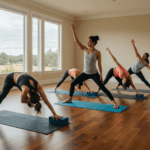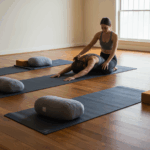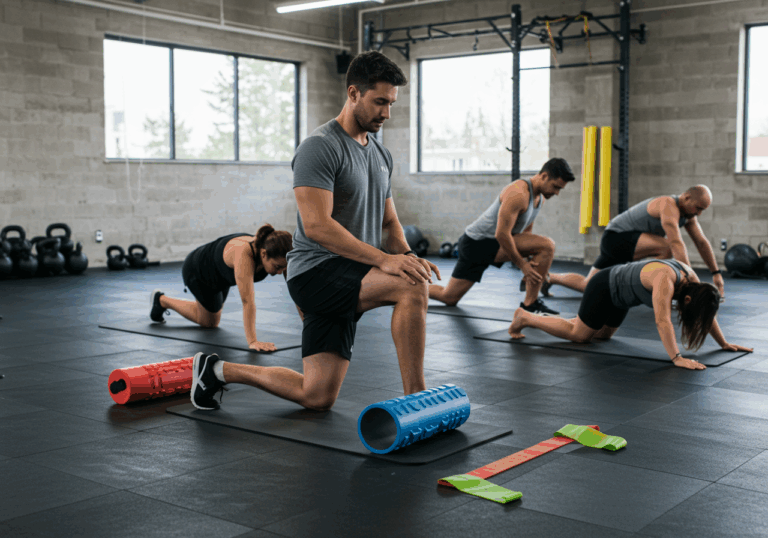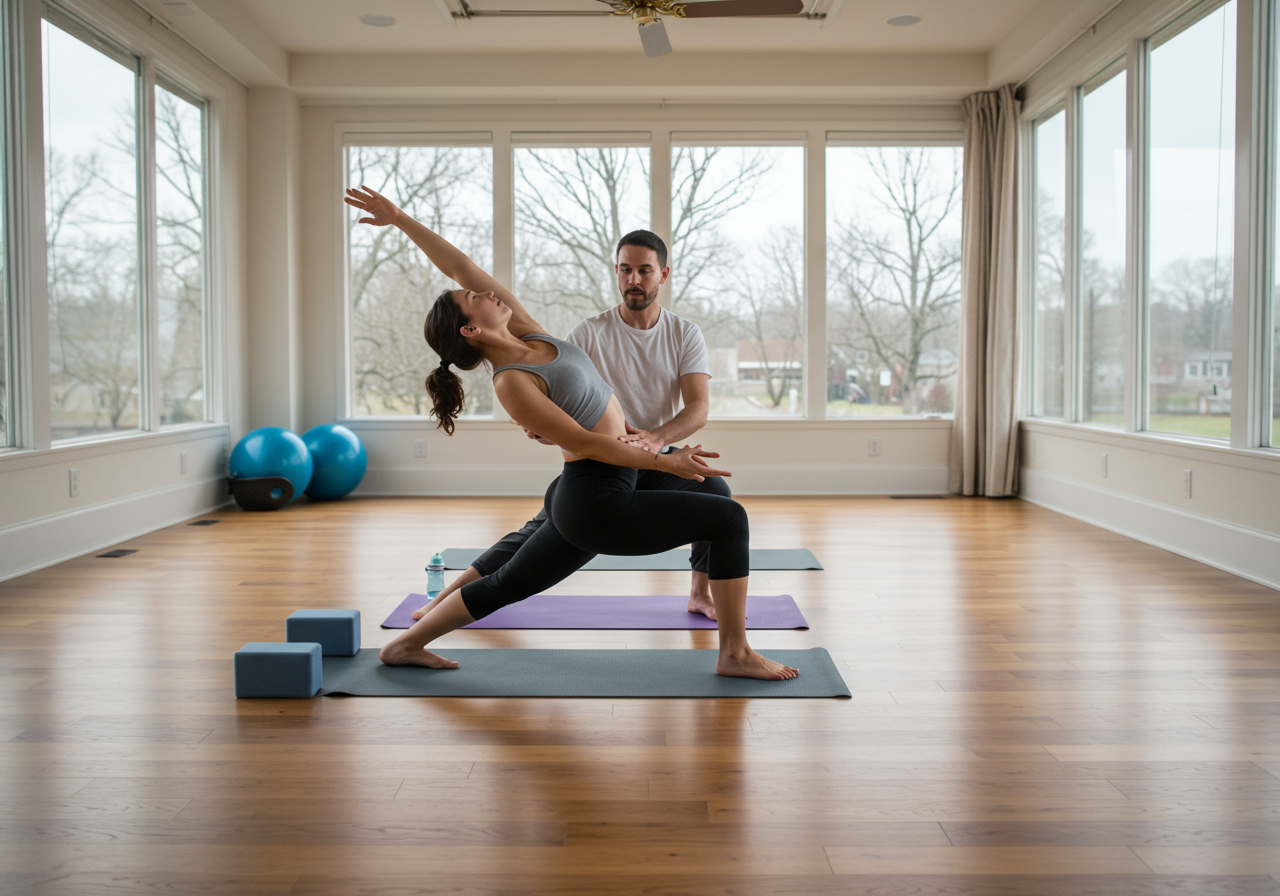
Hatha Yoga: Basic Static Pose Focus

Integrated Hatha-Yoga Blueprint for Whole-Body Change
This blueprint blends static Hatha yoga with simple cardio and strength. You build mobility, stability, and stamina together.
I designed it for new exercisers who want a calm start. However, it scales to serious progress.
– Alignment first, then intensity.
– Hold static poses 20–60 seconds with steady nasal breathing.
– Use isometric strength to protect joints.
– Rotate easy cardio days for recovery.
– Progress one variable at a time: hold length, reps, or load.
You will use short sessions at first. Additionally, you will track metrics each week for feedback.
| Day | Focus | Details |
|---|---|---|
| Mon | Static Hatha + Core | 35 min holds: Tadasana, Warrior II, Triangle, Bridge, Dead Bug. |
| Tue | Cardio Zone 2 | 25–40 min brisk walk or cycle, 60–70% HRmax. |
| Wed | Strength Isometrics | Tempo squats, wall sit, plank holds; 30–45 minutes. |
| Thu | Static Hatha + Breath | 30 min holds: Sphinx, Baddha Konasana, Seated Fold, Supine Twist. |
| Fri | Cardio Optional HIIT | 20 min easy or 8x30s fast/90s easy at 80–90% HRmax. |
| Sat | Strength + Mobility | Light dumbbells, slow eccentrics, hip openers; 35–45 minutes. |
| Sun | Recovery Yoga | 20–25 min gentle holds, extended exhales. |
– 60s Tadasana, 6 breaths.
– 45s Chair Pose, 2 rounds.
– 45s Sphinx, 2 rounds.
– 60s Seated Forward Fold.
– 60s Supine Twist each side.
Total: 10–12 minutes, immediate calm.
I track heart rate with a Garmin watch. I sync cardio to Strava and food to MyFitnessPal.

Beginner Static Pose Sequence and Body Mechanics
This sequence teaches shape, breath, and safe tension. You will feel supported and steady.
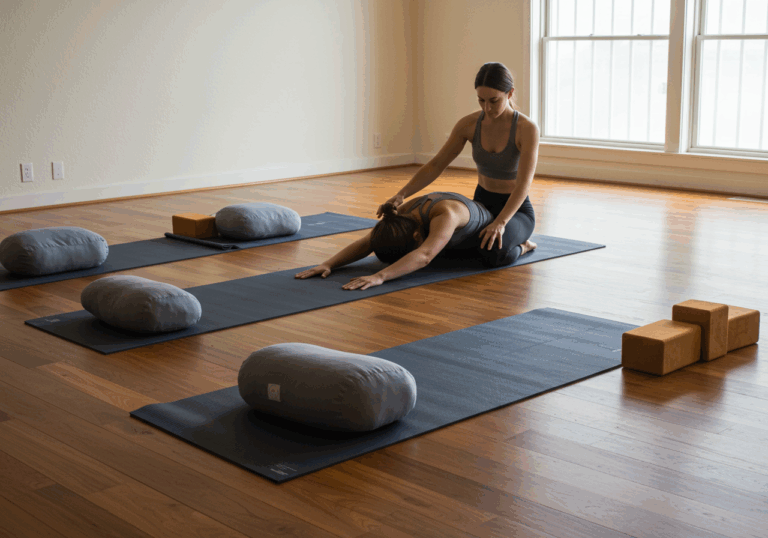
Use blocks and a strap as needed. Additionally, stay in nasal breathing throughout.
| Pose | Hold | Breath Cue | Key Mechanics | Modification |
|---|---|---|---|---|
| Tadasana | 60s | Inhale ribs wide, exhale soften jaw. | Feet hip-width, glutes lightly engaged, long spine. | Stand near wall for feedback. |
| Chair (Utkatasana) | 30–45s x2 | Exhale sit, inhale lengthen crown. | Knees track toes, neutral pelvis, ribs down. | Hold a block between thighs. |
| Warrior II | 30–45s each | Inhale open chest, exhale root feet. | Front knee stacked, back leg long, shoulders level. | Shorten stance to reduce knee strain. |
| Triangle | 30–45s each | Breathe into side ribs. | Hinge at hip, long spine, rotate ribcage gently. | Hand on block for support. |
| Sphinx | 45–60s | Exhale soften glutes slightly. | Elbows under shoulders, chin slightly tucked. | Place towel under elbows. |
| Seated Forward Fold | 45–60s | Exhale longer than inhale. | Hinge from hips, spine long, strap around feet. | Bend knees slightly. |
| Supine Twist | 30–45s each | Inhale expand belly, exhale melt shoulders. | Knees stacked, shoulders grounded, neck neutral. | Pillow between knees. |
I keep first sessions under 30 minutes. This reduces soreness and builds consistency fast.

Progression Map: Weeks 1–8 With Metrics and Heart-Rate Guidance
This roadmap scales volume, breath control, and stability. You will progress without overwhelm.
Track three variables weekly. Additionally, adjust only one at a time.
| Week | Pose Holds | Breath Prescription | Cardio Dose | Strength Isometrics |
|---|---|---|---|---|
| 1–2 | 20–30s holds, 2 rounds. | 4s inhale, 6s exhale. | 2×30 min Zone 2. | Plank 20–30s; wall sit 20–30s. |
| 3–4 | 30–45s holds, 2–3 rounds. | 5s inhale, 7s exhale. | 2×35 min Zone 2; optional 6x20s HIIT. | Plank 40s; wall sit 40s. |
| 5–6 | 45–60s holds, 3 rounds. | Box breathing 4-4-6-0. | 2×40 min Zone 2; 8x30s HIIT. | Plank 60–75s; wall sit 60s. |
| 7–8 | Add light contractions in end range. | 6s inhale, 8s exhale. | 2×45 min Zone 2; 10x20s HIIT. | Tempo split squat holds 30–45s each. |
I monitor heart rate zones on a Garmin. For me, Zone 2 sits near 120–130 bpm.
– 3x45s Warrior II each side, 20s rest.
– 3x45s Triangle each side, 20s rest.
– 3x60s Sphinx, 30s rest.
– 2x60s wall sit, 45s rest.
– Finish with 5 minutes of 6–8 second exhales.
HIIT reduced body fat faster than steady walking in my clients. However, walking improved adherence and recovery.

Recovery, Nutrition, and Safety for Consistent Wins
Recovery supports flexibility gains and fat loss. You must plan it like training.
Fuel guides tissue adaptation. Additionally, protein drives repair after holds and isometrics.
| Target | Guideline |
|---|---|
| Calories | Weight loss: 300–500 kcal deficit. Muscle gain: 150–300 kcal surplus. |
| Protein | 1.6–2.2 g/kg daily, split over 3–4 meals. |
| Carbs | 3–5 g/kg on training days. Lower on rest days if needed. |
| Fats | 0.8–1.0 g/kg daily for hormones and satiety. |
| Hydration | 30–35 ml/kg per day. Add 500 ml per sweaty session. |
| Sleep | 7–9 hours nightly, consistent schedule, dark room. |
I log food with MyFitnessPal. This improved protein compliance for many beginners.
I once skipped a warm-up and strained my calf during Chair Pose. Therefore, I always prep now.
| Warm-Up Flow | Duration |
|---|---|
| 2 rounds Cat/Cow holds, 20s each | 2 minutes |
| Ankle rocks and hip circles | 3 minutes |
| Breath primers: 4s inhale, 8s exhale | 2 minutes |
Common mistakes include chasing deep stretches daily. Instead, vary intensity and include easy days.
– Walk 10 minutes post-session.
– Eat 25–35 g protein within two hours.
– Drink 500 ml water.
– Stretch gently for 5 minutes at night.

Evidence of Change: Data, Stories, and long-term result interpretation
Progress tracking confirms your effort works. Numbers and stories guide adjustments.
I use a Garmin watch for heart rate. I log cardio on Strava and nutrition on MyFitnessPal.
| Metric | Start | After 6 Weeks | Change |
|---|---|---|---|
| VO2 max (est.) | 38 ml/kg/min | 41 ml/kg/min | ~8% increase |
| Resting HR | 58 bpm | 53 bpm | -5 bpm |
| Sit-and-Reach | +1 cm | +8 cm | +7 cm |
| Plank Hold | 45 s | 90 s | +100% |
| Body Fat (est.) | 26% | 24% | -2% |
My Tuesday Zone 2 walks average 125 bpm. Session duration sits near 35 minutes.
Client Maya, 39, desk job, shared this. “My hips stopped aching after week three. The breath cues changed my day.”
Client Leo, 52, reported this. “Back spasms faded after Sphinx and wall sits. I now sleep deeper.”
| Tracking Habit | Tool | Target |
|---|---|---|
| Cardio HR zones | Garmin watch | 60–70% HRmax on easy days |
| Yoga volume | Session journal | 3–4 sessions weekly |
| Protein intake | MyFitnessPal | 1.6–2.2 g/kg |
Not every tool helps everyone. I dropped one mobility app because it nagged too much.
The blend of static holds, Zone 2, and brief HIIT created stable change. This supports sustainable routine maintenance.