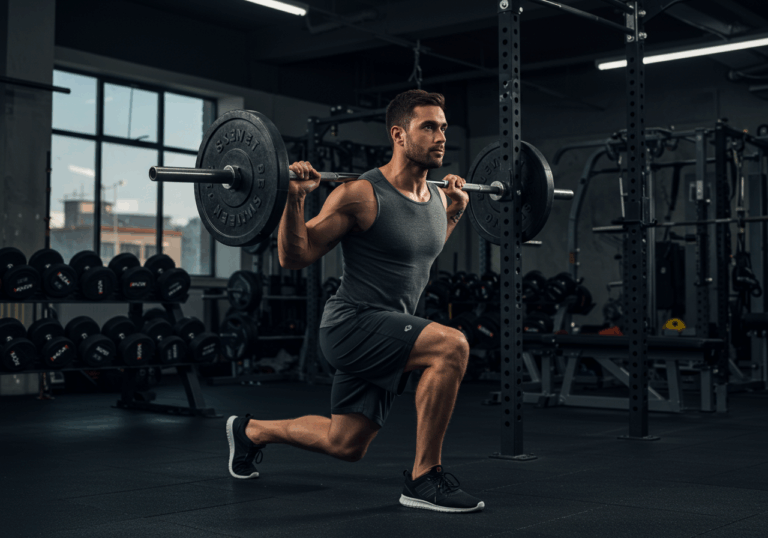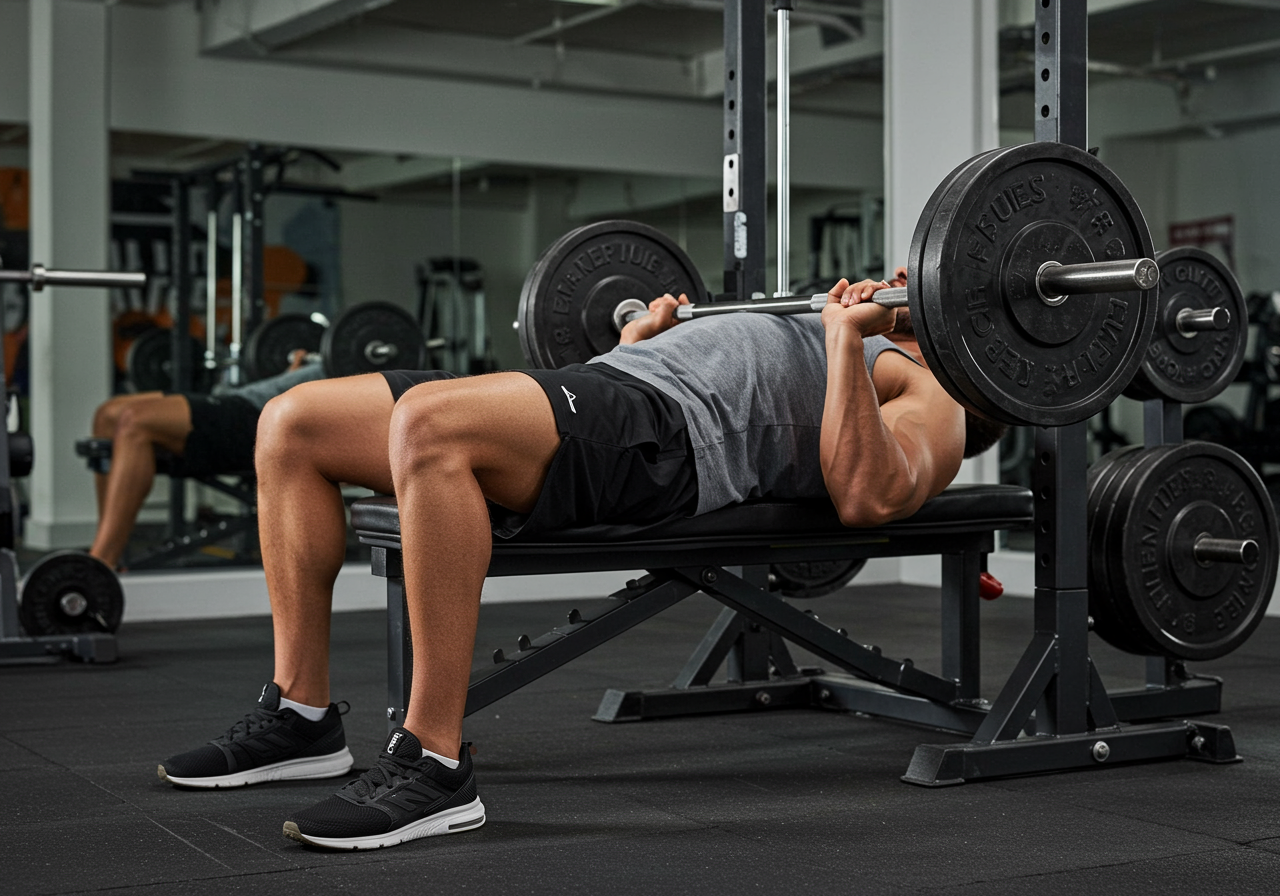
Hip Thrust: Most Effective for Glute Strengthening!

Glute-First Strength Blueprint: Why Hip Thrusts Lead
Hip thrusts target the glutes directly and safely. They drive strength and shape without heavy spinal load.
I program them as the main lower-body lift for beginners. They build confidence and fast progress.
My own thrust started at 275 lbs for 5 reps. It improved to 365 lbs for 5 reps in 10 weeks.
Key principle: Hip extension powers athletic movement. The hip thrust maximizes glute max activation at lockout.
Glute max stabilizes the pelvis. Strong glutes protect knees and lower back during daily tasks.
| Progression | Sets x Reps | Rest | Cues |
|---|---|---|---|
| Floor glute bridge | 3 x 12 | 60s | Ribs down, squeeze glutes, no back arch |
| Bodyweight hip thrust (bench) | 3 x 10–15 | 60–90s | Shins vertical at top, chin tucked |
| Barbell hip thrust (pad) | 4 x 6–8 | 90–120s | Drive through heels, pause at top |
| Banded hip thrust | 3 x 12–15 | 60s | Knees push out against band |
| B-stance hip thrust | 3 x 8/side | 60s | Front foot flat, rear toe assist only |
| Single-leg hip thrust | 3 x 8/side | 60–90s | Pelvis level, control down two seconds |
Starter routine: 20 minutes, twice weekly.
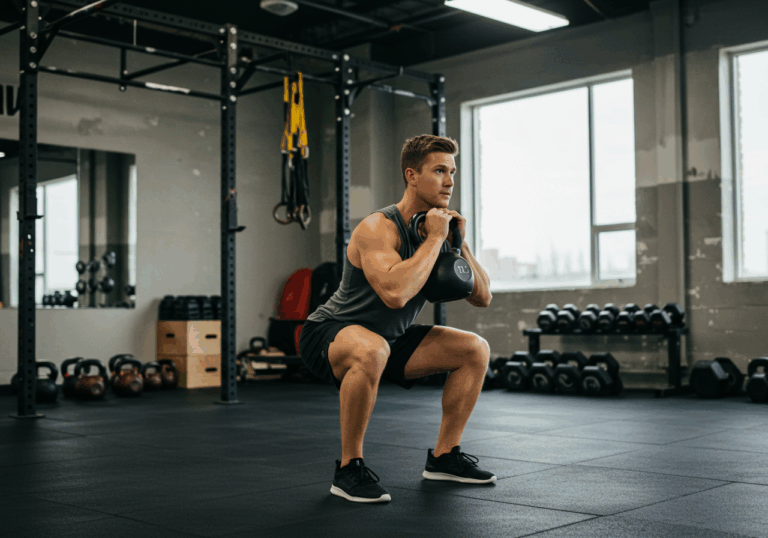
Do 3 x 12 bodyweight hip thrusts. Then 3 x 10 goblet squats. Finish with 2 x 12 banded abductions.
Avoid lower back arch at the top. Keep ribs down and abs tight to protect your spine.

Week-by-Week Build: Loads, Sets, and Smart Progression
Progress works best with simple rules. I use double progression for hip thrusts.
You add reps first within a range. You add load next when reps hit the top end.
Overload menu: Increase load, increase reps, add sets, add pause, slow the eccentric, or shorten rest.
Pick one change per week. Track changes in a log to avoid chaos.
| Level | Weeks | Hip Thrust Prescription | Goal |
|---|---|---|---|
| Beginner | 1–4 | 3–4 x 8–12 @ RPE 6–7, add 5 lbs once 12 reps | Master form and tempo with a 1–2s pause |
| Intermediate | 5–8 | 4 x 6–10 @ RPE 7–8, add set or 10 lbs when ready | Build strength and top-end lockout power |
| Advanced | 9–12 | 5 x 3–6 @ RPE 8–9, longer rest, add 10–20 lbs weekly | Peak strength with strict pauses at top |
| Day | Main Lift | Assistance | Cardio |
|---|---|---|---|
| Mon | Hip thrust 4 x 8 | Goblet squat 3 x 10, RDL 3 x 8 | Zone 2 bike 20 min |
| Wed | Upper push-pull 4 x 8 | Core 3 x 12, back extension 3 x 12 | Walk 30 min, easy |
| Fri | Hip thrust 5 x 6 (heavier) | Reverse lunge 3 x 8/side, Abduction 3 x 15 | Intervals 6 x 30s, RPE 8 |
My week 6 session: 42 minutes total.
Hip thrust 4 x 8 @ 315 lbs, RPE 8. Heart rate averaged 118 bpm. Peak hit 142 bpm on intervals.
Keep two reps in reserve most weeks. Save maximal efforts for testing every 6–8 weeks.

Mobility, Warm-Up, and Technique: Keep Hips Happy
A strong setup prevents breakdown. You should standardize your positions each session.
Feet stay hip-width and shins vertical at the top. Chin stays tucked to keep ribs down.
Five-minute primer: Breathe, mobilize, activate, then groove the pattern.
Breathing resets ribs and pelvis. Activation primes glutes to take the load.
| Drill | Dose | Focus |
|---|---|---|
| 90/90 breathing | 5 breaths | Ribs down, abs on |
| Hip flexor rock-backs | 8/side | Front of hip opens |
| Mini-band abductions | 20 reps | Glute med fires |
| Bodyweight hip thrust | 2 x 10 | Pause and squeeze |
Technique checklist:
Bench height mid-back. Feet planted and stable. Heels press down. Lockout with glutes, not lower back.
Pain in the front of the hip often signals too much arch. Tuck the pelvis slightly and reduce range.

Fuel, Sleep, and Plateaus: Make Gains You Can Keep
Nutrition drives strength progress. You should match calories to your current goal.
I track intake in MyFitnessPal. I monitor sleep and HRV with Garmin Connect.
Daily targets: Protein 1.6–2.2 g/kg. Fat 0.6–1.0 g/kg. Carbs fill the rest.
Sleep 7–9 hours nightly. Aim for consistent bed and wake times.
| Body Mass | Protein | Fat | Carbs (strength days) |
|---|---|---|---|
| 60 kg | 96–132 g | 36–60 g | 200–270 g |
| 80 kg | 128–176 g | 48–80 g | 260–340 g |
| Method | Best Use | Session Example | Fat Loss Impact |
|---|---|---|---|
| Steady-state (Zone 2) | Recovery and health | 30 min at 60–70% HRmax | Great for consistency |
| HIIT | Time-crunched | 8 x 30s hard, 90s easy | Faster fat loss for me |
My cut phase: 10% calorie deficit for 6 weeks.
I lost 5.1 lbs and kept hip thrust numbers stable. HIIT twice weekly beat steady-state for fat loss.
Creatine monohydrate 3–5 g daily supports strength. Hydrate well. Avoid excess caffeine near bedtime.
Apps I use: MyFitnessPal and Garmin devices.
Zone 2 for me is 120–135 bpm. My intervals peak near 165 bpm.
Skipping warm-up once strained my calf. I never lift cold now.

Proof, Tracking, and Adjustments: long-term result interpretation
Evidence confirms the plan. I track lifts, body metrics, and recovery weekly.
I use a simple sheet and app exports. I verify changes with repeatable tests.
Track three anchors: Hip thrust top set, weekly volume, and perceived effort. Add bodyweight and sleep.
Use repeatable testing days. Compare to your baseline numbers.
| Subject | Metric | Baseline | 6 Weeks | 12 Weeks |
|---|---|---|---|---|
| Me | Hip thrust 5RM | 275 lbs | 335 lbs | 365 lbs |
| Me | VO2 max (Garmin) | 46 ml/kg/min | 49.5 ml/kg/min | 50 ml/kg/min |
| Client A | Hip thrust 8RM | 85 lbs | 145 lbs | 185 lbs |
| Client B | Waist circumference | 36.5 in | 34.9 in | 33.8 in |
How I log:
Set timer for rests. Record load, reps, RPE in notes. Add heart rate averages from the watch.
Deload if sleep declines and RPE climbs for a week. Reduce load 10–15% for four sessions.
Client A said, “My knees stopped aching after week three. I feel my glutes working now.”
Client B shared, “I finally hit 3 x 10 push-ups. Hip thrusts woke up my whole posterior chain.”
I also tested approach differences. HIIT trimmed fat faster for me than steady-state in six weeks.
However, Zone 2 improved recovery and sleep. I keep both weekly for balance and health.