⚠️ Fitness Disclaimer: The information in this article is for general educational purposes only and does not constitute professional fitness or medical advice. Always consult a qualified healthcare professional before starting any new exercise program.
⚠️ Cardiovascular Health Notice: If you have a history of heart disease, high blood pressure, or any cardiovascular condition, obtain medical clearance from your physician before performing high-intensity training.
Walking Into My First Spin Class Was the Most Intimidating Fitness Experience I’ve Had
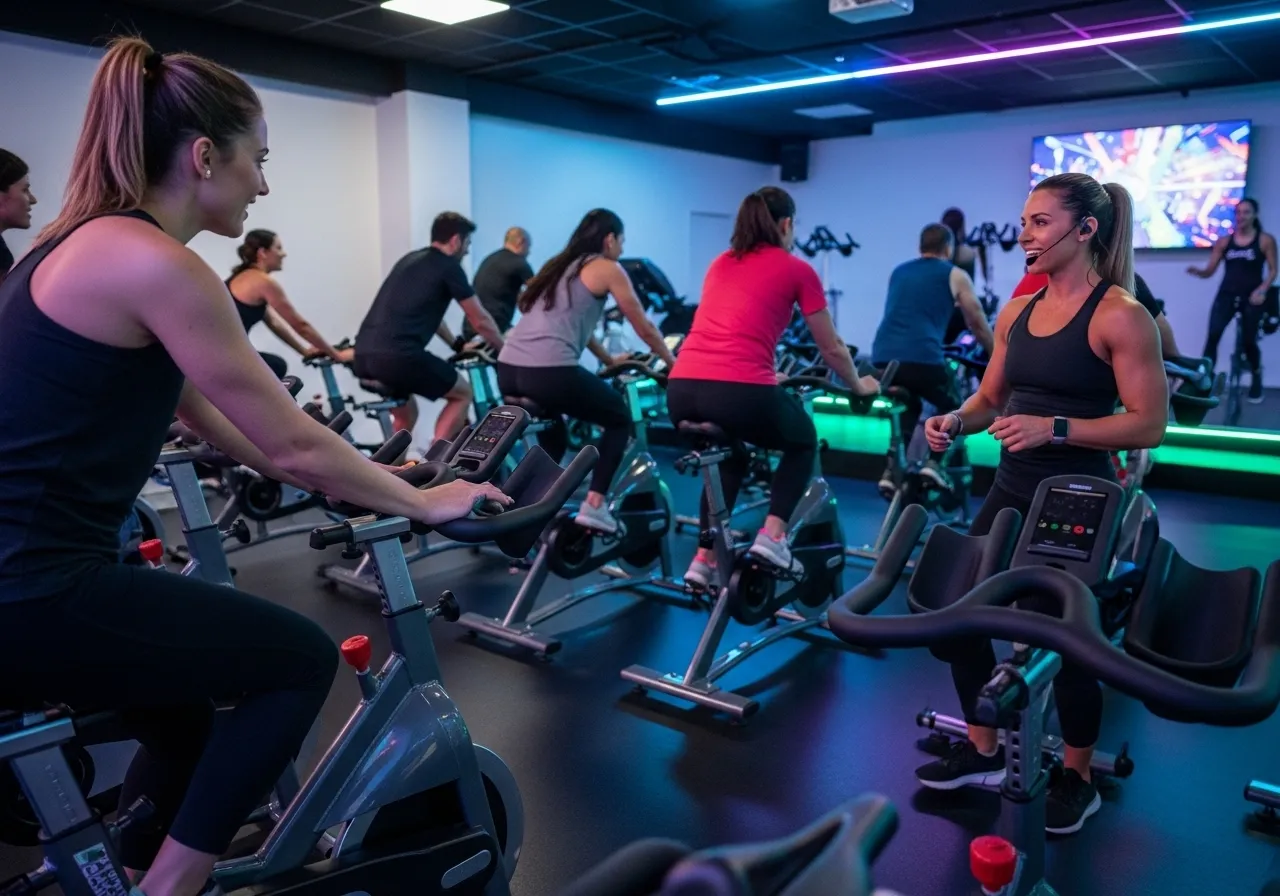
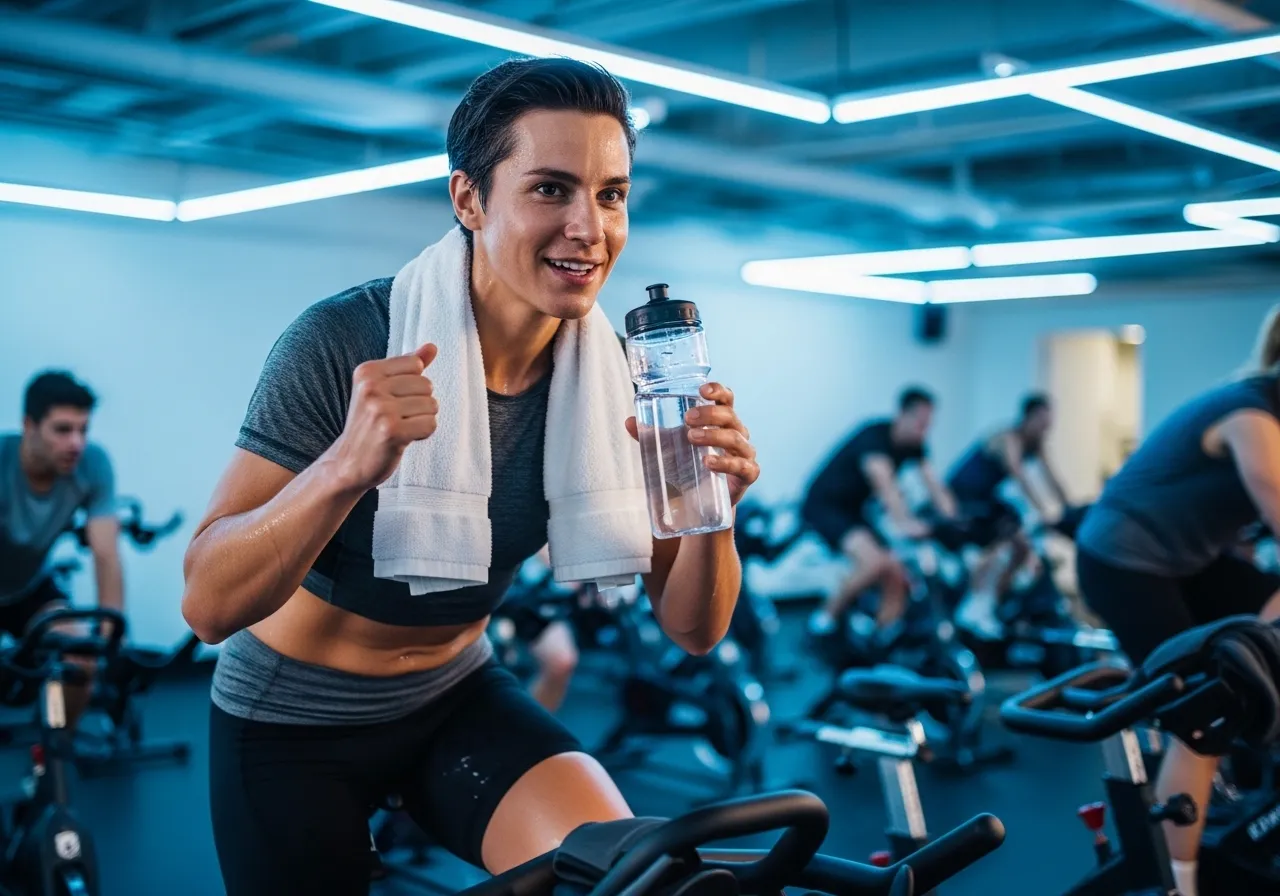
I walked into my first indoor cycling class and immediately wanted to leave. The room was dark with mood lighting. Music vibrated the floor. The instructor was warming up with the intensity of someone preparing for a race. Every bike was occupied by people who clearly knew what they were doing.
I spent 45 minutes alternating between genuine effort and confusion about what I was supposed to do with my upper body. I finished soaked, unable to comfortably sit on anything for two days, and completely hooked. Indoor cycling has since become the cardiovascular training I look forward to most.
Why Indoor Cycling Works So Well
Indoor cycling is classified as moderate-to-high intensity cardiovascular exercise. A systematic review of indoor cycling health benefits found consistent improvements in VO2max, body composition, blood pressure, and cardiometabolic markers across multiple study populations. The low-impact nature — seated pedaling eliminates ground reaction forces — makes it accessible for people with knee, hip, or lower back conditions that limit other cardio modalities.
The Research: What 12 Weeks of Indoor Cycling Produces
Research comparing indoor cycling programs found that 12 weeks of three 55-minute sessions per week produced significant reductions in waist circumference, hip circumference, BMI, and total body fat mass — without any dietary restriction. The cycling sessions alone produced measurable body composition improvements. These results reflect the caloric expenditure of indoor cycling (approximately 400-600 calories per 45-minute moderate-to-vigorous session) creating a meaningful energy deficit over 12 weeks.
Calorie Expenditure and Cardiovascular Fitness
Regular indoor cycling produces cardiac adaptations: increased stroke volume, reduced resting heart rate, improved oxygen delivery, and increased capillary density in exercised muscles. Research finds that improvements are more dramatic in individuals with poorer baseline fitness — beginners see faster relative improvements than already-fit individuals, making it an excellent starting point for people new to structured exercise.
Bike Setup: The Foundation of Every Good Spin Session
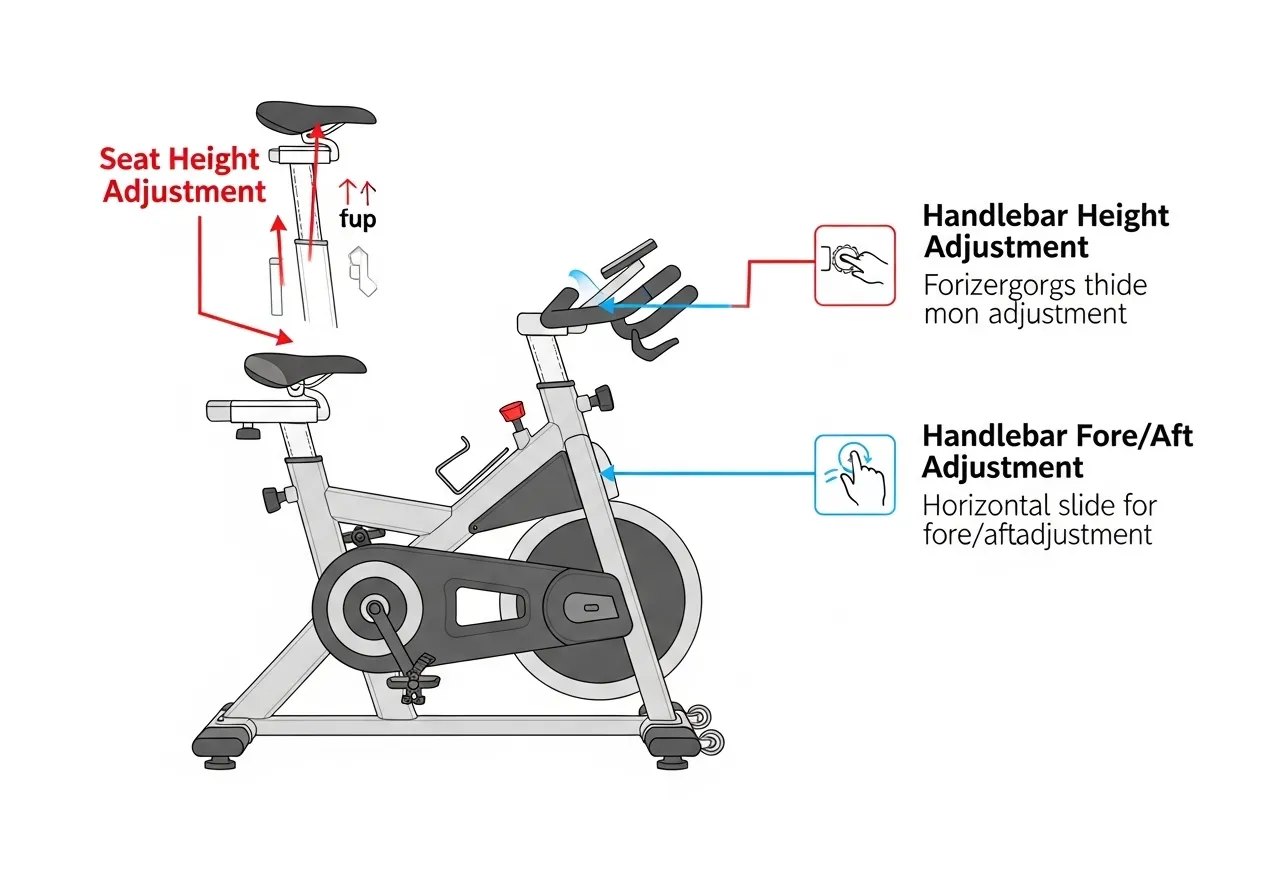
Incorrect bike setup is the primary cause of the knee pain, lower back discomfort, and saddle soreness that drive beginners away after their first sessions. Correct setup takes 3 minutes and makes the difference between productive training and injury.
Seat Height: The Most Critical Adjustment
When your foot is at the bottom of the pedal stroke (6 o’clock position) with the ball of your foot on the pedal, your knee should have a slight bend — approximately 25-35 degrees. A seat too low creates excessive knee flexion and patellofemoral stress. Too high causes hip rocking and lower back strain. Quick calibration: stand beside the bike and set the seat to hip bone height — this is a reliable starting approximation.
Seat Position: Forward and Back
With pedals at 3 and 9 o’clock positions, your front knee should sit directly over the pedal axle. This affects knee loading during the power phase — incorrect position increases patellofemoral stress. If your knee is significantly forward of the pedal, slide the seat back.
Handlebar Height
Beginners should set handlebars slightly higher than seat height to reduce lower back strain while building core strength. As comfort and fitness improve, handlebars can be gradually lowered. Handlebar distance should allow a slight bend in the elbows — fully extended arms indicate bars are too far away.
Resistance: Start Lower Than You Think
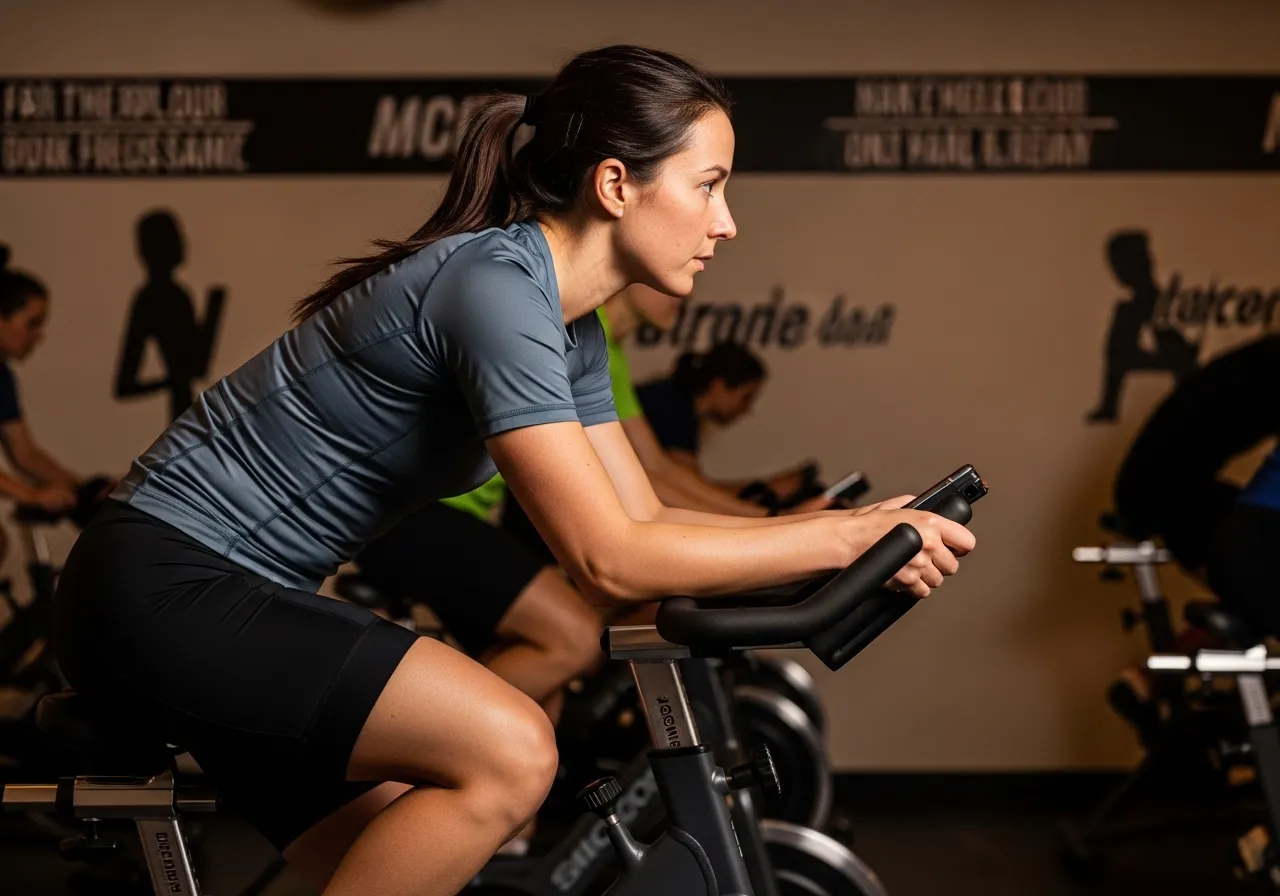
Beginners consistently underestimate how much form deteriorates with excessive resistance. The instinct to “work harder” by adding heavy resistance produces uncontrolled bouncing in the saddle rather than quality training. Effective resistance is where you feel genuine effort in your legs and lungs but can maintain smooth, controlled pedaling.
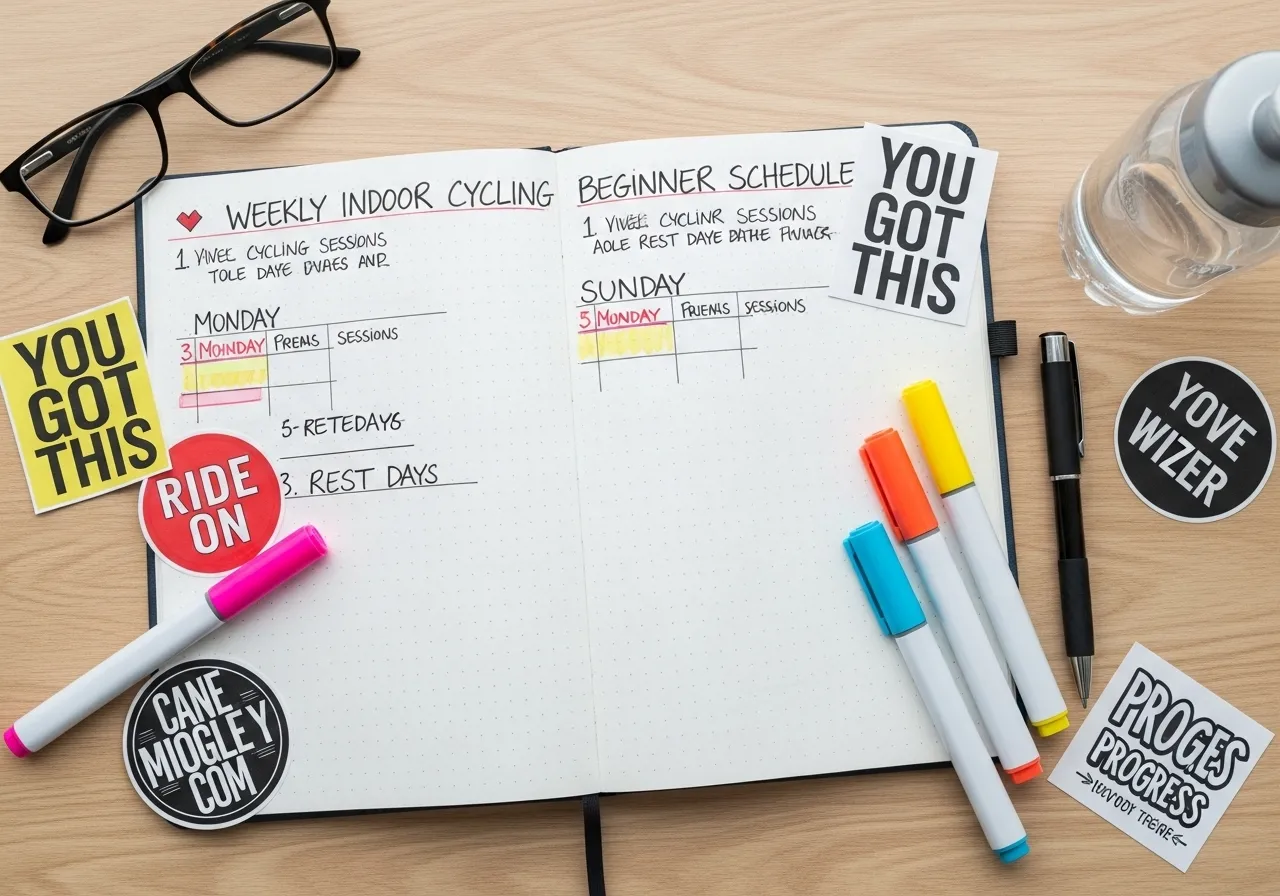
The 8-Week Beginner Indoor Cycling Program
Weeks 1-2: Adaptation Phase
Two sessions per week, 30 minutes each. Keep resistance moderate — you should be able to speak in short sentences throughout most of the session. Focus entirely on technique: smooth pedal circles, stable upper body, consistent cadence between 70-85 RPM. Expect saddle soreness in the first 2-3 sessions — this resolves within 2-3 weeks as the sit bones adapt. Cycling shorts with padding (chamois) reduce this significantly.
Weeks 3-4: Building Duration
Three sessions per week, extending to 40 minutes. Introduce the first intensity variations: two 3-minute moderate-hard efforts per session with 2-minute easier recovery. These brief intensity increases begin building cardiovascular capacity without compromising the technique foundation of the first two weeks.
Weeks 5-8: Adding Intensity and Structure
Three sessions per week at 45-55 minutes. One session per week becomes a structured interval session: 5 rounds of 4 minutes at moderate-hard intensity (breathing hard, can speak only a few words) with 2 minutes easy recovery. The other two sessions remain moderate aerobic riding. This polarized approach — one hard session and two moderate — matches the training distribution that research identifies as optimal for cardiovascular development while managing fatigue.
Reading the Class: What Instructor Cues Mean
Cadence is revolutions per minute. Guide: 60-70 RPM for heavy climbing, 70-85 for moderate work, 85-100 for flatter riding, 100+ for sprints. “Standing” means out of the saddle — keep weight through the pedals, not the handlebars. “Add a turn” means increase resistance by the fraction the instructor specifies, calibrated to your personal effort level.
Maximizing Your Indoor Cycling Results
Heart Rate Monitoring
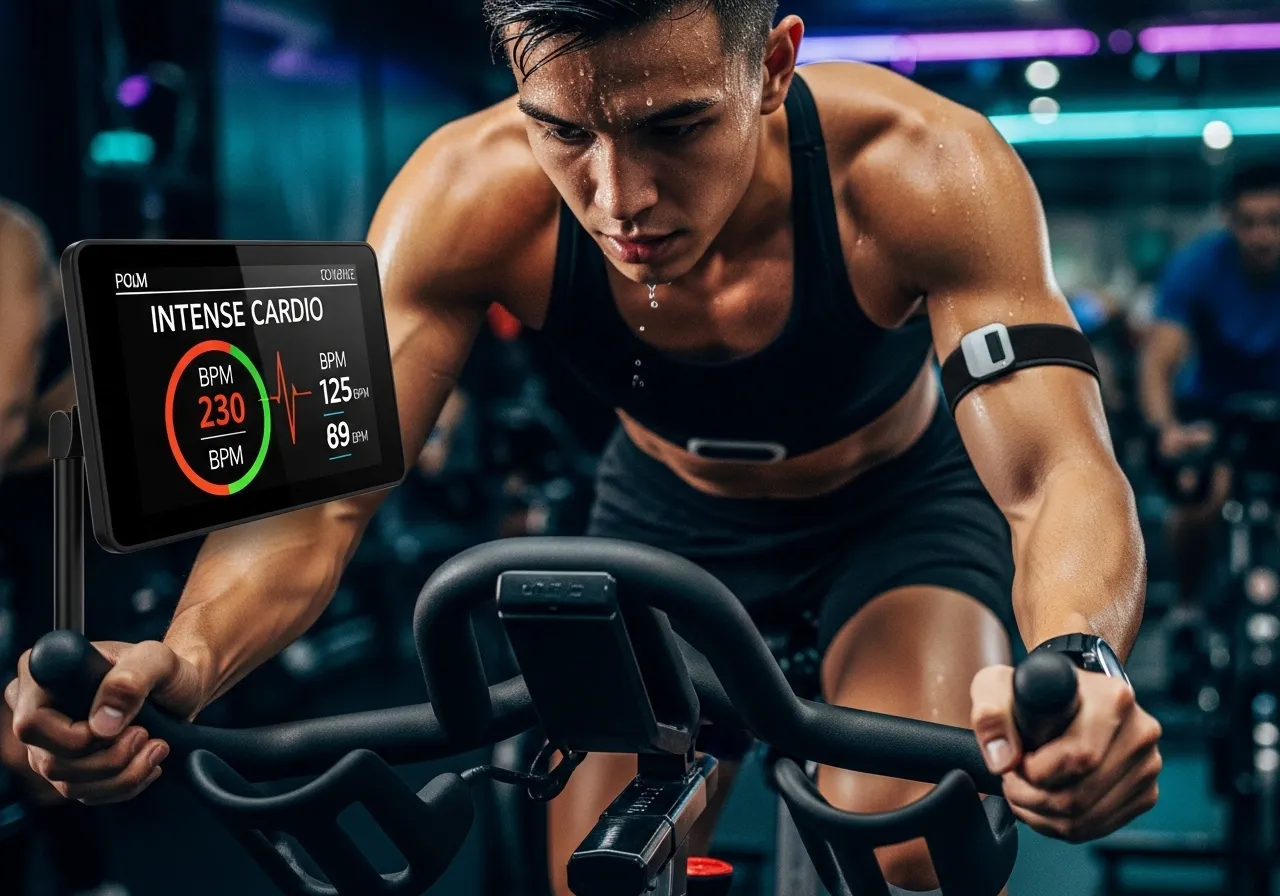
A heart rate monitor transforms indoor cycling from feeling-based effort to scientifically calibrated training zones. Zone 2 (60-70% max HR, conversational pace) develops aerobic base; Zone 4-5 (85-95% max HR, unsustainable for more than a few minutes) develops cardiovascular capacity and produces the EPOC afterburn effect. Mixing both zones within a week provides the complete cardiovascular stimulus that single-intensity cycling cannot.
Progression: When to Add Intensity
Progress resistance when your current effort level produces heart rate consistently below your target zone for that session type. Progress duration when you can complete the full session without significant form degradation. Never progress both simultaneously — change one variable at a time.
Nutrition Around Indoor Cycling
For sessions under 45 minutes, pre-session fueling is optional for most people. For longer or high-intensity sessions, a small carbohydrate-containing snack 60-90 minutes before improves performance. Hydration during cycling is important — the fixed position and indoor environment reduce the perceived sweating that often leads to underhydration in cycling compared to outdoor exercise.
Making Indoor Cycling a Long-Term Habit
Overcoming Saddle Soreness
Saddle soreness in the first 2-4 weeks of indoor cycling is normal and temporary. It resolves as the sit bones adapt — this is a structural adaptation, not a sign of a poorly fitting bike. Padded cycling shorts dramatically accelerate this adaptation. Standing for portions of each session (when the instructor cues it) reduces saddle contact time and helps manage discomfort while the adaptation occurs.
Using Music to Your Advantage
Indoor cycling’s music-driven intensity is one of its most distinctive features. Cadence naturally synchronizes with music tempo — higher-tempo songs drive faster cadence. Curating personal playlists that match your target session intensity (approximately 85-100 BPM for moderate aerobic sessions, 120-140 BPM for interval sections) makes the intensity management feel natural rather than forced.
How often should I cycle as a beginner? Two to three sessions per week is appropriate. More frequent riding in the first 2-3 weeks extends saddle soreness adaptation. Build to three consistent sessions before adding a fourth.
Can indoor cycling help with weight loss? Yes — research confirms indoor cycling produces body weight reductions even without dietary changes when performed consistently over 12 weeks. Three 45-minute sessions per week at moderate intensity expends approximately 1,200-1,800 calories per week from sessions alone.
Do I need special shoes? Not initially — most studios provide cages or straps for regular shoes. As you commit to regular cycling, clip-in shoes improve power transfer, comfort, and reduce foot sliding that can cause knee irritation.
Why is my lower back sore after cycling? Typically indicates handlebar height is too low, core weakness, or using handlebars as weight support. Raise the handlebars, engage core throughout sessions, and build lower back endurance gradually. The systematic review of indoor cycling benefits identifies it as one of the most versatile cardiovascular modalities for general population health improvement.
Is indoor cycling enough for complete fitness? It provides excellent cardiovascular conditioning but does not develop upper body strength or the functional mobility a complete program requires. Combining cycling with 2 resistance training sessions per week covering upper body and core work produces comprehensive fitness that cycling alone cannot achieve.
⚠️ Fitness Disclaimer: The information in this article is for general educational purposes only and does not constitute professional fitness or medical advice. Always consult a qualified healthcare professional before starting any new exercise program, especially if you have existing injuries or medical conditions. The Machine That Gym Culture Can’t Seem to Agree On No…
⚠️ Fitness Disclaimer: The information in this article is for general educational purposes only and does not constitute professional fitness or medical advice. Always consult a qualified healthcare professional before starting any new exercise program, especially if you have existing injuries or medical conditions. The Ball That Made My Conventional Training Feel Incomplete I added…
⚠️ Fitness Disclaimer: The information in this article is for general educational purposes only and does not constitute professional fitness or medical advice. Exercise carries inherent risks. Always consult a qualified healthcare professional or certified personal trainer before starting or modifying any exercise program, especially if you have a pre-existing medical condition, injury, or health…
⚠️ Fitness Disclaimer: The information in this article is for general educational purposes only and does not constitute professional fitness or medical advice. Always consult a qualified healthcare professional before starting any new exercise program, especially if you have existing injuries or medical conditions. The Exercise That Changed How I Understood Glute Training For the…
⚠️ Fitness Disclaimer: The information in this article is for general educational purposes only and does not constitute professional fitness or medical advice. Always consult a qualified healthcare professional before starting any new exercise program, especially if you have existing injuries or medical conditions. The Exercise That Separated Me From the Athletes I Trained With…
⚠️ Fitness Disclaimer: The information in this article is for general educational purposes only and does not constitute professional fitness or medical advice. Always consult a qualified healthcare professional before starting any new exercise program, especially if you have existing injuries or medical conditions. Why Two Straps Changed What I Thought Training Equipment Needed to…