Latin Dance: Burn Calories Passionately
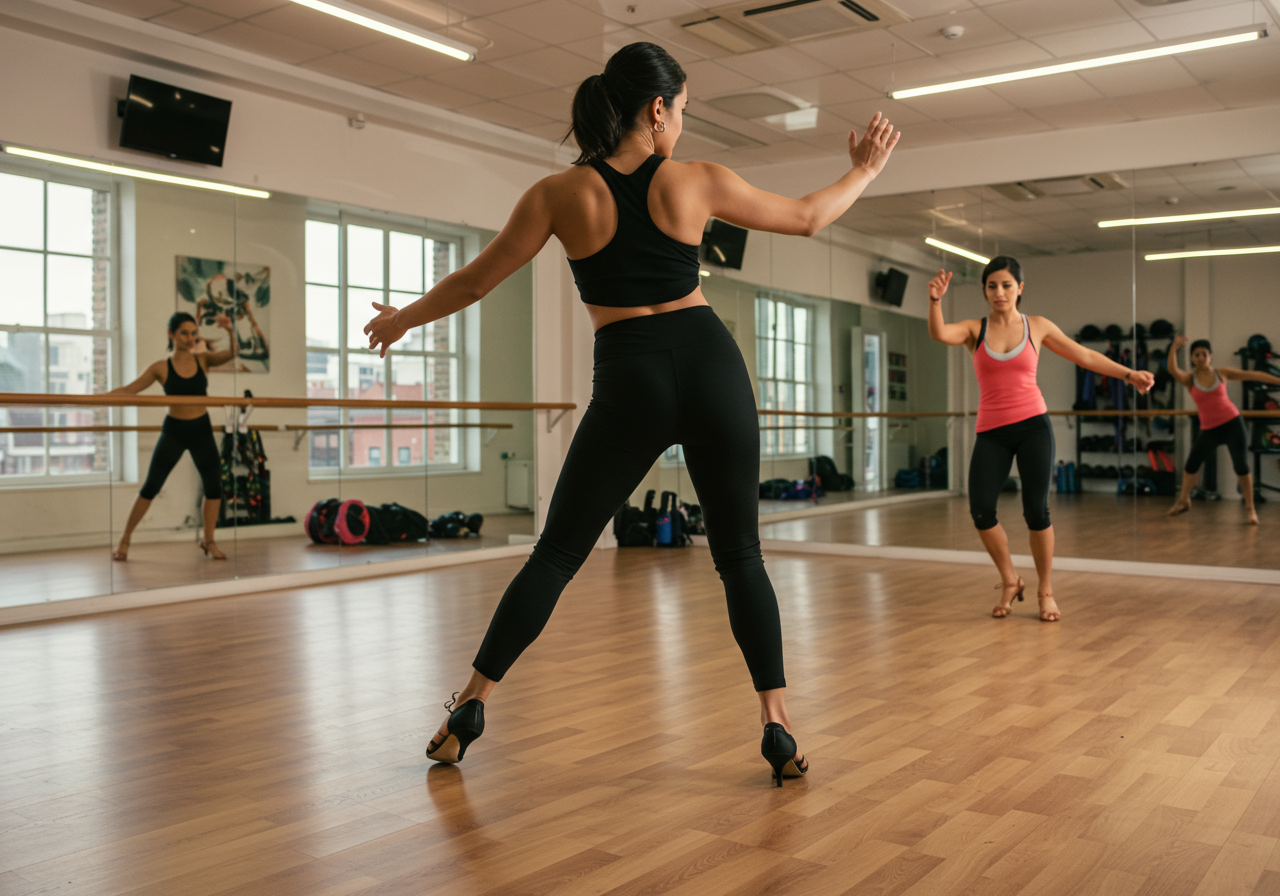
Latin dance builds skill, cardio, and total-body control
Latin dance trains rhythm, timing, and posture while burning serious calories. I use it weekly for fat loss.
Beginners need clear structure and simple cues. I teach steps that protect knees, hips, and lower back.
Energy systems drive your progress. Salsa often hits Zone 3–4. Bachata usually sits in Zone 2–3.
Technique matters more than speed. Clean steps prevent injury and boost calorie burn by improving efficiency.
| Style | Tempo (BPM) | HR Zone | Primary Muscles | Skill Focus |
|---|---|---|---|---|
| Salsa | 150–200 | 3–4 | Calves, quads, core | Timing, turns, shines |
| Bachata | 120–140 | 2–3 | Glutes, core, adductors | Hip control, partner frame |
| Merengue | 120–160 | 2–3 | Calves, hamstrings | Weight shifts, endurance |
| Reggaeton | 85–100 | 3–4 | Glutes, core, shoulders | Body isolations, power |
| Samba | 96–104 | 3–4 | Calves, quads, core | Bounce, stamina |
I monitor sessions with a Garmin watch. Average salsa intervals reach 150–165 bpm.
I coach clients to keep knees soft and heels light. This cue reduces joint stress significantly.
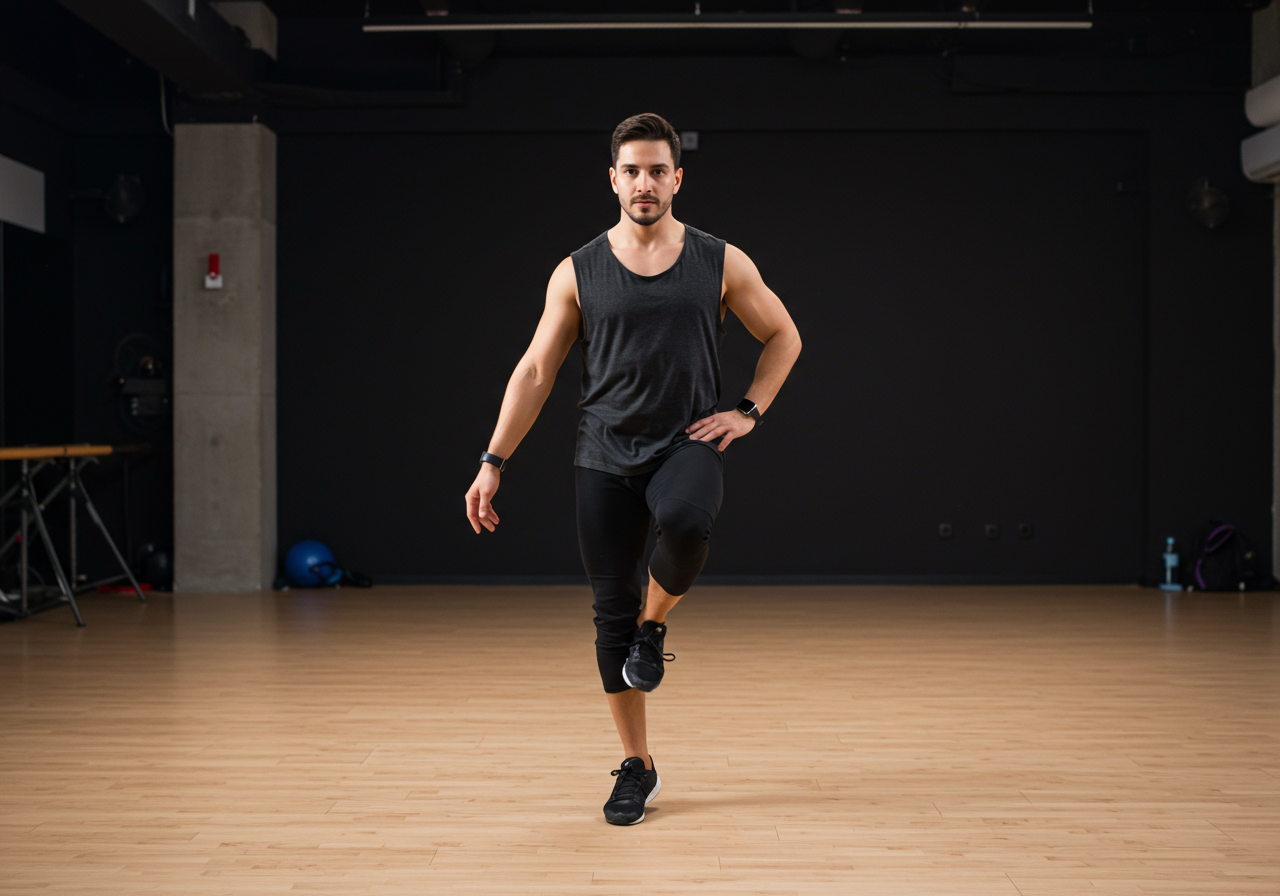
Structured weeks combine dance, strength, and mobility for faster progress
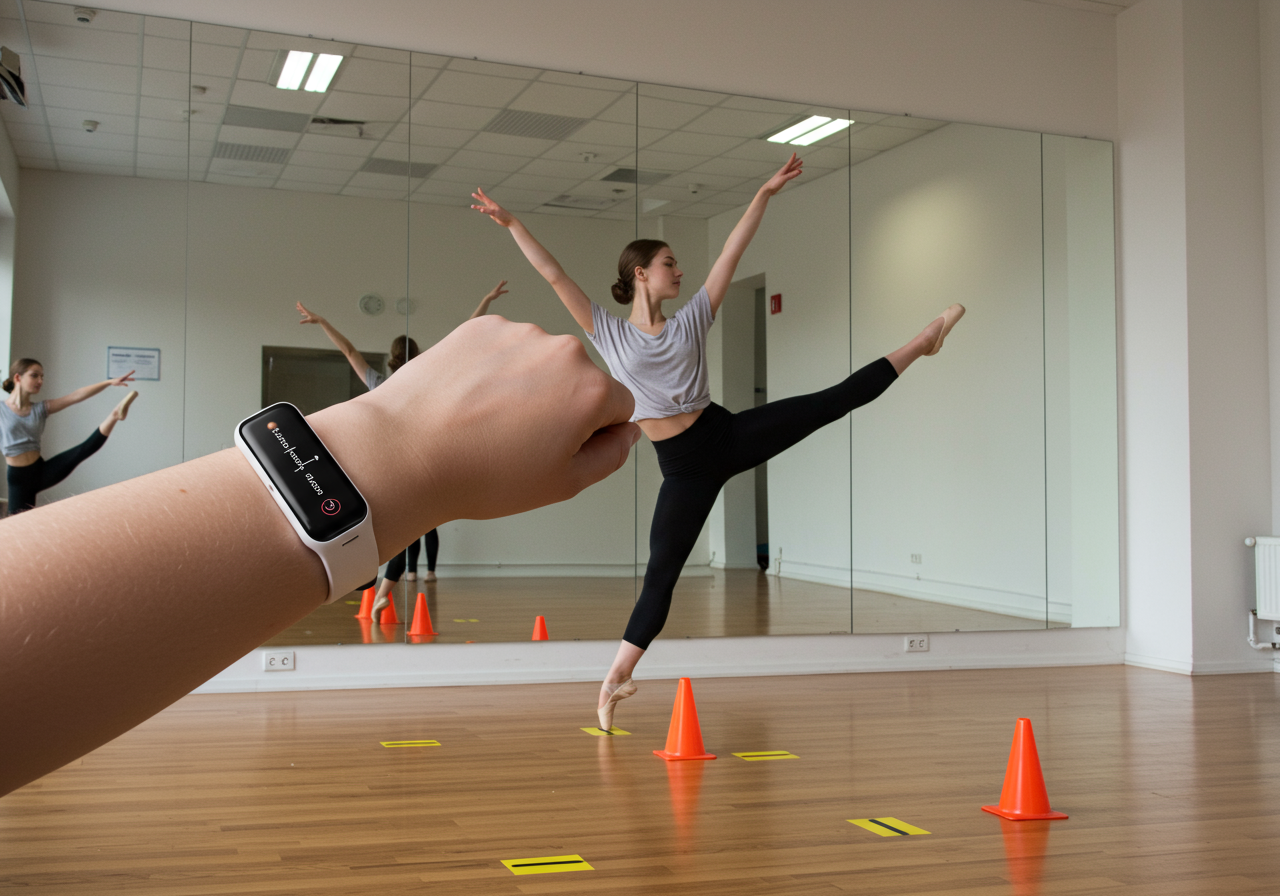
A balanced week prevents plateaus and overuse. I combine dance with strength and mobility days.
Beginners train four days weekly. Intermediate dancers train five or six days with smarter cycling.
| Day | Focus | Details |
|---|---|---|
| Mon | Dance Intervals | Salsa 6×3 minutes Zone 4, 2-minute Zone 2 between. Total 36 minutes. |
| Tue | Strength A | Goblet squat 3×10, Romanian deadlift 3×10, push-up 3×8, row 3×12, plank 3x30s. |
| Wed | Technique + Mobility | Bachata basics 20 minutes Zone 2–3, hip mobility 10 minutes, ankle drills 5 minutes. |
| Thu | Dance Continuous | Merengue 30 minutes steady Zone 3. Finish with turns practice 10 minutes. |
| Fri | Strength B | Split squat 3×10, hip thrust 3×12, overhead press 3×10, pulldown 3×12, side plank 3x20s. |
| Sat | Optional Dance | Reggaeton 20 minutes Zone 3–4. Technique drills 10 minutes. Walk 20 minutes Zone 2. |
| Sun | Recovery | Stretch 10 minutes. Easy walk 30 minutes Zone 1–2. Breathwork 5 minutes. |
I cue soft landings and stacked ribs over hips. This cue saves your back during spins.
I log heart rate with Garmin. I post dances on Strava for accountability.
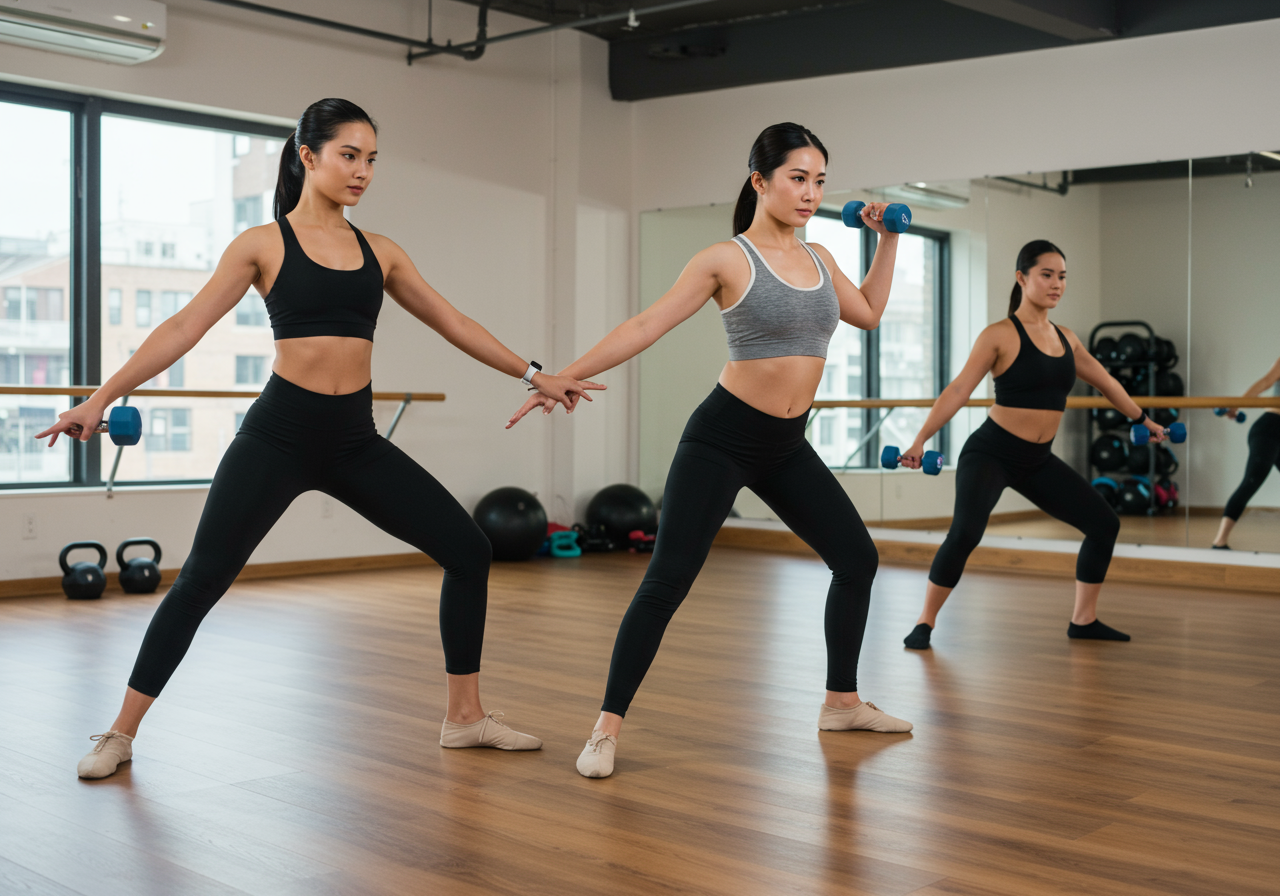
Clear milestones move you from basics to confident performances
Progress follows simple markers. I set targets for steps, tempo, and heart rate control.
Beginners learn basics at slow tempos first. Intermediate dancers add turns and shines safely.
| Level | Dance Targets | Strength Targets | HR Focus |
|---|---|---|---|
| Beginner | Salsa basic 90 BPM, 15 minutes continuous, 4 clean right turns | Bodyweight squat 3×12, incline push-up 3×8 | Zone 2–3 awareness |
| Intermediate | Salsa 140 BPM, 6×2-minute shines, partner frame stability | Goblet squat 3×10 at 20–24 kg, row 3×12 | Zone 3–4 control |
| Advanced | Salsa 180 BPM, multi-turn combos, 30 minutes mixed tempos | Hip thrust 3×10 at bodyweight load, push-up 3×15 | Efficient Zone transitions |
I scale loads by 2–2.5 kg weekly when technique stays clean. I reduce sets if knees feel achy.
I made an early mistake by skipping warm-ups. I strained a calf during a fast turn.
Better fuel and rest accelerate dance-specific fat loss
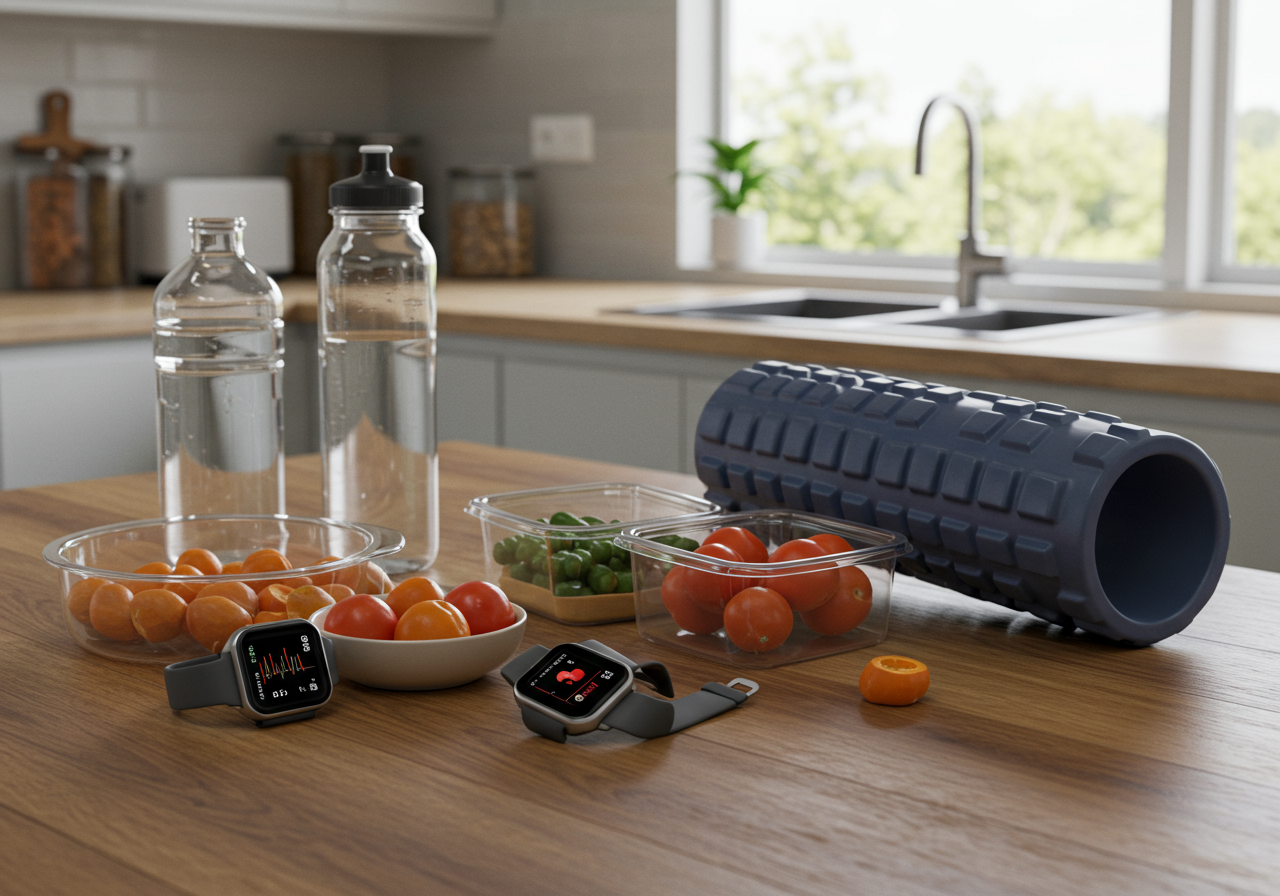
Nutrition drives your energy and recovery. I keep calories slightly below maintenance on dance weeks.
Beginners often under-eat protein. I set simple macros that fit busy schedules and tastes.
| Meal | Example | Macros |
|---|---|---|
| Pre-dance | Greek yogurt, banana, honey | 35g carbs, 20g protein, 5g fat |
| Post-dance | Whey shake, berries, rice cakes | 45g carbs, 30g protein, 2g fat |
| Dinner | Salmon, quinoa, roasted vegetables | 55g carbs, 35g protein, 15g fat |
I track intake with MyFitnessPal. I aim for 7–8 hours of sleep nightly.
I hydrate with water and electrolytes. I increase fluids on hot studio days.
I use Garmin for heart rate and VO2 estimates. I log sessions on Strava for consistency.
I supplement creatine 3–5 g daily and magnesium at night. My recovery feels smoother.
Useful resources: garmin.com, strava.com, myfitnesspal.com.
Measured outcomes confirm progress and guide long-term result interpretation
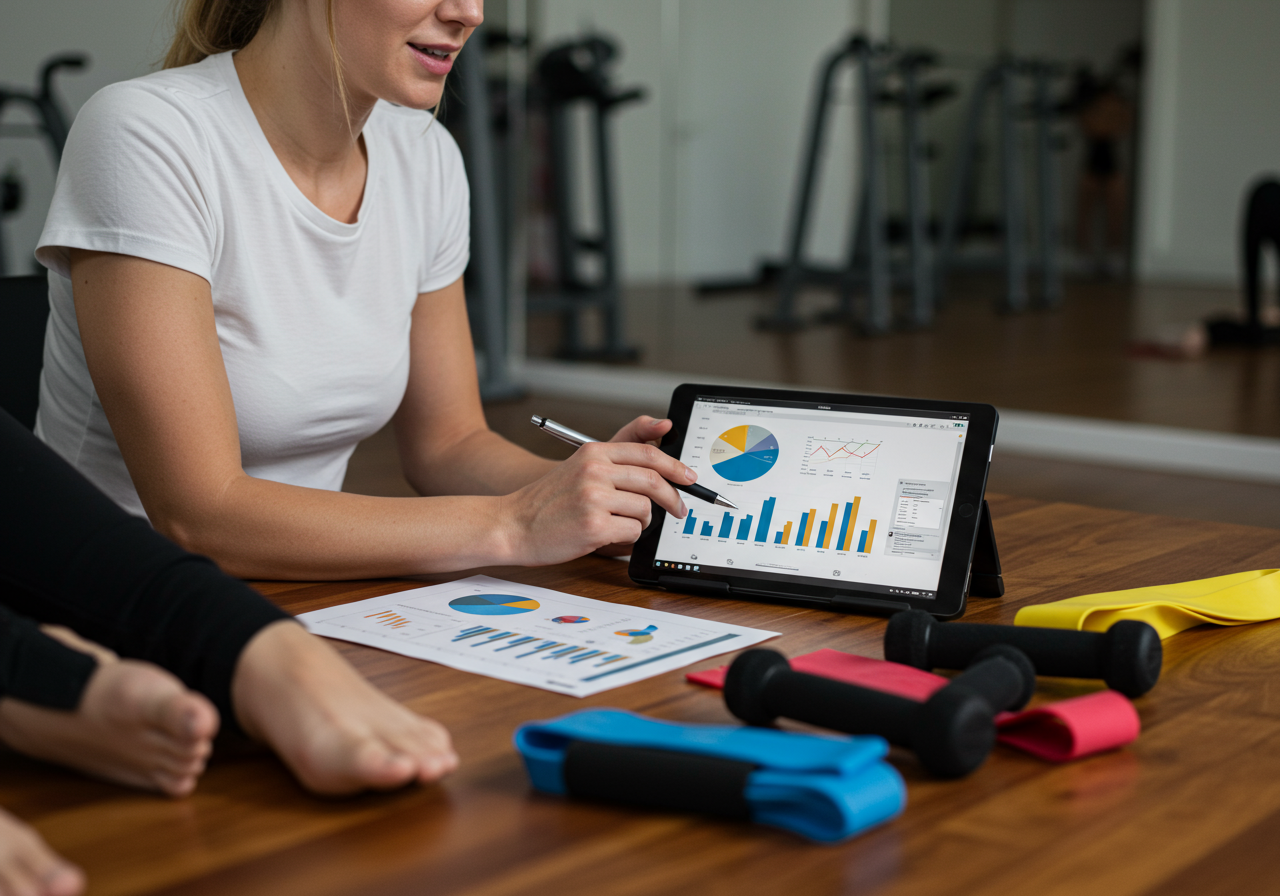
Data validates your effort and guides changes. I test every four weeks using the same protocol.
I measure weight, waist, resting heart rate, and a salsa step test. I track adherence as well.
| Metric | Start | Week 4 | Week 8 |
|---|---|---|---|
| Bodyweight | 77.0 kg | 75.6 kg | 74.5 kg |
| Waist | 86 cm | 83.5 cm | 82 cm |
| Resting HR | 58 bpm | 55 bpm | 52 bpm |
| VO2 max | 46 ml/kg/min | 49 ml/kg/min | 50 ml/kg/min |
After eight weeks, my VO2 max improved by about 8%. Salsa intervals drove that improvement quickly.
HIIT shines reduced fat faster than steady merengue. However, steady sessions improved dance flow and stamina.
Client Marta, 44, shared this: “My jeans finally fit. I dance longer without knee pain.”
Client Luis, 36, said: “I lost 4 kg in eight weeks. I sleep better and stress less.”
Common issues respond to simple fixes. Tight hips need mobility and glute activation before turns.
Motivation dips vanish with social classes. I schedule a Saturday social to anchor the week.
Injury tweaks require quick action. I switch to Zone 2 walking and upper-body lifts during flare-ups.
Retest plan: Salsa step test at the same BPM. Record steps made without errors. Adjust training accordingly.