Rope Climbing: Upper Body Strength & Grip Power
Rope Climbing Blueprint: Skills, Muscles, and Key Principles
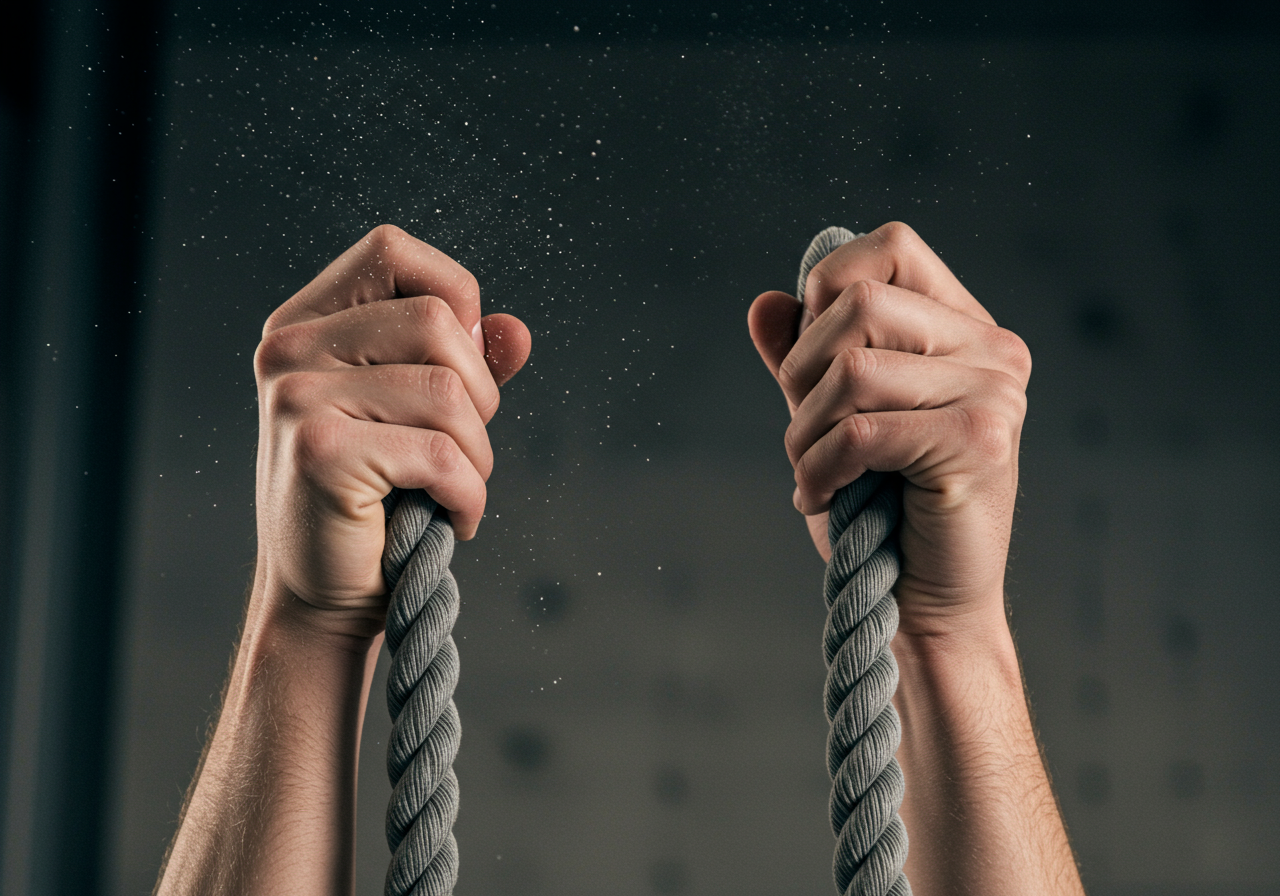
Rope climbing framework for grip power and upper body strength
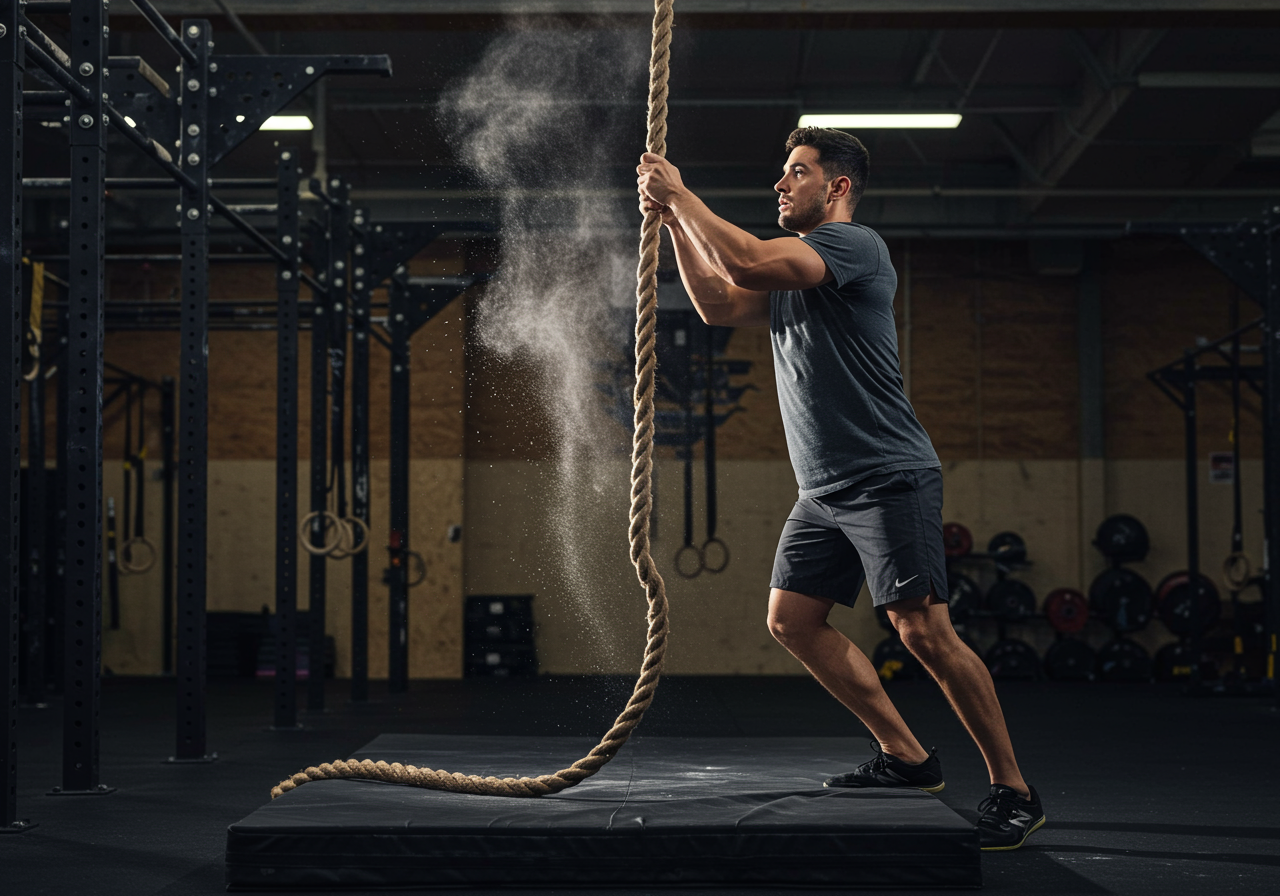
Rope climbing builds real-world pulling strength and grip endurance. It also trains core stability.
I coach beginners on a 15-foot rope twice weekly. I guide safe technique first, then add intensity.
Last month, I ran 10 minutes EMOM: 1 climb every minute. I averaged 148 bpm, peaked at 168 bpm. My forearms burned, but form held.
- Use your feet first. J-hook or S-hook saves grip.
- Pull with lats and biceps. Keep shoulders packed down.
- Squeeze the rope. Alternate hand-over-hand rhythm.
- Brace your core. Keep ribs down and glutes tight.
- Climb smooth. Avoid wild swinging.
- Stop one foot below the top. Tap a marker, then descend under control.
Science, simple: Your forearm flexors work isometrically. Your lats and core produce vertical force. Time under tension grows endurance.
| Skill | Drill | Sets x Reps/Time | Rest | Cue |
|---|---|---|---|---|
| Foot lock (J-hook) | Seated wraps on ground | 5 x 30 seconds | 45–60 seconds | Pinch rope with feet |
| Hand-over-hand pull | Rope seated pulls | 4 x 8 pulls | 60–90 seconds | Elbows drive down |
| Core brace | Hollow hold | 3 x 20–30 seconds | 45 seconds | Ribs down, glutes tight |
This foundation makes later progressions safer and faster.
Weekly Integration: Strength, Cardio, and Mobility That Support Climbing
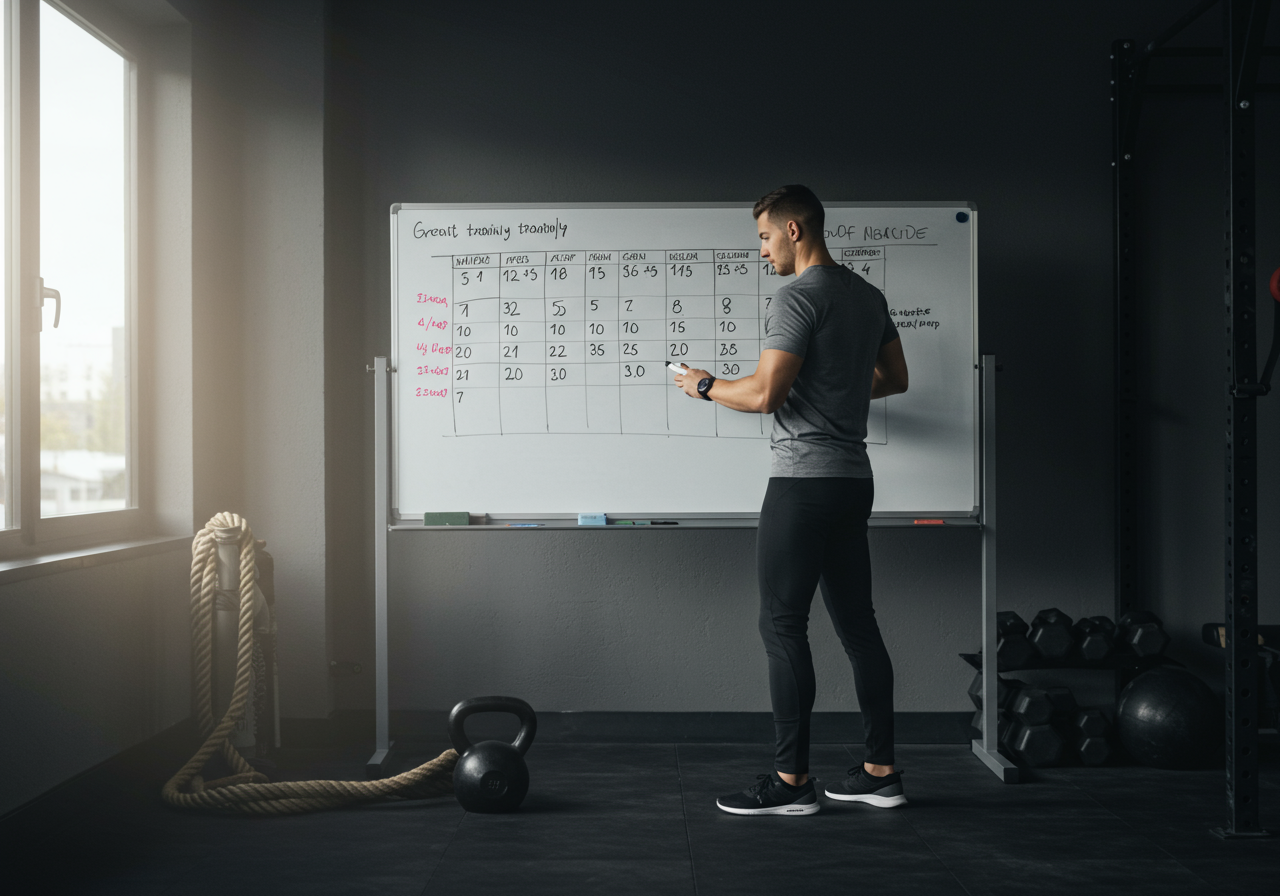
Blend rope climbing with strength, conditioning, and mobility
Your week should target pulling strength, aerobic capacity, and recovery. We keep sessions short and focused.
Beginners do two rope days, two strength days, and two easy cardio days. One day rests completely.
| Day | Focus | Details |
|---|---|---|
| Mon | Rope + Pull Strength | Technique + climbs 20–30 min; Pull-ups 4 x 5; Farmer carries 3 x 40 m |
| Tue | Zone 2 Cardio | 30–40 min at 60–70% max HR |
| Wed | Lower Body + Core | Goblet squats 4 x 8; Deadlifts 3 x 5; Hollow holds 3 x 30 s |
| Thu | Rope Intervals | EMOM 10–12 min; Technique first; Finish with rope pulls 3 x 12 |
| Fri | Mobility + Grip Prep | Wrists, shoulders 20 min; Hang 4 x 20 s; Scap pull-ups 3 x 8 |
| Sat | Zone 2 Cardio | Hike, cycle, or row 40–60 min |
| Sun | Rest | Walks and light mobility only |
- Zone 2 builds your aerobic base. You recover faster between climbs.
- Short EMOM sets tap alactic power. You produce quick, strong pulls.
- Longer sets stress glycolytic capacity. Manage burn, keep form tight.
- 5 minutes: J-hook practice and scap pull-ups.
- 10 minutes: EMOM, climb 10–12 feet, controlled descent.
- 5 minutes: Farmer carry 3 x 40 m, heavy, 60 seconds rest.
Track heart rate with Garmin or Fitbit. Stay smooth, not sloppy.
This weekly blend keeps skills sharp while your body adapts safely.
Step-by-Step Progressions: Beginner To Advanced
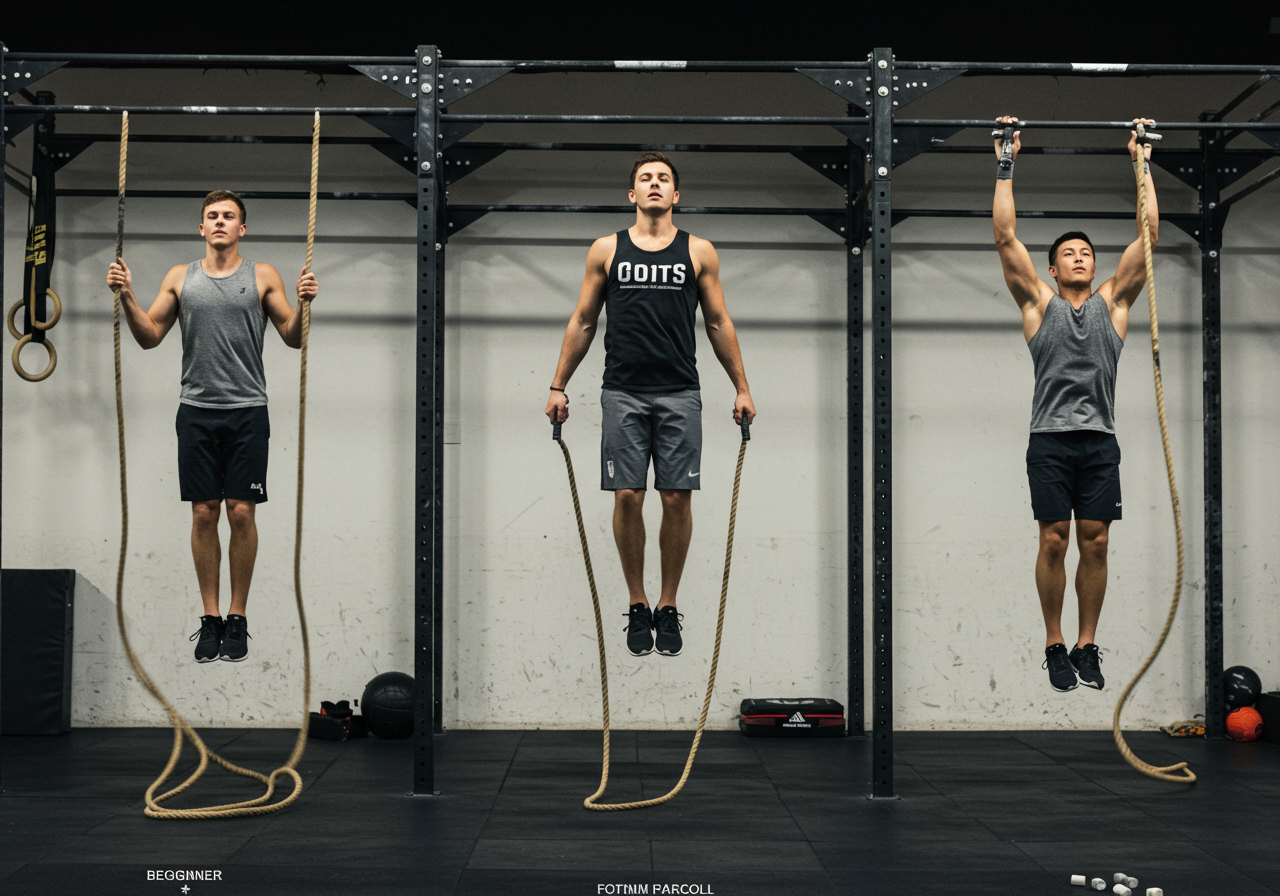
Level up your rope work with simple, proven steps
I use three stages. You move up when reps feel crisp and fast.
| Level | Session Focus | Sets x Reps/Time | Rest | Progression |
|---|---|---|---|---|
| Beginner | Foot locks, rope pulls, assisted climbs | 6–8 x 8–12 pulls or 8–10 ft climbs | 60–90 seconds | Reduce assistance weekly |
| Intermediate | Full climbs, tempo descents | 5–7 x 12–15 ft climbs | 90–120 seconds | Add 1–2 feet or 1 rep weekly |
| Advanced | No-legs climbs, weighted, intervals | EMOM 10–15 min, 1–2 climbs | As set | +2.5–5 lb belt every 1–2 weeks |
- Days 1–10: Practice J-hook daily, 5 minutes. Do rope pulls 6 x 10.
- Days 11–20: Climb 8–10 feet with feet locked. 5–6 sets.
- Days 21–30: Climb 12–15 feet for 4–5 sets. Film one set.
Keep elbows down and close. Replace swinging with tight hips.
Use simple load rules. Add height or reps first. Add weight last.
| Accessory | Prescription | Purpose |
|---|---|---|
| Towel pull-ups | 4 x 4–6 heavy | Crush grip strength |
| Farmer carries | 4 x 40–60 m | Grip endurance and core |
| Scap pull-ups | 3 x 8–12 | Shoulder stability |
Track climbs, time, and heart rate. I log in Strava and my Garmin app.
Fuel, Recovery, and Fixing Plateaus or Pain
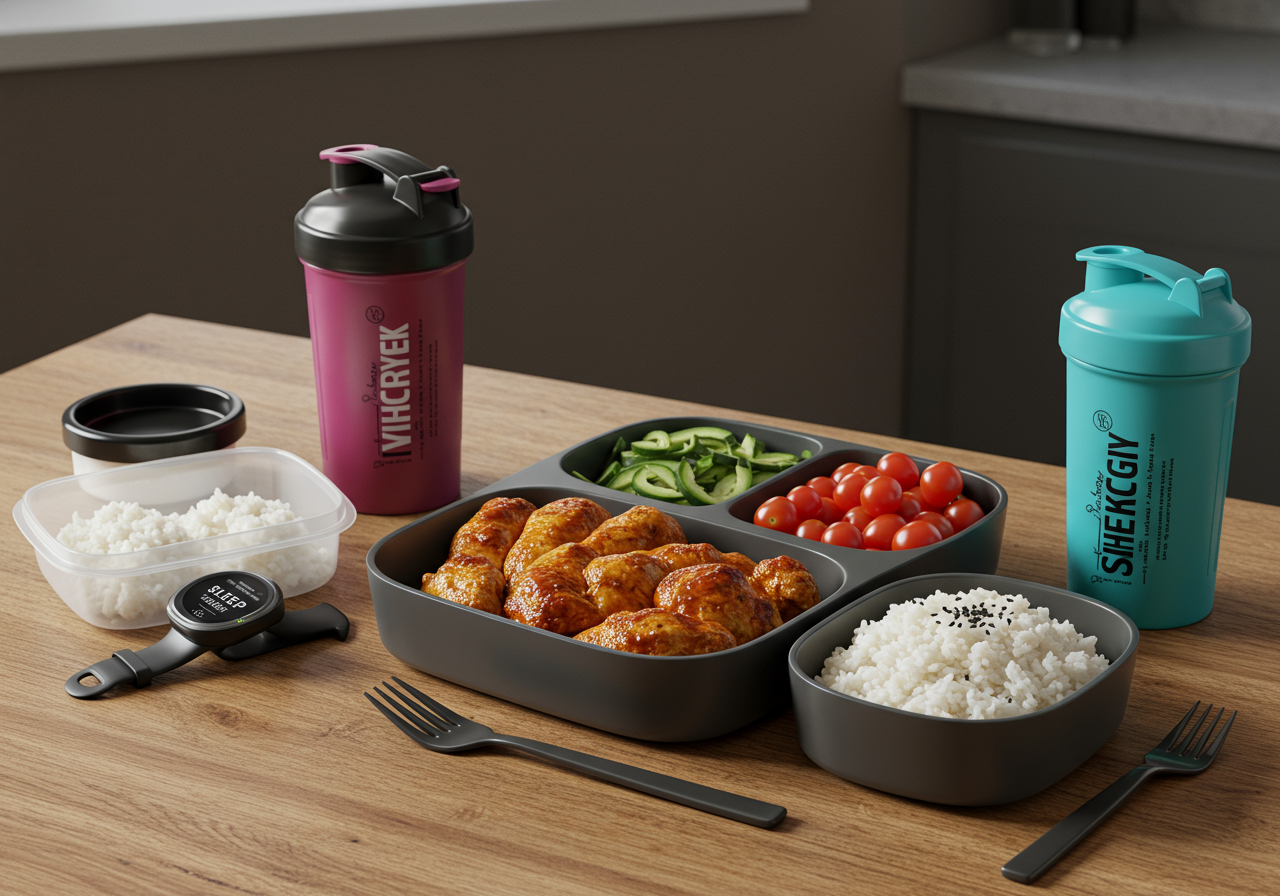
Nutrition and recovery that protect joints and grow performance
Better fuel equals better climbing. Your grip lasts longer when your muscles have energy.
- Protein: 1.6–2.2 g per kg bodyweight daily.
- Carbs: 3–6 g per kg on training days.
- Fat: 0.6–1.0 g per kg.
- Hydration: 30–40 ml per kg daily. Add electrolytes if you sweat hard.
Use MyFitnessPal to track intake for two weeks. Calibrate portions and consistency.
| Goal | Calories | Notes |
|---|---|---|
| Fat loss | 300–500 kcal deficit | Keep protein high. Hold strength work. |
| Performance | Small 100–200 kcal surplus | Add carbs around rope sessions. |
Sleep 7.5–9 hours. I improved session quality when I crossed 7.5 hours.
Supplements that help most clients: 3–5 g creatine daily. 1–2 g omega-3 daily. Caffeine 60 minutes pre-session if tolerated.
- Medial elbow pain means volume is too high. Cut total pulls by 30% for one week.
- Forearm pumps that never fade mean dehydration or tight wraps. Sip electrolytes.
- Calf strain often follows rushed descents. Practice slow, three-count descents.
- Plateau on height? Add one extra set of towel pull-ups.
- Grip fails early? Extend rest to 120 seconds. Use feet more.
- Motivation dips? Film one clean climb to confirm wins.
- Low recovery score or high morning HR? Swap EMOM for Zone 2.
I monitor readiness with resting HR and perceived soreness. I reduce intensity when both spike.
Proof of Results: Coach Diary and Client Wins
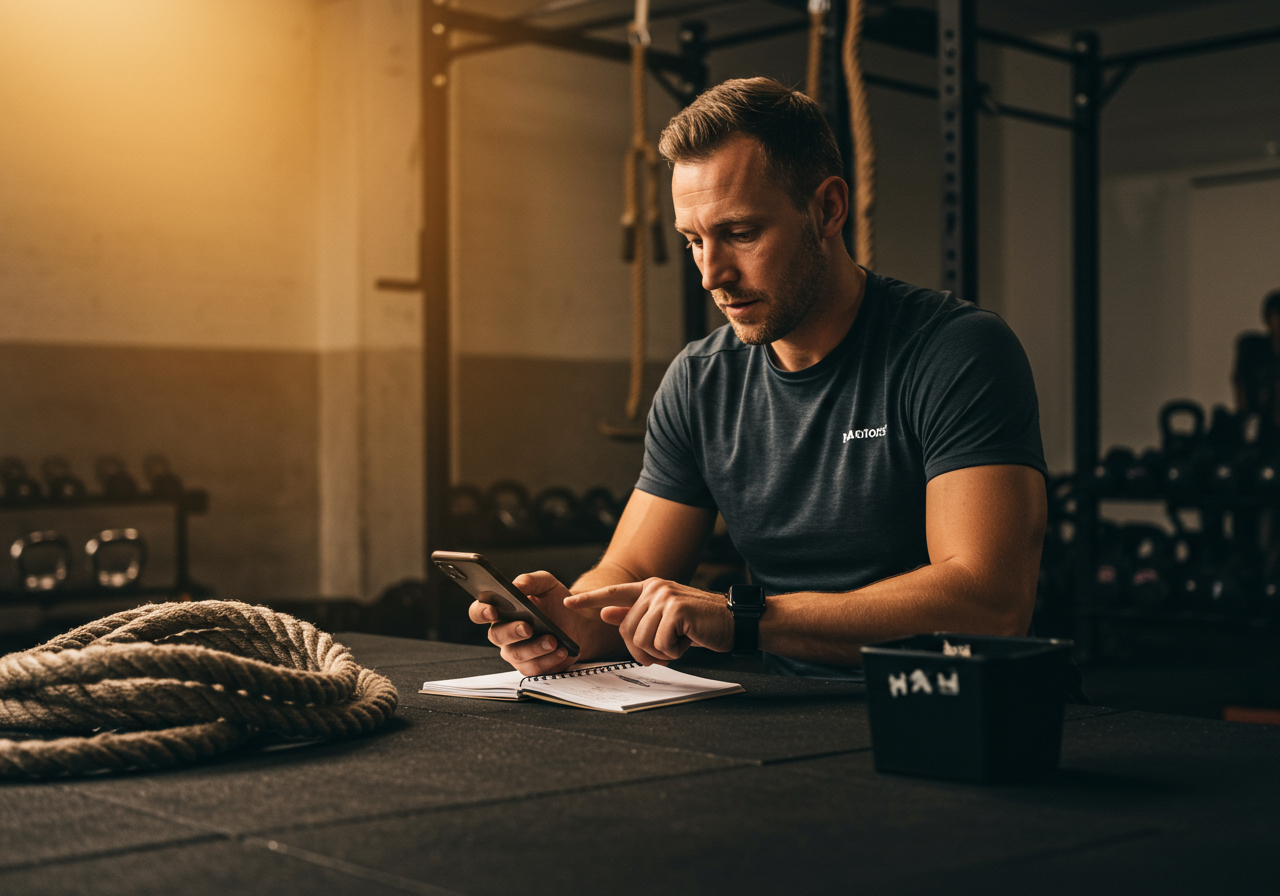
Evidence, real numbers, and sustainable routine maintenance
I track every climb with Garmin. I log food in MyFitnessPal. Simple data makes decisions clear.
| Metric | Start | After 6–8 weeks | Change |
|---|---|---|---|
| 15 ft climb time | 18.2 seconds | 9.6 seconds | −47% |
| Grip dynamometer (dominant) | 56 kg | 62 kg | +6 kg |
| VO2 max (Garmin) | 43 | 46–47 | ~8% increase |
| Bodyweight | 178 lb | 172 lb | −6 lb |
Client Maya, 38, shared, “I went from zero to 15 feet in 5 weeks. No elbow pain.”
Client Dan, 29, said, “Weighted climbs felt impossible. Now I use 10 lb for EMOM.”
- EMOM sessions improved climb speed and technique under fatigue.
- Zone 2 on off days boosted recovery and grip endurance.
- HIIT circuits cut fat faster than steady cycling for my clients.
What failed: Skipping warm-ups led to a strained calf once. I built a strict descent practice after.
| KPI | Target | Tool |
|---|---|---|
| Climb time | Under 12 seconds | Stopwatch or Garmin |
| Weekly volume | 20–40 vertical meters | Training log |
| Recovery | 7.5+ hours sleep | Sleep tracker |
Keep verifying results monthly. Test a timed climb and a max hang on towels.
Helpful apps: Garmin for HR and VO2. MyFitnessPal for macros.
Maintain two rope sessions and one cardio base day weekly. Add weight only when climbs feel snappy.