Side Lateral Raises: Strengthen Side Deltoids
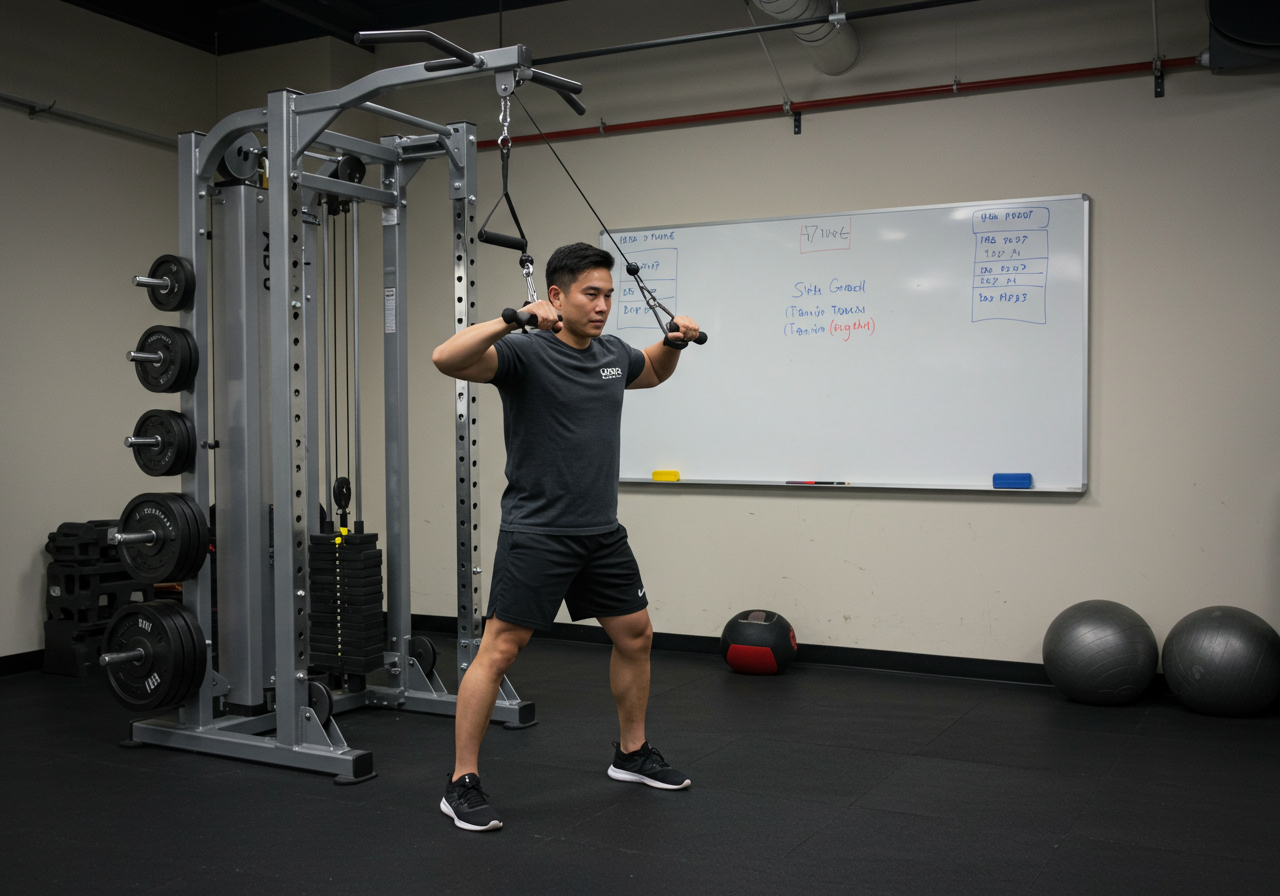
Build balanced shoulders by centering side lateral raises within a full-body strength plan
Your shoulders look wider when side delts grow. Side lateral raises target that head precisely. The movement slots easily into any plan.
I program lateral raises after heavy presses. This approach protects technique and isolates the side delts. Additionally, it controls fatigue from big lifts.
- Train in the scapular plane, about 20–30 degrees forward.
- Use a neutral grip, thumbs slightly up, to protect the shoulder.
- Stop around shoulder height to limit upper trap takeover.
- Apply slow tempos for tension, not momentum.
- Add pressing, pulling, and rear delt work for balance.
| Component | Role | Why it matters |
|---|---|---|
| Side lateral raise | Side delt isolation | Increases shoulder width and symmetry |
| Overhead press | Strength base | Improves deltoid capacity and joint robustness |
| Rear delt row | Posterior balance | Protects posture and shoulder health |
- 5–7 minutes bike, Zone 2, easy breathing.
- Scapular wall slides, 2×12.
- Band external rotations, 2×15 each side.
- Empty-hand lateral raises, 1×20, slow.
My workouts run 55 minutes on upper days. My Garmin targets 120–130 bpm for warm-up.
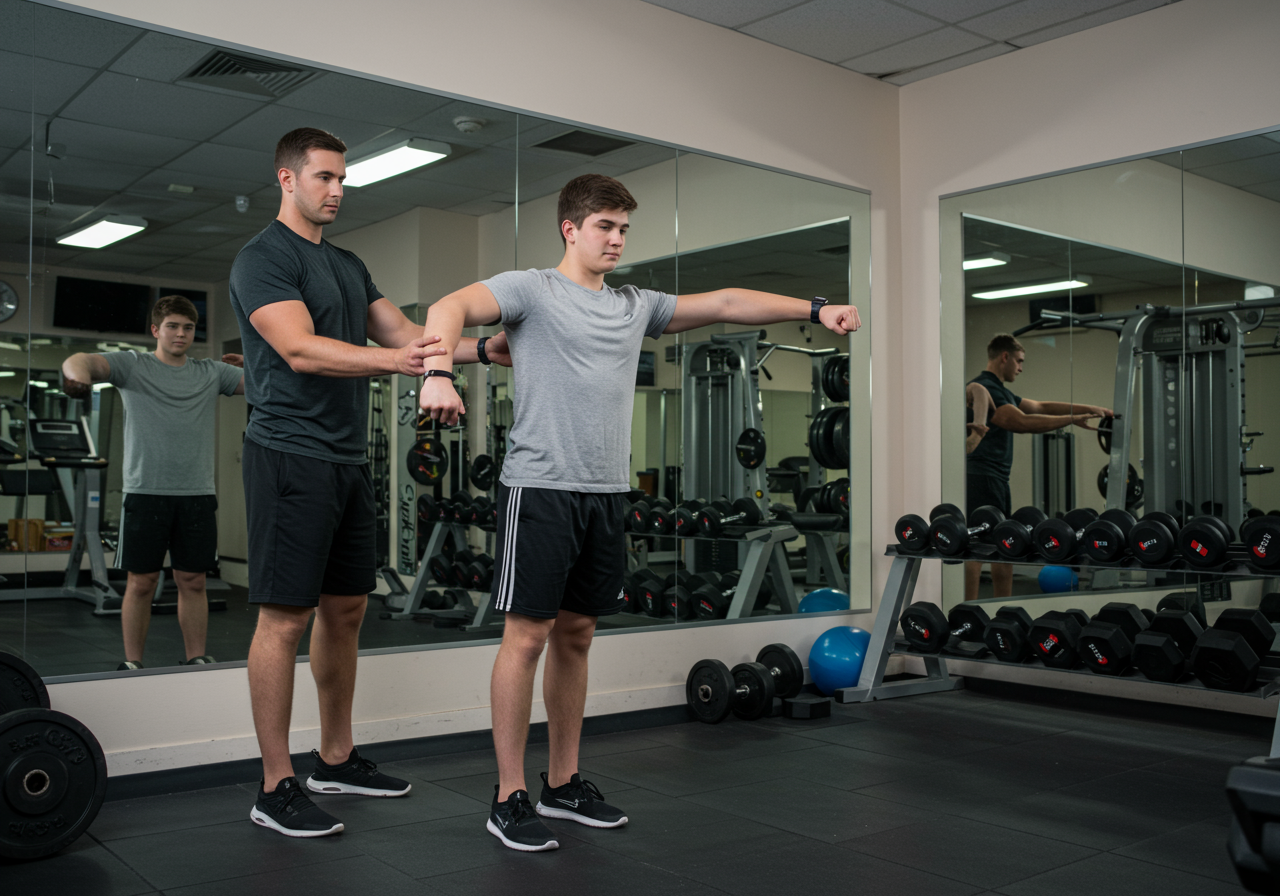
Dial technique first so the side delts receive the full stimulus
Precise form keeps tension where you want it. Small details change everything.
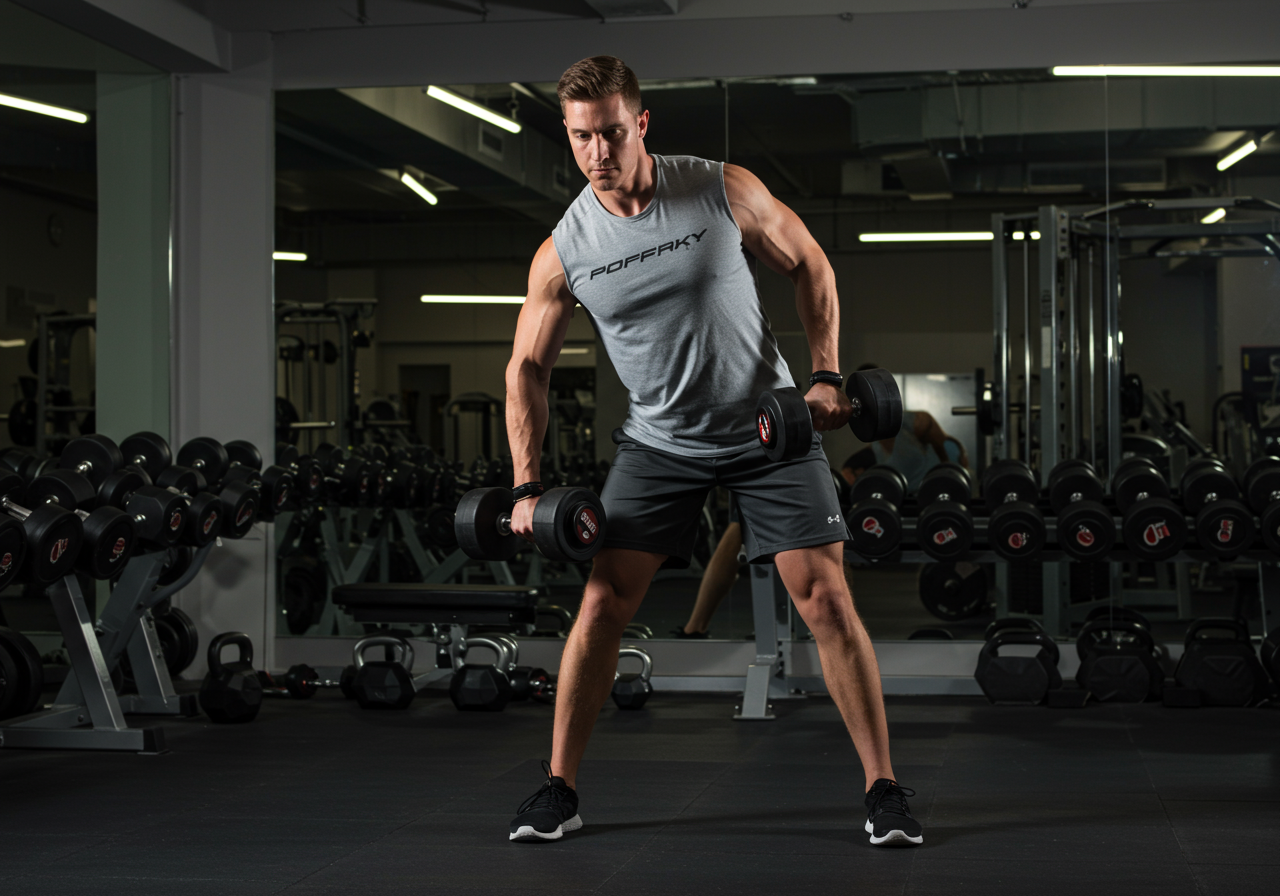
Stand tall with ribs down and glutes tight. Hold dumbbells at your sides with soft elbows. Raise in the scapular plane to just below shoulder height. Lead with elbows, not wrists. Pause briefly. Lower under control.
- Exhale as you lift through the sticking point.
- Keep wrists neutral and relaxed.
- Think wide, not high.
- Hold 1 second at the top.
- Use a 2-1-2 tempo.
| Do this | Not this | Reason |
|---|---|---|
| Raise slightly forward | Raise straight lateral to behind | Tracks scapula safely |
| Lead with elbows | Flick wrists upward | Keeps deltoids primary |
| Neutral or thumbs-up grip | Thumbs-down tilt | Reduces impingement risk |
- 3 sets x 12–15 reps.
- Rest 75–90 seconds.
- Stop 2 reps before failure.
- Start with 2–6 kg dumbbells.
I once skipped the warm-up. My left shoulder pinched during the first set. That mistake taught me discipline.
Progressive overload grows the side delts without trashing the joints
Clear progress rules prevent plateaus. This roadmap scales for any level.
- Double progression: add reps, then add load.
- Tempo control: 2-1-2 or 3-1-2 for tension.
- Mechanical drops: dumbbells to cables to partials.
- Myo-reps: one activation set, then short clusters.
- Volume cycling: build 10–20 hard sets per week gradually.
| Level | Protocol | Load guide | Rest |
|---|---|---|---|
| Beginner | 3×12–15, 2 RIR, 2-1-2 tempo | Light, perfect control | 75–90 s |
| Intermediate | 4×12–20, 0–2 RIR, cables included | Moderate, steady reps | 60–90 s |
| Advanced | 5×10–15 + myo-reps or partials | Heavier, strict form | 60–75 s |
- Day A: Overhead press, lateral raises, rear delt row.
- Day B: Incline press, cable lateral raises, face pulls.
| Week | Sets | Target reps | Notes |
|---|---|---|---|
| 1–2 | 8–10 weekly | 12–15 | Learn form |
| 3–4 | 12–14 weekly | 12–20 | Add cables |
| 5–6 | 14–16 weekly | 10–15 | Myo-reps optional |
| 7 | 10–12 weekly | 12–15 | Deload 30% volume |
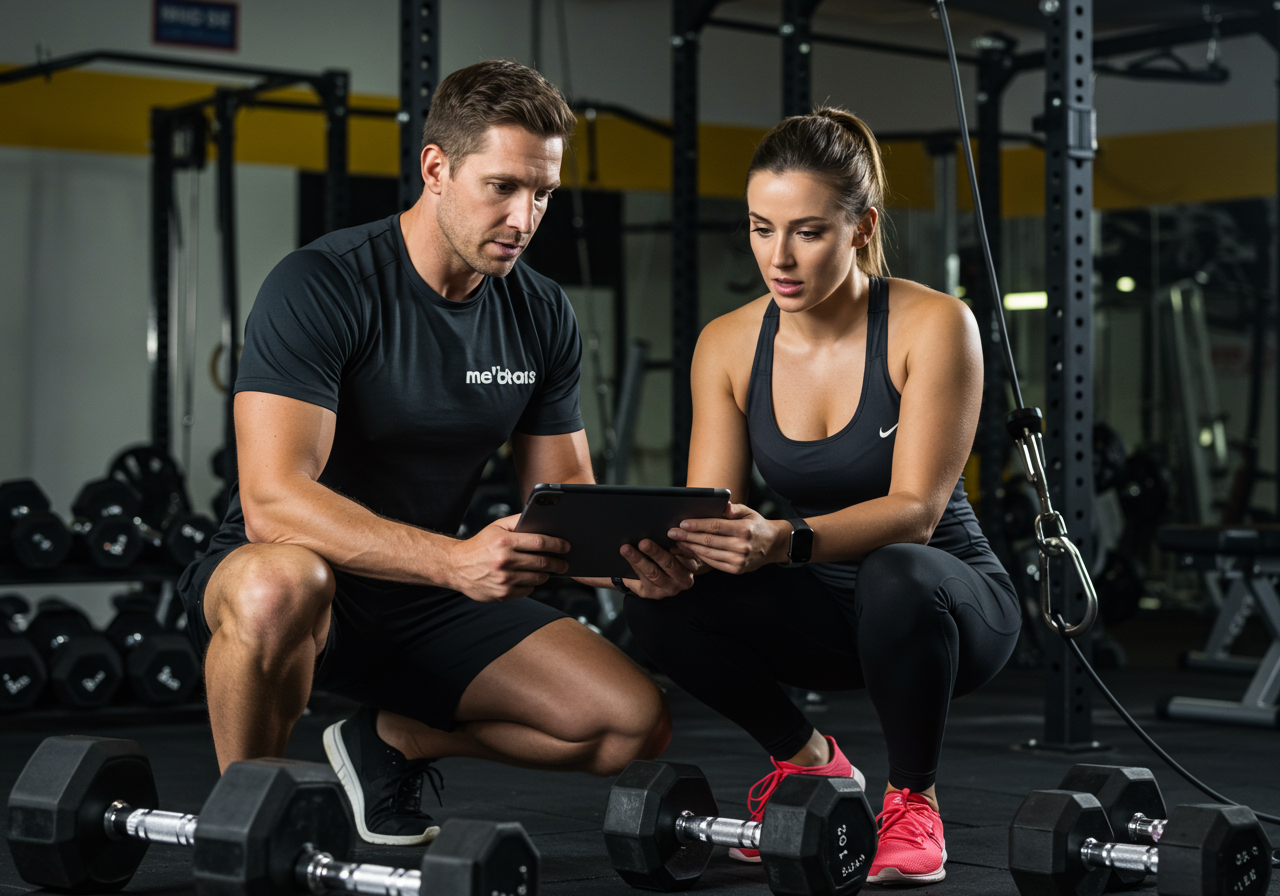
Apply a simple eight-week block and track every rep for reliable progress
This plan blends structure with flexibility. It suits new lifters and busy schedules.
- Upper A: Press focus, dumbbell lateral raises.
- Lower A: Squat focus, core.
- Upper B: Incline press, cable lateral raises.
- Lower B: Hinge focus, conditioning.
| Week | Exercise | Sets x Reps | Load | RIR |
|---|---|---|---|---|
| 1 | DB lateral raise | 3×15 | 5 kg | 2 |
| 2 | DB lateral raise | 3×16–18 | 5 kg | 1–2 |
| 3 | DB lateral raise | 4×12 | 6 kg | 1–2 |
| 4 | Cable lateral raise | 4×15 | Light | 1 |
| 5–6 | DB + myo-reps | 1×20 + 3×5 | 6–7 kg | 0–1 |
| 7 | Deload | 2×12 | 5 kg | 3 |
| 8 | Test set | AMRAP at 6 kg | 6 kg | 0–1 |
My sessions include a 6–8 minute Zone 2 warm-up. Heart rate sits near 125 bpm on average.
I log loads and RIR in the Garmin app. I track calories and protein in MyFitnessPal.
- Protein 1.6–2.2 g/kg daily.
- For growth, add 150–250 kcal above maintenance.
- For fat loss, subtract 300–500 kcal.
- Creatine 3–5 g daily works well.
- Garmin for heart rate and recovery.
- MyFitnessPal for macros.
- Strava for easy cardio logs.
Outcome proof, client feedback, and troubleshooting for long-term result interpretation
Real data drives confidence. These outcomes reflect consistent, honest work.
- DB lateral raise 10RM: 7.5 kg to 9.5 kg, up ~27%.
- Shoulder circumference: +1.8 cm at acromion level.
- Overhead press 1RM: +6% without shoulder irritation.
- Resting heart rate: 58 to 55 bpm from warm-up cardio.
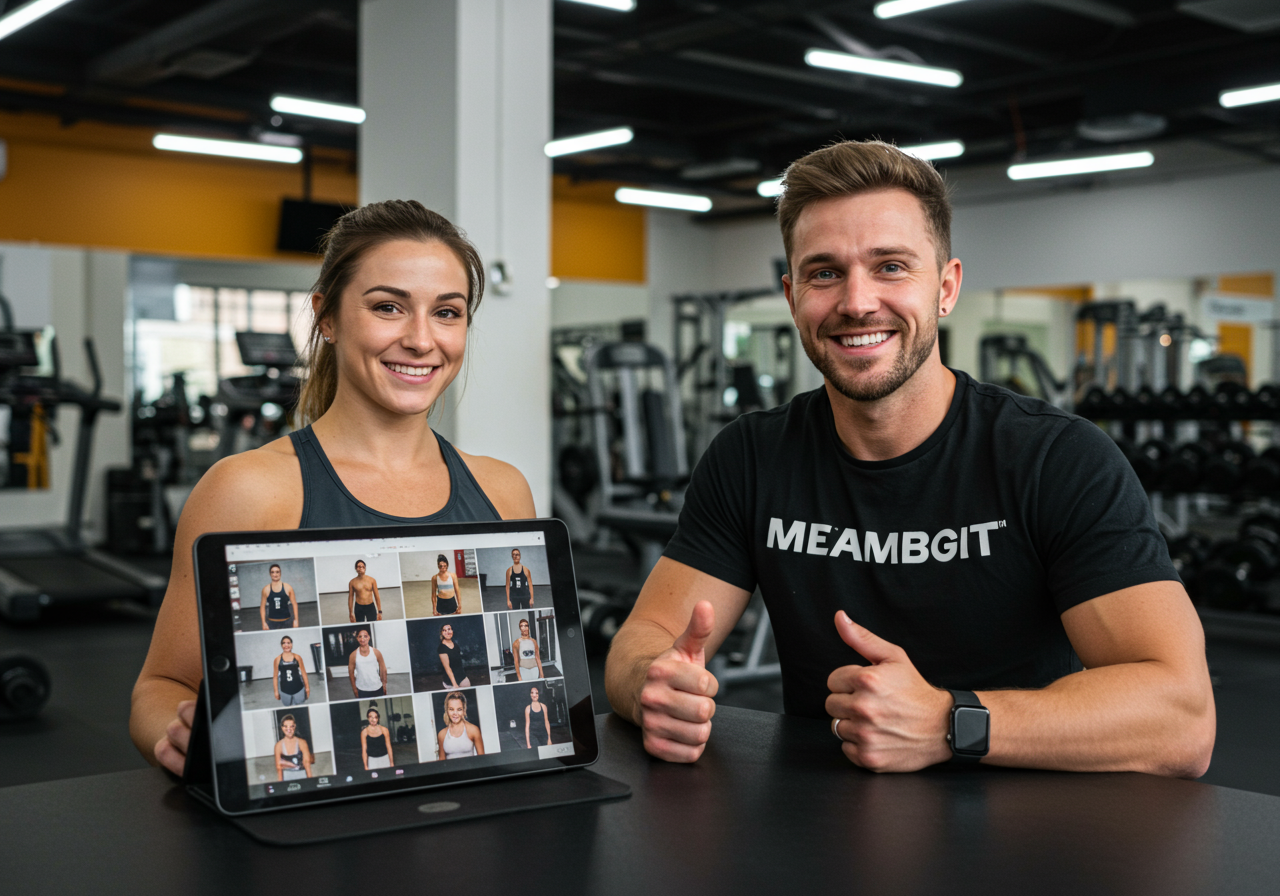
Client M., 34, office worker, gained visible capping in six weeks. She progressed from 3×12 at 3 kg to 4×15 at 5 kg. Her posture improved during typing hours.
Client D., 41, recreational runner, used cables due to elbow pain. He added 14 good reps per side at constant load. His presses felt smoother.
- Switch to cables for steadier tension.
- Try leaning lateral raises to extend the range.
- Use myo-reps once weekly for density.
- Deload volume every fourth week.
| Issue | Fix | Reason |
|---|---|---|
| Trap dominance | Depress shoulders, lighter load | Removes shrug assistance |
| Elbow discomfort | Softer elbow bend, neutral grip | Reduces strain |
| No growth | Increase weekly sets by 2 | Raises stimulus safely |
| Motivation dips | Track PR streaks, small goals | Visible wins build momentum |
Recovery supports progress. I average 7.5 hours sleep nightly. I hit protein targets 90% of days. I schedule one longer walk on rest days.
I tested HIIT finishers against steady cycling for fat loss. HIIT burned more time-efficient calories. However, easy cycling preserved deltoid recovery better. I use HIIT sparingly during heavy shoulder blocks.
Track body weight trends weekly. Pair progress photos with load logs. These habits confirm that your plan is working.