Skull Crushers: Top Triceps Isolation Exercise
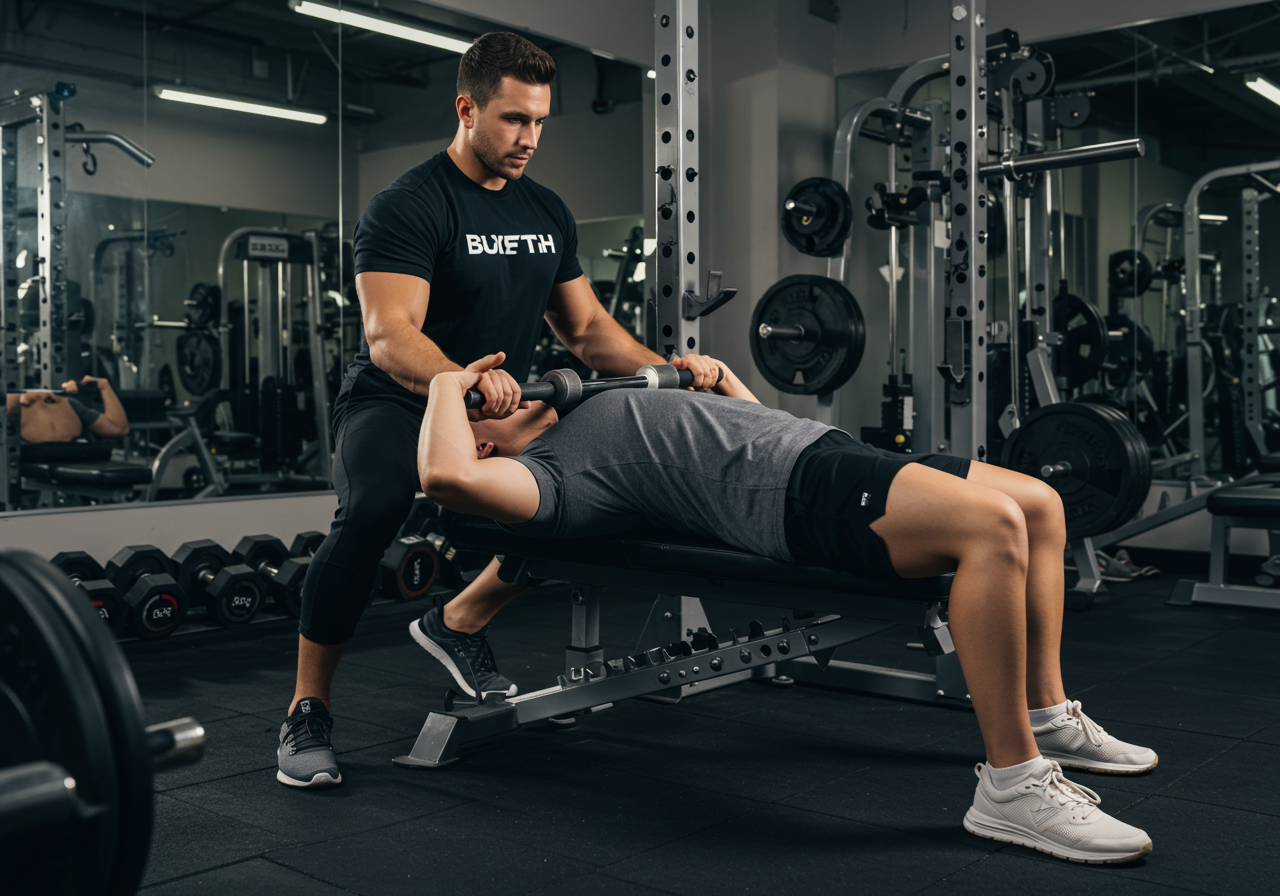
Build strong triceps with precise isolation and smart system design
Skull crushers target the triceps directly with minimal shoulder involvement. This focus builds pressing strength and arm size.
I use skull crushers as the primary triceps isolation in push sessions. This anchors growth around safe, repeatable technique.
The movement fits well with bench press, push-ups, and overhead press. Strong triceps improve lockout strength across these lifts.
- Keep upper arms still and slightly tilted back 10–20 degrees.
- Aim elbows at 30–45 degrees from the torso, not flared.
- Lower the bar behind the head to increase long-head tension.
- Use a 3-1-1 tempo: three down, one pause, one up.
- Stop 1–2 reps before form breaks.
Proper setup protects elbows and wrists. An EZ-bar reduces supination stress compared to a straight bar.
| Variation | Best Use | Load Range | Notes |
|---|---|---|---|
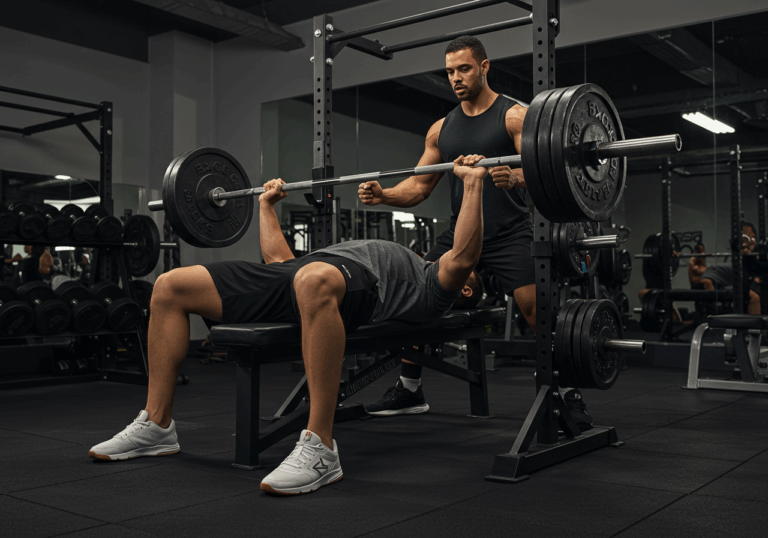
| EZ-bar flat bench | General strength and size | 6–12 reps | Wrist-friendly and stable. |
| Dumbbells neutral grip | Elbow comfort and symmetry | 8–15 reps | Independent arms reduce compensation. |
| Cable skull crushers | Constant tension finishers | 12–20 reps | Smooth resistance through range. |
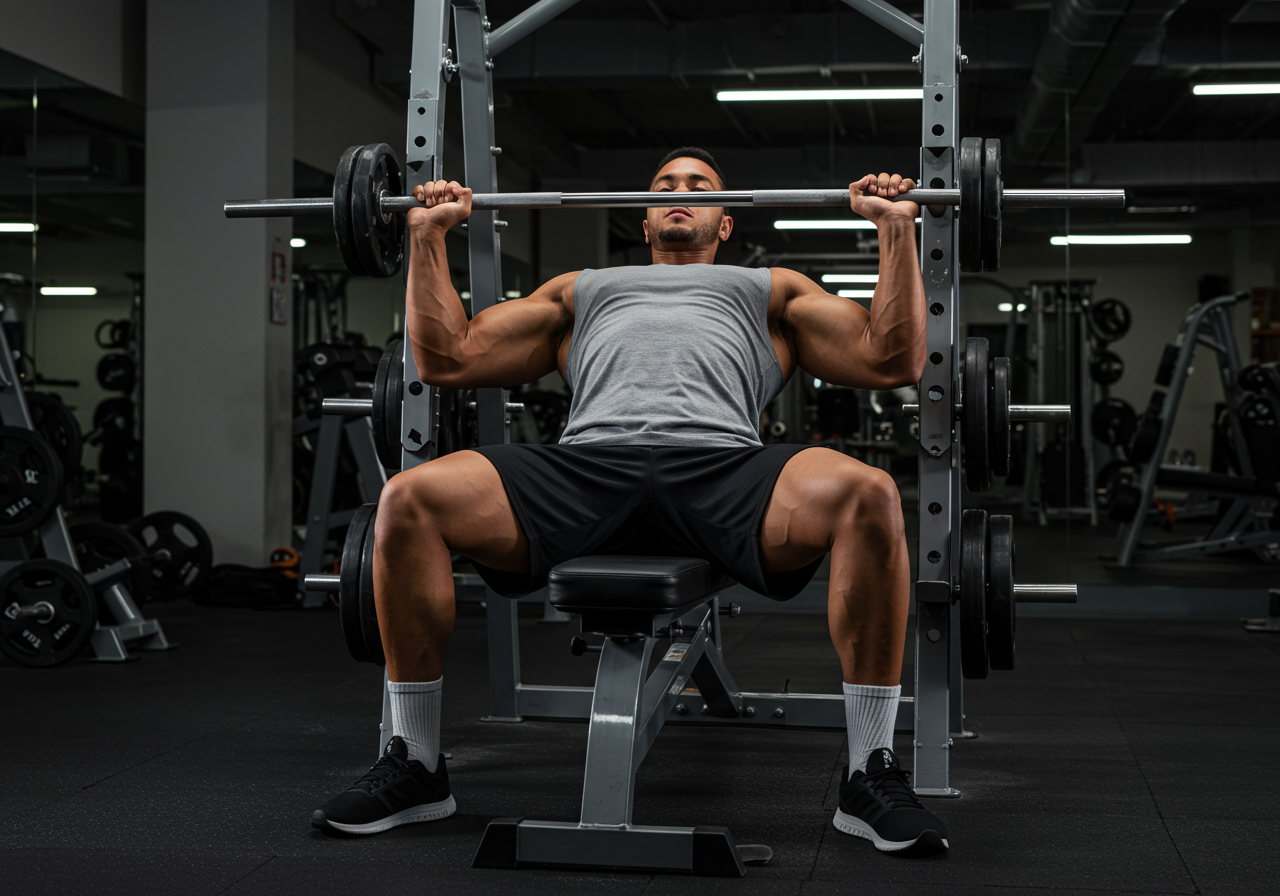
| Incline bench skull crushers | Long-head emphasis | 8–12 reps | Greater stretch with shoulder flexion. |
This foundation sets the stage for progressive loading. The next section organizes weekly work for steady gains.
Structure your week so skull crushers amplify total pushing strength
I program skull crushers after compound presses. This timing ensures triceps receive focused work without form collapse.
Beginners benefit from two push days weekly. Intermediates and advanced lifters often use two to three exposures.
- Warm-up: 5 minutes rowing, then band push-downs 2×20.
- Bench press: 3×6 at RPE 7.
- Skull crushers: 3×10 at RPE 8.
- Chest-supported row: 3×10.
- Face pulls: 2×15.
| Level | Weekly Split | Skull Crusher Prescription | Accessory Pairings |
|---|---|---|---|
| Beginner | 2x Push, 2x Pull, 1x Legs | 3×10, 60–75s rest | Band push-downs, face pulls |
| Intermediate | Upper/Lower/Upper/Lower | 4×8–10, 75–90s rest | Incline DB press, cable fly |
| Advanced | PPL rotation, 5–6 days | 5×6–8 heavy day; 3×12–15 pump day | Close-grip bench, dips, reverse fly |
I track heart rate to manage fatigue between sets. Light nasal breathing keeps me near Zone 1 during accessories.
| Week | Focus | Skull Crusher Load | Notes |
|---|---|---|---|
| 1–2 | Groove technique | RPE 6–7, 3×10 | Slow eccentrics, elbow comfort check. |
| 3–4 | Volume build | RPE 7–8, 4×8–10 | Add one set if recovery is good. |
| 5 | Intensity push | RPE 8–9, 5×6–8 | Short rest, strong technique. |
| 6 | Deload | RPE 6, 2×10 | Cut sets by half for recovery. |
This phased path supports safe progress. We now refine overload methods to break plateaus.
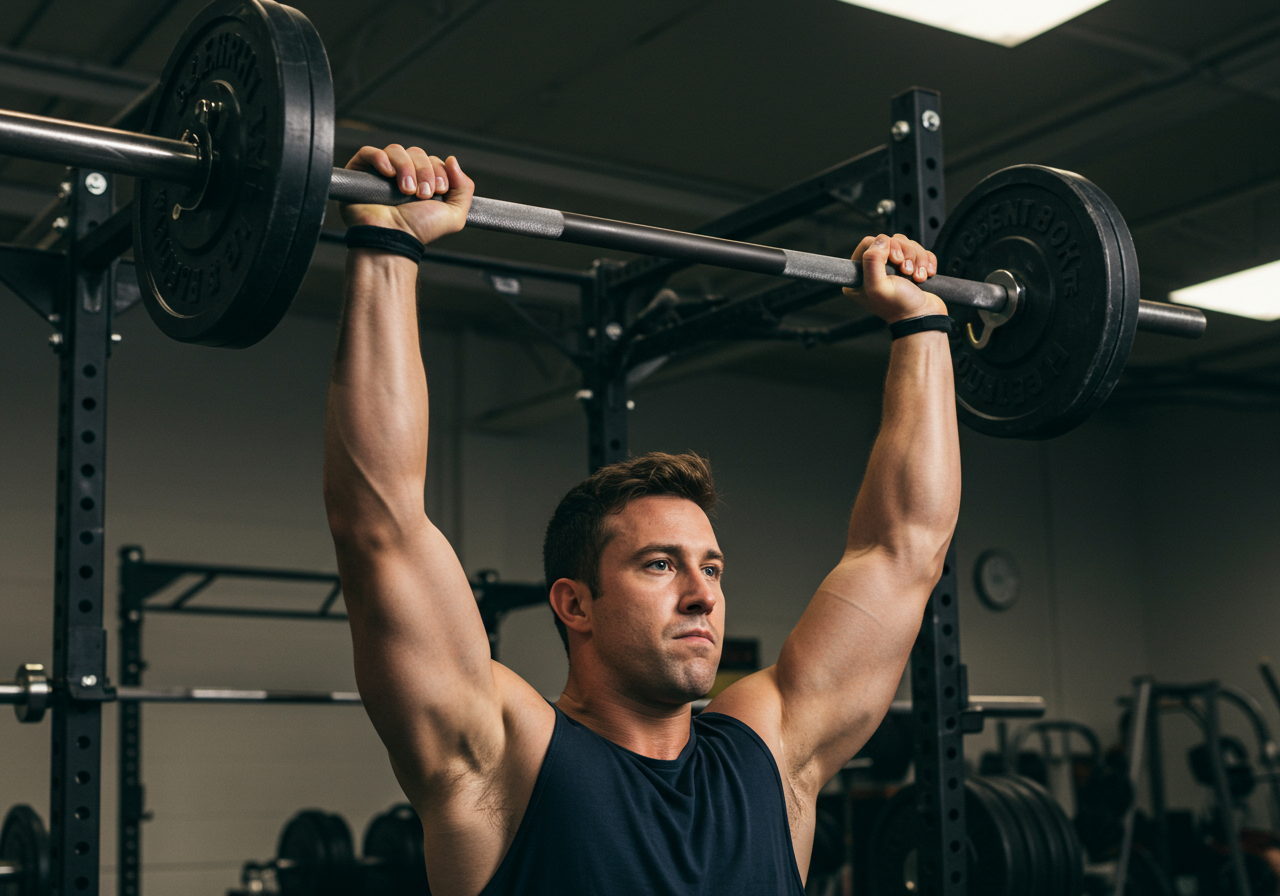
Apply targeted overload while protecting joints and form
Progress comes from small weekly steps. I add 2–5% load or one rep per set.
Grip choices affect comfort and force. I prefer narrow EZ grip for stable forearms.
| Method | Execution | When to Use |
|---|---|---|
| Tempo control | 3s down, 1s pause, 1s up | Technique weeks or tendon care |
| Range stretch | Lower behind head, elbows fixed | Long-head emphasis cycles |
| Double progression | 8–10 reps range, add load after 10 | All levels for steady gains |
| Density blocks | 10 minutes, EMOM 6–8 reps | Advanced pump and work capacity |
Common plateaus usually reflect unstable upper arms. I cue “pin biceps to ribs” during the eccentric.
Another issue is excessive wrist extension. I stack wrists directly above forearms and squeeze the bar.
Breathing remains steady through each set. I exhale on the way up without holding tension too long.
| Level | Progression Ladder | Target RPE |
|---|---|---|
| Beginner | DB 3×12 → EZ 3×10 → EZ 4×8 | 6–8 |
| Intermediate | EZ 4×10 → Incline EZ 4×8 → Cable 3×15 | 7–9 |
| Advanced | Heavy EZ 5×6 → Volume 3×12–15 → EMOM 10′ | 8–9 |
These tactics keep progress moving. The next section secures results with recovery and nutrition.
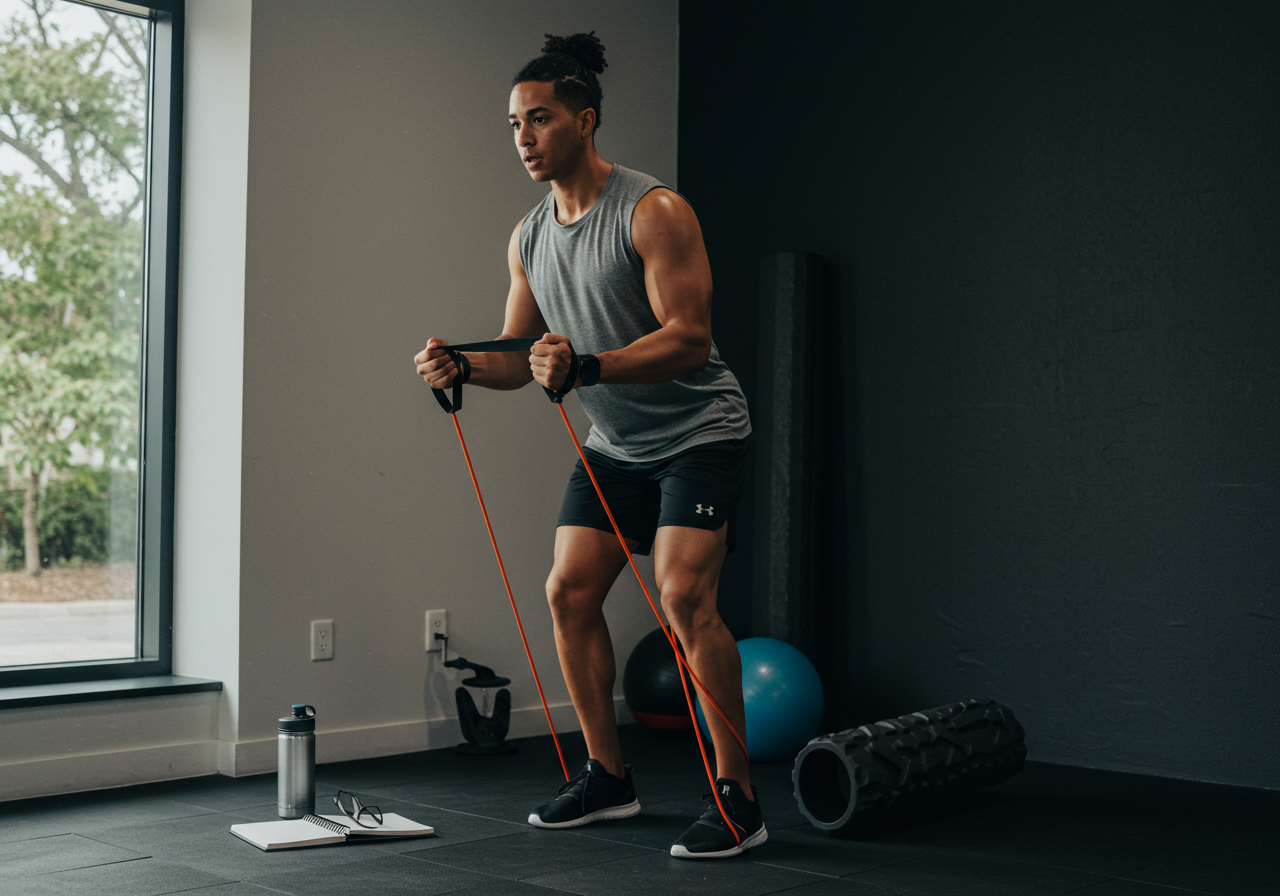
Support tendon health and muscle repair with smart recovery
Triceps respond well when recovery matches workload. I set protein near 1.6–2.2 g/kg body weight.
Calories support the goal. I run a slight surplus for size or a 250–400 kcal deficit for fat loss.
| Recovery Pillar | Action | Target |
|---|---|---|
| Sleep | Dark room, cool temperature | 7.5–9 hours nightly |
| Protein | 25–40 g per meal | 0.4 g/kg per feeding |
| Hydration | Electrolytes on training days | Urine pale straw color |
| Mobility | 3 drills pre and post | 5–8 minutes total |
- Forearm extensor flossing: 2×15 each arm.
- Band press-down isometrics: 3×20–30s holds.
- Scapular wall slides: 2×12.
I log food with MyFitnessPal to keep macros consistent. I verify sleep and HRV with Garmin wearables.
Light Zone 2 cycling aids recovery and nutrient delivery. I keep cadence easy for 20–30 minutes.
These habits keep elbows healthy and sessions productive. We now confirm results with real numbers.
MyFitnessPal helps macro tracking. Garmin tracks sleep and recovery.

Measure changes and refine based on clear feedback
My last six-week block emphasized skull crushers twice weekly. I paired them with close-grip bench press.
I started at 35 kg for 3×10 at RPE 7. I finished at 42.5 kg for 4×8 at RPE 8.
My close-grip bench one-rep estimate rose 7.5%. My arm circumference increased 1.5 cm at mid-brachium.
My resting heart rate stayed stable at 48–50 bpm. Zone 2 rides on Strava supported recovery and fat control.
| Metric | Start | Week 6 | Change |
|---|---|---|---|
| Skull crusher best set | 35 kg x10 | 42.5 kg x8 | +21% load |
| Close-grip bench e1RM | 112.5 kg | 121 kg | +7.5% |
| Arm circumference | 37.0 cm | 38.5 cm | +1.5 cm |
Client Mia started with dumbbells due to elbow soreness. She progressed to EZ-bar with no pain after four weeks.
She reported better push-up lockouts and a tighter arm look. Her testimonial highlighted confidence from clear progress charts.
Another client, Dan, stalled using high-rep fluff. We shifted to double progression with strict tempo.
He added 5 kg across six weeks and dropped elbow irritation. His bench lockout improved dramatically.
- After warm-up, perform AMRAP at 70% of best set.
- Record reps and RPE. Stop at RPE 9.
- Retest every two weeks.
My lesson came from rushing heavy work cold. I strained my right triceps tendon slightly one winter.
I fixed it with isometrics, slower eccentrics, and smarter loading. I returned stronger within three weeks.
Strava logs my easy rides between upper days. Light cardio keeps recovery on track.