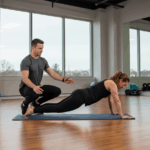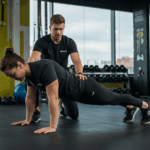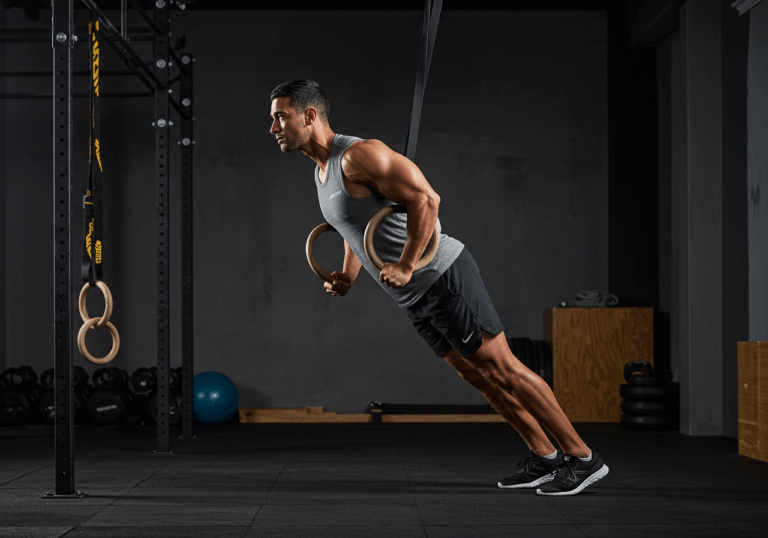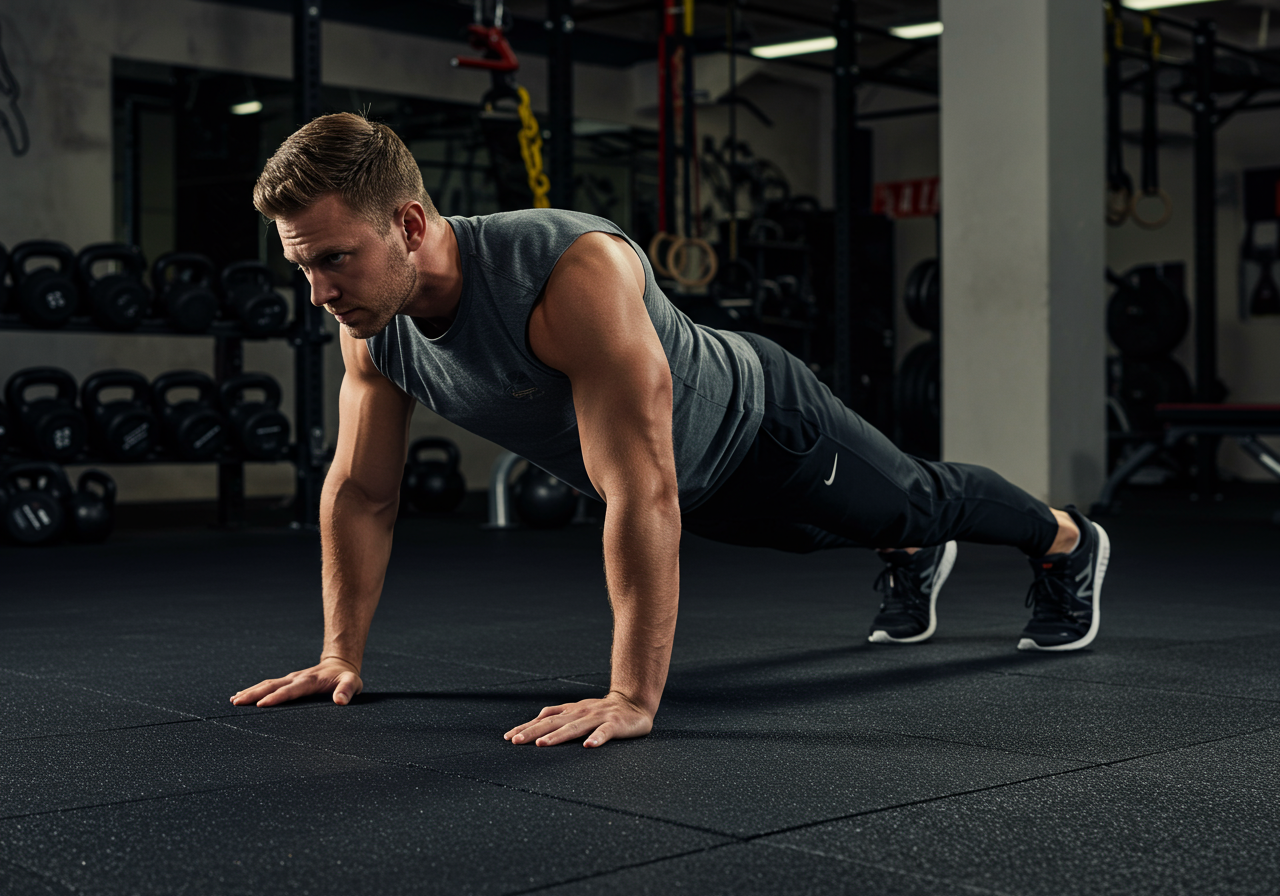
Spiderman Push-ups: Core & Oblique Push-up
Build a precise base for total-body strength
This movement trains pressing strength and anti-rotation control. It teaches your core to resist twisting while you push. It also conditions hips and obliques for everyday stability.
I structure this system for new lifters. I guide you through mechanics, progressions, and recovery. I also connect sessions to measurable results you can track.
- Oblique loading: The knee drive shifts load to one side.
- Anti-rotation: The torso resists twisting under pressure.
- Scapular control: The shoulder blade glides and stabilizes.
- Full-body tension: The glutes and abs prevent sagging.
My first month with this method changed my push-ups. I moved from 20 strict reps to 32. I also reduced shoulder discomfort by cueing protraction at the top.
- Breathing plank: 2 sets x 30 seconds, slow nasal breaths.
- Incline Spiderman push-up: 3 sets x 6 reps per side.
- Standing hip opener: 2 sets x 6 slow circles per side.
| Cue | What to feel | Why it matters |
|---|---|---|
| Hands under shoulders | Stacked joints, even pressure | Protects wrists and shoulders |
| Ribs down, glutes on | Solid plank alignment | Improves force transfer |
| Knee to same-side elbow | Oblique squeeze | Trains anti-rotation strength |
| Protract at top | Shoulder blade push | Builds shoulder stability |
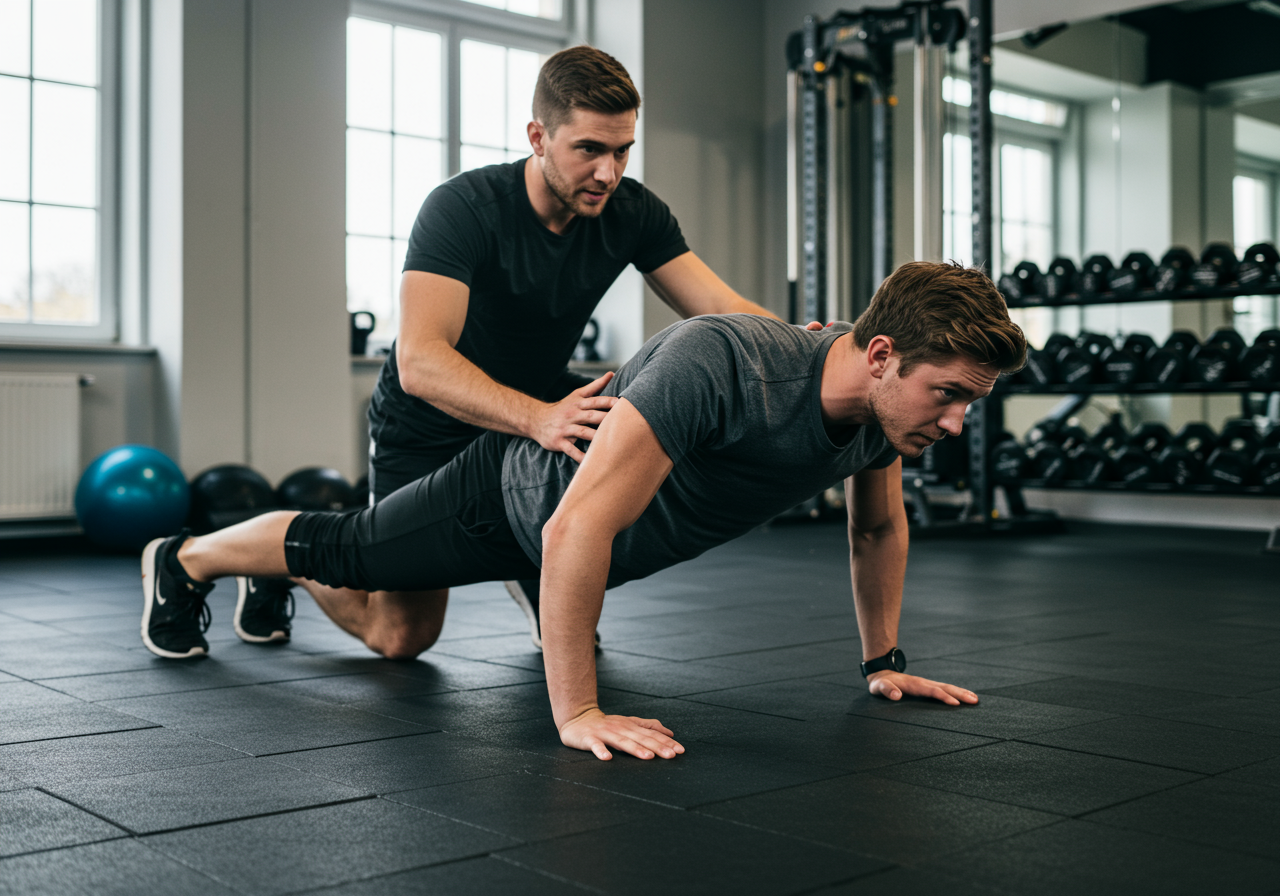
Master technique before adding intensity
Good form starts with a controlled plank. You maintain tension from head to heel. You move the knee only as far as control allows.
Follow these steps for each rep. You will feel stable and strong through the range.
- Set a plank with hands under shoulders and feet hip-width.
- Inhale gently through the nose and brace the abs.
- Lower with elbows ~45 degrees from your torso.
- Drive the right knee toward the right elbow without twisting.
- Press up while keeping ribs down and glutes engaged.
- Protract at the top, then repeat on the other side.
| Level | Exercise | Sets x Reps | Tempo | Rest |
|---|---|---|---|---|
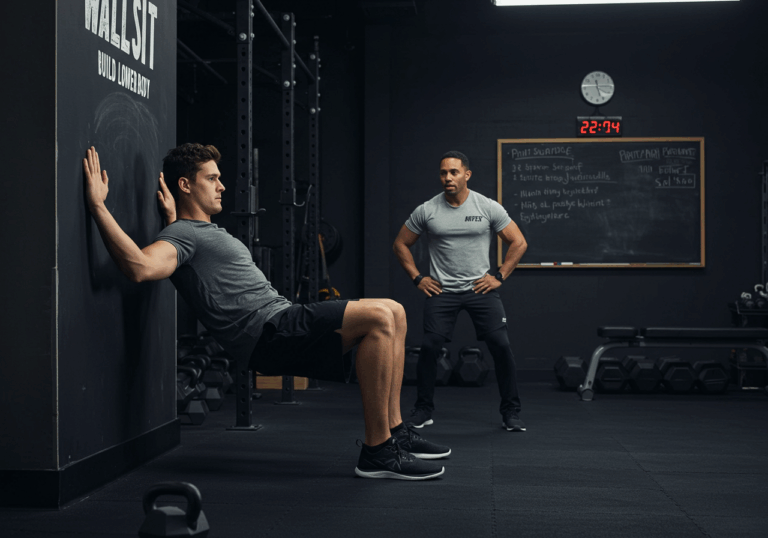
| Beginner | Wall Spiderman Push-up | 3 x 8/side | 3-1-2-1 | 60 sec |
| Beginner | Incline Spiderman Push-up | 3 x 6/side | 3-1-2-1 | 75 sec |
| Intermediate | Floor Spiderman Push-up | 4 x 5/side | 3-1-1-1 | 90 sec |
| Intermediate | Pause at bottom | 4 x 4/side | 4-2-1-1 | 90 sec |
| Advanced | Deficit Spiderman Push-up | 5 x 3/side | 3-1-1-0 | 120 sec |
| Advanced | Weighted Vest Spiderman | 5 x 2/side | 3-1-1-0 | 150 sec |
I increase difficulty by lowering the incline or adding tempo. I progress weekly when all sets stay in perfect form.
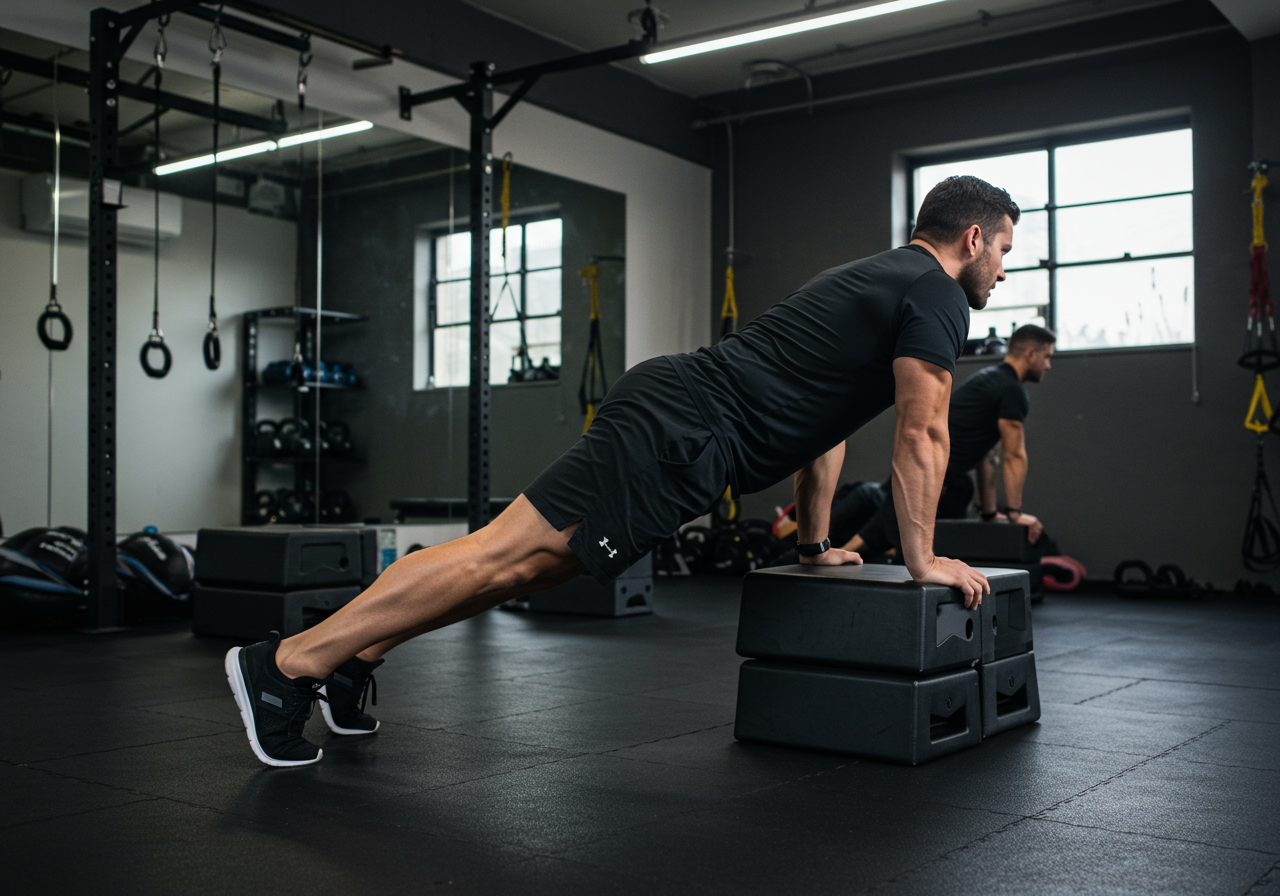
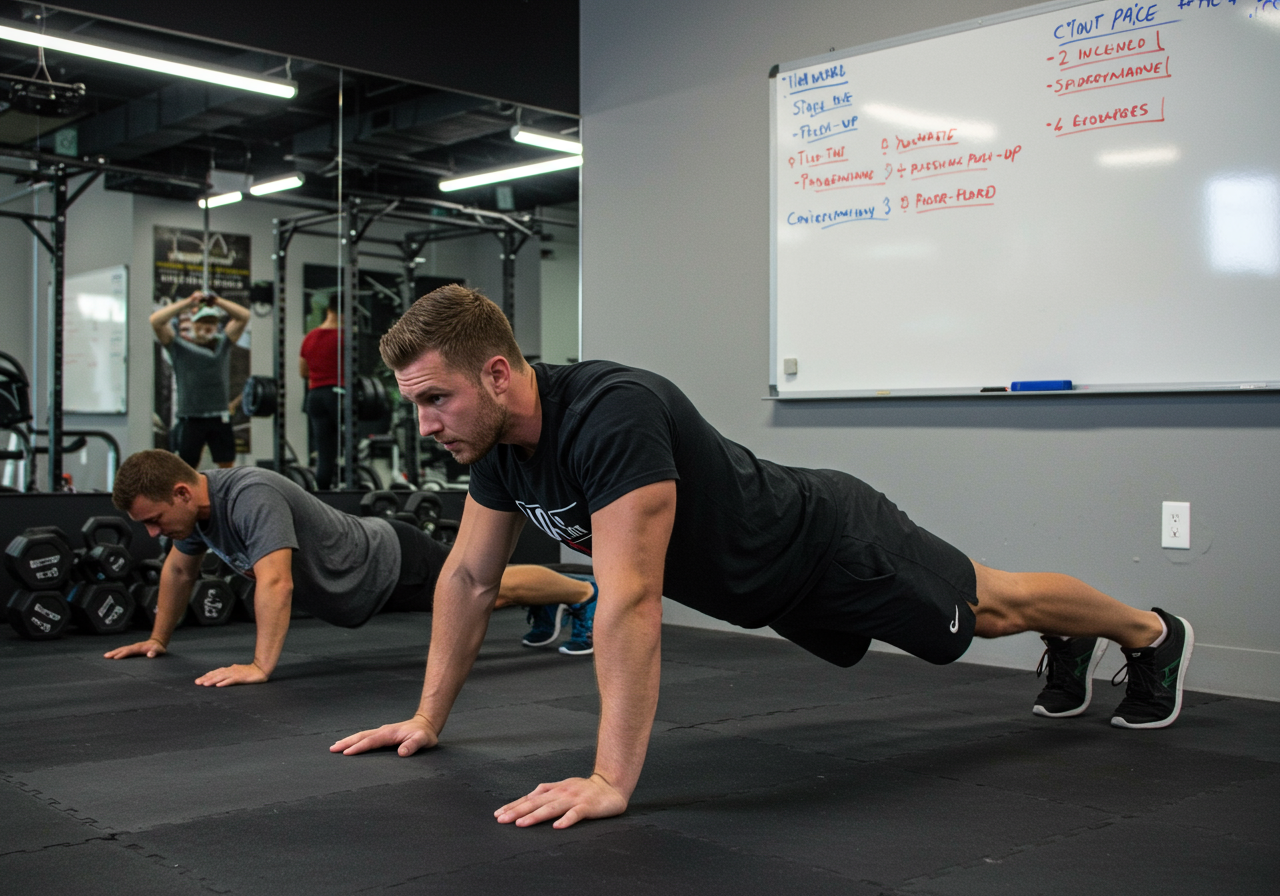
Drive progress with smart overload and support work
Effective overload changes leverage, range, or tempo. It also respects joints and tissues. It keeps your technique crisp.
These strategies build strength without junk volume. They also keep fatigue manageable across the week.
- Leverage: Move from wall to floor to deficit blocks.
- Load: Add a 5–10 kg vest only after mastery.
- Range: Pause two seconds at the lowest safe position.
- Tempo: Extend eccentric to four seconds for control.
- Density: Keep total reps, reduce rest over time.
Support exercises reinforce hips and shoulders. They also reduce twisting leaks during the knee drive.
| Accessory | Purpose | Prescription |
|---|---|---|
| Side plank with reach | Oblique endurance | 3 x 30–45 sec/side |
| Slider knee tucks | Core control | 3 x 8–12 slow reps |
| Scap push-ups | Shoulder stability | 3 x 10–15 |
| 90/90 hip switches | Hip rotation | 2 x 8/side |
I combine strength, mobility, and cardio for general fitness. I also track heart rate zones to manage stress.
| Day | Focus | Work | Notes |
|---|---|---|---|
| Mon | Spiderman strength A | Main lift + accessories | Zone 2 walk 20 min |
| Tue | Mobility + core | Hips, spine, side planks | Breathing drills |
| Wed | Spiderman strength B | Pause or deficit work | Light jog Zone 2 |
| Thu | Active recovery | Walk or cycle 30–40 min | Easy nasal breathing |
| Fri | Spiderman strength C | Weighted or density work | Finish with scap push-ups |
| Sat | Optional HIIT | 6 x 60 sec Zone 4 | Rest 90 sec |
| Sun | Rest | Walk 20 min | Mobility 10 min |
Introduce training in stages and support it with recovery
This rollout uses measured stress and clear targets. It also includes nutrition and sleep practices that match effort.
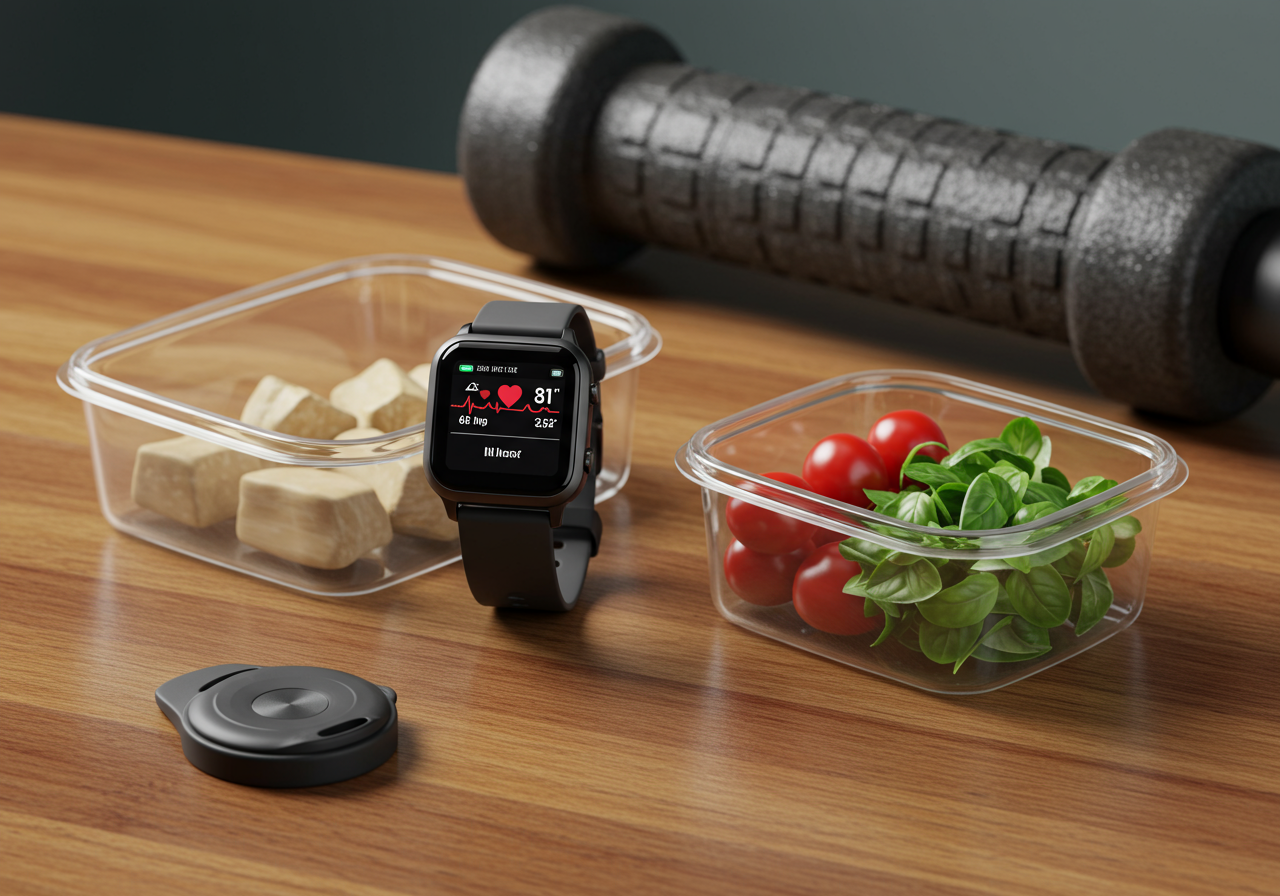
I track sessions using a Garmin watch for heart rate zones. I log food with MyFitnessPal for consistency.
- Week 1: Incline version, 3 days, total 24–30 reps per day.
- Week 2: Floor version, 3 days, total 24–36 reps per day.
- Week 3: Add pauses, 3 days, total 20–30 reps per day.
- Week 4: Deficit or density, 3 days, total 18–28 reps per day.
Cardio stays easy most days. I keep Zone 2 at 60–70% max heart rate.
| Session | Duration | HR Zone | Purpose |
|---|---|---|---|
| Strength block | 25–35 min | Zone 1–2 | Skill and tension |
| Zone 2 walk | 20–40 min | Zone 2 | Recovery and blood flow |
| Optional HIIT | 15–18 min | Zone 4 | Conditioning and fat loss |
- Calories: Bodyweight x 13–15 for recomposition.
- Protein: 1.6–2.2 g/kg daily across 3–4 meals.
- Carbs: 2–4 g/kg on training days for performance.
- Fats: 0.6–1.0 g/kg to support hormones.
- Hydration: 30–40 ml/kg per day with electrolytes if hot.
- Sleep: 7.5–9 hours with a consistent bedtime.
- Supplements: Creatine 3–5 g and vitamin D if deficient.
- Plateau: Reduce total reps by 20% for one week, then progress tempo.
- Sore wrists: Elevate hands on dumbbells and warm up longer.
- Achy shoulders: Narrow elbow angle and add scap push-ups.
- Low motivation: Use Strava streaks and 10-minute minimum sessions.
- Overtraining signs: Morning HR up 7% for 3 days, cut volume in half.
You can explore devices at garmin.com for accurate heart rate. You can log food at myfitnesspal.com for macro tracking.

Verify progress with numbers and real experiences
My last six-week block used three strength days. I paired two Zone 2 sessions and one short HIIT run.
My Garmin showed average training heart rate of 118 bpm in strength blocks. My HIIT peaked at 178 bpm.
| Metric | Week 0 | Week 3 | Week 6 |
|---|---|---|---|
| Max strict push-ups | 24 | 30 | 36 |
| Spiderman reps/set | 3/side | 5/side | 7/side |
| Waist at navel | 86 cm | 84 cm | 82.5 cm |
| VO2 max estimate | 43 ml/kg/min | 45 | 46.5 |
| RPE for main sets | 8 | 7 | 7 |
My VO2 max increased by about 8% in six weeks. HIIT improved fat loss more than steady walking in my case.
I ate 2,350–2,500 calories on training days. I kept protein at 170–185 grams using meals and shakes.
- "My shoulder stopped aching after two weeks of scap work." — Dana, 38
- "I hit 5 per side from zero. The pauses helped control." — Alex, 29
- "Zone 2 kept my energy steady. I slept better as well." — Priya, 41
I made mistakes early by skipping warm-ups. I strained a calf during a HIIT sprint. I now ramp with two easy intervals first.
I also tried daily max-out push-ups. My elbows flared and stalled. Backing off volume restarted progress within five days.
You can upload runs to strava.com to maintain streaks. You can track macros with myfitnesspal.com for consistent intake.