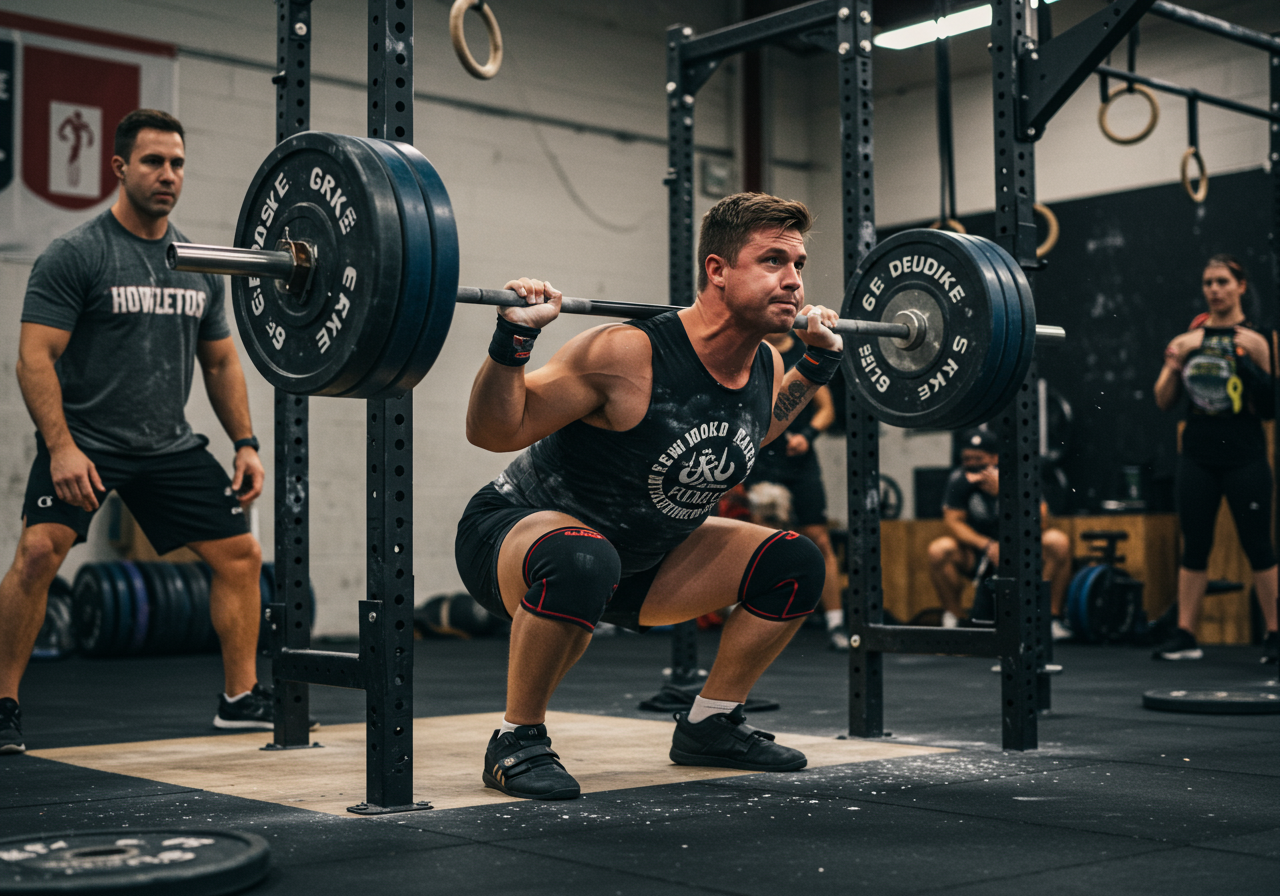
Squats: King of Lower Body, Core Builder

Squat-Centered Total Strength Blueprint
This blueprint places squats at the system’s core. Every supporting piece serves the squat pattern.
I design training around movement families. Squats drive legs, hips, and trunk stability.
I balance heavy bilateral squats with hinges, single-leg work, and core bracing drills.
Key principles:
- Mechanics first: Feet tripod, knees track over toes, ribs stacked.
- Bracing second: Inhale 360 degrees, hold, move under tension.
- Range third: Depth that maintains spine neutrality and balance.
- Load last: Add weight only when positions stay solid.
- Progression always: Raise reps, sets, or load with intent.
This system includes four weekly pillars. Lower A builds base strength and skill.
Upper body work supports posture and bar control. Lower B pushes power and volume.
Mobility and conditioning keep joints and heart ready for progress.
| Day | Focus | Main Work | Support |
|---|---|---|---|
| Mon | Lower A | Back Squat | Romanian Deadlift, Plank |
| Tue | Upper | Bench Press | Row, Face Pull |
| Thu | Lower B | Front Squat or Goblet Squat | Split Squat, Side Plank |
| Sat | Mobility + Zone 2 | Ankle/Hip Flow | 30–40 min Zone 2 |
Immediate routine: 30 minutes, three days weekly.
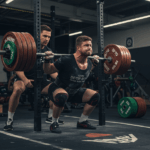
- Box Squat to bench: 4×6, 60–70% effort, 90s rest.
- Goblet Squat Pause: 3×8, 2s pause, 90s rest.
- Hip Hinge Drill with dowel: 3×10, slow.
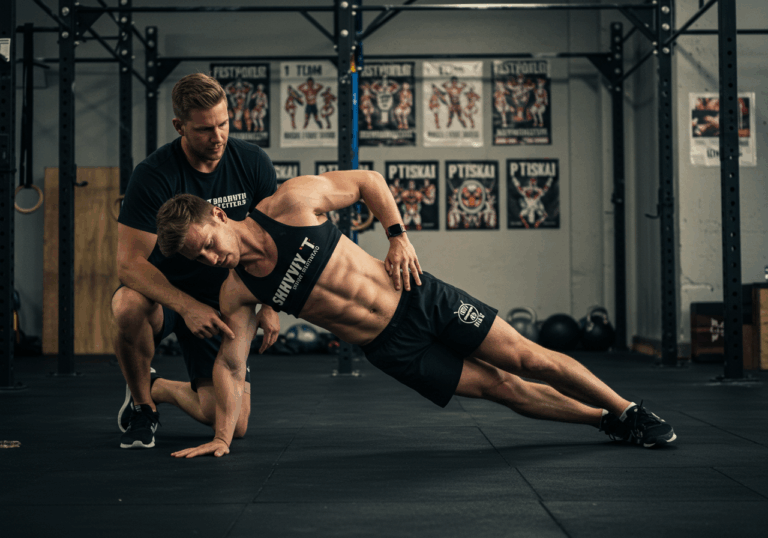
- Dead Bug + Side Plank: 3 rounds, 30s each.
Why this works: Squats load large muscles and demand trunk stiffness.
Mechanical tension drives strength and muscle gain efficiently.
Single-leg work fixes imbalances that limit heavy barbell success.
I run this framework with beginners and competitors. The structure scales by adjusting intensity.
I log sessions using Garmin for heart rate. I record lifts in a spreadsheet.

Progressions From First Rep To Heavy Bar
This section maps clear steps from novice to advanced lifter.
I progress movement first, then volume, then load. Technique stays strict.
| Level | Squat Variation | Sets x Reps | Tempo | Target RIR |
|---|---|---|---|---|
| Beginner | Box Squat, Goblet Squat | 3–4 x 6–10 | 3-1-1 | 2–3 |
| Intermediate | Front Squat, High-Bar Back Squat | 4 x 4–6 | 2-0-1 | 1–2 |
| Advanced | Low-Bar Back Squat, Pause Squat | 5 x 2–4 | 2-2-1 | 0–1 |
Overload methods:
- Double progression: Push reps, then add load next week.
- Top set + backoffs: One heavy set, then lighter volume.
- RIR control: Stop with 1–3 reps in reserve.
- Tempo emphasis: Slower lowering to build stability.
12-week map:
- Weeks 1–4: Technique block, 4×6–8 at RIR 2–3.
- Weeks 5–8: Strength block, 5×4–6 at RIR 1–2.
- Weeks 9–11: Intensification, 6×2–3 at RIR 0–1.
- Week 12: Deload, 60% volume, RIR 3–4.
I pair conditioning on separate days to protect leg recovery.
Zone 2 sits at 60–70% max heart rate. Breathing stays nasal when possible.
My Garmin shows 120–135 bpm during Zone 2 rides. Sessions last 30–40 minutes.
Respect knee tracking and depth tolerance. Pain means regress variation.
Warm up joints before loading. Never skip ramp-up sets.

Recovery, Mobility, and Core Bracing Integration
Recovery multiplies your workload. Strong lifters recover like professionals.
I use a short mobility stack before every squat day. It reads quick and effective.
| Drill | Purpose | Dose |
|---|---|---|
| Ankle Knee-to-Wall | Improve dorsiflexion depth | 2x60s each |
| 90/90 Hip Switches | Open hips safely | 2×10 slow |
| Cat-Cow + T-Spine Reach | Free thoracic rotation | 2×8 each |
Bracing sequence: Inhale 360 degrees into belt line or palms.
Lock ribs over pelvis. Maintain tension through the entire rep.
Nutrition supports adaptation. Protein drives repair and muscle growth.
I set daily protein at 1.6–2.2 g per kilogram bodyweight.
I place carbs around sessions for energy. Fats cover hormones and satiety.
| Goal | Calories | Macros | Notes |
|---|---|---|---|
| Recomp | Bodyweight x 14 | 30% P, 40% C, 30% F | High protein always |
| Cut | Bodyweight x 11–12 | 35% P, 40% C, 25% F | Keep strength work |
I log food with MyFitnessPal for accuracy. The barcode tool saves time.
Sleep matters most. I schedule 7.5–9 hours nightly and reduce late caffeine.
Supplements support habits. They do not replace food or sleep.
- Creatine: 3–5 g daily, any time.
- Caffeine: 2–3 mg/kg before training.
- Vitamin D: Only with confirmed deficiency.
I learned hard lessons. I once skipped warm-up and strained my calf lightly.
I now follow ramp sets before heavy squats. Mistakes taught better habits.

Onboarding Plan, Weekly Flow, and Fixes
This plan guides your first month smoothly. We build skill and confidence.
| Week | Focus | Main Targets |
|---|---|---|
| 1 | Technique | Box height dialed, stable bracing |
| 2 | Volume | Add one set, keep RIR 2 |
| 3 | Load | Increase 2.5–5 kg if reps met |
| 4 | Consolidate | Hold load, polish depth |
Weekly flow:
- Mon: Back Squat 4×6, RDL 3×8, Plank 3x30s.
- Wed: Upper push-pull 45 minutes, RPE 7.
- Fri: Front or Goblet Squat 5×5, Split Squat 3×10.
- Sat: Zone 2 bike 35 minutes, 120–135 bpm.
Stalls happen to everyone. We address causes first, not symptoms.
- Plateau: Drop volume 20% for one week. Push top set next week.
- Overreaching: Resting heart rate up 5 bpm. Reduce intensity immediately.
- Motivation dip: Set a process goal. Film one clean set weekly.
- Knee ache: Shift to box or safety bar squats for two weeks.
Sharp pain requires regression and assessment. Do not push through joint pain.
Form breakdown under load risks injury. Cut the set and reset stance.
I time rest with a simple gym timer app. I keep notes on bar speed and RIR.
I track cardio using Strava for route logs. Data keeps decisions objective.

Proof, Metrics, and Client Outcomes – long-term result interpretation
Real numbers guide our choices. I measure strength, body composition, and conditioning.
| Subject | Timeline | Squat Change | Other Metrics |
|---|---|---|---|
| Me | 10 weeks | 315×5 to 365×3 | RHR 54 to 50 bpm |
| Maya | 8 weeks | Goblet 16 kg to Front 40 kg x5 | Fat −3.2%, Scale −3.4 kg |
| Omar | 6 weeks | Back Squat 80 kg to 110 kg | VO2 max +8% (Garmin) |
Maya combined squats with short intervals. HIIT cut fat faster than steady rides.
Her intervals were 10 x 60 seconds hard with 90 seconds easy. Twice weekly.
Omar used steady Zone 2 cycling. He improved work capacity and kept legs fresh.
My session example: 55 minutes lower body.
- Back Squat: Top set 150 kg x 4 at RIR 1.
- Backoffs: 4×5 at 130 kg, 2 minutes rest.
- RDL: 3×8 at 110 kg. Side Plank: 3x35s.
- HR average: 112 bpm. Peak: 138 bpm (Garmin).
Food logs from MyFitnessPal showed 2,650 kcal on training days. Protein hit 190 grams.
Average sleep reached 7 hours 45 minutes. Recovery scores matched performance days.
How to verify progress:
- Film one top set weekly from side and rear.
- Log RIR and depth notes next to load.
- Track resting heart rate every morning.
- Measure thigh and waist every two weeks.
Clients reported higher confidence and less knee discomfort. Technique focus produced durable results.
I store runs and rides on Strava for trends. I monitor HRV through Garmin daily.
Garmin, Strava, and MyFitnessPal supported every metric.