Static Stretching: Muscle Relaxation, Range of Motion
Purpose, body mechanics, and how it fits into total training
Static stretching improves range by teaching your nervous system to relax. I use it after workouts.
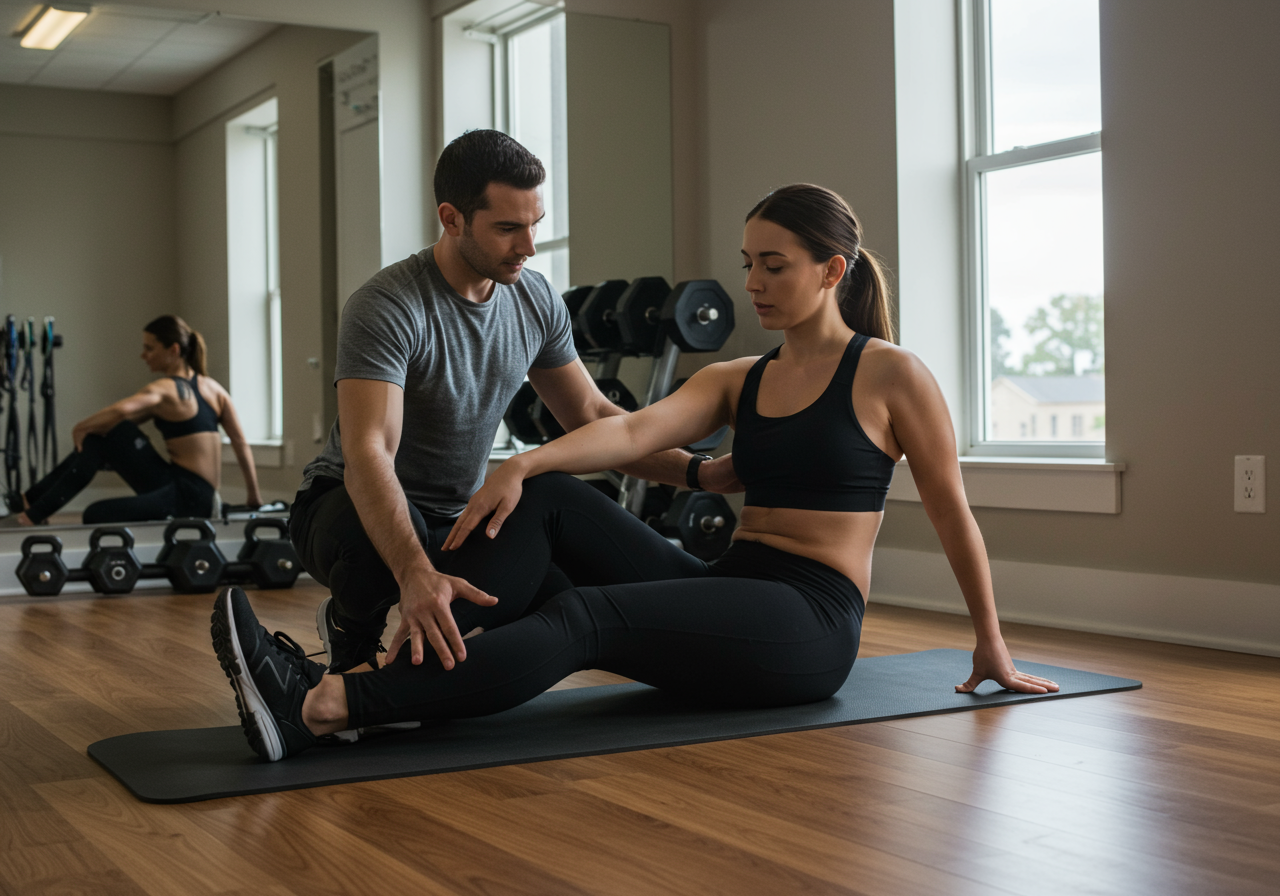
Body mechanics matter for safety and results. I align joints, keep a neutral spine, and avoid pain.
Timing determines outcomes. I place static holds post-exercise or at night to reduce tension.
Evidence supports consistent holds of 30–60 seconds. Longer holds aid stretch tolerance, not tissue length.
Integration delivers better results. I pair static stretching with strength and light cardio to cement mobility.
Individualization prevents setbacks. I scale holds, angles, and props based on comfort and history.
| When | Goal | Holds | Notes |
|---|---|---|---|
| Post-workout | Relaxation + ROM | 30–60s x 1–3 | Muscles just trained |
| Evening | Downshift CNS | 45–90s x 1–2 | Warm shower first |
| Off-days | Maintenance | 30–45s x 1–2 | Light mobility first |
Breathing supports relaxation. I cue slow nasal inhales and longer exhales to downshift tension.
Step-by-step execution with clear cues and timings
Preparation sets your session up for success. I begin with 3 minutes of easy joint circles.
Breathing guides depth. I inhale gently and deepen only on slow exhales.
| Stretch | Setup & Cues | Hold | Breathing |
|---|---|---|---|
| Calf wall stretch | Heel down, knee straight, hips square | 45s/side | 4-6 breath cycles |
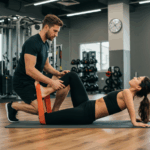
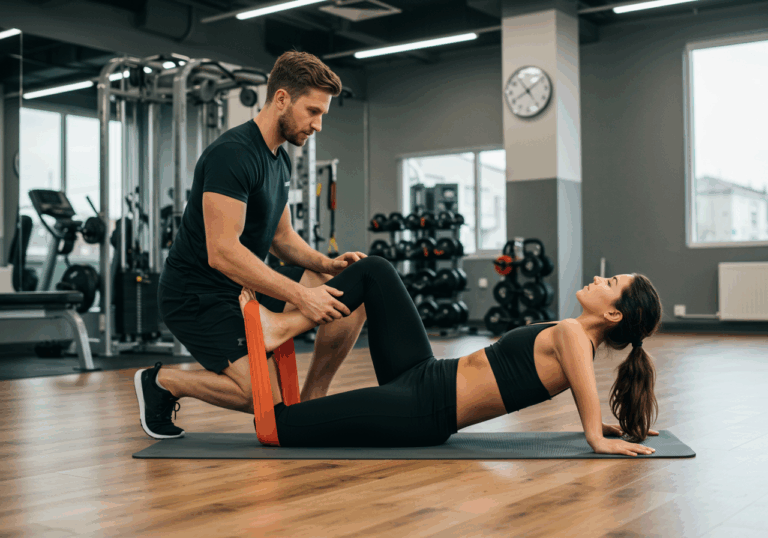
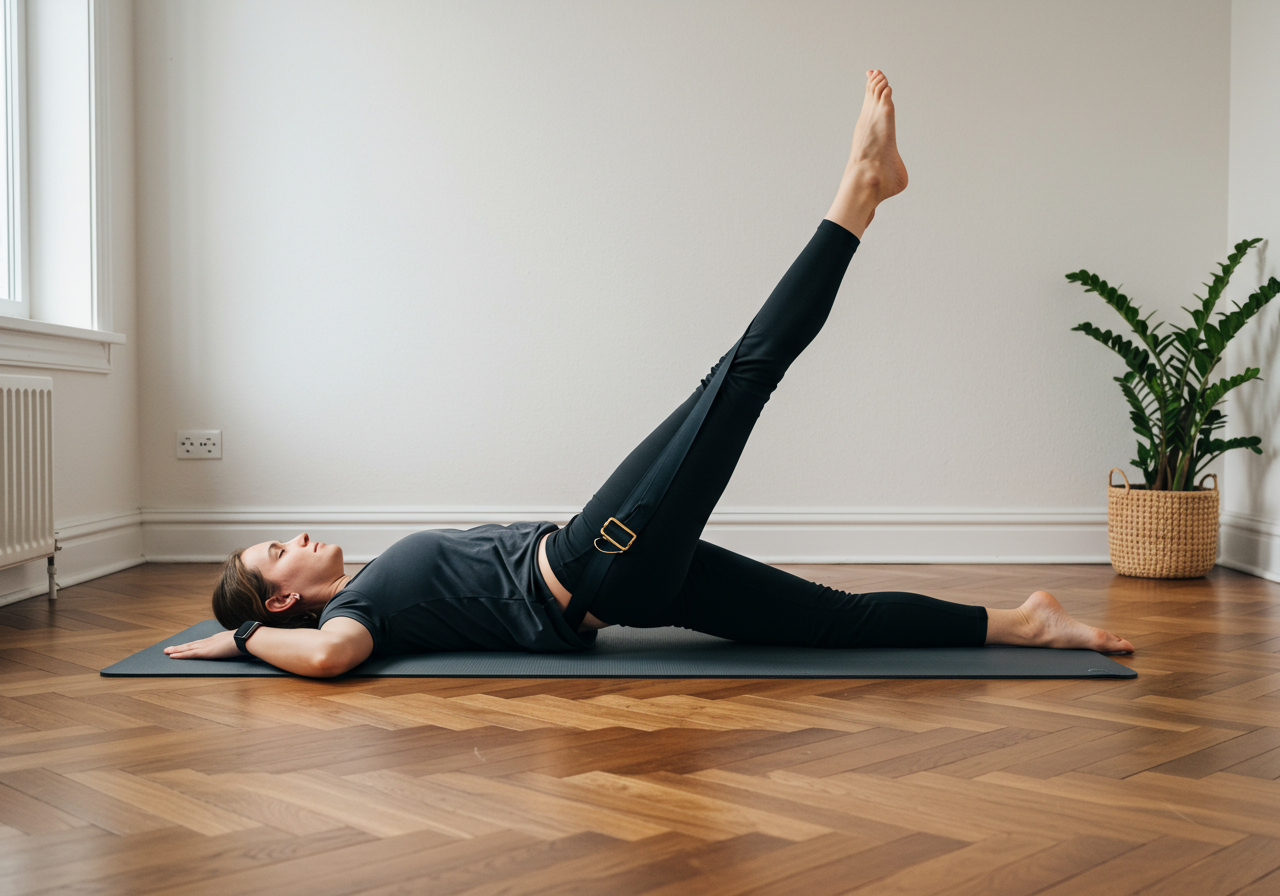
| Supine hamstring | Use strap, keep pelvis neutral | 60s/side | Long exhales |
| Figure-4 glute | Ankle over knee, pull thigh gently | 45s/side | Slow nasal |
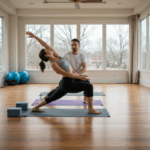
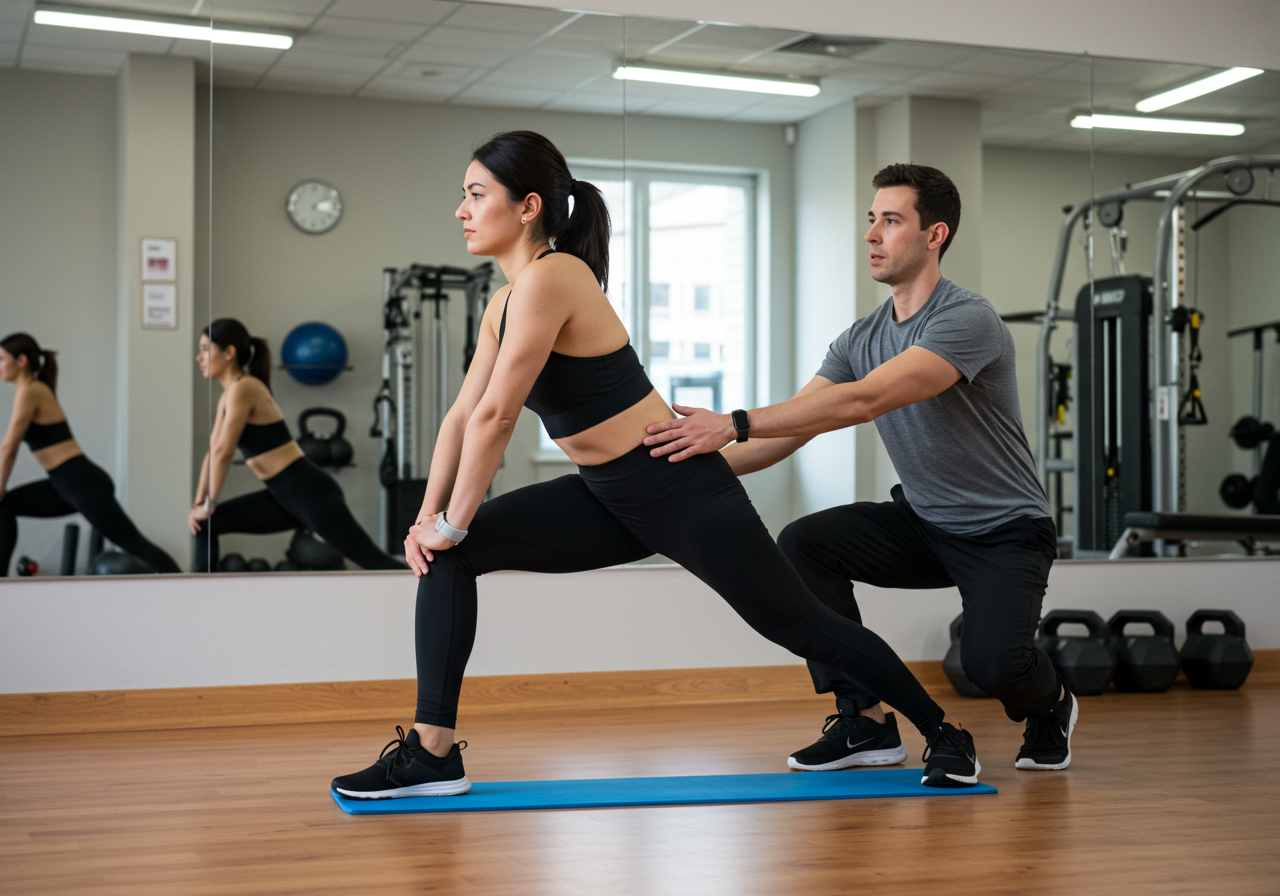
| Hip flexor lunge | Posterior tilt, ribs stacked | 60s/side | Exhale, tuck more |
| Pec doorway | Elbow at 90°, step forward | 45s/side | Relax jaw |
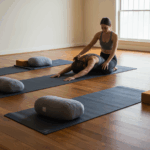
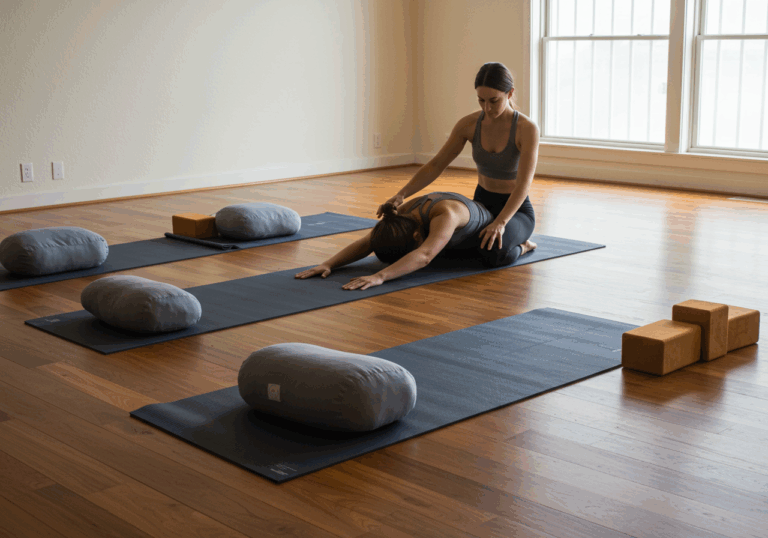
| Lat child’s pose | Hands on blocks, hips back | 60s | Belly inflates |
| Upper-trap side bend | Shoulders down, gentle hand assist | 30–45s/side | Smooth exhales |
Progress relies on small adjustments. I nudge range only when breath remains calm.
Finishing sets the tone for recovery. I end with two minutes of quiet diaphragmatic breathing.
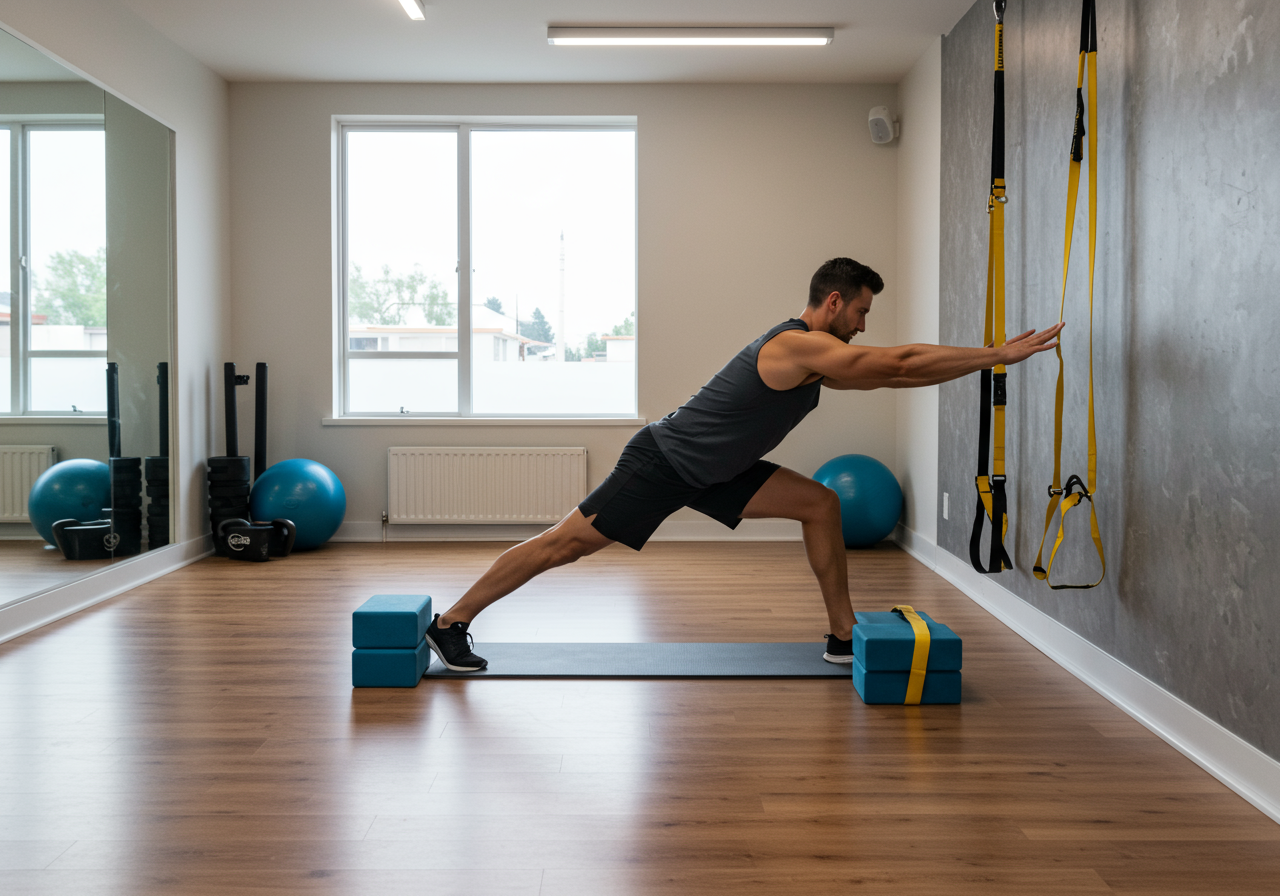
Load, hold, and positional progressions that meet you where you are
Beginners need gentle leverage. I use straps, blocks, and short holds first.
| Level | Method | Hold/Volume | Progress Trigger |
|---|---|---|---|
| Beginner | Supported positions, mild tension | 20–30s x 1–2 | RPE stretch ≤3/10 |
| Intermediate | Full range positions | 30–60s x 2–3 | Stable breath, symmetry |
| Advanced | Loaded stretch or long holds | 60–90s x 2–3 | No shaking, no pain |
Strength pairing protects mobility. I follow hip flexor stretches with glute bridges for balance.
Heart rate guidance aids recovery. I cool down at Zone 1 for five minutes after lifting.
App tracking supports consistency. I log sessions on Garmin and Strava.
Progress metrics make wins visible. I test sit-and-reach and shoulder flexion every two weeks.
Advanced training needs caution. I avoid intense static holds before sprints or heavy attempts.
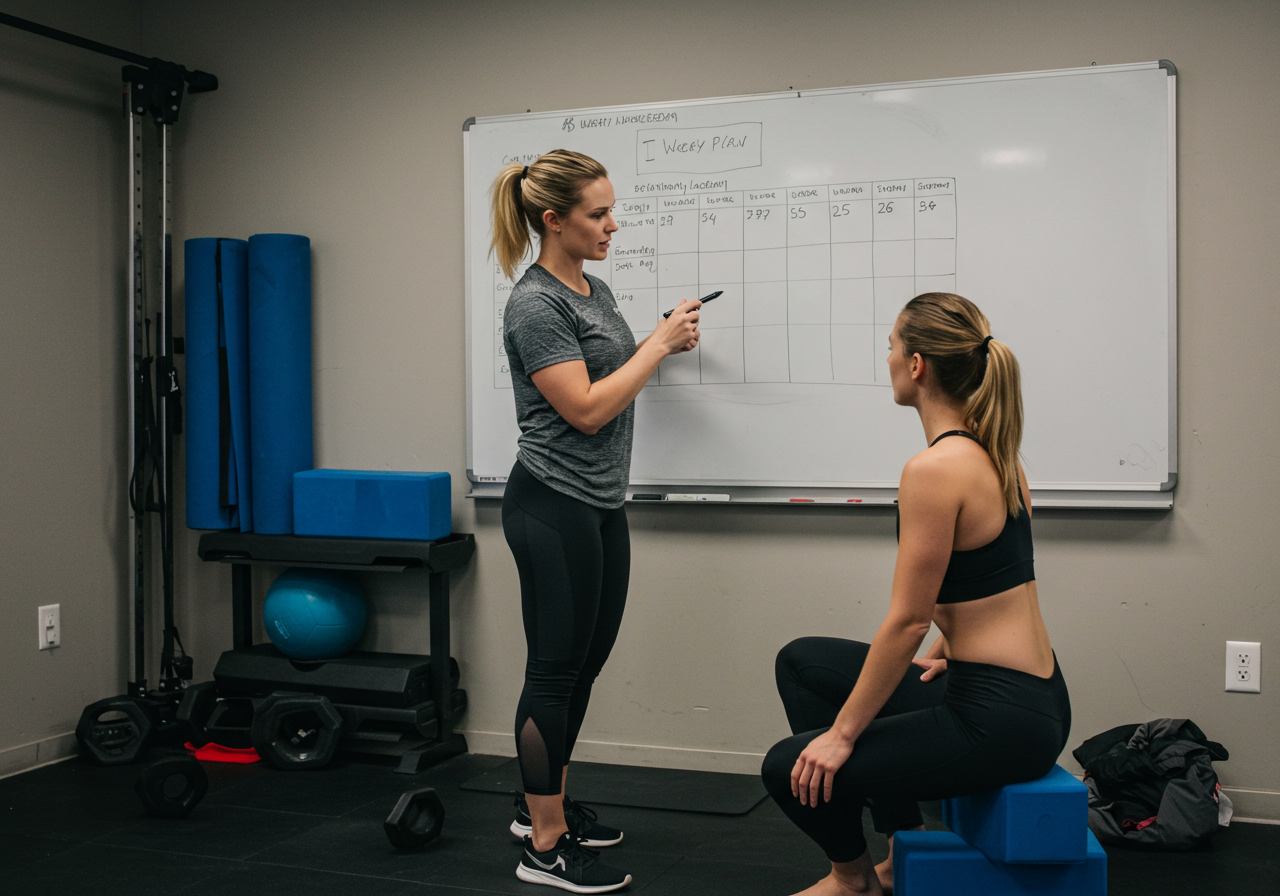
Scheduling, nutrition, recovery, and solutions to common problems
Structure creates momentum. I use a simple weekly layout that supports strength and cardio.
| Day | Main Work | Static Focus | Notes |
|---|---|---|---|
| Mon | Lower strength | Hips, calves | Zone 1 cool-down 5 min |
| Tue | Easy run | Hamstrings | Hold 45–60s |
| Wed | Upper strength | Pecs, lats | Doorway + child’s pose |
| Thu | Rest or walk | Full body | Evening session |
| Fri | Total strength | Hips, shoulders | Longer holds |
| Sat | Intervals or hills | Quads, calves | Light stretch only |
| Sun | Recovery walk | Breathing session | 5–8 minutes |
Nutrition supports tissue recovery. I aim for 1.6–2.2 g/kg protein daily for repair.
Calorie targets depend on goals. I use a slight deficit for fat loss or maintenance for performance.
Hydration affects tissue extensibility. I drink 30–35 ml/kg daily with electrolytes on hot days.
Tracking builds awareness. I log meals on MyFitnessPal for two weeks per month.
Common problems need direct fixes. I match the issue to an action below.
| Issue | Likely Cause | Action |
|---|---|---|
| Plateau | No progressive holds | Add 5–10s weekly or add a set |
| Soreness | Too much intensity | Reduce to 20–30s holds |
| Motivation dip | Sessions too long | Do 5-minute micro-sessions |
| Pinch pain | Poor alignment | Adjust angles or stop |
Heart rate monitoring reduces overdoing. I keep cool-downs in Zone 1 to promote recovery.
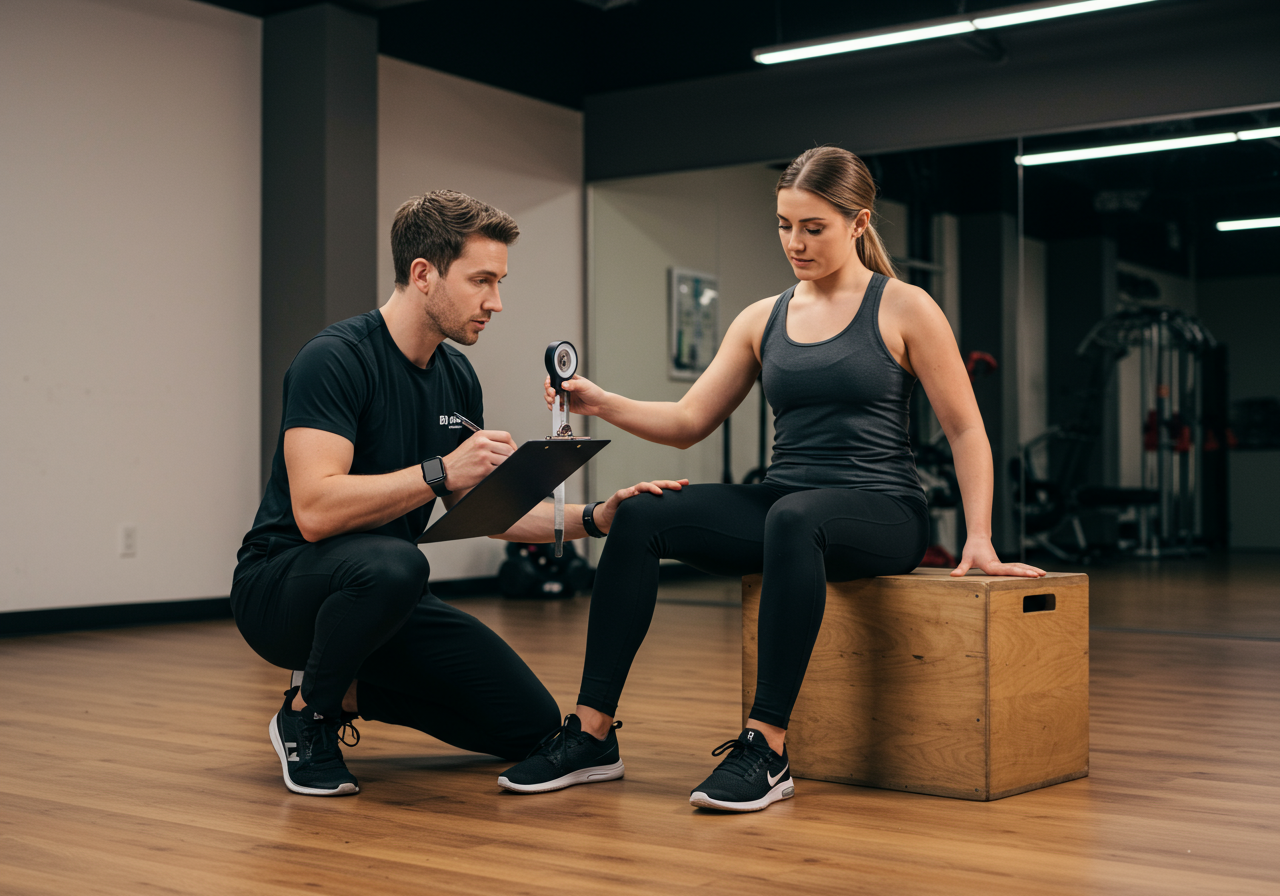
Data, client outcomes, and long-term result interpretation
Objective tests keep us honest. I track ROM, comfort, and training readiness monthly.
| Metric | Baseline | 6 Weeks | 12 Weeks |
|---|---|---|---|
| Sit-and-reach | +2 cm | +7 cm | +11 cm |
| Shoulder flexion | 150° | 165° | 175° |
| Hamstring SLR | 60° | 75° | 85° |
| Perceived stiffness | 7/10 | 4/10 | 3/10 |
Personal training logs show context. I kept HR in Zone 1 during cool-downs consistently.
Real sessions build confidence. I ran 30 minutes at Zone 2 and stretched for 12 minutes after.
Heart rate averaged 136 bpm for the run. Cool-down sat at 98–105 bpm.
Strength days included 5×5 squats at 80 kg. I stretched hips and calves for 10 minutes.
Client stories provide real proof. A desk worker improved shoulder flexion from 145° to 172° in 10 weeks.
She reported easier overhead presses and less neck tightness. She also slept better.
Another client reduced hamstring stiffness from 8/10 to 3/10. He ran pain-free hills again.
Nutrition rounded results. Clients ate 1.6–2.0 g/kg protein and slept 7–8 hours nightly.
Supplements stayed simple. We used creatine monohydrate and vitamin D when deficient.