The 10-Minute Daily Hip Mobility Routine That Fixes Pain, Improves Performance, and Undoes Hours of Sitting
Why Your Hips Are Probably the Most Neglected Part of Your Body
I didn’t think about my hips until they started causing problems everywhere else. Lower back ache that wouldn’t resolve despite stretching my lower back. Knee discomfort during squats that physio couldn’t fully explain. A general stiffness in movement that made me feel older than I was. When a sports physiotherapist finally assessed my hip mobility and found I had the range of motion of a 60-year-old at 32, the source of all those problems suddenly made sense.
The hip joint is the central hub of human movement. Every lower body exercise, every athletic movement, every time you stand from a chair or climb stairs, the hips are involved. When hip mobility is limited — as it is for the majority of adults who sit for 8+ hours daily — the joints and muscles above and below compensate. The lower back takes on the mobility the hips should provide. The knees absorb forces that the hips should be managing. Compensation patterns accumulate into pain at sites that aren’t actually the source of the problem.
This routine addresses the 5 key hip mobility patterns that sitting systematically degrades: hip flexor length, internal rotation, external rotation, hip extension, and combined hip and thoracic rotation. Practiced daily for 10 minutes, it’s the single most impactful physical practice I’ve adopted — more than any gym session, more than any stretching class. My lower back pain resolved within 3 weeks. My squat depth improved more in one month of this routine than in the previous year of squatting.
The Anatomy of Hip Restriction: What’s Actually Tight and Why
Understanding which structures limit hip mobility makes the routine more targeted and the improvements more permanent. The primary contributors to hip restriction in desk-bound adults are:
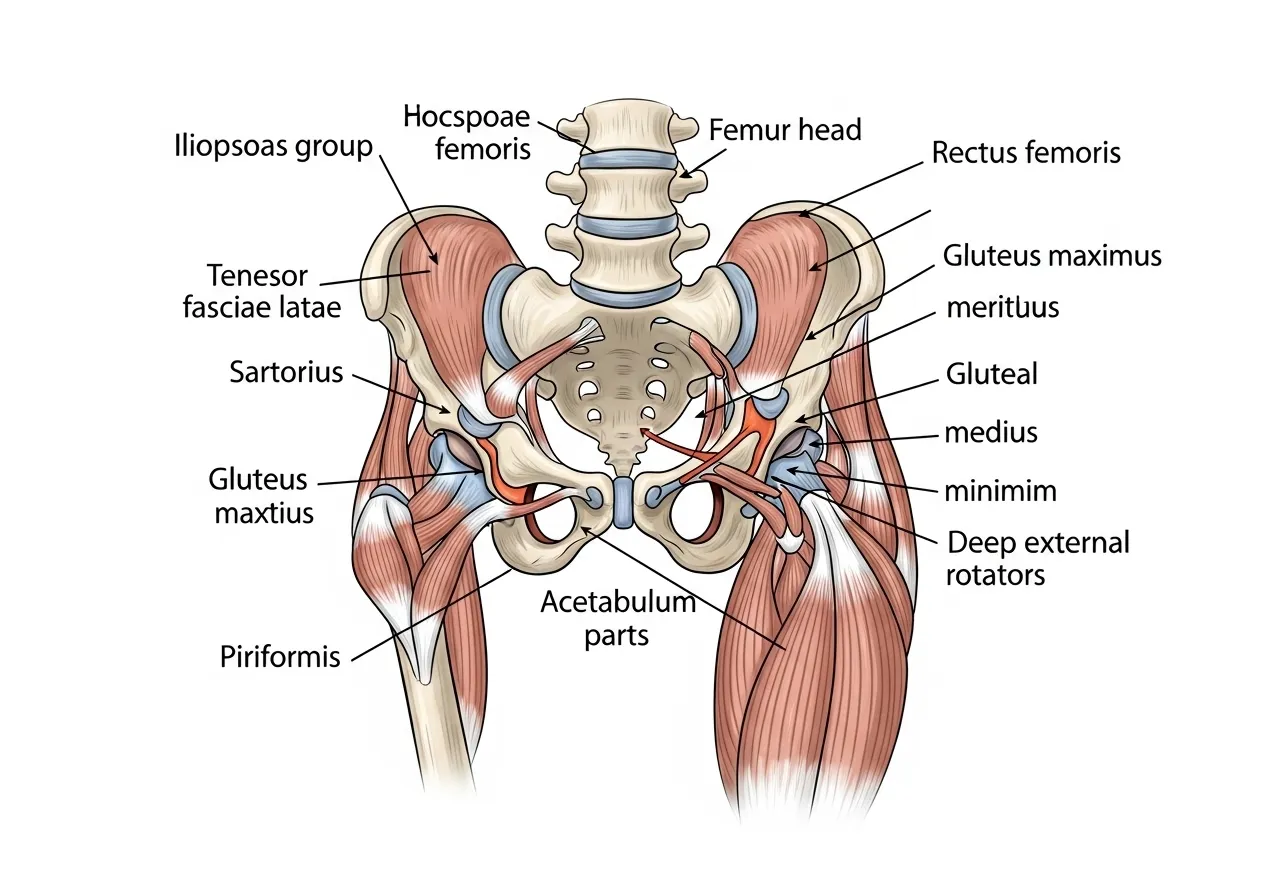
The hip flexors (primarily psoas major and iliacus) shorten in the flexed position that sitting maintains for hours daily. A shortened psoas pulls the lumbar spine forward (anterior pelvic tilt), compresses the lumbar discs, and limits hip extension — which is why people with tight hip flexors often feel lower back strain during exercises like lunges and deadlifts.
The piriformis and short external rotators become tight and overactive in people who sit with legs externally rotated, creating restricted internal rotation and the deep glute tightness that many people misidentify as “tight glutes.” True glute tightness and piriformis tightness feel similar but require different interventions.
The hip capsule itself — the connective tissue surrounding the joint — loses its full range of motion when the joint is never taken through complete circles. This is why joint-specific mobility work (controlled articular rotations) is distinct from and complements muscle stretching.

The 10-Minute Hip Mobility Routine: Complete Guide
This routine is designed to be done daily, ideally in the morning before training or immediately after sitting for extended periods. The exercises are sequenced to build on each other — don’t rearrange the order until you’re familiar with each movement’s purpose.
Exercise 1: Hip 90-90 Position (2 minutes)
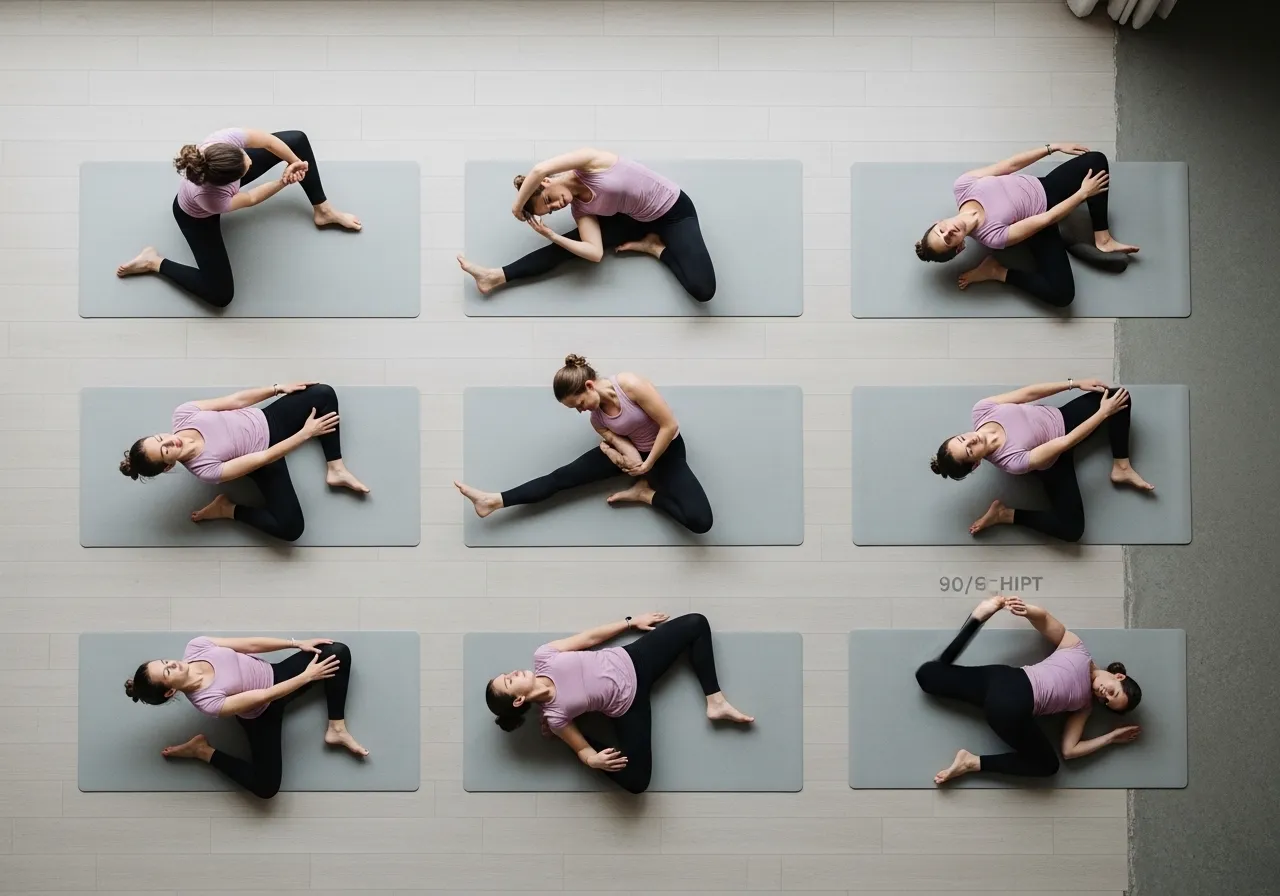
Sit on the floor with both legs bent to 90 degrees — one leg in front (shin parallel to your torso) and one leg to the side (shin perpendicular). Both knees are bent at exactly 90 degrees. Sit upright with your hands lightly on the floor for support. Hold this position for 60 seconds, focusing on sitting tall rather than rounding your lower back. Then switch legs and hold for another 60 seconds.
The 90-90 position simultaneously stretches the external rotators of the front hip and the internal rotators of the rear hip. Most people find one side significantly more restricted — this asymmetry is valuable diagnostic information. The tighter side typically correlates with one-sided lower back tension or knee issues on that side.
To progress: from the 90-90 position, hinge your torso forward over the front shin while maintaining a flat back. This intensifies the external rotation stretch. Or lean toward the rear leg to intensify the internal rotation component.
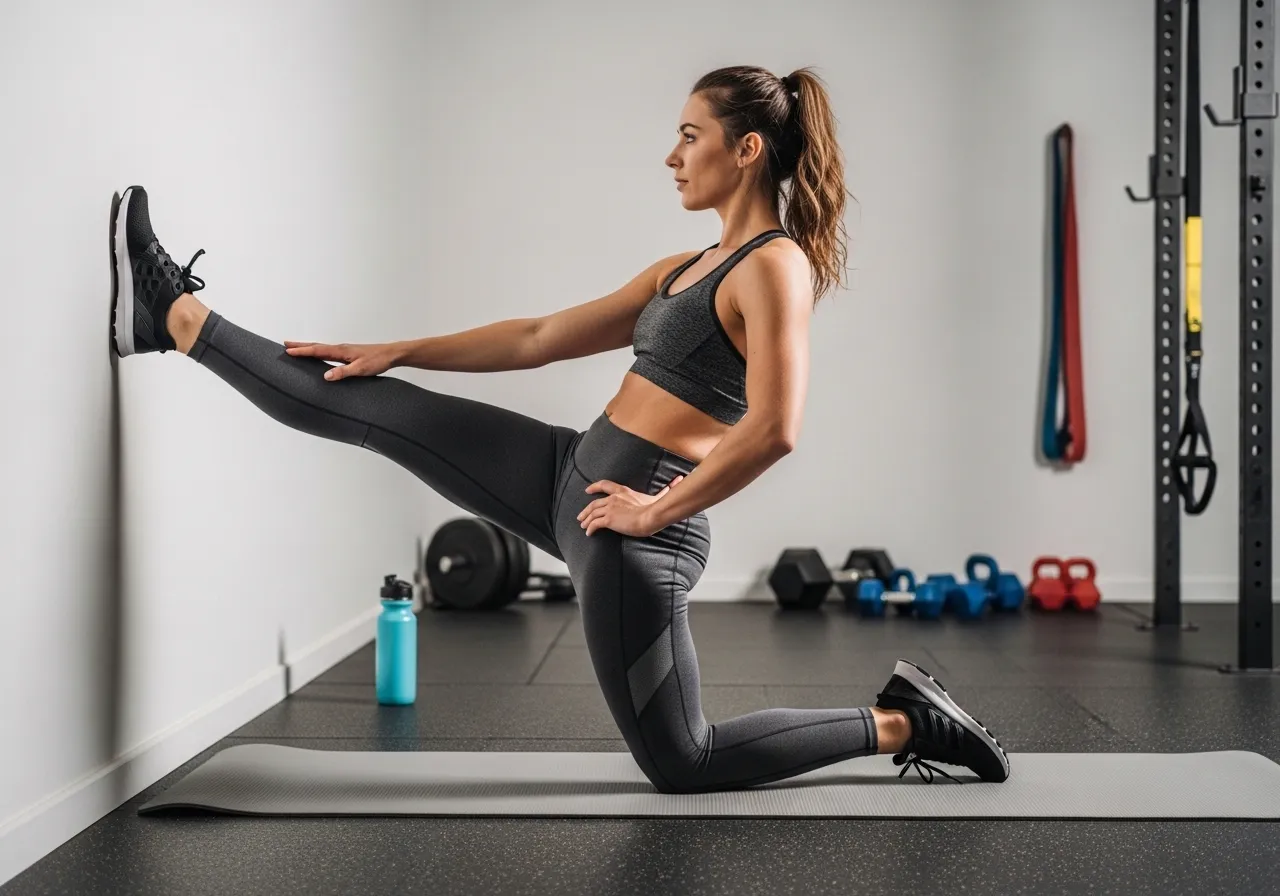
Exercise 2: Couch Stretch (2 minutes)
Find a wall or couch. Place one foot against the wall with your knee on the ground, shin vertical against the wall. Your other foot is flat on the ground in a half-kneeling position. Squeeze the glute of the back leg and drive your hips forward until you feel a deep stretch in the front of the back hip. Hold 60 seconds per side.
This is the single most effective hip flexor stretch available. Unlike the common standing hip flexor stretch (lunge with arms overhead), the couch stretch provides a structural guarantee that the pelvis won’t anteriorly tilt to compensate — the wall prevents it. The difference in stretch intensity between a couch stretch and a standing lunge stretch is dramatic. Research on hip flexor flexibility and lower back pain consistently identifies hip flexor tightness as a significant contributor to chronic low back issues.
The Science Behind Hip Mobility and Athletic Performance
Hip mobility isn’t just about pain reduction — its impact on athletic performance is measurable and significant. Understanding this connection provides the motivation to maintain a daily mobility practice even on days when nothing hurts and performance seems fine.
Squat Depth and Hip Mobility
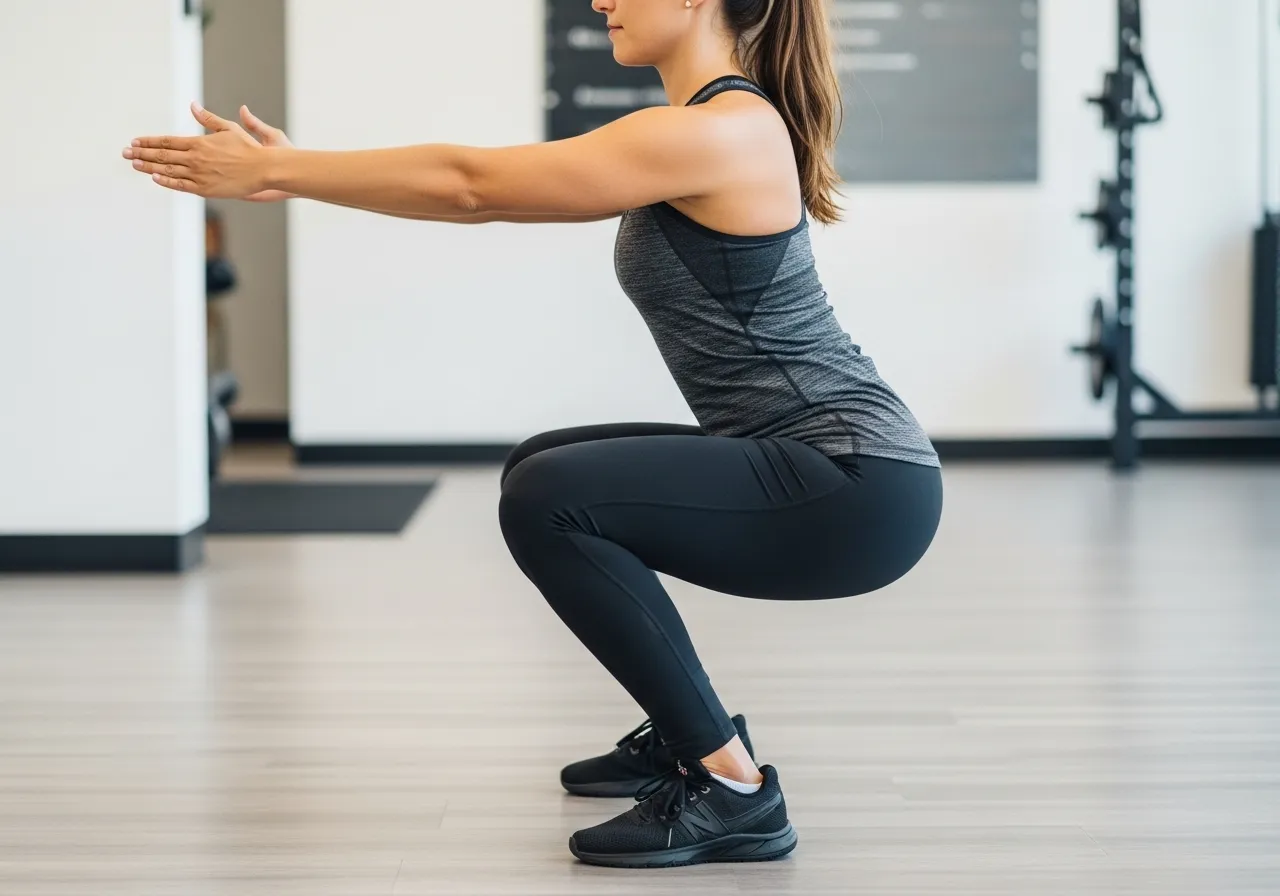
The two primary limiters of squat depth are ankle dorsiflexion and hip external rotation. When hip external rotation is restricted, the femur can’t abduct and rotate out sufficiently to allow full depth without compensatory butt wink (posterior pelvic tilt) at the bottom. Improving hip external rotation — through the 90-90 and pigeon pose work in this routine — directly increases available squat depth without the lumbar flexion that causes disc stress.
Athletes who commit to daily hip mobility work for 8 weeks consistently report squat depth improvements that months of simply squatting more didn’t produce. The squat trains strength in the range available — mobility work expands the range itself.
Running Economy and Hip Extension
Tight hip flexors limit hip extension during the push-off phase of running — the moment that generates forward propulsion. A runner with restricted hip extension compensates by overstriding and overloading the lower back and hamstrings to maintain speed. Improving hip extension through couch stretches and hip flexor release directly improves running economy and reduces injury risk in the hamstrings and lower back.
Hip Mobility and Knee Health
Many knee problems originate at the hip. When the hip can’t rotate and abduct properly during movement, the knee absorbs rotational forces it isn’t designed to handle. The IT band syndrome that plagues runners, the patellofemoral pain that affects squatters, and the medial knee stress that produces inside knee pain — all of these commonly trace to hip mobility deficits that shift load to the knee. Restoring hip mobility is frequently more effective for knee pain than treating the knee itself.
Hip Controlled Articular Rotations: The Missing Element in Most Mobility Work
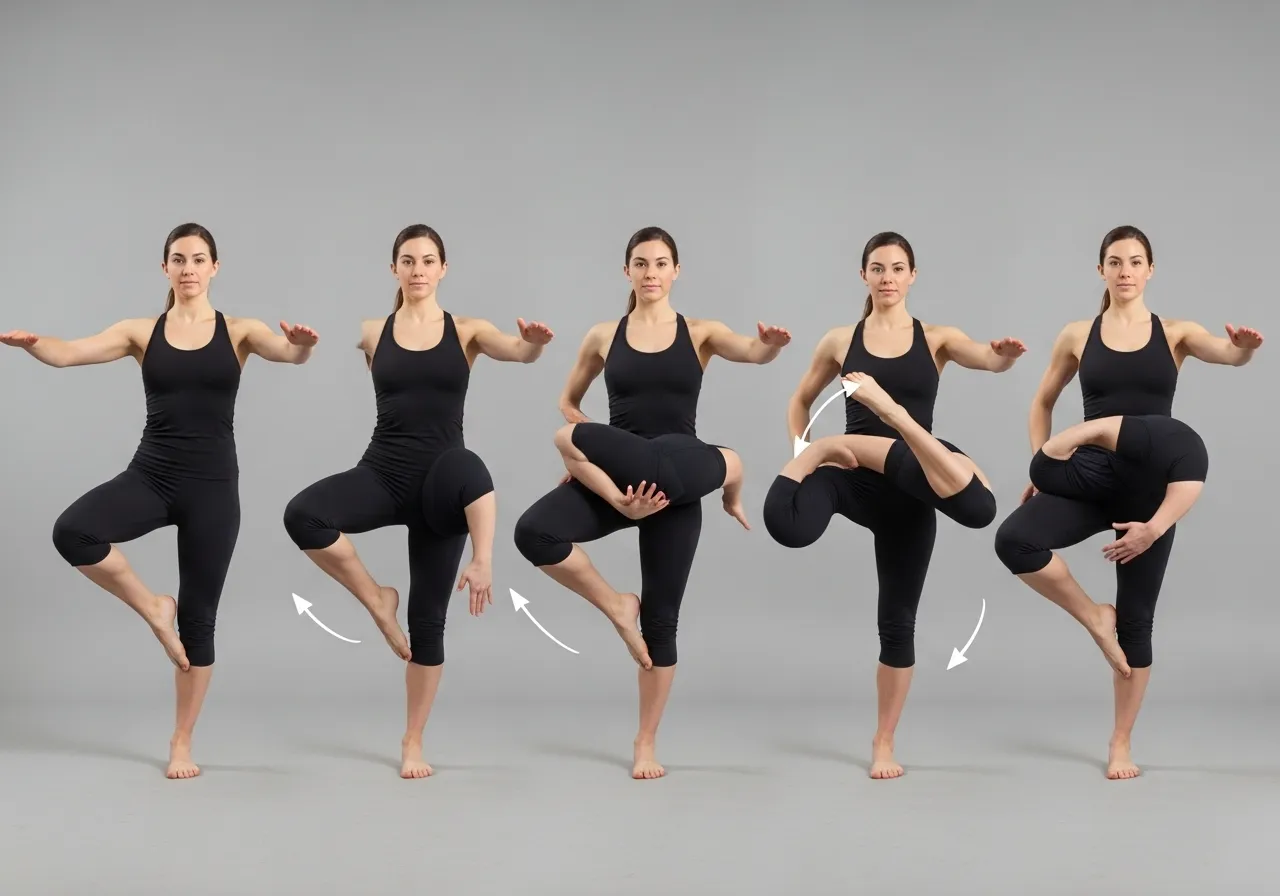
Stretching lengthens muscles and temporarily increases range of motion. Controlled articular rotations (CARs) do something stretching cannot: they train active control through the full available range. This distinction matters enormously for functional mobility — the ability to use your range of motion during movement, not just demonstrate it passively on the floor.
How to Perform Hip CARs
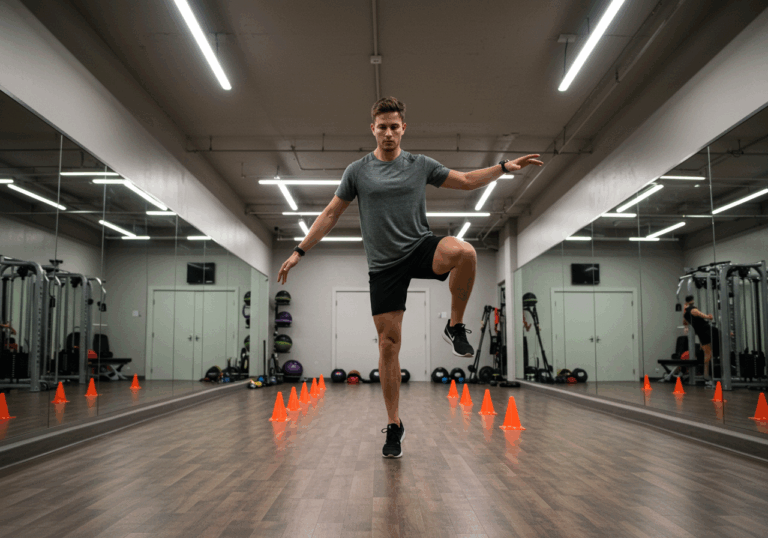
Stand on one foot, holding a wall for balance if needed. Lift the other knee to hip height. Slowly rotate the lifted leg through the largest circle possible — up, out, back, and around — making the arc as large as your hip actively allows. Move at a pace of approximately 5 seconds for the full circle. Complete 5 circles in each direction, then switch legs. Total time: 2 minutes.
The key distinction from passive stretching: CARs are driven by your muscles, not assisted by gravity or leverage. You’re training the nervous system to actively control the hip through its full range, which is what you need during sport and exercise. Passive flexibility without active control is functionally limited — you can demonstrate the range in a static stretch but can’t access it during a squat or sprint.
Integrating CARs With Passive Stretching
The optimal sequence is passive stretching first, CARs second. Passive work (couch stretch, 90-90) creates temporary increases in range through muscle and connective tissue lengthening. CARs performed immediately after train the nervous system to recognize and actively control the new range before it’s “forgotten.” This sequence accelerates permanent mobility improvement compared to passive stretching alone.
Progressive Hip Mobility: Going Beyond the Basics
Once the 10-minute daily routine becomes comfortable — typically after 3-4 weeks — adding progressive challenge maintains continued improvement and prevents the plateau that static routines eventually produce.
The Deep Squat Hold
Holding a deep squat position — feet shoulder-width, toes out 30 degrees, full depth — for cumulative daily time is one of the most comprehensive hip mobility practices available. Start with 30 seconds and build to 3-5 minutes of accumulated deep squat time daily (broken into multiple holds throughout the day). The deep squat position simultaneously challenges hip flexion, external rotation, ankle dorsiflexion, and thoracic extension.
People who grew up in cultures where floor sitting and deep squatting are part of daily life maintain hip mobility far better into old age than those who exclusively use chairs. Reintroducing the deep squat as a rest position — sitting in it while watching television, working at a low table, or simply as a daily practice — is one of the highest-leverage lifestyle interventions for long-term hip health.
The World’s Greatest Stretch
This compound mobility movement addresses the hip, thoracic spine, and shoulder simultaneously. From a lunge position, place the same-side hand on the floor inside the front foot. Rotate the opposite arm toward the ceiling while looking up. Return to lunge position and repeat on the other side. 5 repetitions each side. This single exercise covers more mobility territory than any other single movement and is used in warm-up protocols from recreational gyms to elite sports programs worldwide.
Building the Habit: Making Daily Hip Mobility Non-Negotiable
The challenge with mobility work isn’t the work itself — it’s consistency. Ten minutes daily produces dramatically better results than 30 minutes twice a week. The challenge is making 10 daily minutes happen reliably, especially on days when nothing hurts and motivation is low.
Habit Stacking
Attach the hip mobility routine to an existing daily habit. Before coffee, after showering, while watching the first 10 minutes of morning news. The existing habit serves as the trigger; the mobility work happens automatically in its wake. I do my routine while my coffee brews — it takes almost exactly the same time, and I’ve never needed willpower to start it because starting is the same as starting coffee.
Floor Sitting as Passive Mobility
Simply choosing to sit on the floor instead of a chair for portions of your day provides passive hip mobility work without dedicated practice time. Cross-legged sitting, 90-90 sitting while watching television, and kneeling positions all maintain the hip range that chair sitting steadily erodes. This isn’t a replacement for active mobility work but it meaningfully reduces the degradation that sitting causes.
Frequently Asked Questions About Hip Mobility
How long until I see results? Most people notice meaningful improvement in hip range of motion within 2-3 weeks of daily practice. Pain reduction, if hip tightness is contributing to lower back or knee discomfort, often begins within the first week. Full resolution of long-standing restriction typically requires 8-12 weeks of consistent work.
Should I stretch before or after exercise? Dynamic hip mobility work (leg swings, hip circles, shallow 90-90) is ideal before exercise as part of warm-up. Deep passive stretching (long-hold couch stretch, pigeon pose) is best reserved for after exercise when the tissues are warm, or as standalone sessions separate from training. Deep static stretching before heavy strength training has been shown to temporarily reduce force production.
Can hip mobility work fix lower back pain? Hip mobility deficits are one of the most common contributors to chronic non-specific lower back pain, and improving hip mobility frequently reduces or resolves lower back symptoms. However, lower back pain has multiple potential causes — disc issues, facet joint irritation, muscle strain — and persistent or severe lower back pain warrants evaluation by a healthcare provider before addressing it with self-directed mobility work.
I’m not flexible at all. Can I still do this routine? Yes — and this routine is particularly valuable for people with poor flexibility because it addresses the specific restrictions that poor flexibility in sedentary adults produces. Start with the modified positions (hands on floor for support in 90-90, closer to the wall in couch stretch) and the range will improve progressively. Starting from a low baseline means the improvement rate is faster, not slower.
Is there such a thing as too much hip mobility? Hypermobility — excessive joint range of motion without corresponding stability — creates its own problems, particularly for people with connective tissue disorders like Ehlers-Danlos Syndrome. If you’re naturally very flexible and experience joint instability, pain, or dislocations, consult a physiotherapist before pursuing additional mobility work. For the majority of people, who are restricted rather than hypermobile, more hip mobility is better. Physiopedia’s hip mobility resources provide additional clinical context for those wanting deeper background.
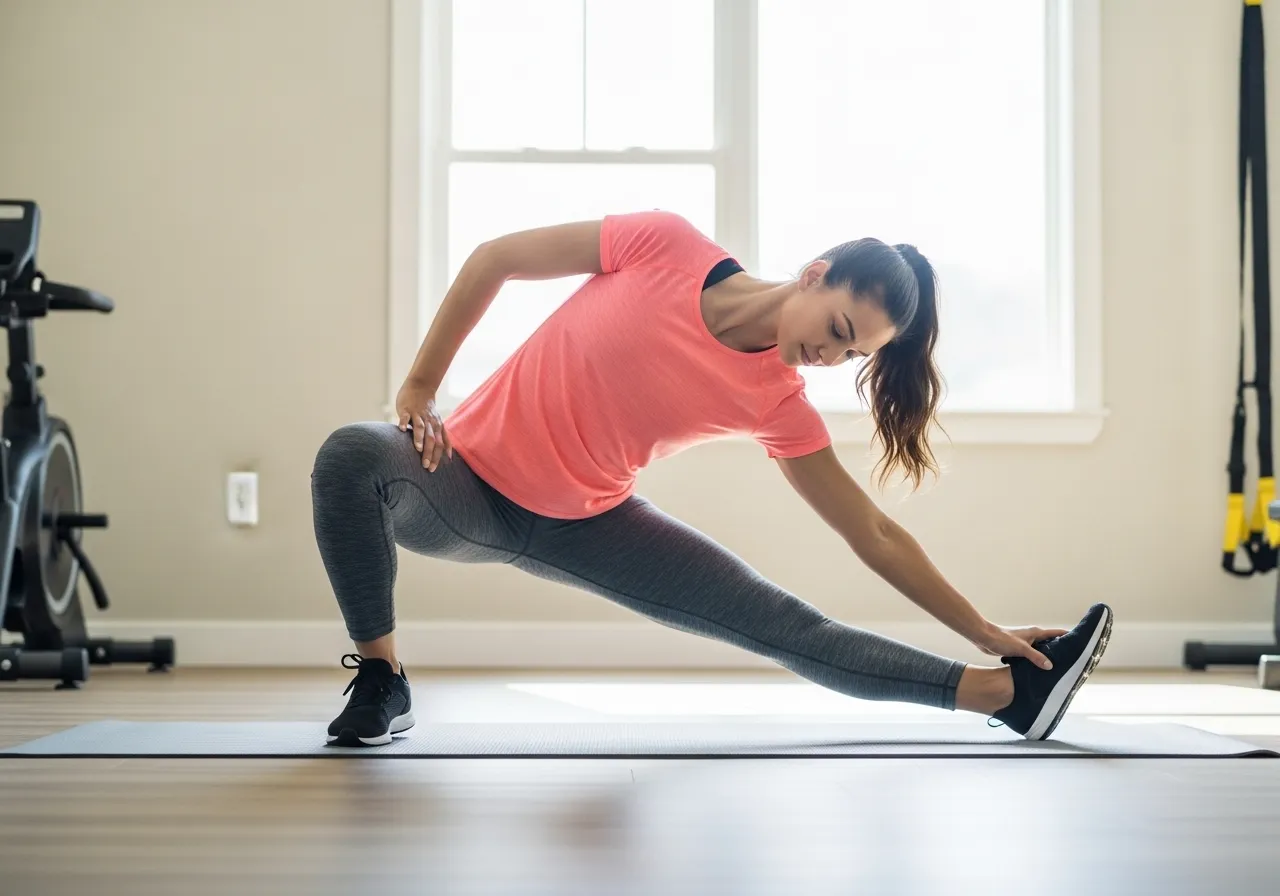
person performing hip mobility exercises on yoga mat