The Cable Machine Is the Most Underrated Piece of Gym Equipment — Here’s How to Actually Use It
Why I Spent Years Ignoring the Most Versatile Machine in the Gym
For the first three years of my training, I walked past the cable machines on the way to the free weights section. Cables seemed like a machine exercise — and machine exercises, I had been told, were inferior to free weights. Isolation movements on machines, as the conventional wisdom went, were for bodybuilders at best and gym tourists at worst. Real training meant barbells and dumbbells.
Then I developed a rotator cuff issue from too much heavy pressing and needed to find upper body training that didn’t load the shoulder in the overhead pressing pattern. A physio friend suggested cable face pulls for rotator cuff health. Within four weeks of adding cable face pulls three times per week, my shoulder felt better than it had in months. The movement had addressed a specific weakness — in the posterior rotator cuff and lower trapezius — that no amount of barbell pressing or rowing had targeted.
That experience prompted me to actually learn the cable machine. What I found was not a second-rate alternative to free weights but a genuinely distinct training tool with capabilities free weights can’t replicate. The cable machine provides constant tension throughout an exercise’s range of motion, allows resistance from any angle including horizontal and diagonal, and enables smooth eccentric loading that free weights don’t consistently offer. This guide covers the physics of why cables work differently, the essential movements every gym-goer should know, and how to build a complete cable-based training program.
The Physics of Constant Tension: Why Cables Are Different
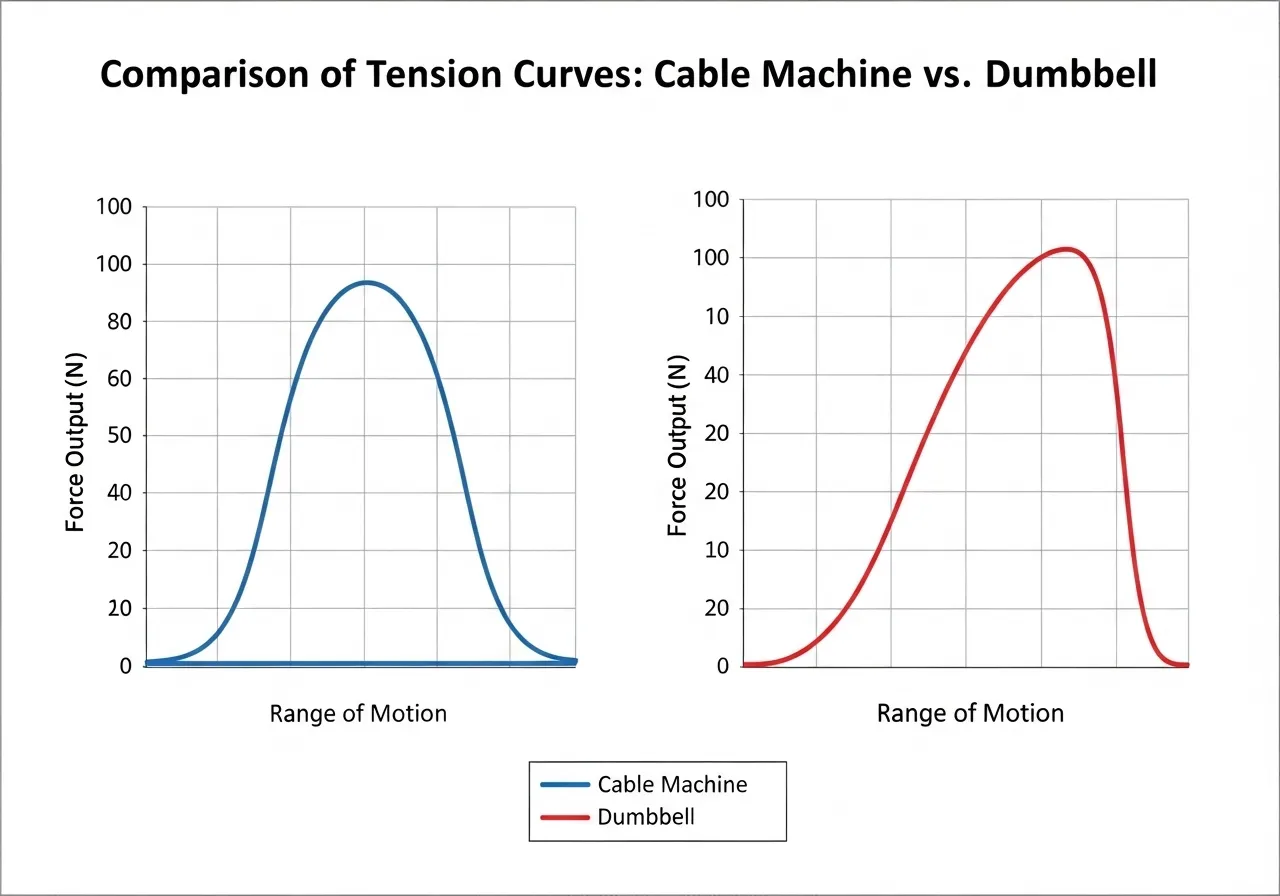
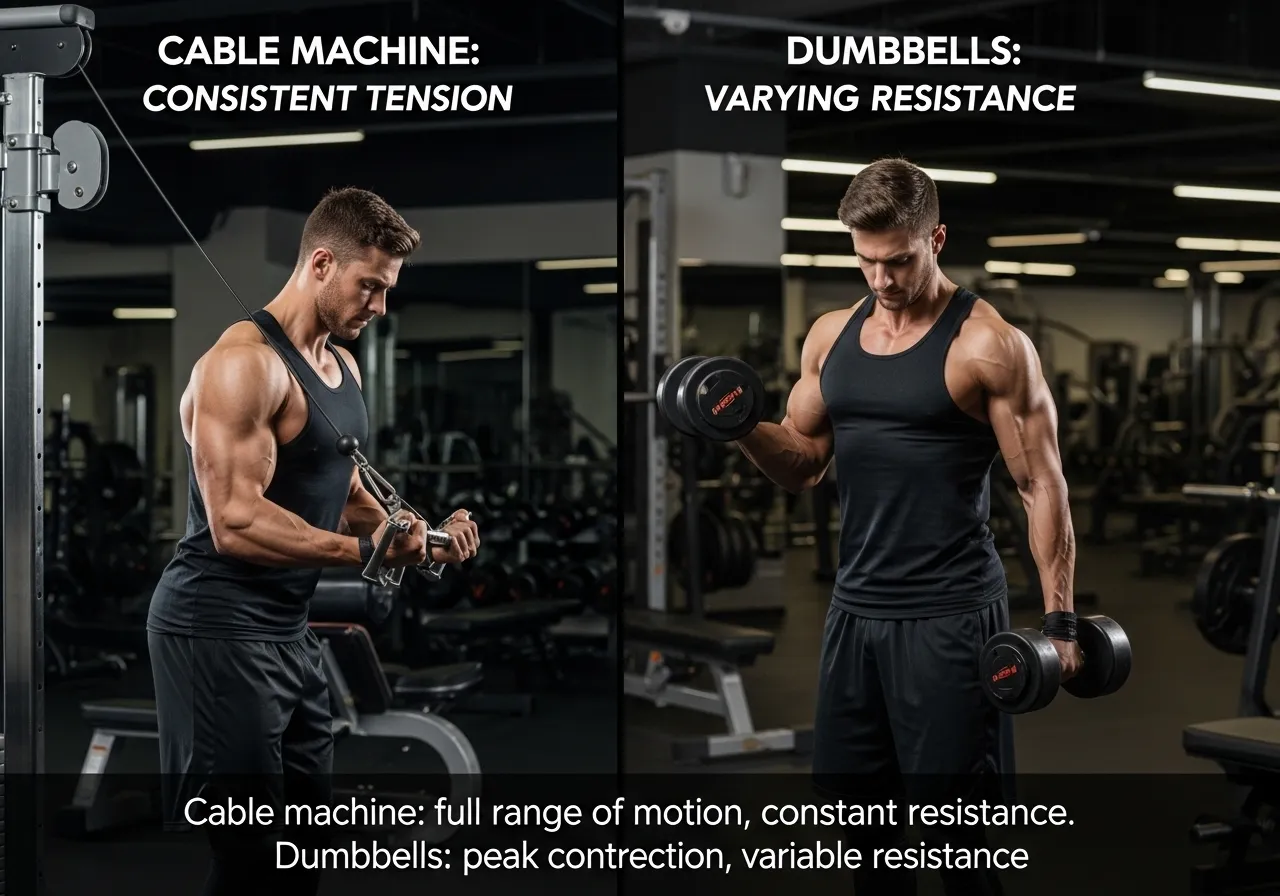
When you perform a dumbbell curl, the resistance varies throughout the range of motion. At the bottom, with your arm fully extended, gravity pulls the dumbbell straight down but your bicep is working mostly to prevent your elbow from fully extending — the lever arm is short and the effective resistance is low. At the midpoint, with your elbow at 90 degrees, the lever arm is longest and the dumbbell feels heaviest. At the top, near full flexion, the resistance decreases again.
A cable curl from a low pulley provides constant tension throughout because the cable’s direction of pull doesn’t change as your arm moves — the pulley maintains consistent resistance regardless of joint angle. For muscle growth specifically, this matters: constant tension means the muscle is challenged throughout the complete range of motion rather than only at the mechanically disadvantaged midpoint. Research on training for hypertrophy suggests that constant tension, particularly in the stretched position where muscles are most sensitive to mechanical tension, drives superior muscle growth compared to free weight exercises that reduce resistance at stretch positions.
The 10 Essential Cable Machine Exercises
These movements cover the full body and represent the minimum cable vocabulary every gym member should own. Master these before experimenting with creative variations.
1. Cable Row (Seated or Standing)
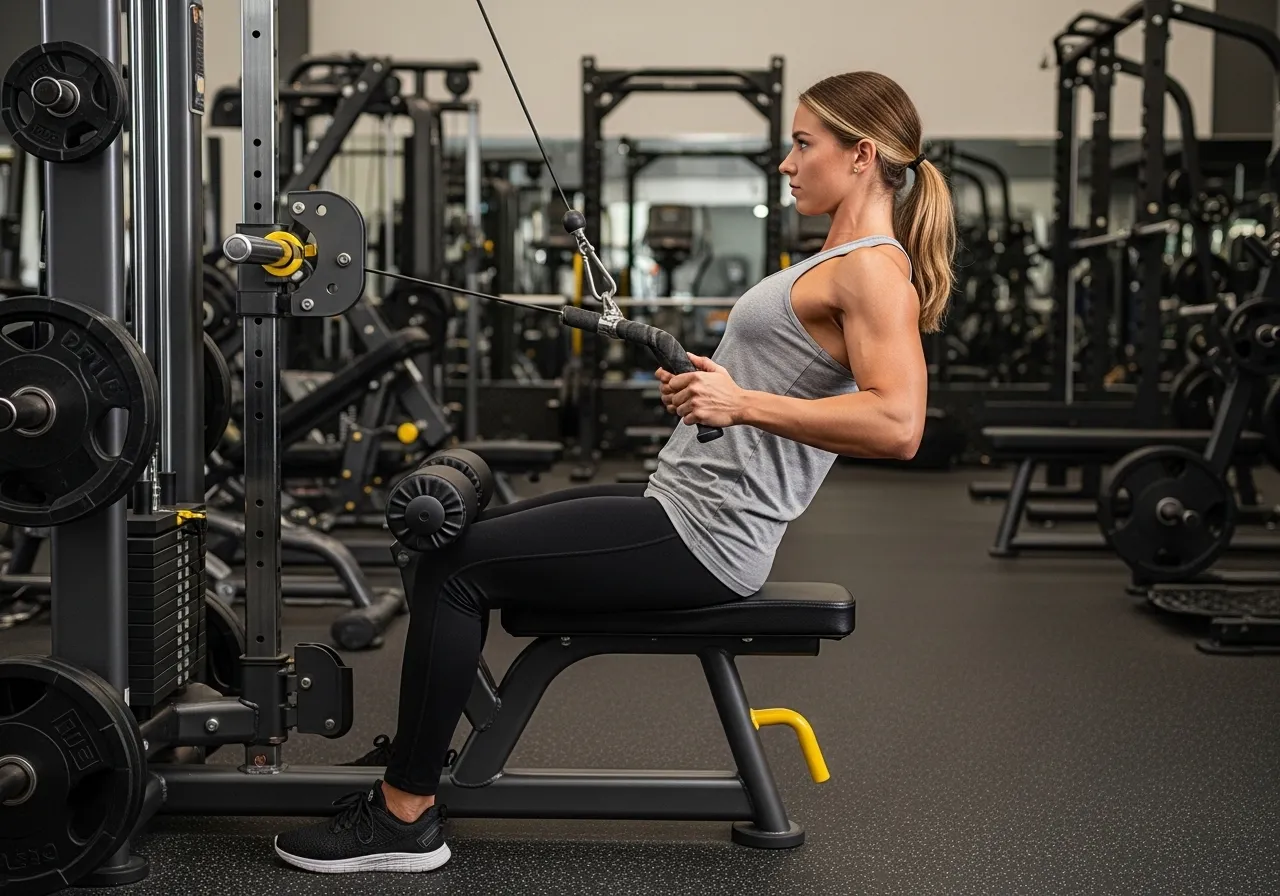
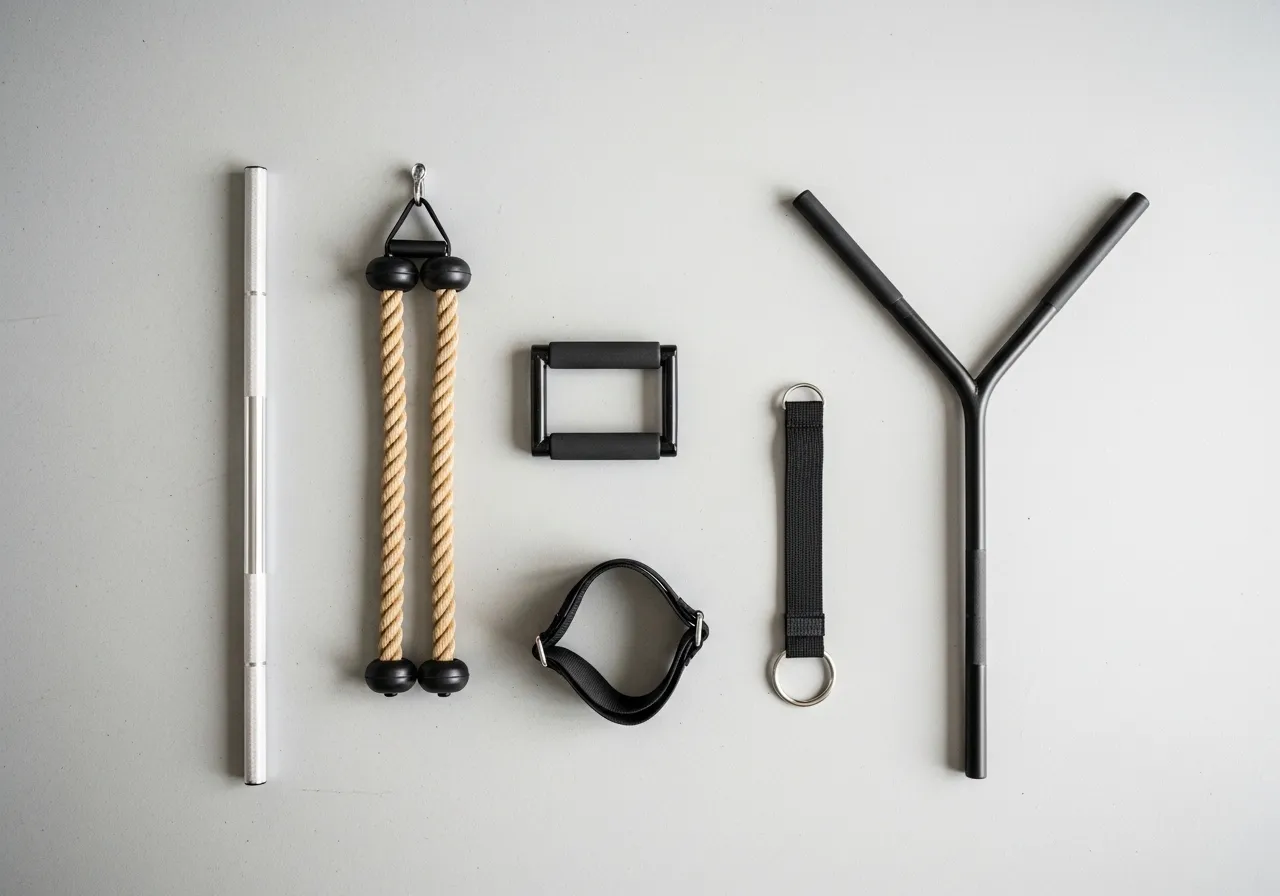
Set the pulley to low position. Attach a V-bar or straight bar handle. Sit facing the machine, feet on platform, slight knee bend, back neutral. Pull the handle to your lower abdomen by driving your elbows back and retracting your shoulder blades. Pause at full contraction. Slowly return to full arm extension. The cable row is the best cable exercise for mid-back development because the low pulley angle creates horizontal pulling that targets the mid-trapezius and rhomboids directly.
2. Cable Face Pull
Set the pulley to upper chest height. Attach a rope. Grip both ends with your thumbs facing you. Pull the rope toward your face, spreading your hands apart at the end of the movement so your hands end up beside your ears and your elbows are high and flared. This movement targets the posterior deltoids, external rotators, and lower trapezius — the muscles most compromised by forward shoulder posture and most important for long-term shoulder health. Research on shoulder rehabilitation exercises identifies posterior deltoid and rotator cuff strengthening as essential for shoulder health in resistance-trained athletes.
3. Cable Pull-Through
Set the pulley to low position. Attach a rope. Stand facing away from the machine, bend at the hips, reach back between your legs, and grip the rope. Drive your hips forward to standing while swinging the rope forward. This hip hinge movement loads the glutes and hamstrings through a longer range of motion than most free weight hip hinge exercises and provides a unique stretched position load on the hamstrings that Romanian deadlifts don’t replicate.
4. Cable Lateral Raise
Set the pulley to low position. Stand beside the machine, grip the D-handle with the far hand, and raise your arm to shoulder height laterally. The cable provides resistance at the bottom of the movement — where a dumbbell lateral raise offers none — making this significantly more effective for developing the lateral deltoid (the muscle that creates shoulder width) than the equivalent dumbbell exercise.
5. Cable Tricep Pushdown
Set the pulley to high position. Attach a rope or straight bar. Standing close to the machine, elbows at sides, push the attachment down until your arms are fully extended. The cable provides consistent resistance throughout the range, unlike skull crushers or close-grip press where the free weight’s leverage changes significantly through the movement.
Building a Complete Training Program Around Cable Machines
A cable-based training program isn’t a compromise forced by equipment limitations — it’s a legitimately effective training system that produces excellent hypertrophy and functional strength results. Here’s how to structure it.
The Cable-Only Upper Body Session
This session works for days when free weights are occupied, when you’re traveling and the hotel gym only has cables, or when you want a dedicated muscle-pump session with constant tension loading. Rest 60-90 seconds between sets.
Push: Cable chest press (low to high angle) 4×10, cable overhead press (split stance) 3×12, cable lateral raise 3×15, cable tricep pushdown with rope 3×15. Pull: Cable row 4×10, cable face pull 4×15, cable bicep curl 3×12, cable hammer curl 3×12.
Total volume: approximately 30 working sets, 45-60 minutes. The horizontal and diagonal angles available on cable machines allow chest and shoulder development that simply isn’t achievable with free weights alone — particularly for the chest’s inner and lower fibers that cable flyes and crossovers uniquely target.
Cables as Free Weight Complements
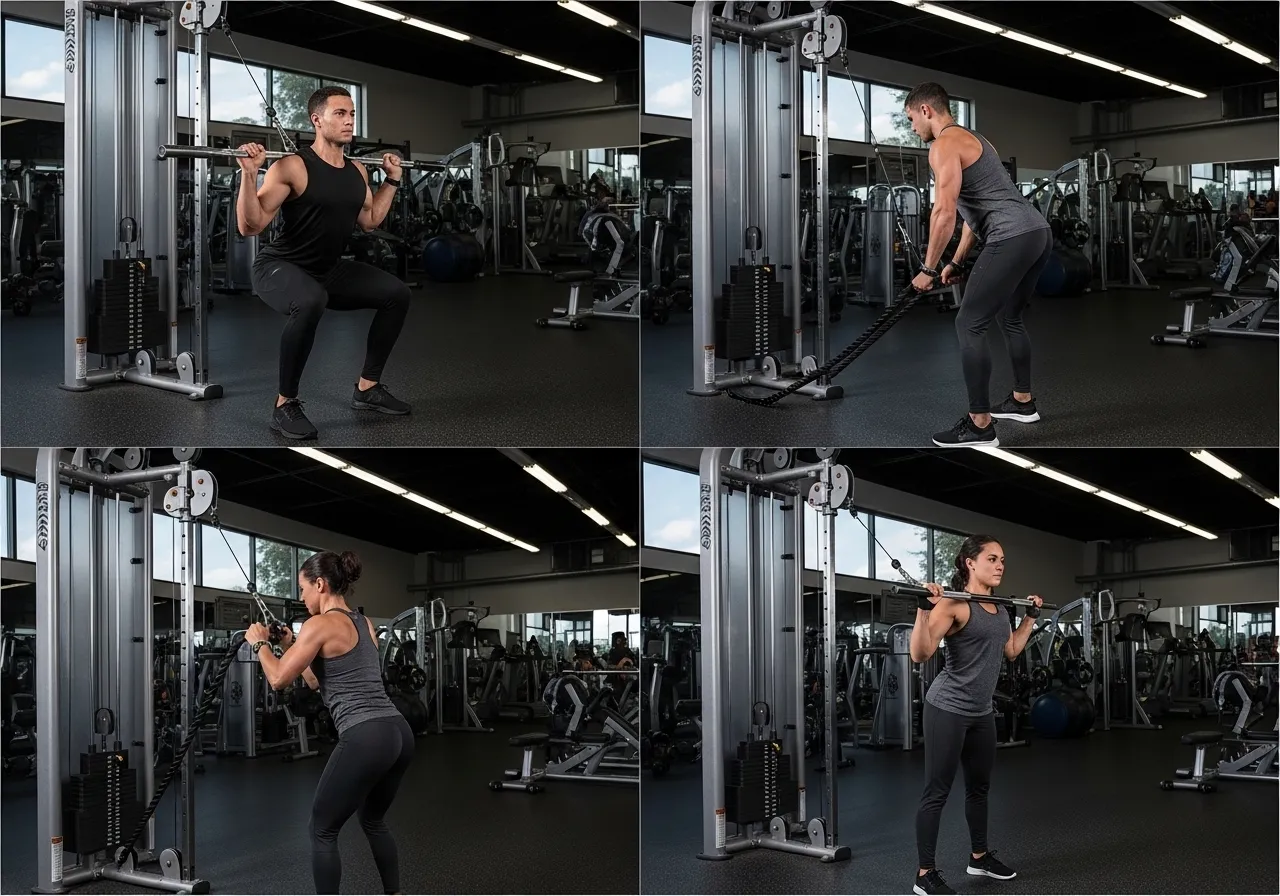
The most effective approach combines free weights for heavy compound movements (bench press, row, overhead press) with cables for accessory work that capitalizes on constant tension. After heavy dumbbell presses, add cable flyes for stretched-position chest work. After barbell rows, add cable face pulls for posterior deltoid and rotator cuff balance. After barbell curls, add cable curls for continuous tension bicep work.
This combination approach gets the maximum stimulus from each modality: free weights for heavy loading and neural demand, cables for constant tension, full-range, joint-friendly volume work.
Advanced Cable Techniques for Maximum Results
Once the basic movements are mastered, these techniques extract additional value from cable training.
Cable Drop Sets
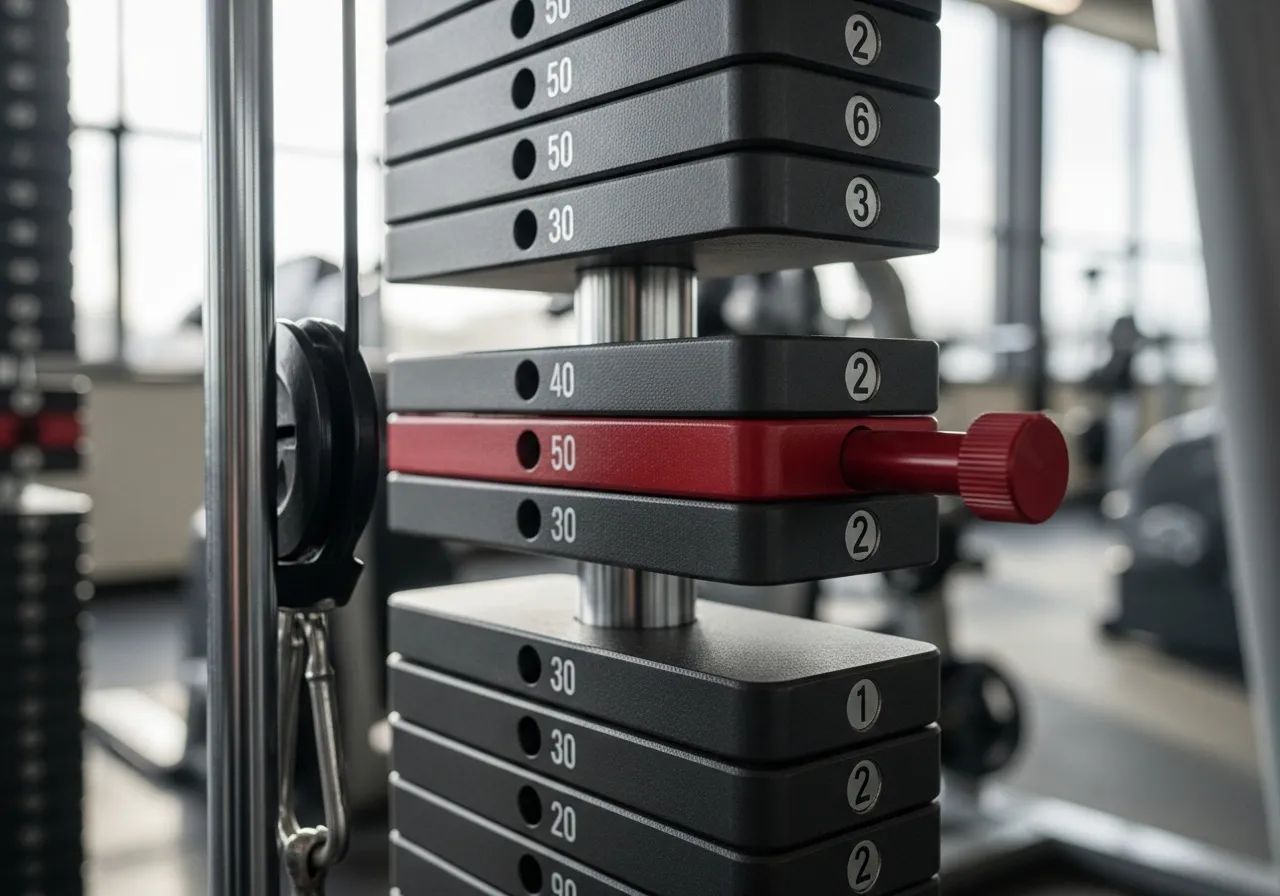
Because cable weight adjustments take 3 seconds (move the pin), cable drop sets are far more practical than dumbbell drop sets. Complete your working set to near failure, immediately reduce weight by 20-30%, and continue for additional reps. This extended time under tension technique is one of the most effective methods for inducing metabolic stress — one of the three primary mechanisms of muscle hypertrophy.
Cable Pauses at Stretch
For any cable exercise that loads the muscle in a stretched position (cable fly, cable curl, cable lateral raise), add a 2-second pause at the fully stretched position before contracting. This eliminates the elastic energy contribution and forces the muscle to generate force from a dead stop in its most growth-sensitive position. It feels harder than it looks — reduce weight by 15-20% when first adding pauses.
Unilateral Cable Work
Single-arm and single-leg cable exercises expose and address bilateral strength imbalances that bilateral exercises mask. A person who can perform a cable row with 60 kg bilaterally might discover their left side can only independently manage 25 kg. This asymmetry, if unaddressed, eventually produces compensatory movement patterns and increases injury risk. Regular unilateral cable work builds balanced strength that transfers to better bilateral performance and reduced injury vulnerability.
Cable Machines for Rehabilitation and Injury Prevention
Beyond performance training, cable machines are the preferred rehabilitation tool for many common gym injuries — particularly shoulder and knee issues — because their adjustable angle and smooth resistance profile allows loading in safe ranges that free weights don’t accommodate.
Shoulder Rehabilitation with Cables
The most common shoulder injuries in gym training (rotator cuff impingement, labral irritation, AC joint issues) often result from too much pressing volume without sufficient posterior shoulder and rotator cuff work. Cable face pulls, cable external rotations, and cable Y-T-W exercises specifically target the posterior deltoid and rotator cuff in ways that pressing and pulling exercises don’t. Adding these movements preventively — before shoulder pain develops — maintains the muscle balance that protects the shoulder under heavy loading.
Knee Rehabilitation with Cables
Cable exercises like terminal knee extensions (cable attached to back of knee, knee extension from slight bend to full extension) directly strengthen the VMO (vastus medialis oblique) — the teardrop-shaped muscle that stabilizes the patella and is often weak in people with patellofemoral pain. The smooth resistance and adjustable angle of cable exercises make them particularly suitable for sub-maximal rehabilitation work where free weight loading would be excessive.
Getting the Most From Cable Machines: Practical Setup Tips
Cable machines are frequently misused not because people don’t know the exercises but because small setup errors compromise the exercise quality significantly.
Pulley Height Matters More Than You Think
The pulley height determines the angle of cable pull and therefore which part of the range of motion the exercise is most challenging. For chest flyes aiming to load the stretched position, use a high pulley so the cable pulls upward at the bottom of the fly. For cable curls aiming to load the shortened (contracted) position, use a high pulley so the cable pulls upward when the arm is flexed. Understanding this relationship allows you to deliberately target the range of motion where you want maximum stimulus.
Maintain Cable Tension Throughout
Never let the cable go slack during a set. Slack cable means zero tension — the entire benefit of constant-tension cable training disappears in that moment. Control the negative (return) phase of every cable exercise slowly enough to maintain tension throughout. Two seconds up, three seconds down is a good starting tempo for most cable movements.
Frequently Asked Questions About Cable Machines
Are cables better than free weights for muscle growth? Neither is categorically better — they provide different stimuli and work best in combination. Cables excel for constant tension, isolation, and unique angles. Free weights excel for heavy compound loading and total-body neural demand. The best programs use both.
What weight should I start with on cables? Start lighter than you think necessary. Cable exercises feel different from free weights because of the constant tension, and many people find cable movements harder at equivalent absolute loads. Start at 50-60% of what you’d use for a dumbbell version of the same exercise and adjust from there.
Can I build a complete physique using only cable machines? Yes — with sufficient volume and progressive overload, cable-only training builds muscle effectively across all body parts. The limitation is maximum loading for compound movements: cable squats, cable presses, and cable deadlift variations can’t be loaded as heavily as their barbell equivalents. For maximum strength development, barbell training remains essential. For hypertrophy (muscle size), cables provide all necessary stimulus.
Why do cables feel different from free weights at the same weight? Several factors: cables provide constant tension (no “rest” at the top or bottom of a movement), the eccentric (lowering) phase is loaded throughout rather than just at the lengthened position, and the smooth mechanical resistance of a cable pulley feels different from the inertia of a free weight. These differences make cables feel harder at equivalent loads — they’re not easier machines, just different tools.
How often should I use cable machines? Cable work can be performed as frequently as your recovery allows, similar to any resistance training. If using cables for rehabilitation movements like face pulls or external rotations, daily performance is appropriate and beneficial for building the movement pattern and tissue health. For heavy cable compound work, standard recovery guidelines apply — 48 hours between sessions targeting the same muscle group. The NSCA’s resources on cable training mechanics provide additional technical depth for coaches and serious athletes.
person performing cable fly exercise on cable machine in gym