Overhead Press Guide: EMG Research, Barbell vs Dumbbell, Variations, and 8-Week Program
This article is for general educational purposes only and does not replace professional medical advice. If you have any pre-existing shoulder, neck, or rotator cuff conditions, please consult a qualified healthcare professional before beginning any overhead pressing program.
The overhead press guide — driving a barbell or dumbbell from shoulder height to full arm extension overhead — is the primary vertical push exercise in strength training, developing the deltoids, close-grip bench press, and upper trapezius while demanding whole-body tension from the feet to the fingertips. (Related: dumbbell shoulder press comparison)
Despite its status as a foundational movement, the overhead press is frequently programmed without the technical depth it deserves — resulting in stalled progress, shoulder discomfort, and missed development potential from its many under-utilised variations.
This guide covers what the EMG research reveals about overhead press muscle activation, the technique differences between major variations, how bar path and grip width affect the stimulus, and a complete 8-week pressing program.
Overhead Press Muscle Activation: What the EMG Research Shows
Barbell vs. Machine: The Stabilisation Advantage
A PubMed study comparing front and back overhead press variations using barbell and machine found that overhead press performed with a barbell produced greater muscle excitation than the machine variation — performing back overhead press enhanced medial and posterior deltoid and partly anterior deltoid activation, while front overhead press favoured pectoralis major — confirming that different overhead press variations provide distinct stimuli to shoulder muscles and may be selected accordingly within a training program.
The barbell’s superiority over machine pressing in total muscle activation is mechanistically straightforward: the barbell provides no guided trajectory, requiring the shoulder girdle stabilisers to actively maintain the bar path throughout the lift. Machine pressing fixes the movement path, reducing the stabilisation demand and with it the overall neuromuscular recruitment.
Dumbbell vs. Kettlebell Overhead Press: Equipment Effects
A PMC study examining overhead press muscle activation with different equipment found that no significant differences were found when comparing dumbbell to kettlebell press at the same load, but muscle activity of all measured muscles except the upper trapezius tended to be higher during kettlebell pressing — attributed to the kettlebell’s centre of gravity being located below the grip within the ball, creating additional rotational torque that requires higher muscle activity to balance during the press movement.
An MDPI study on the same topic confirmed that wider range of motion increased activation of all selected muscles including the deltoid and trapezius — the most involved muscles across all loading conditions — while muscle activity increased in proportion to load, reinforcing the fundamental principle that both range of motion and load magnitude are independent determinants of overhead press training stimulus.
Primary Muscles and Their Roles
The overhead press develops a distinct muscle group profile compared to horizontal pressing:
| Muscle | Role | Activation Level |
|---|---|---|
| Anterior deltoid | Primary shoulder flexion — drives the initial upward push | Very high throughout |
| Medial deltoid | Shoulder abduction — provides the lateral shoulder width | High — increases with back-press variation |
| Upper trapezius | Scapular elevation and upward rotation — essential for safe overhead mechanics | High in top range |
| Triceps brachii | Elbow extension — locks out the top position | Moderate — increases at lockout |
| Serratus anterior | Scapular protraction and upward rotation — stabilises shoulder blade during overhead reach | High — crucial safety muscle |
| Core / spinal erectors | Isometric trunk stabilisation — prevents lumbar hyperextension under load | Moderate — higher in standing press |
Overhead Press vs. Lateral Raise: Training the Complete Deltoid
The deltoid muscle has three anatomically distinct heads — anterior (front), medial (middle), and posterior (rear) — each with different functions and different responses to exercise selection. The overhead press heavily loads the anterior deltoid through shoulder flexion and secondarily recruits the medial deltoid through abduction. The posterior deltoid receives minimal direct stimulus from pressing movements.
A comprehensive shoulder development program acknowledges this distribution:
- Overhead pressing develops anterior and medial deltoid effectively — these heads receive heavy compound loading and progressively develop alongside pressing strength
- Lateral raises (dumbbell or cable raises with the arm moving outward from the body) specifically target the medial deltoid at its peak torque position — complementing the pressing stimulus for the rounded shoulder width that the medial head determines
- Rear delt exercises (face pulls, reverse flies, rear delt rows) are essential — the posterior deltoid receives negligible stimulus from standard pressing movements and must be trained specifically to prevent the shoulder imbalance that causes anterior shoulder impingement
Programming all three deltoid heads — heavy compound pressing for anterior and medial, targeted lateral raises for medial, and dedicated rear delt work for posterior — produces the balanced shoulder development that both maximises aesthetic shoulder roundness and protects the glenohumeral joint from the anterior dominance that leads to chronic impingement.
Barbell Overhead Press: Technique and Setup
Grip Width and Bar Path
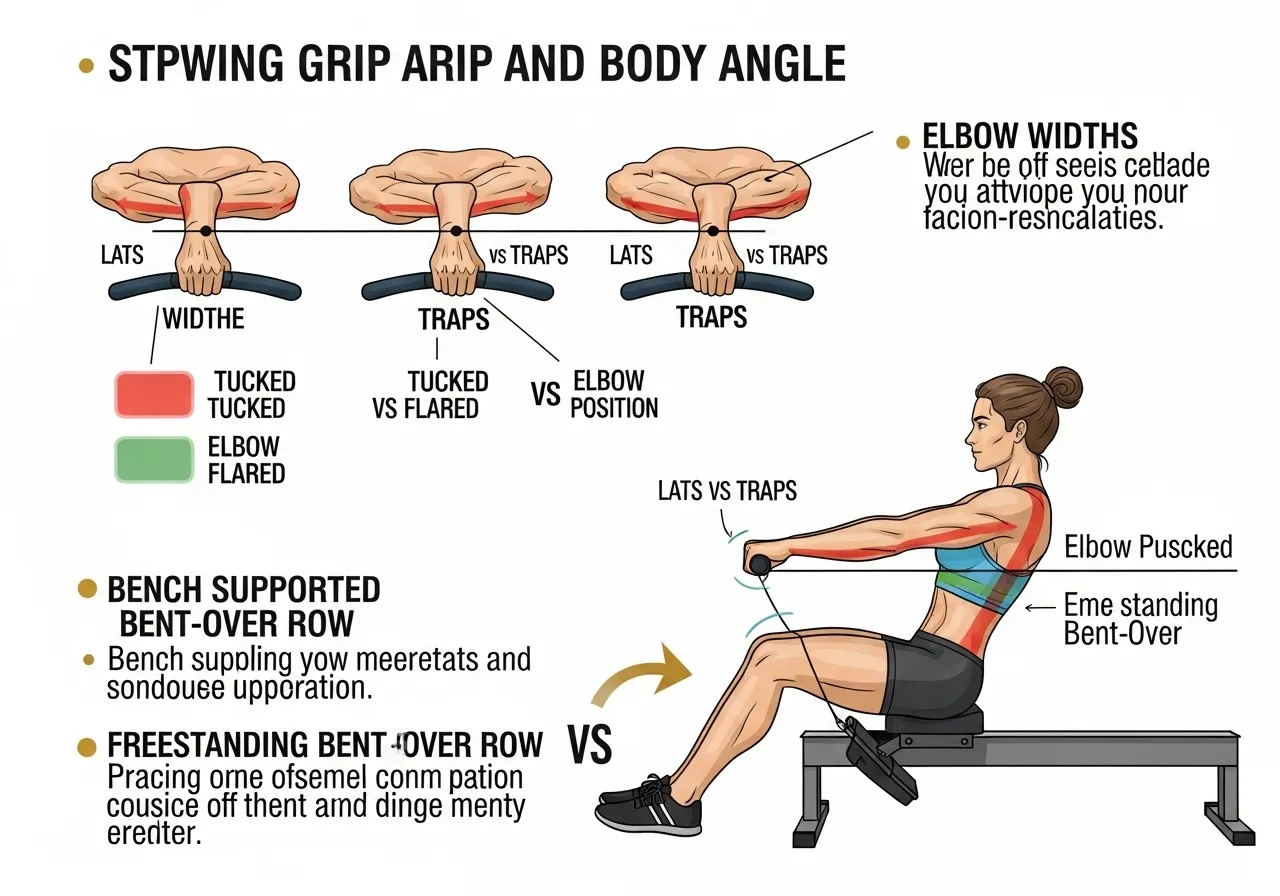
Grip width is the most debated setup variable in barbell overhead pressing — both too narrow and too wide create mechanical disadvantages:
- Too narrow: Forces excessive internal shoulder rotation at the starting position — increasing subacromial impingement (compression of the tendons and bursa within the shoulder joint space) risk and reducing the mechanical advantage of the anterior deltoid
- Too wide: Shortens the effective range of motion and shifts load toward the medial deltoid — reducing the triceps and anterior deltoid contribution at lockout
- Optimal: Just outside shoulder width — the elbows form approximately 45–75° of abduction from the torso at the starting position, placing the anterior deltoid in its optimal length-tension relationship for the drive phase
The bar path in the barbell overhead press should not be perfectly vertical — the bar moves slightly back from the starting rack position to an overhead position directly over the midfoot. This slight backward arc accommodates the head and allows the bar to travel over the body’s natural balance point rather than creating an inefficient moment arm.
Foot Position, Core Bracing, and Hip Position
The standing barbell overhead press is a total-body exercise — the quality of the lower body and trunk setup directly affects pressing performance:
Glutes: Actively squeezed — stabilises the pelvis and prevents the anterior pelvic tilt (forward tilting of the hip bones) that causes the lower back to arch excessively under heavy overhead load
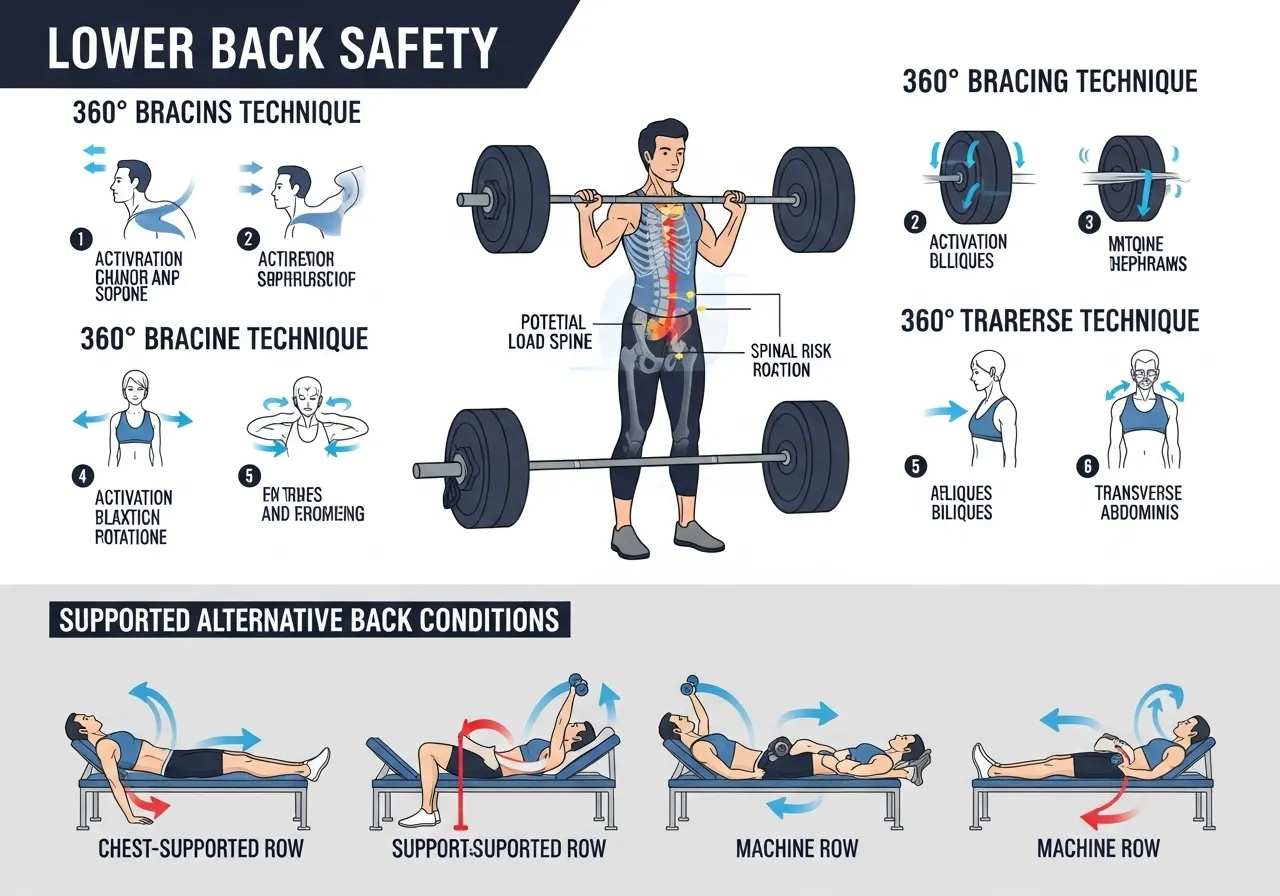
Core bracing: Full 360° brace before each rep — intra-abdominal pressure (internal pressure supporting the spine) protects the lumbar discs from the compressive loading of heavy overhead work
Head position: Neutral — chin slightly back to allow bar clearance. At lockout, the head moves slightly forward to position the ears between the arms — establishing a mechanically sound locked-out position
The Sticking Point: Managing the Most Difficult Range
The sticking point (the point in the range of motion where the mechanical disadvantage is greatest and lifts most frequently fail) in the overhead press occurs approximately at forehead height — the transition from deltoid-dominant initial drive to the combined deltoid-triceps final push.
Addressing sticking point weakness:
- Pin press from sticking point height: Setting safety bars at forehead height and pressing from a dead stop — removing the momentum from the initial drive and demanding pure pressing strength at the weakest position
- Paused reps: A 2-second pause at forehead height during every rep develops starting strength through the sticking point without the specialised setup of pin pressing
- Triceps-focused accessory work: Close-grip pressing, skull crushers (lying triceps extension), and overhead triceps extensions address the elbow extension weakness that frequently limits the final push to lockout
Thoracic Mobility and Its Impact on Overhead Pressing
Limited thoracic extension mobility (the ability to extend the upper back backward) is one of the most common technical limiters in overhead pressing — and one of the most overlooked. When the thoracic spine cannot extend adequately, the body compensates by extending the lumbar spine — producing the lower back arching that both reduces pressing mechanics and increases spinal loading risk.
Assessment: can you place both arms fully overhead, straight, while maintaining a neutral lumbar spine? If not, the overhead position is being achieved through compensatory lumbar extension rather than genuine thoracic mobility.
Thoracic mobility exercises that directly address this limitation:
- Foam roller thoracic extension: lying over a foam roller placed perpendicular to the spine at mid-back height, extending the upper back over the roller in progressive positions
- Thread-the-needle: in a quadruped position, reaching one arm under the body to rotate the thoracic spine through full available range
- Cat-cow with thoracic emphasis: performing the extension phase of cat-cow with deliberate focus on upper back extension rather than allowing the lumbar spine to produce all the movement
Addressing thoracic mobility proactively — spending 5–10 minutes on thoracic extension and rotation work before overhead pressing sessions — may produce immediate improvements in bar path efficiency and overhead position quality, reducing the compensatory lumbar loading that limits both safety and long-term pressing progress.
Is the Seated or Standing Overhead Press More Effective?
The Case for Standing
The standing barbell overhead press is the stricter and more athletically demanding variation — it recruits the core, glutes, and lower body as stabilisers that the seated position eliminates, producing a more comprehensive training stimulus:
- The full-body tension required standing develops the neurological coordination between lower body, core, and upper body that transfers to athletic performance and daily function
- Standing eliminates the backrest support that reduces the stabilisation demand — every kilogram pressed standing is harder than the same kilogram pressed seated, at matched technique
- The standing position is the relevant position for the overwhelming majority of real-world overhead activities — pressing from a standing base trains the pattern in its functional context
The Case for Seated
Seated overhead pressing has its own distinct advantages that make it the preferred variation in specific contexts:
- The backrest eliminates lower back fatigue as a limiting factor — allowing heavier loads to be used for the deltoid and triceps stimulus without spinal erector endurance becoming the constraint
- Seated pressing reduces the lumbar loading associated with heavy standing overhead work — a practical consideration for trainees with lower back sensitivity
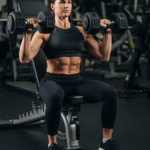
- As a hypertrophy-focused accessory exercise, seated dumbbell pressing allows higher volumes and slightly heavier loads than standing at matched rep ranges — producing more total upper body pressing volume without the systemic fatigue of heavy standing barbell work
Recommended Programming: Both Have a Place
The most effective shoulder pressing programs typically include both variations across a training week or mesocycle:
| Variation | Best Load Range | Primary Benefit | Session Placement |
|---|---|---|---|
| Standing barbell OHP | 4–6 reps, heavy | Strength, full-body integration | Primary exercise, session start |
| Seated dumbbell press | 8–12 reps, moderate | Hypertrophy, independent arm | Secondary, after main lift |
| Arnold press | 10–15 reps, moderate | Full deltoid sweep, rotation | Accessory, later in session |
| Push press | 3–5 reps, very heavy | Power, overload stimulus | Power emphasis day, session start |
Progressive Overload Strategies for the Overhead Press
The overhead press progresses more slowly than the squat and deadlift — the smaller muscles involved and the technical demands of the movement mean that weekly weight increases are rarely sustainable beyond the beginner stage. Effective progression strategies for intermediate and advanced trainees:
- Micro-loading: Adding fractional plates (0.5–1.25 kg) rather than the standard 2.5 kg increment — allowing continuous load progression without the technique breakdown that larger jumps often cause in overhead pressing
- Rep range progression: Working up from the bottom to the top of a rep range (e.g., 3 × 5 to 3 × 7 to 3 × 9) before adding load — accumulating progressive volume before increasing intensity
- Joker sets: After the main work sets, adding one or two heavier sets of 1–3 reps on days when performance feels strong — providing an overload stimulus without committing the full program to a weight that may not be consistently achievable
Combining these three progression strategies — micro-loading for small but consistent load increases, rep range expansion for volume accumulation, and joker sets for opportunistic strength peaks — produces the most consistent long-term overhead press development for intermediate trainees who have exhausted the simple linear progression available to beginners.
Overhead Press Variations: Expanding the Shoulder Development Arsenal
Push Press: Power-Based Overloading
The push press uses a brief leg drive — a dip and drive of the knees — to generate momentum that allows 10–30% more load to be pressed overhead than strict pressing allows. The legs initiate the movement, the shoulders complete it.
Why the push press belongs in most pressing programs:
- Allows training with supramaximal loads (loads above what strict pressing can lift) — producing a potentiation effect for subsequent strict pressing work
- Develops the leg-to-shoulder power transfer relevant to athletic overhead activities
- Provides a direct overload stimulus for the partial pressing range above the sticking point — the shoulder and triceps must decelerate and control loads that the initial leg drive carried past the sticking point
Arnold Press: The Full Rotation Variation
The Arnold press — starting with palms facing the body at chin height, then rotating to a standard press position during the upward movement — is named after Arnold Schwarzenegger who popularised it for developing the full circumference of the deltoid.
EMG research suggests the rotation increases anterior and medial deltoid activation compared to a static-position dumbbell press through a greater total angular sweep of shoulder movement. The practical training benefit is hitting both the forward flexion (anterior deltoid) and the abduction (medial deltoid) components within a single continuous movement.
Z-Press: The Seated Core-Demand Variation
The Z-press is performed seated on the floor with legs extended horizontally — pressing a barbell or dumbbells overhead from this position without any backrest support. The position demands aggressive anterior core and hip flexor activation to maintain an upright torso against the load of the overhead press.
Practical uses:
- Exposes and corrects lower back arching habits — if the lower back cannot be kept neutral without a backrest during pressing, the Z-press reveals this immediately
- Develops the overhead position stability relevant to Olympic lifting and gymnastics
- Provides a challenging pressing variation that reduces absolute load while increasing core demand — useful as a technique-refining accessory
Single-Arm Dumbbell Overhead Press
Pressing with one arm at a time eliminates the bilateral deficit (the reduction in total force production per side when both arms work simultaneously compared to each arm working independently) and addresses strength asymmetries between sides:
- The non-pressing side actively stabilises the torso against the asymmetric load — developing the lateral core stability that bilateral pressing does not train
- Greater range of motion is achievable per arm than with a barbell, allowing each shoulder to find its optimal pressing arc
- Practical for home training where heavy barbell equipment is unavailable — a single heavy dumbbell produces meaningful deltoid stimulus at weights that might seem inadequate for bilateral pressing
Overhead Pressing and Cervical Spine Considerations
The neck and cervical spine (the seven vertebrae of the neck) experience meaningful loading during overhead pressing — both from the weight of the load above and from the postural demands of maintaining head position during the press.
Key cervical spine considerations for overhead pressers:
- The head should move forward slightly at lockout to position the ears between the arms — this is correct technique that distributes the overhead load more evenly, not an error
- Excessive forward head posture (chin jutting forward) during the press creates unfavourable cervical loading — the neutral spine principle applies to the neck as well as the lumbar spine
- Individuals with diagnosed cervical disc conditions should seek physiotherapy guidance on overhead pressing modifications — some conditions may benefit from reduced range of motion or alternative exercises during acute phases
The overhead press and its related movements may remain safe and productive training tools throughout an athletic career when shoulder health is actively maintained alongside progressive loading.
8-Week Overhead Press Program: Strength and Hypertrophy
Program Structure
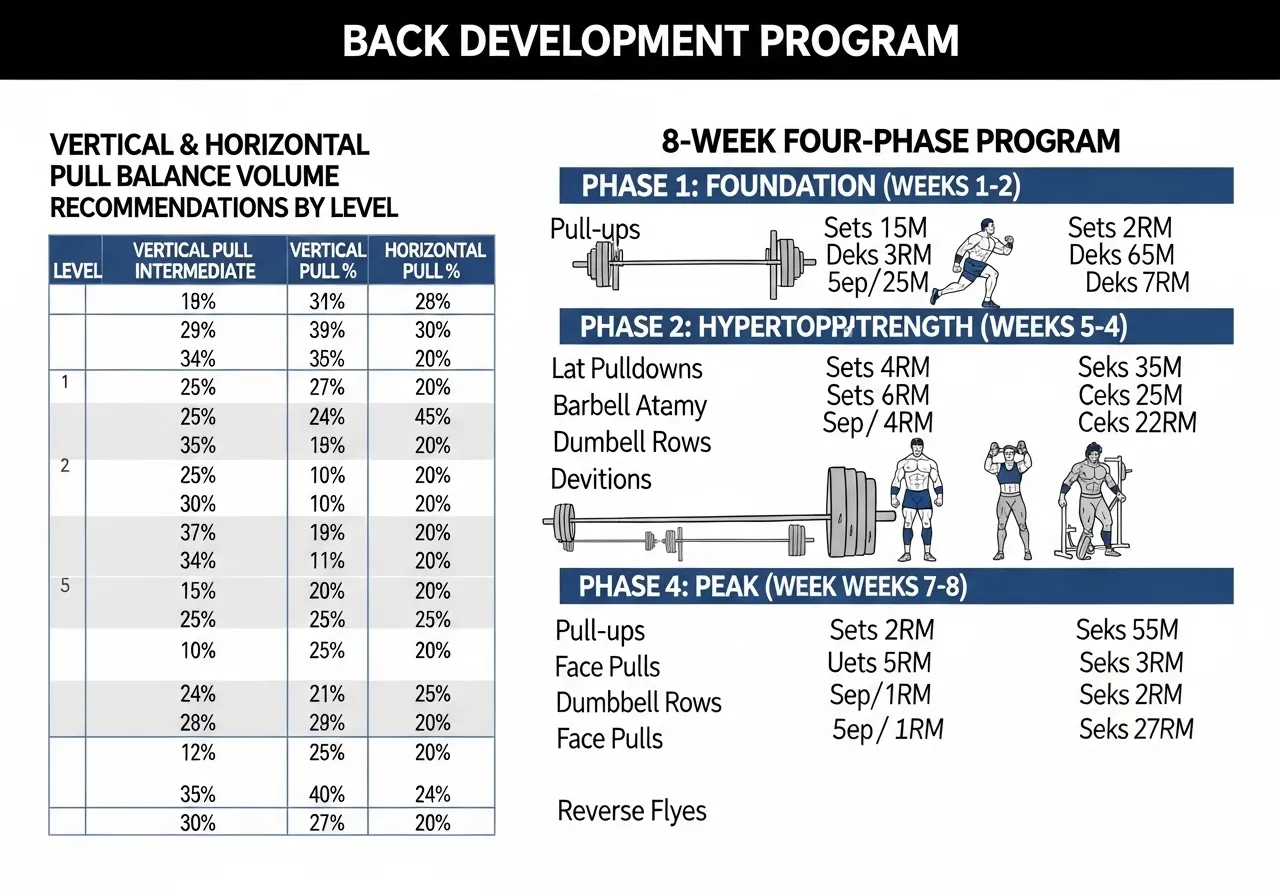
Two pressing-focused sessions per week — one heavy barbell strength session and one moderate dumbbell hypertrophy session. The combination develops both maximum strength and muscle development simultaneously, addressing the complete force-velocity spectrum of shoulder training.
Session A (Strength):
Standing barbell OHP: 4 × 6 @ 65% 1RM — technique priority
Seated dumbbell press: 3 × 10
Lateral raise: 3 × 15
face pull for shoulder health: 3 × 20
Session B (Hypertrophy):
Seated dumbbell press: 4 × 10–12
Arnold press: 3 × 12
Front raise: 3 × 12
Rear delt fly: 3 × 15
Session A:
Standing barbell OHP: 5 × 5 @ 70%
Push press: 3 × 4 @ 80%
Seated dumbbell press: 3 × 10
Face pull: 3 × 20
Session B:
Seated dumbbell press: 4 × 12
Arnold press: 3 × 12
Cable lateral raise: 3 × 15
Rear delt cable fly: 3 × 15
Session A:
Standing barbell OHP: 4 × 4 @ 77–80%
Push press: 3 × 5 @ 85%
Z-press: 3 × 8 (moderate)
Face pull: 3 × 20
Session B:
Single-arm dumbbell OHP: 4 × 8 each side
Arnold press: 4 × 12
Lateral raise superset rear delt fly: 3 × 15 / 3 × 15
Band pull-apart: 3 × 20
Session A:
Standing barbell OHP: Work up to top set of 3 @ 85–87%, then 2 back-off sets × 6 @ 72%
Push press: 3 × 3 @ 90%
Seated dumbbell press: 3 × 10
Face pull: 3 × 20
Session B:
Seated dumbbell press: 5 × 8 (heaviest manageable)
Arnold press: 3 × 10
Cable lateral raise: 4 × 15
Rear delt fly: 4 × 15
The Relationship Between Overhead Press and Other Upper Body Lifts
The overhead press does not develop in isolation — its strength is closely linked to and supportive of other upper body movements:
- Bench press relationship: Stronger overhead pressers typically bench press more effectively — the anterior deltoid strength developed in overhead pressing directly contributes to the initial drive phase of the bench press. Conversely, a weak overhead press relative to bench press often indicates anterior deltoid weakness limiting the shoulder’s contribution to horizontal pressing.
- Pull-up relationship: The overhead position strength developed in pressing directly complements the overhead position stability needed at the top of pull-up and lat pulldown movements — the lockout position in the overhead press trains the same shoulder girdle position that the top of a pull-up requires.
- Olympic lifting: For trainees interested in Olympic weightlifting, overhead pressing strength — particularly the strict press and push press — is one of the most reliable predictors of jerk performance. The ability to support heavy loads overhead is directly tested in the clean and jerk.
Nutrition Timing for Overhead Pressing Sessions
Upper body strength sessions, while producing lower total caloric demand than lower body compound sessions, still benefit from strategic nutritional timing:
- A mixed meal of protein and carbohydrates 2–3 hours before a pressing session provides sustained energy and amino acid availability for the neuromuscular demands of heavy pressing
- Post-session protein intake of 20–40 grams supports the muscle protein synthesis that drives the deltoid hypertrophy and shoulder girdle strength adaptations from the session
- Adequate hydration throughout the session maintains neuromuscular performance — even mild dehydration (2% body weight reduction) has been associated with meaningful reductions in strength output in research studies
Shoulder Health and Overhead Press Safety
The Subacromial Space and Pressing Mechanics
The subacromial space (the narrow gap between the top of the humerus — the upper arm bone — and the underside of the acromion — the bony protrusion at the top of the shoulder) contains the supraspinatus tendon and the subacromial bursa (a fluid-filled sac providing cushioning). Compression or irritation of these structures during overhead movement is called subacromial impingement — the most common shoulder complaint in pressing-focused training.
Mechanical factors that may reduce impingement risk during overhead pressing:
- External rotation at setup: Ensuring the elbows are positioned slightly forward of the body’s frontal plane (not perfectly to the sides) allows the greater tubercle of the humerus to clear the acromion during the upward press
- Scapular upward rotation: The shoulder blade must rotate upward during overhead pressing — the serratus anterior and lower trapezius produce this rotation, and weakness in these muscles is a common precursor to impingement symptoms
- Avoiding excessive lumbar extension: The classic “chest out, back arched” overhead press position — while allowing heavier loads by reducing the range — places the shoulder in an impingement-prone position by changing the relative angle of the subacromial space
Rotator Cuff Strengthening: The Essential Complement
The rotator cuff — the four muscles (supraspinatus, infraspinatus, teres minor, and subscapularis — together responsible for humeral head compression and shoulder rotation in multiple planes) — must be specifically strengthened alongside pressing volume to maintain the shoulder joint stability that heavy overhead work demands.
Essential rotator cuff exercises for overhead pressing athletes:
- Face pull (cable or band): External rotation with horizontal abduction — the most directly protective exercise for the posterior shoulder in pressing-focused programs
- Band external rotation: Elbow at 90°, rotating the forearm outward against band resistance — directly strengthens the infraspinatus and teres minor
- Prone Y-T-W raises: Lying face down on a bench, raising the arms into Y, T, and W positions — develops the lower trapezius and posterior deltoid that support scapular mechanics during overhead movement
Including 2–3 rotator cuff exercises in every session that involves significant overhead pressing volume may reduce the anterior-posterior shoulder imbalance that progressively develops in pressing-heavy programs without corrective work.
When to Address Shoulder Pain in Pressing
Not all shoulder discomfort during pressing indicates a serious problem — minor transient discomfort during warm-up sets that disappears with session progression is common and typically harmless.
Pain characteristics that warrant cessation of overhead pressing and professional assessment:
- Sharp, localised pain at a specific point in the range of motion — particularly at the top of the press or at the catch position
- Pain that worsens as the session progresses rather than resolving after warm-up
- Pain that persists into the following day at rest — particularly in the anterior shoulder or at the outer deltoid insertion
- Any pain accompanied by weakness — a sudden inability to control the bar or dumbbell during a previously manageable weight
Overhead Press for Athletic Transfer
Beyond aesthetic and strength goals, the overhead press develops functional qualities that transfer directly to athletic and daily activity performance:
- Throwing sports: The overhead position strength, scapular stability, and rotator cuff development from pressing training contribute to the deceleration capacity — the ability to control the arm during the follow-through phase — that protects throwers from chronic shoulder injury
- Contact sports: Upper body pushing strength from overhead pressing complements the horizontal pressing strength of the bench press — together they develop the complete spectrum of pushing force that blocking, tackling, and striking require
- Daily function: Overhead reach strength — placing objects on high shelves, carrying items overhead, reaching during work tasks — is directly developed by overhead pressing and declines significantly with age when not specifically trained
Overhead Press FAQ
How much should I be able to overhead press relative to my bench press?
A frequently cited strength standard suggests the overhead press may be approximately 60–70% of the bench press for most trained individuals — reflecting the smaller muscle group size and shorter moment arm of the overhead position compared to the horizontal press. Highly trained strength athletes may press overhead at 65–75% of their bench press, while beginners often start with a wider gap as the overhead movement pattern requires more practice.
If the overhead press is significantly below this range relative to bench press, anterior-posterior shoulder imbalance or technique inefficiency in the overhead pattern may be limiting factors worth addressing specifically.
Why does my lower back ache after overhead pressing?
Lower back discomfort after overhead pressing almost always reflects one of two correctable technique errors: excessive lumbar hyperextension (arching the lower back to compensate for limited shoulder or thoracic mobility) or inadequate core bracing before and during reps.
The fix: stand in front of a wall mirror and check the side profile at the top position — the ribcage should remain down, not flared upward. If the lower back is visibly arched, reduce the weight until the position can be maintained with a neutral spine, and identify whether shoulder mobility guide, thoracic mobility, or core strength is the limiting factor.
Should I use wrist wraps for the overhead press?
Wrist wraps — supportive fabric bands that limit wrist extension under load — are appropriate for very heavy overhead pressing where wrist extension strain becomes a limiting factor before the deltoids are adequately fatigued.
For general training purposes, developing wrist and forearm strength without wraps is preferable — the wrist extensors and flexors develop meaningful strength from the pressing demand, and relying on wraps at moderate loads may delay this development. Wraps are most justified for maximum effort sets in the final phases of a strength peaking program where load is at or near 1-repetition maximum.
- Barbell overhead press produces greater muscle activation than machine pressing — the unguided trajectory demands stabiliser recruitment that machines eliminate
- Back overhead press enhances medial and posterior deltoid activation; front overhead press favours pectoralis major — both variations are valuable in a complete shoulder program
- Wider range of motion consistently increases deltoid and trapezius activation — full lockout reps are superior to partial range for muscle development
- Scapular upward rotation — driven by the serratus anterior and lower trapezius — is essential for safe overhead mechanics and must be actively trained alongside pressing volume
- The push press allows 10–30% more load than strict pressing — providing a useful overload stimulus for the top range and a power-based complement to strict pressing work