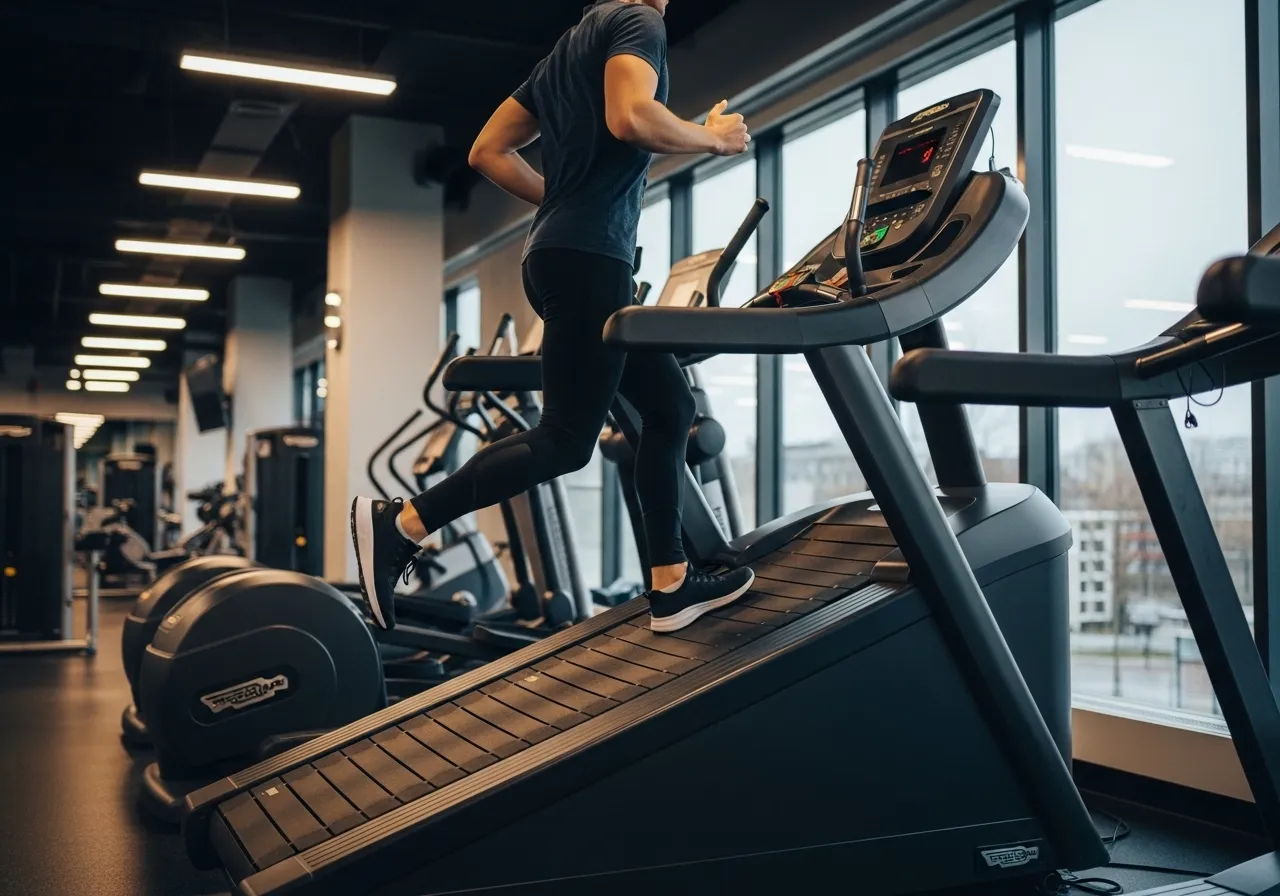
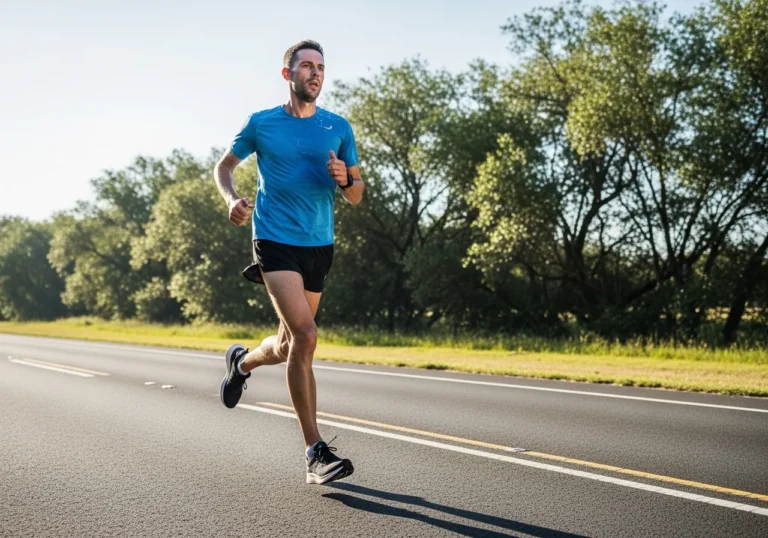
Treadmill running gets dismissed as the inferior version of real running. It removes terrain variation, wind resistance, and the natural speed fluctuations that make outdoor running physiologically rich. These criticisms are partially true and largely overstated.
The treadmill also offers something outdoor running cannot: precise, repeatable training conditions. Exact speed. Exact incline. No traffic, no weather, no darkness. These conditions are not just convenient. They are genuinely useful for structured training that requires precise intensity control.
This guide covers what the research shows about how treadmill and outdoor running actually compare, the biomechanical differences that matter for performance and injury, the 1% incline correction and when to use it, treadmill-specific training protocols, and how to build an effective 8-week treadmill programme.
Is Treadmill Running as Effective as Outdoor Running?
📌 Key Finding
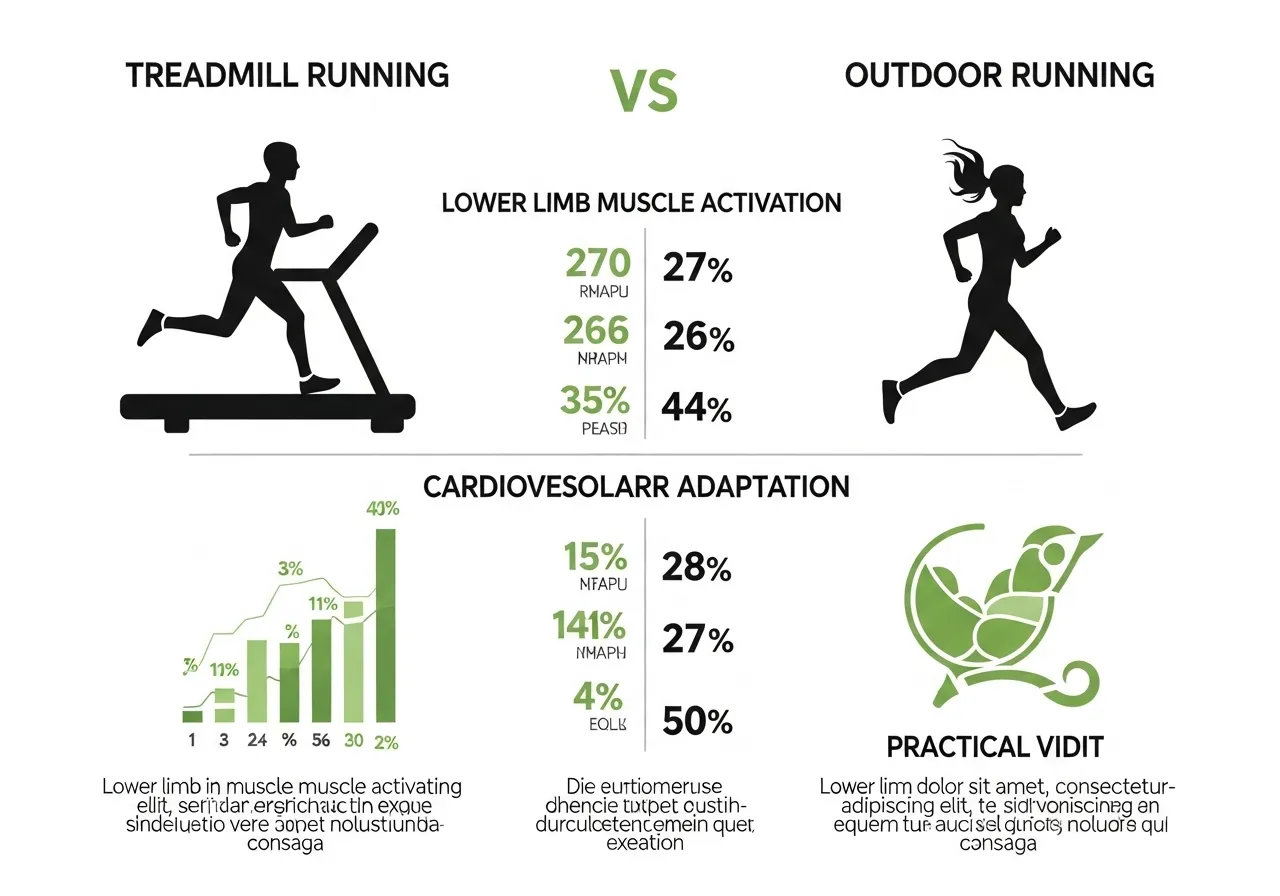
Outdoor running activates more lower limb muscle groups at higher levels than treadmill running at matched speed. The terrain variability, wind resistance, and natural gait adjustments of outdoor running create a richer neuromuscular stimulus than controlled belt running.
Where the Treadmill Matches Outdoor Running
Cardiovascular adaptations including VO2 max improvement, cardiac output, mitochondrial density, and aerobic enzyme upregulation are equivalent between treadmill and outdoor running when intensity and duration are matched. The physiological stress on the heart and aerobic system does not distinguish between running surfaces.
This means treadmill training is fully valid for all cardiovascular fitness goals. The differences between treadmill and outdoor running are primarily neuromuscular and biomechanical, not cardiovascular. For trainees whose primary goal is cardiovascular fitness, endurance development, or weight management through caloric expenditure, the treadmill achieves these goals at equivalent efficiency to outdoor running when volume and intensity are matched.
The Practical Verdict
Treadmill and outdoor running are complementary training modalities rather than competing alternatives. Using both within a training programme captures the precise intensity control of treadmill work and the neuromuscular richness of outdoor running. Choosing exclusively one over the other leaves benefits on the table that the other uniquely provides.
For trainees who can only choose one, outdoor running produces a slightly more complete stimulus. For trainees who need structured interval training at precise paces, or who have weather, safety, or schedule constraints, the treadmill is not a compromise. It is a genuine training tool with distinct advantages that outdoor running cannot replicate.
Psychological Differences Between Treadmill and Outdoor Running
Beyond the physiological differences, treadmill and outdoor running feel markedly different. Outdoor running provides constant environmental feedback: changing scenery, terrain challenges, social interaction, and the psychological satisfaction of covering ground. These factors reduce perceived exertion and make running feel less effortful at equivalent physiological intensity.
Treadmill running provides none of these environmental inputs. Many trainees find identical running paces feel significantly harder on the treadmill than outdoors because the absence of environmental feedback amplifies awareness of physical discomfort. Research on perceived exertion during treadmill running consistently shows higher RPE ratings compared to outdoor running at matched heart rate and pace.
This psychological difference has practical training implications. Easy Zone 2 runs on the treadmill may feel harder than their physiological intensity suggests, leading trainees to run faster than intended to reduce the subjective tedium. Using heart rate rather than pace to control treadmill intensity removes the temptation to push above the target zone. Music, podcasts, or video content significantly reduce perceived exertion during treadmill sessions and are effective tools for maintaining intensity discipline on longer treadmill runs.
The 1% Incline Correction: What the Research Actually Says
Why Flat Treadmill Running Is Easier Than Outdoor Running
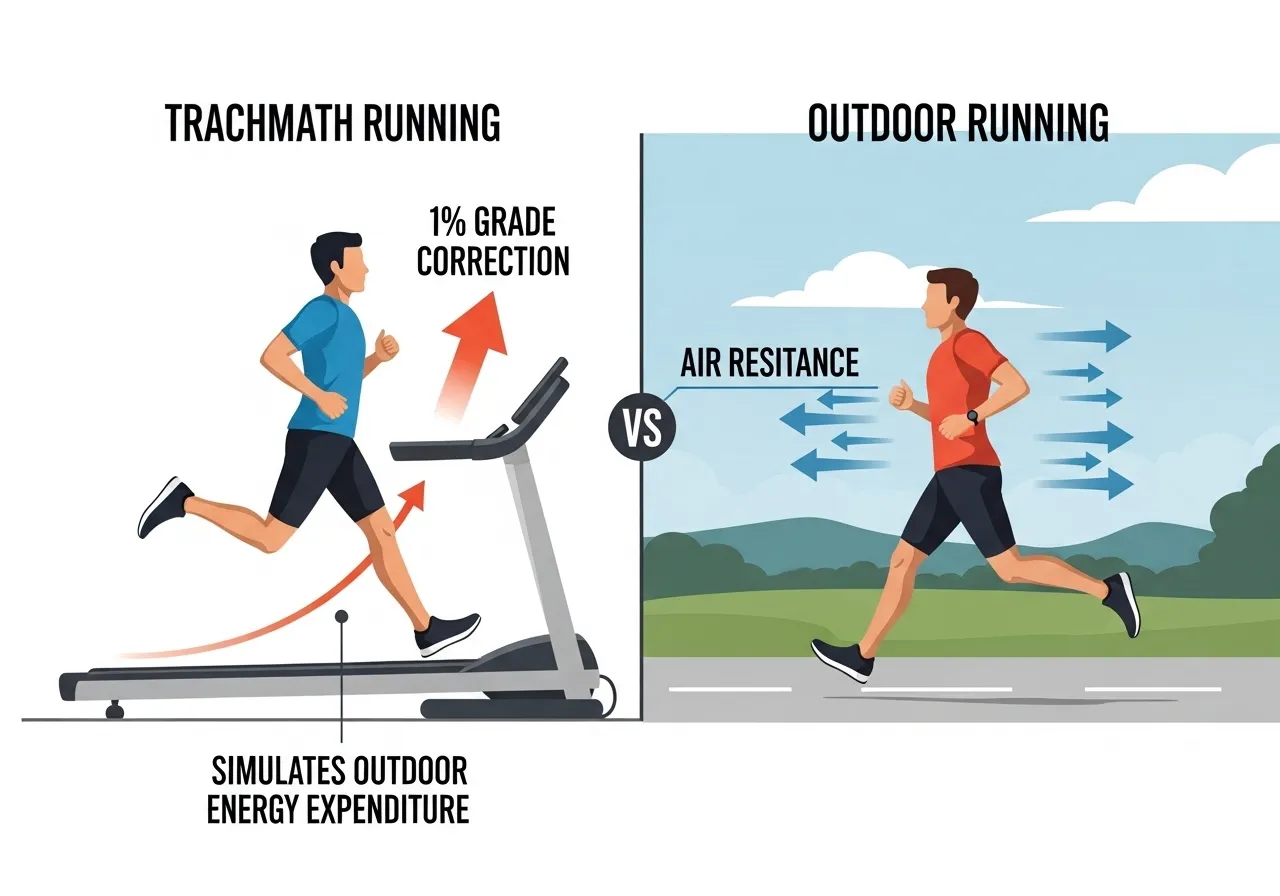
Running outdoors requires overcoming air resistance, which increases with the square of running speed. At recreational running paces of 8 to 12 km/h, air resistance represents approximately 3 to 8% of the total energy cost of running. At faster paces above 15 km/h, the air resistance contribution becomes more substantial.
A treadmill belt moving beneath the feet eliminates this air resistance component entirely. The result: running at a given speed on a flat treadmill is measurably easier than running at the same speed outdoors on a flat surface. The body receives less cardiovascular and metabolic stress per session than the pace display suggests.
📌 Key Finding
Setting the treadmill to 1% incline compensates for the absence of air resistance and produces an energy expenditure equivalent to running at the same speed outdoors on a flat surface. This is the standard correction used in running research and competitive training.
When 1% Incline Is and Is Not Appropriate
The 1% correction applies specifically to running at speeds above approximately 7 km/h on a flat outdoor surface. Below this speed, air resistance is minimal and the correction is negligible. Above 20 km/h, the 1% correction may slightly underestimate the air resistance component.
The 1% correction is also not appropriate when the intended goal is to train for an incline-specific event or to use incline as a deliberate training variable. Treadmill incline training above 1% is not a compensation strategy. It is a distinct training stimulus with specific physiological benefits that flat treadmill and outdoor running do not replicate.
Incline Training on the Treadmill: The Science and the Protocols
How Incline Changes the Biomechanics and Physiology
📌 Key Finding
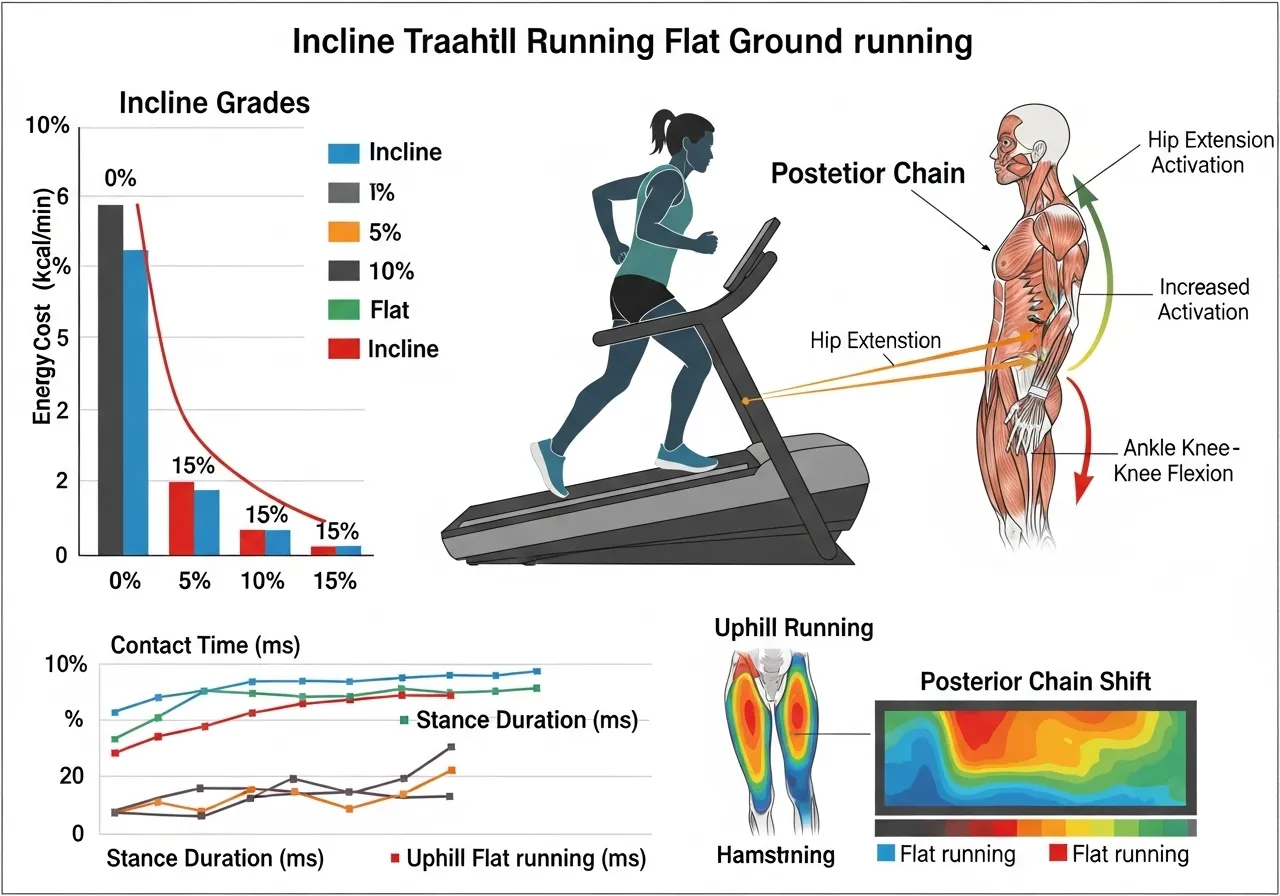
Uphill running reveals biomechanical differences between economical and less economical runners that flat running masks. Incline treadmill training develops running economy and posterior chain strength that flat running cannot provide at equivalent intensity.
Incline Running and Muscle Activation
Increasing treadmill incline shifts the muscular demand toward the posterior chain. The gluteus maximus, hamstrings, and calves produce proportionally more force during uphill running as the hip extension moment increases with grade. The quadriceps, dominant on flat and downhill surfaces, contribute less proportionally.
This posterior chain emphasis makes incline treadmill running a complementary stimulus to flat running and strength training. Trainees who perform exclusively flat running often have underdeveloped posterior chain relative to quadriceps. Adding 15 to 20 minutes of incline treadmill running at 6 to 10% grade twice per week develops glute and hamstring endurance that transfers to both running performance and injury resistance.
Incline Walking as a Training Tool
Incline walking at steep grades of 10 to 15% provides cardiovascular stimulus comparable to Zone 2 running with dramatically reduced impact forces. This makes it valuable for trainees recovering from lower leg injuries, building aerobic capacity during deload periods, or accumulating Zone 2 volume without the impact fatigue of high running mileage.
At 6 km/h and 12% incline, heart rate typically reaches 70 to 80% of maximum for most recreational athletes. This places incline walking firmly in Zone 2 to Zone 3 without the repetitive impact forces of running at equivalent cardiovascular intensity. The Zone 2 aerobic base building framework and its application is covered in the Zone 2 training guide.
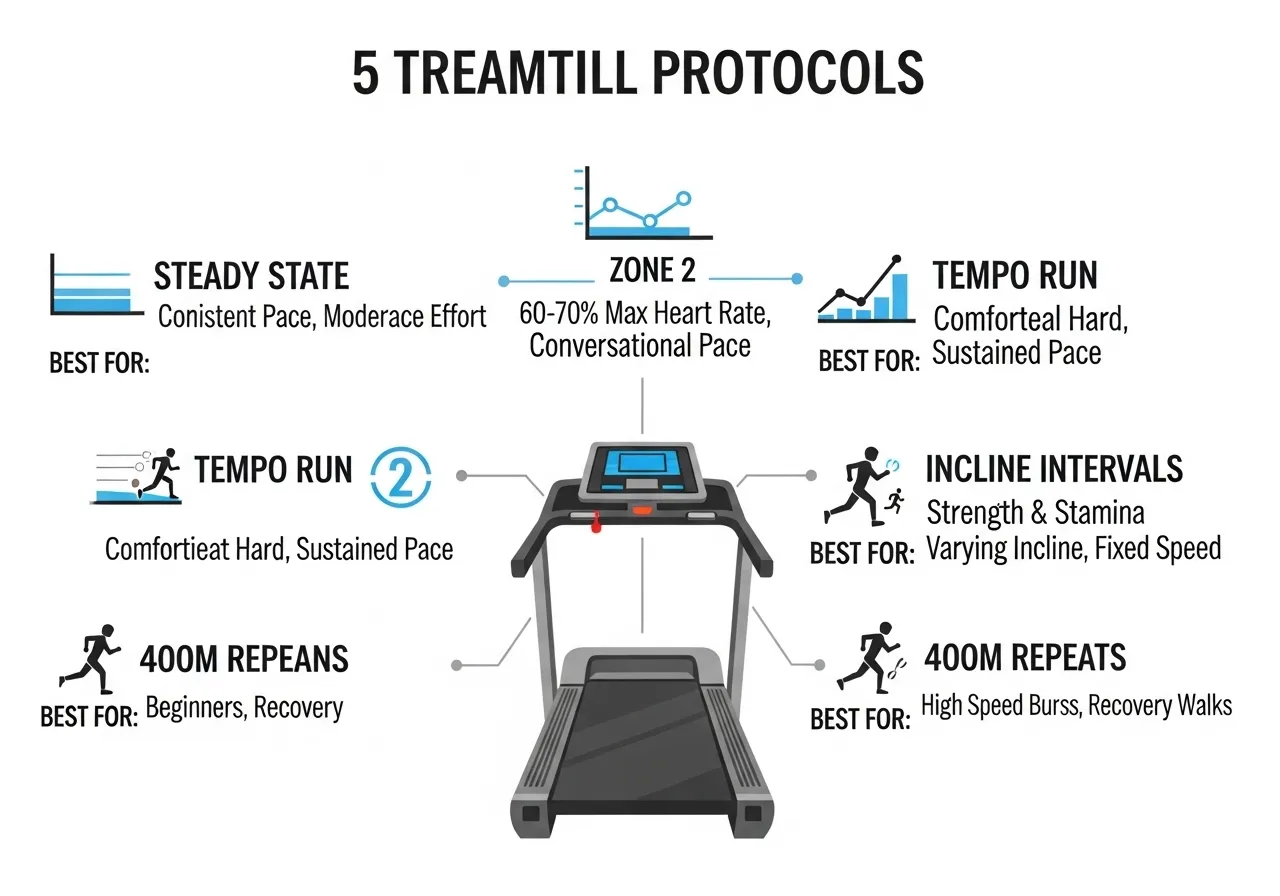
5 Treadmill Training Protocols for Different Goals
🏃 Protocol 1: Steady-State Aerobic Base (45 Minutes)
Target: Zone 2 cardiovascular base, fat oxidation, mitochondrial density
How: Set treadmill to 1% incline. Run at a pace where conversation is possible throughout. Target heart rate: 75 to 85% of LT2 heart rate. Maintain consistently for 45 minutes without pace variation.
Best for: Aerobic base building, recovery from high-intensity sessions, beginners developing initial running fitness.
🏃 Protocol 2: Treadmill Tempo Run (25 to 30 Minutes)
How: Set to 1% incline. After 10 minutes of easy warmup, run for 20 to 25 minutes at LT2 pace (the pace sustainable for approximately one hour in a race). Cool down 5 minutes easy.
Best for: Lactate threshold development, half marathon and marathon preparation. The treadmill’s precise speed control allows tempo pace to be held exactly, eliminating the natural pace drift that occurs outdoors.
🏃 Protocol 3: Incline Intervals (30 Minutes)
Target: Posterior chain endurance, running economy, VO2 max
How: Alternate 3 minutes at 8 to 12% incline at moderate pace with 2 minutes flat at easy pace. Repeat 5 to 6 rounds. The incline portion should produce a hard but sustainable effort; the flat recovery should feel genuinely easy.
Best for: Posterior chain development, runners training for hilly courses, trainees who want cardiovascular work with increased glute and hamstring demand.
How: After 15 minutes easy warmup, run 400m at 5 km race pace. Rest 90 seconds at easy walk or jog. Repeat 6 to 10 times. Cool down 10 minutes easy.
Best for: Speed development, 5 km and 10 km race preparation, VO2 max improvement. The treadmill’s belt speed setting eliminates the tendency to slow down on intervals, which is the most common error in outdoor speed work.
🏃 Protocol 5: Progressive Incline Walk (45 Minutes)
Target: Zone 2 cardiovascular stimulus with minimal impact
How: Walk at 5.5 to 6.5 km/h. Every 5 minutes, increase incline by 1% from 5% to 15%. Spend 5 minutes at maximum incline before stepping back down at the same rate. Total time: 45 minutes.
Best for: Injury-modified training, high-volume aerobic base building without impact accumulation, trainees who cannot run due to lower leg pathology. For the science behind this protocol and lactate threshold training context, the lactate threshold guide covers the cardiovascular zones these sessions target.
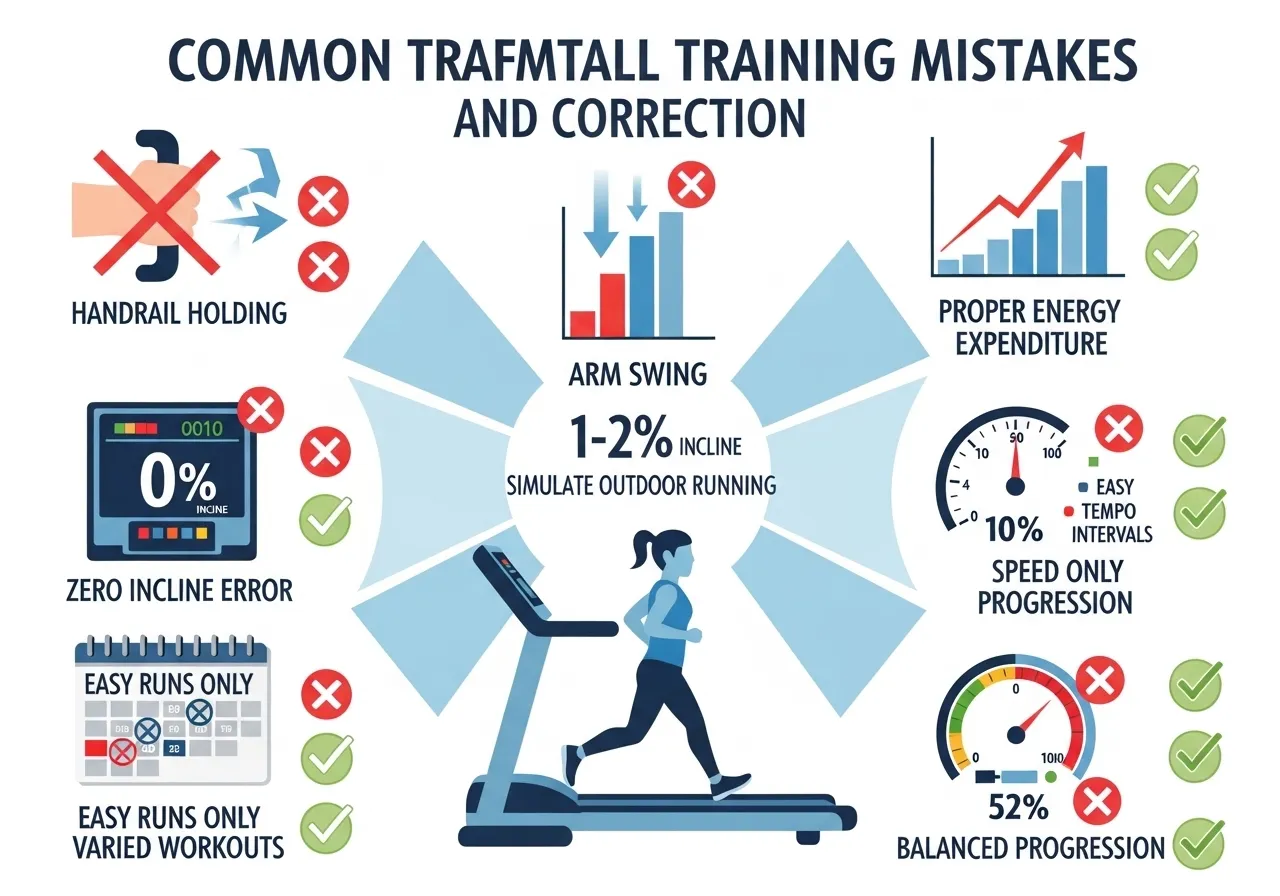
The Common Treadmill Training Mistakes That Limit Progress
Mistake 1: Holding the Handrails
Holding the treadmill handrails during running or walking is the single most counterproductive treadmill habit. It reduces energy expenditure by 20 to 30% by partially supporting body weight, disrupts natural arm swing mechanics, and teaches the body a movement pattern that does not transfer to outdoor running.
The pace or incline that requires handrail holding for stability is too high for the current fitness level. The correct response is to reduce speed or incline until the session can be completed without handrail support. Progressively building fitness without support produces genuine adaptation. Using support to maintain a challenging display number produces neither fitness nor technique improvement.
Mistake 2: Running at Zero Incline
Running at 0% incline on a flat treadmill is slightly easier than running at the same speed outdoors due to the absence of air resistance. Over weeks of consistent flat treadmill running, training intensity is marginally underestimated relative to the effort required for outdoor running at the same displayed pace.
For most recreational trainees, the energy expenditure difference is small and practically insignificant. The 1% correction is most important for trainees who are pace-focused and need their treadmill training to accurately reflect outdoor race performance. Setting 1% as the default minimum incline adds no practical difficulty and eliminates the energy expenditure discrepancy entirely.
Mistake 3: Only Using the Treadmill for Easy Runs
Many trainees use the treadmill exclusively for easy steady-state running and reserve all quality work (intervals, tempo runs) for outdoor sessions. This misses the treadmill’s primary advantage for quality training: precise speed control.
The treadmill enforces the target pace. Outdoor intervals drift below target speed when fatigue accumulates or terrain changes. A treadmill set to 5 km pace runs exactly at 5 km pace regardless of how tired the athlete is. This precision makes treadmill interval training superior for trainees who struggle to maintain target paces outdoors during high-intensity work.
Mistake 4: Using Speed as the Only Progression Variable
Most treadmill progressions increase belt speed as the primary load variable. Speed progression is valid but is not the only option. Incline progression, duration progression, and interval density progression all represent legitimate treadmill training advances that do not require running faster.
For trainees with injury history, lower back sensitivity, or ankle/knee limitations that make higher-speed running risky, incline and duration progression allow significant cardiovascular development within a safer speed range. The running guide covering pace, training zones, and technique for both treadmill and outdoor running is at the running guide.
Mistake 5: Not Warming Up Before Treadmill Intervals
The treadmill makes it easy to skip warmup. Step on, set the speed, start running. Many trainees begin interval work within the first two minutes of treadmill contact without raising core temperature, increasing tendon compliance, or priming the neuromuscular system for high-intensity effort.
Treadmill injuries, specifically calf strains and Achilles tendinopathy, are disproportionately common at the start of sessions when the tissue is cold. The belt forces the foot through a consistent repetitive motion that does not allow for the natural stride variation that might spare a cold tissue from repetitive stress.
A minimum warmup of 8 to 10 minutes at easy pace before any interval or tempo work eliminates the majority of treadmill-specific session-start injury risk that cold tissue running creates. Adding 3 to 4 minutes of dynamic lower limb drills including leg swings, ankle circles, and hip rotations before stepping on the belt makes this injury protection even more complete and prepares the joints for loading.
8-Week Treadmill Training Programme
📅 Phase 1: Weeks 1 to 2: Aerobic Foundation
3 sessions per week: 30 to 35 minutes at 1% incline, Zone 2 pace
Build treadmill familiarity and aerobic base before intensity.
📅 Phase 2: Weeks 3 to 4: Adding Incline Work
2 easy sessions: 35 to 40 minutes at 1% incline, Zone 2
1 incline session: 30 minutes alternating 3 min at 8% and 2 min flat
Introduce posterior chain loading through incline intervals.
📅 Phase 3: Weeks 5 to 6: Introducing Speed Work
2 easy sessions: 40 minutes at 1%, Zone 2
1 tempo session: 10 min easy + 20 min at LT2 pace + 5 min easy at 1%
1 incline interval session
Add lactate threshold stimulus alongside base volume.
📅 Phase 4: Weeks 7 to 8: Full Programme and Benchmark
2 easy sessions: 40 to 45 minutes Zone 2
1 speed interval session: 6 to 8 x 400m at 5km pace, 90 sec rest
1 tempo session: 25 to 30 minutes at LT2
Week 8: timed 5km at 1% to benchmark fitness progress
Peak programme with all session types. The 5km benchmark establishes a baseline for the next training block.
Frequently Asked Questions About Treadmill Training
Is treadmill running harder on the knees than outdoor running?
Treadmill running provides a more consistent, cushioned surface than most outdoor running environments. This reduces the peak impact forces per stride compared to concrete or asphalt but eliminates the natural force variation of outdoor terrain that may reduce cumulative stress through biomechanical diversity.
Neither surface is categorically harder or easier on the knees. The primary determinants of knee stress during running are running volume, speed, technique, and footwear, not surface type. Trainees with active knee pathology often find treadmill running more comfortable than road running due to the consistent cushioning, but this comfort does not represent lower training stimulus at matched cardiovascular intensity.
How do I pace myself on a treadmill if I usually run outdoors?
Your outdoor running pace at 1% treadmill incline will feel equivalent in effort to the same pace outdoors. Start with your known comfortable outdoor pace, set the incline to 1%, and adjust based on perceived effort and heart rate over the first few minutes. Most trainees find their comfortable treadmill pace at 1% incline is within 5 to 10 seconds per km of their outdoor easy pace.
If transitioning from outdoor pace training to heart rate training on the treadmill, use your LT2 heart rate derived from a field test to set zones rather than relying on pace. This removes the surface and conditions variables and ensures the cardiovascular stimulus is accurately targeted regardless of speed display.
What is the best treadmill incline for general fitness?
For most general fitness goals, alternating between sessions provides the broadest stimulus. Two sessions per week of steady-state running at 1% incline for Zone 2 base building, one session of incline intervals at 8 to 12% for posterior chain development, and one session of tempo or speed work at 1% for lactate threshold development covers all major fitness qualities through treadmill training alone.
Trainees with a single weekly treadmill session benefit most from the incline interval protocol that combines cardiovascular stimulus with posterior chain loading. This provides the most total training benefit from a single session when volume is limited.
Can I train for a race entirely on a treadmill?
Cardiovascular fitness for race performance is fully transferable from treadmill to outdoor racing. The aerobic adaptations, lactate threshold improvements, and VO2 max gains developed on the treadmill translate directly to outdoor performance.
The practical limitation is running mechanics. Treadmill running reduces biomechanical variability compared to outdoor running, so trainees who train exclusively on the treadmill may experience greater fatigue from the terrain variation, camber, and inconsistent surface of outdoor racing. Including at least 20 to 30% of weekly running volume outdoors in the final four to six weeks before a race allows the neuromuscular system to readapt to outdoor running conditions before race day.
Does treadmill running help with weight loss?
Treadmill running contributes to weight loss through caloric expenditure at a rate comparable to outdoor running at equivalent speed and duration. A 75 kg individual running at 10 km/h for 45 minutes expends approximately 450 to 500 calories on a treadmill at 1% incline, which matches outdoor running energy expenditure closely.
The practical weight loss advantage of the treadmill is consistency: indoor training is not affected by weather, darkness, or safety considerations that limit outdoor running frequency. For trainees whose weight loss goal depends on maintaining a consistent weekly training volume, the treadmill removes the barriers that cause outdoor training to lapse during winter, rain, or busy schedules.
Incline treadmill work increases caloric expenditure above flat running at the same speed. At 6 km/h and 10% incline, energy expenditure is roughly equivalent to running at 10 to 11 km/h on a flat surface. For trainees who cannot run at higher speeds due to fitness limitations or injury, incline walking at steep grades provides a viable caloric expenditure pathway within a controlled cardiovascular intensity range.
What speed should I start with on a treadmill as a beginner?
Most beginners should start at 6 to 7 km/h for walking and 8 to 9 km/h for running. The correct starting speed is one at which a comfortable conversation is possible throughout. If breathing is too laboured for speech within the first two minutes, the speed is too high.
Beginning at a pace that feels almost too easy is the correct treadmill programming approach for the first two weeks of any new training block. The body needs time to adapt to the repetitive motion of belt running, the confined space, and the absence of the natural environmental cues that outdoor running provides continuously. Many trainees who start too fast on treadmills develop shin splints or Achilles discomfort within the first two weeks of training, which sets their programme back by a month or more. Starting conservatively and building gradually over four to six weeks is always faster in the long run than starting ambitiously and spending weeks managing an avoidable overuse injury.
Key Takeaways
Outdoor running activates more lower limb muscles at higher levels than treadmill running. Cardiovascular adaptations are equivalent when intensity and duration are matched.
Setting the treadmill to 1% incline compensates for the absence of air resistance and accurately reflects the energy cost of outdoor running at recreational and competitive speeds.
Uphill running reveals biomechanical differences between economical and less economical runners that flat running does not. Incline treadmill training develops running economy and posterior chain endurance.
The treadmill’s primary advantage for quality training is precise speed control: interval sessions run at exactly the target pace without the drift that occurs outdoors.
Holding handrails reduces energy expenditure by 20 to 30%. Any pace or incline requiring handrail support is too high for the current fitness level.
Treadmill running at the same pace feels harder than outdoor running at equivalent physiological intensity due to the absence of environmental feedback. Use heart rate, not pace, to control treadmill session intensity.
⚠️ Health & Fitness DisclaimerThis article is for general educational purposes only and does not replace professional medical advice. If you have any cardiovascular, joint, or metabolic conditions, consult a qualified healthcare professional before beginning any cycling for fitness guide program. Indoor cycling is among the most versatile and research-supported cardiovascular training tools available —…
⚠️ Health & Fitness DisclaimerThis article is for general educational and informational purposes only.It does not replace professional medical or fitness advice.If you have any pre-existing condition, injury, or cardiovascular concern — please consult a qualified healthcare professional or certified personal trainer before starting or modifying any exercise program. Battle ropes sit at an unusual…
Easy running is comfortable. Sprint intervals are brief and brutal. Tempo running sits between them and is, for many recreational runners, the training zone they consistently avoid because it is neither comfortable enough to sustain for long nor short enough to feel manageable. This avoidance is expensive. Tempo running, performed at or just below the…
⚠️ Health & Fitness DisclaimerThis article is for general educational purposes only and does not replace professional medical advice. If you have cardiovascular, respiratory, or musculoskeletal conditions, please consult a qualified healthcare professional before beginning a swimming program. Swimming is one of the most physiologically complete forms of exercise available — simultaneously developing cardiovascular fitness,…
⚠️ Fitness Disclaimer: The information in this article is for general educational purposes only and does not constitute professional fitness or medical advice. Exercise carries inherent risks. Always consult a qualified healthcare professional or certified personal trainer before starting or modifying any exercise program, especially if you have a pre-existing medical condition, injury, or health…
Most cardio equipment trains the legs while the upper body assists at best. The assault bike is different. The arms drive the handlebars forward and back while the legs pedal. Both contribute to power output simultaneously. This total-body demand creates a cardiovascular and metabolic challenge that leg-only cardio equipment cannot replicate at the same effort…