Scapular Stability Guide: Anatomy, EMG Research, 7 Key Exercises, and Shoulder Health Protocol
This article is for general educational purposes only. It does not replace professional medical advice. If you have existing shoulder pain, rotator cuff injury, or shoulder impingement, consult a qualified healthcare professional before starting any scapular training programme.
Most shoulder problems in the gym do not start at the shoulder joint itself. (see also: shoulder mobility guide)
They start at the scapula — the shoulder blade — and the muscles that control it.
When the scapula moves poorly, the entire shoulder mechanics shift. The rotator cuff (the four-muscle group that stabilises and rotates the humeral head within the shoulder joint) works harder to compensate. Over time, that compensation creates the impingement, clicking, and aching that eventually limits pressing, pulling, and overhead movement.
This guide covers what scapular stability actually means and which exercises restore it.
You will also find an 8-week programme that builds the foundation most lifters never develop.
The Shoulder Pain Myth: Why Rotator Cuff Exercises Alone Often Fail
The Standard Approach — and Its Gap
When shoulder pain develops, the typical advice is: do rotator cuff exercises.
External rotation with a band. Internal rotation with a dumbbell. Maybe some prone Y-T-W. These are genuinely valuable exercises. But they address the rotator cuff in isolation — without addressing the platform on which the rotator cuff operates.
That platform is the scapula.
What Scapular Dyskinesis Actually Is
Scapular dyskinesis (altered or abnormal scapular movement pattern — from the Greek dys meaning “difficulty” and kinesis meaning “movement”) describes the condition where the shoulder blade fails to move in the correct coordinated pattern during arm elevation and pressing.
The most common presentation: the scapula tilts forward and rotates inward as the arm rises overhead, rather than rotating upward and retracting as normal mechanics require.
This altered movement reduces the subacromial space — the gap between the top of the humerus and the underside of the acromion.
A reduced subacromial space pinches the rotator cuff tendons that pass through it. That pinching is the mechanism behind subacromial impingement syndrome.
The Research on Scapular Stabilisation Exercises
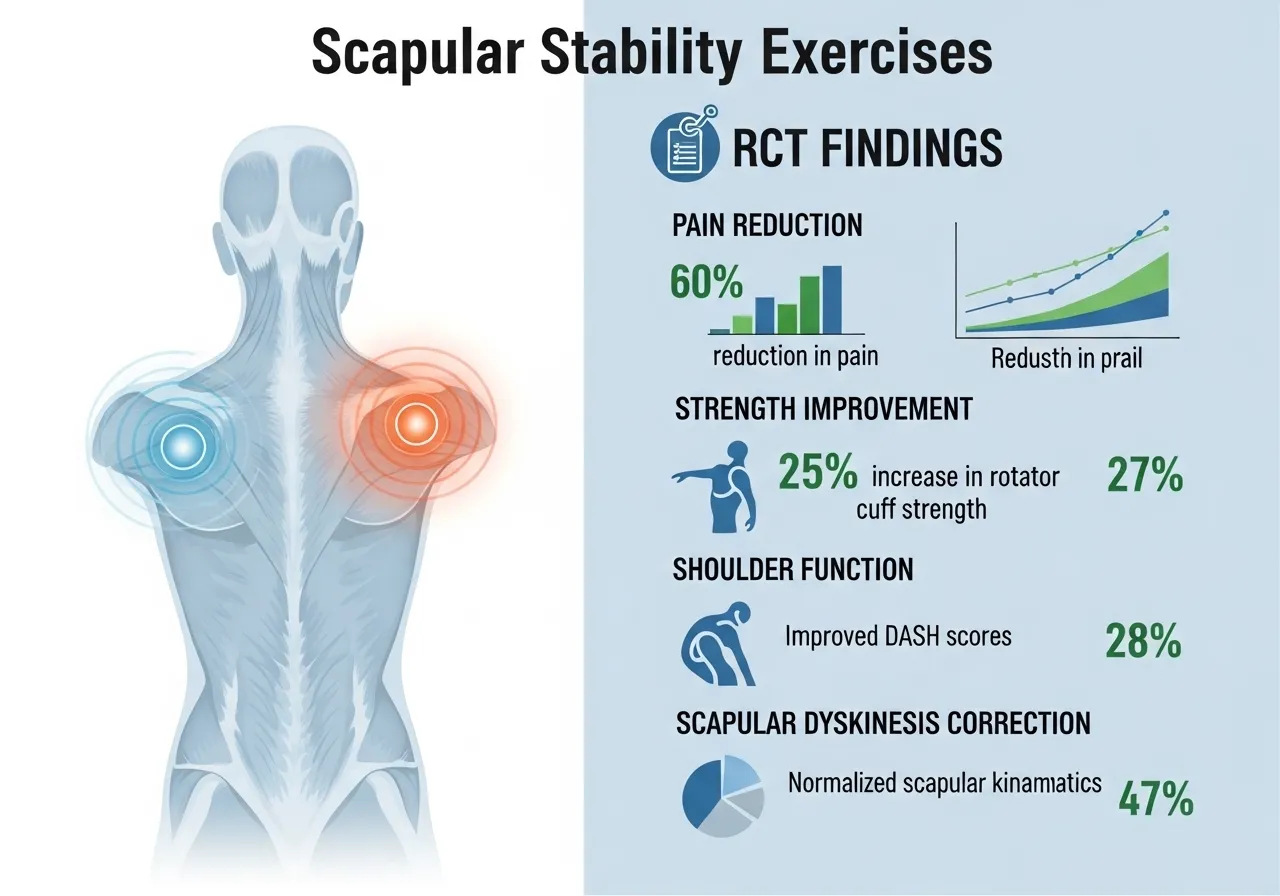
A randomised controlled trial examining the effects of scapular stabilisation exercises on subacromial pain syndrome found that scapular stabilisation exercises added to standard shoulder mobilisation, stretching, and strengthening significantly improved scapular dyskinesis, reduced pain, and increased muscle strength and shoulder function in patients with subacromial pain syndrome — confirming that targeted scapular work adds measurable benefit beyond general shoulder exercise alone.
Scapular stabilisation exercises improve pain, strength, and shoulder function beyond what general shoulder exercise achieves. The scapular platform matters — not just the rotator cuff that sits on it.
Why Trainees Without Pain Still Need Scapular Work
Scapular dyskinesis develops silently. Most trainees do not notice it until pressing loads become heavy enough to expose the compensation.
A shoulder that wings slightly during pull-ups at bodyweight may collapse significantly under a loaded barbell. By the time pain appears, the dysfunction has often been present for months.
Proactive scapular stability work — face pulls, prone Y-T-W, serratus push-ups — costs under 10 minutes per session. It builds the structural foundation that prevents the compensation chain from developing in the first place.
Scapular Anatomy: The Four Muscles That Control Everything
The Scapula’s Role in Shoulder Movement
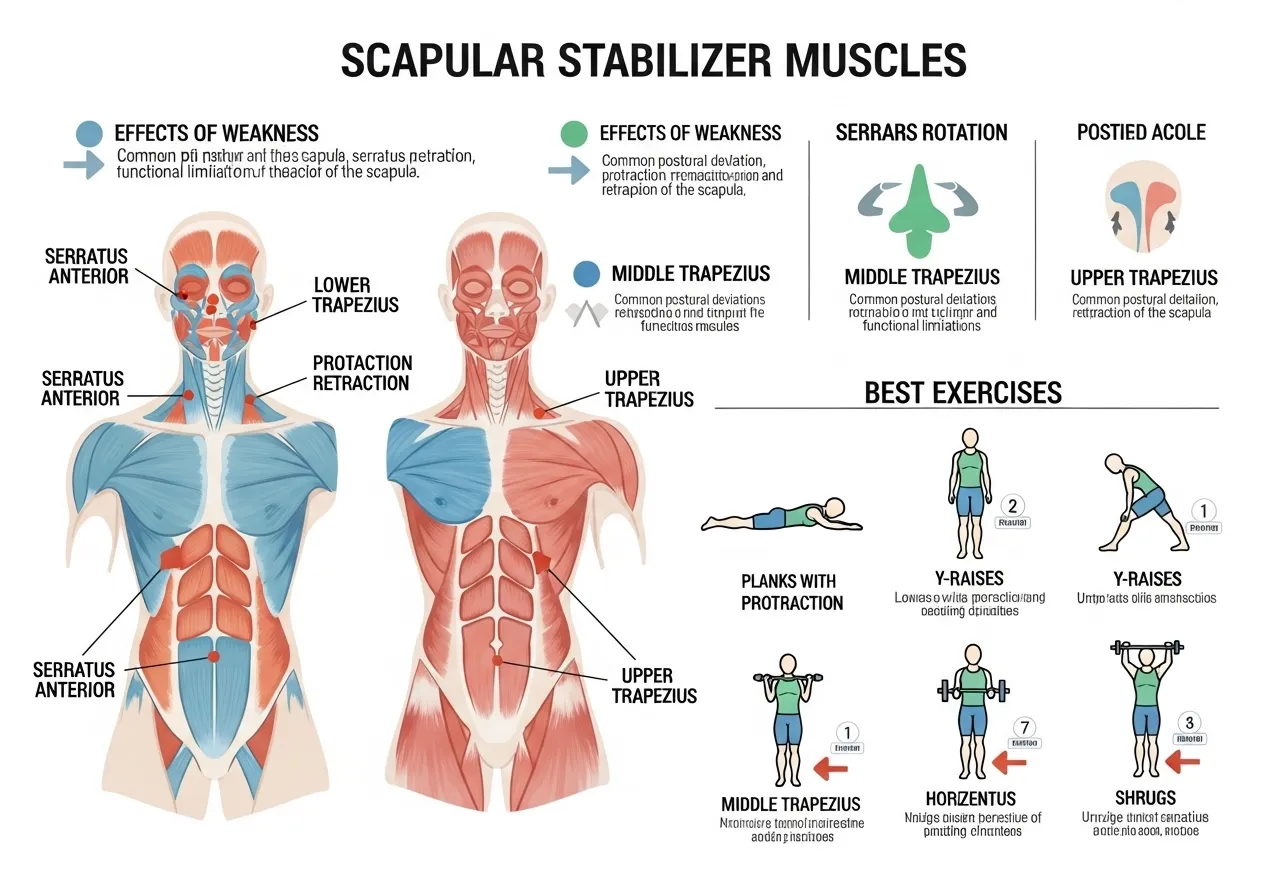
The scapula is not a passive bone. It moves actively through five directions: upward rotation, downward rotation, anterior tilt, posterior tilt, and protraction/retraction.
During normal arm elevation, the scapula upwardly rotates approximately 60° as the arm rises to 180°. This upward rotation keeps the glenoid (the socket of the shoulder joint) facing the humeral head throughout the range — maintaining joint congruency and subacromial space.
When this rotation is disrupted, everything downstream suffers.
The Four Key Scapular Stabilisers
| Muscle | Primary Action | Common Weakness Effect | Best Exercise |
|---|---|---|---|
| Serratus anterior | Protracts + upwardly rotates scapula | Scapular winging; impingement | Serratus push-up, wall slide |
| Lower trapezius | Depresses + upwardly rotates scapula | Elevated scapula; upper trap dominance | Prone Y raise, cable pull-down |
| Middle trapezius | Retracts scapula | Forward-rounded shoulder posture | Face pull, prone T raise |
| Upper trapezius | Elevates + upwardly rotates scapula | Over-dominant; creates shrug pattern | Needs inhibition, not more training |
The Upper Trap Dominance Problem
In most people with shoulder problems, the upper trapezius is not weak — it is overactive.
When the serratus anterior and lower trapezius underperform, the upper trapezius compensates. It shrugs the scapula upward rather than rotating it properly. This creates the hunched-shoulder posture that characterises chronic poor shoulder mechanics.
The solution is not to stretch the upper trap aggressively. It is to strengthen the serratus anterior and lower trapezius until they can perform their role — at which point the upper trap’s overactivity naturally reduces.
The Force Couple: How Two Muscles Must Work Together
Normal scapular upward rotation depends on a force couple (two forces acting on an object in opposite directions to produce rotation) between the serratus anterior and the lower trapezius.
A study comparing scapular muscle activity during various exercises finds that different scapular exercises produce distinct activation patterns across the lower trapezius, serratus anterior, and upper trapezius.
Three-dimensional kinematics confirms that exercise selection directly determines which components of the scapular force couple receive the greatest stimulus.
No single exercise trains all scapular stabilisers equally. Exercise selection determines which component of the force couple receives emphasis — making exercise variety essential for complete scapular stability development.
Does Posture Cause Scapular Dyskinesis — or Is It the Other Way Around?
The Chicken-and-Egg Problem
Forward head posture and rounded shoulders are frequently blamed for scapular dysfunction. But the relationship runs in both directions.
Poor scapular control allows the shoulder blade to drift into anterior tilt and internal rotation. Over time, this sustained position contributes to the rounded appearance. But the rounded posture also reinforces the muscle imbalances that perpetuate poor scapular control.
The practical consequence: stretching the chest and strengthening the upper back (the typical posture fix advice) addresses only part of the problem. Without specific scapular motor control work — retraining the serratus anterior and lower trapezius to fire correctly during arm movement — the compensatory pattern persists even after postural stretching.
Sedentary Work and Scapular Muscle Imbalance
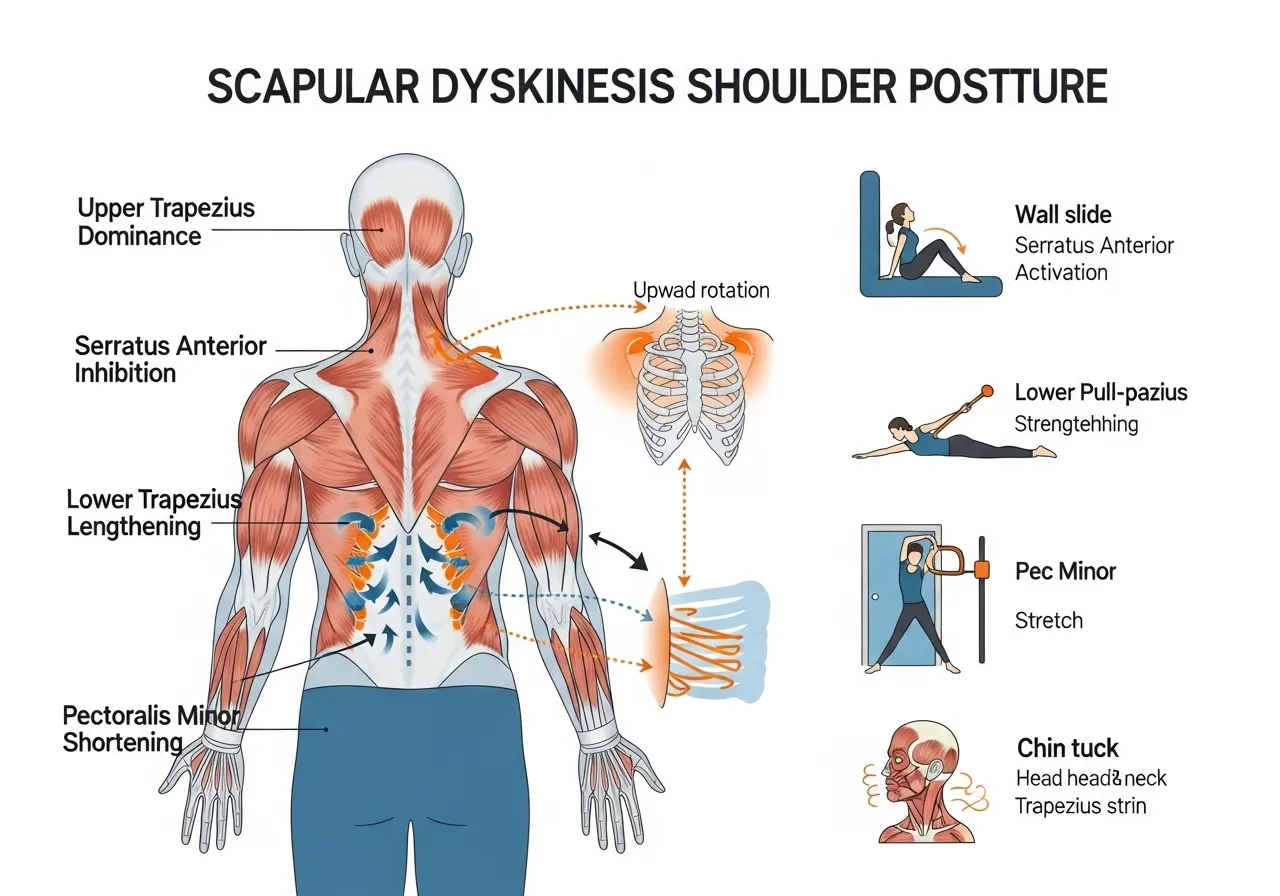
Prolonged desk sitting creates a predictable pattern of scapular muscle changes:
- Upper trapezius: Chronically shortened and overactive from sustained elevation while using a keyboard and mouse
- Serratus anterior: Progressively inhibited as the thorax narrows in the seated position and the scapula falls into resting protraction
- Lower trapezius: Lengthened and underactive in the forward-slouched position — it functions best when the thoracic spine mobility spine is extended
- Pectoralis minor: Shortened in the rounded-forward position — pulling the coracoid (the bony projection at the front of the shoulder blade) downward and forward, which anteriorly tilts the entire scapula
How Much Does Scapular Control Transfer to Gym Performance?
Scapular stability work produces direct transfer to pressing and pulling performance — not just injury prevention.
A shoulder blade that maintains correct position during the bench press creates a stable platform from which the pectorals and triceps press. One that wings or elevates reduces force transfer and limits the load achievable before technique breaks down.
In overhead pressing, inadequate scapular upward rotation limits safe arm elevation.
Improving scapular upward rotation by 10–15° often unlocks range of motion that months of stretching failed to produce. The restriction is usually motor control — not tissue tightness.
When to Prioritise Scapular Work Over Other Training
These are reliable signals that scapular stability work deserves priority:
- Clicking or clunking during arm elevation that is not painful but is noticeable
- Shoulder fatigue or aching during high-rep pressing that begins before the target muscle tires
- Visible winging of one or both shoulder blades during push-ups or rows
- Significant asymmetry between sides during overhead pressing or cable work
- Anterior shoulder pain specifically at the top of the pressing range
Any of these patterns warrants consultation with a physiotherapist for individual assessment alongside the training programme.
The Overhead Movement Pattern: A Hidden Indicator
Ask a training partner to watch your shoulder from behind as you perform a single-arm cable raise — slowly lifting the arm from the side to overhead.
Normal mechanics: the scapula upwardly rotates smoothly throughout the lift. The shoulder does not hitch or shrug. The movement is even and controlled.
Abnormal mechanics: the scapula hikes upward early (upper trap compensation), the arm stalls between 60–90° (impingement zone), or one side moves differently from the other.
This simple observation provides more practical information than most fitness assessments. Asymmetry between sides is often more important than the absolute pattern — a symmetric pattern that is slightly imperfect causes far fewer problems than a significantly asymmetric one.
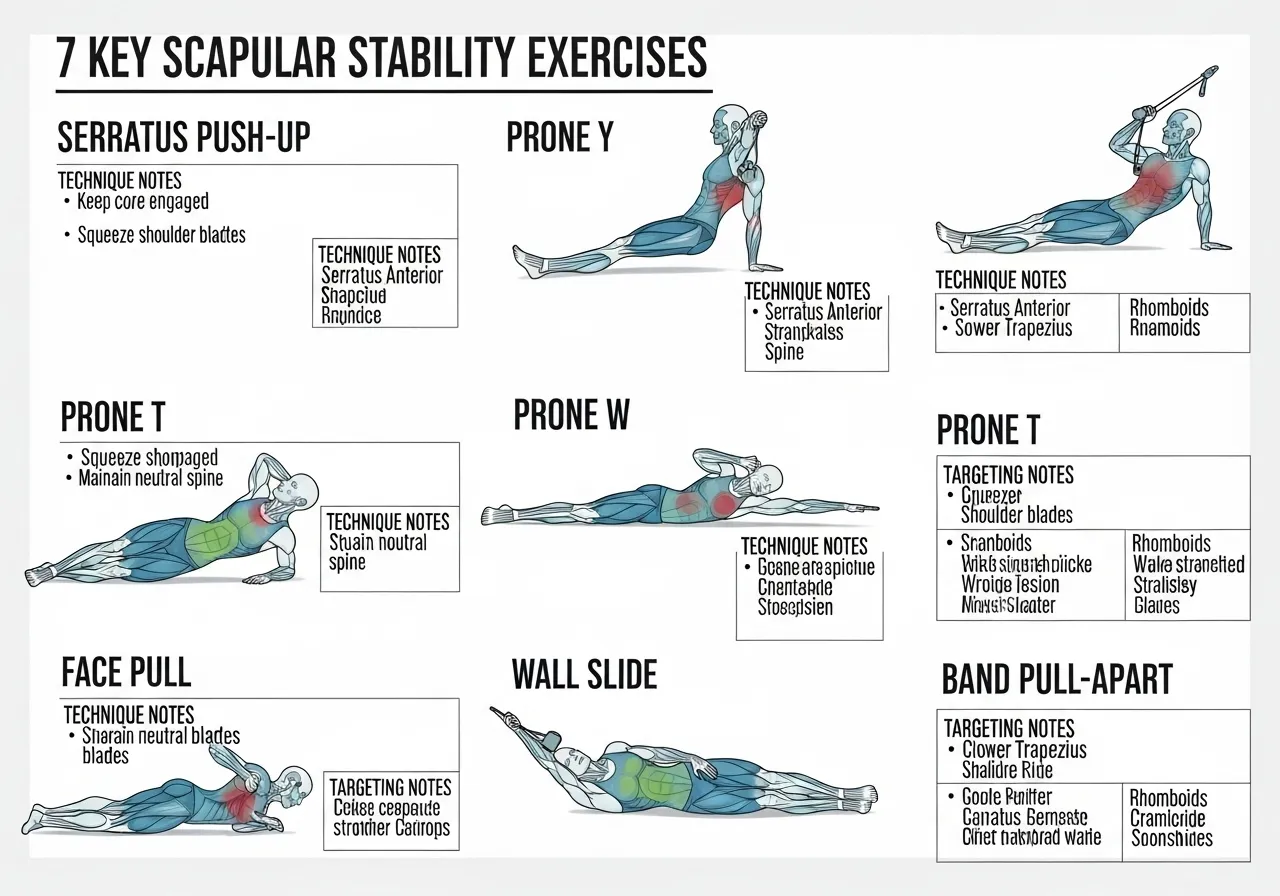
7 Key Scapular Stability Exercises: Technique and Targeting Notes
🏋️ 1. Serratus Push-Up (Wall or Floor)
Target: Serratus anterior (primary scapular protractor and upward rotator)
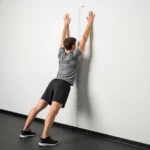
How: Begin in a push-up position at the top. Without bending the elbows, push the upper back toward the ceiling by protracting (spreading) the shoulder blades apart. Hold 2 seconds, then allow the blades to come together. The elbows remain straight throughout — this is a scapular movement, not an arm movement.
Key point: The wall variation (standing, arms extended against a wall) allows easier load management for beginners. The floor variation provides more challenge and better integrates core stability guide.
🏋️ 2. Prone Y Raise
Target: Lower trapezius (primary), middle trapezius secondary
How: Lie face down on a bench or floor. Arms extended at roughly 135° from the torso (forming a Y shape). Thumbs pointing upward. Lift the arms toward the ceiling by depressing the scapulae and retracting the shoulder blades — not by shrugging. Hold the top for 2 seconds. Begin with bodyweight before adding light plates.
Key point: Most people shrug their shoulders upward during this exercise, which trains upper trapezius instead of lower. Focus on driving the shoulder blades downward and inward as the arms rise — the opposite of a shrug.
🏋️ 3. Prone T Raise
Target: Middle trapezius (primary retractor)
How: Same position as Y raise but arms extended directly to the sides at 90° (forming a T). Palms facing down. Lift by retracting the scapulae — drawing the shoulder blades together — rather than elevating them. The movement range is small. Quality of scapular retraction matters far more than height of lift.
Key point: A very light load is appropriate here — the middle trapezius is a postural muscle, not a power muscle. 2–3 kg is often sufficient for meaningful stimulus.
🏋️ 4. face pull guide (Cable or Band)
Target: Middle and lower trapezius, posterior deltoid, external rotators
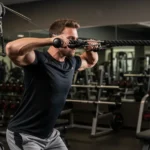
How: Set a cable or anchor a band at upper-chest height. Grip the rope with a neutral grip, elbows at shoulder height. Pull toward the face while externally rotating the shoulders — hands end up beside the ears, elbows wide. Squeeze the scapulae together and hold 1 second at the end position.
Key point: The external rotation component (turning the hands outward as you pull) is non-negotiable — without it, the face pull becomes a basic row and loses the posterior shoulder + scapular retraction emphasis that makes it uniquely valuable.
🏋️ 5. Wall Slide with Lift-Off
Target: Serratus anterior, lower trapezius, rotator cuff coordination
How: Stand with the back against a wall, arms at 90° (elbows bent, forearms flat against the wall). Slide the arms upward while maintaining full contact of the forearms and back of hands. At the top, “lift off” the hands slightly from the wall while keeping arms overhead. Return slowly.
Key point: Losing contact of the forearms or back of hands from the wall indicates the scapular stabilisers cannot maintain position under load. This test also serves as a diagnostic — the range at which contact is lost marks the starting point for the training programme.
🏋️ 6. Band Pull-Apart
Target: Middle trapezius, posterior deltoid, rhomboids
How: Hold a resistance band at shoulder width with an overhand grip, arms extended in front. Pull the band apart by retracting the scapulae — hands end up at the sides of the chest. The elbows remain straight throughout. Control the return over 2–3 seconds.
Key point: Perform as a daily warm-up or between sets of pressing. High rep ranges (15–25) at low resistance work better than heavy loads for this exercise — the target muscles respond better to endurance-style loading.
🏋️ 7. Prone W / Prone Ts and Ws
Target: Lower and middle trapezius, external rotators, posterior deltoid
How: Lying face down, arms bent at 90° with elbows flared out (forming a W shape). Lift the arms by depressing and retracting the scapulae — the forearms rise away from the surface. Hold 2 seconds at the top. Can be combined with Y and T raises in a sequence (Y-T-W).
Key point: The W position specifically challenges the lower trapezius at a shortened length — complementing the Y raise which trains it at a more lengthened position. Both are needed for complete lower trapezius development.
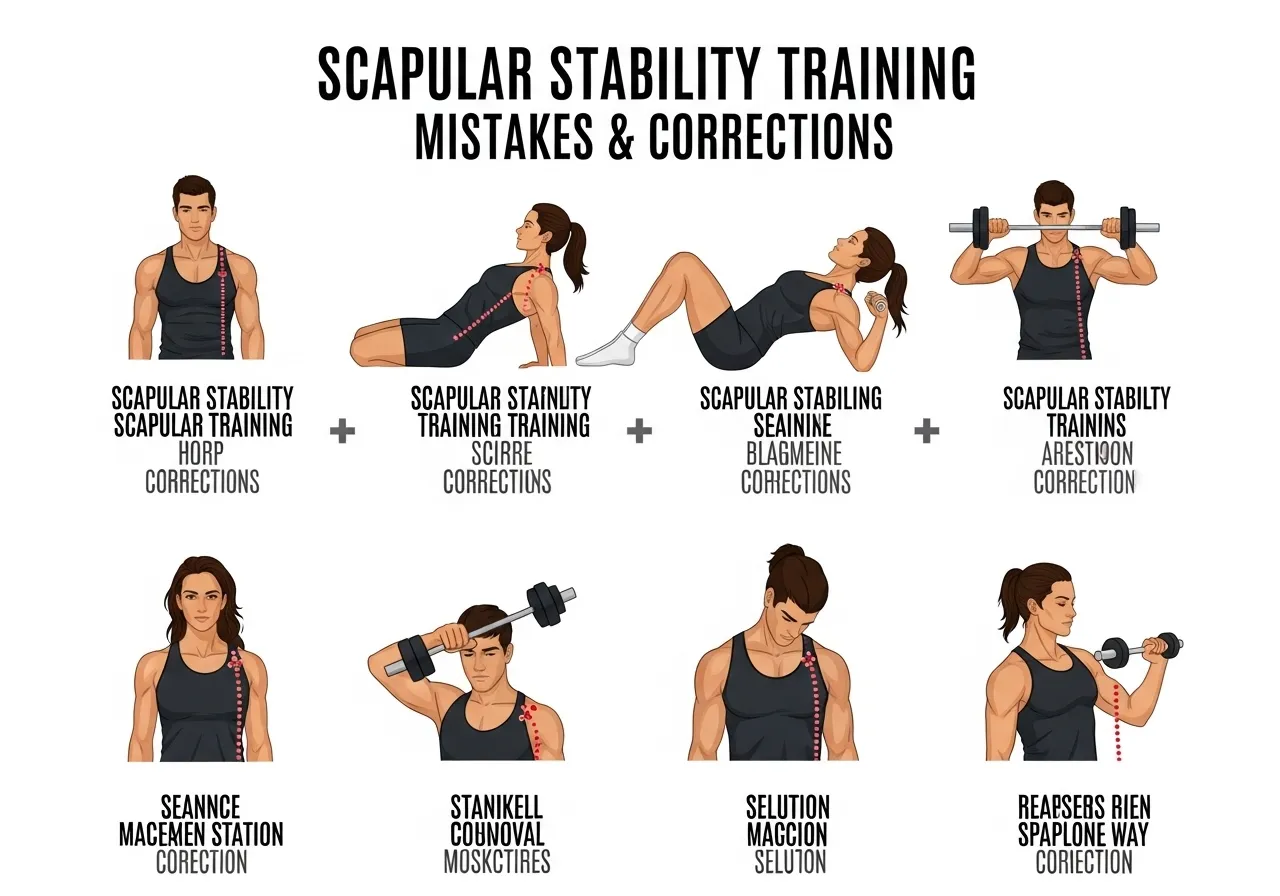
Why Scapular Stability Work Often Fails to Produce Results
Problem 1: Moving the Arms Instead of the Scapulae
This is the single most common error across every scapular exercise.
During a prone Y raise, most trainees lift their arms by shrugging — recruiting the upper trapezius to elevate the shoulder. The movement looks correct from the outside. But the lower trapezius receives no meaningful stimulus.
The correction requires slowing the movement significantly and focusing entirely on scapular position first. Before lifting the arm, consciously depress the shoulder blade (push it downward). Then lift while maintaining that depression. The range of motion is smaller. The exercise feels less impressive. But the correct muscle receives the stimulus.
Problem 2: Too Much Load Too Early
Scapular stabilisers are postural muscles. They respond to sustained low-load activation — not to heavy resistance training loads.
Trainees who grab 5 kg plates for prone Y raises immediately lose the scapular-controlled movement and default to a shrug/momentum pattern. Bodyweight or 1–2 kg is the appropriate starting point for most prone scapular exercises.
Progression comes through better quality of movement at the same load — not from adding weight prematurely.
Problem 3: Treating Scapular Work as Optional Accessory
Most trainees place scapular exercises at the end of a session — if they get to them at all. After bench press, rows, and overhead work, the shoulder girdle muscles are fatigued. The quality of scapular exercise in this state is significantly reduced.
A more effective approach: place 2–3 scapular exercises at the start of each upper body session as activation work. Wall slides, band pull-aparts, and prone Y raises performed before pressing prime the correct scapular position for the entire session. The investment is 5–8 minutes. The return is better shoulder position throughout all subsequent exercises.
Problem 4: No Integration Into Pressing and Pulling
Isolated scapular exercises develop the capacity for correct scapular movement. But that capacity only transfers to gym performance if it is reinforced during compound exercises.
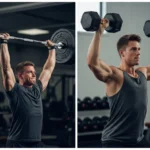
During bench press: actively retract and depress the scapulae before each set and maintain that position throughout. During overhead press guide: cue active upward rotation of the shoulder blade as the arm rises. During rows: initiate each rep with scapular retraction before bending the elbow.
The scapular cue must be present in compound exercises — not just in isolated scapular work. Without this integration, the movement pattern remains a therapy exercise rather than a functional habit.
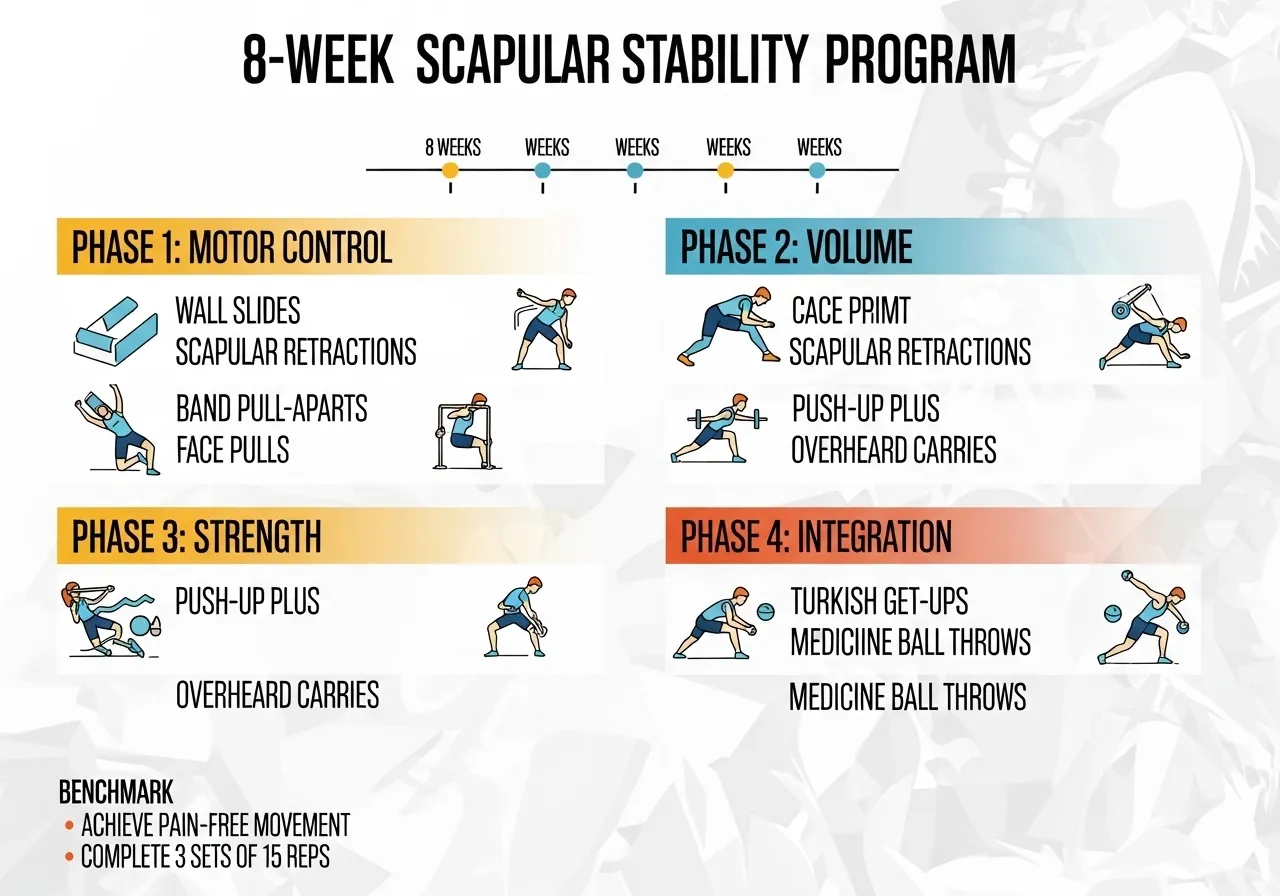
8-Week Scapular Stability Programme
This programme runs three sessions per week. Each session begins with a scapular activation block before any pressing or pulling work. The goal progresses from isolated motor control (Weeks 1–2) through loaded integration (Weeks 7–8).
Equipment needed: a resistance band, access to a cable machine (or a second band anchored high), and a flat bench or floor space for prone exercises.
📅 Phase 1 — Weeks 1–2: Motor Control Foundation
- Daily (any time): Wall slide with lift-off 2×8 — assess and note where contact is lost
- Session activation block (before all pressing/pulling): Band pull-apart 2×20 | Serratus push-up 2×10 (wall variation)
- Session main scapular work: Prone Y raise bodyweight 3×12 | Prone T raise bodyweight 3×12
Focus: Learn the scapular depression/retraction cue; do not progress load until movement quality is clean
📅 Phase 2 — Weeks 3–4: Volume Build
- Session activation block: Band pull-apart 3×20 | Serratus push-up 3×10 (floor variation) | Face pull 3×15
- Session main scapular work: Prone Y raise (1–2 kg) 3×12 | Prone T raise (1–2 kg) 3×12 | Prone W raise bodyweight 3×10
- Integration cue: Apply scapular retraction + depression cue during all bench press and row sets this phase
Focus: Build volume at low load; add scapular cuing to all compound pressing and pulling
📅 Phase 3 — Weeks 5–6: Strength Development
- Session activation block: Wall slide 2×8 (retest contact loss range) | Face pull 3×12 | Band pull-apart 2×20
- Session main scapular work: Prone Y raise (2–3 kg) 4×10 | Prone T raise (1–2 kg) 4×12 | Prone W raise (1 kg) 3×10 | Serratus push-up 3×12
- Add overhead cuing: During all overhead pressing, actively cue scapular upward rotation as the arm elevates past 90°
Focus: Progressively load prone exercises; maintain quality as load increases — reduce weight immediately if shrug pattern returns
📅 Phase 4 — Weeks 7–8: Integration and Benchmark
- Session activation block: Face pull 3×12 | Band pull-apart 3×20 | Serratus push-up 3×12
- Session main work: Prone Y-T-W sequence (2–3 kg) 3 rounds of 10 each | Wall slide with lift-off (full overhead range target)
- Benchmark (Week 8): Retest wall slide — note how far the arms can slide before contact is lost compared to Week 1. A 20–30% increase in the range before losing wall contact is a typical 8-week outcome.
- Observe pressing mechanics: Compare shoulder blade position during bench press in Week 8 versus Week 1 — consistent scapular retraction throughout the press indicates successful integration
Focus: Integrate all patterns; establish the activation block as a permanent pre-session habit
Frequently Asked Questions About Scapular Stability
How do I know if I have scapular dyskinesis?
The simplest self-assessment: perform a push-up and have someone observe from behind. If one or both shoulder blades “wing” outward — lifting away from the ribcage — during the pushing phase, serratus anterior weakness is likely present.
A qualified physiotherapist or sports medicine physician can perform a formal scapular assessment. This is worth pursuing if shoulder pain, clicking, or pressing limitation is already present.
How long does it take to fix scapular stability?
Motor control improvements begin within 2–4 weeks of consistent work — the nervous system adapts faster than the muscles. However, the structural strength to maintain correct position under heavy compound loading typically requires 8–12 weeks of progressive training.
Maintenance work (band pull-aparts, face pulls, serratus push-ups) is worth continuing indefinitely as a warm-up habit even after the initial programme completes.
Can I do scapular exercises every day?
Yes — the activation block exercises (band pull-aparts, wall slides, serratus push-ups at low intensity) are appropriate daily and serve as both training stimulus and movement preparation. The loaded prone exercises (Y-T-W with added weight) benefit from 48 hours of recovery between sessions, like any resistance training.
Does scapular work help with neck pain?
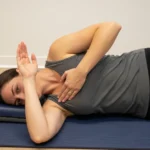
Often, yes. The upper trapezius and levator scapulae (the muscle running from the cervical spine to the upper scapula) are commonly overactive in people with neck pain. They compensate for weak serratus anterior and lower trapezius. Strengthening the scapular stabilisers reduces the compensatory demand on these neck muscles — and many people report reduced neck tension within 3–4 weeks of consistent scapular work.
Should I stop bench pressing while doing this programme?
No — unless shoulder pain makes pressing actively painful, in which case professional assessment takes priority. The programme is designed to complement compound pressing, not replace it. The scapular activation block before each session actually improves pressing quality by pre-activating the stabilisers that keep the shoulder blade correctly positioned throughout the press.