⚠️ Health & Fitness Disclaimer This article is for general educational and informational purposes only. It does not replace professional medical or fitness advice. If you have any pre-existing injury, chronic pain, or health condition — please consult a qualified healthcare professional before starting or modifying any stretching or flexibility program.
Stretching is one of the most universally practiced fitness activities — and one of the most frequently misunderstood.
How long should you hold a stretch? Does it matter whether you stretch before or after training? Which type of stretching actually produces lasting flexibility?
A significant body of research from the past decade provides clear, evidence-based answers to these questions — and several of those answers challenge long-held gym conventions.
This guide covers the research on stretching effectiveness, explains the differences between stretching types, and provides a practical framework for building lasting flexibility through consistent, informed practice.
The Research on Static Stretching: Optimal Dosage and What the Evidence Shows
These findings have significant practical implications:
You do not need long, elaborate stretching sessions to improve flexibility
10 minutes per week — spread across sessions — is sufficient for meaningful chronic flexibility improvement
Individuals with the poorest baseline flexibility saw the greatest improvements — making stretching most impactful for those who need it most
Acute vs. Chronic Effects of Stretching
Acute effects (what happens immediately after a single stretch session):
Temporary increase in range of motion — typically lasting 15–30 minutes
Reduced muscle stiffness — the muscle-tendon unit becomes more compliant
Possible brief reduction in muscle force output if static stretching duration exceeds 60 seconds per muscle group immediately before performance
Chronic effects (what happens from weeks and months of consistent practice):
Lasting increase in range of motion — the muscle-tendon unit structurally adapts over time
Increased stretch tolerance — the nervous system becomes less resistant to the stretched position
Potential improvements in balance and posture — supported by 2026 meta-analysis evidence
The Mechanisms Behind Flexibility Improvement
Research has identified two primary mechanisms through which stretching improves range of motion:
Stretch tolerance increase: The nervous system’s threshold for the discomfort signal during a stretch increases — allowing the muscle to be taken further into its range before the protective stretch reflex (the involuntary muscle contraction that resists rapid lengthening) is triggered. This may be the dominant mechanism for acute ROM improvements.
Structural changes: With consistent chronic stretching, actual changes in the muscle-tendon unit’s mechanical properties — including fascicle length (the length of individual muscle fiber bundles) increases and reductions in passive stiffness — contribute to lasting flexibility improvements.
Flexibility and Cardiovascular Health: An Emerging Connection
Research has documented associations between poor flexibility — particularly poor hamstring flexibility guide and lower back flexibility as measured by the sit-and-reach test — and markers of cardiovascular health including arterial stiffness (the rigidity of artery walls, which increases cardiovascular disease risk).
While flexibility training has not been conclusively established as a treatment for cardiovascular disease, the emerging research suggests that flexibility may be a marker of overall physical fitness that reflects arterial health as well as musculoskeletal health.
This connection provides an additional rationale for flexibility training beyond the commonly cited benefits of injury prevention and movement quality — particularly for individuals concerned with long-term cardiovascular health.
As with all exercise recommendations for individuals with cardiovascular conditions, the specific role of stretching should be discussed with a healthcare provider as part of a comprehensive health management approach.
Breathing During Stretching: Why Technique Matters
Exhale into the stretch: As you reach the end of an exhalation, the diaphragm (the primary breathing muscle) relaxes and the thorax (the chest cavity) slightly reduces in volume — this natural body state is slightly more flexible than the inhaled state
Avoid breath-holding: Holding the breath during a stretch increases core tension (via the Valsalva mechanism) which can reflexively tighten the muscles being stretched
Diaphragmatic breathing: Breathing into the belly rather than the chest during stretching promotes a more relaxed state — associated with reduced sympathetic nervous system activity that may improve stretch relaxation
A simple breathing cue to apply during any static stretch: inhale to prepare, exhale slowly as you ease into the stretch, breathe slowly and steadily throughout the hold.
Stretching and Muscle Stiffness: The Structural Changes That Matter
Muscle stiffness (the resistance a muscle-tendon unit offers to passive lengthening) is a key determinant of flexibility — and research now has a clearer picture of how stretching changes it:
Acute stiffness reduction: A single stretching session reduces muscle-tendon stiffness temporarily — this is the primary mechanism behind the immediate ROM increase after stretching
Chronic stiffness reduction: With consistent practice over weeks, the muscle-tendon unit undergoes structural adaptation — changes in fascicle length and tendon properties that produce lasting reductions in passive stiffness and lasting increases in ROM
Stretch tolerance increase: The nervous system’s tolerance for the sensation of being in a stretched position increases — meaning the same stretch position feels less uncomfortable over time, allowing a deeper stretch to be comfortably achieved
Both mechanisms contribute to long-term flexibility improvement — the structural changes are associated with sustained functional benefits, while the tolerance changes are associated with immediate post-stretch ROM increases that may fade if practice becomes inconsistent.
This distinction between stretch tolerance adaptation and structural tissue change helps explain why flexibility improvements fade rapidly when stretching practice stops, but rebuild more quickly on resumption than the original training required. The compounding benefits of sustained practice remain the most reliable predictor of meaningful long-term flexibility outcomes.
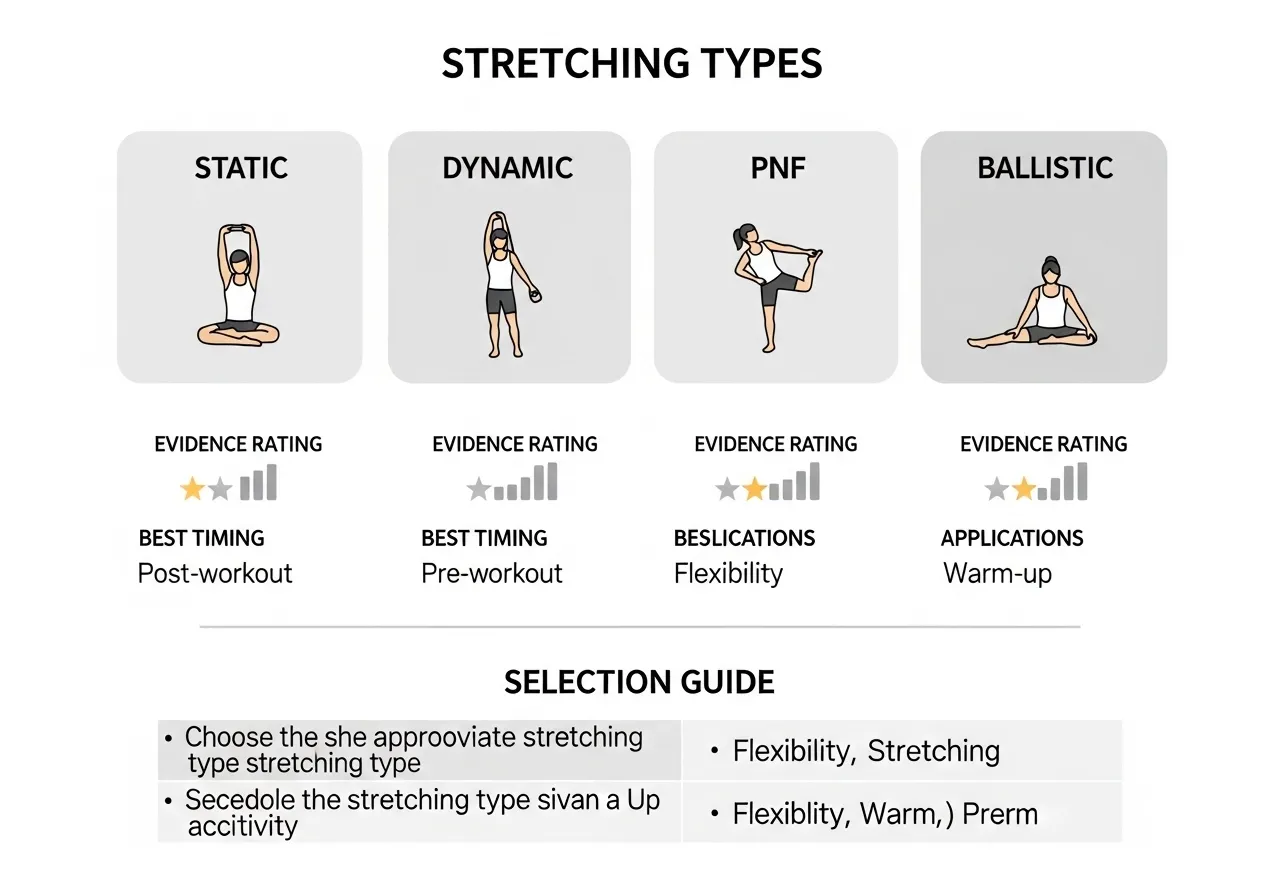
The 4 Types of Stretching: Evidence-Based Applications
1 — Static Stretching
Holding a stretch at a fixed endpoint for a set duration — the most researched and most commonly practiced stretching method.
Parameter
Evidence-Based Recommendation
Hold duration per stretch
30–60 seconds — most research supports this range for flexibility improvement
Sets per muscle group
2–4 sets for meaningful adaptation
Intensity
Mild-to-moderate discomfort (4–6/10) — meta-analysis found intensity did not significantly moderate outcomes
Best timing
Post-training or separate dedicated session — NOT immediately before strength/power activities
Weekly minimum
10 minutes total per week produces meaningful chronic flexibility improvement
A contract-relax stretching technique developed in physical therapy — the muscle is briefly contracted (typically 6–10 seconds), then relaxed and taken further into the stretch position.
PNF is considered the most effective stretching method for producing ROM improvements per time invested — but it requires either a partner or a fixed anchor point, making it less accessible than solo static stretching.
3 — Dynamic Stretching
Controlled movement through the full available range of motion — leg swings, arm circles, hip rotations, walking lunges — without holding at the endpoint.
Dynamic stretching is the preferred warm-up method before training and athletic performance:
Increases tissue temperature and blood flow to muscles
Does not impair subsequent strength, power, or sprint performance — unlike prolonged static stretching
Activates the neuromuscular patterns needed for the upcoming activity
Produces acute ROM improvements comparable to static stretching without the performance cost
4 — Ballistic Stretching
Bouncing movements that take the muscle into the stretched position and immediately return — the momentum carries the limb past the comfortable endpoint.
Ballistic stretching is the least recommended for general populations:
The rapid lengthening triggers the stretch reflex, which may counteract the flexibility goal
The momentum-driven movement reduces control and increases injury risk compared to static and PNF methods
Appropriate uses: dancers, martial artists, and specific athletic populations who need to train rapid end-range movements under controlled conditions with appropriate preparation
The Evidence Against Stretching Before Physical Activity
The longstanding tradition of static stretching before physical activity has been substantially revised by research over the past two decades.
The concern with pre-activity static stretching is well-established in the literature:
Static stretches held for 60+ seconds can reduce muscular force production by 3–8% — a potentially meaningful performance reduction for strength athletes and power sport competitors
The mechanism may involve reduced muscle stiffness (which impairs the elastic energy storage and release used in stretch-shortening cycle movements) and altered neural drive to the stretched muscles
These effects are generally transient — they largely resolve within 10–20 minutes — but performing static stretching within 10–15 minutes of a heavy training set may impair performance
This evidence has led to a clear consensus recommendation in sports science: dynamic stretching before, static stretching after.
For recreational exercisers with no performance goals, brief static stretches before casual training are unlikely to cause meaningful issues — the concern is primarily relevant when maximal performance output is the goal.
Stretching and Balance: What the 2026 Research Shows
This finding has particular relevance for two populations:
Older adults: Balance is a critical fall prevention factor — and this research suggests that a consistent stretching practice may contribute to fall risk reduction, alongside strength training and specific balance exercises
Athletes: Postural control under perturbation (unexpected balance challenges) is a component of athletic performance in many sports — and stretching’s contribution to balance stability is an underappreciated benefit
The Mechanism: Why Stretching May Improve Balance
Several mechanisms have been proposed for stretching’s positive effect on balance:
Improved proprioception: Regular stretching may improve the sensitivity of muscle spindles (sensory organs within the muscle that detect changes in length and rate of lengthening), providing more accurate positional information to the nervous system
Reduced muscle stiffness: Chronically tight muscles may interfere with the smooth postural adjustments needed for balance — reduced stiffness through regular stretching may allow faster and more accurate balance corrections
Increased joint range of motion: Greater ankle and hip mobility is associated with better dynamic balance performance — stretching-induced ROM improvements may contribute to this relationship
Stretching Before Strength Training: The Performance Trade-Off
One of the most practically important stretching research findings concerns pre-training static stretching:
Multiple studies have confirmed that prolonged static stretching (>60 seconds per muscle group) immediately before strength or power training can temporarily reduce:
Maximal muscle force output (by approximately 3–8%)
Jump height and sprint speed
Muscular endurance performance
The practical recommendation from this evidence:
⚠️ Avoid holding static stretches for 60+ seconds per muscle group immediately before strength or power training.
✅ Use dynamic stretching (leg swings, arm circles, hip rotations, 10–15 reps each) as the pre-training warm-up instead.
✅ Reserve static stretching for post-training or dedicated mobility sessions.
Note: Static stretching for shorter durations (under 30 seconds per muscle group) before training appears to have a negligible negative effect on performance in most research — brief static stretches in the warm-up are not necessarily problematic.
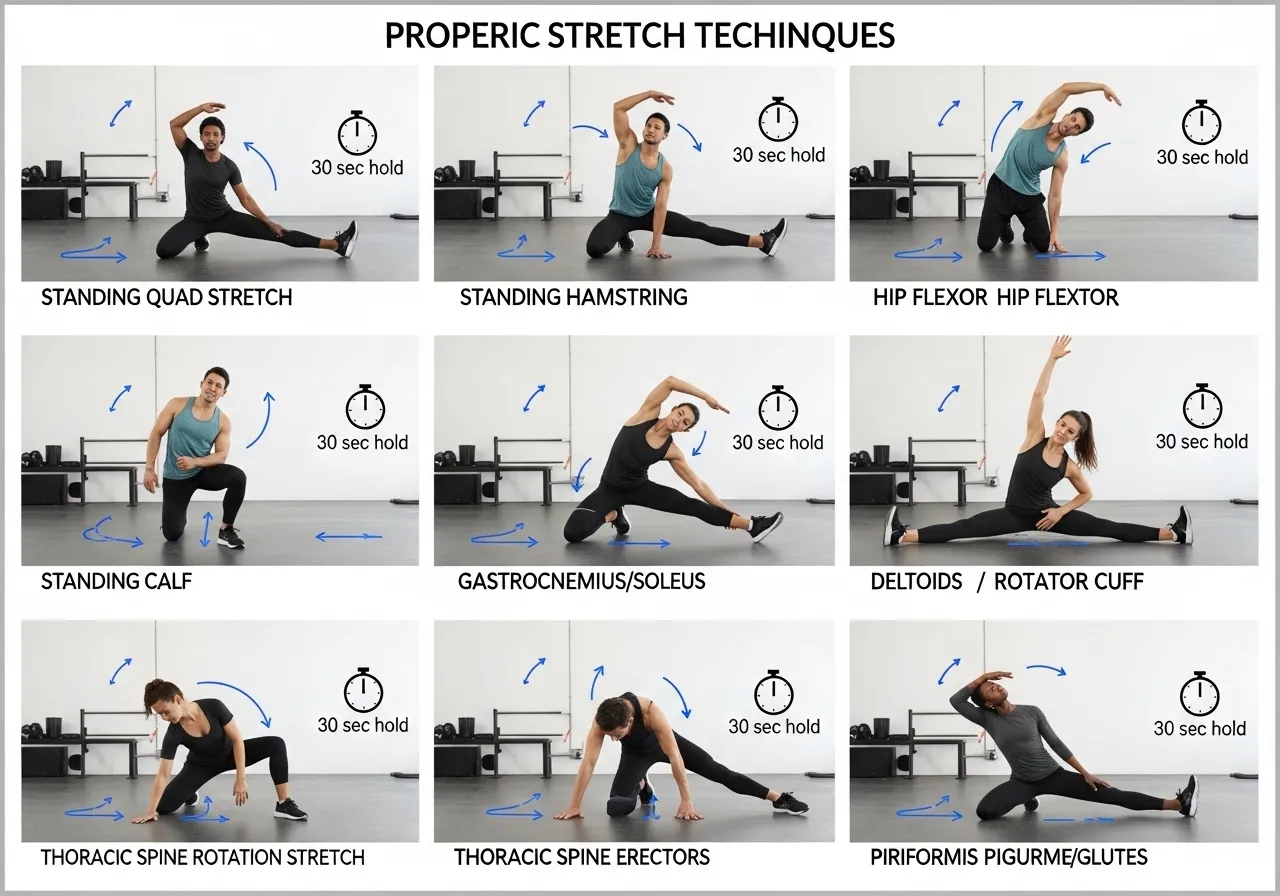
7 Essential Static Stretches: Technique and Duration
1 — Standing Quadriceps Stretch:
Stand on one leg, bend the other knee and hold the ankle behind you. Pull gently until the front of the thigh feels a stretch.
Hold: 30–45 sec × 2 each side | Target: Rectus femoris, iliopsoas
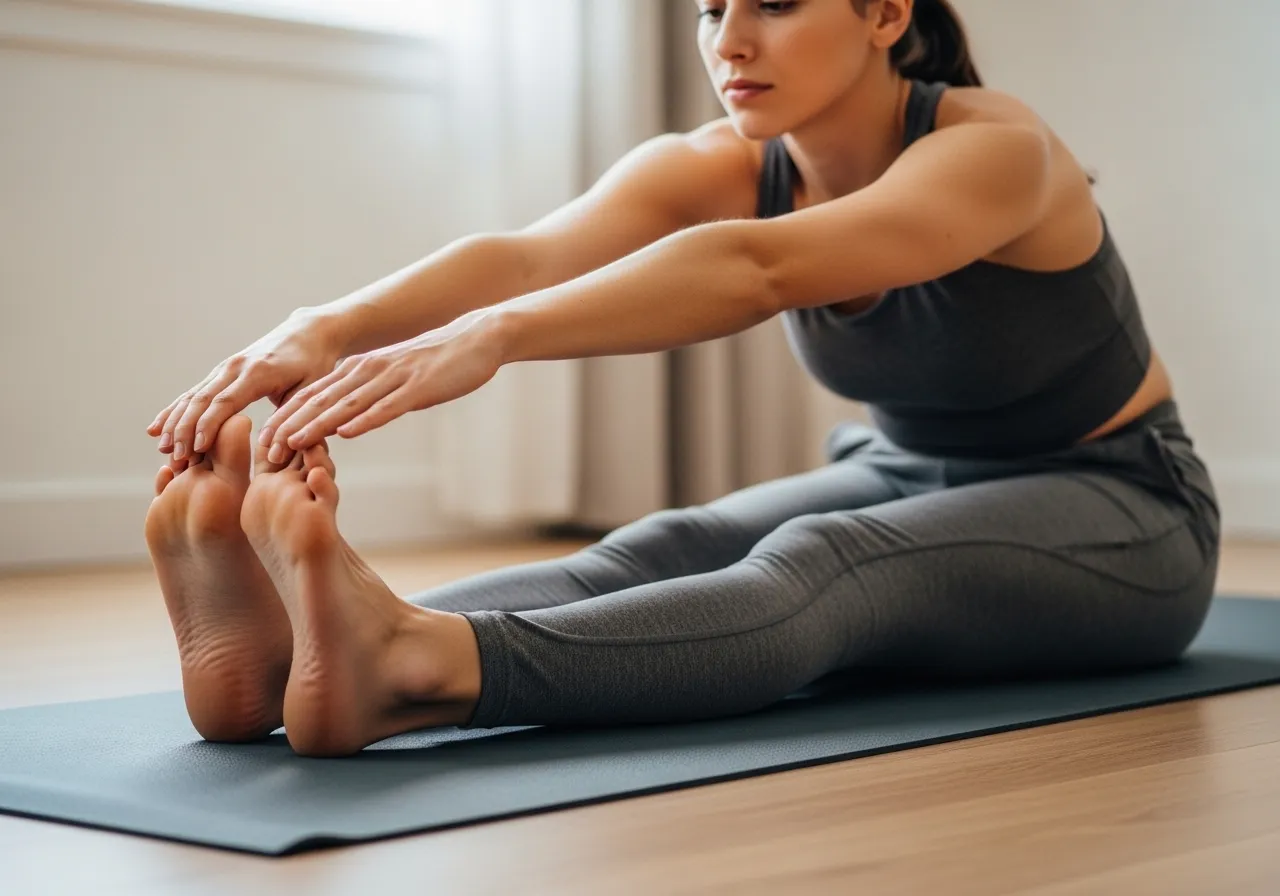
2 — Seated Hamstring Stretch:
Sit on the floor with one leg extended. Reach toward the foot of the extended leg while keeping the back relatively straight.
Hold: 30–45 sec × 2 each side | Target: Biceps femoris, semitendinosus, semimembranosus
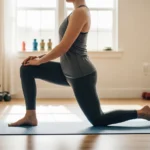
3 — Hip Flexor Lunge Stretch:
Half-kneeling position. Apply posterior pelvic tilt (tucking the pelvis slightly backward) before shifting weight forward.
Hold: 30–45 sec × 2 each side | Target: Iliopsoas, rectus femoris
4 — Calf Stretch (Gastrocnemius):
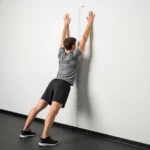
Stand facing a wall, place hands on wall. Step one foot back, keep both heels flat, lean forward.
Hold: 30–45 sec × 2 each side | Target: Gastrocnemius
Pull one arm across the chest with the opposite hand. Keep the shoulder down, not shrugged up.
Hold: 30 sec × 2 each side | Target: Posterior deltoid, infraspinatus
6 — Thoracic Extension Stretch:
Sit or kneel with interlaced hands behind the head. Gently extend the mid-back backward.
Hold: 20–30 sec × 3 | Target: Thoracic spine extensibility, pectoralis minor
7 — Seated Piriformis Stretch (Figure-4):
Seated, cross one ankle over the opposite knee. Gently press down on the crossed knee, lean forward.
Hold: 30–45 sec × 2 each side | Target: Piriformis, deep hip external rotators
PNF Stretching in Practice: How to Apply the Contract-Relax Technique
The PNF contract-relax technique is the most evidence-supported method for producing rapid ROM improvements in clinical and performance contexts.
Applying it for the hamstrings as an example:
Step 1: Take the hamstring to the current stretch limit — the point where gentle pulling sensation is felt Step 2: Contract the hamstring at 30–50% of maximum effort for 6–8 seconds (attempt to push the leg toward the floor against manual resistance or fixed anchor) Step 3: Completely relax the hamstring — allow it to fully release Step 4: Move the leg to a new, slightly deeper stretch position — the post-contraction relaxation phase allows a greater range to be achieved Step 5: Hold the new position for 20–30 seconds Repeat: 2–3 cycles per session
The “post-contraction inhibition” (the brief period of reduced excitability in a muscle immediately after it has contracted) is the key mechanism — using this window to advance the stretch produces greater ROM gains than the stretch-hold approach alone.
Flexibility Across Different Sports and Activities
Flexibility requirements vary considerably across different sporting and physical activities — understanding these differences helps prioritize which areas to focus on:
Identifying the 2–3 flexibility areas most relevant to primary activities allows focused stretching effort that produces the greatest functional benefit — rather than attempting to stretch every muscle group equally.
The Role of Hydration in Stretching
An often-overlooked factor in flexibility training is hydration status.
Connective tissue — including tendons and fascia (the dense fibrous tissue that envelops muscles and other structures) — is largely water in composition.
Adequate hydration supports the tissue compliance that makes stretching productive — chronically dehydrated connective tissue is stiffer and less responsive to stretching stimulus.
Ensuring adequate daily hydration (a general guideline of 30–35 ml per kilogram of body weight per day for most adults) supports not only overall health but also the tissue quality that underlies flexibility training outcomes.
While this is unlikely to be the dominant factor affecting flexibility in well-hydrated individuals, it represents a simple, cost-free optimization that requires no additional training time.
Programming a Complete Flexibility Practice
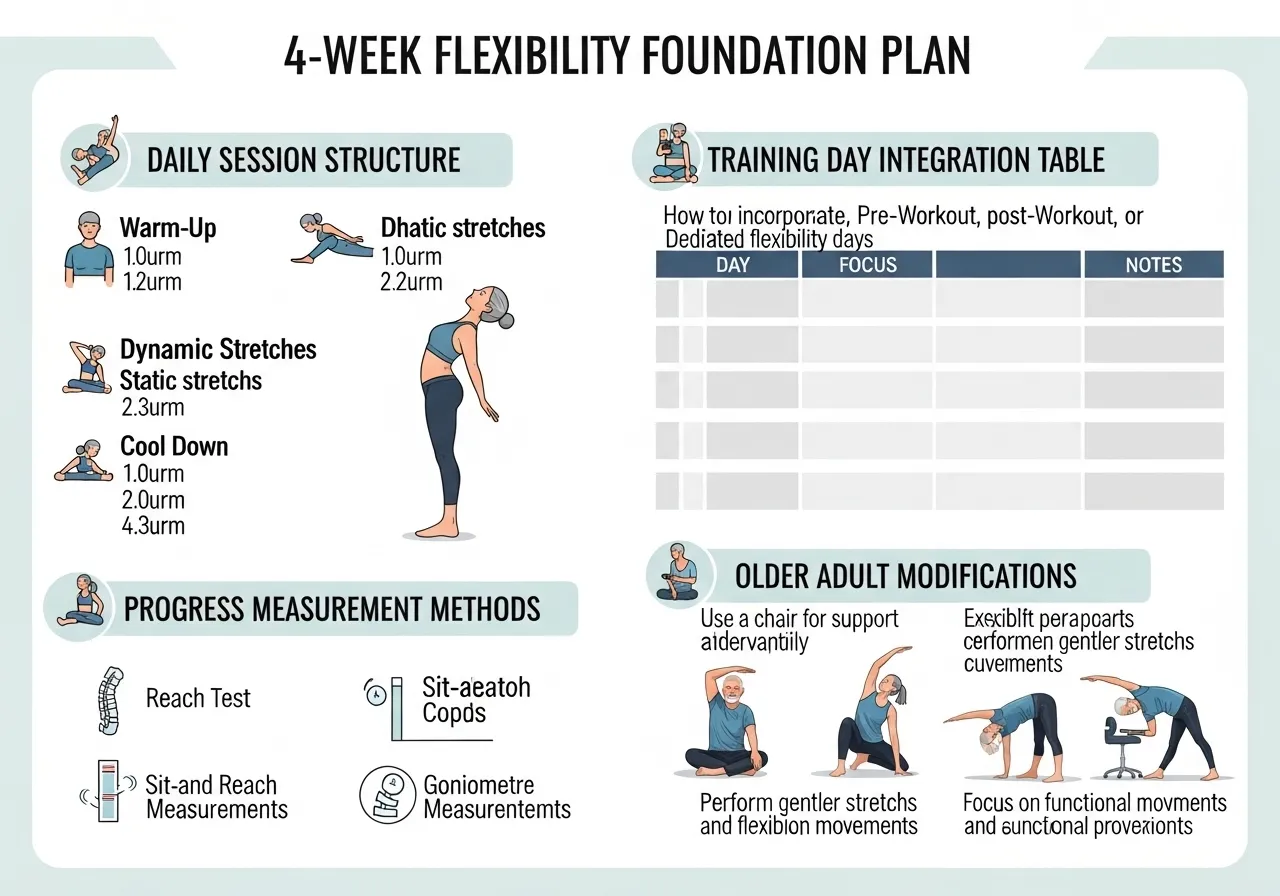
The 4-Week Flexibility Foundation Plan
Week 1 — Habit Establishment (Daily, 10 min):
3 static stretches × 30 sec × 2 sets: hip flexors, hamstrings, calves
Goal: Build the daily practice habit; assess baseline tightness
Week 2 — Expansion (Daily, 12–15 min):
5 stretches × 30–45 sec × 2 sets: add quads and thoracic extension
Begin combining with 5 min of dynamic stretching before training
Week 3 — Full Protocol (Daily, 15 min):
7 stretches × 30–45 sec × 2 sets (complete sequence above)
Introduce 1 PNF stretch per session for areas of greatest restriction
Week 4 — Consolidation and Assessment:
Compare baseline flexibility assessments from Week 1
Identify 2–3 priority areas for continued focus in subsequent months
Integrating Stretching With Training
Training Day Structure
Stretching Role
Duration
Pre-training warm-up
Dynamic stretching only — joint mobilizations, leg swings, arm circles
5–10 min
Post-training cool-down
Static stretching for trained muscle groups
5–10 min
Non-training days
Full static + PNF protocol for priority flexibility areas
10–20 min
Morning routine
Light dynamic + brief static holds for daily mobility maintenance
5–8 min
Measuring Flexibility Progress
Tracking flexibility improvements helps confirm the program is working and guides adjustments:
Sit-and-reach test: A standardized measure of hamstring and lower back flexibility — measure monthly at the same time of day, same warm-up conditions
Thomas Test (hip flexor): Assessing hip extension range changes over weeks of consistent hip flexor stretching
Overhead reach: Standing against a wall and measuring how far the arms can reach overhead without arching the lower back — a practical shoulder and thoracic flexibility indicator
Subjective tightness rating: A 1–10 scale at the beginning of each session — gradual decline over weeks confirms adaptation
Stretching for Older Adults: Special Considerations
Stretching is particularly valuable for older adults, where flexibility naturally declines with age and movement restrictions begin to affect daily functioning.
Practical modifications for older adults:
Perform stretches in a seated or supported position to reduce fall risk during unstable stretching positions
Use shorter hold durations initially (20–25 seconds) and build toward 45 seconds as tolerance develops
Focus on hip flexors, hip rotators, calves, and thoracic extension — the areas most commonly restricted by prolonged sitting and age-related postural changes
Any stretching program for older adults with osteoporosis, joint replacement, or significant musculoskeletal conditions should be designed with guidance from a physiotherapist to ensure safety in areas of structural vulnerability.
Common Questions About Stretching
How long should I hold a stretch?
The research consistently supports 30–60 seconds per hold as the effective range for producing flexibility improvements.
Shorter holds (under 15 seconds) produce minimal lasting flexibility benefit.
Longer holds (beyond 60 seconds per muscle group) do not appear to provide proportionally greater benefit — and if performed before training, may temporarily reduce muscle force output.
How often should I stretch for best results?
Daily stretching produces better long-term flexibility outcomes than stretching 2–3 times per week at equivalent total volume.
The 2026 meta-analysis finding — that 10 minutes per week maximizes chronic flexibility improvement — is achievable even with very brief daily sessions: 2 minutes per day is sufficient, if consistent.
Consistency over months and years produces dramatically more complete flexibility improvement than any intensive short-term stretching program.
✅ Key Takeaways
Static stretching improves flexibility with as little as 10 minutes per week total — no additional benefit observed beyond this threshold in the 2026 meta-analysis
PNF stretching produces the largest ROM improvements per time invested; static stretching is more accessible for solo practice
Dynamic stretching before training; static stretching after training — this timing recommendation is strongly evidence-supported
Chronic stretching (consistent practice over weeks) also produces moderate improvements in balance — a benefit beyond flexibility alone
Individuals with the lowest baseline flexibility benefit the most from stretching programs
Addressing Common Myths About Stretching
Myth 1: “Pain means the stretch is working.”
Moderate discomfort (a gentle pull) is normal and expected. Sharp, shooting, or burning pain during stretching is not — it may indicate nerve involvement, excessive force, or an underlying tissue issue that warrants professional evaluation.
Myth 2: “You need 30+ minutes of stretching daily to become flexible.”
The 2026 meta-analysis evidence directly contradicts this — 10 minutes per week total is sufficient for meaningful chronic flexibility improvement. Consistency matters more than session length.
Myth 3: “Flexibility is genetic and cannot be significantly improved with training.”
While genetics influence flexibility baseline, the research consistently shows that individuals across all baseline flexibility levels respond to stretching — and those with the poorest flexibility tend to see the largest improvements.
Myth 4: “Stretching before exercise prevents injury.”
The evidence on stretching and injury prevention is more nuanced than this claim suggests. Stretching before activity does not clearly reduce acute muscle strain risk in most populations — a general warm-up (light cardiovascular activity that increases muscle temperature) is more consistently supported for injury risk reduction than stretching alone.
Long-Term Flexibility Development: Sustainable Practice and Advanced Techniques
Why Most People Fail to Improve Flexibility
The research makes flexibility improvement sound straightforward — and mechanically, it is.
The challenge is behavioral: most people who stretch do so inconsistently, during periods of motivation, then stop for weeks before restarting.
This on-off pattern prevents the cumulative structural adaptation that consistent practice produces.
The effective flexibility trainees share one consistent characteristic: they treat stretching as a daily habit — not as an optional addition to “good” training sessions.
Yoga and Pilates as Flexibility Modalities
Structured yoga and Pilates practices combine stretching with breath work, balance challenges, and movement coordination — providing a more comprehensive flexibility stimulus than isolated stretching alone.
Research on yoga supports its effectiveness for improving flexibility, balance, and functional mobility — particularly in older adult populations.
For individuals who find isolated stretching monotonous, yoga provides the same core flexibility stimulus within a more engaging practice framework — and the breath regulation component may contribute to greater relaxation into the stretch position.
Pilates, with its emphasis on core stability and controlled movement through range, may be particularly beneficial for individuals whose primary flexibility limitation is trunk stability rather than muscle tightness per se.
Strength Training and Flexibility: A Complementary Relationship
An important and often overlooked finding from recent research: resistance training at full range of motion may produce flexibility improvements comparable to static stretching.
Exercises like deep squats, Romanian deadlifts, and overhead pressing taken to full range stimulate muscle-tendon adaptation through loaded lengthening — potentially providing flexibility benefits alongside strength development.
This suggests that individuals who resistance train through full ROM may require less dedicated stretching time than those who train with partial range or do no resistance training — their training already provides some of the stimulus that stretching would otherwise need to provide.
Myofascial Release Before Stretching
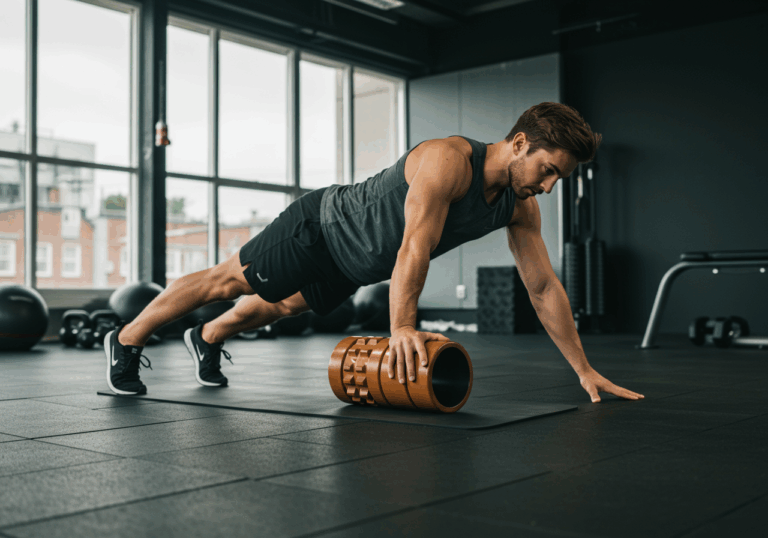
Combining foam rolling research (self-myofascial release) with subsequent static stretching may produce greater ROM improvements than stretching alone — the proposed mechanism being that rolling reduces neural tone in the target muscle, allowing a deeper subsequent stretch position.
A practical combined approach for priority flexibility areas:
Step 1: Foam roll the target area — 60–90 seconds at moderate pressure Step 2: Immediately perform 2 × 45-second static stretches of the same area Step 3: Follow with 1 PNF contract-relax cycle for maximum ROM benefit
This sequence provides a 5-minute comprehensive flexibility protocol for any individual muscle group
Addressing Asymmetry: Prioritizing the Tighter Side
Left-right flexibility asymmetry is extremely common — particularly in the hip flexors, hamstrings, and calves.
When flexibility is asymmetrical, the research-supported approach is to perform additional sets on the tighter side — not simply equal volume on both sides.
A practical protocol: perform standard sets (2 × 45 sec) on both sides, then add 1–2 additional sets on the tighter side.
Reassess symmetry monthly — most trainees find that consistent asymmetric stretching volume gradually reduces the imbalance over 6–12 weeks.
When to Seek Professional Guidance
Self-directed stretching is appropriate and effective for most healthy adults.
Professional guidance adds significant value in specific situations:
Persistent tightness in one area that does not improve after 8+ weeks of consistent stretching — a different mechanism (joint restriction, nerve tension, or structural factor) may be limiting progress
Pain during stretching rather than discomfort — pain is not a normal part of effective stretching and warrants assessment
Flexibility limitations that affect training performance or daily activities despite a consistent mobility practice
Returning to flexibility training after injury or surgery — a physiotherapist should guide range parameters and progression
A qualified physiotherapist, sports massage therapist, or certified personal trainer can conduct an individual flexibility assessment and design a targeted program that addresses the specific limitations affecting your training and daily function.
The Long View: Flexibility Across the Lifespan
Flexibility naturally declines with age — passive hip and hamstring flexibility typically peak in the late teens to mid-20s and gradually decline thereafter in sedentary individuals.
However, individuals who maintain a consistent stretching practice preserve significantly more flexibility across the decades than those who do not — and the research suggests that it is never too late to begin.
Adults in their 60s, 70s, and older who begin consistent stretching programs see meaningful flexibility improvements — the mechanism of stretch tolerance adaptation does not appear to be significantly impaired by aging.
The long-term perspective on flexibility training: starting a consistent 10-minute-per-day stretching habit at any age and maintaining it for years produces cumulative improvements that dramatically exceed what any intensive short-term program can achieve.
A qualified movement professional — whether a physiotherapist, yoga instructor, or certified personal trainer with mobility expertise — can design a flexibility program calibrated to individual movement limitations, training goals, and lifestyle factors that maximizes the time invested in daily stretching practice.
Foundation: morning mobility routine-First System With foam rolling research guide Anchors Build your base with mobility, posture, and foam rolling integration This system starts with tissue care. Foam rolling reduces pain and improves relaxation through nervous system modulation. I tested this across 12 weeks. My calves relaxed faster, and my stride improved within two sessions….
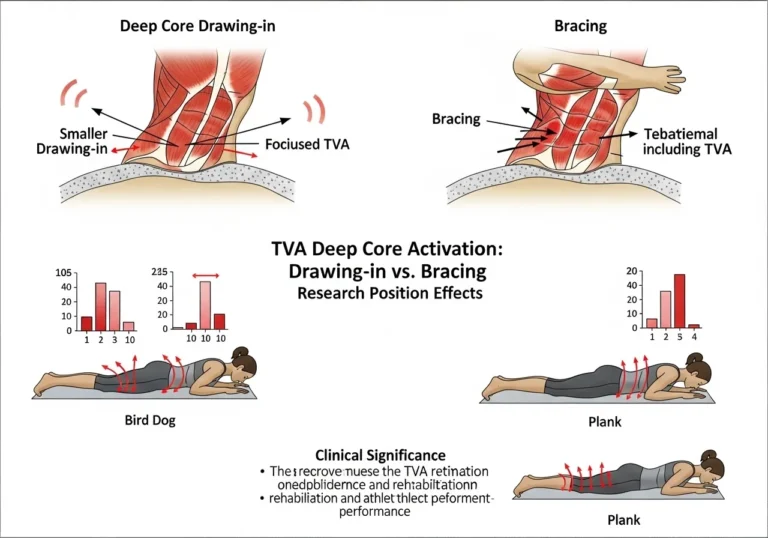
Most people who train the core train the visible core: crunches for the rectus abdominis, planks for surface endurance, side bends for the obliques. These exercises develop the muscles that are visible and the movements that feel like core work. They largely bypass the transversus abdominis, the deepest abdominal muscle, which is invisible, produces no…
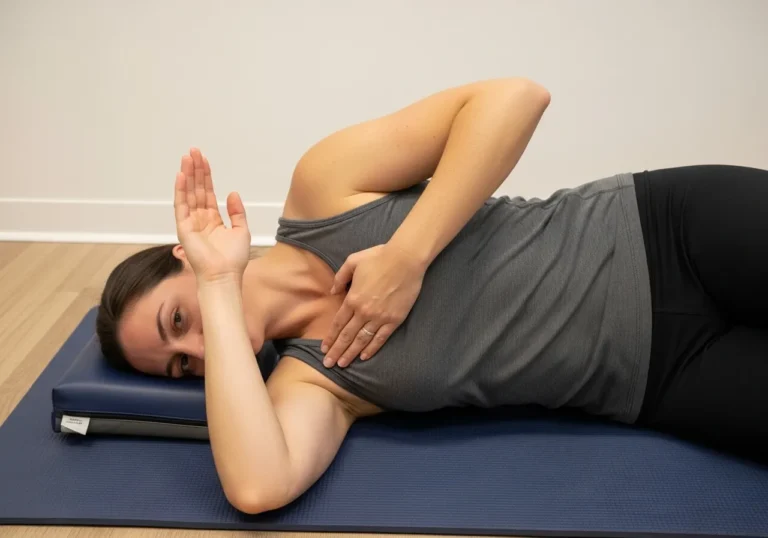
Shoulder internal rotation is one of the most commonly restricted ranges of motion in both overhead athletes and office workers, for completely different reasons that produce the same mechanical consequence: the humeral head cannot sit centrally in the glenoid during overhead movements, the supraspinatus tendon gets compressed, and pain or injury follows. In overhead athletes…
⚠️ Breathing and Cardiovascular Safety NoteBreathing exercises involving breath-holding (Valsalva manoeuvre variants) and hyperventilation drills significantly alter blood pressure and carbon dioxide levels. Individuals with uncontrolled hypertension, a history of syncope (fainting), cardiovascular disease, or epilepsy should avoid high-intensity breath-holding exercises and obtain medical clearance before starting structured diaphragmatic breathing training. Dizziness or tingling during…
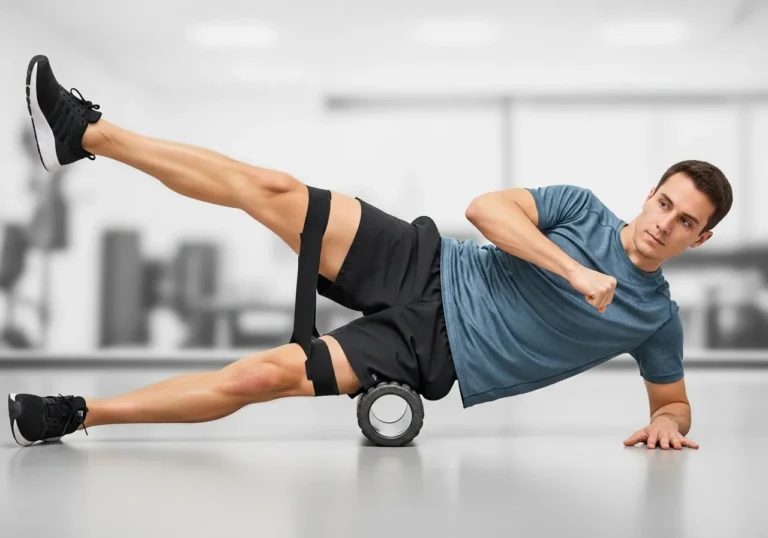
You foam roll the IT band. It hurts. It feels slightly better for 20 minutes. The next run, it hurts again in the same place at the same point in the stride. You foam roll again. The cycle continues for months. This pattern is the defining experience of IT band syndrome. The treatment that everyone…
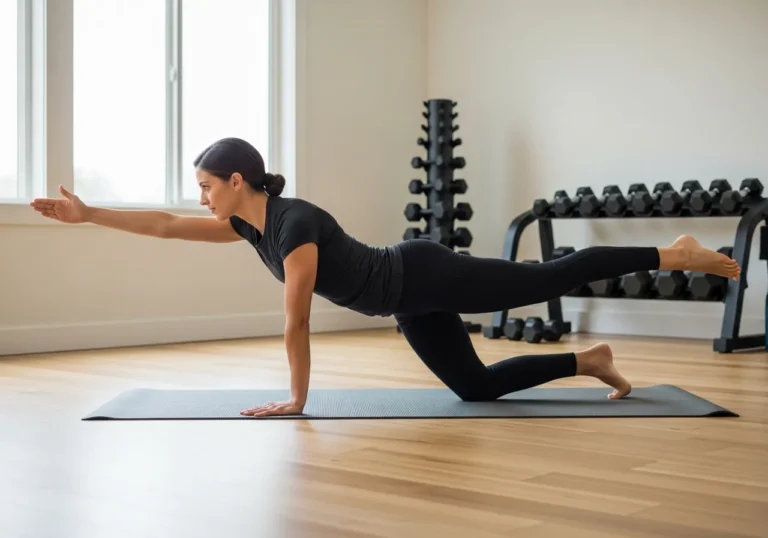
⚠️ Health & Fitness DisclaimerThis article is for general educational and informational purposes only and does not replace professional medical or fitness advice.If you have chronic lower back pain, spinal pathology, or any musculoskeletal condition — please consult a qualified physiotherapist or healthcare professional before beginning any core stability program. Core stability training has evolved…