⚠️ Health & Fitness Disclaimer This article is for general educational and informational purposes only and does not replace professional medical or fitness advice. If you have any pre-existing back, knee, or cardiovascular condition — please consult a qualified healthcare professional before starting any rowing program.
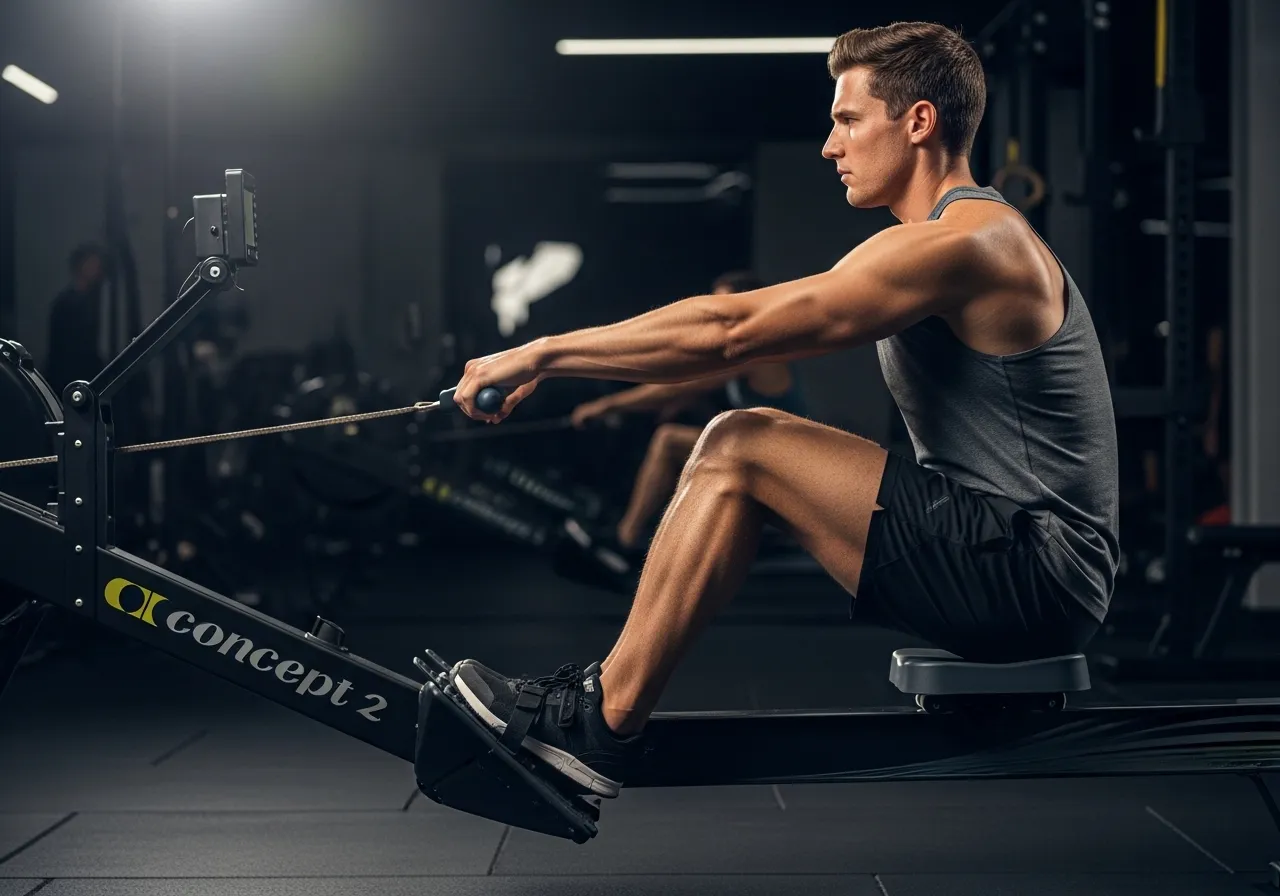
The rowing machine mastery sits in an unusual category among cardio equipment: it demands genuine full-body effort, trains both cardiovascular endurance and muscular strength simultaneously, and places minimal impact stress on the joints — yet it is consistently underutilized compared to treadmills and stationary bikes in most gyms.
This guide covers the physiology of rowing, what the research says about its cardiovascular advantages over cycling, proper technique for the four-phase stroke, and a practical beginner-to-intermediate programming plan.
The Physiology of Rowing: What Makes It Unique Among Cardio Options
Full-Body Muscle Engagement
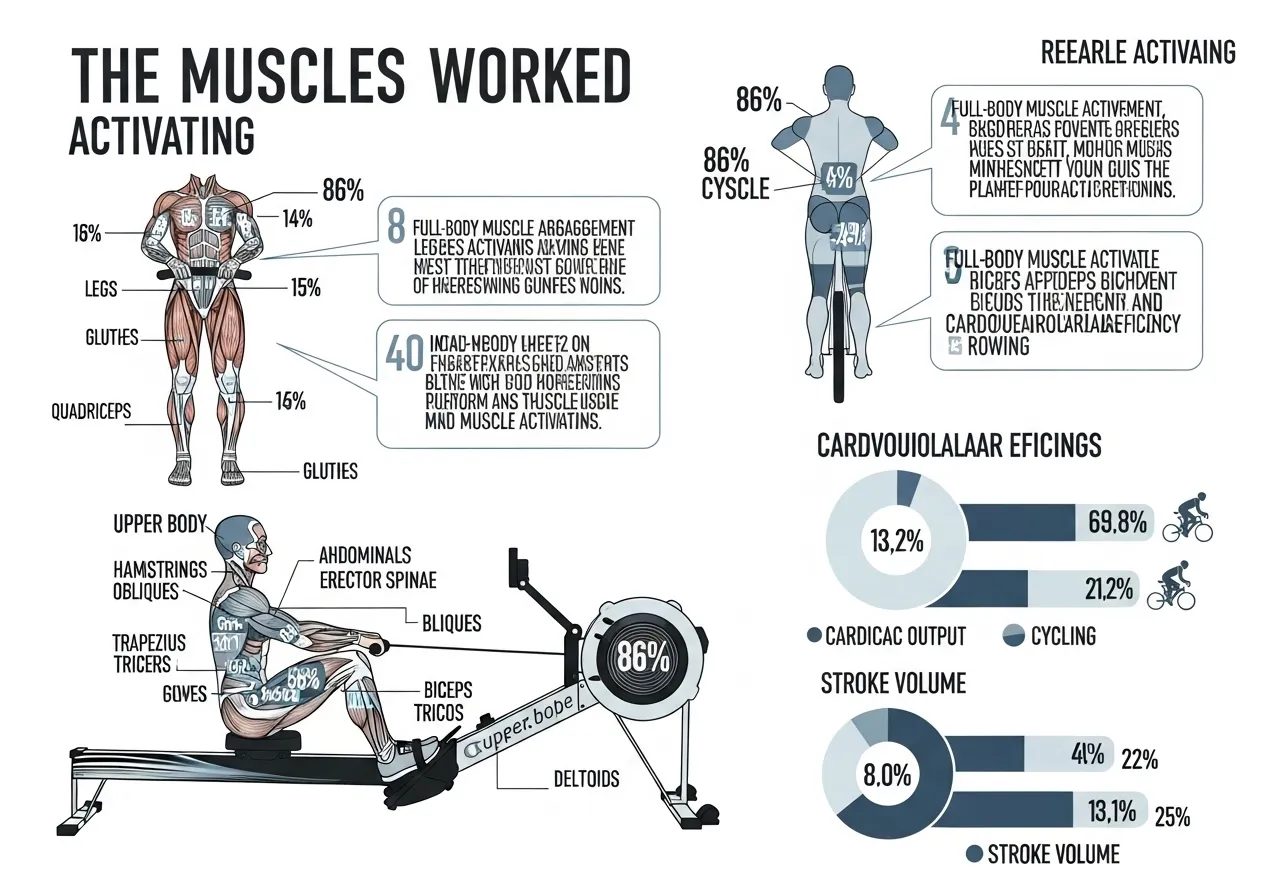
The rowing stroke is often described as a 60/40 split — approximately 60% of the power comes from the legs and hips, and 40% from the back and arms.
The primary muscles engaged during each rowing stroke:
Phase
Primary Muscles
Secondary Muscles
Drive (leg push)
Quadriceps, gluteus maximus
Hamstrings, calves
Drive (back swing)
Erector spinae, rhomboids
Trapezius, rear deltoids
Drive (arm pull)
Latissimus dorsi, biceps brachii
Posterior deltoid, brachialis
Throughout
Rectus abdominis, transverse abdominis
Obliques (rotational stability)
Approximately 86% of the body’s skeletal muscle mass is recruited during a maximal rowing effort — making it one of the highest total muscle mass engagement exercises available.
For equivalent effort, rowing burns more calories than cycling
Rowing produces greater cardiac adaptations — larger stroke volume (the amount of blood pumped per heartbeat) and cardiac output (total blood pumped per minute) — than cycling over time
Rowing engages upper body musculature that cycling cannot, making it a more complete conditioning tool
Low Impact, High Return
Rowing is a non-weight-bearing exercise — the seat supports the body weight, and the footrests take only horizontal pushing force rather than vertical impact.
This makes it suitable for individuals managing lower limb joint conditions that prohibit running or jumping — including those with mild knee osteoarthritis, hip osteoarthritis, or stress fracture histories — provided the low back is not a limiting factor.
Any individual with a pre-existing lower back condition should consult a physiotherapist or sports medicine physician before starting rowing, as the hip-hinge mechanics and lumbar loading of the rowing stroke require specific assessment and technique guidance in these contexts.
Energy Systems in Rowing: Aerobic and Anaerobic Contributions
Rowing is unique among cardio exercises in the degree to which it challenges both the aerobic and anaerobic energy systems simultaneously:
Aerobic system: Dominant during steady-state rowing at 20–22 SPM — produces ATP (adenosine triphosphate — the cell’s energy currency) through oxidative metabolism using oxygen and generating water and carbon dioxide as byproducts
Anaerobic lactic system: Engaged during high-intensity intervals — produces ATP without oxygen but generates lactate (a byproduct that contributes to the burning sensation in muscles during intense exercise)
Anaerobic alactic (phosphocreatine) system: Dominant in the first 5–10 seconds of maximum effort — sprint starts and very short intervals draw heavily from this system
A 2,000m race simulation — the standard competitive rowing distance — typically requires approximately 70–75% aerobic and 25–30% anaerobic contribution, making it one of the most balanced mixed-system endurance tests.
This mixed energy demand means that a complete rowing training program should include both steady-state aerobic work (building the aerobic base) and high-intensity intervals (training the anaerobic capacity) for comprehensive conditioning adaptation.
Heart Rate Zones for Rowing Training
Training by heart rate zones ensures appropriate intensity distribution across a rowing program:
Zone
% Max Heart Rate
Rowing Application
RPE
Zone 1 (Recovery)
50–60%
Warm-up, cool-down, technique drill
2–3
Zone 2 (Aerobic base)
60–70%
Steady-state 20–30 min sessions
4–5
Zone 3 (Aerobic development)
70–80%
Tempo pieces, moderate intervals
6–7
Zone 4 (Threshold)
80–90%
Hard intervals, 500m pieces
7–8
Zone 5 (Maximum)
90–100%
Sprint intervals, short all-out efforts
9–10
A polarized training model — spending 80% of rowing volume in Zones 1–2 and 20% in Zones 4–5 — is supported by research on endurance sport development for producing strong cardiovascular adaptations while managing cumulative fatigue.
Rowing and Respiratory Fitness
One of rowing’s distinctive physiological attributes is the demand it places on the respiratory system (the lungs and breathing musculature).
The coordinated breathing pattern required during rowing — exhale on the drive, inhale during recovery — synchronizes breathing with the stroke cycle in a way that few other exercises do.
Consistent rowing training produces measurable improvements in:
Tidal volume: The amount of air inhaled and exhaled per breath — increases with sustained aerobic rowing training
Ventilatory efficiency: The ratio of ventilation to oxygen consumption — improves as the respiratory muscles adapt to the sustained demand of rowing
Respiratory muscle endurance: The diaphragm and intercostal muscles (the muscles between the ribs that expand the chest) fatigue less quickly after consistent rowing training
These respiratory adaptations contribute to the improved exercise tolerance that rowers experience across other physical activities — not just rowing itself.
Building both aerobic and anaerobic capacity through well-structured rowing training produces comprehensive cardiovascular adaptations that transfer broadly to other physical activities and daily health markers. This dual stimulus is what makes rowing such an efficient training option for time-constrained individuals.
The Four Phases of the Rowing Stroke: Complete Technique Guide
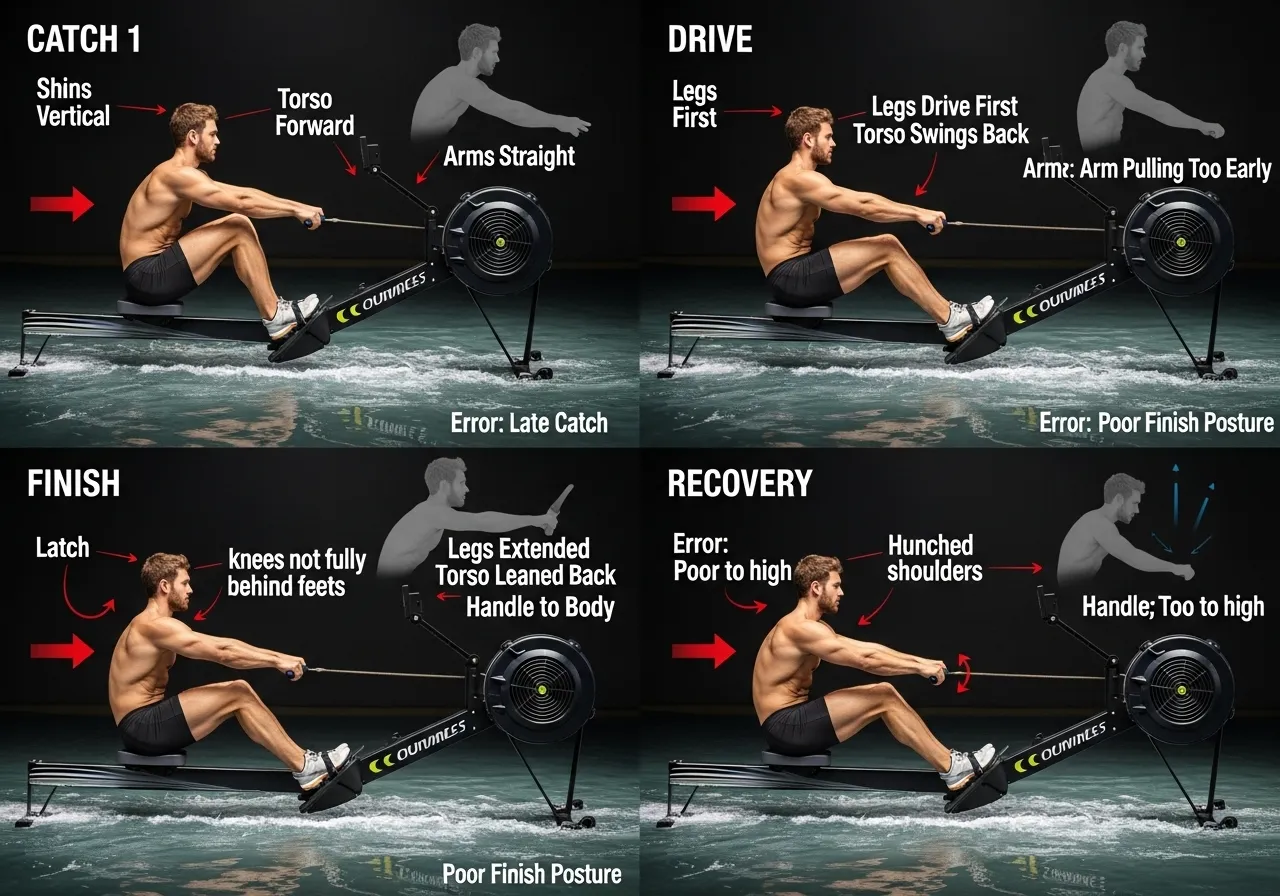
Phase 1 — The Catch
The starting position of each stroke — where the rower is compressed forward at the machine.
Body position at the catch:
→ Shins vertical (approximately 90° angle at the ankle)
→ Torso leaning slightly forward from the hips — about 1 o’clock position on a clock face
→ Arms straight, hands gripping the handle with relaxed grip (not white-knuckle tight)
→ Shoulders relaxed — not hunched up toward the ears
→ Core braced, back flat — not rounded at the lumbar spine
The most common catch error is excessive forward lean — a round-backed, hunched position that compresses the lumbar spine under load. The torso should hinge from the hips, maintaining a relatively neutral spine rather than rounding the lower back.
Phase 2 — The Drive
The power phase — generating force from the catch position back to the finish.
The drive sequence matters significantly for both power output and back safety:
Correct drive sequence: 1. Legs push first — press the footrests away with the legs while keeping the torso angle constant 2. Body swing — once legs are approximately 2/3 extended, swing the torso back from about 1 o’clock to 11 o’clock (past vertical) 3. Arms pull — draw the handle toward the lower ribs, elbows traveling past the body
⚠️ Common error — “opening the back” early: Swinging the torso backward before the legs have driven results in the lower back bearing the brunt of the load rather than the legs. This is the primary cause of rowing-related lower back complaints.
Phase 3 — The Finish
Body position at the finish:
→ Legs fully extended (or nearly so — very slight knee bend is acceptable)
→ Torso leaning slightly back — approximately 11 o’clock position
→ Handle drawn to the lower ribs, elbows past the body
→ Wrists flat — not bent downward or upward
→ Core still braced, back still neutral
Phase 4 — The Recovery
The return to the catch — the reverse sequence of the drive:
Recovery sequence: 1. Arms extend first — push the handle away until arms are straight 2. Torso pivots forward — return to the 1 o’clock forward lean 3. Legs compress — slide the seat forward to the catch position
The recovery should take approximately twice as long as the drive phase — a 1:2 drive-to-recovery ratio promotes better rhythm and allows partial recovery between strokes.
Beginners often row at too high a stroke rate — producing a frantic, shallow stroke rather than a powerful, controlled one. Starting at 20 SPM (strokes per minute) and focusing on technique produces better results than rushing at 26+ SPM with poor form.
Technique Drills for Building the Correct Stroke Pattern
Several specific drills accelerate the development of correct rowing technique:
Pick Drill (Arms Only → Arms + Body → Full Slide):
Start by rowing with arms only (legs and torso still). Add torso swing after 3–4 strokes. Finally add leg drive.
Purpose: Isolates each phase to develop correct sequencing before putting them together.
Pause Drill (Pause at Arms Away):
After each stroke, pause with arms fully extended and torso forward — before sliding the seat toward the machine.
Purpose: Enforces the correct recovery sequence (arms first, then body, then legs) rather than letting the seat slide forward prematurely.
Slow Motion Rowing (15 SPM):
Row at 15 SPM — a deliberately slow rate that forces attention to each phase.
Purpose: Reveals technique flaws that are hidden at faster stroke rates; builds proprioceptive awareness of body position.
The Breathing Pattern in Rowing
The correct breathing pattern for rowing coordinates with the stroke cycle:
Drive phase: Exhale forcefully — the core bracing required for the powerful drive naturally forces air out
Recovery phase: Inhale — the relative rest of the recovery allows a full breath in preparation for the next drive
At high stroke rates (26+ SPM): Two strokes per breath cycle becomes necessary — exhale on two consecutive drives, inhale during the recovery phases
Many beginners hold their breath during the drive phase — this increases intra-thoracic pressure and reduces the effectiveness of the cardiovascular response. Focusing on a consistent exhale during each drive is a simple cue that improves both performance and comfort during rowing sessions.
Damper Setting and Machine Setup: Getting It Right Before You Row
The Damper Setting: Misunderstood by Most Beginners
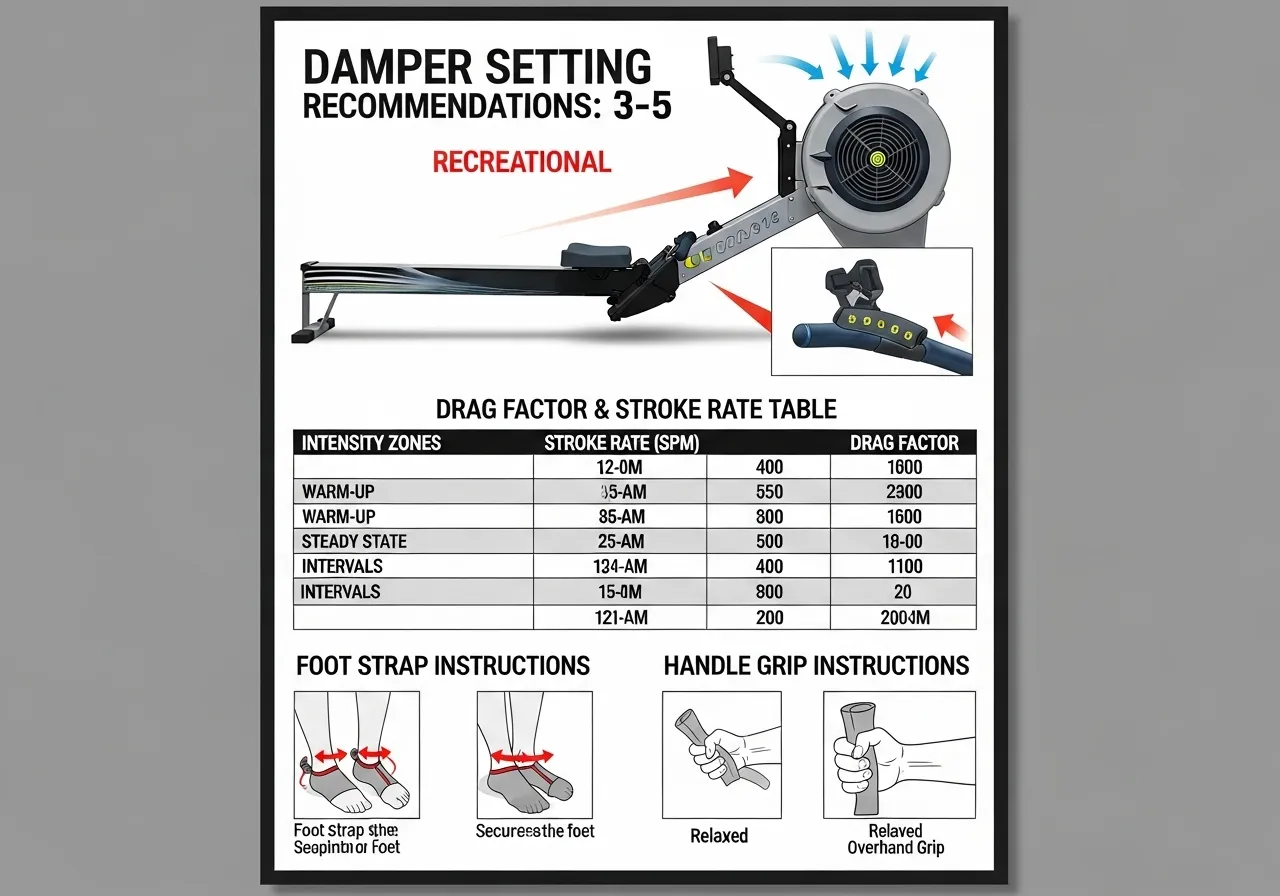
The damper lever on the side of the flywheel cage is the most misunderstood control on the rowing machine.
Many beginners set it to 10 (maximum) believing higher = harder workout. This is incorrect.
💡 What the damper actually does:
The damper controls airflow to the flywheel — higher damper = more air enters = more flywheel resistance = slower flywheel deceleration between strokes.
A high damper setting makes the stroke feel like rowing a heavy barge — requiring more force per stroke at the expense of stroke rate and cardiovascular output.
A lower damper (3–5 for most recreational rowers) makes each stroke feel more athletic — similar to rowing a racing shell — allowing better technique and sustainable cardiovascular output.
The best damper setting depends on individual body mass and fitness level:
Recreational fitness rowers: 3–5 (most common recommendation)
Strength-focused sessions: 6–8 for slower, more powerful strokes
Concept2 Drag Factor: The More Accurate Setting
On Concept2 rowing machines (the most common in gyms), the display shows “drag factor” — a more consistent measure of resistance than the damper number, which varies with machine age and dust accumulation.
A drag factor of 120–130 is generally recommended for most recreational rowers — equivalent to approximately damper 4–5 on a clean machine.
Access drag factor via the PM5 monitor: Menu → More Options → Display Drag Factor during rowing.
Foot Strap Setup
The strap should cross the widest part of the foot — across the ball of the foot, not the toes
Tight enough to prevent heel lift during the drive — but not so tight it restricts ankle blood flow
The heel cup of the footrest should contact the heel throughout the stroke
Handle Grip
Hold the handle with a relaxed, hooked grip — fingers curled around, but not gripping tightly
Wrists remain flat throughout — neither bent up nor down
The handle width is shoulder-width; hands remain just outside shoulder width
Common Rowing Machine Setup Mistakes
Beyond the damper setting, several setup errors commonly reduce rowing effectiveness or increase injury risk:
Foot strap too loose: The heel lifts during the drive — reducing leg force transfer into the machine. Tighten until heels remain flat throughout
Seat position: Some machines allow fore-aft seat track adjustment — ensure the track length is sufficient for full leg extension at the finish without the knees hyperextending
Monitor height: If the monitor is too low, trainees tend to drop the head and round the upper back to see it — position the monitor at eye level or practice not looking at it during rowing (check between strokes instead)
When to Use Rowing as Part of a Larger Program
Rowing integrates well into multiple types of training programs:
Program Type
Rowing Role
Recommended Frequency
General fitness
Primary cardio tool
3–4× per week
Strength training program
Cardio finisher or separate days
2× per week
Running program (cross-training)
Low-impact cardio on non-run days
1–2× per week
Rehabilitation (lower limb)
Impact-free cardio maintenance
Under physio guidance
Rowing Machine Types: Concept2, Water Rowers, and Air Resistance Machines
Several machine types are available, each with different resistance mechanisms:
Type
Resistance Mechanism
Notes
Air resistance (Concept2)
Flywheel with damper
Industry standard; consistent performance data
Water resistance
Paddles in water tank
More closely mimics on-water feel; natural resistance curve
Magnetic resistance
Fixed resistance levels
Quieter; less natural feel; common in home machines
Hydraulic resistance
Piston-based arms
Compact; generally lower quality for serious training
For gym-based training, the Concept2 RowErg is the most widely used and recommended machine — its consistent performance data allows meaningful comparison of progress over time and across different machines.
Reading the Concept2 Performance Monitor
The PM5 performance monitor on Concept2 machines displays several key metrics:
Split (/500m): The most important training metric — time per 500 meters at current pace. Lower = faster. Most training targets are expressed in terms of target split time
Watts: Power output in watts — useful for tracking absolute performance improvement over months of training
Stroke rate (SPM): Strokes per minute — use the rate chart in Section 2 to match rate to intended intensity
Calories per hour: Estimated caloric expenditure — less reliable than wattage or split for training prescription but useful for general awareness
Training with a target split time rather than by effort alone produces more consistent and measurable progress — setting a specific 500m split target for each session and tracking whether it was achievable at the planned stroke rate and duration is the most informative approach to rowing program management.
Rowing Machine Programming: From Beginner to Intermediate
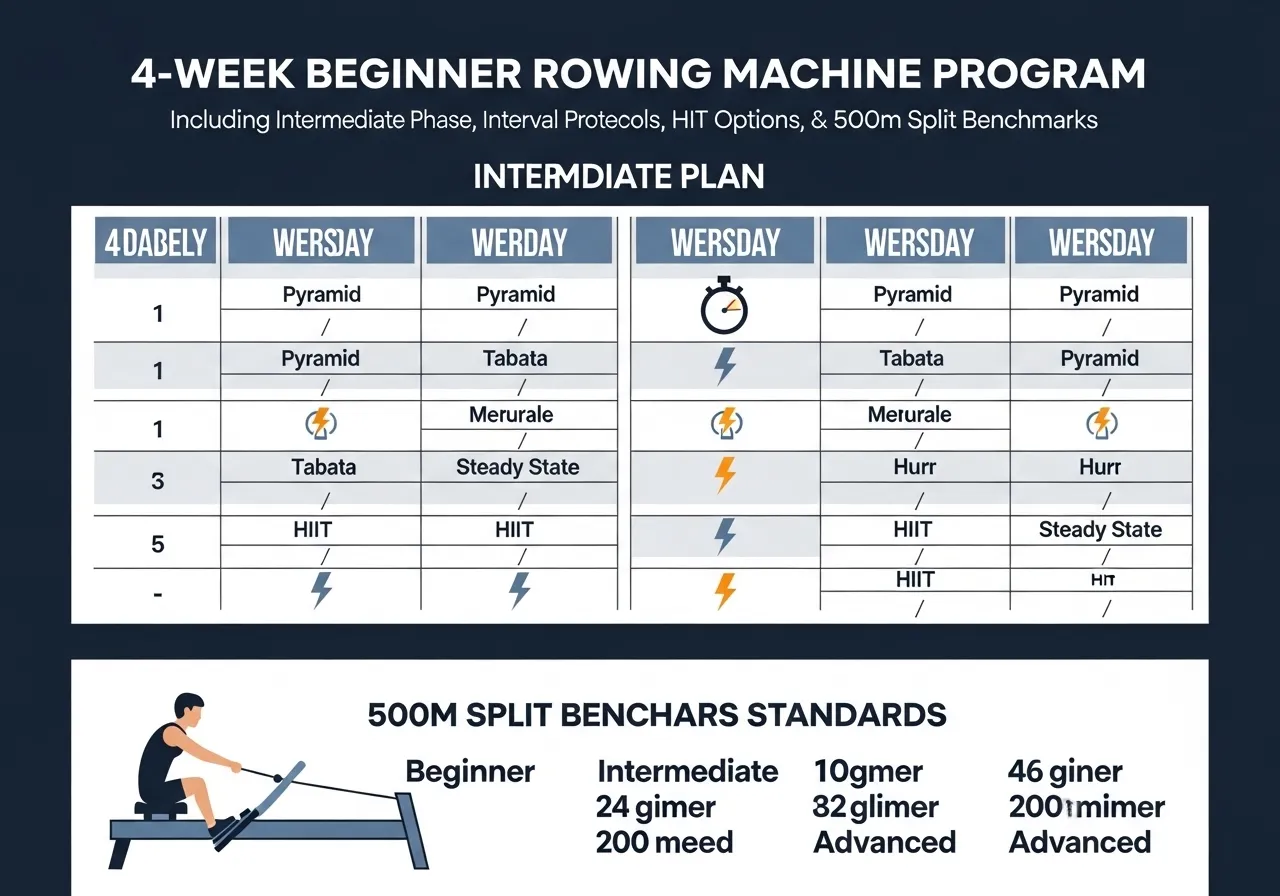
Beginner Phase: The First 4 Weeks
The primary challenge for rowing beginners is not cardiovascular capacity — it is technique coordination and the unusual loading pattern on the lower back and lats (latissimus dorsi — the broad back muscle running from the lower back to the upper arm).
Starting with short sessions focused on technique rather than pushing effort preserves form quality and prevents the early overuse soreness that stops many beginners.
Week 1–2 (3 sessions/week):
3 × 5-minute rows at 20 SPM, damper 4, Rate of Perceived Exertion (RPE) 5–6/10
Rest 3 minutes between pieces
Focus: drive sequence (legs-body-arms); relaxed grip
Week 3–4 (3 sessions/week):
3 × 8-minute rows at 20–22 SPM, RPE 6–7/10
Rest 2 minutes between pieces
Focus: consistent stroke timing; 1:2 drive-to-recovery ratio
Intermediate Phase: Weeks 5–12
Session Type
Structure
Frequency/Week
Steady State (Zone 2)
20–30 min continuous @ 20–22 SPM, RPE 5–6
2×
Interval (HIIT)
8 × 1-min hard / 2-min easy @ 24–26 SPM
1×
Pyramid
1-2-3-2-1 min hard with equal rest — total ~20 min
1× (optional)
Key Performance Benchmarks
The Concept2 split time — time to row 500 meters at current pace — is the standard performance metric for indoor rowing:
Level
Men 500m Split
Women 500m Split
Beginner
2:30–3:00
2:45–3:15
Intermediate
2:00–2:30
2:15–2:45
Advanced
Under 2:00
Under 2:10
These are general estimates with significant individual variation based on body size, age, and training history. The most meaningful comparison is personal progress — tracking your own 500m split improvement over weeks of consistent training.
Protocol 1 — Classic Intervals: 8 × 500m with 2:00 rest between Protocol 2 — Time-Based: 10 × 1:00 hard / 1:00 easy Protocol 3 — Pyramid: 250m / 500m / 750m / 500m / 250m — 2:00 rest between Protocol 4 — Tabata: 8 × 20 sec all-out / 10 sec rest (for experienced rowers only — requires excellent technique to maintain safely at maximum effort)
Common Questions About Rowing Machine Training
Is rowing hard on the lower back?
Rowing with correct technique is generally not hard on the lower back — the sequential drive pattern (legs first, then back swing) distributes load appropriately across the largest muscle groups.
The most common cause of rowing-related back pain is initiating the drive with the back rather than the legs — essentially performing a back extension under load rather than a leg press with a subsequent torso swing.
Individuals with existing lower back conditions — including disc herniations, spondylolisthesis (a condition where one vertebra slips forward on another), or sacroiliac joint dysfunction — should receive specific technique assessment from a physiotherapist before rowing regularly.
How many calories does rowing burn?
At moderate intensity (22 SPM, RPE 6–7), a 70 kg person may burn approximately 400–500 calories per hour of rowing.
At vigorous intensity (HIIT intervals), caloric expenditure may reach 600–700 calories per hour.
These estimates are highly individual — body mass, rowing efficiency, and fitness level all significantly affect actual caloric expenditure.
✅ Key Takeaways
Rowing produces higher cardiovascular output — ventilation, oxygen consumption, cardiac output — than cycling at matched effort levels
Approximately 86% of skeletal muscle mass is recruited during rowing — making it one of the most complete full-body conditioning exercises available
The drive sequence is legs first, then back swing, then arms — initiating with the back is the primary technique error
Set the damper to 3–5 for most fitness rowing — higher does not mean harder in terms of cardiovascular output
Individuals with lower back conditions should seek technique assessment before rowing regularly
Injury Prevention for Regular Rowers
With correct technique, rowing has a lower injury rate than many other high-intensity exercise modalities.
The most common rowing-related complaints and their prevention:
Lower back pain: Almost always technique-related — initiating the drive with the back rather than the legs. The correction is enforcing the legs-body-arms sequence and reducing intensity until the correct pattern is habituated
Knee discomfort: Can result from the knees traveling past the toes at the catch position on some body proportions. Adjusting foot stretcher position to bring the catch position slightly back may resolve this
Wrist tendinopathy (degeneration and pain in the wrist tendons): From gripping the handle too tightly over many sessions — practicing a relaxed, hooked grip is the primary preventive measure
Rib stress fractures: Rare but documented in high-volume competitive rowers — not a realistic concern for recreational rowing frequencies
Any pain that is sharp, persistent, or worsens during rowing warrants stopping and seeking professional assessment before continuing.
Rowing for Health, Weight Management, and Long-Term Athletic Development
Rowing as a Low-Impact Alternative to Running
For individuals who want high-intensity cardiovascular training without the ground impact of running — due to knee conditions, stress fracture history, or general joint sensitivity — rowing provides a comparable cardiovascular stimulus with near-zero impact loading.
The caloric expenditure of rowing at vigorous intensity is comparable to running at a moderate pace — making it an effective substitute for running in programs where lower limb impact needs to be reduced without sacrificing cardiovascular intensity.
However, rowing does not train the weight-bearing impact stimulus that running provides for bone density maintenance — individuals who switch entirely from running to rowing for extended periods should be aware that the bone density benefit of running is not replicated by rowing.
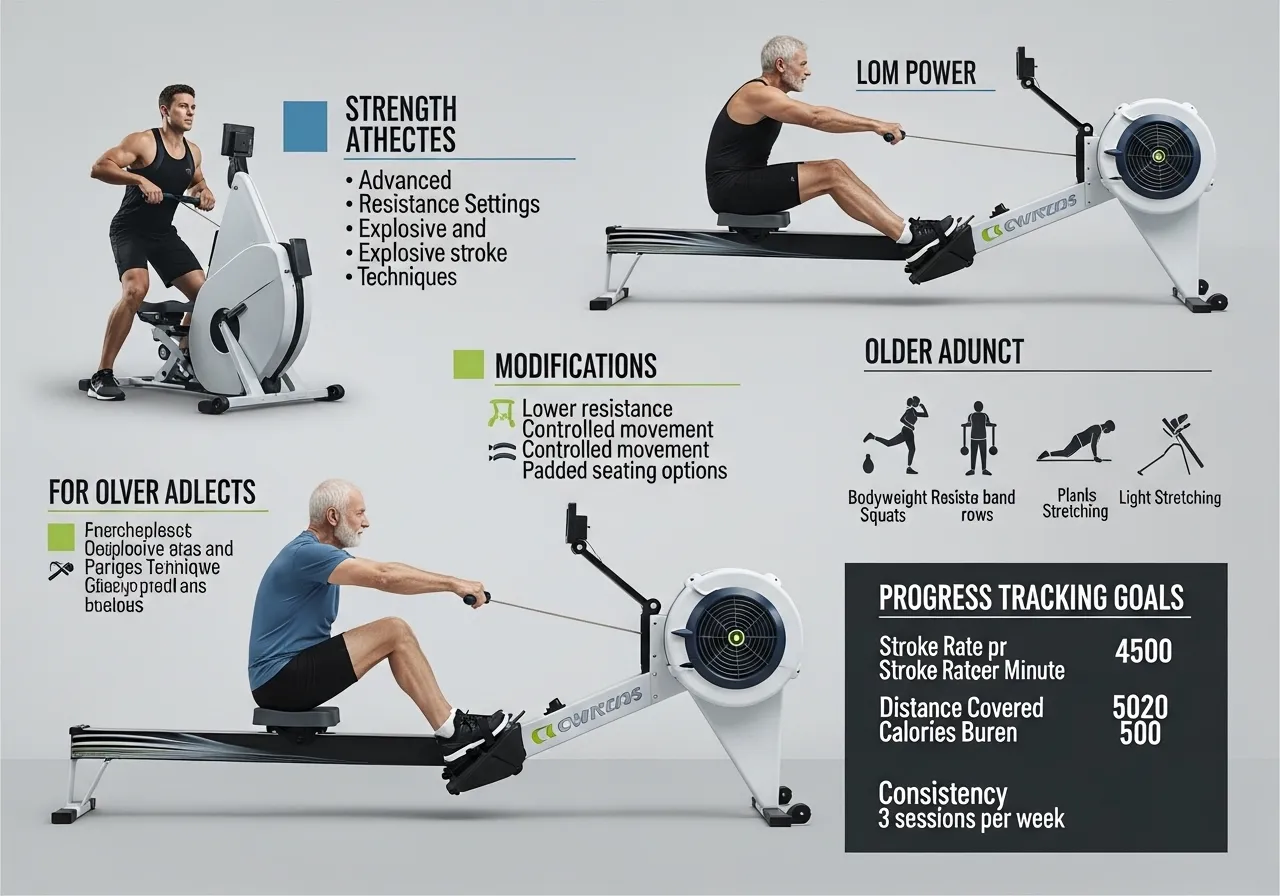
Rowing for Strength Athletes
Strength-focused athletes often use rowing as their primary cardiovascular conditioning tool because:
The seated, non-weight-bearing position reduces lower limb fatigue accumulation — a squat or deadlift athlete can row on a recovery day without accumulating the same leg fatigue as running
The pulling pattern (back and biceps dominant) complements pushing-heavy strength programs that may be deficient in horizontal pulling volume
The core stability demand of rowing reinforces the anti-extension core patterns used in heavy barbell lifts
Building a Sustainable Long-Term Rowing Practice
Rowing improvement follows a predictable pattern:
Weeks 1–4: Technique learning is the primary bottleneck — power output is limited by coordination, not fitness
Months 2–3: Technique begins to consolidate — cardiovascular capacity becomes the limiting factor and fitness gains accelerate
Months 4–6: Meaningful performance gains become measurable — 500m split times drop consistently, longer steady-state sessions become comfortable
Year 1 and beyond: Training variety (intervals, steady-state, pieces at different rates) produces ongoing development
Rowing for Older Adults
The rowing machine is particularly well-suited for older adults seeking effective cardiovascular exercise:
No impact — the seated position and smooth stroke eliminate the joint impact stress of running or jumping
Functional movement pattern — the drive sequence mirrors the mechanics of standing from a seated position, maintaining functional lower body strength
Upper body engagement — many older adults are deficient in pulling strength; rowing develops this directly
Scalable intensity — the same machine accommodates very light effort for low-intensity aerobic sessions and vigorous effort for HIIT
Older adults with lower back conditions, hip replacements, or cardiovascular conditions should obtain clearance from their healthcare provider before beginning rowing training — particularly the back extension and rotation components of the stroke warrant specific assessment in these populations.
Supplementary Exercises for Rowers
To balance the specific demands rowing places on the body, including these supplementary exercises in a weekly program is advisable:
Exercise
Why It Helps
Frequency
Hip flexor stretching
Rowing involves repetitive hip flexion — hip flexors may tighten over time
Daily
Face pulls / band pull-aparts
Rear deltoid and rotator cuff — balances the heavy lat/bicep demand of rowing
2–3× per week
Thoracic extension
Counteracts the forward flexion pattern of rowing
Daily
Glute bridges
Hip extension strength supporting the drive phase
2× per week
Tracking Progress and Setting Goals
The Concept2 logbook — available free at concept2.com — allows recording of every session, tracking performance improvements, and comparison with international rankings.
Useful initial goals for beginners:
Row 5,000 meters total in a single session (no stops) within 3 months of starting
Complete a 2,000m piece — the standard competitive rowing distance — in under 8 minutes (for most fitness rowers)
Achieve a consistent 500m split that improves by 10+ seconds from the first session benchmark after 8 weeks of consistent training
A qualified personal trainer with rowing experience, or a certified rowing coach, can provide individualized technique feedback and programming that accelerates development significantly compared to self-taught rowing — particularly for addressing technique errors that are difficult to identify and correct alone.
Nutrition Strategies for Rowing Sessions
Rowing sessions — particularly longer steady-state pieces and HIIT intervals — have specific nutritional considerations:
Pre-session (1–3 hours before): A carbohydrate-containing meal supports energy availability for sustained aerobic effort — particularly relevant for sessions longer than 30 minutes
Intra-session hydration: Rowing produces significant sweat — having water accessible during sessions longer than 20 minutes is advisable, particularly in warm environments
Post-session: Protein intake within 1–3 hours supports the muscular repair and adaptation processes following sessions that include significant back, leg, and arm loading
These guidelines represent general sports nutrition principles — individual needs vary significantly based on body size, session intensity, and overall dietary habits. A registered sports dietitian can provide personalized nutrition guidance for rowing training if specific performance optimization is a goal.
The Mental Benefits of Rowing Training
Beyond the well-documented physiological benefits, consistent rowing training is associated with several psychological and cognitive benefits:
Flow state potential: The rhythmic, coordinated nature of rowing — synchronizing breathing, body movement, and stroke timing — creates conditions conducive to a flow state (a state of complete absorption in an activity associated with reduced anxiety and improved mood)
Stress reduction: Sustained aerobic exercise at moderate intensity (Zone 2 rowing) produces well-documented reductions in cortisol (the primary stress hormone) and improvements in mood
Goal-setting structure: The performance data available from rowing machines — split time, wattage, distance — provides clear, measurable goals that create a sense of achievement and motivation as performance improves
The combination of high physical demand, measurable performance feedback, and rhythmic coordinated movement makes rowing a particularly engaging exercise modality for individuals who find less structured cardio activities monotonous.
For trainees experiencing high stress or anxiety, discussing exercise type and intensity with a healthcare provider can help determine the most appropriate approach for their specific situation.
Patience with the technique development phase — typically the first 3–4 weeks — ultimately produces a rowing practice that is both physically effective and genuinely sustainable over the long term.
⚠️ Health & Fitness DisclaimerThis article is for general educational and informational purposes only. It does not replace professional medical or fitness advice. If you have any pre-existing condition, injury, or health concern — consult a qualified healthcare professional or certified personal trainer before starting or modifying any exercise program. The Romanian conventional deadlift guide…
⚠️ Fitness Disclaimer: The information in this article is for general educational purposes only and does not constitute professional fitness or medical advice. Always consult a qualified healthcare professional before starting any new exercise program. ⚠️ Cardiovascular Health Notice: If you have a history of heart disease, high blood pressure, or any cardiovascular condition, obtain…
Three minutes of actual sprint work per week produces the same VO2 max improvement as five full hours of moderate-intensity cycling per week. This is not a headline designed to sell something. It is the finding of a peer-reviewed randomised controlled trial from McMaster University. Sprint interval training operates through a different physiological mechanism than…
⚠️ Cardiovascular Monitoring Safety NoteHRV monitoring is a wellness and performance tool — not a medical diagnostic device. Consistently low HRV accompanied by symptoms such as chest pain, unexplained breathlessness, palpitations, or severe fatigue may indicate an underlying cardiovascular or systemic condition requiring medical evaluation. Do not use HRV data alone to override symptoms that…
⚠️ Health & Fitness DisclaimerThis article is for general educational and informational purposes only.It does not replace professional medical or fitness advice.If you have any pre-existing shoulder, neck, or upper back condition — please consult a qualified healthcare professional or certified personal trainer before starting or modifying any pressing program. The overhead press guide is…
⚠️ Fitness Disclaimer: The information in this article is for general educational purposes only and does not constitute professional fitness or medical advice. Always consult a qualified healthcare professional before starting any new exercise program. ⚠️ Cardiovascular Health Notice: If you have a history of heart disease, high blood pressure, or any cardiovascular condition, obtain…