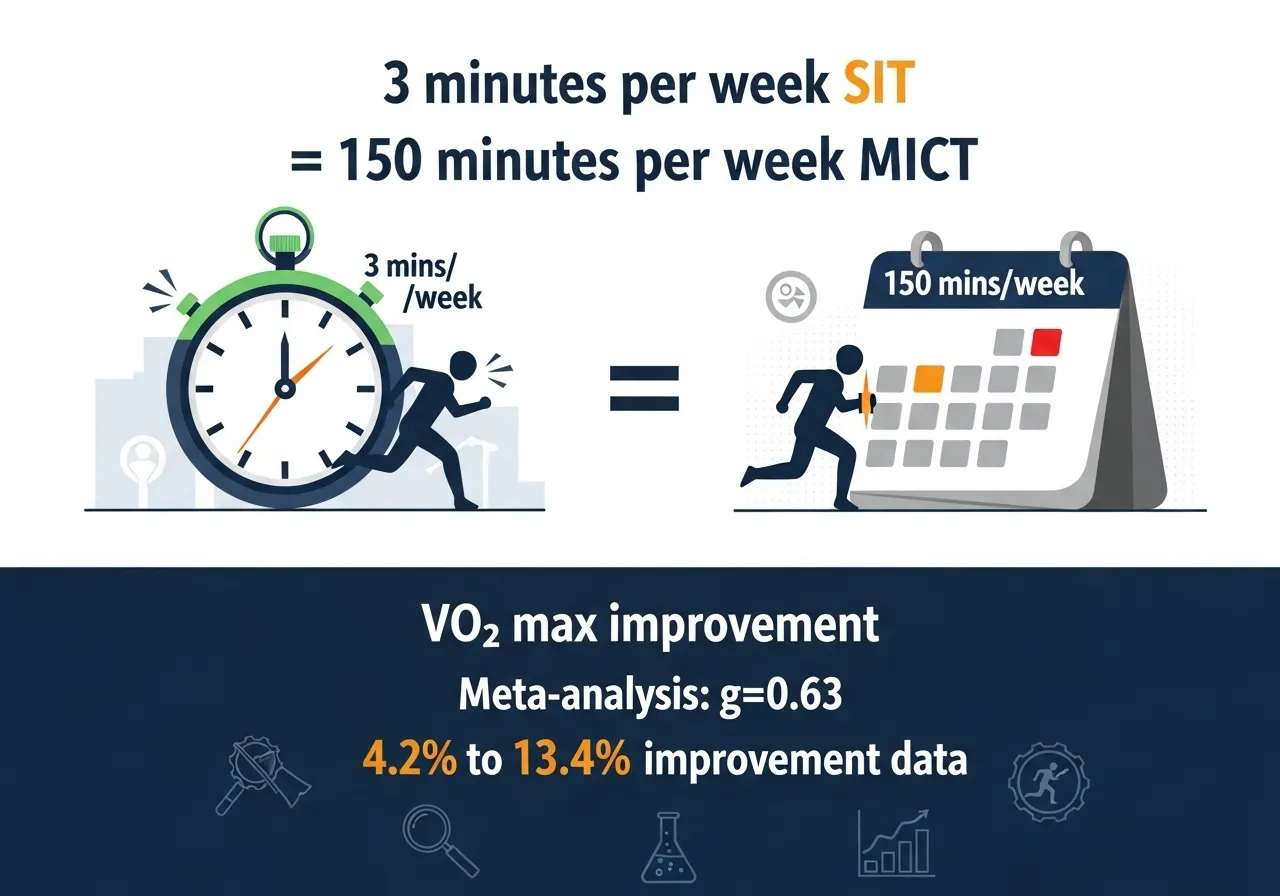
Three minutes of actual sprint work per week produces the same VO2 max improvement as five full hours of moderate-intensity cycling per week. This is not a headline designed to sell something. It is the finding of a peer-reviewed randomised controlled trial from McMaster University.
Sprint interval training operates through a different physiological mechanism than other cardio. It does not develop aerobic base by accumulating moderate-intensity volume. It forces rapid, extreme metabolic stress in short windows that the body then adapts to by upregulating the exact same aerobic machinery that long endurance training develops, just through a different stimulus pathway.
The practical problem: most trainees either avoid sprint training entirely because it sounds extreme, or perform it incorrectly because they treat it as just fast running. Neither approach captures the actual training effect. This guide covers what the research shows about SIT’s mechanisms, how it differs from HIIT, the evidence on protocols, technique, progressive programming, and who should and should not be using it.
What the Research Shows: Can 3 Minutes per Week Really Match 5 Hours of Cardio?
📌 Key Finding
Three minutes of sprint work per week produced identical VO2 peak improvements to 150 minutes of moderate cycling per week over 12 weeks. The total time commitment was 30 minutes for SIT versus 150 minutes for MICT per week, including warmup and recovery.
📌 Key Finding
Sprint interval training produces a moderate-to-large effect size of g = 0.63 for VO2 max improvement across studies, with gains of 4.2 to 13.4 percent depending on baseline fitness and protocol. Both aerobic and anaerobic adaptations occur simultaneously through SIT.
Why the Same Aerobic Adaptation Occurs With Less Volume
The paradox of SIT producing aerobic adaptations through supramaximal anaerobic effort requires a physiological explanation. During a 30-second all-out sprint, oxygen consumption rises from near-resting levels to a significant fraction of VO2 max within the sprint itself, particularly in the latter half. The recovery periods following each sprint produce sustained elevated oxygen consumption as the body attempts to repay the oxygen debt and restore phosphocreatine stores.
This combination of acute high-intensity aerobic demand during the sprint and prolonged elevated oxygen consumption during recovery produces a cumulative aerobic stimulus per session that is disproportionate to the very short sprint duration. The mitochondrial biogenesis, PGC-1 alpha upregulation, and oxidative enzyme increases that define aerobic adaptation respond to the metabolic stress signal of repeated near-maximal efforts, regardless of whether those efforts are achieved through long moderate exercise or short supramaximal exercise.
Sprint Interval Training vs HIIT: The Physiological Distinction That Changes How You Train
The Intensity Distinction
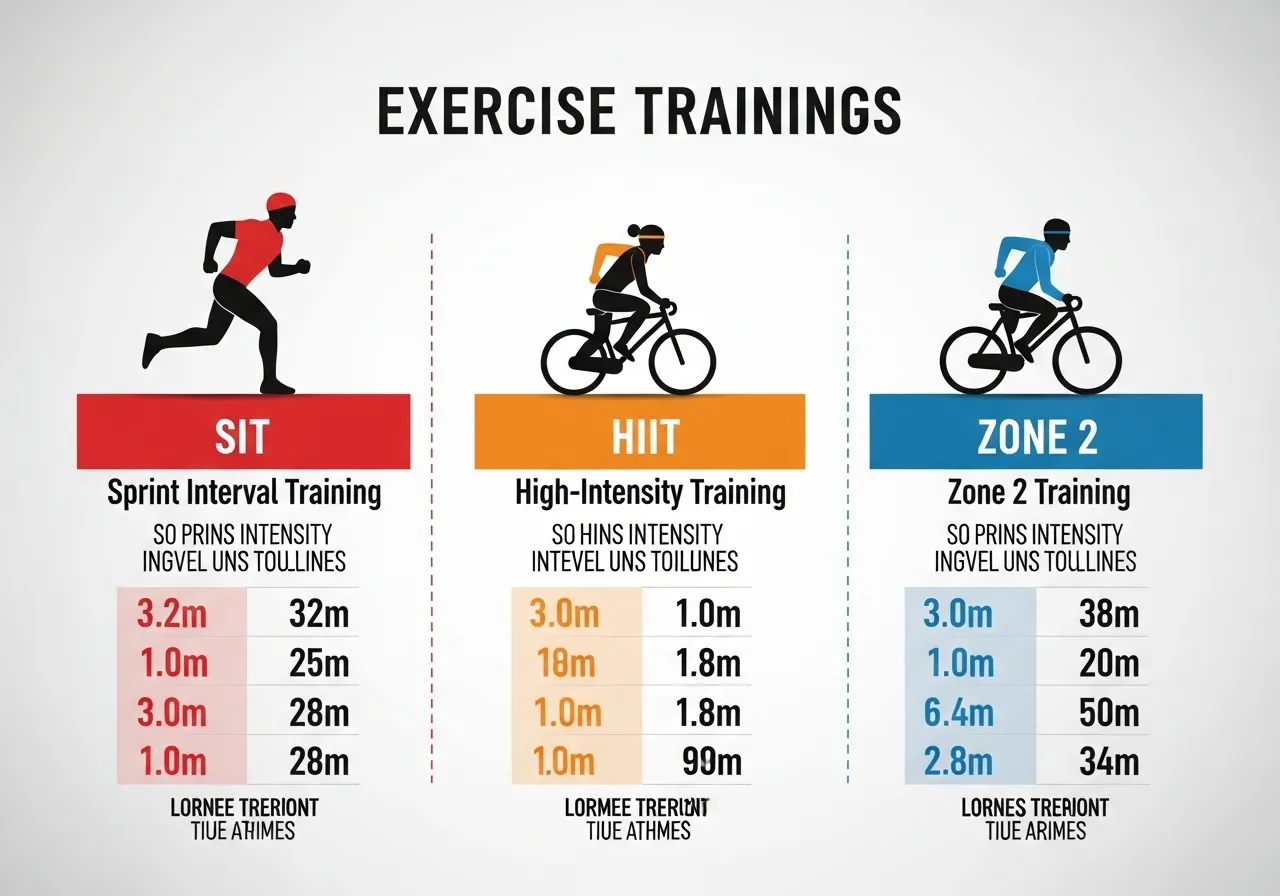
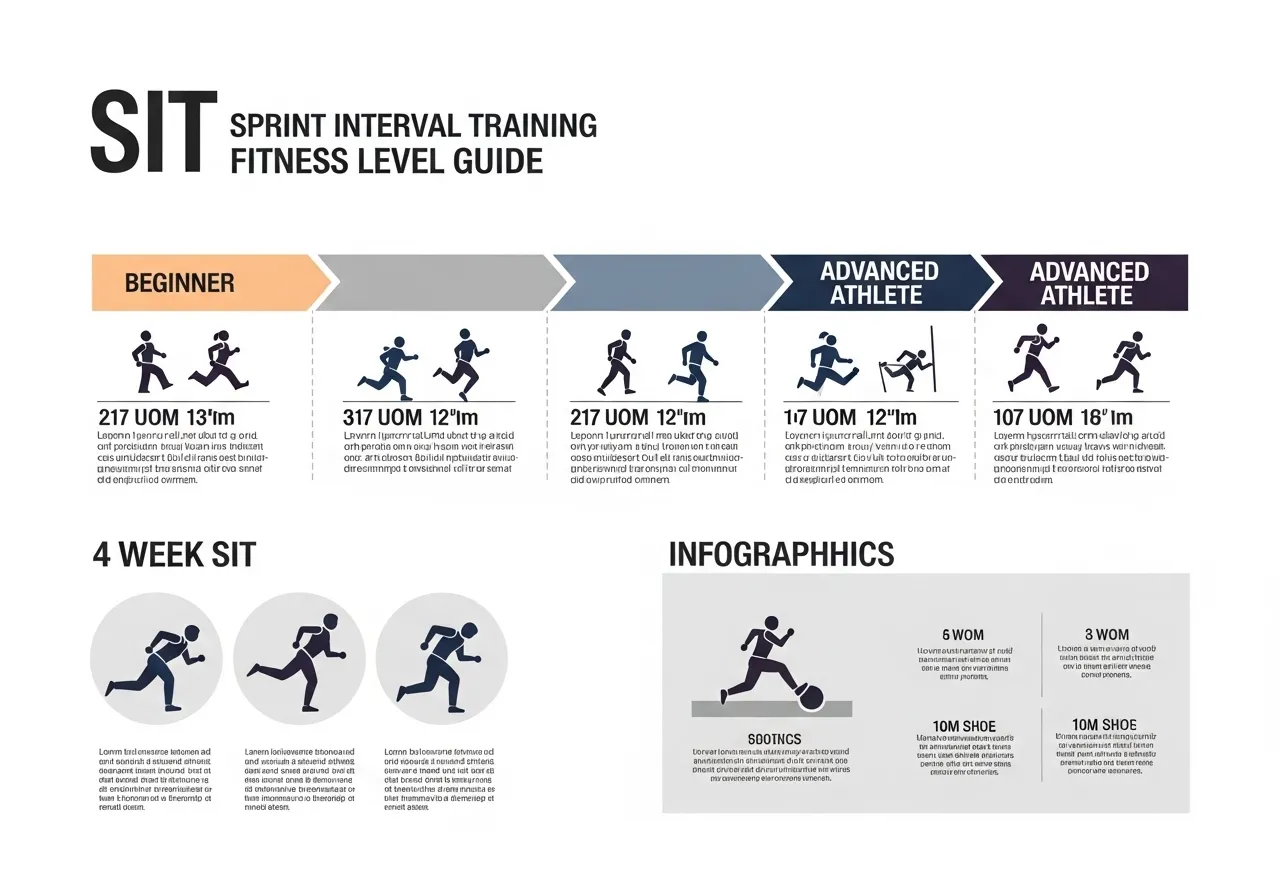
The terms HIIT and SIT are often used interchangeably. They are physiologically distinct. The difference is the intensity relative to VO2 max:
Protocol
Intensity
Duration per Effort
Energy System Primary
Example
HIIT
85 to 95% VO2 max
1 to 4 minutes
Oxidative + glycolytic
4×4 Norwegian intervals
SIT
100 to 130% VO2 max (supramaximal)
10 to 30 seconds
Alactic + glycolytic
Wingate, hill sprints
The Alactic Energy System and Why It Matters
Sprint interval training, particularly efforts under 10 seconds, draws primarily on the alactic energy system: the phosphocreatine (PCr) system that produces ATP without oxygen or lactate accumulation. This system produces the highest power output of any energy pathway but depletes within 5 to 10 seconds.
Training the alactic system specifically develops peak power output, rate of force development, and neuromuscular recruitment speed. These qualities do not improve with HIIT or Zone 2 training, regardless of intensity. They require supramaximal effort of very short duration to produce the specific adaptation. For trainees whose goals include sprint speed, explosive athletic performance, or peak power development, SIT addresses qualities that no other cardio training modality develops.
When to Use SIT vs HIIT vs Zone 2
The three training types are not competing for the same adaptation. They develop overlapping but distinct physiological qualities:
Zone 2: Mitochondrial density, fat oxidation efficiency, aerobic base. The foundation all other cardiovascular training builds on. The Zone 2 framework is covered in the Zone 2 training guide.
HIIT: VO2 max expression, lactate threshold development, high-intensity sustained effort capacity. Covered in depth in the HIIT training guide.
SIT: Peak power output, alactic capacity, supramaximal VO2 max stimulus, time-efficient aerobic adaptation for time-limited trainees.
A complete cardiovascular programme includes all three in proportions determined by the individual’s goals, training age, and available time. SIT is not a replacement for Zone 2 or HIIT but a distinct stimulus that adds a quality neither of the others develops.
The Optimal SIT Protocol: What the Research Actually Shows
📌 Key Finding
The classic 4 to 6 × 30-second Wingate protocol is not the minimum effective dose. Shorter protocols with fewer sprints produce equivalent health benefits with significantly lower session duration and perceived difficulty, making them more appropriate for most recreational athletes.
Practical Protocol Selection by Goal
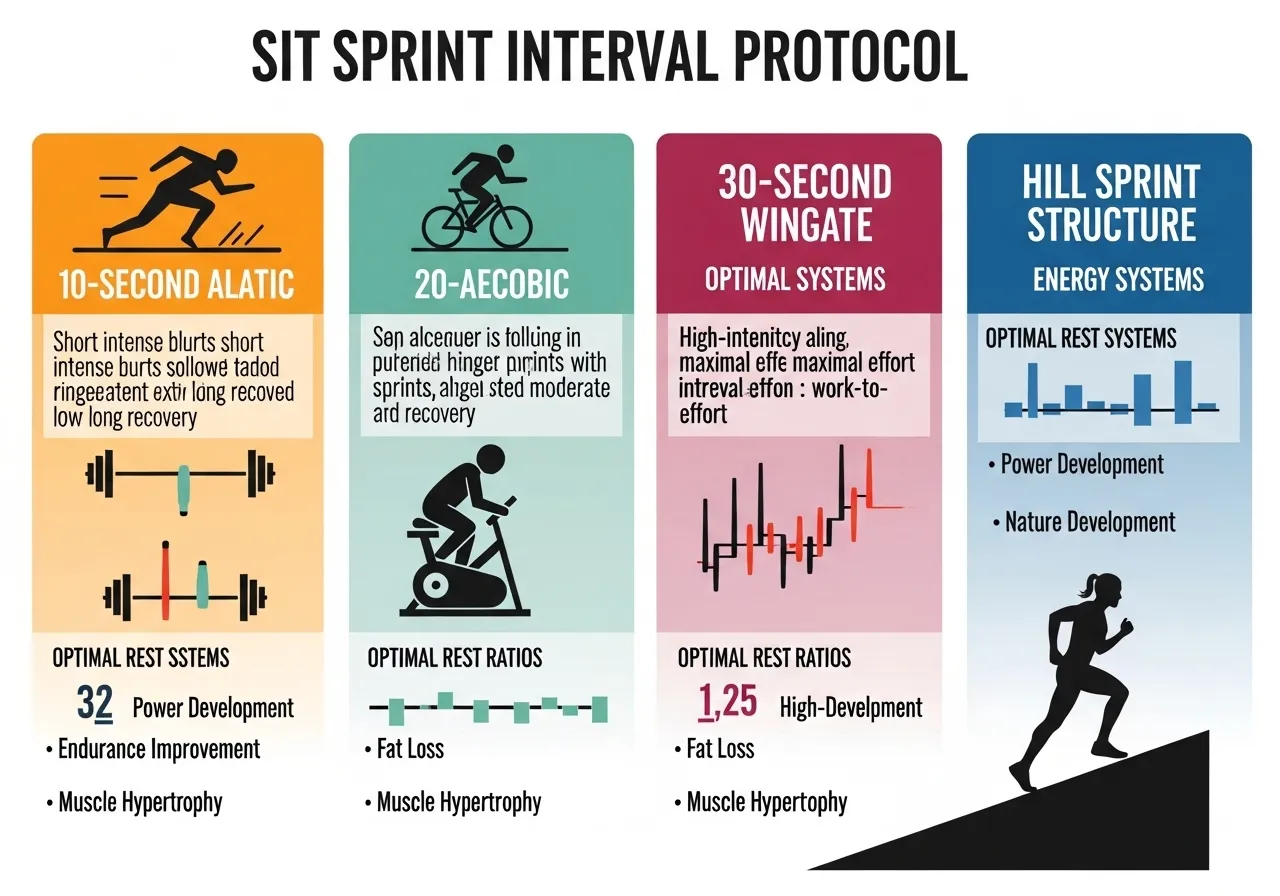
The research supports multiple SIT protocols with different effort-to-benefit profiles. The appropriate protocol depends on training history, goal, and available equipment:
Structure: 8 to 12 × 10-second maximum effort sprints, 50 seconds complete rest between efforts (1:5 work-to-rest)
Total sprint time: 80 to 120 seconds per session
Best for: Peak power development, alactic system training, athletes needing explosive speed. The short rest is sufficient for near-complete PCr resynthesis, allowing each sprint to be a genuine maximum effort.
Structure: 4 to 6 × 20-second maximum effort sprints, 2 minutes rest between efforts
Total sprint time: 80 to 120 seconds per session
Best for: Time-efficient VO2 max improvement. Research shows 2 × 20-second sprints can produce equivalent VO2 max improvements to 6 × 30-second Wingate sprints when performed consistently. Appropriate for intermediate trainees.
Structure: 4 to 6 × 30-second maximum effort cycling sprints, 4 minutes active recovery between efforts
Total sprint time: 2 to 3 minutes per session
Best for: Comprehensive aerobic and anaerobic adaptation, trained athletes who can sustain true maximum effort across all intervals. Not appropriate for beginners due to the extreme metabolic demand of sustained 30-second supramaximal effort.
🏃 Protocol 4: Hill Sprint Protocol (Running-Based SIT)
Structure: 6 to 10 × 8 to 10 second maximum effort uphill sprints, walk back down as recovery (approximately 60 to 90 seconds)
Total sprint time: 48 to 100 seconds per session
Best for: Running-specific sprint development with reduced injury risk compared to flat-surface sprinting. The incline reduces ground contact forces, lowers hamstring injury risk, and enforces a forward lean that promotes correct sprint mechanics.
Sprint Interval Training Technique: The Details That Determine Whether It Is Effective or Injurious
⚠️ SIT Safety and Medical Clearance Note Sprint interval training involves supramaximal cardiovascular effort that places significant acute demand on the cardiovascular system. Individuals with known cardiovascular disease, hypertension requiring medication, recent injury, or who are completely sedentary should obtain medical clearance before beginning SIT. A minimum of four to six weeks of moderate cardiovascular base training is strongly recommended before introducing sprint intervals. Any chest pain, severe dizziness, or palpitations during sprint efforts requires immediate cessation and medical assessment.
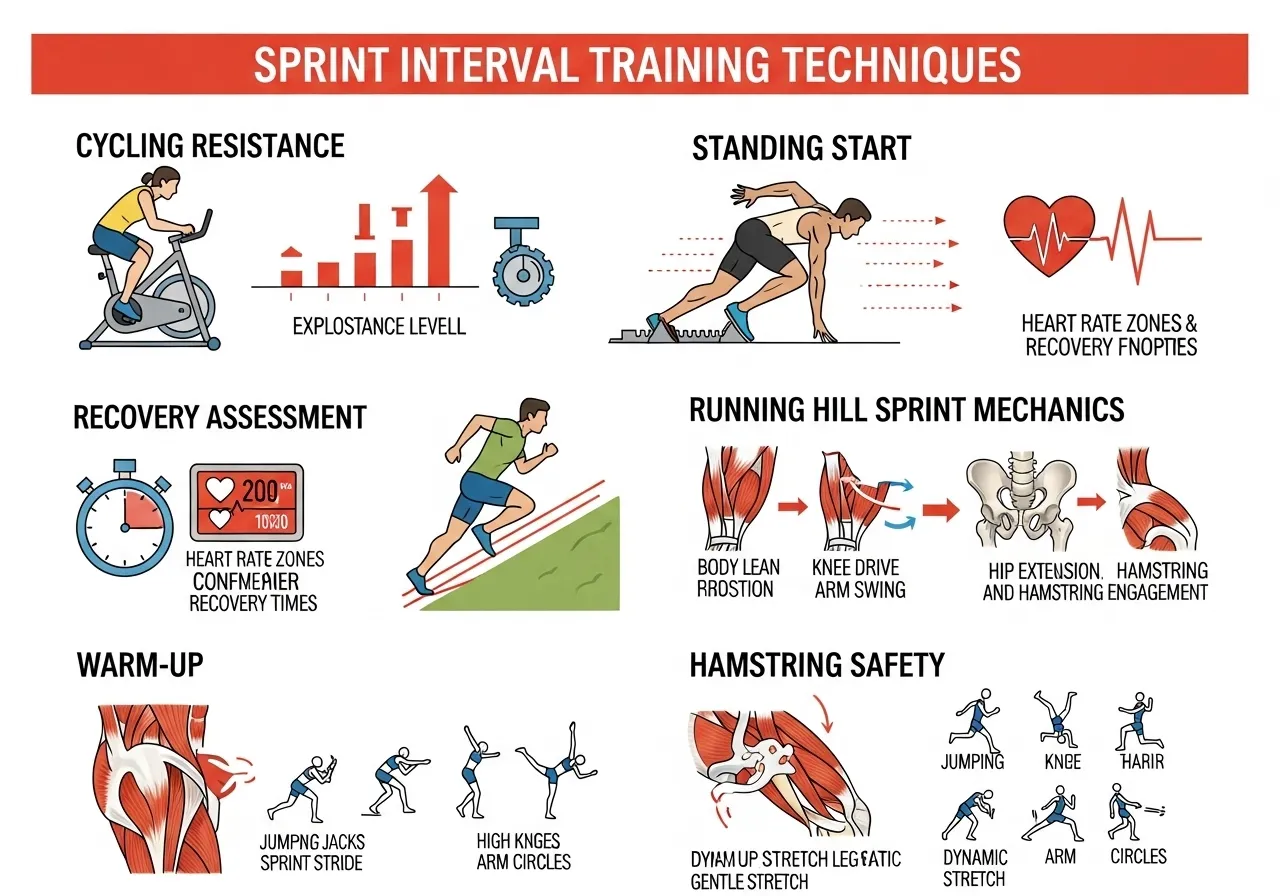
Cycling-Based SIT Technique
The Wingate protocol and most laboratory SIT research uses cycle ergometers. For gym-based SIT on stationary bikes or assault bikes, the technique requirements are straightforward but critical for achieving true supramaximal effort:
1. Resistance setting: The resistance must be high enough that maximum pedalling speed produces genuine effort. On a stationary bike, set resistance at a level where maximum cadence is 100 to 120 RPM during the sprint. On an assault bike, resistance is self-regulated by effort. 2. Standing start vs seated: Standing on the pedals for the first 2 to 3 seconds of each sprint maximises initial power output. Transition to seated position as cadence reaches maximum. 3. Recovery between sprints: Recovery must be complete enough to allow true maximum effort on the next sprint. If the 3rd and 4th sprints produce dramatically lower power than the 1st and 2nd, rest periods are insufficient. 4. Warmup requirement: Minimum 10 minutes of progressive cycling before the first sprint. Cold muscle tissue during supramaximal effort increases both injury risk and perceived exertion without improving training stimulus.
Running-Based SIT Technique
Running sprints require specific technical attention to maximise power output and minimise injury risk. The most common injury in sprint training is proximal hamstring strain, which occurs almost exclusively from poor sprint mechanics rather than from the speed itself.
Correct sprint mechanics: forward lean from the ankles (not the waist), high knee drive, full hip extension at toe-off, arms driving forcefully forward and back in a straight line. The single most protective technical cue is completing the hip extension fully at toe-off. A sprint that terminates with the hip partially flexed rather than fully extended at push-off is the position where hamstring strain occurs most frequently.
Hill sprints naturally correct most of these mechanical errors. The incline requires forward lean, forces high knee drive to clear the slope, and reduces peak ground force at toe-off. For trainees new to sprint training, hill sprints are the safest entry point regardless of fitness level.
Is Sprint Interval Training Appropriate for All Fitness Levels?
The Beginner Problem
SIT produces extreme perceived exertion. Most research rates the 30-second Wingate sprint as among the highest RPE of any exercise tested, typically 9 to 10 out of 10. For sedentary individuals beginning exercise, this level of effort is both psychologically aversive and potentially unsafe without adequate cardiovascular and musculoskeletal preparation.
Beginners attempting classic SIT protocols frequently cannot sustain true maximum effort on later intervals, produce lower power outputs than intermediate trainees, and experience disproportionate muscle soreness and fatigue that disrupts the rest of their training for several days. The research showing SIT’s equivalence to MICT was conducted in previously sedentary but healthy individuals, not in complete exercise beginners. The distinction matters for protocol prescription.
Building the Prerequisite Foundation
A minimum cardiovascular foundation before beginning SIT:
Four to six weeks of consistent moderate-intensity cardiovascular training, three sessions per week
Ability to sustain 20 minutes of continuous moderate-intensity effort without distress
No active lower extremity injury or restriction
Established warmup and cooldown habits
Trainees who meet these prerequisites can begin SIT with the shorter, lower-volume protocols (10-second alactic sprints or 20-second sprints) before progressing to classic 30-second Wingate-style efforts. The lactate threshold development that supports higher-intensity work is covered in the lactate threshold training guide.
Advanced Athletes: Why SIT Still Produces Adaptation
For highly trained endurance athletes with VO2 max values above 60 ml/kg/min, the relative gains from SIT are smaller than in untrained populations but the absolute performance benefits remain meaningful. Trained athletes use SIT specifically to develop the supramaximal power output that allows them to respond to race surges, sprint to a finish line, or produce the short explosive efforts that determine competitive outcomes.
The adaptation in trained athletes is less about aerobic capacity improvements and more about neuromuscular power, sprint economy, and the ability to sustain near-maximal effort repeatedly. These qualities require SIT specifically and do not develop through the moderate and threshold intensity training that comprises most of an endurance athlete’s programme.
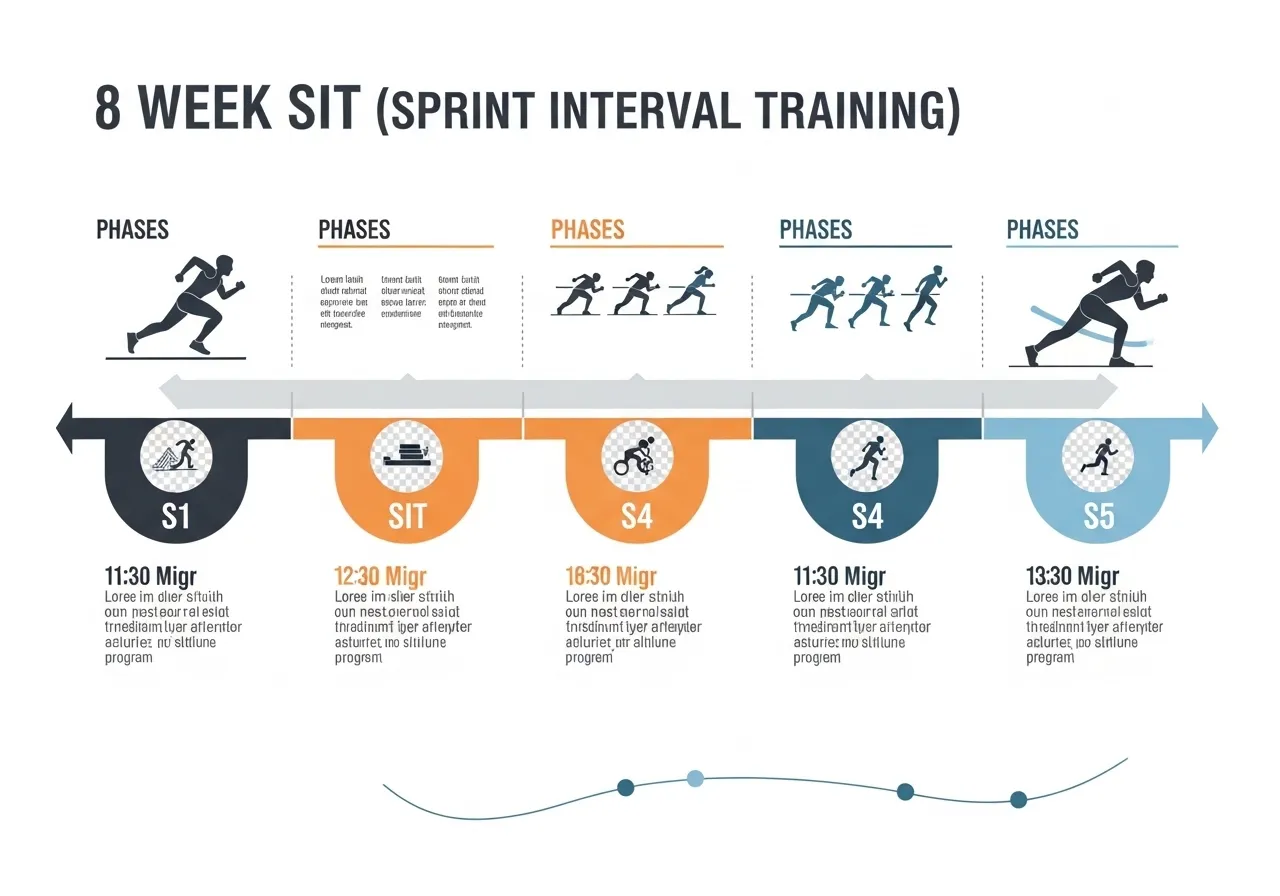
8-Week Progressive Sprint Interval Training Programme
📅 Phase 1: Weeks 1 to 2: Foundation and Introduction
2 sessions per week
Protocol: 6 × 10-second hill sprints or bike sprints, 90-second full rest between efforts
Total sprint time per session: 60 seconds
Warmup: 10 minutes easy cycling or jogging
Focus: technique, complete recovery between efforts, learning the intensity level
The 10-second duration uses the alactic system almost exclusively. This allows genuine maximum effort without the extreme lactate accumulation of longer sprints. It is the appropriate entry point for any trainee new to SIT.
Total sprint time: 80 seconds (10-second protocol) or 80 seconds (20-second protocol)
Assess: can all 8 sprints maintain true maximum effort? If not, keep 90-second rest.
Extending to 20-second sprints begins recruiting the glycolytic system alongside the alactic system. This is where the broader aerobic adaptation stimulus begins to develop.
📅 Phase 3: Weeks 5 to 6: Intensity Progression
2 sessions per week
Protocol A: 4 × 30-second all-out sprints, 3-minute active recovery (light pedalling or walking)
Total sprint time: 2 minutes (Protocol A) or 100 seconds (Protocol B)
Protocol A introduces the 30-second duration that drives the most aerobic adaptation. Protocol B maintains the alactic power quality. Alternating both targets different energy systems across the week.
📅 Phase 4: Weeks 7 to 8: Peak Protocol
2 sessions per week
Session A: 4 to 6 × 30-second all-out sprints, 4-minute active recovery (classic protocol)
Session B: 12 × 10-second sprints, 50-second rest
Week 8: compare 10-second sprint peak power to Phase 1 baseline for progress assessment
The full classic SIT protocol at Session A represents the evidence-based intervention from the McMaster research. Reaching this point after a progressive 6-week build significantly reduces injury risk compared to starting here directly.
How to Combine Sprint Interval Training With Strength and Endurance Work
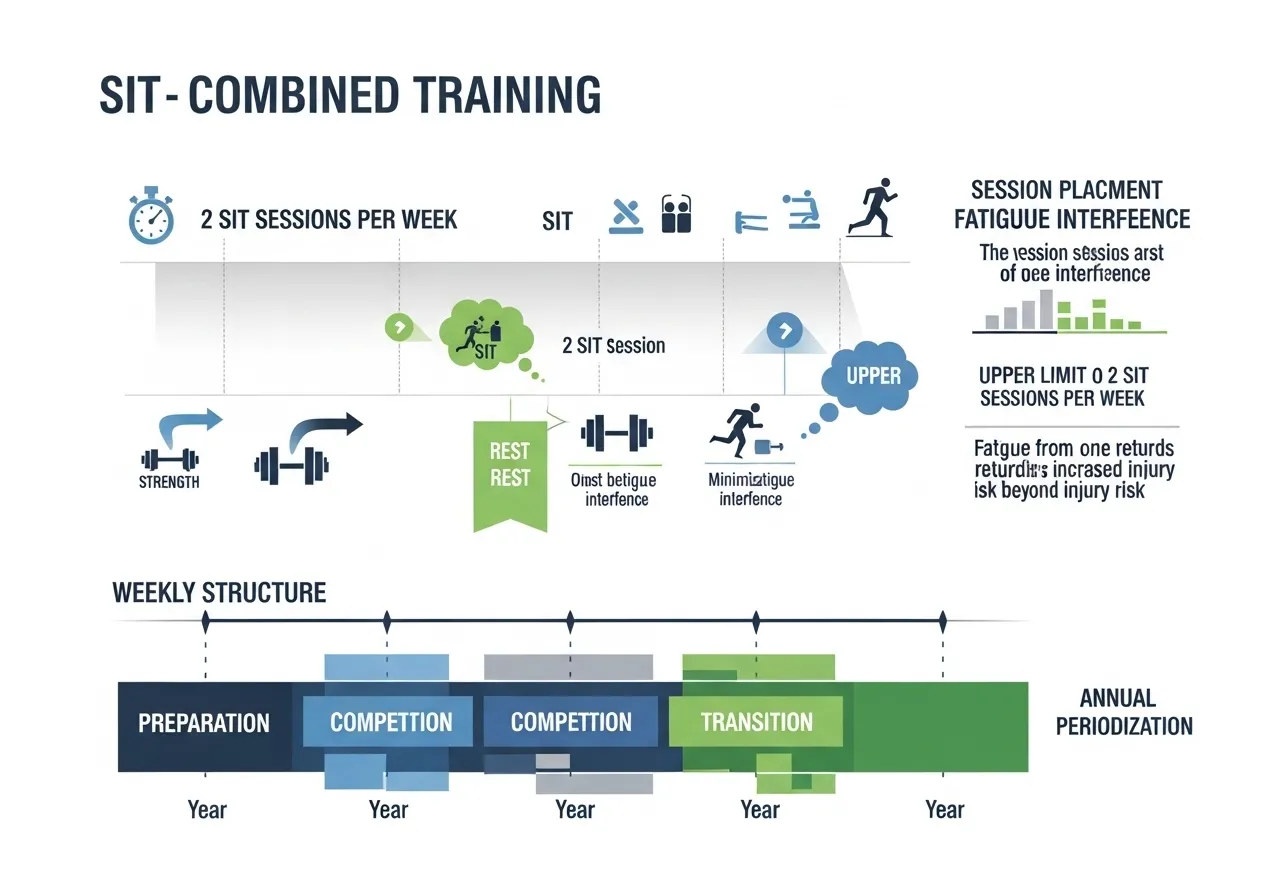
Session Placement: Fatigue Interference
SIT creates significant acute neuromuscular fatigue, particularly from the cycling-based protocols that heavily load the quadriceps and hip extensors. Performing SIT before lower body strength training substantially reduces strength training performance and increases injury risk in both the sprint and strength sessions.
The practical placement rules: SIT on separate days from lower body strength training, or if combined, strength training first and SIT as a finisher at reduced volume. Upper body strength sessions are largely unaffected by preceding bike-based SIT and can be performed on the same day without significant performance compromise.
Weekly Frequency: Why Two Sessions Is the Upper Limit
Most SIT research demonstrating positive adaptations uses two to three sessions per week. Two sessions produce results equivalent to three in most populations. More than three sessions per week produces diminishing returns because the recovery time required between genuine supramaximal sessions is 48 hours minimum.
A practical weekly structure combining SIT with strength training:
Monday: Upper body strength
Tuesday: SIT session (bike or hill sprints)
Wednesday: Lower body strength
Thursday: Zone 2 cardio (30 to 40 minutes)
Friday: Upper body strength
Saturday: SIT session
Sunday: Rest or very easy Zone 2
Periodisation: When to Use SIT Blocks
SIT is most effective when used in concentrated 6 to 8 week blocks with a clear performance objective, followed by a period where the stimulus is reduced and other training qualities are emphasised. Using SIT year-round at constant volume produces adaptation plateaus and accumulated neuromuscular fatigue.
An annual structure: one SIT block in spring (building into summer athletic activities), one block in autumn (maintaining conditioning heading into winter), with Zone 2 and strength training filling the intervening periods. This periodisation approach produces greater long-term cardiovascular development than constant moderate intensity work throughout the year.
Frequently Asked Questions About Sprint Interval Training
How is SIT different from simply running fast?
The critical distinction is intensity relative to maximum capacity. SIT requires supramaximal effort, meaning above 100% of VO2 max, which is only achievable for very short durations of 10 to 30 seconds. This is not “running fast.” It is producing the absolute maximum force the body can generate for as long as possible.
Most trainees who think they are doing sprint intervals are performing HIIT at 80 to 90% of their maximum. This is effective training but produces different adaptations through different mechanisms. True SIT requires the effort level where you genuinely cannot sustain it past 30 seconds.
Does sprint interval training cause muscle loss?
No. The research on SIT consistently shows either muscle mass maintenance or slight gains, not muscle loss. The supramaximal muscular effort required for SIT provides a significant anabolic stimulus, particularly to fast-twitch muscle fibres that endurance training does not adequately develop.
Sprinters are not lean despite their training volume. Sprint-based training develops the fast-twitch hypertrophy that distance running underserves. Trainees who combine SIT with resistance training experience complementary adaptations rather than competing stimuli.
How quickly do SIT adaptations appear?
Measurable VO2 max improvements from SIT appear within two to four weeks of consistent training. The McMaster research showed significant improvements at six weeks, with the trajectory suggesting earlier adaptation in the first two weeks. Peak power improvements, specifically alactic system capacity, appear even faster: within two to three weeks of 10-second sprint training, peak power output typically increases 5 to 10%.
These rapid initial adaptations reflect primarily neural changes, motor unit recruitment efficiency, and PCr resynthesis capacity rather than structural cardiovascular changes. The structural adaptations, mitochondrial density increases and cardiac output improvements, develop over six to twelve weeks of consistent training.
Can sprint interval training replace all other cardio?
No, and attempting to do so misunderstands what each training type develops. SIT develops peak power, supramaximal capacity, and time-efficient aerobic adaptation. It does not develop the sustained moderate-intensity fat oxidation capacity, the mitochondrial density required for long-duration performance, or the aerobic base that makes all other training more effective.
Complete cardiovascular fitness requires all three domains: Zone 2 for aerobic base, threshold training for sustained high-intensity capacity, and SIT for peak power and supramaximal stimulus. SIT is the most time-efficient component of this triad, not the replacement for the other two.
Key Takeaways
Twelve weeks of SIT with 3 minutes of sprint work per week produced identical VO2 peak improvements to 150 minutes of moderate cycling per week in a randomised controlled trial.
A meta-analysis of 13 SIT studies shows a mean effect size of g = 0.63 for VO2 max improvement, with gains of 4.2 to 13.4 percent depending on protocol and baseline fitness.
SIT is supramaximal intensity (above 100% VO2 max). HIIT is submaximal (85 to 95% VO2 max). The distinction matters for protocol design and energy system targeting.
Classic 4 to 6 × 30-second Wingate protocols are not the minimum effective dose. Shorter protocols with fewer sprints produce equivalent health benefits with lower session time and perceived difficulty.
Two sessions per week is the effective frequency. More than three weekly sessions does not produce additional adaptation and accumulates neuromuscular fatigue that impairs both SIT and strength training performance.
⚠️ Health & Fitness DisclaimerThis article is for general educational and informational purposes only.It does not replace professional medical or fitness advice.If you have any pre-existing condition, joint concern, or cardiovascular issue — please consult a qualified healthcare professional before starting or modifying any exercise program. Jump rope training has been used by boxers, athletes,…
⚠️ Health & Fitness DisclaimerThis article is for general educational and informational purposes only and does not replace professional medical or fitness advice.If you have any cardiovascular condition, joint concerns, or are new to vigorous exercise — consult a qualified healthcare professional before starting any HIIT program. High-intensity interval training — HIIT — has moved…
⚠️ Fitness Disclaimer: The information in this article is for general educational purposes only and does not constitute professional fitness or medical advice. Always consult a qualified healthcare professional before starting any new exercise program. ⚠️ Cardiovascular Health Notice: If you have a history of heart disease, high blood pressure, or any cardiovascular condition, obtain…
Fasted cardio — cardiovascular exercise performed after an overnight fast, typically first thing in the morning before eating — is one of the most debated topics in fat loss training. The argument for it is intuitive: low blood glucose and insulin from overnight fasting force the body to oxidise fat for fuel during exercise, producing…
Altitude training is the gold standard endurance performance intervention for decades. The reduced oxygen partial pressure at altitude stimulates erythropoietin release, increases red blood cell mass and haemoglobin, and produces measurable improvements in VO2max and endurance performance when the athlete returns to sea level. It is also expensive, logistically complex, and inaccessible to most athletes…
Most recreational endurance athletes train in the middle. They run or cycle at a pace that feels like a meaningful workout: harder than a casual stroll, not so hard that it becomes a genuine interval session. This moderate intensity zone, roughly 75 to 85% of maximum heart rate, feels productive. It creates obvious cardiovascular stress….