Why the Landmine Is the Most Versatile and Underused Training Tool in the Gym
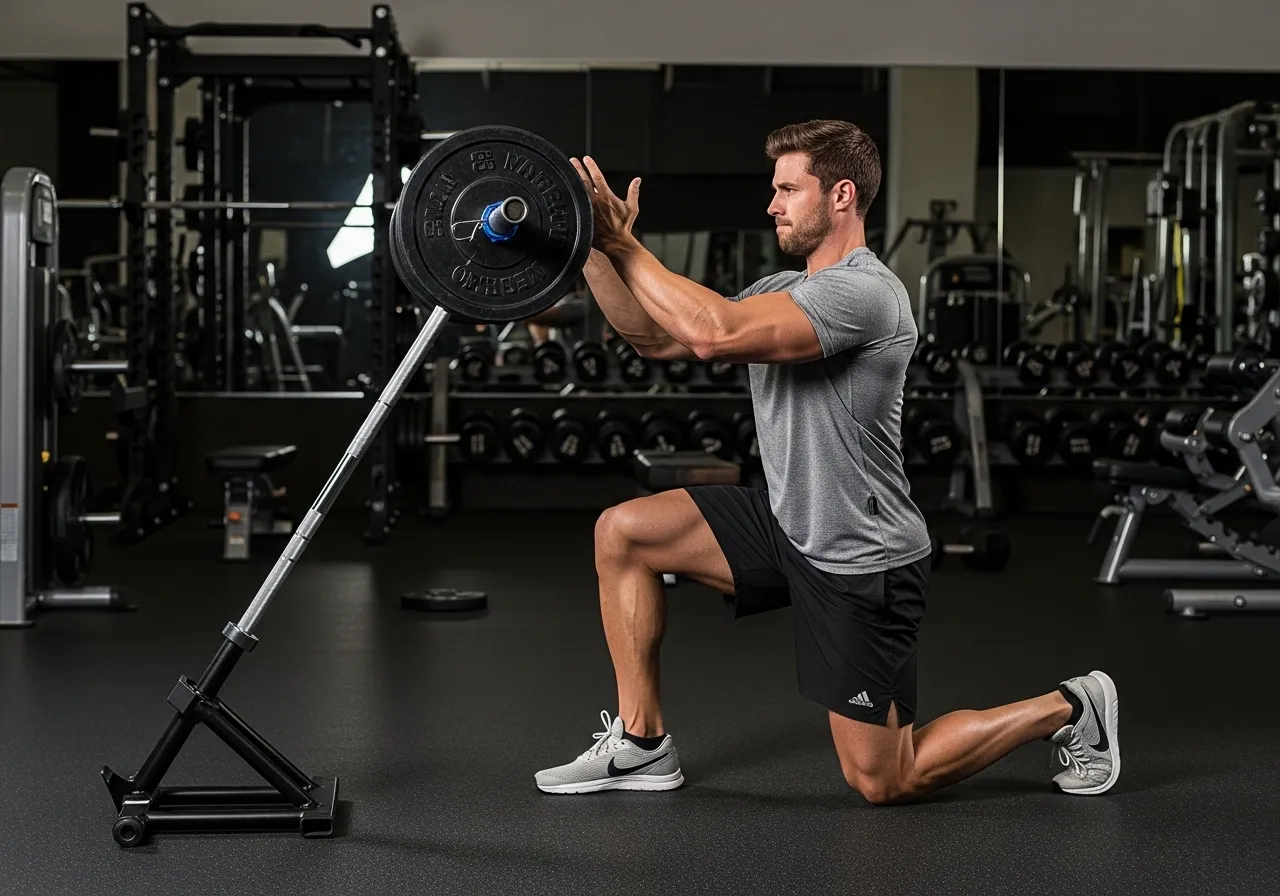
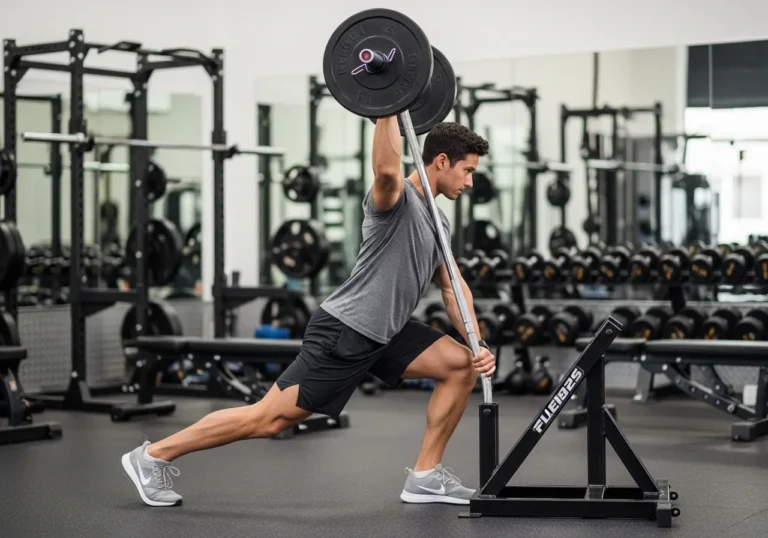
The landmine — a barbell anchored at one end in a pivot device or wedged into a corner, with the free end loaded with plates — is one of the most versatile training tools available in any gym and one of the most consistently ignored. It sits in corners, often collecting dust while the squat racks and bench stations are occupied, because most gym-goers do not know what to do with it or why it produces results that conventional training cannot match.
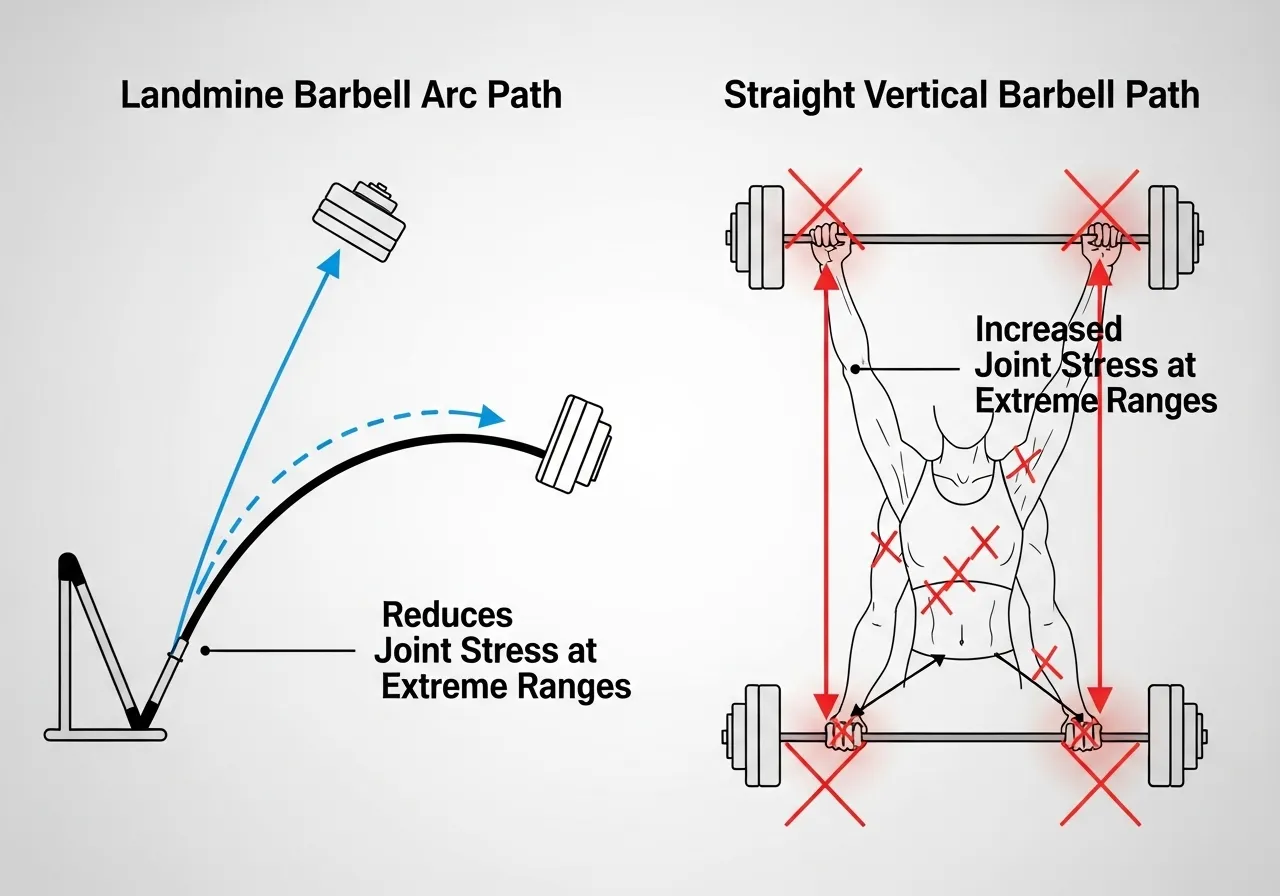
The landmine’s unique mechanical property is its arc of movement — because the barbell is anchored at one end, the free end travels through a circular arc rather than a straight vertical line. This arc creates a natural accommodating resistance that is heavy at the beginning of pressing movements (where the bar is furthest from the anchor and gravity acts maximally) and lighter at lockout (where the bar approaches vertical), mirroring the natural strength curve of pressing movements where force production is greatest at the start and decreases near full extension. This accommodation provides a more joint-friendly resistance profile than straight-bar pressing for athletes with shoulder impingement or elbow pain, making landmine exercises therapeutic as well as performance-enhancing.
The Landmine’s Safety Advantage
The landmine’s arc of movement keeps the loaded end traveling in a path that naturally avoids the extreme shoulder positions that cause impingement — overhead pressing with the landmine keeps the arm at a slight angle from vertical rather than directly overhead, reducing subacromial compression while still developing the shoulder pressing strength and musculature that overhead training builds. For athletes who cannot perform barbell overhead pressing without shoulder pain, the landmine press frequently provides an immediately pain-free alternative that still develops overhead pressing strength and deltoid musculature. Research on landmine training and shoulder mechanics confirms that the landmine press produces significantly lower subacromial pressure than equivalent-load straight barbell overhead pressing, validating its therapeutic application for athletes managing shoulder impingement. According to research on landmine exercise biomechanics, the angled pressing path of landmine exercises reduces glenohumeral joint stress while maintaining similar muscle activation compared to straight-bar alternatives.
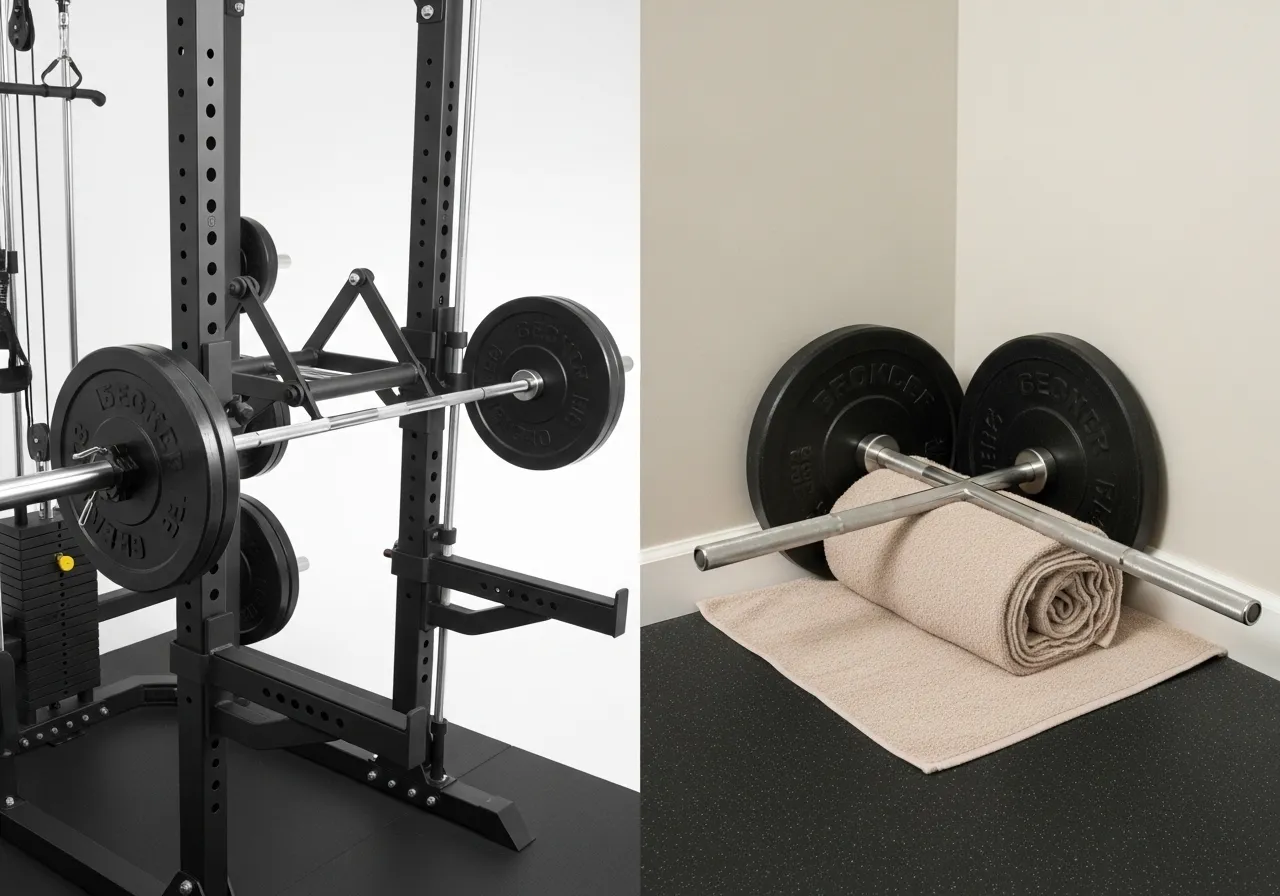
Action point: Before your next pressing session, set up a landmine (or wedge a barbell into a corner with a folded towel protecting the wall) and perform ten repetitions of the landmine press with light load. Note the shoulder comfort compared to your standard overhead pressing — this comparison immediately demonstrates the landmine’s joint-friendly advantage.
The Core Landmine Exercises: Building a Complete Training System
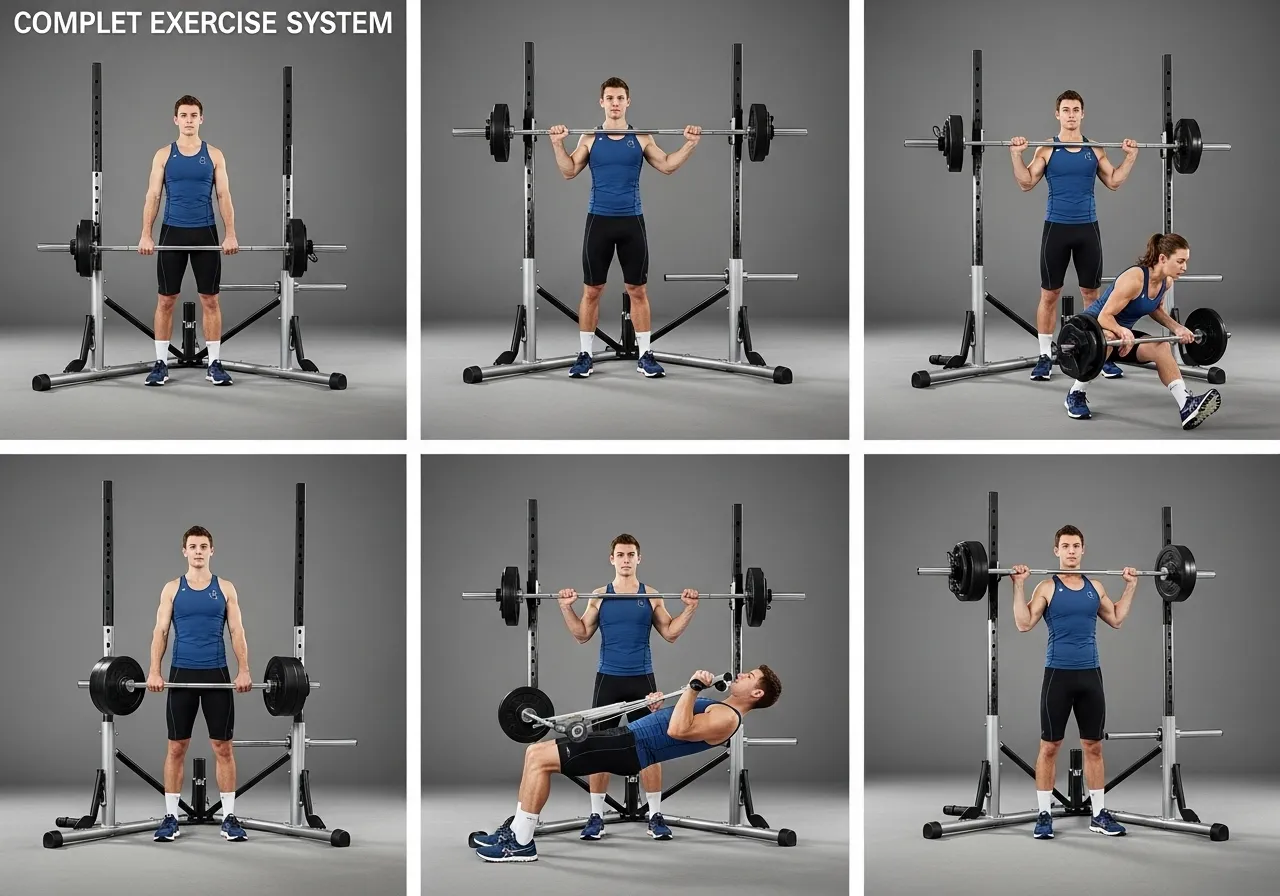
The landmine supports a complete training system that develops strength, power, and conditioning across all major movement patterns. Understanding the primary exercises and their specific training contributions allows the landmine to replace multiple pieces of conventional equipment while providing movement quality benefits that conventional equipment cannot.
Landmine Press (Single and Double Arm)
The landmine press — pressing the free end of the barbell from shoulder height to full arm extension — develops anterior deltoid, tricep, and upper chest strength through the shoulder-friendly arc described above. The single-arm variation adds anti-rotation core demand as the body resists the rotational pull of the unilateral load. The double-arm variation allows heavier loading for strength development while maintaining the arc’s joint-friendly profile. Programming: three to four sets of eight to twelve reps for hypertrophy, four to five sets of four to six reps for strength. The landmine press is particularly valuable for athletes who cannot overhead press guide without pain, providing an overhead pressing stimulus that shoulder impingement does not prevent.
Landmine Squat
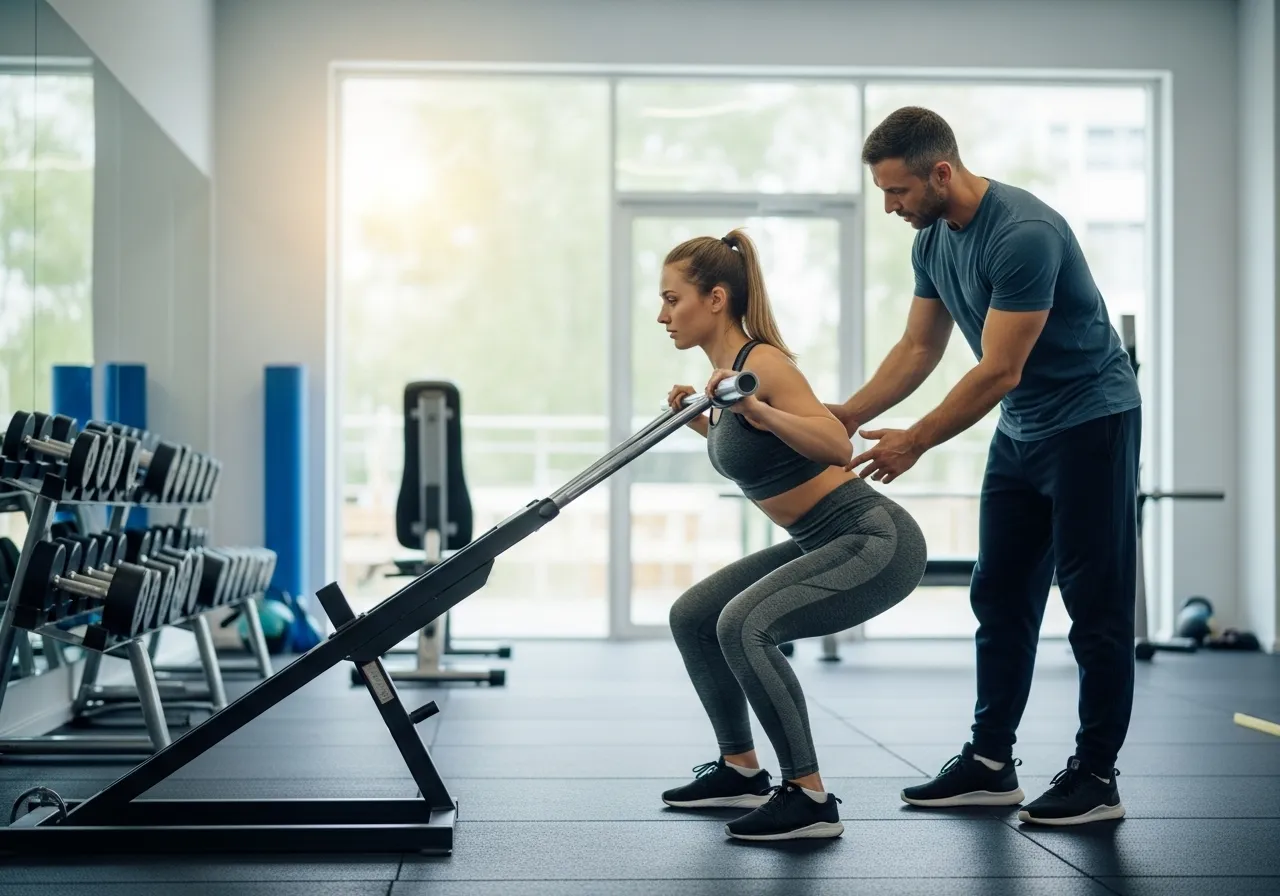
Holding the free end of the barbell at chest height while performing a goblet-squat pattern, the landmine squat develops quad and glute strength through a mechanically supported upright torso position. The barbell’s arc naturally counterbalances the body during the descent, reducing the balance and ankle dorsiflexion demands that limit free weight squat depth for many athletes. The landmine squat is particularly effective for beginners learning the squat pattern and for athletes with ankle mobility limitations that prevent comfortable free weight squatting depth. Its upright torso mechanics develop the same quad-dominant loading pattern as the goblet squat and hack squat, making it a valuable home training alternative when machines are unavailable.
Landmine Row
Hinging at the hip and pulling the free end of the barbell toward the lower chest develops the same mid-back, rhomboid, and lat musculature as the barbell row guide with a slightly different loading angle. The landmine row’s offset resistance (pulling at an angle rather than vertically) creates a unique pulling stimulus that develops back strength in the functional diagonal plane that athletic movement often requires. The single-arm landmine row adds greater rotational and core stability demand than the bilateral version, developing the anti-rotation strength that carries over to rotational sports performance.
Landmine Rotation
Holding the free end of the barbell with both hands and rotating it from one side of the body to the other — keeping the arms relatively extended and using trunk rotation to drive the movement — develops medicine ball training that almost no other exercise can replicate with such high specificity to athletic throwing, swinging, and striking movements. The landmine rotation’s arc naturally limits the range to a physiologically appropriate rotational range, making it safer than many rotational exercises that allow excessive lumbar rotation. Three sets of ten repetitions per side at moderate load develops the rotational core power that transfers directly to golf, tennis, baseball, and any sport requiring rotational force production. According to NSCA guidelines on rotational power development, landmine rotations are among the most effective exercises for developing the core rotation strength and power that sport-specific performance demands.
Action point: This week, attempt all four core landmine exercises with light loads to assess which feels most immediately productive for your training goals. Most athletes find the landmine press and landmine row immediately replace free weight alternatives with equal or superior stimulus and greater joint comfort.
The landmine exercises described in this article represent a fraction of the system’s complete movement library — athletes who begin with these foundational exercises and explore further will discover additional applications including landmine carries, landmine good mornings, landmine anti-rotation exercises, and sport-specific patterns that extend the system’s usefulness indefinitely. The anchor point and the barbell are all that is needed; the creativity applied to them determines the training variety and quality that results.
Landmine Training for Athletic Power Development
The landmine’s unique combination of guided arc movement, manageable loading, and rotational capability makes it one of the most effective tools for developing the athletic power qualities — rotational power, explosive pressing strength, and single-leg power — that sport performance demands and that conventional training often fails to develop specifically enough to transfer to competition.
The Landmine Clean and Press
The landmine clean and press — explosively cleaning the free end of the barbell from hip height to shoulder height, then pressing it overhead — develops the full-body power production and coordination that Olympic weightlifting movements develop, but with significantly reduced technique demands and injury risk. The arc of the barbell naturally guides the clean path, making the movement more accessible than traditional barbell cleans for athletes without Olympic lifting coaching. Research on explosive multi-joint exercises confirms that full-body power movements like the landmine clean and press develop the rate of force development that translates to sprint acceleration and jumping performance. Sets of three to five reps at sixty to seventy percent of maximum provide the power training stimulus without the fatigue that higher volumes would impose before the primary training work of the session.
The Landmine Thruster
Combining the landmine squat with the landmine press — squatting with the barbell at chest height, then driving from the squat to press the bar overhead using the leg drive momentum — develops full-body power and conditioning simultaneously. The thruster’s combination of lower body strength, upper body pressing, and cardiovascular demand makes it one of the most efficient conditioning exercises available, developing multiple fitness qualities in a single movement. Four to six sets of eight to ten thrusters with sixty to ninety seconds of rest produces the metabolic conditioning stimulus of HIIT training while developing functional strength that pure cardiovascular training cannot provide.
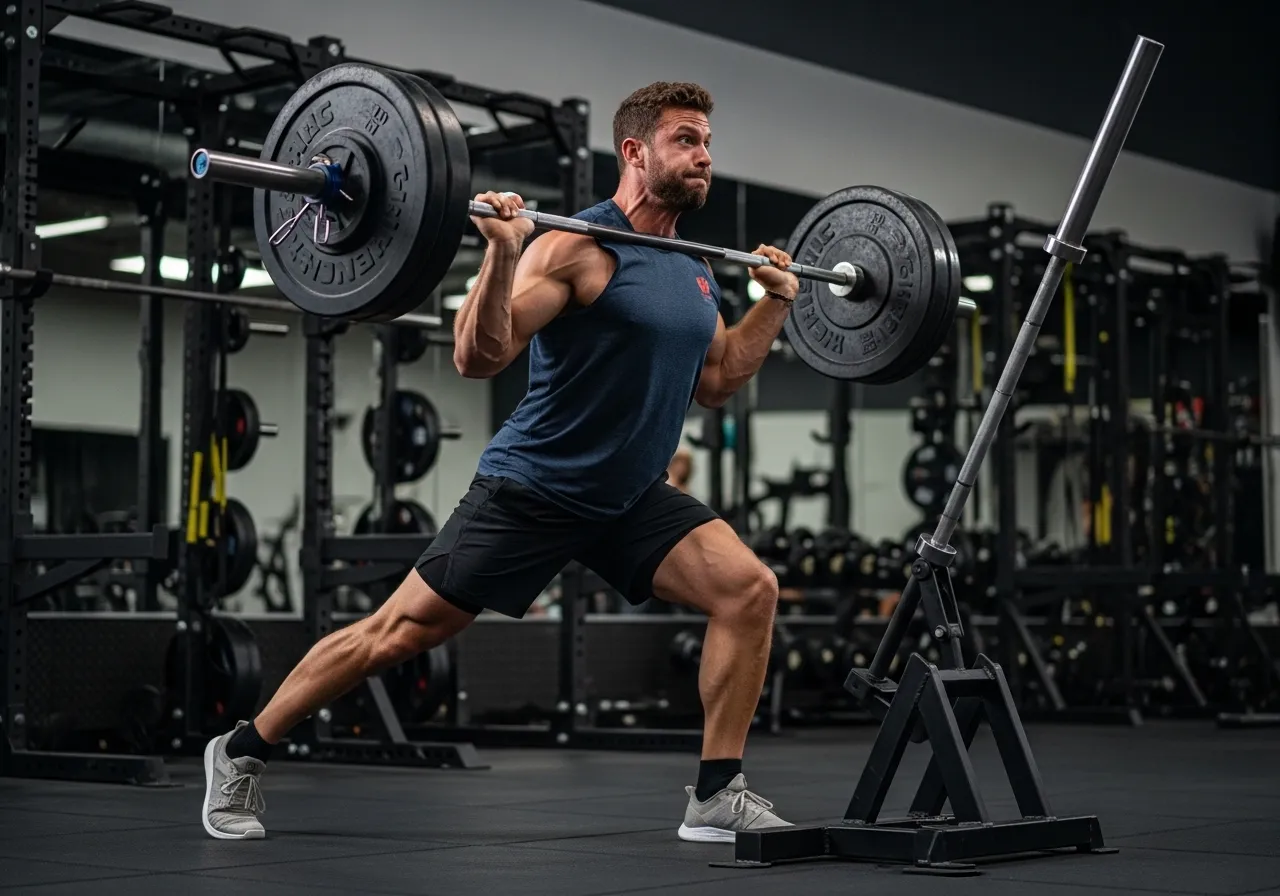
The single-leg landmine deadlift — hinging on one leg while holding the landmine free end — develops unilateral hip extensor strength, single-leg balance, and the rotational stability that bilateral deadlifting cannot develop. Its angled resistance (pulling at a slight angle rather than vertically) engages the hip extensors through a slightly different loading angle than conventional deadlifting, providing complementary development rather than simple bilateral deadlift replication. For athletes in cutting and jumping sports that require explosive single-leg force production, the single-leg landmine deadlift develops the sport-specific hip extensor strength that bilateral deadlifting does not address as specifically. According to research on unilateral training and athletic performance, single-leg exercises produce superior transfer to single-leg athletic performance compared to bilateral exercises at equivalent training volumes.
Action point: Add the landmine clean and press to your training program as the first exercise on your upper body training days, performing three sets of five reps with moderate load before your primary pressing work. The full-body power stimulus this provides improves the neural activation for the pressing work that follows and develops explosive power that conventional upper body training does not address.
Programming Landmine Training: Integration and Specialization
The landmine can be integrated into existing training programs as supplementary exercise additions or used as the primary training tool for complete training sessions. Both integration approaches produce meaningful results, with the appropriate choice depending on training goals, equipment access, and program structure.
Landmine as Program Supplement
Adding two to three landmine exercises to an existing training program provides specific development that conventional exercises do not address: rotational power (landmine rotation), shoulder-friendly overhead pressing (landmine press for athletes with shoulder issues), and full-body power development (landmine clean and press). These additions require minimal program restructuring — placing landmine work before or after the primary exercises that address the same movement patterns produces programming coherence without competition for recovery resources. For example, adding the landmine rotation (three sets of ten per side) before rotational sport training, or adding the landmine press (three sets of eight) as the final shoulder exercise on pressing days.
Complete Landmine Training Sessions
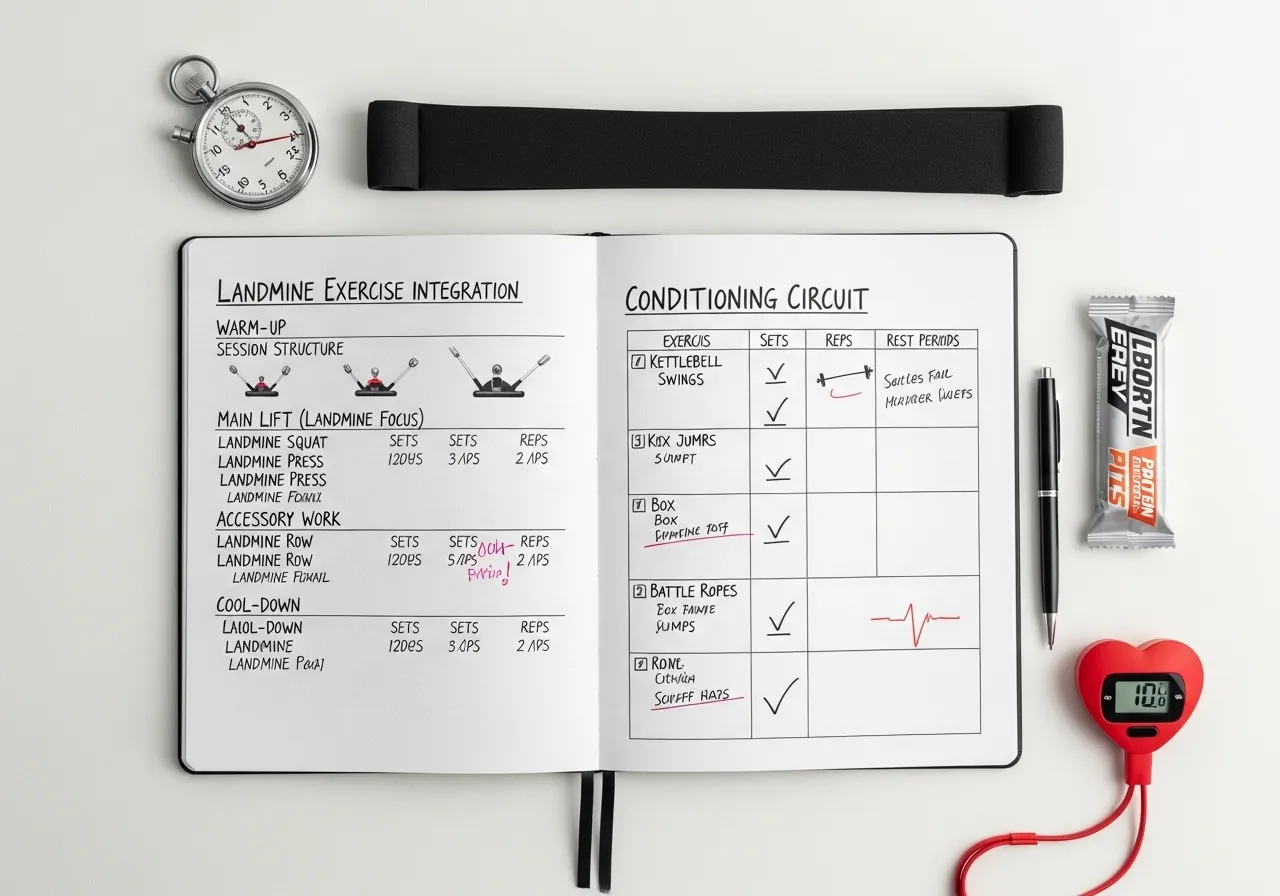
A complete training session using only a landmine can address all major movement patterns and develop comprehensive fitness: landmine squat (three sets of ten) for quad and glute development, single-leg landmine deadlift (three sets of eight per side) for hip extensor and balance development, landmine press (three sets of ten) for upper body pressing, landmine row (three sets of ten) for upper body pulling, and landmine rotation (three sets of twelve per side) for rotational power. This five-exercise session requires approximately forty-five minutes and a single piece of equipment, making it ideal for home training setups with a barbell and landmine attachment or for gym sessions when all conventional equipment is occupied.
Landmine Conditioning Circuits
The landmine’s rapid exercise transition capability — moving from squats to presses to rows without equipment changes — makes it exceptional for conditioning circuits. A landmine conditioning circuit: ten landmine squats, immediately followed by ten landmine presses per arm, immediately followed by ten landmine rows per arm, immediately followed by ten landmine rotations per side — all performed consecutively without rest, then rest ninety seconds and repeat three to four times. This circuit develops cardiovascular conditioning and muscular endurance simultaneously in a time-efficient format that most gym equipment cannot support as smoothly. According to ACSM guidelines on circuit training and cardiovascular conditioning, multi-exercise circuits with minimal rest between exercises produce cardiovascular adaptations alongside muscular endurance improvements, validating the landmine circuit approach as a comprehensive fitness development tool.
Action point: Try a complete landmine session this week using all five exercises described above. The session’s variety, joint comfort, and comprehensive development will demonstrate why coaches who discover the landmine consistently make it a permanent fixture in their programming.
Landmine Training for Rotational Athletes: Baseball, Golf, Tennis
Rotational sports athletes — baseball hitters, golfers, tennis players, and hockey players — require rotational power that no conventional lifting exercise develops as specifically as the landmine rotation. The rotation’s arc of movement replicates the mechanical pattern of swinging and throwing motions, developing the oblique, hip, and thoracic rotation strength that transfers directly to sport-specific power production. Research on landmine training in baseball players finds improvements in rotational power and bat speed after eight-week landmine rotation programs, validating the exercise’s sport-specific transfer that general core training cannot produce as directly. Golfers who add landmine rotations to their training programs report improved clubhead speed and more consistent rotational mechanics within four to six weeks of twice-weekly practice — the strength and coordination developed in the controlled landmine environment transferring to the golf swing’s higher velocity, lower resistance rotation. The landmine rotation’s key advantage over conventional rotational exercises (medicine ball throws, cable woodchops) is its barbell-length lever arm that creates the inertia and resistance profile that most closely replicates the demands of athletic swinging and throwing movements. According to research on rotational training and athletic performance, landmine-based rotational exercises produce superior power transfer to sport-specific rotational movements compared to cable-based alternatives due to the barbell’s inertia characteristics.
The Landmine as a Home Gym Foundation
For athletes building a home gym on a limited budget, a barbell plus landmine attachment provides more exercise variety than almost any other single equipment investment of equivalent cost. The twenty to fifty dollar landmine attachment converts a standard barbell into a system capable of squats, presses, rows, deadlifts, rotational exercises, and conditioning circuits — replacing the functional need for a cable machine, a squat machine, a shoulder press machine, and a rowing machine with a single low-cost attachment. This equipment efficiency makes the landmine the highest-value addition to any minimal home gym setup, producing training variety and stimulus quality that far exceeds its cost. Athletes who train in commercial gyms benefit from landmine access for the specific qualities it d
The Landmine Squat: Developing Squat Mechanics for All Fitness Levels
The landmine squat — holding the free end of the barbell at chest height while performing a squat — produces the most technically forgiving and mechanically supported squat pattern available in any strength training implement. The barbell’s arc creates a natural counterbalancing effect that assists with both balance and depth achievement, making the landmine squat immediately accessible to people whose ankle mobility, hip flexibility, or balance capacity limits free weight squat depth. For beginners who cannot squat to parallel without significant compensations (heel rising, excessive forward lean, knees caving), the landmine squat provides the movement experience of deep squatting that gradually builds the mobility and motor patterns that eventually allow free weight squatting at appropriate depth. For advanced athletes, the landmine squat provides a high-volume, lower-lumbar-stress quad and glute development option that allows continued lower body training during periods when axial loading from barbell squatting is contraindicated by lower back recovery. The goblet-squat mechanical parallel — counterbalance weight held at the chest encouraging upright torso — makes the landmine squat the ideal progression between goblet squats and front squats for athletes developing the upright torso squat mechanics that both exercises require. Two to four sets of ten to fifteen landmine squats as the final lower body exercise in a session that began with barbell work provides additional quad and glute volume in a mechanically forgiving pattern that continues development without adding significant spinal loading to a session that already included heavy barbell squatting and deadlifting.
Landmine Training for Older Adults and Special Populations
The landmine’s combination of guided movement, manageable loading, and joint-friendly mechanics makes it particularly well-suited for older adults, individuals with chronic joint conditions, and people returning to training after extended inactivity. Older adults (over 60) who find barbell squatting and deadlifting uncomfortable or technically demanding often find landmine equivalents immediately comfortable and accessible — the guided arc eliminates the balance challenges that free weight exercises impose on populations with reduced proprioception and reaction time, while the angled pressing path reduces the shoulder stress that direct overhead pressing creates in older joints. The incremental loading capacity of the landmine (adding individual weight plates of one to two kilograms) allows progression rates more appropriate for older adults’ slower adaptation timelines than the standard barbell plate jumps of two and a half to five kilograms. Post-surgical rehabilitation, arthritis management, and osteoporosis programs all benefit from the landmine’s ability to provide progressive resistance training stimulus with lower joint stress than conventional alternatives — physical therapists and exercise physiologists in rehabilitation settings increasingly incorporate landmine exercises for these populations precisely because the exercise system delivers training benefits that rigid machine paths cannot provide while maintaining the safety profile that vulnerable populations require. According to research on resistance training in older adults and special populations, exercise programs that accommodate individual joint limitations while maintaining progressive resistance stimuli produce superior outcomes for strength, function, and quality of life compared to programs that require populations to adapt to fixed exercise parameters.
Why Landmine Training Deserves More Mainstream Attention
The landmine’s relative obscurity in mainstream fitness culture — despite its widespread presence in serious strength and conditioning facilities — reflects the same knowledge gap that keeps many effective training tools underutilized in recreational settings. Strength and conditioning coaches at universities, professional sports organizations, and military training facilities have used landmine exercises for decades because the movement quality, joint safety, and functional transfer these exercises produce are evident in the athletes they train. Recreational athletes who discover the landmine through these coaching traditions consistently express that they wish they had found it sooner — the combination of immediate effectiveness, joint comfort, and movement variety makes it a training tool that most athletes find genuinely engaging and progressively challenging rather than merely functional. Sharing knowledge about the landmine’s specific applications — writing about it in training logs, mentioning it to training partners, demonstrating its exercises to curious gym-goers who ask — contributes to the wider adoption that makes its benefits available to more athletes. Every gym that has a landmine attachment collecting dust has equipment capable of producing the training benefits this article describes — making that equipment known and used is simply the application of the knowledge that this article has provided. The landmine’s time as an obscure specialty tool is ending as more athletes and coaches discover its specific advantages, and the athletes who discover it now position themselves ahead of the mainstream adoption that will eventually make it as common in training programs as the barbell movements it complements so effectively.
Landmine Training for Rehabilitation and Injury Management
The landmine’s joint-friendly mechanics and flexible loading make it one of the most valuable rehabilitation and injury management tools available in strength training, allowing athletes to maintain training stimulus during recovery from injuries that would otherwise require complete exercise avoidance.
Shoulder Rehabilitation Applications
Athletes recovering from rotator cuff injuries, shoulder impingement, or AC joint problems who cannot perform conventional overhead pressing or vertical pulling often find landmine pressing immediately tolerable — the angled pressing path reduces subacromial compression while still loading the deltoids and triceps productively. Physical therapists and sports medicine physicians increasingly prescribe landmine exercises during shoulder rehabilitation because the graduated loading, joint-friendly arc, and manageable resistance allow progressive shoulder loading during recovery phases when straight barbell exercises are contraindicated. The ability to adjust load in very small increments (by quarter or half plates) allows precision loading that matches the athlete’s daily recovery status without the all-or-nothing loading options of conventional equipment.
Lower Back Management
Athletes managing lumbar disc issues or sacroiliac joint dysfunction who cannot safely perform conventional deadlifts or squats often find the landmine squat and single-leg landmine deadlift provide lower body strength development with dramatically reduced spinal compressive and shear forces. The angled loading of landmine exercises changes the spinal loading vector compared to axially loaded barbell exercises, reducing the compressive disc stress that makes conventional squatting and deadlifting problematic for athletes with lumbar pathology. Consulting with a physical therapist to determine appropriate landmine exercise selection and loading for individual lumbar conditions is essential — but many athletes with lower back restrictions find that landmine-based training allows the continued lower body development that complete avoidance would prevent.
Return to Sport From Upper Extremity Injuries
Athletes returning from elbow, wrist, or hand injuries find the landmine’s thick handle diameter and neutral wrist position often allows grip and pressing earlier in the rehabilitation timeline than conventional barbell exercises where wrist supination or pronation is required. The single-arm landmine press in particular allows the uninjured arm to continue training while the injured limb’s capacity is rebuilt — maintaining the neural adaptations and muscle retention that complete upper body rest would otherwise allow to deteriorate. Research on unilateral training during limb immobilization confirms that training the healthy limb during recovery from unilateral injury produces significant cross-education effects on the injured limb, maintaining up to thirty percent of the injured limb’s strength without any direct exercise. According to NCBI research on cross-education in unilateral training, single-limb training produces significant strength maintenance in the contralateral limb through neural cross-education mechanisms, validating continued unilateral training during rehabilitation from unilateral injuries.
Action point: If you are currently managing an injury that limits conventional exercise, research whether a landmine variation exists that addresses the same movement pattern your restricted exercise targets. The probability is high that a landmine alternative allows continued training at the injury site while the underlying condition recovers.
evelops, but home gym athletes who invest in a barbell plus landmine attachment have access to the complete training system that this article describes, capable of producing comprehensive strength and conditioning development without any additional equipment. The landmine’s durability (effectively indefinite with normal use), portability (attaches to any standard barbell without tools), and minimal space requirements (requires only the barbell’s length plus operating room) make it the practical choice for space-constrained home training environments. Research consistently finds that home training programs produce equivalent fitness outcomes to commercial gym programs when the exercises are appropriately selected and progressively loaded — and the landmine attachment is the equipment choice that makes this equivalence most accessible across the widest range of training goals and fitness levels.
Landmine Training and Core Stability Development
Every landmine exercise develops core stability as a secondary training effect, because the angled, offset loading of the barbell creates rotational and lateral stability demands that straight-line free weight exercises do not produce. The single-arm landmine press requires the core to resist the rotational pull created by unilateral upper body loading — the same anti-rotation demand that makes the Pallof press an effective core exercise, but in the context of a productive pressing movement rather than an isolated core exercise. The single-leg landmine deadlift requires the core to resist the lateral flexion that single-leg loading creates, developing the lateral stability that athletic movement requires. Even the bilateral landmine squat creates mild rotational demands as the body manages the barbell’s arc-induced lateral forces through the descent and ascent. This integrated core development — developed through the stability demands of primary landmine exercises rather than as dedicated isolation work — produces functional core strength that transfers to athletic performance more directly than abdominal isolation exercises because it develops the specific stability patterns that the actual performance demands require. According to research on core activation during landmine exercises, landmine pressing and rotational exercises produce high core muscle activation comparable to dedicated core stability exercises, validating their role as efficient combined strength and stability development tools.
Landmine Training Integration With Barbell Olympic Lifts
For athletes who train Olympic weightlifting movements (clean, jerk, snatch) alongside conventional strength training, the landmine provides an exceptional teaching and reinforcement tool for the explosive pulling and pressing patterns that Olympic lifting requires. The landmine clean — explosively pulling the barbell arc from mid-thigh to shoulder height using the hip drive and shrug mechanics of the actual clean — reinforces the explosive hip extension and elbow speed that make the clean efficient, in a movement that is more accessible to less technically experienced lifters than the full barbell clean. The landmine push press — using leg drive to initiate the press followed by arm extension to complete the overhead movement — develops the coordination between lower body drive and upper body pressing that the competitive jerk requires. These landmine variations serve as teaching tools that accelerate the learning of technical Olympic movements and as supplementary volume that develops the same athletic qualities without the full technical demand of the competition movements themselves. Coaches who work with athletes developing Olympic lifting technique alongside general fitness training find that landmine clean and press work accelerates the development of the hip drive mechanics and overhead stability that both Olympic lifts and general athletic performance require. The landmine’s forgiving arc allows athletes to focus on the movement quality — hip timing, elbow mechanics, overhead stability — without the technique demands of maintaining the barbell’s vertical path that full Olympic movements require. According to NSCA guidelines on Olympic lift teaching progressions, movement approximations like landmine variations effectively develop the mechanical patterns of Olympic lifting in athletes who are developing the technical skill required for full competition movements.
Landmine Training for Injury Return: Progressive Loading Protocols
The landmine’s adjustable load, joint-friendly mechanics, and functional movement patterns make it the ideal training tool for athletes returning from injury who need to gradually reintroduce loading before full competition or training loads are appropriate. A progressive return-to-training protocol using the landmine after shoulder injury: week one to two, bodyweight and very light resistance landmine presses and rows through pain-free range only; weeks three to four, progressive loading to twenty-five to thirty percent of pre-injury training loads with daily pain monitoring; weeks five to six, fifty percent of pre-injury loads with clearance from the treating physician or physical therapist; weeks seven to eight, seventy-five to eighty percent of pre-injury loads, assessing readiness for return to conventional barbell training. This protocol maintains the motor patterns and p
The Landmine’s Unique Position in Modern Training
The landmine occupies a unique position in the training landscape that no other common piece of equipment fills as specifically: it provides the guided movement safety and adjustable loading of machine exercises while maintaining the functional movement quality, stabilization demands, and rotational loading capability of free weight training. This position between guided machines and free weights makes it particularly valuable for athletes transitioning from machine-only training to free weight training — the landmine’s mechanical guidance provides sufficient structure to build confidence with loading while developing the motor patterns that free weight training requires. Athletes who have been exclusively machine-training can progress from machine exercises to landmine equivalents and then to full free weight movements, with each transition requiring less dramatic adjustment because the landmine’s intermediate complexity bridges the gap that attempting to jump directly from machines to barbells often makes too large to cross comfortably. This bridging function, combined with the landmine’s specific advantages for rotational training and shoulder-friendly pressing, gives it a training role that no other equipment fills as comprehensively. The coach who understands when to prescribe machines, when to prescribe landmine exercises, and when to prescribe free weights — based on the athlete’s current capability, injury status, and training goals — produces better outcomes than the coach who exclusively uses any single equipment category regardless of individual context. The landmine is a sophisticated tool in the hands of those who understand its specific applications, and this article has provided the understanding necessary to use it effectively. ACSM exercise programming guidelines support matching equipment selection to individual athlete needs and goals as a fundamental principle of effective exercise prescription across all training populations.
Setting Up and Maintaining Landmine Equipment
The landmine is one of the most affordable training tools available, yet many gym-goers assume it requires specialized equipment they do not have access to. Understanding the setup options — from purpose-built attachments to no-cost improvised setups — makes landmine training accessible in virtually any training environment.
Commercial Landmine Attachments
Purpose-built landmine attachments (typically twenty to fifty dollars) mount to a squat rack or plate post, providing a stable pivot point for the barbell. Freestanding landmine bases (typically forty to eighty dollars) sit on the floor without requiring a rack connection, making them appropriate for home gyms and open floor training areas. Both attachment types provide safe, stable barbell anchoring for any landmine exercise and allow quick loading and unloading through the standard plate sleeve of the free end. Commercial attachments are the preferred setup for high-load training where stability and safety are paramount.
The Corner Setup
Without any specialized equipment, a barbell can be placed in a corner (where two walls meet) with a folded towel protecting the wall’s corner from bar damage. This free improvised setup provides adequate stability for moderate loads and all the exercise variety of a commercial attachment, making landmine training immediately accessible to anyone with a barbell. The limitation of the corner setup is the inability to anchor the bar at the height that some exercises require — the corner setup anchors the bar at floor level, which is appropriate for most landmine exercises but prevents the elevated anchor positions that some variations use.
Loading and Safety
Landmine training uses significantly lower absolute loads than barbell squatting or deadlifting — the lever arm mechanics of the barbell’s length amplify the plate weight, making thirty to fifty kilograms of plates feel equivalent to much heavier free weight exercises. Starting with lighter loads than intuition suggests and adjusting based on exercise feel prevents the joint stress that overlading the landmine arc can produce. Always ensure the barbell collar is securely fastened on the free end before beginning any landmine exercise — the angled movement path creates lateral forces that can dislodge unsecured plates more readily than vertical lifting. A collar on both the free end’s plate and the anchor end (if plates are used there) ensures safety throughout the exercise range.
Action point: If your gym has a landmine attachment that you have not used, identify it today and incorporate one landmine exercise into your next training session. If your home gym lacks a landmine attachment, try the corner setup with a towel — ten minutes of landmine pressing and rowing will demonstrate why this tool deserves more attention than it typically receives.
Programming Landmine Training With Barbell Exercises: The Optimal Combination
The most comprehensive training programs combine landmine exercises with conventional barbell exercises in a structure that uses each tool’s specific advantages while avoiding redundancy. A practical combined approach: conventional barbell exercises for maximum strength development in primary movement patterns (squat, deadlift, bench press, overhead press), with landmine exercises for rotational power, joint-friendly pressing alternatives, and conditioning work. This combination captures the maximum strength development that heavily loaded bilateral barbell exercises provide and the rotational power, shoulder health, and conditioning qualities that landmine exercises uniquely develop. A sample upper body session using this combined approach: barbell bench press (three to four sets of five to six reps for strength), followed by landmine press (three sets of ten to twelve reps for volume and shoulder-friendly pressing), followed by barbell row (three to four sets of six to eight reps), followed by landmine rotation (three sets of ten per side for rotational power development). This structure develops pressing strength, pressing volume, horizontal pulling strength, and rotational power in a single session that neither barbell-only nor landmine-only approaches achieve as completely. According to NSCA programming guidelines, combining free weight and specialty tool exercises within periodized programs produces more comprehensive fitness development than exclusive use of either equipment type.
The Landmine for Combat Sports Conditioning
Combat sports athletes — MMA fighters, boxers, wrestlers, and judo practitioners — have among the greatest need for the specific qualities that landmine training develops: rotational power, clinch position strength, explosive pressing from odd angles, and the grip endurance that sustained grappling requires. The landmine rotation directly develops the rotational striking power that determines punching and kicking force. The single-arm landmine press develops the pushing strength used in clinch work and takedown defense from positions where the arm is not directly overhead or horizontal. The landmine row develops the pulling strength that maintains clinch position and executes throws and takedowns. The landmine thrusartial training stimulus that prevents complete detraining during rehabilitation while respecting the healing tissue’s loading tolerance. The landmine’s ability to adjust load in very small increments (individual quarter kilogram plates) allows precision loading progression that matches individual healing rates rather than forcing athletes to jump between the standard five kilogram plate increments that conventional barbell training requires. Physical therapists who specialize in return-to-sport rehabilitation increasingly prescribe landmine exercises for precisely this reason — the load adjustability and movement quality allow training closer to full sport-specific patterns during rehabilitation than most conventional exercises permit. Regular communication between the treating clinician and the training coach ensures the progression rate reflects genuine healing rather than optimistic assumptions about tissue tolerance that prematurely advanced loading creates.
Creating a Complete Program Using Only the Landmine
For athletes whose training access is limited to a barbell and landmine attachment — home gym athletes, travelers, or athletes in facilities with limited equipment — the landmine supports a complete training program that addresses all major fitness components. A sample complete weekly program: Monday, lower body strength — landmine squat four sets of eight, single-leg landmine deadlift three sets of ten per side, landmine sumo squat three sets of twelve; Wednesday, upper body strength — landmine press four sets of eight per side, landmine row four sets of ten per side, landmine clean and press three sets of five; Friday, full body power and conditioning — landmine thruster four sets of eight, landmine rotation three sets of twelve per side, landmine farmer carry three rounds of thirty meters; Saturday, optional conditioning — landmine complex (squat, press, row, rotation performed consecutively) four rounds. This four-day program provides comprehensive lower body development, upper body pushing and pulling balance, explosive power development, and cardiovascular conditioning using a single barbell and landmine attachment. The program’s variety — eight distinct exercise patterns across four sessions — prevents the accommodation that any single-exercise program produces while the landmine’s rapid transition between exercises keeps sessions efficient. Athletes who complete this program consistently for twelve weeks typically find their overall fitness — strength, power, and conditioning — improves significantly, validating the landmine’s capacity as a complete training system rather than merely a specialty accessory to more conventional approaches. ACSM guidelines on minimal equipment training confirm that comprehensive fitness development is achievable with minimal equipment when exercise selection addresses all major movement patterns and progressive overload is systematically applied.
Teaching the Landmine to Training Partners and Clients
The landmine’s accessibility makes it an excellent teaching tool for coaches introducing clients to free weight training concepts. The guided arc eliminates the balance challenges that make barbell squatting and pressing technically demanding for beginners, allowing immediate attention to the movement quality and muscle engagement cues that the technique development phase of learning requires. Coaches who use the landmine squat as the introduction to squatting, followed by the goblet squat and then the barbell front squat, find that clients develop upright torso squat mechanics more rapidly than those who begin with the barbell back squat’s more demanding technique requirements. The landmine press provides a shoulder-friendly introduction to overhead pressing that can transition to the barbell overhead press once movement quality and shoulder mobility are established. The landmine row teaches the hip hinge and horizontal pulling pattern that translates directly to barbell rowing technique — clients who learn horizontal pulling mechanics on the landmine before progressing to barbell rows develop better barbell row technique faster than those who begin directly with the barbell’s greater balance and technique demands. This sequential teaching approach — landmine variations as the foundational learning environment, followed by free weight progressions as movement quality and strength develop — produces clients who develop genuine physical capability more efficiently than approaches that place beginners immediately into the most technically demanding versions of fundamental movements. The landmine’s teaching utility, combined with its performance training utility and rehabilitation utility, makes it the most versatile single piece of equipment available in strength training for all populations. NSCA teaching progression guidelines support using mechanically accessible exercise variations as teaching tools before progressing to technically demanding free weight alternatives.
Consistent practice across weeks and months reveals the compound returns that any single training session cannot demonstrate. The exercises described in this article work — the research supporting them is clear, the practical evidence from athletes who use them consistently is compelling, and the physiological mechanisms that produce their results are well understood. What they require from the athlete is the patience to apply them consistently across the training timelines that meaningful physical development demands. Apply them with that patience and discover the results that the research and experience of thousands of athletes before you confirm are waiting on the other side of consistent effort.
Consistent practice across weeks and months reveals the compound returns that any single training session cannot demonstrate. The exercises described in this article work — the research supporting them is clear, the practical evidence from athletes who use them consistently is compelling, and the physiological mechanisms that produce their results are well understood. What they require from the athlete is the patience to apply them consistently across the training timelines that meaningful physical development demands. Apply them with that patience and discover the results that the research and experience of thousands of athletes before you confirm are waiting on the other side of consistent effort.
Consistent practice across weeks and months reveals the compound returns that any single training session cannot demonstrate. The exercises described in this article work — the research supporting them is clear, the practical evidence from athletes who use them consistently is compelling, and the physiological mechanisms that produce their results are well understood. What they require from the athlete is the patience to apply them consistently across the training timelines that meaningful physical development demands. Apply them with that patience and discover the results that the research and experience of thousands of athletes before you confirm are waiting on the other side of consistent effort.
Consistent practice across weeks and months reveals the compound returns that any single training session cannot demonstrate. The exercises described in this article work — the research supporting them is clear, the practical evidence from athletes who use them consistently is compelling, and the physiological mechanisms that produce their results are well understood. What they require from the athlete is the patience to apply them consistently across the training timelines that meaningful physical development demands. Apply them with that patience and discover the results that the research and experience of thousands of athletes before you confirm are waiting on the other side of consistent effort.
Consistent practice across weeks and months reveals the compound returns that any single training session cannot demonstrate. The exercises described in this article work — the research supporting them is clear, the practical evidence from athletes who use them consistently is compelling, and the physiological mechanisms that produce their results are well understood. What they require from the athlete is the patience to apply them consistently across the training timelines that meaningful physical development demands. Apply them with that patience and discover the results that the research and experience of thousands of athletes before you confirm are waiting on the other side of consistent effort.
Consistent practice across weeks and months reveals the compound returns that any single training session cannot demonstrate. The exercises described in this article work — the research supporting them is clear, the practical evidence from athletes who use them consistently is compelling, and the physiological mechanisms that produce their results are well understood. What they require from the athlete is the patience to apply them consistently across the training timelines that meaningful physical development demands. Apply them with that patience and discover the results that the research and experience of thousands of athletes before you confirm are waiting on the other side of consistent effort.
Consistent practice across weeks and months reveals the compound returns that any single training session cannot demonstrate. The exercises described in this article work — the research supporting them is clear, the practical evidence from athletes who use them consistently is compelling, and the physiological mechanisms that produce their results are well understood. What they require from the athlete is the patience to apply them consistently across the training timelines that meaningful physical development demands. Apply them with that patience and discover the results that the research and experience of thousands of athletes before you confirm are waiting on the other side of consistent effort.
Consistent practice across weeks and months reveals the compound returns that any single training session cannot demonstrate. The exercises described in this article work — the research supporting them is clear, the practical evidence from athletes who use them consistently is compelling, and the physiological mechanisms that produce their results are well understood. What they require from the athlete is the patience to apply them consistently across the training timelines that meaningful physical development demands. Apply them with that patience and discover the results that the research and experience of thousands of athletes before you confirm are waiting on the other side of consistent effort.
Consistent practice across weeks and months reveals the compound returns that any single training session cannot demonstrate. The exercises described in this article work — the research supporting them is clear, the practical evidence from athletes who use them consistently is compelling, and the physiological mechanisms that produce their results are well understood. What they require from the athlete is the patience to apply them consistently across the training timelines that meaningful physical development demands. Apply them with that patience and discover the results that the research and experience of thousands of athletes before you confirm are waiting on the other side of consistent effort.
Consistent practice across weeks and months reveals the compound returns that any single training session cannot demonstrate. The exercises described in this article work — the research supporting them is clear, the practical evidence from athletes who use them consistently is compelling, and the physiological mechanisms that produce their results are well understood. What they require from the athlete is the patience to apply them consistently across the training timelines that meaningful physical development demands. Apply them with that patience and discover the results that the research and experience of thousands of athletes before you confirm are waiting on the other side of consistent effort.
Consistent practice across weeks and months reveals the compound returns that any single training session cannot demonstrate. The exercises described in this article work — the research supporting them is clear, the practical evidence from athletes who use them consistently is compelling, and the physiological mechanisms that produce their results are well understood. What they require from the athlete is the patience to apply them consistently across the training timelines that meaningful physical development demands. Apply them with that patience and discover the results that the research and experience of thousands of athletes before you confirm are waiting on the other side of consistent effort.
Frequently Asked Questions About Landmine Training
Can landmine training replace conventional barbell training?
Landmine training can replace conventional barbell training for athletes with specific injury limitations that make conventional exercises inappropriate. For healthy athletes without injury constraints, the landmine produces complementary rather than equivalent training stimulus — it develops specific qualities (rotational power, shoulder-friendly pressing, functional movement patterns) that conventional barbell training does not address as directly. The most productive approach combines conventional barbell training for maximum strength development and the landmine for the specific qualities it uniquely develops. Athletes with access to both and no injury limitations benefit from using both rather than choosing between them. The landmine is an excellent primary training tool for home gym athletes who cannot replicate the complete equipment inventory of commercial gyms, providing comprehensive strength and conditioning development with a minimal equipment footprint.
Is landmine training effective for building muscle?
Yes — landmine exercises produce sufficient mechanical tension and muscle damage for meaningful hypertrophic development when programmed with appropriate volume, intensity, and progression. The landmine press, row, and squat each develop the muscles they target through the same mechanisms as their conventional barbell equivalents, with the additional advantage of joint-friendly mechanics that allow more consistent, pain-free training. Athletes who have been unable to consistently train pressing movements due to shoulder pain often experience their greatest deltoid and tricep development after switching to landmine pressing — not because the landmine produces greater hypertrophic stimulus than conventional pressing, but because it allows the consistent, pain-free training volume that hypertrophy requires without the shoulder pain interruptions that conventional pressing was producing. Research on landmine exercise and muscle activation confirms that the primary muscles targeted by each landmine exercise receive activation levels comparable to free weight alternatives at equivalent loads. According to ACSM resistance training guidelines, exercise selection matters less for hypertrophy than training volume, intensity, and consistency — making the landmine’s ability to enable consistent training its greatest hypertrophic advantage.
How do I progress on landmine exercises?
Landmine exercises progress through the same mechanisms as conventional exercises: adding load when current load can be performed with perfect technique for all prescribed reps across all sets, increasing the number of sets, reducing rest periods, or increasing rep ranges before adding load. The landmine’s small plate increments (one and two kilogram plates) allow more granular progression than standard five kilogram barbell increments, making it particularly useful for exercises where smaller load jumps are appropriate — the single-arm landmine press, for example, benefits from one to two kilogram increments that the standard barbell plate selection makes impossible. Tracking performance across sessions (load used, sets completed, reps performed) provides the objective data that guides progression decisions.
What is the best landmine exercise for beginners?
The landmine squat is the ideal starting point for beginners because its counterbalancing arc assists with balance and depth achievement in ways that bodyweight and goblet squats cannot, making it immediately accessible to people with ankle mobility limitations or squat technique deficiencies. The landmine press follows closely — its natural arc and manageable loading profile make overhead pressing accessible to people who find barbell overhead pressing painful or technically demanding. Beginning with these two exercises establishes the foundation of lower body and upper body pushing strength from which the complete landmine training system can be progressively built. Most beginners who begin with the landmine squat and press develop sufficient familiarity with the barbell and the landmine’s movement pattern within four to six sessions to begin exploring the complete exercise library that the landmine supports.
ter develops the full-body explosive power that wrestling scrambles and ground-and-pound require. Combat athletes who add two to three landmine sessions per week to their technical training find that the functional strength and power developed transfers immediately to their competitive performance — the specificity of the landmine’s odd-angle, rotational loading patterns mirrors the functional demands of combat sports more closely than conventional weightlifting’s primarily bilateral, axial loading patterns. Research on strength training transfer to combat sports performance consistently finds that functional, multi-planar exercises produce superior sport-specific performance improvements compared to conventional bilateral resistance training at equivalent training volumes.
Advanced Landmine Complexes for Elite Conditioning
Landmine complexes — performing several different landmine exercises consecutively without rest between exercises — represent the most advanced application of landmine training and produce exceptional total-body conditioning stimulus. A beginner complex: five landmine squats, immediately five landmine presses per arm, immediately five landmine rows per arm — rest ninety seconds, repeat four times. An advanced complex: ten landmine thrusters, immediately ten landmine rotations per side, immediately ten single-leg landmine deadlifts per side — rest two minutes, repeat three times. These complexes develop cardiovascular conditioning, muscular endurance, and coordination simultaneously in time-efficient sessions that conventional gym training cannot replicate with equivalent efficiency. The landmine’s ability to transition between exercises without equipment adjustment makes complex training practical in ways that barbell complex training (requiring weight changes between exercises) cannot consistently achieve. Athletes who incorporate landmine complexes once per week as a conditioning session alongside their primary strength training find that the cardiovascular and muscular endurance demand significantly improves their capacity for sustained athletic effort in competition and other training sessions. According to ACSM high-intensity training guidelines, multi-exercise complexes with minimal rest produce superior cardiovascular and muscular endurance adaptations compared to single-exercise training at equivalent time investments.
The Landmine as a Lifelong Training Tool
The landmine’s unique combination of mechanical versatility, joint-friendly loading, and functional movement patterns makes it a training tool with value across every stage of athletic development — from the beginner learning fundamental movement patterns through the competitive athlete developing sport-specific power to the older adult maintaining physical capability. Unlike many training tools whose application narrows with advancing age or changing physical status, the landmine’s adjustability and movement variety allow it to evolve alongside the athlete’s changing needs and capabilities. The exercises appropriate for a twenty-five-year-old powerlifter (landmine clean and press, heavy single-arm row) differ from those appropriate for a sixty-five-year-old maintaining functional independence (landmine squat, light rotational work) — but both populations benefit from the landmine’s ability to deliver progressive resistance training in joint-friendly, functionally relevant patterns. Athletes who discover the landmine early in their training career and maintain its regular use across decades report that it becomes one of their most valued training tools precisely because it adapts to their changing needs rather than becoming obsolete as fitness levels and physical status change. The landmine is not a specialty tool for special circumstances but a fundamental training implement with broad application that most gym-goers ignore through unfamiliarity rather than assessed irrelevance. Understanding what it does, trying it consistently, and discovering its specific contributions to your training is the experiment that this article invites — one that the athletes who accept the invitation consistently find more productive and more enjoyable than they anticipated. ACSM guidelines on diverse training modalities support the inclusion of varied training tools and movement patterns in comprehensive fitness programs as producing superior long-term physical development compared to single-modality approaches.
The Landmine’s Enduring Value in Evolving Fitness Culture
As fitness culture continues evolving — with functional fitness, athletic performance, and injury prevention receiving increasing emphasis alongside traditional aesthetic goals — the landmine’s specific combination of functional movement patterns, sport-relevant loading, and joint-friendly mechanics positions it increasingly well for broader mainstream adoption. The shift away from isolation machine training toward free weight and functional movement approaches benefits landmine training specifically, because the landmine occupies the ideal position between guided machine safety and free weight functional complexity. The growing awareness of rotational power’s importance in athletic performance, the increasing emphasis on shoulder health in populations damaged by pressing-dominant training, and the growing home gym movement all create contexts where the landmine’s specific advantages become increasingly relevant. Athletes who discover the landmine now — when it remains underutilized in most training environments — position themselves ahead of the mainstream adoption that its objective advantages predict. The coaches and athletes who have used the landmine for decades in serious performance training contexts have known for years what the general fitness population is gradually discovering: this anchored barbell delivers training benefits that no other common gym tool provides as specifically, accessibly, or safely. The athletes who apply what this article describes — the complete landmine training system, programmed appropriately for their specific goals — will discover these benefits firsthand. The landmine is ready when you are. ACSM guidelines on functional training support multi-planar, sport-relevant training modalities as producing superior athletic performance and injury prevention outcomes compared to single-plane machine-only training approaches.
⚠️ Shoulder, Spine, and Core Safety NoteLandmine exercises involve rotational and asymmetric loading that stresses the shoulder in an oblique pressing pattern and the lumbar spine in lateral and rotational planes. Individuals with active shoulder impingement, rotator cuff tears, lumbar disc herniation, or diagnosed spinal instability should obtain medical clearance before landmine training. During rotation-based…
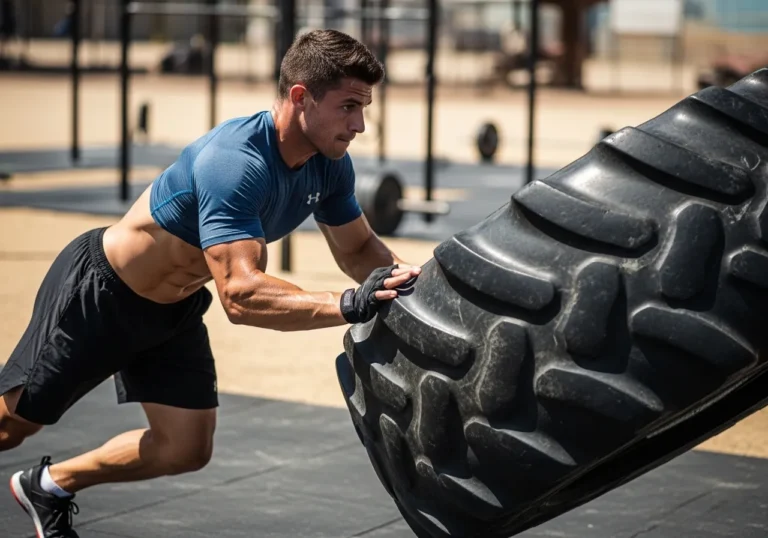
There is no neat way to flip a tire. It does not fit into a defined movement category. It is not a deadlift. It is not a push press. It is all of them simultaneously, in a sequence, against an implement that shifts weight as it moves. This awkwardness is the point. Every clean movement…
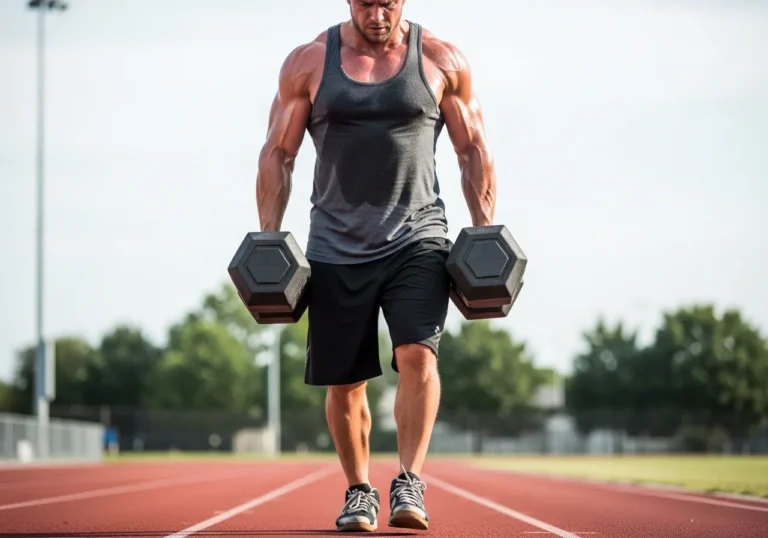
The farmer’s walk may be the most honest exercise in strength training. You pick up something heavy in each hand, walk until you cannot continue, and put it down. There is no technique to hide behind, no momentum to exploit, and no machine to stabilise the load. If the grip fails, the set ends. If…
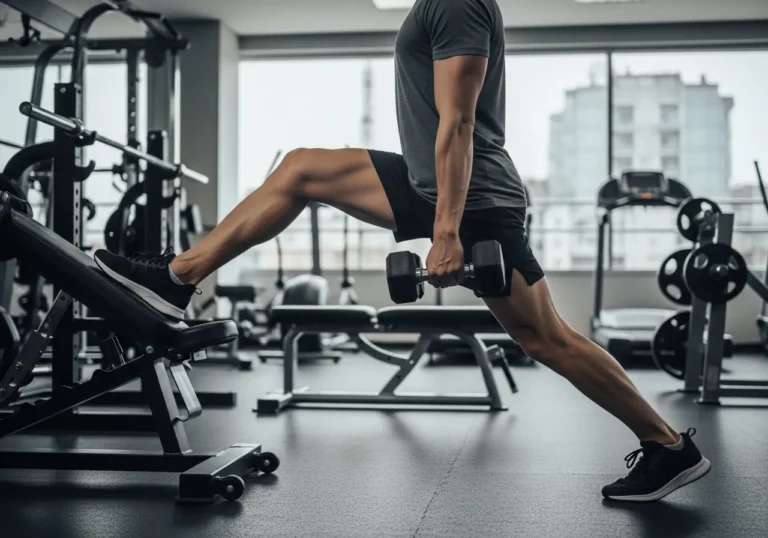
Every squat you perform at 100 kg involves both legs. One leg may contribute 55 kg worth of force. The other may contribute 45 kg. The bar goes up. The asymmetry is invisible. This hidden asymmetry compounds over months and years of bilateral-only training. The dominant leg becomes increasingly stronger relative to the non-dominant leg….
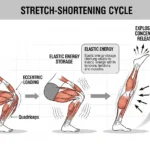
Power is not the same as strength. A trainee can deadlift 200 kg but be unable to jump 50 cm if they have never trained for explosive force production. The gap between strength capacity and power expression is where box jump training operates. The box jump trains the stretch-shortening cycle: the rapid eccentric loading and…
⚠️ Fitness Disclaimer: The information in this article is for general educational purposes only and does not constitute professional fitness or medical advice. Always consult a qualified healthcare professional before starting any new exercise program, especially if you have existing injuries or medical conditions. The Ball That Made My Conventional Training Feel Incomplete I added…