⚠️ Health & Fitness Disclaimer This article is for general educational and informational purposes only. It does not replace professional medical or fitness advice. If you have any pre-existing condition, injury, or cardiovascular concern — please consult a qualified healthcare professional or certified personal trainer before starting or modifying any exercise program.
Battle ropes sit at an unusual intersection in fitness training — they look unconventional, but the physiological demands they create are well-documented and measurable.
Unlike most gym equipment that targets either the cardiovascular system or the muscular system, battle ropes training guide simultaneously challenge both — producing a training stimulus that few other tools can replicate in the same time frame.
This guide explains the physiology behind battle rope training, breaks down each movement pattern, and provides a structured approach to building progressive programs for battle ropes overview and strength-endurance goals.
What Battle Rope Training Actually Does to the Body
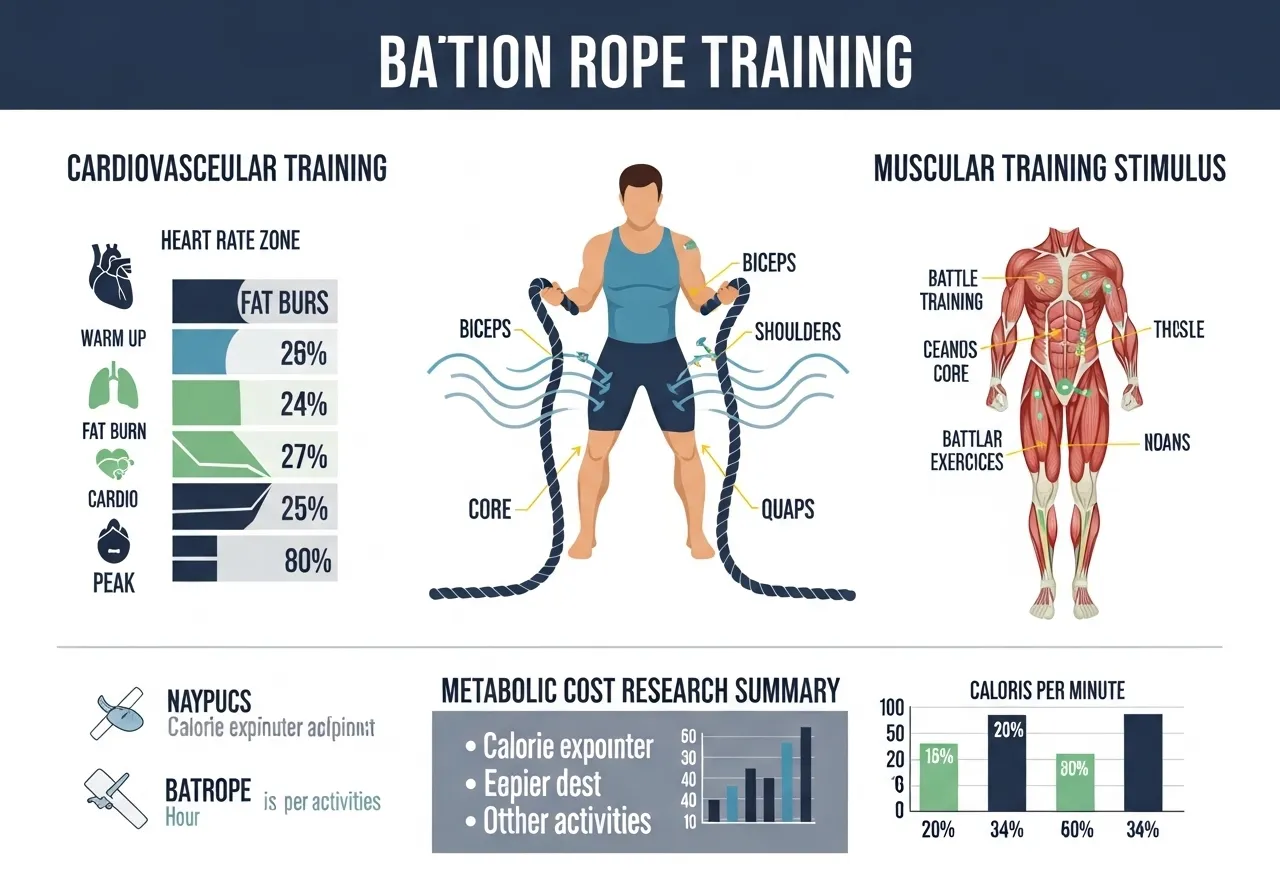
The Dual-System Stimulus
Battle rope training is classified as a form of concurrent training (training that simultaneously develops both aerobic capacity and muscular performance) — a relatively rare property among single-exercise modalities.
During a standard double-wave battle rope interval:
The shoulder, upper back, and core musculature works against the load and inertia of the rope across hundreds of repetitions per minute
The cardiovascular system responds to the combined demands of upper body work and the metabolic byproducts accumulating rapidly in the working muscles
Heart rate can reach 85–90% of maximum within the first 30 seconds of all-out effort — a Zone 4–5 cardiovascular stimulus achieved without any lower body impact
These measurements confirm what practitioners have long observed: a well-executed battle rope session creates genuine physiological stress in a short duration, making it time-efficient relative to its training effect.
Why Upper Body HIIT Is Distinct
Most cardiovascular training relies on lower body locomotion — running, cycling, rowing, and similar activities all depend primarily on the legs.
Battle ropes are one of the few tools that create genuine high-intensity cardiovascular stress through predominantly upper body work.
This distinction has practical value for several populations:
Individuals with lower extremity injuries or joint conditions that limit running and cycling
Athletes who need sport-specific upper body conditioning (combat sports, swimming, throwing sports)
Trainees who want to add cardiovascular volume without additional lower body fatigue load
Grip Strength and Forearm Development
Gripping and controlling a thick, heavy rope for repeated high-intensity intervals creates grip and forearm flexor demands that few training tools can match.
The rope’s circumference — typically 1.5–2 inches (3.8–5 cm) — requires the hand to maintain a wide grip throughout each interval, directly developing the grip endurance that transfers to deadlifts, rows, pull-ups, and sport-specific grappling patterns.
Trainees who add regular battle rope work frequently report improvements in grip endurance on other exercises within 4–6 weeks — a direct transfer from the accumulated grip demand of rope training.
Core Engagement Patterns
Battle rope exercises — particularly alternating wave patterns and rotational movements — require the core musculature to resist rotation and maintain trunk stability while the arms generate powerful, rhythmic movements.
This anti-rotation demand (the core’s function of preventing unwanted trunk movement during limb activity) is distinct from the compression-based core demand of squats and deadlifts — making rope training a genuinely complementary core stimulus rather than a redundant one.
Battle Ropes vs. Traditional Cardio: Understanding the Differences
Factor
Battle Ropes
Running/Cycling
Primary muscles
Upper body dominant
Lower body dominant
Joint impact
Low lower body impact
Moderate–High (running)
Grip/forearm development
High
Minimal
Core anti-rotation demand
High (especially alternating)
Low–Moderate
Cardiovascular stimulus
High (85–95% MHR achievable)
High (full range possible)
Session time for HIIT stimulus
15–25 min
20–30 min
Battle ropes are most valuable as a complement to lower body cardiovascular training — they provide equivalent cardiovascular demand while resting the lower body joints, creating a balanced weekly training load across both upper and lower body systems.
Energy Systems Involved
Understanding which energy systems battle rope training engages helps select the appropriate work-to-rest ratios for specific goals:
Phosphocreatine (PCr) system (immediate energy for very short, maximal efforts): Dominant during 10–15 second maximal intervals — depletes rapidly and requires 45–90 seconds to replenish
Glycolytic (anaerobic) system (energy from glucose without oxygen, producing lactate): Dominant during 20–45 second intervals — responsible for the burning sensation in the working muscles
Oxidative (aerobic) system (energy from oxygen and fuel substrates): Increasingly involved at lower intensities or longer intervals — responsible for recovery between rounds
The 1:2 work-to-rest ratio primarily stresses the glycolytic and phosphocreatine systems — appropriate for power and anaerobic conditioning.
Reducing rest to 1:1 or 2:1 work-to-rest increases the oxidative system demand — appropriate for metabolic conditioning and endurance goals.
The EPOC Advantage: Post-Exercise Caloric Burn
Battle rope HIIT generates a measurable EPOC effect (Excess Post-exercise Oxygen Consumption — the elevated caloric burn that continues for hours after high-intensity training as the body returns to its resting state).
High-intensity interval formats like battle rope training tend to produce larger EPOC responses than steady-state cardio — meaning total caloric expenditure over 24 hours may exceed what the session itself accounts for.
However, it is important to maintain perspective: EPOC represents an additional 50–150 calories on top of the session’s direct caloric cost for most practical protocols — meaningful, but not a dramatic effect.
For fat loss goals, the total caloric deficit created over time remains the primary driver — battle rope training contributes to this through both session expenditure and EPOC, making it a useful tool but not a replacement for overall dietary management.
This dual-system training approach positions battle ropes as a uniquely versatile tool across fitness levels and training goals.
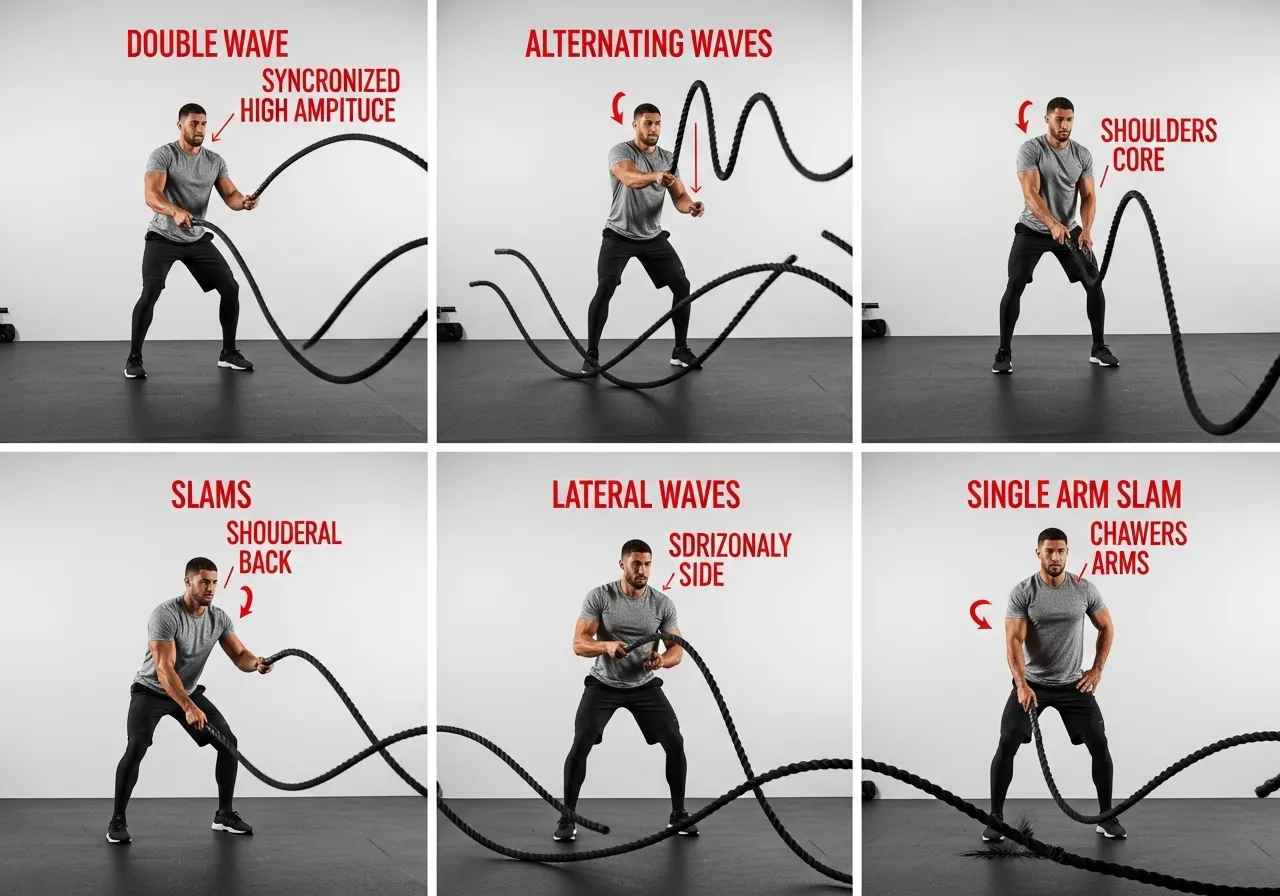
The 6 Core Battle Rope Exercises and What Each Develops
1 — Double-Arm Waves (Bilateral Wave)
Both arms move simultaneously in an up-and-down wave pattern, driving the rope from hip height overhead and back in a continuous rhythm.
Primary muscles: Anterior deltoid, biceps brachii, forearm flexors, core stabilizers Metabolic demand: High — both arms working simultaneously creates maximum upper body metabolic load Best for: Pure conditioning, VO2max stimulus, beginner entry point Common error: Using only the wrists and forearms — the movement should originate from the shoulders with the wave generated from shoulder flexion/extension, not wrist flicking
Arms alternate up and down rather than moving together — one arm drives up as the other drives down in a counter-phase rhythm.
Primary muscles: Anterior deltoid, core rotators (obliques), forearm flexors Relative to double wave: Greater oblique and anti-rotation core demand; slightly lower peak metabolic output per interval Best for: Core activation emphasis, athletes in rotational sports Research note: Studies comparing bilateral and unilateral battle rope waves found that alternating patterns produce greater external oblique activation than double-arm variations
3 — Slams
Both ropes are raised overhead together, then slammed down to the ground simultaneously — a full-body explosive movement that requires coordinated hip extension and shoulder flexion.
Primary muscles: Latissimus dorsi, anterior deltoid, core (flexion demand), hip extensors Unique property: The slam is the only common battle rope movement that trains a downward pulling pattern — engaging the lats in a way that waves do not Best for: Power development, lat engagement, full-body coordination Common error: Not fully extending overhead before slamming — partial range reduces the lat stretch and limits the power-generating component
4 — Lateral Waves (Side-to-Side)
Both ropes are moved laterally — side to side rather than up and down — creating a horizontal wave pattern that loads the medial deltoid (the middle portion of the shoulder muscle responsible for arm abduction) and lateral core differently than vertical wave patterns.
Primary muscles: Medial deltoid, lateral core (quadratus lumborum, obliques), forearm stabilizers Best for: Shoulder variation training, lateral core development, movement pattern variety Tip: Keep the shoulders level and avoid rotating the trunk — the wave should come from the shoulders moving laterally, not from body rotation
5 — Power Slams (Single-Arm)
One rope is raised and slammed powerfully while the opposite hand holds the other rope — a unilateral explosive movement that creates significant rotational demand on the core.
Primary muscles: Ipsilateral (same-side) lat and deltoid, contralateral (opposite-side) core rotators Best for: Rotational power development, combat sports athletes, addressing unilateral upper body strength differences Sets/Reps: 3 × 8 each arm | Focus on full overhead extension before the slam
6 — Circles (Inward and Outward)
Both ropes move in circular patterns simultaneously — either both rotating inward toward each other or both rotating outward away from each other.
Primary muscles: Rotator cuff (the four muscles that stabilize the shoulder joint: supraspinatus, infraspinatus, teres minor, subscapularis), deltoid, forearm pronators/supinators Best for: Shoulder stability development, rotator cuff activation, warm-up and cool-down work Tip: Outward circles (arms rotating away from each other) emphasize the external rotators and are particularly useful for shoulder health maintenance
Movement Pattern Summary
Exercise
Metabolic Load
Primary Target
Unique Benefit
Double Wave
Very High
Anterior deltoid, conditioning
Max cardiovascular demand
Alternating Wave
High
Anterior deltoid, core rotators
Oblique activation
Slams
High
Lats, full body power
Lat engagement unique to ropes
Lateral Waves
Moderate–High
Medial deltoid, lateral core
Frontal plane shoulder training
Single-Arm Slam
High
Rotational power
Unilateral explosive stimulus
Circles
Moderate
Rotator cuff, shoulder stability
Shoulder health maintenance
Foot Position Variations That Change the Training Stimulus
The foot position and stance width during battle rope training meaningfully affect which muscles are engaged as stabilizers:
Parallel stance (shoulder-width): Standard starting position — bilateral symmetrical base that allows maximum upper body force output
Split stance (staggered feet): One foot forward, one back — increases hip and core stability demand as the body resists the rotational forces from the rope movement
Kneeling position: Both knees on the ground — removes lower body contribution entirely, increasing upper body and core demand; reduces the ability to generate power from the legs
Half-kneeling (one knee down): One knee on the ground, one foot flat — challenges hip stability on the grounded-knee side while maintaining some lower body drive capacity
These stance variations provide useful progressive overload options without changing the work interval duration or rope weight — a practical way to increase difficulty when standard intervals have become manageable.
Battle Rope Training for Older Adults
Battle rope training can be adapted for older adults — but the approach requires significant modification from protocols designed for younger, highly conditioned populations.
For adults over 60 or those with reduced shoulder mobility, starting with very short intervals (10 seconds) at low intensity with long rest periods (60–90 seconds) allows cardiovascular adaptation without excessive shoulder load.
The seated position — performing wave patterns while seated in a chair — removes all standing balance demand and reduces the total body stress while maintaining upper body and cardiovascular challenge.
All battle rope programming for older adults with cardiovascular conditions, shoulder pathology, or significant musculoskeletal concerns should be designed and supervised by a qualified exercise professional or physiotherapist to ensure appropriate intensity and safety monitoring.
Nutrition Considerations Around Battle Rope Sessions
The high metabolic demand of battle rope HIIT creates specific nutritional considerations:
Pre-session (1–2 hours before): A small carbohydrate-containing meal or snack supports the glycolytic energy system demand of high-intensity intervals — performing HIIT in a significantly fasted state may reduce interval quality
Post-session hydration: High-intensity upper body work produces significant sweat — replacing fluids after the session supports recovery
Post-session protein: 20–30 g of protein within 1–3 hours supports the muscle repair process in the shoulder, forearm, and core musculature that battle rope training stresses
Battle Rope Programming: Protocols, Progression, and Integration
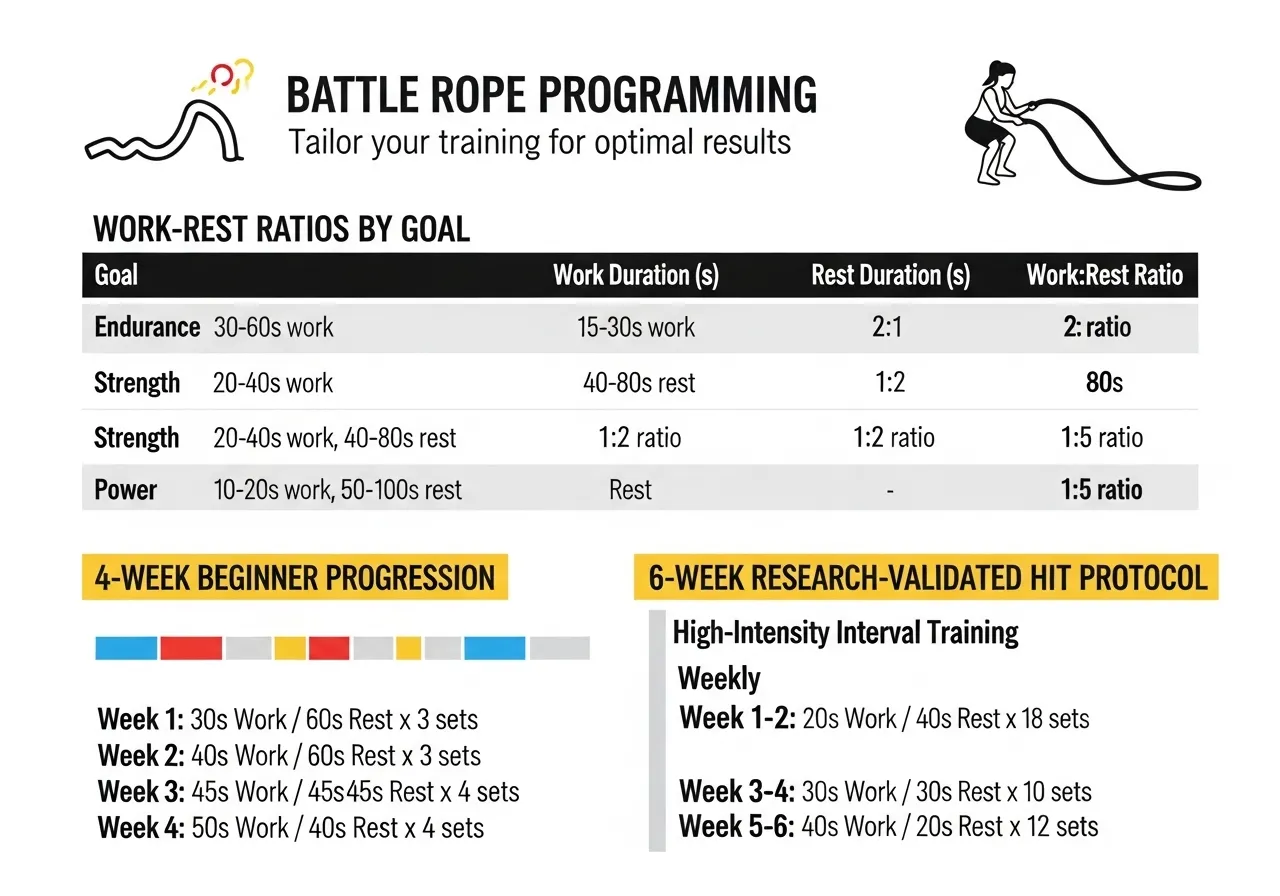
Work-to-Rest Ratios: The Key Variable
Battle rope training effectiveness is largely determined by the work-to-rest ratio — the relationship between active effort time and recovery time between intervals.
Protocol from the study:
10 rounds × 30 seconds all-out (alternating double and alternating wave)
60 seconds rest between rounds
3 sessions per week for 6 weeks
→ Results: Significant improvements in upper-body VO2max, shoulder strength, and muscular endurance
Battle Rope Complex Training
Combining multiple rope movements back-to-back without rest — a “battle rope complex” — creates a higher total metabolic demand than single-exercise intervals:
Integrating Battle Ropes Into an Existing Training Program
Training Context
Role for Battle Ropes
Placement in Session
Strength-focused program
Conditioning finisher (10–15 min)
After main strength work
Fat loss program
Primary conditioning tool
Standalone or circuit
Athletic training
Sport-specific conditioning
Post-skill work or separate session
General fitness
Full-body conditioning session
Standalone 20–30 min session
Battle Rope Training for Time-Constrained Trainees
One of the most practically significant aspects of battle rope training is its time efficiency relative to training effect.
A structured 20-minute battle rope session — 10 rounds of 30-second intervals with 60-second rest — has been shown in research to produce meaningful aerobic and muscular adaptations with consistent training over 6 weeks.
For trainees with limited training time, battle rope HIIT may provide more total physiological stimulus per minute than many longer traditional cardio formats — making it a genuinely viable option when training duration must be minimized.
This efficiency does not mean battle ropes should always replace longer-duration cardio — for trainees with specific endurance performance goals or who are building an aerobic base, sustained Zone 2 work remains important.
But for trainees whose primary goal is general conditioning, fat loss, or maintaining cardiovascular fitness alongside a busy schedule, the time-to-benefit ratio of structured battle rope intervals is competitive with most available alternatives.
Periodization of Battle Rope Programs
For trainees who include battle rope training consistently over months, periodizing the program across blocks prevents accommodation (the gradual reduction in training response as the body adapts to a fixed stimulus):
Block 1 — Foundation (Weeks 1–4): Short intervals, long rest (1:3 ratio), movement quality focus Block 2 — Development (Weeks 5–8): Medium intervals, medium rest (1:2 ratio), volume increase Block 3 — Intensity (Weeks 9–12): Longer intervals, shorter rest (1:1 ratio), maximum metabolic demand Deload Week: Every 4–6 weeks, reduce volume by 40–50% and use longer rest periods
Rotating between these blocks over a 12-week period may produce more complete long-term conditioning adaptation than maintaining a fixed protocol throughout.
Equipment Selection, Safety, and Technique Foundations
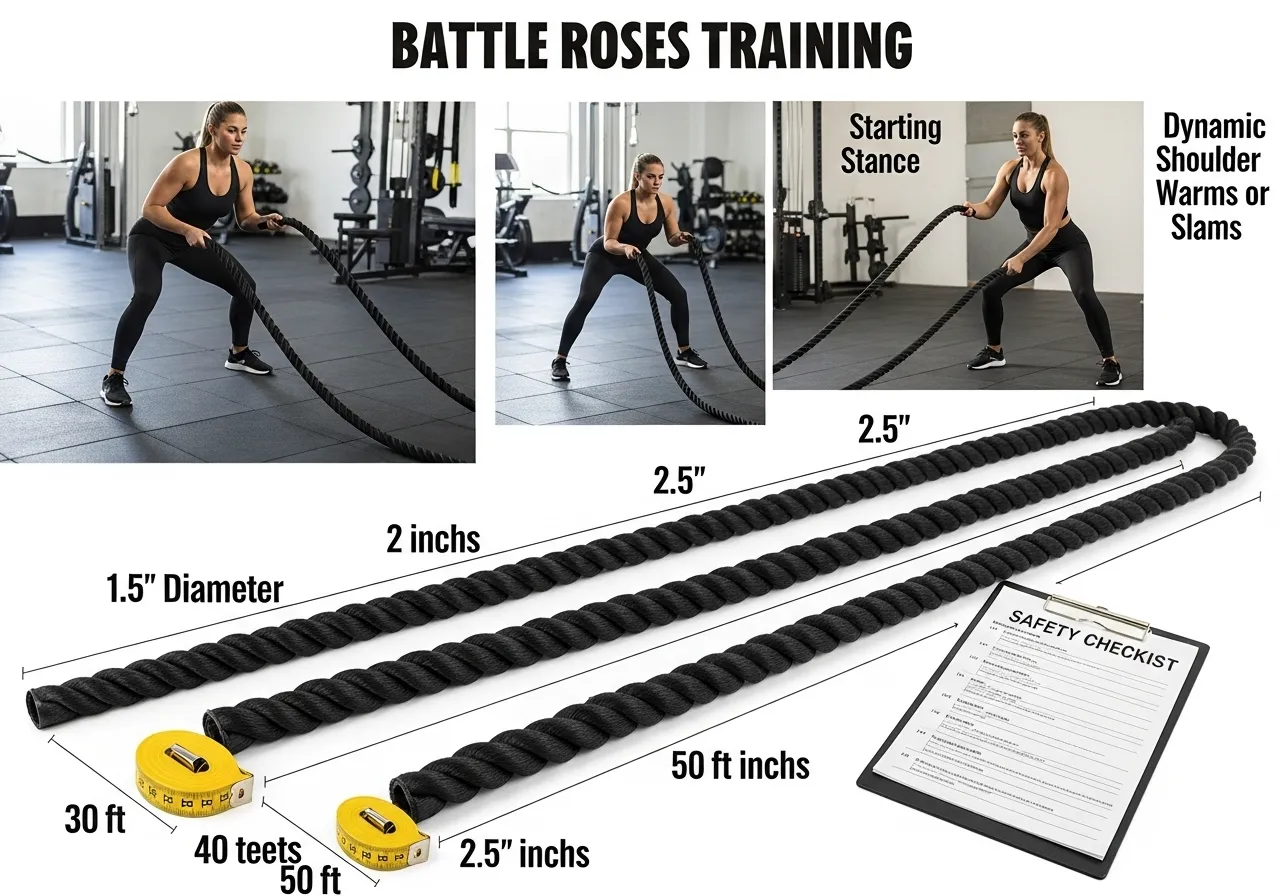
Choosing a Battle Rope
Battle rope specifications significantly affect training difficulty and outcome — understanding these variables allows better equipment decisions:
Specification
Effect on Training
Recommendation
Length: 9 m (30 ft)
Lower resistance — wave travels more easily
Beginners, home use
Length: 15 m (50 ft)
Higher resistance — wave requires more force
Intermediate–Advanced
Diameter: 1.5 inch (3.8 cm)
Standard grip demand — accessible for most
Most trainees
Diameter: 2 inch (5 cm)
Greater grip and forearm demand — significantly heavier
Advanced, grip strength focus
Anchoring and Space Requirements
Anchor point: A fixed post, wall anchor, or heavy rack at approximately knee height — the anchor should not move during training
Space required: At minimum, half the rope length — a 15 m rope requires approximately 8–9 m of clear training space
Floor surface: Rubber flooring, grass, or concrete — the rope ends will contact the floor during slam variations; hard floors are acceptable but accelerate rope wear
Starting Position and Posture
Optimal starting stance:
→ Feet shoulder-width apart, slight hip hinge (10–20° forward lean from hips)
→ Knees soft — approximately 15–20° bend
→ Core braced before beginning each interval
→ Elbows slightly bent throughout — full elbow extension places excessive stress on the biceps tendon and elbow joint
Safety Considerations
⚠️ Before beginning battle rope training:
→ Individuals with shoulder impingement, rotator cuff pathology, or recent shoulder surgery should consult a physiotherapist or sports medicine physician before beginning overhead rope movements
→ Existing elbow tendinopathy (tendon pain and degeneration) may be aggravated by high-repetition gripping — seek professional evaluation if elbow pain develops during or after sessions
→ Start with shorter intervals (10–15 seconds) and longer rest periods to allow the grip, forearms, and shoulders to adapt before increasing work duration
→ Battle rope training is not inherently low-impact for the upper body — the repeated high-velocity movements create significant cumulative stress on the shoulder and elbow joints
The Warm-Up Protocol
Recommended pre-session warm-up (8–10 minutes):
✅ Shoulder circles — 15 each direction
✅ Band pull-aparts — 2 × 15 (activates rear deltoids and rotator cuff)
✅ Arm swings (cross-body and overhead) — 10 each
✅ Hip circles and light squats — 10 each
✅ Light battle rope double waves at 40% intensity — 3 × 10 seconds (movement-specific warm-up)
Shoulder Health Maintenance During Battle Rope Programs
The shoulder joint faces significant cumulative load during battle rope training — maintaining shoulder health requires proactive measures alongside the training itself:
Rotator cuff activation: Including 2 × 15 band external rotations before each session activates the external rotators (infraspinatus and teres minor) that stabilize the shoulder during high-velocity arm movements
Balanced pulling work: Including horizontal and vertical pulling exercises (rows and pulldowns) in the weekly program balances the predominantly pressing and elevation demand of battle rope movements
Rope circles for shoulder maintenance: Ending each battle rope session with 2–3 sets of inward and outward circles at low intensity — this moves the shoulder through controlled rotation that counteracts the fatigue-related stiffness from wave patterns
If you notice a difference in fatigue or discomfort between the left and right shoulder during or after battle rope sessions, this asymmetry may indicate a strength imbalance worth addressing — a physiotherapist or qualified strength coach can assess and prescribe specific exercises to correct it.
Battle Ropes for Athletic Performance and Long-Term Development
The improvements in upper-body anaerobic power (the ability to generate maximum force rapidly over a short duration) and core endurance suggest that battle rope training produces adaptations with direct transfer to sport-specific demands beyond general conditioning.
These findings are relevant across multiple sports where upper body power and core endurance are performance determinants — not only basketball but combat sports, swimming, rowing, American football, and tennis.
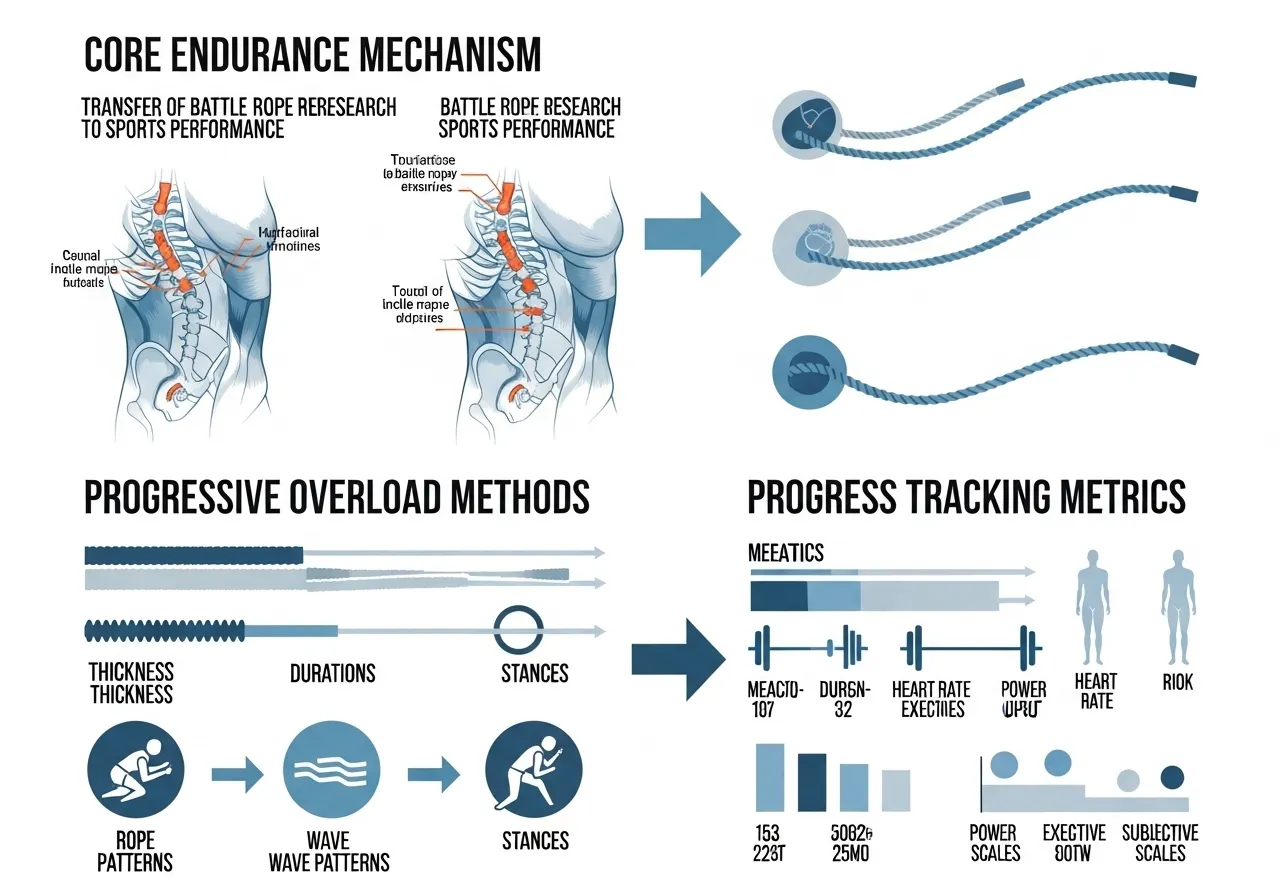
The core endurance improvements seen in battle rope research are not coincidental — they reflect a specific training mechanism:
During all battle rope patterns, the core is performing anti-rotation work (resisting the rotational forces produced by the moving arms) for the entire duration of the interval.
This sustained isometric and dynamic core demand — maintained under cardiovascular fatigue — is different from isolated core exercises performed in a non-fatigued state.
Training the core under cardiovascular load may produce more functional core endurance than performing core exercises in isolation — a quality particularly relevant for athletes whose sports require maintaining trunk stability while fatigued.
Monitoring Intensity: The Rating of Perceived Exertion Approach
Heart rate monitoring is the most common objective intensity marker for battle rope training — but the rating of perceived exertion (RPE: a 1–10 scale of subjective effort, where 1 is resting and 10 is maximum possible effort) is a practical complement:
Training Goal
Target RPE During Intervals
RPE at Rest Period End
General conditioning
7–8
4–5
HIIT / max effort
9–10
5–7
Strength-endurance
6–7
3–4
If RPE does not return below 5–6 by the end of the rest period, the rest interval may need to be extended before beginning the next work interval — particularly for beginners whose cardiovascular recovery is slower than the programmed rest allows.
Progressive Overload in Battle Rope Training
Progressive overload (gradually increasing training stress over time to drive continued adaptation) in battle rope training works differently from weight-based exercises:
Increase work duration: Adding 5 seconds per interval per week (from 20 sec → 25 sec → 30 sec) while keeping rest constant
Decrease rest duration: Reducing rest from 60 to 45 to 30 seconds over weeks at the same work interval
Increase rounds: Adding one round per week at the same work:rest ratio
Change rope weight/length: Moving to a longer or heavier rope increases resistance and grip demand at the same interval duration
Increase movement complexity: Progressing from double waves to alternating waves to complexes as movement quality improves
Tracking Progress in Battle Rope Training
Progress markers specific to battle rope training:
Wave count per interval: Counting wave cycles per 20-second interval — more waves at the same perceived effort indicates improved power endurance
Heart rate recovery: How quickly heart rate returns to below 120 bpm after an interval — faster recovery indicates cardiovascular adaptation
Grip endurance: Whether grip failure occurs before the cardiovascular system is the limiting factor — as grip adapts, the cardiovascular system becomes the primary limiter (the desired progression)
Subjective effort per interval: A session that felt 9/10 six weeks ago now feels 7/10 at the same protocol — a direct indicator of adaptation
Practical Questions About Battle Rope Training
How long should a battle rope session be?
For most training goals, a complete battle rope session of 15–25 minutes of structured interval work is sufficient to produce meaningful cardiovascular and muscular adaptation.
Longer is not necessarily better — the intensity of effective battle rope training makes extended sessions difficult to sustain at productive effort levels.
A 20-minute session of 10 × 30-second maximal intervals with 60 seconds rest represents approximately the maximum productive HIIT volume for most trainees.
Can battle ropes replace cardio?
Battle ropes may replace cardiovascular training for the high-intensity cardiovascular stimulus component — the metabolic demand is sufficient to develop and maintain aerobic capacity.
However, they do not replace Zone 2 steady-state cardio (low-intensity sustained aerobic exercise that develops the oxidative energy system and mitochondrial density).
A combination of battle rope HIIT for high-intensity cardiovascular training and steady-state cardio for aerobic base development may produce more complete cardiovascular fitness than battle ropes alone.
How often should I train with battle ropes?
2–3 sessions per week is a commonly recommended frequency — with at least 48 hours between sessions to allow the shoulder, forearm, and grip musculature to recover adequately.
Battle rope training creates significant upper body cumulative fatigue — daily training without adequate recovery may increase overuse injury risk at the shoulder and elbow joints.
If shoulder or elbow soreness persists beyond 48–72 hours after a session, reducing session frequency or intensity before the next session is advisable.
✅ Key Takeaways
Battle ropes provide a simultaneous cardiovascular and muscular stimulus — one of the few tools to meaningfully develop both systems in a single session
Grip width, forearm position, and movement origin (shoulder vs. wrist) matter more for movement quality than which specific exercise is selected
A 1:2 work-to-rest ratio (30 sec work / 60 sec rest) at 10 rounds, 3× per week, is a research-validated protocol for improving upper-body VO2max and shoulder strength
Alternating wave patterns produce greater oblique activation than double waves — useful for trainees prioritizing rotational core development
Shoulder or elbow pain during or after battle rope training warrants professional evaluation before continuing
Battle Ropes in a Complete Weekly Training Plan
An example of how battle rope training might fit within a complete weekly training structure for a general fitness trainee:
Monday: Lower body strength (squats, deadlifts, lunges) Tuesday: Battle rope HIIT — 20 min (10 × 30 sec / 60 sec rest) Wednesday: Upper body strength (press, row, pull) Thursday: Zone 2 cardio — 40 min (run, cycle, or row) Friday: Full body strength or athletic training Saturday: Battle rope conditioning — 15–20 min complex format Sunday: Rest or light activity
In this structure, battle ropes provide two distinct stimuli: a HIIT cardiovascular session early in the week, and a conditioning finisher or standalone session later in the week.
The total battle rope volume (2 sessions × 15–20 min) allows adequate recovery between sessions while maintaining consistent cardiovascular and upper body conditioning stimulus across the week.
⚠️ Fitness Disclaimer: The information in this article is for general educational purposes only and does not constitute professional fitness or medical advice. Always consult a qualified healthcare professional before starting any new exercise program. ⚠️ Cardiovascular Health Notice: If you have a history of heart disease, high blood pressure, or any cardiovascular condition, obtain…
⚠️ Health & Fitness DisclaimerThis article is for general educational and informational purposes only. It does not replace professional medical or fitness advice. If you have any pre-existing condition, injury, or health concern — consult a qualified healthcare professional or certified personal trainer before starting or modifying any exercise program. VO2 max is one of…
⚠️ Health & Fitness DisclaimerThis article is for general educational and informational purposes only. It does not replace professional medical or fitness advice. If you have any pre-existing condition, injury, or health concern — consult a qualified healthcare professional or certified personal trainer before starting or modifying any exercise program. Sandbag training occupies a unique…
⚠️ Fitness Disclaimer: The information in this article is for general educational purposes only and does not constitute professional fitness or medical advice. Always consult a qualified healthcare professional before starting any new exercise program. ⚠️ Cardiovascular Health Notice: If you have a history of heart disease, high blood pressure, or any cardiovascular condition, obtain…
Most recreational athletes choose one form of cardio and repeat it. Runners run. Cyclists cycle. Swimmers swim. This is not a strategic decision. It is the path of least resistance: the familiar equipment, the practised movement, the social group tied to the activity. The repetition accumulates a specific cardiovascular adaptation to one mode of exercise…
⚠️ Cardiovascular Safety NoteHigh-intensity cycling intervals (Zone 4–5 work) place significant demand on the cardiovascular system — heart rate typically reaches 85–95% of maximum during threshold and VO2max efforts. Individuals with undiagnosed heart conditions, coronary artery disease, or recent cardiac events should obtain medical clearance before starting structured high-intensity cycling training. Any chest pain, dizziness,…