Hamstring Flexibility: Why Your Hamstrings Are Always Tight and How to Finally Fix It
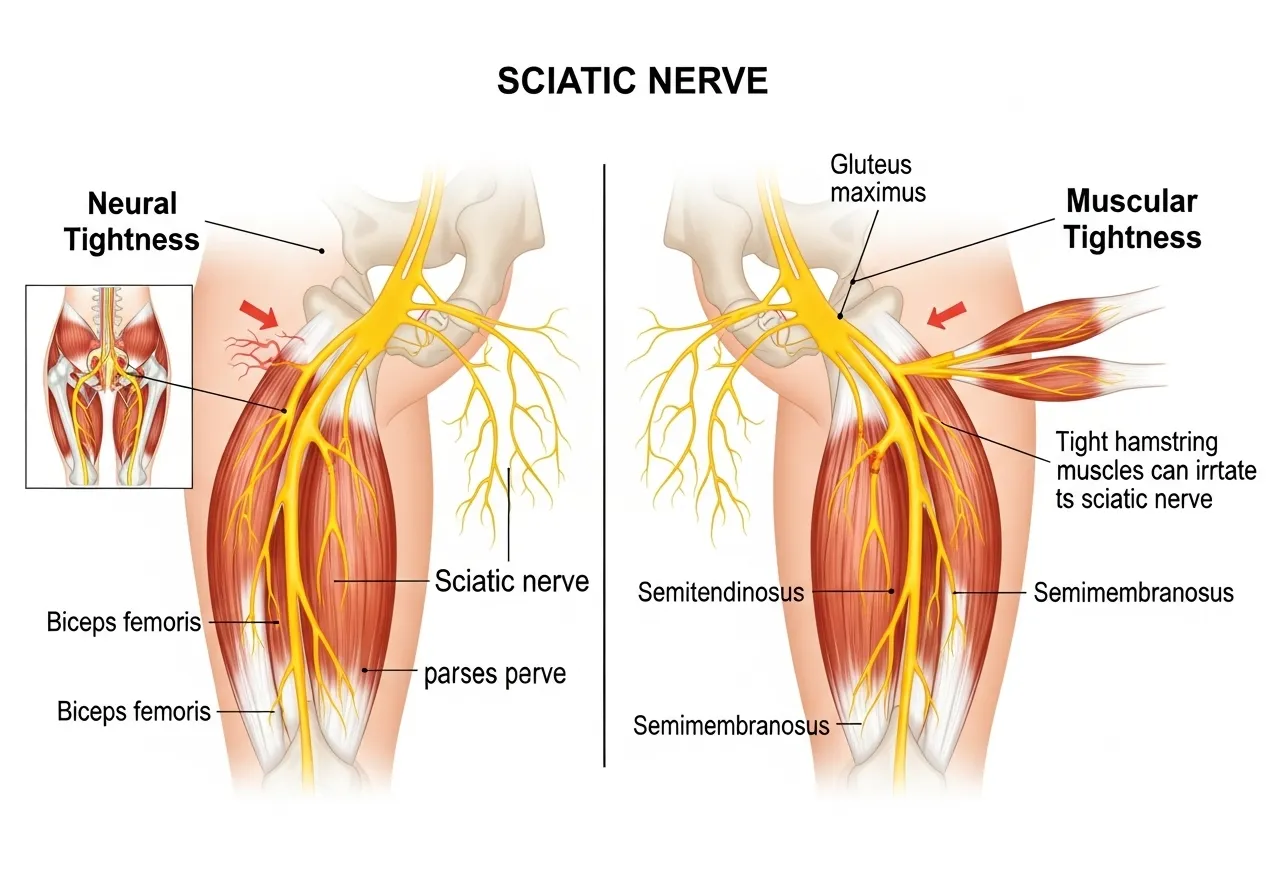
Why Your Hamstrings Are Always Tight — And Why stretching guide Alone Never Fixes It
Tight hamstrings are one of the most universal physical complaints among gym-going adults, yet they are also one of the most persistently misunderstood and mistreated mobility issues in recreational fitness. The typical response to tight hamstrings is more stretching — more forward folds, more standing toe touches, more seated hamstring stretches — applied to tissues that feel chronically tight regardless of how much stretching is performed. This approach produces temporary relief that disappears within hours, and no lasting improvement despite months of consistent effort. (see also: RDL vs conventional deadlift)
The reason stretching alone fails to permanently resolve hamstring tightness is that chronic hamstring tightness in most people is not caused by shortened muscle tissue that needs to be lengthened. It is caused by a combination of neural tension, positional awareness, and functional weakness that stretching does not address. Understanding the actual cause of hamstring tightness is the prerequisite for addressing it effectively rather than perpetually managing it through repeated temporary stretching that produces no lasting change.
Neural Tension vs Muscle Shortness: The Critical Distinction
The sciatic nerve runs through the posterior thigh alongside the hamstring muscle, and when this nerve is irritated or under tension, it produces the exact sensation that people interpret as hamstring tightness — a pulling, limited-range sensation during forward bending that feels indistinguishable from muscle tightness but responds completely differently to treatment. Stretching tight muscle tissue produces gradual improvement; stretching a tense sciatic nerve can worsen the irritation and perpetuate the tightness sensation. Neural flossing exercises — gentle, rhythmic nerve mobilizations rather than sustained static stretches — address neural tension more effectively than stretching, explaining why some people find static hamstring stretching aggravates their tightness rather than improving it. Research on neural tension and hamstring flexibility confirms that neural mobilization techniques produce superior range of motion improvements compared to static stretching alone in individuals with limited straight leg raise range caused by neural rather than muscular restriction.
Action point: Perform the neural tension test: lie on your back, lift one leg with the knee straight, and note the range before feeling tightness. Then flex the foot (toes toward shin) — if this immediately increases the tightness sensation, neural tension is a primary component of your hamstring restriction and neural flossing exercises should be included in your mobility program alongside stretching.
The Relationship Between Hamstring Flexibility and Lower Back Pain
Lower back pain is one of the most prevalent musculoskeletal complaints affecting working adults, and hamstring tightness is a frequently overlooked contributor to this pain through the biomechanical chain connecting the posterior thigh to the lumbar spine. The hamstrings attach to the ischial tuberosities (sit bones) at the base of the pelvis. When the hamstrings are chronically tight, they pull the pelvis into a posteriorly tilted position during sitting and bending activities — flattening the lumbar curve and placing the lumbar discs in a flexed position that increases disc stress. During dynamic activities like bending to pick something up, hamstring tightness that limits hip hinge range forces the lumbar spine to flex compensatorily, imposing the repeated loaded flexion that disc herniation and facet joint irritation both result from. Improving hamstring flexibility enough to allow genuine hip hinge range — the pelvis tilting forward over the femoral heads rather than the lumbar spine flexing to reach the floor — directly reduces the lumbar loading that causes and perpetuates lower back pain. Research on the relationship between hamstring flexibility and lower back pain consistently finds that individuals with limited straight leg raise range (a measure of hamstring flexibility) have significantly higher rates of lower back pain than those with adequate flexibility — not merely correlation but mechanistically explainable by the lumbar loading pattern that tight hamstrings impose. According to research on hamstring flexibility and lumbar spine loading, adequate hamstring flexibility is a primary determinant of safe lumbar mechanics during daily bending and lifting activities, validating hamstring flexibility improvement as a direct lower back pain prevention strategy.
Programming Hamstring Flexibility Work Into an Existing Training Schedule
Integrating a comprehensive hamstring flexibility program into an existing training schedule requires minimal additional time when the components are distributed across existing training sessions and daily habits. The recommended distribution: neural flossing two minutes each morning as part of a morning routine (requires no gym access or equipment); static hamstring stretching after every training session as part of the cool-down (five minutes adds negligible time to sessions already in progress); Romanian deadlifts twice per week as part of the lower body training day that already exists (replacing or supplementing existing lower body work rather than adding additional sessions). This distribution produces daily neural flossing frequency, four to five weekly static stretching sessions, and twice-weekly strength-through-range training — the complete program components — without requiring any additional training sessions beyond the existing schedule. Athletes who have failed to maintain previous hamstring flexibility programs because they required dedicated additional sessions find that this distributed integration approach dramatically improves adherence, because the habit of stretching after existing training sessions is easier to maintain than the habit of attending an additional dedicated flexibility session. The neuroscience of habit formation confirms this: attaching new behaviors to existing habits (training sessions) produces better adherence than scheduling new standalone behaviors that require independent initiation. ACSM flexibility training guidelines support integrating flexibility work into existing training sessions as an effective adherence strategy for populations who struggle to maintain dedicated flexibility programming.
Hamstring Flexibility Testing: Measuring What You Cannot Otherwise See
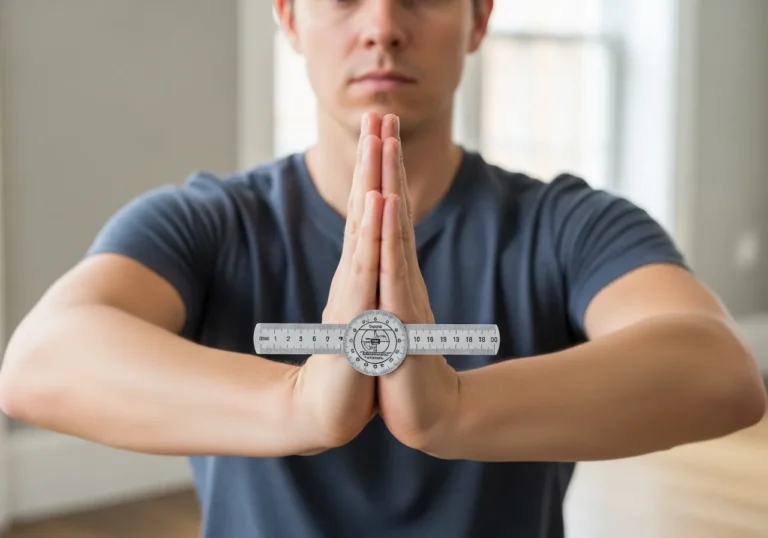
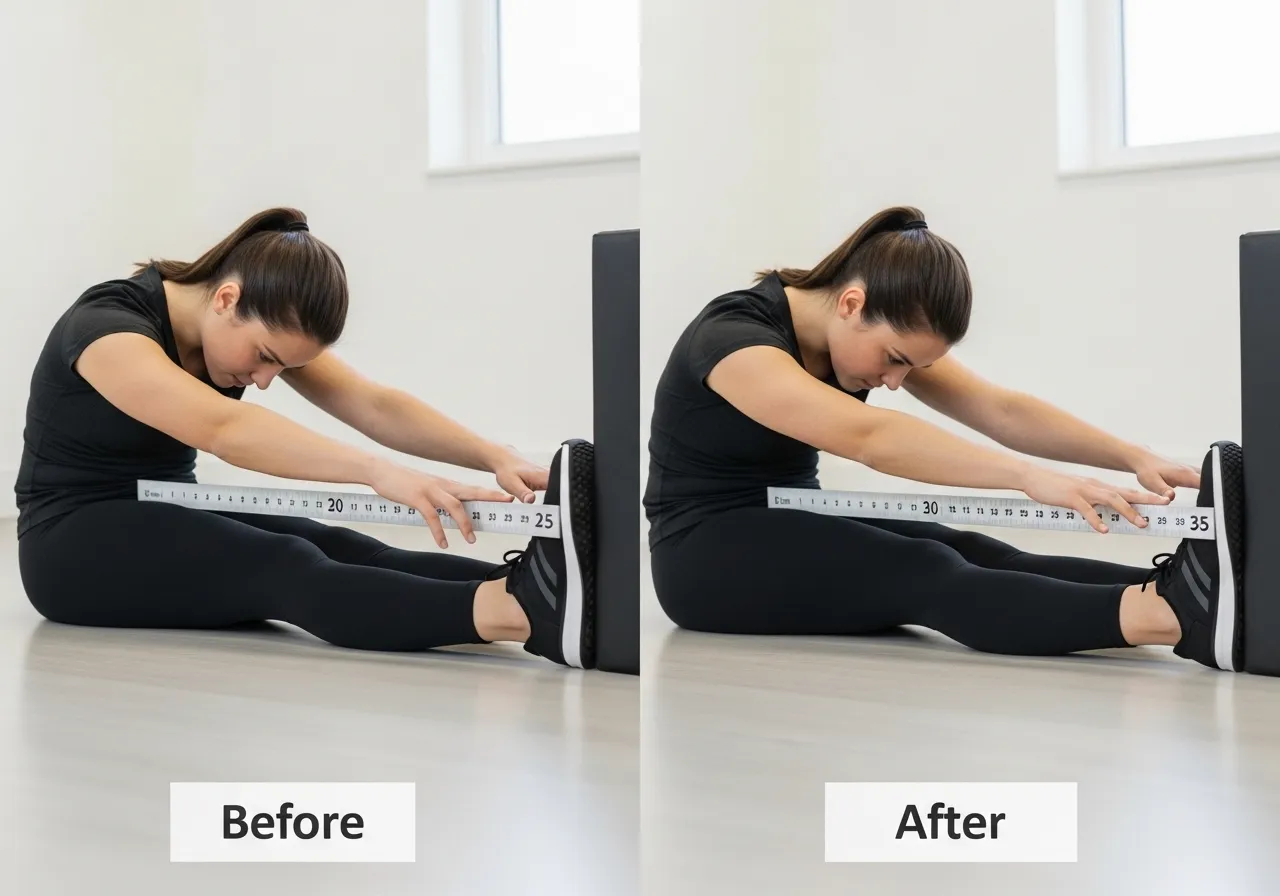
Objective hamstring flexibility testing provides the baseline and progress measurements that make the program’s effectiveness visible and motivating. The most accessible tests for recreational athletes: the straight leg raise test (lying on the back, raise one leg with the knee extended to the point of mild tension and measure the angle from the floor — normal is 80-90 degrees, restricted is below 70 degrees); the seated forward bend (sitting with legs extended, measure the distance from fingertips to toes — positive values indicate reaching past the toes, negative values indicate restriction); and the standing forward bend (standing with feet together, bend forward with knees straight and measure the distance from fingertips to floor). Record these measurements before beginning the program and at four-week intervals during the program. Most athletes implementing the complete program see five to ten degree improvement in straight leg raise range and five to ten centimeter improvement in seated forward bend per month of consistent daily practice — objective improvement that the testing reveals even when day-to-day progress is too gradual to perceive without measurement. These improvement numbers, tracked across three to six months, provide compelling evidence of genuine physical change that motivates the continued practice that produces further improvement.
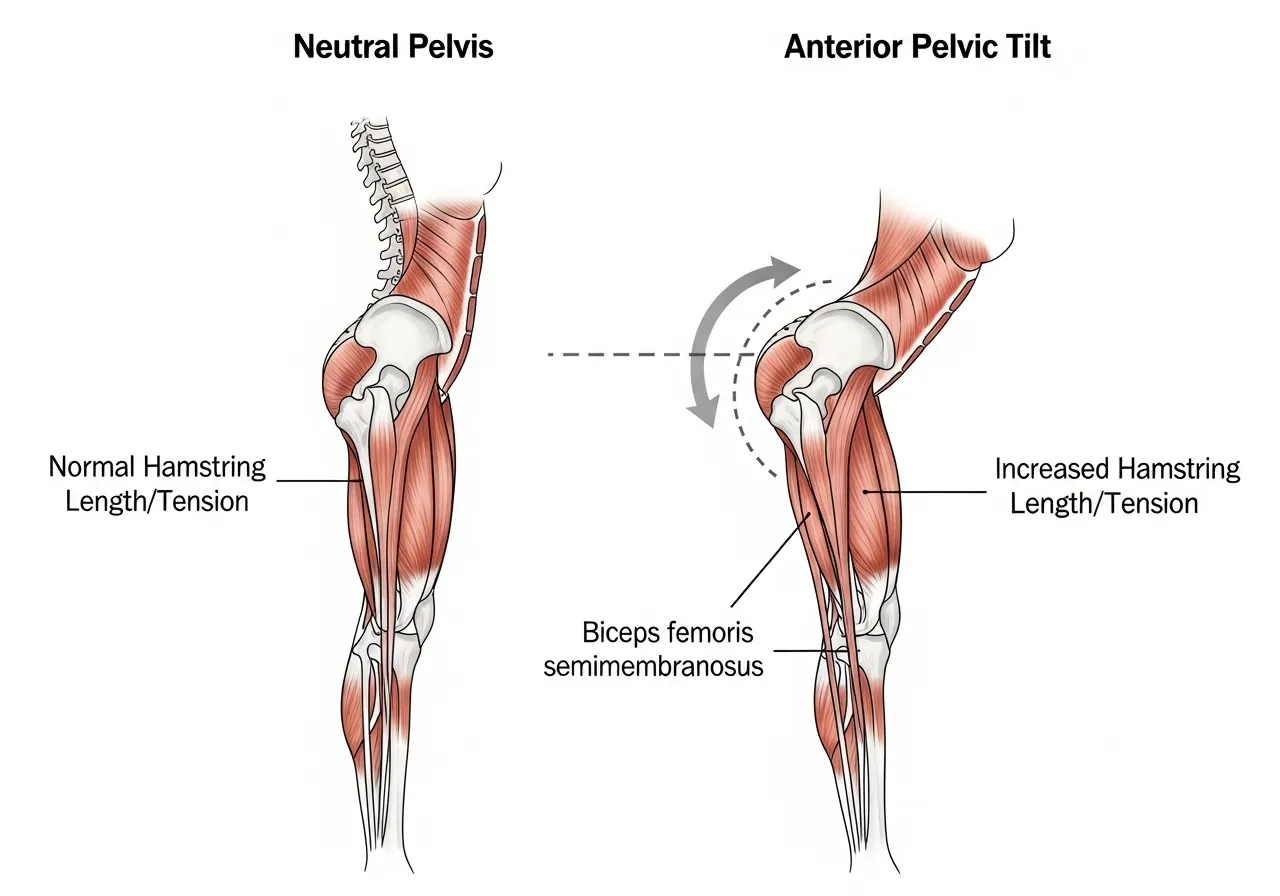
The Causes of Chronic Hamstring Tightness
Chronic hamstring tightness in physically active adults results from several converging factors that all require different interventions — which is why the single-strategy approach of “just stretch more” fails to produce lasting results for most people with persistent hamstring tightness.
Anterior Pelvic Tilt
Anterior pelvic tilt — the excessive forward tilting of the pelvis that creates the characteristic “butt stuck out” posture — places the hamstrings in a chronically lengthened position at rest. This sounds like it should make the hamstrings more flexible, but the opposite occurs: the nervous system responds to the chronic lengthening by increasing muscle tone (neural tension) to prevent what it interprets as dangerously excessive lengthening. The resulting chronic high-tone hamstring is what most people experience as tightness — not shortened muscle fibers but neurologically protected lengthened ones. Addressing anterior pelvic tilt through hip flexor stretching (which is typically tight in anterior tilt), glute strengthening (which is typically weak), and core engagement reduces the chronic neurological protection that manifests as hamstring tightness, producing lasting flexibility improvements that stretching the hamstring directly cannot achieve. According to NCBI research on pelvic tilt and hamstring function, correcting anterior pelvic tilt produces significant improvements in hamstring flexibility without specific hamstring stretching, confirming the role of pelvic position in hamstring tone regulation.
Weakness in the Lengthened Range
Hamstrings that have never been trained through their full range of motion — from full hip flexion with the knee extended to full knee flexion — are neurologically protected from stretching into ranges that the nervous system has not confirmed are safe for loaded function. The nervous system’s protective reflex contracts the hamstring before it reaches the full passive range, producing the “wall” that many people experience when forward bending. Building hamstring strength through the full range — specifically in the lengthened position during exercises like Romanian deadlifts, Nordic hamstring curls, and leg curls at full range — teaches the nervous system that the hamstring can function safely at greater lengths, reducing the protective tone that limits passive range.
Sitting and Shortened hip flexor stretching
Extended sitting shortens the hip flexors and anterior structures of the hip, which reciprocally affect hamstring tone through the body’s fascial and neurological interconnections. The hip flexor tightness that desk work creates does not just tighten the hip flexors — it changes the pelvic position and the neurological environment of the posterior chain in ways that increase hamstring tightness simultaneously. Addressing hip flexor mobility alongside hamstring flexibility is therefore not supplementary but essential — the hamstring flexibility program that ignores the hip flexor connection treats symptoms while leaving the primary cause unaddressed.
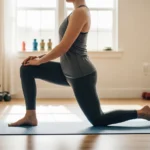
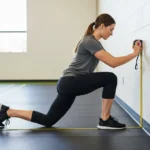
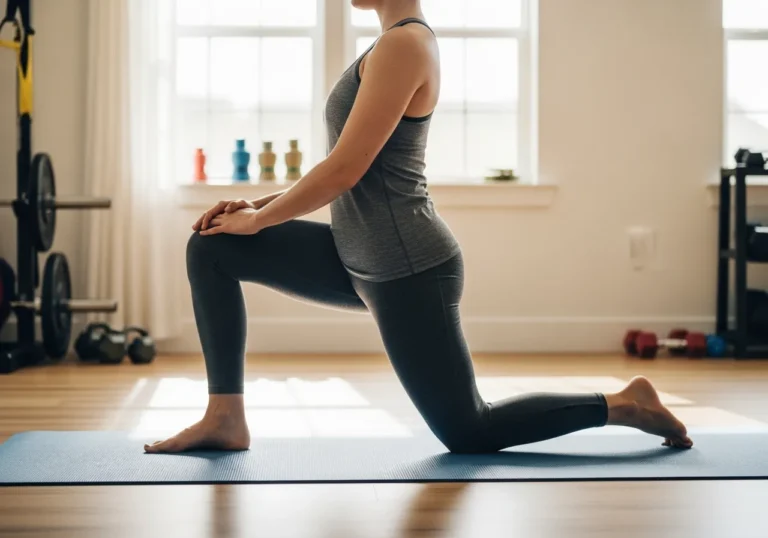
Action point: Before your next hamstring stretch, perform five minutes of hip flexor stretching (kneeling lunge position, hip pressed forward). Test your forward bend range before and after the hip flexor work. Most people find their hamstring range improves immediately after hip flexor stretching — evidence that the connection is real and that hip flexor work belongs in any hamstring flexibility program.
Hamstring Flexibility Across the Lifespan
Hamstring flexibility naturally declines with age — research finds that posterior thigh flexibility decreases approximately five to eight degrees per decade after age 30 in individuals who do not specifically maintain flexibility through regular practice. This decline reflects the progressive thickening and reduced extensibility of the connective tissue component of muscle-tendon units and the neural changes that occur with aging, not merely inactivity. However, research on flexibility training across age groups consistently finds that even adults in their sixties and seventies show meaningful flexibility improvements with consistent practice, though improvement rates are slower than in younger populations and maintenance requires more consistent effort. The practical implication: beginning hamstring flexibility work at any age produces benefits, but beginning earlier and maintaining consistently prevents the decline that would otherwise require increasingly intensive intervention to reverse. Adults who maintain regular hamstring flexibility practice through their forties and fifties retain the posterior chain function that allows pain-free daily bending, safe lifting mechanics, and athletic activity that sedentary adults of the same age lose progressively. The investment in the daily flexibility program described in this article, maintained consistently across years, is an investment in the functional physical capability that active aging requires and that neglected flexibility would progressively compromise. According to research on flexibility training and aging, regular stretching programs produce significant flexibility maintenance and improvement in adults over 60, with daily practice producing superior outcomes to less frequent programs.
Yoga and Pilates for Hamstring Flexibility
Yoga and Pilates provide structured approaches to hamstring flexibility development that many people find more sustainable than isolated stretching programs. The social context, guided instruction, and comprehensive movement practice of yoga classes integrate hamstring flexibility work with breathing, body awareness, and overall movement quality in ways that isolated stretching cannot replicate. Poses specifically effective for hamstring development include: uttanasana (standing forward fold), paschimottanasana (seated forward fold), prasarita padottanasana (wide-legged forward fold), and downward-facing dog (which loads the hamstring in a lengthened position with body weight for sustained periods). Yin yoga — a slow-paced style that holds poses for three to five minutes each — provides the prolonged tissue loading that produces connective tissue length changes that briefer dynamic styles cannot achieve. Pilates classes emphasize hamstring activation alongside flexibility, developing the strength-through-range component that pure yoga flexibility work sometimes neglects. For athletes who resist standalone stretching programs but enjoy structured group movement practices, yoga or Pilates classes two to three times per week provide the comprehensive hamstring development described in this article within an enjoyable format that sustains long-term adherence.
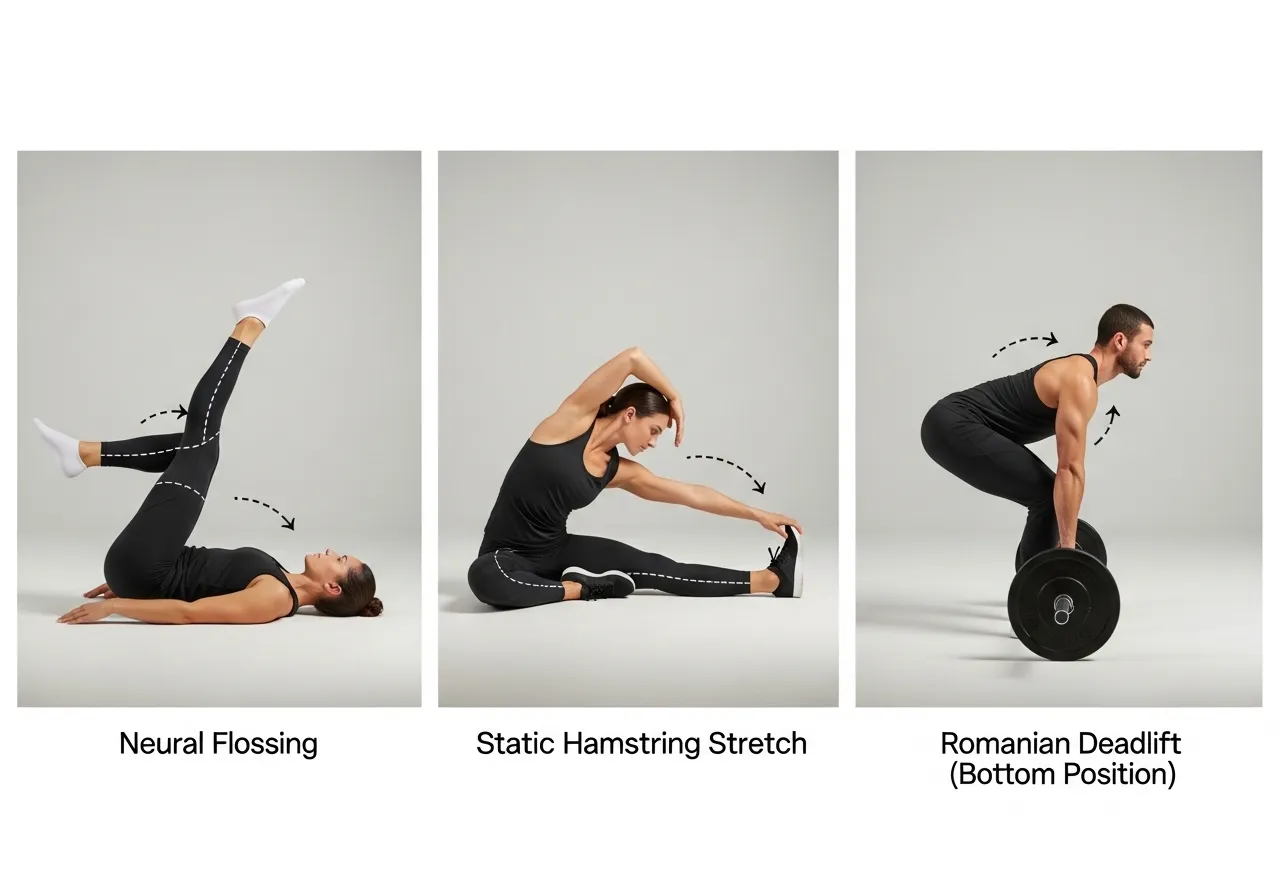
The Effective Hamstring Flexibility Program: What Actually Works
An effective hamstring flexibility program addresses all three causes of hamstring tightness — neural tension, positional weakness, and hip flexor restriction — rather than focusing exclusively on passive hamstring stretching that addresses only one component.
Neural Flossing (Sciatic Nerve Mobilization)
Perform lying on your back: lift one leg to the point of mild tension (not pain), then rhythmically alternate between straightening the knee (extending the leg) and flexing the foot (pointing toes toward shin) for twenty to thirty repetitions. This gentle rhythmic movement mobilizes the sciatic nerve along its path through the posterior thigh without the sustained tension that aggravates irritated neural tissue. Perform twice daily — morning and evening — for the first two to four weeks of the program to reduce neural tension before adding more aggressive static stretching. Athletes who identify significant neural tension through the neural tension test typically find their forward bend range improves more from two weeks of neural flossing than from months of static hamstring stretching that actually aggravates the neural component.
Progressive Static Hamstring Stretching
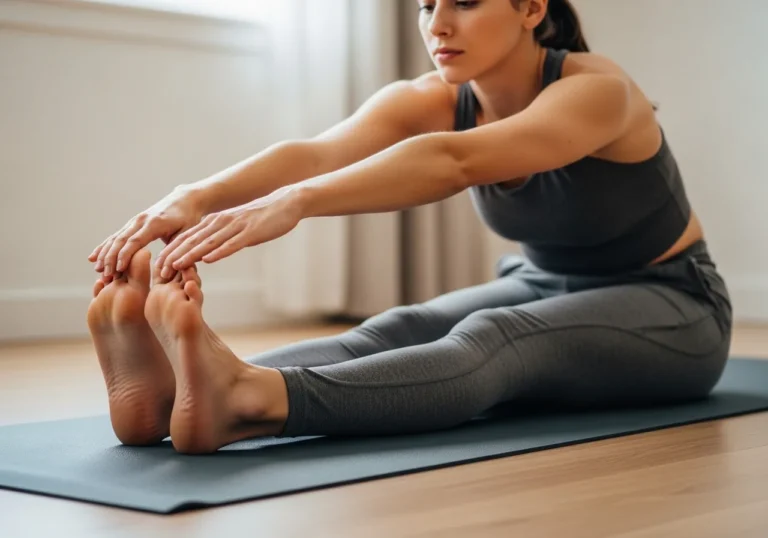
Once neural tension is reduced through flossing, progressive static stretching addresses the actual muscle length limitation. The standing forward bend (reaching toward the toes while keeping the knees straight or slightly bent) held for thirty to sixty seconds, three times per session, performed daily produces the connective tissue length adaptations that create lasting flexibility improvement. The seated hamstring stretch (sitting with one leg extended, reaching toward the foot while maintaining a flat back) provides an alternative position that many people find produces a more isolated hamstring stretch without the spinal flexion component of the standing forward bend. Progressively deepening the stretch as range improves — spending two to three weeks at each depth before attempting greater range — prevents the nervous system protective response that attempts to stretch beyond current comfortable range consistently triggers.
Strength in the Lengthened Range: The Missing Component
Romanian deadlifts performed through a full range of motion — lowering the bar until a deep hamstring stretch is felt, maintaining a flat back throughout — are the most effective single exercise for developing hamstring strength in the lengthened position that creates lasting flexibility improvements. The loaded stretch at the bottom of each rep signals to the nervous system that the hamstring can function safely at this length, gradually reducing the protective tone that limits passive range. Three sets of ten to twelve Romanian deadlifts performed twice weekly, progressively deepening the bottom position as flexibility improves, produces hamstring flexibility improvements that passive stretching alone cannot achieve. According to research on eccentric exercise and flexibility development, strength training through full range of motion produces greater flexibility improvements than equivalent-time static stretching, explaining why strength-through-range approaches outperform stretching-only protocols for persistent tightness.
Action point: Add neural flossing to your morning routine this week (two minutes, both legs), followed by two sets of standing forward bends held thirty seconds each. Compare your forward bend range at the end of week one to your starting point — most people see meaningful improvement within seven days of this combined approach versus no improvement from years of stretching alone.
The hamstring flexibility transformation most people want — being able to touch their toes without discomfort, squatting deeply without pelvic tuck, running without posterior thigh tightness — is achievable for virtually all healthy adults through the complete program described in this article. The key insight that makes the program work where years of isolated stretching have failed: address the neural tension, the pelvic position, and the weakness simultaneously rather than treating tightness as a simple mechanical problem that more of the same stretching will eventually solve. Apply the complete program consistently for eight to twelve weeks and experience the hamstring freedom that the correct approach reliably delivers.

Hamstring Flexibility and Athletic Performance
Adequate hamstring flexibility directly affects athletic performance in ways that extend beyond the subjective comfort of being able to touch the toes. The specific performance qualities most affected by hamstring flexibility — sprint mechanics, squatting depth, hip hinge efficiency, and injury resistance — each have direct implications for training effectiveness and competitive performance.
Sprint Speed and Stride Length
Sprint speed is partly determined by stride length — the distance covered per stride — which is limited by hamstring flexibility at the hip extension phase of the gait cycle. The hip must reach full extension (leg behind the body) for maximum stride length, and hamstring tightness that limits hip extension reduces stride length and therefore maximum sprint speed. Elite sprinters have significantly greater hamstring flexibility than recreational runners, and improving hamstring flexibility in athletes with restricted range produces measurable stride length improvements. Research on hamstring flexibility and sprint performance finds that athletes who increase their hamstring flexibility by ten to fifteen degrees of hip flexion range improve their sprint time by two to four percent — a meaningful athletic improvement achieved through a non-running training intervention. According to research on flexibility and sprint performance, hamstring flexibility is a significant predictor of sprint speed in team sport athletes, validating its inclusion in athletic development programs.
Squatting Mechanics and Hamstring Flexibility
The squat’s bottom position requires simultaneous knee flexion and hip flexion that places significant demand on hamstring flexibility — specifically the hamstring’s ability to function at both a flexed knee and a flexed hip simultaneously. Athletes with restricted hamstring flexibility experience the “butt wink” at the bottom of the squat — the posterior pelvic tilt that occurs when hamstring restriction forces the pelvis to tuck under as depth increases. This lumbar flexion under load is the primary mechanism for squat-related disc stress, and hamstring flexibility improvement is the most direct solution for athletes whose butt wink results from hamstring restriction rather than hip mobility limitation. Testing which is the cause: if butt wink resolves when the heel is elevated (simulating improved ankle dorsiflexion), ankle mobility is the primary limiter; if it persists with heel elevation but resolves with reduced depth, hamstring flexibility is the primary limiter requiring the program described in this article.
Action point: Perform a deep bodyweight squat and note whether posterior pelvic tilt occurs before achieving parallel depth. If it does, determine whether the tilt is reduced by heel elevation (ankle issue) or persists regardless (hamstring issue). If hamstring restriction is confirmed, prioritize the program’s Romanian deadlift guide component alongside the stretching work for the fastest improvement in squatting mechanics.
Hamstring Flexibility and Posterior Chain Athletic Development
The hamstring’s role extends far beyond its flexibility contribution to encompass the explosive power production that sprinting, jumping, and change-of-direction athletic performance demands. A flexible hamstring is a functionally superior hamstring — one that can operate through greater ranges under load, produce force at longer muscle lengths where the mechanical advantage is greater, and recover from the eccentric stress of athletic movement more efficiently than a restricted, neurologically protected hamstring. Athletes who improve their hamstring flexibility through the complete program described in this article consistently report that the improvement translates into stronger deadlifts and Romanian deadlifts (because the hip hinge range is no longer limited by hamstring restriction), more explosive sprint mechanics (because hip extension is no longer limited), and reduced posterior thigh discomfort after intense training sessions (because the hamstring can tolerate the ranges that athletic movement imposes without the protective tension that restriction produces). These athletic performance benefits — beyond the flexibility itself — are the most compelling argument for including comprehensive hamstring flexibility development in any serious training program. The athlete who views hamstring flexibility as merely the ability to touch their toes misses the complete picture of how posterior chain mobility underpins athletic performance across essentially every sport and training activity.
Daily Hamstring Mobility Routine: The Complete Protocol
A comprehensive daily hamstring mobility routine that addresses all components of hamstring tightness takes ten to twelve minutes and can be performed anywhere without equipment. Morning sequence (five minutes): neural flossing lying on the back, thirty repetitions per side — two minutes total; kneeling hip flexor stretch, thirty seconds per side — one minute total; standing forward bend with slightly bent knees, three sets of thirty seconds — ninety seconds total; finishing with five standing toe touch attempts with the intention of relaxing further with each repetition. Evening or post-training sequence (five minutes): seated hamstring stretch, sixty seconds per side — two minutes total; supine hamstring stretch with towel or band, sixty seconds per side — two minutes total; brief hip flexor stretch, thirty seconds per side — one minute total. This ten-minute daily routine, performed for eight to twelve consecutive weeks, produces the comprehensive hamstring flexibility improvement that the individual components alone cannot achieve. Athletes who commit to this complete daily routine rather than the occasional stretching session that most people manage discover what consistent, comprehensive hamstring work actually produces: genuine lasting flexibility that does not disappear within hours of the stretching session. NSCA flexibility programming guidelines support daily flexibility practice as producing superior long-term outcomes compared to less frequent higher-volume sessions for connective tissue and neural tissue adaptations.
Hamstring flexibility is not an isolated physical quality but a reflection of the complete posterior chain — its development through the comprehensive program improves the entire functional chain from heel to pelvis in ways that isolated stretching targeting only the hamstring cannot approach.
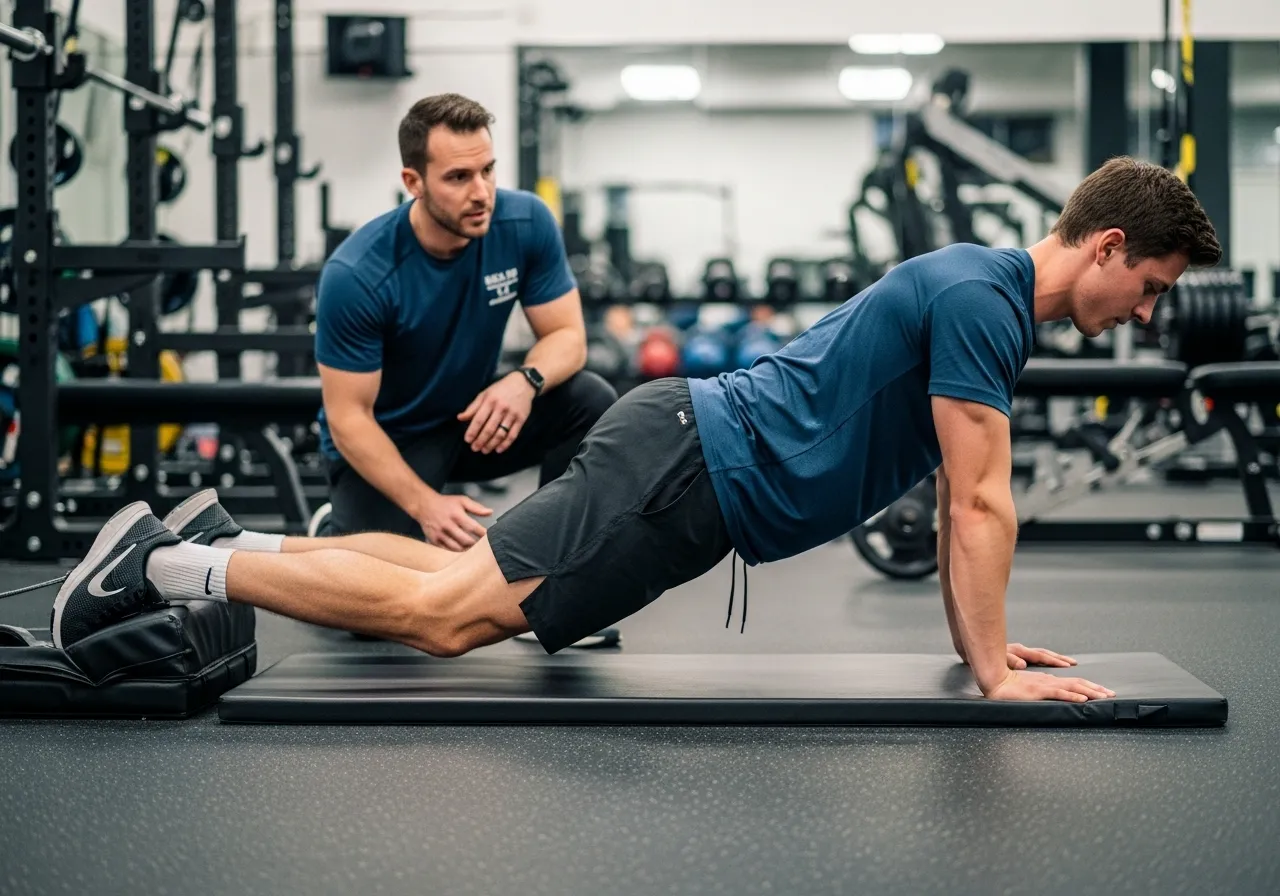
Hamstring Flexibility for Injury Prevention
Hamstring strains are among the most common and most recurrent injuries in running and team sports, and hamstring flexibility is one of the primary modifiable risk factors. The injury mechanism: when the hamstring is asked to decelerate the leg during the late swing phase of running — the moment just before the foot contacts the ground — it must produce maximum eccentric force at maximum length. Athletes with restricted hamstring flexibility or hamstring weakness in the lengthened range are at significantly elevated risk of strain at this precise moment because they are lacking either the range or the strength to safely perform the decelerating function.
The Nordic Hamstring Curl for Injury Prevention
The Nordic hamstring curl — anchoring the feet and lowering the body toward the floor using only hamstring eccentric strength — is the most evidence-supported single exercise for reducing hamstring strain risk. Research on the Nordic hamstring curl and injury prevention in football players finds a fifty to seventy percent reduction in hamstring strain incidence in teams that implement Nordic curl programs compared to control groups without the exercise. The exercise specifically develops the eccentric strength in the lengthened position that is the precise capability that hamstring strain prevention requires. Performing three sets of five to eight Nordic hamstring curls twice per week alongside the flexibility program described in this article provides both the flexibility and the strength-through-range that constitute comprehensive hamstring injury prevention. According to research on Nordic hamstring curls and injury prevention, this exercise produces the largest single-exercise reduction in hamstring injury risk of any intervention studied in team sport populations.
Return to Training After Hamstring Strain
Hamstring strains require specific rehabilitation protocols that differ from general flexibility programs. Grade one strains (mild, no significant muscle fiber disruption) typically resolve within one to two weeks with appropriate management: ice in the first 24 hours, gentle range of motion exercises from day two, progressive loading from day five to seven. Grade two strains (moderate, partial muscle fiber disruption) require two to six weeks of progressive rehabilitation with professional guidance. Grade three strains (complete rupture) require surgical consultation and months of rehabilitation. Returning to full training before complete healing is the primary cause of hamstring strain recurrence — the recurrence rate for inadequately rehabilitated hamstring strains exceeds fifty percent in the first year, making patience with the rehabilitation timeline the most important injury management decision for athletes who sustain this injury.
Action point: If you play any running or team sport, add two sets of five Nordic hamstring curls to your twice-weekly training program regardless of current hamstring flexibility status. The injury prevention evidence for this exercise is among the strongest available for any single resistance exercise in any sport context.
Stretching Myths That Keep People Tight Forever
Several persistent myths about stretching prevent people from making the flexibility progress that the correct approach reliably produces. Myth one: “More stretching intensity produces faster results.” Aggressive, painful stretching actually activates the myotatic (stretch) reflex, causing the muscle to contract against the stretch and producing the exact resistance it is meant to overcome. The correct approach is sustained, comfortable stretching at the edge of resistance — the intensity where tension is present but pain is absent — which gradually reduces the reflex response and allows progressive lengthening. Myth two: “Flexibility is genetic and cannot be meaningfully changed.” While genetics influence baseline flexibility, research consistently finds that virtually all healthy adults can achieve meaningful flexibility improvements through appropriate training regardless of starting flexibility. The athletes who remain chronically tight after months of stretching are typically addressing the wrong cause (stretching muscle tissue when neural tension is the primary issue) rather than hitting a genetic ceiling. Myth three: “Ballistic stretching is dangerous.” Controlled ballistic stretching — rhythmic movements through range without the jerky, momentum-dependent movements that cause injury — is actually the most effective approach for some flexibility goals, particularly for sports that require dynamic range of motion rather than static flexibility. The distinction is between controlled rhythmic movement (appropriate) and jerky, uncontrolled momentum (inappropriate). Myth four: “You must hold stretches for at least sixty seconds to benefit.” Research finds that thirty-second holds produce equivalent long-term flexibility improvements to sixty-second holds when performed the same number of times per session — the total time in the stretched position matters more than the individual hold duration. These myths waste training time and perpetuate the frustration that keeps people trapped in the cycle of stretching without progress that the correct program resolves.
Frequently Asked Questions About Hamstring Flexibility
How long does it take to significantly improve hamstring flexibility?
Most people with moderate hamstring tightness see meaningful improvement within four to six weeks of the combined program (neural flossing, progressive static stretching, and Romanian deadlifts through full range). People with significant restriction — unable to touch the knees when standing with legs straight — typically require ten to sixteen weeks of consistent daily practice to achieve functional range. The rate of improvement depends primarily on the cause of restriction: neural tension responds faster (two to four weeks), muscle tightness responds moderately (six to twelve weeks), and fascial restriction (often present in people who have been tight for years) responds slowest (twelve to twenty-four weeks). Daily practice produces two to three times faster improvement than equivalent-volume less-frequent practice, making daily habit formation the most important factor in improvement rate regardless of the specific cause of restriction. Research on stretching frequency and flexibility development confirms that daily stretching produces significantly superior range of motion improvements compared to equivalent-volume less-frequent programs.
Is it possible to be too flexible in the hamstrings?
Yes — excessive hamstring flexibility without corresponding strength is associated with hamstring strain risk rather than injury protection. Athletes who can place their palms flat on the floor with straight legs but cannot perform a single Nordic hamstring curl with control have flexibility without the strength-through-range that the flexible range requires for safe function under athletic loading. Hypermobile individuals (those who can easily hyperextend most joints) should emphasize hamstring strengthening through range rather than additional stretching, as their injury risk comes from inadequate control of the range they already possess rather than from range limitation. The goal is not maximum flexibility but functional flexibility — the range that allows complete athletic movement patterns with the strength to control and function safely throughout that range.
Why do my hamstrings feel tight immediately after stretching?
The return of tightness sensation within hours of stretching confirms that the stretching is addressing only the symptom (muscle tension) without addressing the cause (neural tension, pelvic tilt, or functional weakness). Stretching temporarily reduces the protective muscle tone that creates the tightness sensation, but the cause of that tone reasserts itself within hours. Addressing the underlying cause — implementing the complete program of neural flossing, hip flexor work, and strength-through-range exercises — produces lasting changes in the neural environment that determines resting hamstring tone, eliminating the tightness rather than temporarily reducing it. Athletes who implement the complete program consistently find that the tightness sensation disappears over four to eight weeks not because they are stretching more aggressively but because the underlying cause of the tension has been resolved. According to ACSM flexibility training guidelines, comprehensive flexibility programs that address neural and strength components alongside passive stretching produce superior long-term outcomes compared to passive stretching alone.
The hamstrings are chronically tight in most adults not because of inevitable biology but because of addressable causes that the correct program resolves — neural tension that flossing dissipates, pelvic position that hip flexor work corrects, and weakness-in-range that Romanian deadlifts and Nordic curls develop. Apply the complete program with daily consistency and discover in eight to twelve weeks what years of isolated stretching could not produce: genuine, lasting hamstring flexibility that stays flexible between sessions because the underlying causes have been resolved rather than temporarily suppressed. The tight hamstrings that have limited your squatting, contributed to your back pain, and frustrated your flexibility training have a solution — and this article has provided the complete roadmap for reaching it.
Sample Eight-Week Hamstring Flexibility Program
Week one to two: daily neural flossing (two minutes each leg morning), hip flexor kneeling stretch (thirty seconds per side twice daily), standing forward bend (three sets of thirty seconds after training sessions). Week three to four: add Romanian deadlifts twice weekly (three sets of ten to twelve, progressive depth), replace neural flossing with combination of flossing plus static stretching. Week five to six: add seated hamstring stretch to post-training sequence, begin single-leg Romanian deadlifts for greater hamstring loading specificity. Week seven to eight: introduce Nordic hamstring curls twice weekly (two sets of five), continue all previous components, begin testing forward bend range monthly. The eight-week program produces the combination of neural, muscular, and strength adaptations that comprehensive hamstring flexibility requires — more in eight weeks of correct approach than most people achieve in years of isolated stretching. NSCA flexibility program design guidelines support progressive, periodized flexibility programming as producing superior outcomes compared to non-periodized daily stretching routines for long-standing flexibility restrictions.
hamstring flexibility tight hamstrings neural tension stretching program