⚠️ Health & Fitness Disclaimer This article is for general educational purposes only and does not replace professional medical advice. If you have any lower back, shoulder, or wrist conditions, please consult a qualified healthcare professional before beginning kettlebell training overview training.
The kettlebell is simultaneously one of the oldest and most modern training tools available — used in Russian strength sports for over a century and rediscovered by mainstream fitness in the last two decades as research confirmed what practitioners had long observed: that its offset centre of mass and ballistic exercise demands produce a uniquely comprehensive training stimulus. (Related: sandbag training guide) (Related: medicine ball training)
The kettlebell’s design is the source of its distinctive training properties. Unlike a dumbbell where the weight is evenly distributed around the handle, the kettlebell’s mass hangs below the handle — creating a longer lever arm and a constantly shifting centre of mass that requires ongoing muscular compensation throughout every exercise.
This guide covers the EMG research on kettlebell muscle activation, explains the six foundational exercises in detail, addresses the cardiovascular and metabolic demands that make kettlebell training distinctive, and provides an 8-week program.
Kettlebell Research: Muscle Activation and Athletic Performance
Comprehensive Training Review: What Kettlebells Actually Develop
The 80% MVC gluteal activation is particularly notable — this exceeds the gluteus maximus activation produced by many conventional glute exercises and confirms that the kettlebell swing is a genuinely high-intensity posterior chain exercise despite the relatively light absolute loads typically used.
Kettlebell Training for Older Adults: Clinical Evidence
The Kinetic Chain: Why Kettlebell Training Feels Different
The kinetic chain concept — the integrated sequence of muscle activations from the feet through the hips, core, and upper body — is the central principle of ballistic kettlebell training. Unlike isolation exercises that target individual muscles, the kettlebell swing, clean, and snatch require simultaneous activation across this entire chain:
The power generation originates at the hips — the gluteus maximus and hamstrings drive the hip extension that accelerates the kettlebell
The core functions as a rigid transfer mechanism — bracing to transmit force from the hips to the upper body without losing energy through spinal flexion
The upper body guides and decelerates the kettlebell — with the lats, rear deltoids, and forearm muscles managing the swing’s trajectory and grip
This integrated chain activation explains both the cardiovascular demand and the functional strength transfer of kettlebell training — the whole-body muscular recruitment produces heart rate responses comparable to high-intensity interval training while simultaneously developing the posterior chain strength that translates to athletic movement.
One-Arm vs. Two-Arm Kettlebell Swing: The EMG Differences
A PubMed study comparing one-armed and two-armed kettlebell swings found meaningful differences in core muscle activation between the two variations — differences that have direct programming implications:
The one-armed swing produced 24% greater contralateral (opposite side) upper erector spinae activation compared to the ipsilateral side — the core must resist the rotational force of an asymmetrical load by activating the muscles on the opposite side
The two-armed swing produced greater bilateral erector spinae activation than the ipsilateral side in the one-arm swing — suggesting the two-arm swing may provide more symmetrical spinal extensor training
The one-arm swing adds an anti-rotation demand absent from the two-arm version — developing the core stability relevant to single-leg activities, throwing sports, and asymmetrical loading situations
The practical programming implication: two-arm swings develop bilateral posterior chain endurance and power; one-arm swings add anti-rotation core stability to the same movement. Including both variations within a program produces more comprehensive development than either alone.
The Breathing Pattern: The Forgotten Technique Component
Correct breathing during kettlebell training — particularly during swings and ballistic exercises — is both a performance enhancer and a safety mechanism:
At the top of the swing: Brief exhale (a sharp hiss through closed teeth, often called “biomechanical breathing”) creates a reflexive core brace that stiffens the torso at the moment of peak force transfer
At the bottom of the swing: The glottis opens for a quick inhale before the hips snap forward again
During the press: Exhale on the way up; inhale on the way down — standard resistance training breathing applies to grinding (slow) movements
This rapid breathing pattern — combined with the metabolic demand of multiple large muscle groups working simultaneously — explains why kettlebell training feels more cardiovascularly taxing than conventional strength training at the same perceived exertion level.
The Six Foundational Kettlebell Exercises
The Two-Handed Kettlebell Swing: Foundation of Everything
The swing is the foundational kettlebell exercise from which all ballistic techniques develop. Mastering the swing requires mastering the hip hinge — the fundamental movement pattern of bending at the hips while keeping the spine neutral.
Setup: Kettlebell approximately 30 cm in front of the feet, hinge to grasp the handle, push the ground away as you stand — do not squat up. Backswing: The kettlebell swings back between the legs — not below the knees. The hips drive backward (hip hinge), not downward (squat). The forearms make contact with the inner thighs at the bottom. Power phase: Drive the hips forward explosively — the glutes and hamstrings generate the force that swings the kettlebell, not the arms or shoulders. The bell floats to shoulder height or overhead driven purely by hip power. Float: At the top, the kettlebell becomes briefly weightless — the core remains braced, the glutes remain contracted. Receive: As the bell descends, actively guide it back between the legs for the next rep rather than letting it fall passively.
The Goblet Squat: The Teaching Squat
The goblet squat — holding the kettlebell by the horns (sides of the handle) at chest height and performing a deep squat — is the most effective teaching tool for squat mechanics available:
The counterbalance of the kettlebell in front of the chest naturally encourages upright torso position — correcting the forward lean that plagues most beginner squatters
The goblet position allows depth that many beginners cannot achieve with a barbell — the counterbalance compensates for limited ankle dorsiflexion and hip mobility
It simultaneously develops the anterior core and upper back strength needed to maintain the position with heavier loads
The Turkish Get-Up: The Whole-Body Assessment and Developer
The Turkish get-up (TGU) is a seven-stage movement sequence from lying to standing while holding a kettlebell overhead — arguably the most comprehensive single exercise for assessing and developing shoulder stability, core integration, hip mobility, and movement competency.
The seven stages:
Roll to press (supine to elbow support)
Elbow to hand (extend the arm fully)
Hip bridge (drive hips to the ceiling)
Leg sweep (thread the lower leg through to kneeling)
Windmill to standing (rotate to upright)
Reverse the sequence to return to the floor
The TGU is frequently prescribed in rehabilitation as a movement quality screen — an inability to complete any stage cleanly often reveals the specific mobility or stability deficit most relevant to that individual’s movement limitations.
The Clean and Press: Power and Overhead Strength
The kettlebell clean brings the bell from the floor or swing position to the rack position (resting in the crook of the elbow, forearm vertical). From the rack, the military press drives the bell overhead in a strict vertical line.
The clean is a pulling technique that requires precision — the bell should arrive at the rack smoothly, not crash against the forearm. The characteristic bruising of the forearm and wrist during early learning indicates the bell is rotating around rather than being guided to the rack — a technique correction rather than a battle ropes overview outcome.
The Kettlebell Snatch: The King of Kettlebell Exercises
The snatch takes the bell from between the legs to overhead in a single continuous movement — combining the hip extension power of the swing with a vertical pull and punch that locks the bell out overhead. It is the most technically demanding and most metabolically challenging of the foundational exercises:
A 5-minute kettlebell snatch test (performing as many snatches as possible in 5 minutes) is used as a conditioning benchmark in competitive kettlebell sport
The snatch’s overhead lockout demands active shoulder stability — the lat, rotator cuff, and triceps stabilise the joint throughout the overhead position
The metabolic demand of high-rep snatches rivals interval running in heart rate elevation while simultaneously developing posterior chain strength and overhead stability
The seven-stage sequence of the TGU also creates a uniquely slow movement that allows the practitioner to identify any position where control is lost — making it one of the few exercises that simultaneously develops and reveals the movement limitations most relevant to that individual’s specific stability or mobility deficits.
Are Kettlebell Swings Effective for the Lower Back?
The Hip Hinge and Lumbar Health
The relationship between kettlebell swings and lower back health is more nuanced than simple benefit or risk — the same movement pattern that helps many individuals resolve chronic lower back pain can exacerbate specific conditions in others.
The benefits for the lower back:
The hip hinge movement pattern specifically trains the gluteus maximus and hamstrings to extend the hip — reducing the reliance on the lumbar erectors for daily movements that are commonly performed with poor mechanics
The dynamic bracing pattern of swing training — the rapid alternation between bracing and relaxation across hundreds of repetitions — may develop the reactive core stability that protects the spine under unexpected loads
The posterior shear loading during swings (opposite to the anterior shear of conventional lifts) may specifically benefit individuals whose conditions are aggravated by anterior shear patterns
The risks for specific conditions:
Individuals with posterior element pathology (facet joint arthritis, spondylolysis) may find the repeated hip extension of swings aggravating rather than therapeutic
The approximately 3,200 N of lumbar compression generated during swings with a 16 kg kettlebell is well within safe physiological limits for healthy spines but may be problematic for specific disc pathologies
Technique errors — particularly squatting down rather than hinging, and rounding the lower back at the bottom of the swing — dramatically increase harmful loading patterns
The evidence-based guidance: individuals with lower back conditions should seek assessment from a physiotherapist before beginning kettlebell training — the swing may be exactly the right exercise or entirely the wrong one depending on the specific condition and its loading sensitivities.
Cardiovascular and Metabolic Demands
The heart rate response to kettlebell training is one of the most consistently surprising findings in the exercise science literature — heart rates of 85–90% of maximum are regularly reported during protocols that use moderate absolute loads of 12–24 kg:
The whole-body muscular recruitment creates a metabolic demand that exceeds what the relative loads might suggest — the oxygen cost of moving large muscle groups explosively repeatedly is substantial regardless of the absolute load used
Continuous 12-minute swing protocols have been documented to produce average VO2 responses equivalent to moderate-intensity running in healthy adults
Post-exercise hypotension (blood pressure reduction following exercise) has been documented following kettlebell swing protocols — a response typically associated with aerobic training rather than traditional strength training
The Simple & Sinister Program: The Minimalist Standard
Pavel Tsatsouline’s Simple & Sinister program — consisting solely of 100 one-hand swings (10 sets of 10) and 10 Turkish get-ups (5 each side) per session — has become one of the most widely practiced kettlebell programs precisely because of its elegant simplicity:
The entire program requires a single kettlebell and 20–30 minutes per session
The combination of swings (posterior chain and cardiovascular) and TGU (whole-body movement quality) addresses both power and mobility simultaneously
Progressive challenge comes from faster completion times (the “simple” standard is completing the full session within specific time parameters) and eventual weight increases rather than exercise complexity increases
For individuals seeking a minimalist but comprehensive training approach, this program framework serves as an excellent entry point that can be maintained indefinitely while providing ongoing progressive challenge through weight increases and time improvements.
The concurrent strength and cardiovascular demand within a single session — achievable in 20–30 minutes with a single implement — makes kettlebell training one of the most time-efficient comprehensive training approaches documented in exercise science research.
Kettlebell Training for Different Goals
Kettlebell Training for Strength
Despite using relatively light absolute loads compared to barbell training, kettlebell training produces meaningful strength adaptations:
The explosive hip extension of swings and snatches develops the rate of force development (how quickly maximum force can be produced) — a quality relevant to athletic performance that slow-tempo barbell training does not emphasise
The Turkish get-up develops shoulder stability and upper body strength in the overhead position through multiple angles that conventional pressing exercises cannot match
The kettlebell press (military press from the rack position) develops strict overhead pressing strength with a different grip and weight distribution than the barbell — providing complementary rather than duplicate stimulus
Kettlebell Training for Fat Loss and Conditioning
The metabolic demand of kettlebell training makes it particularly effective for conditioning and body composition goals:
The combination of strength and cardiovascular demands in a single session — achievable in 20–40 minutes — produces caloric expenditure comparable to longer conventional cardio sessions
The excess post-exercise oxygen consumption (EPOC) following high-intensity kettlebell protocols may extend the caloric expenditure effect for hours after the session ends
The absence of steady-state pacing that conventional cardio allows — each swing, clean, or snatch requires maximum effort — prevents the adaptation to fixed-intensity exercise that reduces long-term cardiovascular training effectiveness
Kettlebell Training vs. Barbell Training: How to Integrate Both
Quality
Kettlebell Advantage
Barbell Advantage
Absolute strength
Moderate
Superior — heavier loads available
Explosive power
High — hip extension power transfer
Moderate in conventional lifts
Cardiovascular
High — 85–90% max HR achievable
Low in standard strength sessions
Portability
Excellent — single implement
Limited — fixed infrastructure needed
Learning curve
Moderate — ballistics require coaching
High for Olympic lifts; moderate for powerlifts
Kettlebell Training for Grip Strength: An Underappreciated Benefit
The irregular handle and cannonball shape of the kettlebell creates a unique grip challenge absent from dumbbell and barbell training — the weight hangs off-centre, requiring constant grip compensation to maintain control during dynamic movements:
The thicker handle of most kettlebells (compared to barbells) requires greater intrinsic hand muscle activation to maintain grip security — developing the hand and forearm strength that carries over to improved performance in pull-ups, deadlifts, and climbing activities
The bottoms-up carry — walking with a kettlebell held upside-down by the handle, ball facing up — is one of the most challenging grip and shoulder stability exercises available, requiring full-time neuromuscular activation to prevent the kettebell from falling
Research on kettlebell training in older adults specifically documents grip strength improvements — a clinically significant outcome because grip strength is a reliable predictor of overall mortality risk and functional independence in aging populations
8-Week Kettlebell Program
Program Structure
Three sessions per week, 30–45 minutes each. The program begins with technique establishment in weeks 1–2 before introducing the ballistic exercises at volume. One size of kettlebell is used throughout — typically 12–16 kg for women, 16–24 kg for men who are new to kettlebells.
Phase 1 — Weeks 1–2 (Technique Foundation):
Goblet squat: 3 × 10 (slow, 3-sec descent, pause at bottom)
Deadlift (hip hinge drill): 3 × 10 (two hands, treat as swing prep)
Two-hand swing: 4 × 10 (technique priority; hip hinge quality)
Turkish get-up: 2 × 2 each side (slow, controlled, learn each stage)
Press (standing): 3 × 5 each side
Focus: Hip hinge mechanics, breathing, neutral spine throughout
Phase 2 — Weeks 3–4 (Volume Build):
Two-hand swing: 5 × 20 (build to smooth, powerful reps)
One-hand swing: 4 × 10 each side
Goblet squat: 3 × 12
Turkish get-up: 3 × 3 each side
Press: 3 × 8 each side
Focus: Developing rhythm and bracing pattern; build swing volume
Phase 3 — Weeks 5–6 (Conditioning):
Swing ladders: 10-15-20-15-10 (continuous, minimal rest)
Clean and press: 5 × 5 each side
Goblet squat: 4 × 10 (add pause at bottom)
TGU: 3 × 3 each side
One-hand swing EMOM: 10 each side every minute for 10 minutes
Focus: Cardiovascular demand; building work capacity
Phase 4 — Weeks 7–8 (Peak):
Session A: Simple & Sinister-inspired — 100 one-hand swings + 10 TGU (timed)
Session B: Clean and press ladders 1-2-3-1-2-3 × 5 sets each side
Session C: Snatch (introduction): 5 × 5 each side + goblet squat 4 × 12
Focus: Maximum work capacity; snatch introduction; benchmark session A
Programming Kettlebells Alongside Barbell Training
For trainees who already follow a barbell-based strength program, kettlebell exercises integrate most naturally in specific programming positions:
As a warm-up: 5–10 minutes of goblet squats, TGU, and light swings activates the posterior chain and hip mobility before heavy barbell work — particularly valuable before deadlifts and squats
As a conditioning finisher: 10–15 minutes of swing intervals or clean and press circuits following strength work adds cardiovascular demand without adding additional muscle damage from more strength work
As dedicated active recovery sessions: Moderate-weight swings and TGU on rest days from heavy barbell training maintains cardiovascular fitness and movement quality without creating the muscle damage that would impair recovery
As a travel replacement: A single kettlebell maintains training quality during travel periods when barbell equipment is unavailable — a more complete substitute than bodyweight alone for trainees who require loaded resistance
Kettlebell Training for Athletes: Sport-Specific Applications
Several specific athletic populations have incorporated kettlebell training with documented performance benefits:
Combat sports (MMA, wrestling, judo): The Turkish get-up develops the multi-planar movement competency and shoulder stability that ground-based combat sports require — getting from floor to standing under load directly mimics the scrambling demands of combat sport
Distance running: The hip hinge strength from swing training and the single-leg stability from TGU directly address the two most common biomechanical deficiencies in distance runners — weak glutes and inadequate hip stability that contribute to knee and IT band pathology
Cycling: The posterior chain strength and hip extension power from kettlebell training complement the hip flexor-dominant demands of cycling, addressing the muscular imbalances that accumulate with high cycling volume
Kettlebell Swing Progressions: From Beginner to Advanced
A structured progression pathway for the kettlebell swing develops technique and work capacity simultaneously:
Step 1 — Deadlift: Two-hand kettlebell deadlift, treating it as a hip hinge drill — establishes the correct body position and movement pattern before any dynamic component is added
Step 2 — Dead swing: Each rep starts from a dead stop on the floor — eliminates the momentum management demands of continuous swings while building the hip snap
Step 3 — Two-hand continuous swing: Standard swing with continuous rhythm — building volume from 5-rep sets to 20-rep sets as technique stabilises
Step 4 — One-hand swing: Introduces the anti-rotation demand and asymmetrical loading — equal sets each side
Step 5 — Hand-to-hand swing: Passing the bell from hand to hand at the top of the float — develops the ambidextrous skill needed for complex kettlebell flows
Step 6 — Clean: Taking the bell from the swing backswing to the rack position — the first step toward the press and snatch
Each progression should feel stable and controlled before advancing — rushing through the progression to more complex exercises before establishing the foundation creates technique habits that become increasingly difficult to correct at heavier weights.
Managing Grip Fatigue in Kettlebell Sessions
Grip fatigue is the most common limiting factor in beginner kettlebell sessions — the handle thickness, dynamic loading, and cumulative repetition volume challenge the hands before the target muscles (glutes, hamstrings, posterior chain) reach their limits:
Chalk (magnesium carbonate) significantly reduces grip-related fatigue by eliminating sweat-induced slipping — recommended for any serious kettlebell training, particularly during high-rep swing protocols
The correct grip is a diagonal hand placement across the handle — not a perpendicular grip that creates uncomfortable handle pressure on the palm during dynamic swings
Callus management (filing down excessive callus buildup with a pumice stone) prevents the painful tearing that accumulated callus is prone to during high-rep sessions — the irony that neglecting calluses creates more skin damage than managing them
Kettlebell Training FAQ
Kettlebell Training FAQ
How long does it take to learn kettlebell swing properly?
Most motivated adults can develop technically proficient two-handed swings within 2–4 sessions of focused practice. The hip hinge movement pattern is the critical prerequisite — if the hip hinge is already familiar from Romanian deadlifts or similar exercises, swing technique tends to arrive quickly. If the hip hinge is unfamiliar, a few sessions of wall hip hinge drills (pushing the hips back to touch a wall) may be needed before swings feel natural.
The one-handed swing, clean, and snatch require additional sessions — typically 4–8 sessions to develop smooth technique for each progression. The Turkish get-up may require 3–6 sessions to feel controlled through all seven stages, but the investment is worthwhile for the comprehensive movement quality assessment and shoulder stability development it provides.
Can kettlebell training replace conventional gym training?
For most fitness goals — strength, conditioning, fat loss, and athletic performance — kettlebell training can serve as the primary training modality with complete success. The research confirms meaningful improvements in strength, power, cardiovascular fitness, and functional capacity from kettlebell-only programs.
The specific goal where kettlebell training alone has limitations is maximum absolute strength development — if the target is a 200 kg deadlift or competitive powerlifting, barbell training is required. For the vast majority of recreational and fitness-focused trainees, kettlebell training provides a sufficient and often superior combination of training stimuli within a fraction of the time and equipment investment of conventional barbell training.
✅ Key Takeaways
Kettlebell swings produce approximately 80% MVC for the gluteal muscles — among the highest posterior chain activation levels documented for any exercise at similar absolute loads
The whole-body kinetic chain activation of ballistic kettlebell exercises produces heart rates of 85–90% maximum — combining strength and cardiovascular training in the same session
The Turkish get-up is both a movement quality assessment tool and a comprehensive developer of shoulder stability, hip mobility, and core integration simultaneously
Kettlebell training significantly improves grip strength and functional capacity in older adults — with the TGU specifically improving the floor-to-stand transfer relevant to fall prevention
The most common beginner error is selecting too light a weight — the swing requires sufficient mass to create the pendulum momentum that makes the hip hinge feel mechanically correct
Is kettlebell training suitable for people with no prior experience?
Yes — with appropriate coaching or quality instructional resources, kettlebell training is accessible to beginners. The goblet squat and two-hand swing are technically straightforward movements that most adults can learn to perform safely within a few sessions. The Turkish get-up and snatch require more time but can be approached systematically through the progressions outlined above.
The most important investment for beginners is one or two sessions with a qualified kettlebell instructor — the hip hinge pattern that underlies all kettlebell ballistic exercises is not intuitive for most people, and a qualified coach can identify and correct the fundamental errors (squatting vs. hinging, pulling with arms vs. driving with hips) in a single session that might otherwise persist as ingrained habits for months of self-taught practice. Many RKC (Russian Kettlebell Certification) or SFG (StrongFirst Girya) certified coaches offer introductory sessions specifically for this purpose.
What are the EMOM and ladder formats used in kettlebell programming?
EMOM (Every Minute On the Minute) is a format where a specific number of reps is performed at the start of each minute, with remaining time as rest. For kettlebell swings: 10 swings EMOM for 10 minutes produces 100 swings with the rest period naturally determined by completion speed. As fitness improves, more reps can be completed per minute, effectively reducing rest time without changing the clock structure.
Ladder sets involve performing increasing then decreasing rep counts within a set sequence — e.g., clean and press 1/2/3/2/1 per side. The varying rep counts produce metabolic variety within a session and allow near-maximal efforts at lower rep counts followed by submaximal conditioning at higher counts — a format well-suited to kettlebell training because the explosive nature of clean and press makes the lower rep sets genuinely demanding despite lighter loads relative to barbell equivalents.
⚠️ Fitness Disclaimer: The information in this article is for general educational purposes only and does not constitute professional fitness or medical advice. Always consult a qualified healthcare professional before starting any new exercise program, especially if you have existing injuries or medical conditions. The Ball That Made My Conventional Training Feel Incomplete I added…
There is no neat way to flip a tire. It does not fit into a defined movement category. It is not a deadlift. It is not a push press. It is all of them simultaneously, in a sequence, against an implement that shifts weight as it moves. This awkwardness is the point. Every clean movement…
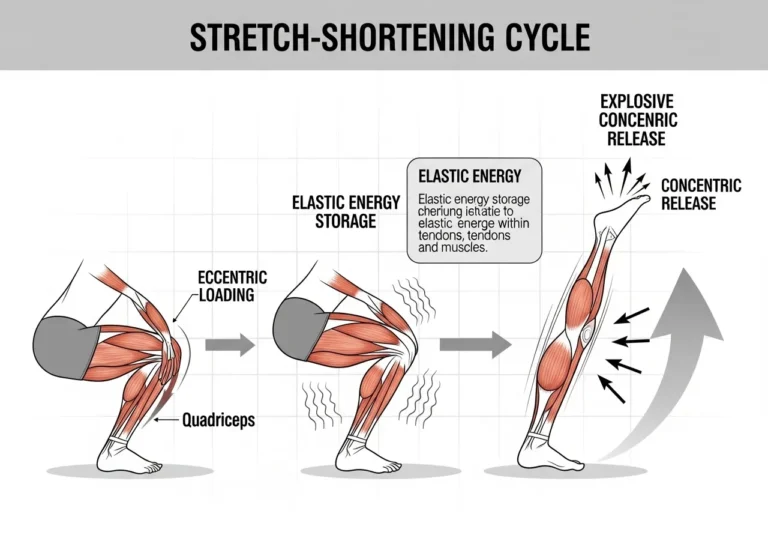
⚠️ Fitness Disclaimer: The information in this article is for general educational purposes only and does not constitute professional fitness or medical advice. Always consult a qualified healthcare professional before starting any new exercise program, especially if you have existing injuries or joint conditions. Why Strength Alone Will Never Make You Truly Explosive I squatted…
⚠️ Fitness Disclaimer: The information in this article is for general educational purposes only and does not constitute professional fitness or medical advice. Always consult a qualified healthcare professional before starting any new exercise program. ⚠️ Cardiovascular Health Notice: If you have a history of heart disease, high blood pressure, or any cardiovascular condition, obtain…
Most people who exercise do both strength training and cardiovascular work. They are not strength athletes or endurance athletes. They are general fitness trainees who want to be strong, have good cardiovascular health, and maintain a body composition that reflects consistent training. For these people, concurrent training is not a choice. It is the default….
⚠️ Shoulder, Spine, and Core Safety NoteLandmine exercises involve rotational and asymmetric loading that stresses the shoulder in an oblique pressing pattern and the lumbar spine in lateral and rotational planes. Individuals with active shoulder impingement, rotator cuff tears, lumbar disc herniation, or diagnosed spinal instability should obtain medical clearance before landmine training. During rotation-based…